By Brian Marckx, CFA
OBB:FMPI
Q1 2014 10-Q Filed
FluoroPharma (OBB:FPMI) filed their 10-Q for the quarter ending March 31, 2014. Results continue to track our estimates very closely as does cash burn.
Q1 operating expenses were ~$1.2M and in-line with our estimate. We continue to expect operating expenses to increase with clinical trials progression. Q1 net loss and EPs were $1.5M and ($0.05), compared to our $1.8M and ($0.07) estimates. Cash used in operating activities was $1.0M in Q1, flat from Q4 2013. Ex-changes in working capital, cash used in operating activities was also $1.0M, compared to $1.1M used in Q4 2013. FPMI exited Q1 with $895k in cash and securities.
We have made no changes to our financial model following the close of Q1. We continue to expect that FPMI will not generate revenue prior to 2017. We are maintaining our Outperform rating and $2.15/share price target. See below for access to our full 25-page report on FPMI.
Promising Phase II Data Reinforces Our Confidence in CardioPET
Data and images from FluoroPharma's ongoing phase II trial of its novel imaging agent, CardioPET, were presented in early February 2014 at the Society of Nuclear Medicine and Molecular Imaging Meeting in Palm Springs, CA.
As a reminder, CardioPET is being developed as a PET imaging agent to better diagnose acute and chronic coronary artery disease (CAD) in patients that cannot undergo stress testing, among other potential indications. The Belgian-based phase II trial is an open label study designed to assess safety and performance of CardioPET compared to SPECT myocardial perfusion imaging (MPI) agents and angiography.
The study's focus is assessment of both myocardial perfusion and myocardial fatty acid uptake. The data presented in February relate to assessment of the safety of CardioPET, image quality and in determination of the optimal timing for PET imaging after injection. Future data from the study will compare results to that of SPECT myocardial perfusion imaging agents.
Fifteen patients with known or suspected coronary artery disease were included in the analysis. Images were taken in three to five minute durations at intervals of one to ten minutes and at 15, 30, 45 and 55 minutes after injection. Image quality was graded as either optimal, sub-optimal or non-interpretable. Changes in blood pool activity, liver activity and delineation defects over time were recorded.
Relative to safety, there were no adverse events and no other safety issues related to CardioPET (one patient had a panic attack from being in the imaging system). Relative to quality of the images and performance of CardioPET, images at all time points from three minutes following injection were considered excellent. Blood pool activity began to decline in the initial one to three minute timeframe and blood pool clearance was totally completed in all patients at five minutes (image below). Rapid blood pool clearance is beneficial as it allows for imaging shortly following injection and reduces patient exposure to imaging radiation.

CardioPET enters the myocardium similar to the way of fatty acids and remains there long enough to allow for PET imaging. The images also showed that fatty acid uptake decreased over time. In ischemic heart conditions, uptake of fatty acids is reduced, which would be expected in these patients.
The interim data, image quality and safety were considered very promising. The ability to attain high quality images very shortly after injection is of particularly benefit and significant. We expect there will be additional data and images presented in the near-term and expect similarly positive results. This interim data reinforces our belief that CardioPET has potential to unseat the current standard imaging agents for coronary artery disease imaging, particularly for those patients unable to undergo stress testing.
Industry Veteran Hired to Lead Commercialization Strategy, Board of Directors & Scientific Boards Beefed Up
In late October 2013 FPMI announced that they brought on Edward Lyons to fill the newly created position of V.P. of Marketing. He comes with an impressive background which presumably offers FPMI potentially valuable industry contacts as well as significant operational and product specific knowledge. Mr. Lyons, who was with GE Healthcare as that company's Global Marketing Director, Nuclear Medicine, will head FPMI's marketing and commercialization strategy. Mr. Lyons comes with a vast background in diagnostic imaging including positions with Bristol-Myers and DuPont Pharmaceuticals and culminating with the high-level position at advanced imaging giant, GE Healthcare. FPMI's press release also notes that Mr. Lyons was Chief Technologist in Nuclear Medicine and Nuclear Cardiology at Philadelphia Hear Institute and Temple University Hospital.
In March 2014 FPMI announced that they added Andrew Sassine to their Board of Directors. Mr. Sassine’s background includes 13 years at Fidelity Investments working as a research analyst and managing several of the company’s small cap funds. He also serves on the boards of several other life sciences companies.
Then in April FPMI announced the appointment of Dr. H. William Strauss as chair of the company's Scientific Advisory Board. Dr. Strauss has an extensive background in cardiovascular nuclear medicine and currently serves as Attending Physician Emeritus of the Molecular Imaging and Therapy Nuclear Medicine Service at Memorial Sloan Kettering Cancer Center & Memorial Hospital in NYC. Prior to that he held teaching and research positions at several prestigious medical schools including Johns Hopkins, Harvard, Stanford and Cornell. Dr. Strauss is also a published author and has written several books and hundreds of articles in the area of cardiovascular nuclear medicine. He is a past president of the Society of Nuclear Medicine, former editor of the Journal of Nuclear Medicine and sits on the editorial boards of that journal and six other publications. Dr. Strauss is a member of the American Society of Clinical Investigation, fellow of the American College of Nuclear Physicians and the American College of Nuclear Medicine, and a life member of the American Board of Nuclear Medicine.
Product Development Progress
Although development timelines slipped during 2013 as FPMI needed to raise additional capital, the company has made significant progress on moving both CardioPET and BFPET through the development pipeline. The capital infusion in Q3 2013 allowed the company to dedicate more resources towards the ongoing phase II study of CardioPET and should facilitate enrollment of BFPET studies, slated to begin at Massachusetts General Hospital.
As noted above, we expect additional data coming out of the CardioPET studies in the near-term. BFPET studies had been expected to commence enrollment by the end of 2013. That was delayed but we think that will happen by mid-year 2014.
CardioPET data to-date has been consistently very positive and our expectations that follow-on results, which we think will be upcoming, will be similarly positive. The Belgian-based phase II trial is an open label study designed to assess safety and performance of CardioPET compared to SPECT myocardial perfusion imaging (MPI) agents and angiography. As a reminder, in late February 2013 FPMI announced that the initial images from the phase II trial "show high resolution in the heart and provides extremely clear image quality". Then in June 2013 the company announced that an internal review of additional data from this study supported earlier findings of excellent image quality. While FPMI did not provide specifics on the images in the June press release, Dr. Manual Cerqueira, Chairman of the Department of Nuclear Medicine at the Cleveland Clinic was quoted and noted, "The images thus far obtained from CardioPET indicate excellent image quality. The immediate acquisition of images will be very efficient for patient work flow." The interim data, which was finally revealed (as discussed above) in early February 2014 at the Society of Nuclear Medicine and Molecular Imaging Meeting in Palm Springs, did not disappoint and provided the most substantive evidence to-date of the potential performance benefits of CardioPET over current standard imaging agents.
Relative to BFPET, in January 2013 FPMI announced that phase II trials will be conducted at Massachusetts General Hospital. Similar to the investigator-led study, the phase II study will compare BFPET to Rb-82 and/or traditional SPECT agents such as sestamibi which suffer from certain drawbacks such as high cost or comparably (relative to BFPET) lower image quality.
As a reminder, in July and November 2012 FPMI announced image results from a 20-patient investigator-sponsored clinical trial conducted in China where patients with CAD were imaged using BFPET.
Alan Fishman, principal investigator of the BFPET phase I trial (completed in 2008), commented on the initial results of the China-based study released in July, noting that the "initial results are impressive. Image quality obtained using PET is superb. BFPET shows clear diagnostic qualities as well as increased resolution, inherent in PET. The initial images look spectacular and we are confident that when all the patients are imaged, the data will further support clinical development of the agent." His confidence was further bolstered when additional data was available in November, noting "We saw a high level of agreement between the angiography, the SPECT and the BFPET images. These additional images demonstrate that BFPET shows clear diagnostic qualities as well as the increased resolution, inherent in PET."
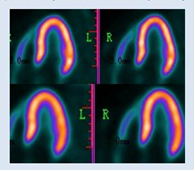
As highlighted in the images below, image quality with BFPET as compared to standard imaging agents appears to be excellent.
Difference In Image Quality Is Obvious Even To The Untrained Eye
Image Using Sestamibi
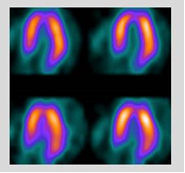 Image Using BFPET
READ THE LATEST FULL RESEARCH REPORT HERE
SUBSCRIBE TO ZACKS SMALL CAP RESEARCH to receive our articles and reports emailed directly to you each morning.
Please visit our website for additional information on Zacks SCR and to view our disclaimer