[1] The Canadian Rx Atlas, Third Edition, Dec 2013, UBC center for health Services and Policy Research.

Pharmacology: Severe hypertriglyceridemia (SHTG) is a condition in which triglyceride levels are elevated, often caused or exacerbated by uncontrolled diabetes mellitus, obesity, and sedentary habits. High levels of cholesterol and triglycerides have been shown to increase the risk of atherosclerosis, angina and heart attacks (coronary artery disease). Bezalip SR belongs to a family of fibrates used for treating patients with SHTG.
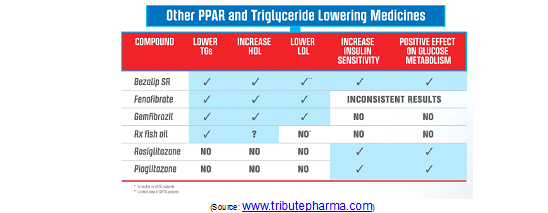
In clinical trials, Bezalip SR has been shown to significantly reduce triglyceride levels, increase high-density lipoproteins (HDL) levels while providing small decreases in low-density lipoproteins (LDL) thereby improving the lipid profile. Bezalip SR's unique mechanism of action may provide certain advantages compared to other currently marketed products, including an increase in insulin sensitivity, especially in patients with type 2 diabetes.
Bezalip SR, 400mg tablet, is designed for sustained release of the bezafibrate continuously over the day so that only one dose is required to be taken each day. The tablets must be swallowed whole to avoid damaging the sustained-release action.
Cholesterol-lowering drugs currently offered in the market include statins, niacin, bile-acid resins, fibric acid derivatives (fibrates), and cholesterol absorption inhibitors. All classes of cholesterol-lowering medicines are most effective when combined with therapeutic lifestyle changes such as increased exercise and a low-fat, high-fiber diet. Statins are most commonly used for people who require LDL-lowering therapy. The statin class includes some of the largest-selling prescription products in the world (Lipitor®, Zocor®, Crestor®, etc.). Statins dominate single-agent prescriptions for the treatment of lipid disorders. Fibrates or niacin is beneficial for people who need to lower triglycerides and increase high-density lipoprotein. The niacin (nicotinic acid – vitamin B3) class includes brands such as Niaspan®, which work primarily on increasing HDL cholesterol. The fibrates class of cholesterol lowering treatments is composed of three competing molecules: gemfibrozil (Lopid®), bezafibrate (Bezalip SR), and fenofibrate (Lipidil® in Canada or Tricor® in the U.S.). Omega 3 fatty acids (Lovaza®, Vascepa®) may reduce the synthesis of triglycerides in the liver because eicosapentaenoic acid (EPA) and docosahexaenoic acid (DHA) are poor substrates for the enzymes responsible for triglyceride synthesis, and EPA and DHA inhibit esterification of other fatty acids.
All fibrates are PPARs-alpha agonists that have the ability to decrease triglyceride and increase HDL. However, bezafibrate has a unique characteristic profile of action since it activates all three PPAR subtypes (alpha, gamma and delta) at comparable doses. Unlike other fibrates, bezafibrate decreases blood glucose level, HbA1C, insulin resistance, and reduces the incidence of type 2 diabetes. Bezafibrate significantly decreased LDL levels, induced atherosclerotic plaque regression in thoracic and abdominal aorta and improved endothelial function. In clinical trials bezafibrate was highly effective for cardiovascular risk reduction in patients with metabolic syndrome and atherogenic dyslipidemia. Although evidence supports statin’s role in treating dyslipidemia (LDL was reduced) as well as preventing cardiovascular events (atherosclerosis), fibrates, including bezafibrate, have shown a stronger effect on triglycerides and HDL than statins.[1]
Bezafibrate has consistently shown a significant beneficial effect on patients with type 2 diabetes and high lipid levels. Further, recent reports have indicated that there is potential for statins to slightly increase diabetes risk. Studies done on bezafibrate monotherapy showed that it may be appropriate for treating early-onset type 2 diabetes coexisting with hypertriglyceridemia. On the other hand, studies suggest that hyperglycemic patients with poor blood glucose control might benefit from simultaneous administration of bezafibrate and a diabetes drug[2].
[1] Teramoto, Tamio, Kohji Shirai, Hiroyuki Daida, and Nobuhiro Yamada. "Effects of bezafibrate on lipid and glucose metabolism in dyslipidemic patients with diabetes: the J-BENEFIT study." Cardiovasc Diabetol 11 (2012): 29.
[2] Tenenbaum, A., & Fisman, E. Z. (2012). Balanced pan-PPAR activator bezafibrate in combination with statin: comprehensive lipids control and diabetes prevention. Cardiovasc Diabetol, 11, 140.
Canada: The Canadian cholesterol drug market is valued at $1.6 billion while the fibrate sub-market is valued at about $50M. Cholesterol levels are likely to increase with age, with adult men developing heart disease 10 years earlier than adult women on average. Hence, the increased use of cholesterol-lowering drugs among older adults is expected to grow as life expectancy continues to rise. Tribute holds the exclusive license from Actavis (ACT:NYSE) to market Bezalip SR in Canada where according to IMS data it enjoys about 13% share of the fibrate market in that country.
U.S.: It is estimated that nearly four million (Ford ES, 2009) people in the U.S. suffer from SHTG[1]. Pharmacological treatment for SHTG (severe hypertriglyceridemia) includes fibrate drugs such as fenofibrate and gemfibrozil and Omega-3 fatty acid (fish oil) products. The combined sale of all of the above fibrate drugs was approximately $3.5 billion in the U.S. in 2013. Research indicates that there is a strong preference for prescribing brand-name over generic fenofibrate products in the United States. Of the cholesterol-lowering drugs, fibrates accounted for 9.4% market share in the U.S. while only 5.3% in Canada as of 2009[2]. Fenofibrates comprised of 75% of the market share of fibrates in the United States (fenofibric acid is not available in Canada).
Tribute has also obtained the exclusive license from Actavis to develop and commercialize Bezalip SR in the U.S. The Investigational New Drug application (IND) submitted to the FDA in the U.S. for the proposed development program for Bezalip® SR tablets was cleared by the regulatory agency in November 2013. The NDA will be the final step required before Tribute can start selling Bezalip SR in the U.S. Tribute expects to exploit the five years of market exclusivity of Bezalip SR in the U.S. that will be available to Tribute upon NDA approval. Tribute has entered into an agreement with JSB-Partners (JSB), a global life sciences advisor with extensive transaction experience and large network of pharmaceutical and biotech contacts, to support Tribute in negotiating contracts related to the co-development and commercialization of Bezalip SR in the U.S. Tribute intends to submit a Special Protocol Assessment (SPA) in the U.S. to establish the safety and efficacy of Bezalip SR.
Provided Tribute is able to gain required NDA clearance and significant market share in the U.S., this could be a game-changer for Tribute as the potential market size for Bezalip SR in the U.S. will be much larger than all of the other products in Tribute’s portfolio combined.
Abbott Laboratories' (NYSE: ABT) Tricor and Trilipix and are the major players in the fibrate space, and yielded almost $1billion in U.S. sales in 2011. GlaxoSmithKline's (NYSE: GSK ) drug Lovaza, Amarin’s Vascepa and AstraZeneca’s Epanova, made up of omega-3 fatty acid similar to Bezalip SR, compete for share of this growing dyslipidemia subpopulation. In addition, as Bezalip SR is a sustained release drug that needs to be swallowed whole, patients might prefer this pill (11mm in size) as opposed to the aforementioned drugs that are at least 118% greater in size. However, it remains to be seen if Bezalip SR will be able to gain a significant share of the fibrate market given that it has to compete with a number of established drugs.
[1] Ford, Earl S., Chaoyang Li, Guixiang Zhao, William S. Pearson, and Ali H. Mokdad. "Hypertriglyceridemia and its pharmacologic treatment among US adults." Archives of Internal Medicine 169, no. 6 (2009): 572-578.
[2] Cynthia A. Jackevicius,
Jack V. Tu, Joseph S.Ross, Dennis T. Ko, Daniel Carreon, and Harlan M. Krumholz,” Use of Fibrates in the United States and Canada”, JAMA. 2011 March 23; 305(12): 1217–1224.
Soriatane
Soriatane (acitretin) is used for the treatment of severe psoriasis without suppressing the immune system. Soriatane is a registered trademark, Heath Canada approved and under license from Actavis Group PTC ehf.

Pharmacology: Psoriasis is a skin condition associated with the formation of bubbles or large areas of reddish inflammatory skin and other disorders of keratinization. Soriatane’s primary ingredient is acitretin. Acitretin, an organic chemical compound and a synthetic analogue of retinoic acid, is a derivative of vitamin A. Retinoids have a structure similar to vitamin A and are involved in the normal growth of skin cells. Soriatane®, a prescription medication, works by inhibiting the excessive cell growth, plaque formation and scaling, and keratinization (process by which skin cells become thickened due to the deposition of protein within them), the condition seen in psoriasis (includes erythrodermic and pustular types). Soriatane is involved in the controlled growth and maturation of healthy epidermal cells and affects certain immune reactions in the second dermis. These two mechanisms lead to the formation of the epidermal cells. New epidermal overgrowth can be prevented by the containment of horny scales and existing epidermal overgrowth can be replaced within days. Since it is a very lipophilic (having an affinity for lipids) substance, it penetrates well into tissues.
Psoriasis can be triggered by biological as well as environmental factors. Systemic psoriasis may be treated orally by biologic treatments (ustekinumab (Stelara®), infliximab (Remicade®), etanercept (Enbrel®), alefacept (Amevive®), and adalimumab (Humira®)), cytotoxic agents (Methotrexate®), immunosuppressant’s (cyclosporine), or retinoids. The activity of the immune cells that become overactive in psoriasis is decreased when using biologic treatments. While the biologic agents (TNF-alpha inhibitors) are generally known to be well-tolerated and highly effective, they are significantly more expensive and reimbursement varies widely. Cytotoxic agents work by blocking the function of an enzyme that helps to slow down the rapid overgrowth of skin cells. As the name suggests, immunosuppressant’s work by decreasing the activity of the immune system thereby controlling the skin cell overgrowth as seen in psoriasis. Cyclosporine is known to have a rapid onset but is used only as a short-term option. Topical corticosteroids as well as phototherapy offer an alternative treatment option. Acitretin has a slow onset but is known to be most effective as a maintenance therapy, after the disease has been stabilized by other treatment medications.
Psoriasis Market: According to GBI Research, the systemic psoriasis therapeutic market is expected to grow at a CAGR of 11.1% with an increase in disease awareness and diagnosis rates expected to drive the growth in psoriasis treatment. Although generic and non-prescription treatments dominate the market, increase in reimbursement pressures, especially for the biologics, might be the limiting factor in market expansion.
Specialty Care Products
NeoVisc and Uracyst are Tribute’s proprietary products that are developed and manufactured in Canada.
NeoVisc
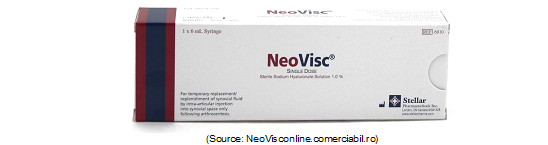
NeoVisc® is a 1.0% solution of a highly purified, linear high molecular weight sodium hyaluronate which is derived entirely from non-animal sources used to improve joint mobility and reduce joint pain. NeoVisc is available as a single dose (6mL pre-filled syringe) and in a triple dose (2mL pre-filled syringes) format. Tribute is currently the only company in Canada to provide such a product. In addition to Canada, NeoVisc is approved for sales in other international markets, but has not yet been approved in the U.S. Tribute’s most recent approval was in September 2013 from the regulatory office of Hong Kong for the sale of NeoVisc.
Pharmacology: Viscosupplementation is one of the non-pharmacological strategies besides physical therapy and exercise to reduce joint pain and improve joint mobility. Viscosupplementation products may be quite effective when simple pain killers are not. Viscosupplements are administered through an intra-articular injection (injections into the synovial space of the joint, especially the knee). The treatment is localized to the affected area and it helps improve the natural viscosity of the synovial fluid. By increasing lubrication at the joint, joint pain is reduced while joint mobility is improved.
However, it is important to note that the relief period on the single dose may not be as long as the current triple dosed NeoVisc treatment. Visits to the clinic are convenient for the patient as they can make two separate visits for the single dose treatment instead of three consecutive visits for the triple dose treatment annually. Although higher in cost per injection, the single-injection products offer increased convenience for patients in terms of shorter treatment times as well as sufficient dosage for smaller joints. The competitors to the NeoVisc single dose product in Canada include Sanofi’s Synvisc/Synvisc®-One, Pendopharm’s Monovisc® and Bioventus Canada’s Durolane
®.
NeoVisc for Osteoarthritis
Patients with osteoarthritis (OA) typically experience pain and loss of mobility due to changes to the internal environment of the affected joint. An aging population and increase in obesity rates are expected to contribute towards growth in osteoarthritis prevalence. Currently NSAIDs and analgesics are the preferred treatment for OA. Globally, an increase in product awareness among physicians as well as patients opting for specialty medications will likely drive the sales of viscosupplements. Management has estimated that the market for NeoVisc in Canada at roughly $25 million.
Uracyst
Uracyst, a sodium chondroitin sulfate solution, is Tribute’s patented technology for the treatment of non-common cystitis and interstitial cystitis (IC), an inflammatory disease of the urinary bladder wall. Uracyst® is a fluid that is instilled into the bladder. It contains 2% sterile sodium chondroitin sulfate solution and is effective in reducing the symptoms of painful bladder syndrome (PBS/IC).
Tribute outsources the manufacturing of its proprietary products to third party contractors. These facilities are known to be in compliance with Health Canada, and the Canadian Therapeutic Products Directorate (TPD) division medical device guidelines and current Good Manufacturing Practice (cGMP) regulations.
Pharmacology: Bladder surface mucus is composed of glycosaminoglycans (GAGs) and proteoglycans on the outer surface of the transitional cell apical membrane (urothelium that contracts or expands to accommodate the volume of fluid). The glycosaminoglycan layer (GAG) is a mucosal lining of the bladder that acts as a protective barrier against the bladder wall and the urine metabolites. Disruption of this layer is presumed to lead to migration of potassium (and possibly other components of the urine) across the mucosal surface. This results in depolarizing of nerves and muscles and leads to tissue injury and pain. The main symptoms of PBS/IC are painful bladder, increased frequency of urination, and an increased urge to urinate. Since urothelium in IC is dysfunctional and the permeability barrier is lost, restoration and maintenance of the urothelial mucus GAG/proteoglycan layer remains one of the therapeutic measures for PBS/IC. Chondroitin sulfate is believed to be the major proteoglycan responsible for the GAG barrier function, which is lost due to PBS/IC. Uracyst works by replenishing the bladder with a protective coating of chondroitin sulfate, restoring its impermeability.
Interstitial cystitis is managed non-pharmacologically using strategies such as physical therapy, and diet but is treated pharmacologically by restoring the mucus/GAG layer, inhibiting neurological activity, suppression of allergies (anti-histamines), and/or using analgesics (amitriptyline). Drugs for bladder instillation include hyaluronic acid (Cystistat®, Bioniche Life Sciences Inc.), sodium pentosan polysulfate (Elmiron®), Dimethyl sulfoxide (DMSO), Intravesical heparin, Hydrodistension, and sodium chondroitin sulphate solution (Uracyst®). Elmiron is an oral agent used to treat ICs and is known to have a very slow onset. Uracyst provides significant competitive advantages over heparin, pentosan polysulfate, and hyaluronan in simple barrier restoration (curing a dysfunctional urothelium).

Interstitial Cystitis (Bladder) Market
The global IC therapeutics market is estimated to grow at a CAGR of 6.3% over the next eight years according to Global Data analysis. As per management’s estimate, the global IC market is valued at $150M. This market is limited in size due to low diagnosis rate, lack of approvals of new products as well as limited availability of existing approved products.
Tribute has global licensing agreements for marketing Uracyst and has long-term patents in the U.S., Canada, Europe and other international territories. The company sells Uracyst in Canada through its own sales force. Tribute received its second patent in Canada issued July 10, 2012, as Canadian Patent No. 2,515,512 entitled "Cystitis Treatment with High Dose Chondroitin Sulfate". The new patent for Tribute’s proprietary product Uracyst is valid through 2024.The drug is also being sold globally through licensing agreements. Tribute is actively seeking partners and regulatory approvals in Israel, the U.S., China, Japan and South Korea plus other markets globally.
Collatamp G
Collatamp G is a fully resorbable, gentamicin-collagen hemostat used both as a surgical implant for hemostasis and for the local delivery of high doses of gentamicin. Collatamp G is made out of collagen, a “natural” substance found in the skin. Collatamp G is a fully resorbable, gentamicin-impregnated collagen "sponge" that can be easily implanted during orthopedic, abdominal, cardiac, plastic or vascular surgery that can reduce the risk of surgical site infections. It provides hemostasis and delivers a high concentration of gentamicin directly to the target tissue. It also provides a localized antibiotic action while maintaining systemic gentamicin levels well below the toxicity threshold.
On June 20, 2012 Tribute acquired the Canadian rights to Collatamp G from Theramed Corporation. Collatamp G is approved in over 50 countries. Collatamp G is a registered trademark and under license from EUSA Pharma (Europe) Limited. The market for such devices is valued at $20M.
FINANCIAL CONDITION
Cash
As of March 31, 2014, the Company had cash and cash equivalents of $3M. Cash used in operations for the first quarter of 2014 was approximately $2M. This was primarily due to expansion of their sales and distribution network to increase sales of their licensed domestic products, especially CAMBIA, as well as fees for filing IND for Bezalip SR in the U.S.
In the general procedure of obtaining licensing and manufacturing agreements and regulatory approvals, Tribute is obligated to pay an up-front licensing fee and additional milestone payments in increments based on aggregate net sales. Management has openly discussed their intentions and ambitions to grow their business through future business development activities such a product acquisitions and licensing. We expect the company will need to raise additional capital as they continue to grow their Canadian business and as they make a push into partnering and selling new products into new but developed markets such as the U.S. This will likely require Tribute to raise additional cash through either debt or equity (or a combination of the two) financing, which they have been successful at doing in the past.
Debt / Liabilities
As of March 31, 2014, Tribute had $8M in current liabilities of which $4.5M are warrant liabilities and $7.9M is long-term debt. Tribute entered into a credit agreement with SWK LLC., which provided the company with a $8M term loan. The loan matures on August 8, 2018. Interest and principal are paid as a percentage of ongoing revenues. The loan accrues interest at an annual rate of 11.5% plus LIBOR with a minimum interest rate of 13.5%. To the extent that revenues do not cover required interest payments, unpaid interest accrues until paid off in future dates. All unpaid interest principal amounts must be fully paid at maturity of the loan. The loan agreement includes customary events of default such as failure to pay principal and/or interest when due, or failure to comply with covenants. As the company continues to expand, they may secure additional debt financing to maintain operations until they turn cash-flow positive.
VALUATION/RECOMMENDATION
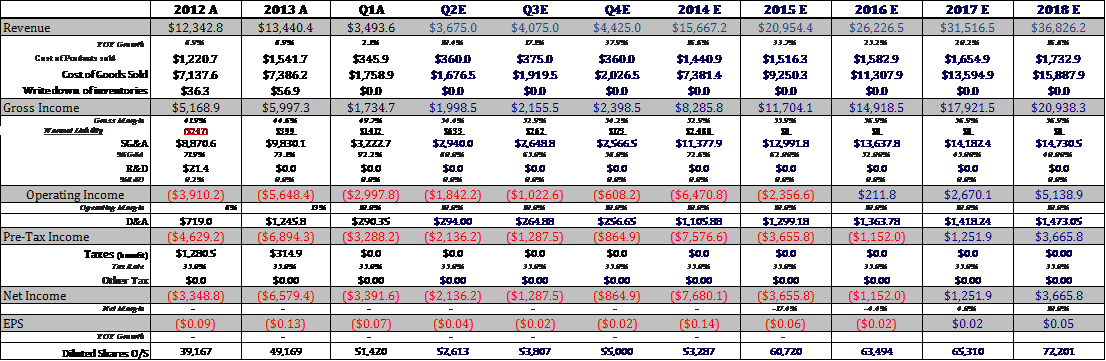
During 2013 Tribute had net sales of $13.4M of which $8.6M was from licensed domestic product sales, $3.4M from other domestic product sales and $1.3M from international product sales. Bezalip SR and Soriatane have been the primary revenue drivers in Tribute’s portfolio of licensed domestic products contributing more than 65% of total sales. Our model assumes that these two products continue to drive the bulk of revenue in Canada and (perhaps conservatively) estimate sales for these two drugs doubling by 2016. CAMBIA was introduced in 2013 as part of Tribute’s licensed domestic product portfolio and almost immediately exhibited rapid sales growth.
We expect this product to be a key source of revenue for Tribute in the coming years. Soon after the launch, uptake of CAMBIA in the Canadian market was quick and prescriptions written for CAMBIA went up by 36% from just under 1,200 in Q3 2013 to over 1,600 in Q4 2013. By the end of 2013, CAMBIA had gained more than 1% market share in Canada. CAMBIA is patent protected through 2026, providing Tribute with market exclusivity for another twelve years. Although CAMBIA cannot compete with generics on volume, we expect CAMBIA can capture approximately 5% market share by 2016 as the drug benefits from its market exclusivity and leverages advantages over other migraine medications. Other domestic product and international sales are primarily driven by Uracyst, NeoVisc and Collatamp G.
Uracyst and NeoVisc, with combined international sales of $1.2M as of December 31 2013, have provided the bulk of the revenues. While the sales pattern is unpredictable due to changes in the global economy, variations in regulatory approvals, and disease diagnosis, management believes that their international business is picking up which will help in their proprietary product sales overseas as they expand their business into new territories. We expect a modest growth rate for Uracyst and NeoVisc and model revenue from these two products to reach $2 million by 2017. We do not currently model revenues for Bezalip SR in the U.S. as regulatory approval has yet to be attained.
We will update our model to incorporate a contribution from sales of Bezalip SR in the U.S. if and when we feel it is appropriate - assumptions surrounding which will include the likelihood and timing of FDA approval.
For the year 2013 cost of goods sold (COGS) was about 65% of revenue for Bezalip and Soriatane and 30% for CAMBIA. COGS are inherently higher for in-licensed products as they include sales and distribution fees, tiered milestone payments and royalties. Sales and distribution fees for Bezalip SR and Soriatane are payable as a percentage of net sales up to a baseline revenue. Additionally, there are incremental fees for sales above this baseline amount. As a result, total COGS for Bezalip and Soriatane will be lower as sales increases (i.e. - gross margins will expand). We model COGS at 61% of net sales for Bezalip SR and Soriatane in 2014 with a gradual reduction as revenues increase over time.
Selling, general and administrative (SG&A) expenses increased by more than 10% in the last two years to roughly 73% of net sales in 2013. Management attributed this to the initial launch of their pipeline product, CAMBIA, including costs related to development of physician samples, training materials and slide kits for key opinion leaders (KOL). Since most of the costs associated with the promotion of CAMBIA have already been invested, we do not anticipate incremental operating expenses related to sales and marketing of the product. As such, we expect SG&A as a percentage of total net revenue to reduce over the next 5 years assuming no additional products are added to their portfolio.
The pharmaceutical industry is a regional market served by very few specialty pharmaceutical companies, such as Tribute. Management believes that Tribute has a competitive advantage within its chosen therapeutic areas over other Canadian companies or multi-national subsidiaries seeking to license or acquire products in Canada. Tribute has been strategic in acquiring licensed products that have high revenue potential in diverse markets. When paired with their operational efficiencies, we expect them to achieve positive cash flow in near term. Tribute is gaining traction as the company has adopted the route to rapidly and effectively target smaller market niches that have a need for specific drugs. Tribute also holds defendable patents for certain of its products. As Tribute continues to develop new partnerships and further expand its business in the U.S. and Canada, there is a possibility of seeing new pharmaceutical products being added to their portfolio.
Valuation:
TBUFF currently trades at $0.60/share, well below our calculated and targeted fair value. We utilized a risk-adjusted Net Present Value (NPV) analysis to determine our price target objective. Using a Discounted Cash Flow (DCF) analysis, we derive the total equity value of approximately $63.4 million, assuming 63.6 million fully-diluted shares outstanding and roughly $12.00 million in cash by end of 2016. Presently we do not consider sales of Bezalip SR in the U.S. as it does not have the regulatory approval to be commercialized in the near-term; however, we do acknowledge that it could contribute to revenue upon obtaining regulatory approval. We are initiating coverage of Tribute Pharmaceuticals Inc. with an Outperform rating and a $1.00 per share price target.
RISKS
Patent cliff: As branded drugs near patent expiration, the loss of drug exclusivity could significantly reduce Tribute’s revenue growth going forward. As such branded drugs compete against generic alternatives that are cheaper.
Customer Concentration: More than 50% of Tribute’s entire product sales are from three wholesale customers. The loss of any one of the customers due to economic downturns, changing market scenarios, or for any other reason could reduce order volumes resulting in decreased revenues.
Regulatory Approvals: Tribute is involved in the acquisition of pharmaceutical products that have yet to be approved by regulatory agencies in the respective territories they are marketed in. This is an extensive process that tends to be time-intensive in nature. The evolving regulatory compliance issues of local government agencies may cause further delays or non-approvals that could negatively impact Tribute’s business.
Reimbursement: The increase in use of premium-priced drugs (complexity of manufacturing, special storage and handling, patient-specific dosing, and mode of administration) has changed the reimbursement landscape considerably. Despite the global economic recovery, cost pressures can result in lower levels of reimbursement that might constrain the sales of specialty pharmaceutical products such as those offered by Tribute.
Generic Equivalents: Although the specialty-care drugs are difficult to replicate after patent expiration, they are quite often challenged by the generics industry. Generic companies are well-positioned to be the alternative healthcare solution, providing low-cost, reasonably high-quality drugs that could reduce Tribute’s market share.
PROJECTED FINANCIAL STATEMENT
MANAGEMENT TEAM
Rob Harris
President and CEO
Rob Harris has 35 years of pharmaceutical industry experience in both Canada and the United States in sales, marketing, business development and general management. Prior to co-founding Tribute Pharmaceuticals, Rob was the President & CEO of Legacy Pharmaceuticals Inc. Rob also has previous experience at Biovail Corporation where as VP of Business Development he was involved, led and successfully concluded numerous business development transactions, including the licensing of new chemical entities, the acquisition of mature products, the completion of co-promotion deals, distribution agreements, product development and reformulation transactions. Rob joined Biovail in 1997 as the GM of Biovail Pharmaceuticals Canada at a time when the company experienced rapid growth in the Canadian division. Before Biovail, Rob worked in various senior commercial management positions during his twenty-year tenure at Wyeth (Ayerst) and has been involved in numerous product launches during his career.
Scott Langille
Chief Financial Officer
Scott Langille has over 25 years of experience in the pharmaceutical industry in both Canada and the United States. Prior to Tribute Pharmaceuticals, Scott was Chief Financial Officer of Virexx Medical Corp, a biotechnology company located in Alberta listed on the American Stock Exchange and the Toronto Stock Exchange. Scott was responsible for strategic direction, business development initiatives, investor relations, corporate financing activities, and financial operations. Past financial experience includes Director, Corporate Finance at Biovail Corporation, Director of Finance at Biovail Pharmaceuticals Canada, Biovail's sales and marketing division in Canada as well as Vice President at Biovail Pharmaceuticals Inc., Biovail's sales and marketing division in the United States. Other prior management positions include Director Finance at AltiMed Pharmaceuticals Company and Controller at Zimmer Canada. Scott has a professional accounting designation and an MBA from the University of Toronto.
Dr. Bernard Chiasson
Chief Scientific Officer
Dr. Bernard Chiasson, Ph.D. has nearly two decades of experience in working with the pharmaceutical and biotechnology industry. He has held positions of increasing responsibility in R and D including drug discovery, medical affairs, business development and licensing, regulatory affairs and executive management. Bernie has successfully patented technologies in the area of neuroscience and has worked on several small molecules, biologics and biotechnology products at all stages of development including the final registration phase with Health Canada and the US FDA. He is a trained Neuroscientist and Pharmacologist. He has created development and commercialization strategies as well as franchise management approaches for various categories including Hematology, Oncology, Inflammation and Nephrology. He has obtained his industry training with Novartis, Draxis, Bayer, Amgen and OptumInsight. Most recently, Bernie was VP of US Strategic Regulatory Affairs and Global Medical Services at OptumInsight where he was responsible for a team of scientists and physicians supporting client drug development, safety and regulatory strategies and operations. Bernie received his University training at Dalhousie University and the University of Toronto.
Janice Clarke
V.P. Finance & Administration
Janice Clarke has over twenty years of office administration and financial management experience with proven abilities to implement and manage various financial systems and office procedures. Janice joined Stellar Pharmaceuticals Inc. in August 2000 and currently manages its administrative and financial processes.
Ann Hartshorn
V.P. Marketing
Ann has over 25 years of experience in the pharmaceutical industry with progressive positions spanning sales and marketing, new product launches, and life cycle management throughout various therapeutic areas with family practice and specialized medicine. Prior to joining Tribute Pharmaceuticals, Ann was a principal of a pharmaceutical consulting firm that assisted numerous international pharmaceutical companies in their life cycle management activities, including Astra Zeneca, Servier Pharma, and Pfizer. Prior to her consulting activities, Ann was Director, Hospital and Specialty Business Unit for Crystaal Corporation in which capacity she successfully launched several products in Canada. While at Crystaal, Ann also served as Director of Marketing and Director of New Product Planning. Ann also has previous marketing experience with Wyeth and Astra Zeneca. Born and educated in England, Ann graduated from the University of Reading and the Royal Berkshire Hospital as a State Registered Nurse and Midwife. After immigrating to Canada, she worked in the ICU, CCU and NICU at Ottawa Civic and Ottawa General Hospitals.
Murray Roach
VP Sales
Mr. Roach has 20 years of pharmaceutical sales and marketing experience in Canada, including Vice President, Sales and Marketing for Taro Pharmaceuticals in Canada. In this capacity Mr. Roach gained an extensive experience in the dermatology market nationally in all aspects of the business. Prior to Taro Pharmaceuticals, Mr. Roach spent 15 years at Wyeth Canada in several senior sales and marketing positions including Director of Sales, Pharmaceuticals, Director of Sales, Biopharmaceuticals and Product Manager for Effexor® (venlafaxine). Mr. Roach enjoyed many years of success at Wyeth Canada and won numerous sales and marketing awards during his career with Wyeth. He began his career with Wyeth as a sales representative in Saskatchewan and is a graduate of the University of Saskatchewan, College of Education.
David Butts
B.SC., V.P. International Business
David Butts V.P, International Business is a senior executive with over 25 years in the life sciences industry with progressive sales, marketing and clinical experience. He has a proven track record and success in the area of new business development and product licensing. A graduate from Carleton University, Ottawa, Mr. Butts has a good knowledge of the clinical development process and experience in many key pharmaceutical segments; urology, orthopedics, respiratory, allergy and cardiology.
Paul MacPherson
V.P. Manufacturing & Operations
Paul joined Tribute in May 2007, with 15 years of experience in process engineering and production within the pharmaceutical and biotech fields. He holds Bachelor's and Master's Degrees in Chemical Engineering from McMaster University.
Darrin Statchuk
Director of Quality & Regulatory Affairs
Darrin Statchuk, Director of Quality and Regulatory Affairs, joined the company in 2004. Mr. Statchuk has over 15 years of experience in the manufacturing sector specializing in Quality Management and Regulatory aspects for both large and small international companies. Darrin graduated from the University of Western Ontario, where he earned his Bachelor of Science in Chemistry.
Luigi Berardelli
Director Specialty Products
Luigi Berardelli, Director of Sales and Marketing for Tribute’s Specialty Care Group has over 20 years of experience in the pharmaceutical market in Canada. Past experience includes Business Unit Director for Synvisc/Surgical Devices at Genzyme (now Sanofi), Director of Sales at Biovail’s Canadian operations and Director of Sales at Rhone Poulenc Canada.
Jesse Ledger
Director of Business Development
Jesse Ledger, Director of Business Development has over 10 years of industry experience. Previous experience includes Director of Business Development for Sterimax Inc., where he was responsible for numerous licensing transactions and Manager of Business Development at Methapharm Inc. Jesse has an honours BBA from Trent University in Peterborough, Ontario.
READ THE LATEST FULL RESEARCH REPORT HERE