05/30/2014
By Grant Zeng, CFA
NASDAQ:THLD
Overview
Threshold Pharmaceuticals (NASDAQ:THLD) is a late development stage biopharmaceutical company focused on hypoxia targeted therapy for cancer.
Threshold’s key edge lies on its expertise in the tumor microenvironment. The Company is developing TH-302, a prodrug targeting tumor hypoxia, a common characteristic of the tumor microenvironment.
Hypoxia, or low oxygen concentration, is a common feature of the tumor microenvironment in most solid tumors and in the bone marrow of patients with some hematological malignancies. Tumor hypoxia is associated with the development of resistance to traditional anticancer treatments, including chemotherapy and radiotherapy, enhanced metastatic potential, and ultimately treatment failure. Normal healthy tissues, in contrast, are well oxygenated and typically are not hypoxic.
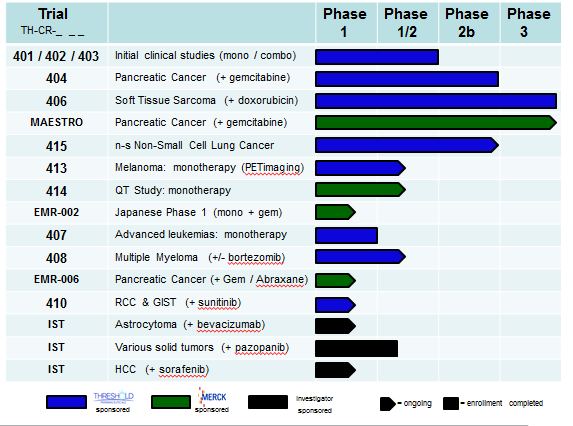
To explore this broad therapeutic potential of TH-302, Threshold is conducting multiple clinical trials to evaluate its safety and efficacy as monotherapy and in combination with currently marketed anticancer drugs, including traditional chemotherapeutic agents and antiangiogenic agents. Currently, TH-302 is being evaluated in two ongoing pivotal Phase III clinical trials and multiple earlier-stage clinical trials.
Threshold has a global license and co-development agreement for TH-302 with Merck KGaA, with an option to co-commercialize in the United States.
The second lead program is [18F]-HX4 [flortanidazole (18F)], which is an investigational radiolabeled hypoxia Positron Emission Tomography (PET) imaging agent. The Company initially intends to develop [18F]-HX4 to determine a patient’s tumor hypoxia profile, which may identify patients who will best respond to Threshold’s hypoxia-targeted therapeutics.
Tumor Hypoxia: An Emerging Target For Cancer Therapy
Tumor hypoxia is a common feature of the microenvironment of many solid tumors. Tumor hypoxia is a result of disordered vasculature found in all solid tumors. The network of blood vessels supplying solid tumors is known to be highly irregular and disordered, failing to deliver sufficient oxygen and nutrients to the rapidly dividing cancer cells, whereas normal healthy tissues are typically well oxygenated by virtue of having highly regular and structured arrays of blood vessels.
Many traditional anticancer agents are not able to penetrate these hypoxic zones. Furthermore, cells that reside within regions of tumor hypoxia are relatively quiescent in contrast to highly proliferative cells that are the hallmark of cancer. As many traditional cancer therapies work by blocking cell division, they are not effective in killing the non-dividing, quiescent cells within hypoxic zones. In addition, cells subjected to prolonged hypoxia are thought to accumulate the changes in their growth properties and genetic mutations that can lead to drug resistance, enhanced metastatic potential, and treatment failure,ultimately resulting in compromised clinical outcomes.
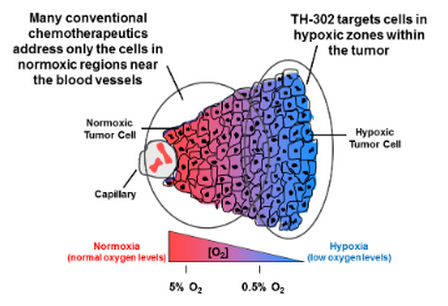
Given the essential role of hypoxia in tumor progression, metastasis, and resistance to radiotherapy and standard chemotherapy, and ultimately treatment failure, specific targeting of hypoxic tumor regions is emerging as a significant, high-priority target for effective and durable cancer therapy.
The Prodrug Platform
Threshold’s prodrug technology is a platform technology. A prodrug candidate typically has two distinct parts, a toxic portion (the chemotherapeutic toxin) and an attached trigger molecule. To prevent general toxicity, the trigger molecule masks the toxin until the prodrug is activated, for example, by the low oxygen concentration in the hypoxic zones of tumors. Once activated, the toxin kills cells in its vicinity. Threshold has designed prodrug candidates that are triggered only at the very low oxygen levels found in these hypoxic regions. A greater than 100-fold difference in cytotoxicity between cells in normal oxygen levels and hypoxic cells can be achieved.
The Company’s lead prodrug candidate is TH-302, a prodrug to be selectively activated under the extreme hypoxic conditions in cancer tissue. Within regions of tumor hypoxia, TH-302 releases bromo isophosphoramide mustard (Br-IPM), a potent DNA alkylating agent. Br-IPM kills tumor cells by forming DNA crosslinks, rendering cells unable to replicate their DNA and divide as well as interfering with the transcription of DNA to make essential proteins. Once activated in hypoxic tissues, Br-IPM can also diffuse into surrounding oxygenated regions of the tumor and kill cells there via a “bystander effect”. Because of its preferential activation in the targeted hypoxic regions of tumors, TH-302 may be less likely to produce broad systemic toxicity seen with untargeted cytotoxic chemotherapies.
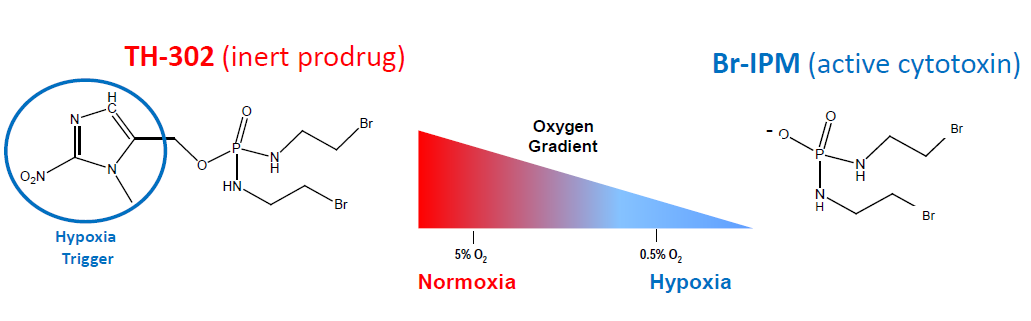
Preclinical and clinical data suggest that TH-302 has significant antitumor activity both alone as well as in combination with other cancer therapies that target the rapidly proliferating cells found in normally oxygenated regions of solid tumors.
The Deal with Merck KGaA, A Major De-risk Factor
In February 2012, Threshold entered into a global license and co-development agreement for TH-302 with Merck KGaA. Under the terms of the agreement, Merck KGaA received co-development rights, exclusive global commercialization rights and provided Threshold an option to co-commercialize TH-302 in the United States.
The deal is worth total of $550 million in terms of upfront and milestone payments. To date Threshold has received upfront and milestone payments of $110 million. The Company can earn additional potential milestone payments of up to $440 million, comprised of $100 million in development and regulatory milestones and $340 million in sales-based milestones.
In the United States, Threshold will have primary responsibility for development of TH-302 in the soft tissue sarcoma indication. Threshold and Merck KGaA will jointly develop TH-302 in all other cancer indications being pursued. Merck KGaA will pay 70% of worldwide development costs for TH-302.
Merck KGaA will be responsible for commercialization of TH-302 in the US with Threshold receiving a tiered, double-digit royalty on sales. Under the royalty-bearing portion of the agreement, Threshold retains the option to co-promote TH-302 in the United States. Additionally, Threshold retains the option to co-commercialize TH-302 allowing the company to participate in up to 50% of the profits in the United States based on certain revenue tiers. Outside of the United States, Merck KGaA will be solely responsible for the commercialization of TH-302 with Threshold receiving a tiered, double-digit royalty on sales in these territories.
We think the deal with German Merck serves as a major de-risk event for Threshold. The license agreement with Merck KGaA not only boosts Threshold’s balance sheet in a non-dilutive way, but more importantly validates the Company’s technology and clinical programs. With the agreement with Merck KGaA, all the clinical programs will be accelerated going forward.
TH-302 +Doxorubicin for Soft Tissue Sarcoma
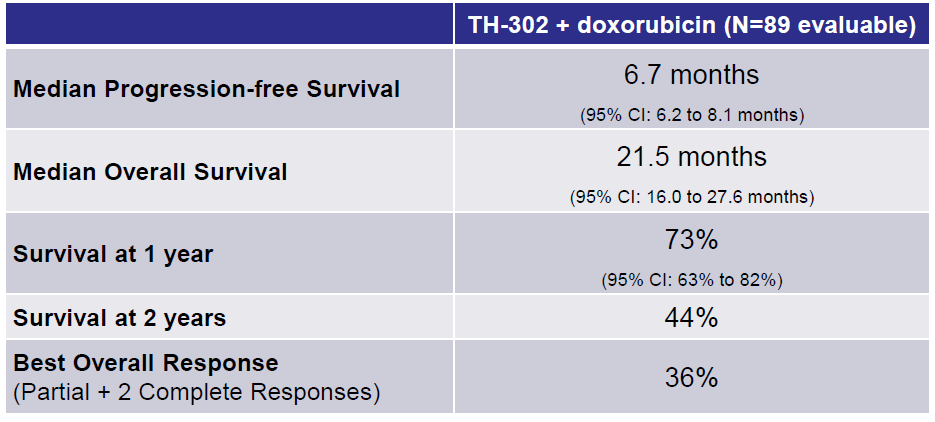
Threshold has completed a multi-center, dose-escalation Phase II trial (the TH-CR-403 trial) of TH-302 in patients with soft tissue sarcoma (STS). The TH-CR-403 trial was designed to determine the safety, efficacy and pharmacokinetics of TH-302 in combination with full-dose doxorubicin in patients with STS followed by TH-302 maintenance monotherapy for patients who had not progressed after six treatment cycles. A total of 91 patients with advanced STS previously untreated with chemotherapy were enrolled.
At the CTOS 2012 annual meeting (Connective Tissue Oncology Society), Threshold presented updated results from the TH-CR-403 trial.
The median progression free survival (PFS) on study 403 was 6.7 months. The median PFS after TH-302 maintenance was 3.7 months. The median overall survival (OS) on-study 403 was 21.5 months. The median OS after TH-302 maintenance was 18.0 months. The 12-month OS was 73% and the 24-month OS was 44%. Overall best response (partial and complete responses, unconfirmed) for all 91 patients was 36%.
In conclusion, treatment with TH-302 + doxorubicin is associated with longer time to progression or death, increased survival, and higher response rates versus historical treatment with doxorubicin alone. The combination of TH-302+doxorubicin (left panel) compares favorably with doxorubicin alone and with doxorubicin in combination with ifosfamide (right panel, Phase III, 455 patients).
TH-302 maintenance following induction of TH-302 combined with full dose doxorubicin in soft tissue sarcoma is tolerated with limited hematologic toxicity, manageable skin and mucosal toxicity, no additive renal, hepatic or cardiac adverse events and no cumulative toxicity.
Based on the positive Phase II study, Threshold initiated a pivotal TH-CR-406 trial in partnership with the Sarcoma Alliance for Research through Collaboration (SARC) in September 2011. CR-406 trial is an international, randomized, pivotal Phase III trial enrolling patients with metastatic or locally advanced unresectable soft tissue sarcoma (STS) who have not previously received chemotherapy outside the adjuvant or neoadjuvant setting. The trial is designed to evaluate the efficacy and safety of TH-302 in combination with doxorubicin, compared to doxorubicin alone. The study is under a Special Protocol Assessment (SPA) with the FDA.
The primary endpoint is overall survival; secondary endpoints include efficacy measured by progression-free survival, overall response rate, overall survival at 6 and 12 months, progression free rate at 3 months and progression-free rate at 6 months, duration of response, stable disease or better rate, change in Eastern Cooperative Oncology Group or ECOG and performance status, as well as assessments of safety and tolerability, pharmacokinetics and biomarkers. The FDA and the European Commission have granted TH-302 orphan drug designation for the treatment of soft tissue sarcoma.
In December 2013, Threshold completed the target enrollment of 620 patients. The enrollment achievement triggered a milestone payment of $12.5 million from Merck KGaA.
Though Threshold will remain blinded to the data from this Phase III trial, an Independent Data Monitoring Committee (IDMC) will conduct an interim efficacy and safety analysis after 235 deaths are reached. The Company’s current projections are that the number of events required to trigger the interim safety and efficacy analyses will be reached in mid-2014. Since the analyses themselves typically take anywhere from 6-12 weeks to complete, we are projecting the analysis should be completed mid-late third quarter of 2014. The primary efficacy analysis is currently projected to be reached in mid-2015 with top-line results expected thereafter.
We estimate Threshold will submit a new drug application (NDA) in late 2015 or early 2016. The FDA approval could be in late 2016 or early 2017.
Sarcomas are a group of aggressive cancers of connective tissues of the body. Currently, there are only limited treatment options for sarcomas. Soft tissue sarcomas are usually treated with surgery, chemotherapy and radiation or in combination of these modalities.
Doxorubicin and ifosfamide are the most commonly used chemotherapeutic agents in patients with advanced soft tissue sarcoma, but response rates are generally low and toxicity can be significant. Doxorubicin is the only approved front line therapy with an overall survival rate of approximately 8 months to 12 months, and an overall response rate of approximately 15% to 25%. The most serious toxicity for doxorubicin is the cumulative cardiotoxicity which usually limits the use of doxorubicin.
TH-302 +Gemcitabine for Pancreatic Cancer
Threshold completed a randomized, controlled Phase IIb clinical trial of TH-302 in combination with gemcitabine in patients with first-line pancreatic cancer (the 404 trial).
A total of 214 patients with previously untreated, locally advanced, unresectable or metastatic pancreatic adenocarcinoma were enrolled and treated. Patients were randomized equally into one of three cohorts: TH-302 at a dose of 240 mg/m2 plus gemcitabine (G+T240) or TH-302 at a dose of 340 mg/m2 plus gemcitabine (G+T340) or gemcitabine alone. If a patient’s cancer progressed while on gemcitabine alone, the patient could crossover and be randomized into one of the TH-302 plus gemcitabine cohorts. The primary efficacy endpoint of the trial was a comparison of progression-free survival between the two pooled combination arms and the gemcitabine alone arm. The secondary endpoints were overall response rate, overall survival, event-free survival, CA 19-9 (a serum biomarker) response rate as well as various safety parameters.
Results from the 404 trial showed a consistent dose effect in terms of improved progression-free survival, increased objective response rate, and decreased CA 19-9 levels in the G+T340 arm compared with the G+T240 and the gemcitabine-alone arms. There was a significant improvement (p=0.008) in progression-free survival associated with 41% reduction of risk for disease progression or death for patients treated with G+T340. This represented a 2.4-month increase in median progression-free survival for patients receiving G+T340 compared with gemcitabine alone. The 12-month overall survival rates were also in favor of the G+T340 treatment group compared with the control arm (38% vs. 26% (p=0.13)). Median overall survival for G, G+T240, and G+T340 was 6.9, 8.7, and 9.2 months, respectively; the differences between treatment groups were not significant, which may be at least partially explained by control arm patients with progressive disease crossing over to one of the G+T treatment arms. In other words, patients receiving gemcitabine alone who crossed over to receive gemcitabine plus TH-302 upon disease progression did contribute to the survival of the control arm. While not statistically significant, the improvement in median overall survival in the gemcitabine plus TH-302 treatment arms was consistent with the improvement in median progression-free survival.
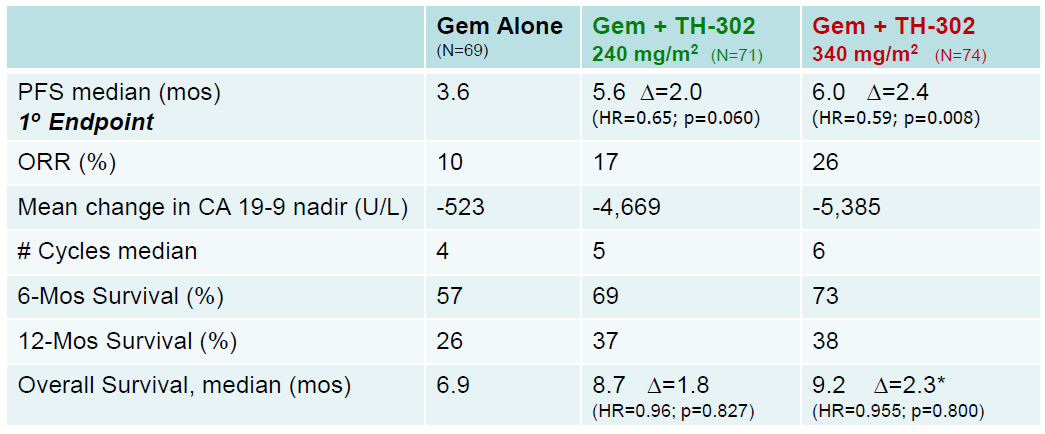
*crossover diminished the apparent survival benefit of TH-302
The most common adverse events were fatigue, nausea and peripheral edema, and were similar in frequency across treatment groups. There was no significant difference in the percentage of patients discontinuing treatment for adverse events across the three treatment arms.
Based on the positive Phase IIb study, in December 2012, Threshold partner Merck KGaA initiated the global pivotal Phase III MAESTRO clinical trial assessing the efficacy and safety of TH-302 in combination with gemcitabine in patients with previously untreated, locally advanced unresectable or metastatic pancreatic adenocarcinoma. MAESTRO stands for TH-302 in the treatment of MetastAtic or unrESectable pancreaTic adenocaRcinOma.
The MAESTRO trial is a randomized, placebo-controlled, international, multi-center, double-blind Phase III clinical trial of TH-302 plus gemcitabine compared with placebo plus gemcitabine and is expected to enroll 660 patients. The primary efficacy endpoint is overall survival; the secondary endpoints include efficacy measured by progression-free survival, overall response rate and disease control rate, as well as assessments of safety and tolerability, pharmacokinetics and biomarkers. The study is being conducted under an SPA with the FDA.
Enrollment in the trial is ongoing.
TH-302+Gemcitabine+Abraxane for Pancreatic Cancer
In January 2014, Merck KGaA initiated a Phase I trial to evaluate TH-302+Gemcitabine+Abraxane for the 1st line treatment of pancreatic cancer. This Phase I trial is an open-label, dose escalation trial. Primary endpoint is to determine maximum tolerated dose. Secondary endpoints include progression free survival, response rate, and duration of response.
This trial will enroll 48 subjects, and final data will be available in 2016.
According to the American Cancer Society, about 46,420 people will be diagnosed with pancreatic cancer and about 39,590 people will die of pancreatic cancer in the US in 2014. Pancreatic cancer is the twelfth most common cancer in the U.S. Pancreatic cancer has a low survival rate regardless of stage of disease, with approximately 95% of patients dying from their disease within 5 years.
Gemcitabine is the current standard of care for patients with pancreatic cancer with a median overall survival of approximately 6 months and an overall response rate of approximately 8%. The FDA recently approved two other therapeutic agents for the first-line treatment of patients with pancreatic cancer. Erlotinib (Tarceva) was approved for the first line treatment of pancreatic cancer in combination with gemcitabine with a median overall survival of 6.4 months and overall response rate of 8.6%. Abraxane (Nab-paclitaxel) was approved as first–line treatment for metastatic pancreatic cancer in combination with gemcitabine. Abraxane plus gemcitabine demonstrated a statistically significant improvement in median overall survival compared to gemcitabine alone (8.5 vs. 6.7 months).
TH-302 for Advanced Melanoma
In August 2013, Threshold initiated a Phase II clinical trial to evaluate the efficacy and safety of TH-302 in patients with melanoma. Threshold's partner Merck KGaA will fund 70% of development costs associated with this study.
The Phase II trial is a single-arm, multi-center study investigating the clinical efficacy and safety of TH-302 administered at 480 mg/m2 weekly on a 28-day cycle (three weeks on, one week off) in up to 40 patients with advanced melanoma. The primary endpoint is three-month progression-free survival. Secondary endpoints include response rate, duration of response, overall survival, safety and evaluation of potential imaging, serum, and tissue biomarkers that may be associated with tumor response and predict for efficacy and safety of TH-302 therapy.
In a previous Phase I trial, responses were observed in patients with advanced melanoma treated with TH-302. Out of 34 patients, seven patients (21%) achieved a partial response including patients with BRAF mutant and wild-type tumors, and 12 patients (35%) achieved stable disease yielding a clinical benefit rate of 56%. Median progression-free survival was 3.5 months.
Enrollment in the trial is ongoing.
TH-302 for Leukemia
In June 2010, Threshold initiated a Phase I (TH-CR-407) open label clinical trial of TH-302 designed to determine the maximum tolerated dose, dose limiting toxicity, safety, tolerability, clinical activity, and pharmacokinetics of TH-302 in patients with advanced leukemia.
The starting dose of TH-302 was 120 mg/m2 administered daily for 5 days of a 21-day cycle. At the highest dose investigated in this study (550 mg/m2), two patients developed dose limiting mucosal toxicity. The maximum tolerated daily dose of TH-302 was established at 460 mg/m2. Early results of this trial suggested activity of TH-302 monotherapy as evidenced by stabilization or reduction of bone marrow and peripheral blast counts in some patients. Thus, a second dosing regimen was evaluated in which TH-302 was administered as a continuous infusion over a 5-day period.
In December 2013, updated results were presented at the 55th Annual Meeting of the American Society of Hematology (ASH). A total of 49 patients with previously treated acute myeloid leukemia (AML, n=39), acute lymphoblastic leukemia (ALL, n=9) or chronic myeloid leukemia (CML, n=1) were treated with TH-302. In the first part of the trial, a total of 38 patients received 30-minute bolus administration of TH-302 at escalating doses of 120 – 550 mg/m2 (depending on the dose cohort) daily on days 1-5 of a 21-day cycle. In the second part of the trial, a total of 11 patients received TH-302 as a continuous infusion on days 1-5 of a 21-day cycle. Two of three patients treated with continuous infusion of TH-302 (460 mg/m2/day) experienced dose-limiting toxicities of Grade 3 mucositis or Grade 3 hyperbilirubinemia; continuous administration maximum-tolerated dose was established at 330 mg/m2/day.
Two AML patients who received 550 mg/m2 bolus TH-302 had complete resolution of leukemia cutis. One AML patient at 550 mg/m2 bolus TH-302 had a complete response with incomplete platelet recovery (CRp), and one AML patient at 440 mg/m2 bolus TH-302 had a complete response.
The responses observed in these very difficult to treat patients are consistent with the monotherapy activity that has been previously observed in a variety of solid tumors. Threshold has indicated that the potential for further evaluation of TH-302 in combination with other chemotherapies for the treatment of advanced leukemia will be assessed.
TH-302 for Multiple Myeloma
In March 2012, Threshold initiated a Phase I/II (the 408 trial) open label clinical trial of TH-302 to determine the maximum tolerated dose, dose limiting toxicity, safety, tolerability, clinical activity, and pharmacokinetics of TH-302 in patients with relapsed/refractory multiple myeloma.
The study has three parts:
· The first part is designed to establish the maximum tolerated dose of TH-302 in combination with dexamethasone;
· This MTD of TH-302 will be further evaluated in combination with dexamethasone in additional patients in the second part of the study;
· Lastly, the combination of TH-302 and dexamethasone with Velcade® (bortezomib, a proteasome inhibitor currently used to treat patients with multiple myeloma) will be investigated.
The dose of TH-302 administered in the dose escalation portion of the study was 240, 340, or 480 mg/m2 given on days 1, 4, 8, and 11 of a 21-day cycle, with 40 mg dexamethasone given on the same days as TH-302.
The first part of the Phase I/II trial has been completed. 14 patients received therapy. These patients were heavily pretreated having received 3 to 11 prior treatments (median of 6.5) and all having received a regimen containing bortezomib, an immunomodulatory agent lenalidomide and/or thalidomide, and an alkylating agent. Patients received one to 19 cycles (median of 4 cycles) of therapy with TH-302 and dexamethasone. The maximum tolerated dose was determined to be 340 mg/m2 TH-302. The most frequent Grade 3/4 side effects were thrombocytopenia, leukopenia, anemia, and neutropenia.
Thirteen patients were evaluable for response. Two patients achieved a partial response and 3 patients achieved a minimal response, with the combination of the 2 types of responses comprising a clinical benefit rate of 38 percent. Seven patients had stable disease and one patient had progressive disease. Two patients, one with a partial response and one with stable disease, remained on the study for more than one year (13 to 15 months) before discontinuing.
The clinical benefit rate from TH-302 in combination with low dexamethasone for multiple myeloma is comparable to early data as listed below from two of the most recently approved agents for advanced multiple myeloma, i.e., pomalidomide and carfilzomib.
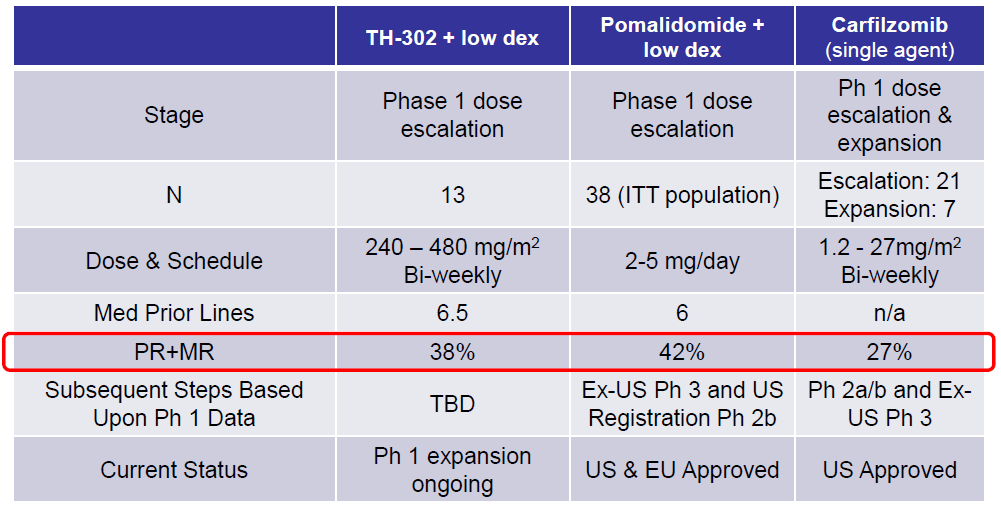 Threshold is currently enrolling patients into the second part of the trial in an effort to better characterize the efficacy and safety of TH-302 at 340 mg/m2 in combination with dexamethasone. The Company expects to complete enrollment of 15 patients around the middle of 2014.
The Company expects to initiate the third part of the trial to investigate the combination of TH-302 and bortezomib by year-end 2014.
There are few treatment options for patients with advanced multiple myeloma that stop responding to bortezomib and lenalidomide, and responses to subsequent salvage therapy have historically been extremely low. The preliminary results suggest that the combination of TH-302 with dexamethasone is active in some heavily pretreated patients who have failed conventional therapy.
TH-302 + Sunitinib for RCC, GIST, and PNET
Threshold is conducting a Phase I trial (the 410 trial) evaluating standard full dose sunitinib (50 mg) administered daily (Days 1 – 28 of a 6-week cycle) with TH-302 (240 mg/m2 to 480 mg/m2) administered on days 8, 15 and 22.
In 2013, preliminary data from the 410 trial were published online in the ASCO 2013 Annual Meeting Proceedings, and updated preliminary results from 12 patients were reported at the 2013 AACR-NCI-EORTC International Conference on Molecular Targets and Cancer Therapeutics. As reported at AACR-NCI-EORTC, no dose-limiting toxicities were observed in the 4 patients treated in the initial cohort at 240 mg/m2. One of 6 evaluable patients treated at 340 mg/m2 had a dose-limiting toxicity of Grade 3 stomatitis. Grade 3 thrombocytopenia and neutropenia were reported in 3 (25%) and 4 (33%) patients, respectively; Grade 4 neutropenia was reported in one patient (8%). Fatigue, nausea, and vomiting were the most common nonhematologic adverse events occurring in 83%, 75%, and 67% of patients, respectively. All cases were grade 1 or 2 except for one report of grade 3 nausea.
Partial responses were achieved by one of four (25%) evaluable GIST patients (confirmed) and three of eight (37.5%) evaluable RCC patients (one confirmed). All four patients with partial responses had received prior sunitinib.
Threshold expects to complete enrollment of additional patients at 480 mg/m2 in 2H14 to determine the maximum tolerated dose of TH-302 in combination with sunitinib. Plans for further investigation of this combination will be assessed.
TH-302 + Avastin for Glioblastoma
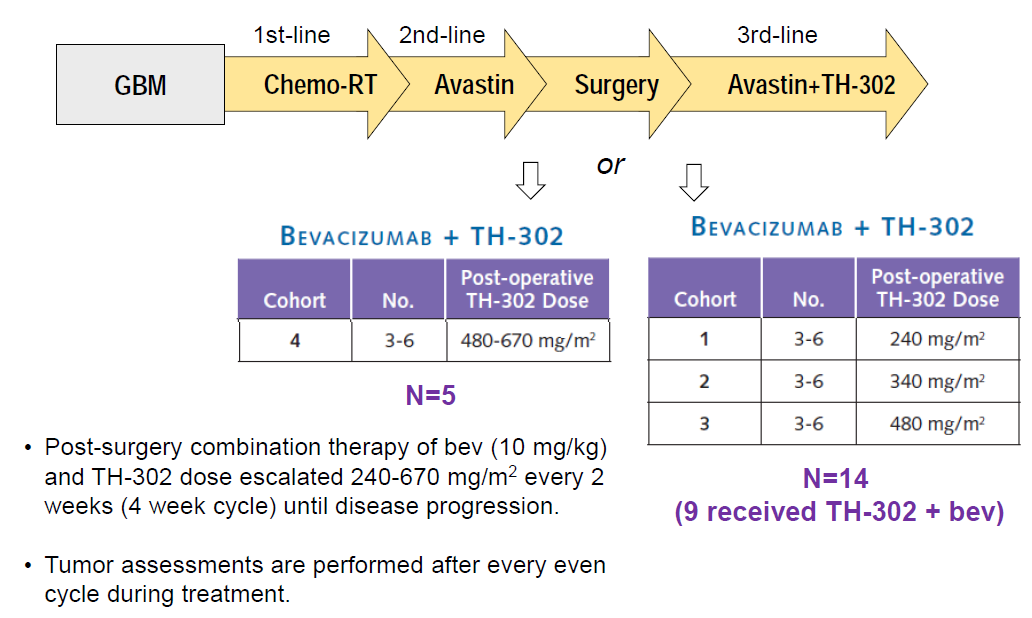
An investigator-sponsored Phase I/II trial (the 4003 trial) to evaluate TH-302 in combination with Avastin® (bevacizumab) in patients with recurrent glioblastoma following bevacizumab failure is ongoing.
Glioblastoma multiforme (GBM), also called glioblastoma, is the most common and most aggressive type of primary brain tumor and accounts for approximately 50% to 60% of all primary brain tumors. It is estimated that 23,130 people were diagnosed with and 14,080 people died of cancer of the brain and other nervous system in 2013 in the US.
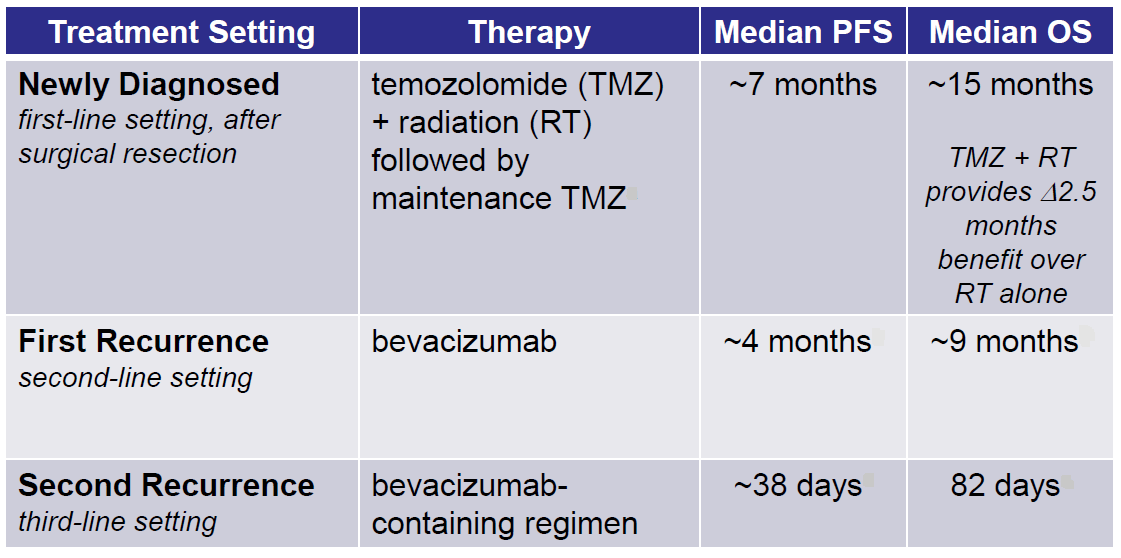
Glioblastomas are among the most aggressively malignant human neoplasms. The median survival time from the time of diagnosis without any treatment is usually less than 1 year. Despite multimodality treatment, median survival is about 14.6 months. The overall 5-year survival is less than 10% with the standard of care today.
Chemotherapy (temozolomide) with radiotherapy (RT) is standard care for newly diagnosed glioblastoma. Avastin (bevacizumab, Roche) is approved in the U.S. for progressive disease following prior therapy. After disease progression on bevacizumab, patients may start a subsequent bevacizumab-containing regimen. These patients typically progress in 5 to 8 weeks.
Preliminary results from the 4003 trial demonstrated that no dose-limiting toxicity had been reported at doses of TH-302 up to 670 mg/m2 plus bevacizumab at 10 mg/kg every two weeks.
Preliminary data in 14 patients showed one patient achieved a complete response and two patients achieved partial responses.
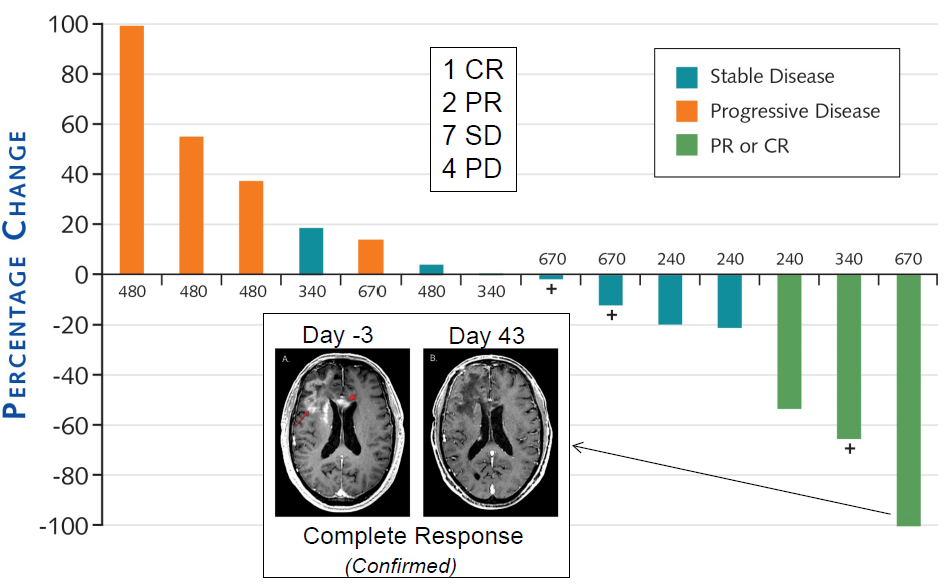
Patients continue to be enrolled in the 670 mg/m2 TH-302 cohort.
TH-302 in Combination with Pazopanib for Advanced Solid Tumors
An investigator-sponsored Phase I trial (the 4001 trial) has been completed, evaluating TH-302 in combination with pazopanib in patients with advanced solid tumors.
Results were reported at the 2013 AACR-NCI-EORTC annual meeting for the 30 patients enrolled with a variety of solid tumors for whom standard therapy or palliative measures were nonexistent or no longer effective. The clinical benefit rate was 76% (n=25 evaluable patients) with three patients with partial responses (12%) and 16 patients with stable disease (64%). The partial responses were observed in patients with neuroendocrine cancer, ovarian cancer, and chondrosarcoma. Treatment-related grade 3 hematological adverse events were reported for neutropenia (7%), thrombocytopenia (7%), and anemia (13%). Treatment-related, grade 2 nonhematologic adverse events included vomiting/nausea/diarrhea (7% grade 3), mucositis (7% grade 3), hand foot syndrome (all grade 2), and hypertension (all grade 2). No grade 4 adverse events have been reported.
Threshold is assessing plans for further investigation of TH-302 in combination with Pazopanib.
TH-302 in Combination with Sorafenib for RCC and HCC
This is an investigator-sponsored Phase I/II clinical trial to evaluate sorafenib + TH-302 in advanced renal cell carcinoma (RCC) and advanced hepatocellular carcinoma (HCC).
Primary endpoints include number of dose-limiting toxicity incidents, MTD of sorafenib + TH-302, and overall response rate.
The trial started in May 2012, and is ongoing. Total of 48 subjects will be enrolled in this study. We estimate final data to be presented later this year.
[18F]-HX4: A PET Imaging Agent for Hypoxia
Threshold acquired [18F]-HX4 [flortanidazole (18F)] from Siemens Healthcare in March 2013.
[18F]-HX4 is an investigational Positron Emission Tomography (PET) imaging agent for hypoxia developed by Siemens Healthcare Molecular Imaging to potentially identify and quantify the degree of hypoxia in tumors in vivo.
[18F]-HX4 contains a short-lived radioisotope, 18F, which can be detected in a PET scanner. PET imaging is used to help physicians diagnose and treat cancer and is routinely performed in cancer treatment centers globally. [18F]-HX4 has a 2-nitroimidazole “trigger” that is designed to be activated under the extreme hypoxic conditions generally found in tumors but not typically in normal healthy tissue, therefore it will accumulate more in these hypoxic regions.
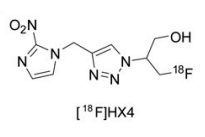 Clinical data from Siemens Healthcare have demonstrated the potential of [18F]-HX4 to quantify the degree of hypoxia within different tumors. Threshold initially intends to develop [18F]-HX4 to determine a patient’s tumor hypoxia profile, which may identify patients who will best respond to Threshold’s hypoxia-targeted therapeutics.
[18F]-HX4 is currently being incorporated into some of the Company’s ongoing trials with TH-302. Ultimately, the goal is to get [18F]-HX4 approved as a companion diagnostic for hypoxia-targeted drugs.
TH-302 Advantages and Market Opportunities
Anti-hypoxia is an emerging cancer therapy and represents a new approach to targeted therapy. Threshold is a key player in this promising new treatment approach.
Many different approaches are used in treating cancer, including surgery, radiation, chemotherapy, targeted therapy and immunotherapy or a combination of these approaches. But most currently used cancer therapies are focused on killing cancer cells that exhibit rapid division and growth. Such cells are found in regions of the tumor that have an adequate blood supply and therefore receive nutrients and oxygen essential for cell division and growth. However, the vasculature supporting tumors is highly disorganized and irregular. This results in regions of the tumor that do not receive adequate amounts of nutrients and oxygen (hypoxic zones).
As we discussed earlier, many traditional anticancer agents are not able to penetrate into the hypoxic zones of tumors or they are not effective on non-dividing hypoxic tumor cells. Moreover, tumor cells in hypoxic regions can develop genetic mutations that lead to drug resistance, enhanced metastatic potential, and, ultimately, treatment failure.
Another disadvantage of current cancer therapies that target rapidly dividing cells is their toxic side effects. Because rapidly dividing cells are also found in many healthy tissues, particularly the gastrointestinal tract, bone marrow and hair follicles, nearly all conventional chemotherapy drugs cause severe side effects.
Threshold’s TH-302 is specifically designed to target cancer hypoxia. Because of its preferential activation in the targeted hypoxic regions of solid tumors, TH-302 may be less likely to produce broad systemic toxicity seen with untargeted cytotoxic chemotherapies.
Threshold has generated clinical data with TH-302 both alone and in combination with multiple anticancer drugs in multiple cancer types. Two classes of cancer therapeutics have been, or are being tested in combination with TH-302: chemotherapeutics and antiangiogenics. The current total market addressed by chemotherapy and antiangiogenics exceeds $10 billion.
TH-302 is in different stages of development for a variety of cancer indications, including late stage development for soft tissue sarcoma and pancreatic cancer. Other cancer indications include lung cancer, melanoma, glioblastoma, kidney cancer, liver cancer, gastrointestinal stromal tumors, multiple myeloma, and leukemia.
We think TH-302 has a blockbuster potential for Threshold considering its broad anticancer activity and favorable safety profile.
New Prodrugs Provides Sustainable Growth
In addition to TH-302, Threshold is also developing new prodrugs for targeted cancer therapy.
Through the study of TH-302, either alone or in combination, Threshold has better understood the mechanism of action of anti-hypoxic therapy for cancers. Based on this experience and its expertise in selectively designing cancer microenvironment based prodrugs, Threshold is developing new prodrug agents targeting other aspects of tumor microenvironment.
Current focus is on tumor microenvironment induced enzyme expression. The Company has identified two lead compounds of new prodrugs: TH-2953 and TH-2870. In addition to promising in vitro anti-cancer activities, both drug candidates have demonstrated significant in vivo anti-cancer efficacy. In a non-small cell lung cancer xenograft mouse model below, TH-2870 and TH-2953 showed significant anti-tumor efficacy.
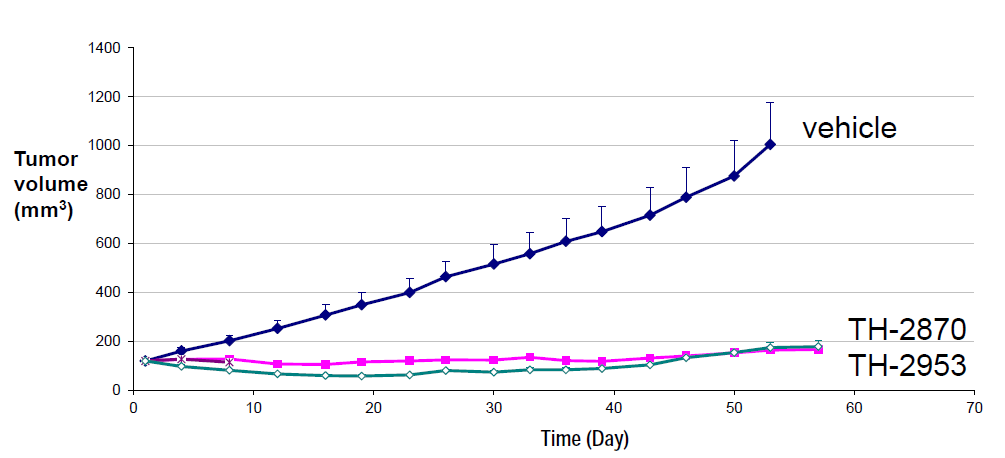
Additional preclinical study is underway.
We think the development of new candidates will provide the Company long term growth beyond TH-302.
Strong Balance Sheet
As of March 31, 2014, Threshold had $86.4 million in cash, cash equivalents and marketable securities.
Threshold has a collaboration agreement with Merck KGaA worth total of $550 million in terms of upfront and milestone payments. To date Threshold has received upfront and milestone payments of $110 million. The Company can earn additional potential milestone payments of up to $440 million, comprised of $100 million in development and regulatory milestones and $340 million in sales-based milestones.
We welcome this non-dilutive financing which benefits all of its shareholders. We estimate current cash balance combined with the potential payment from Merck KGaA could last into 2016 when the Company’s TH-302 could be approved for soft tissue sarcoma.
Valuation Is Attractive
We are initiating coverage of Threshold (THLD) with an Outperform rating. Our 12-month price target is $9.50. Our call is based on the Company’s strong fundamentals.
Threshold is a late development stage biopharmaceutical company focused on developing and commercializing hypoxia based therapeutics for cancer treatment based on its prodrug platform technology.
The Company’s lead drug candidate is TH-302, a prodrug which can be taken by cancer cells and released in the microenvironment of tumor hypoxia. Th-302 is in a series of clinical trials targeting a variety of cancer indications either alone or in combination with other cancer therapeutics. The most advanced are two ongoing Phase III clinical trials for soft tissue sarcoma and for pancreatic cancer, respectively.
The Phase III trial of TH-302 in combination of doxorubicin has completed the target enrollment of 620 patients with advanced soft tissue sarcoma. An interim efficacy and safety analysis is currently projected to be conducted after the required number of events are reached in mid-2014. Since the analyses themselves typically take anywhere from 6-12 weeks to complete, we are projecting the analysis should be completed mid-late third quarter of 2014. The number of events required to trigger the primary efficacy analysis is projected to occur in mid-2015. We estimate TH-302 could be approved by the FDA in late 2016 or early 2017.
The Phase III trial of TH-302 in combination with gemcitabine in pancreatic cancer patients is ongoing.
In addition to the two Phase III trials, Th-302 is in more than 10 Phase I/II clinical trials targeting different cancer indications.
Threshold has a collaboration agreement with Merck KGaA to co-develop TH-302 worth total of $550 million in terms of upfront and milestone payments. This agreement is a major de-risk factor for Threshold in our view. This non-dilutive financing not only boosts Threshold’s balance sheet, but more importantly validates its technology and clinical programs.
In addition to TH-302, Threshold is also developing second generation candidates for tumor microenvironment targeted therapy for cancers. These early stage candidates provide sustainable growth for the Company.
In terms of valuation, we think Threshold shares are undervalued at current market price. Currently, Threshold shares are trading at about $3.60 per share, which values Threshold at $212 million in terms of market cap based on 59 million outstanding shares. We think this is a discount compared to its peers. Threshold is a late development stage company with its lead candidate TH-302 to be approved in as early as in late 2016. According to our financial model, we estimate Threshold will become profitable in fiscal 2018 with EPS of $0.27 based on $110 million in revenue. Revenue will grow to $170 million in 2019 with an EPS of $0.83. We think it’s appropriate to use 35 x P/E multiple to valuate Threshold. If we use 35 x P/E ratio and EPS of $0.83 for 2019, discounted at 25% for 5 years, we come up with our price target of $9.50 per share. Our price target values Threshold at $560 million in market cap which we think is appropriate.
But keep in mind the risks associated with our price target. We assume that TH-302 will be approved by the FDA in late 2016 or early 2017. There are still some clinical and regulatory hurdles to overcome by Threshold. If TH-302 fails to be approved or is delayed for approval by the FDA, the share price could drop dramatically.
Even if TH-302 is approved by the FDA, there is still commercialization risk for Threshold since the Company has no experience in product commercialization.
Another risk we would like to remind investors is that the broad market fluctuation also has impact on the Company’s share price. But overall we think Threshold is a risk/award opportunity for investors with a long term investment horizon.
READ THE LATEST FULL RESEARCH REPORT HERE
SUBSCRIBE TO ZACKS SMALL CAP RESEARCH to receive our articles and reports emailed directly to you each morning.
Please visit our website for additional information on Zacks SCR and to view our disclaimer.
Multimedia Files:
Categories:
Press Releases