By David Bautz, PhD
OTC:MTNB
In September 2015, Matinas BioPharma Holdings, Inc. (OTC:MTNB) presented preclinical data for both MAT2203 and MAT2501 at the ICAAC/ICC scientific meeting. Both compounds utilize the company’s lipid-crystal, nano-particle technology, which is designed to allow the safe delivery of toxic compounds, to increase their oral bioavailability, and to increase their efficacy. Below we give an overview of the company’s technology along with the recently presented data and market potential for both compounds.
Background on Nano-particle Drug Delivery
Matinas is developing a novel drug delivery technology that was acquired from Aquarius Biotechnologies in January 2015. The purpose of the technology is to allow the safe oral administration of drugs that are seldom used due to their toxic side effect profiles. The drug delivery platform is centered on the use of cochleates, which are stable, crystalline phospholipid-cation delivery vehicles that are composed of soybean phosphatidylserine (PS) and calcium. The compounds have a unique multilayered structure and no internal aqueous space. “Encochleated” molecules within the interior of the cochleate structure remain intact resulting in an increase of oral bioavailability, lower toxicity, and the opportunity for intracellular targeting. As the following figure shows, cochleates are produced from a large, continuous, solid, lipid bilayer sheet rolled up in a spiral or as stacked sheets, with no internal aqueous space.
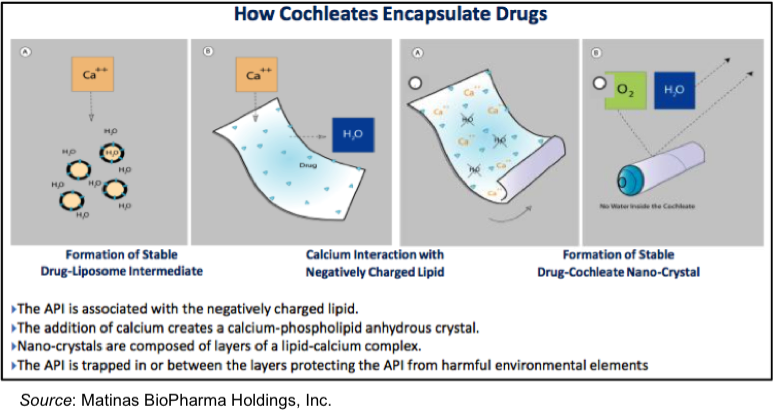
The technology has a number of unique attributes, including:
- The unique structure of the cochleate means that the compounds inside are protected even though the outer layers of a cochleate may be exposed to harsh environmental conditions or enzymes (i.e., the digestive tract)
- The technology allows for targeted delivery to the site of infection, as the cochleates are taken up by macrophages, which then travel to the site of infection and release the drug cargo
- Toxic drugs are sequestered until transported to the site of infection, thus decreasing their side effects
- Cochleates themselves appear to have a nontoxic profile
Theoretically, the technology could be utilized to develop an orally bioavailable formulation of any number of different types of compounds, however Matinas is initially focusing on using the technology to improve the safety and oral bioavailability of antimicrobial compounds that are seldom utilized due to their toxic side effect profiles.
MAT2203: The most advanced product in Matinas’ pipeline is a lipid-crystal nano-particle formulation of Amphotericin B (CAmB). Amphotericin B (AmB), the gold standard for systemic antifungal drugs, is one example of a well-established, highly efficacious systemic antifungal drug that has a 50-year history of intravenous (IV) therapy. Importantly, no evidence of resistance has been noted during this time. The drug is highly potent and has utility as an anti-parasitic agent as well. Intravenous formulations such as AmBisome® and Fungizone® remain among the most effective agents in the treatment of life-threatening systemic fungal infections.
No oral formulations of AmB are currently commercially available. Although some patients are able to tolerate the IV injection, many experience localized and systemic side effects associated with IV administration of the drug. For example, the Side Effect & Drug Interactions section of the AmBisome® prescribing information includes warnings on renal impairment, hepatic impairment, febrile reactions, fever accompanied by shaking chilies, normochromic and normocytic anemia, musculoskeletal pain, anaphylactic reactions, dermatologic reactions, neurologic reactions, including convulsions, tinnitus, and vertigo, hematological reactions, and injection site reactions. Some of these side effects can be eliminated or reduced, specifically the injection site reactions and potentially the hematological, hepatic, and renal impairments, by oral administration. Sales of the perceived “least toxic” formulation of AmB, AmBisome®, were approximately $500 million worldwide in 2014 (EvaluatePharma).
MAT2501: This is a lipid-crystal nano-particle formulation of Amikacin that is currently in preclinical development. Amikacin is an aminoglycoside antibiotic most commonly used to treat severe, hospital-acquired infections, including Gram-negative infections. It is typically used as a last resort medication against multi-drug resistant bacteria. The drug is administered either IV, intramuscularly, or through a nebulizer. All aminoglycosides carry the potential risk of nephrotoxicity, with the risk being greatest in those with impaired renal function. A reduction in dosage is usually necessary if evidence of renal dysfunction occurs. In addition, treatment with aminoglycosides can cause neurotoxicity in the form of hearing loss, numbness, skin tingling, muscle twitching, and convulsions. For these reason, an aminoglycoside formulation that would reduce the potential for this toxicity and allow for oral dosing is clearly warranted.
Encochleated AmB is Rapidly Targeted to Infected Tissues in Mice with Invasive Candidiasis
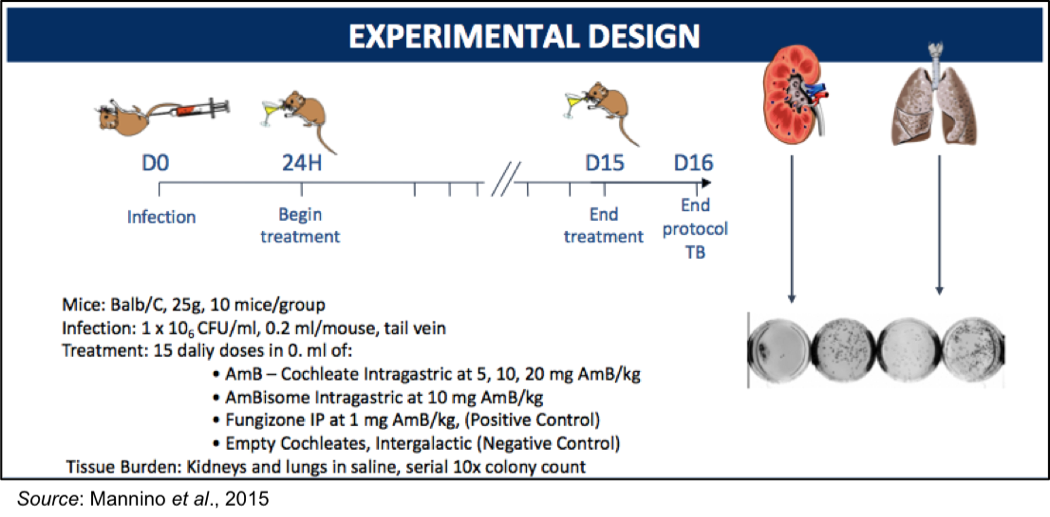
To test the efficacy of encochleated AmB (MAT2203), Matinas researchers infected mice with Candida albicans and then treated the mice with control, AmB, or CAmB once daily for 14 days. Concentrations of drug and C. albicans were evaluated in lung and kidney along with overall survival. The experimental design is shown below.
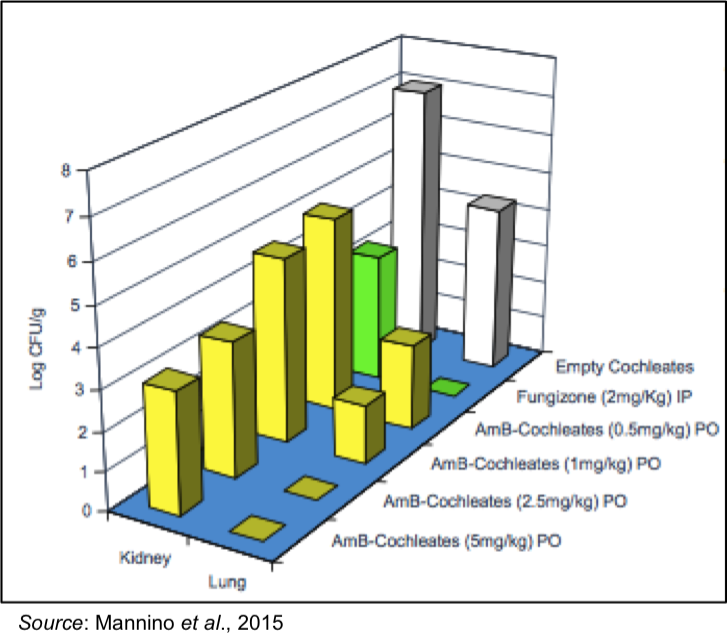
In the lung, low dose oral CAmB resulted in a 2-log reduction in microbial burden, while high dose CAmB sterilized the lung (no microbes were recovered) and reduced the bacterial burden in the kidneys by 4 logs. Fungizone (2 mg/kg) was used as a positive control, and 2.5 mg/kg CAmB had the same efficacy as Fungizone.
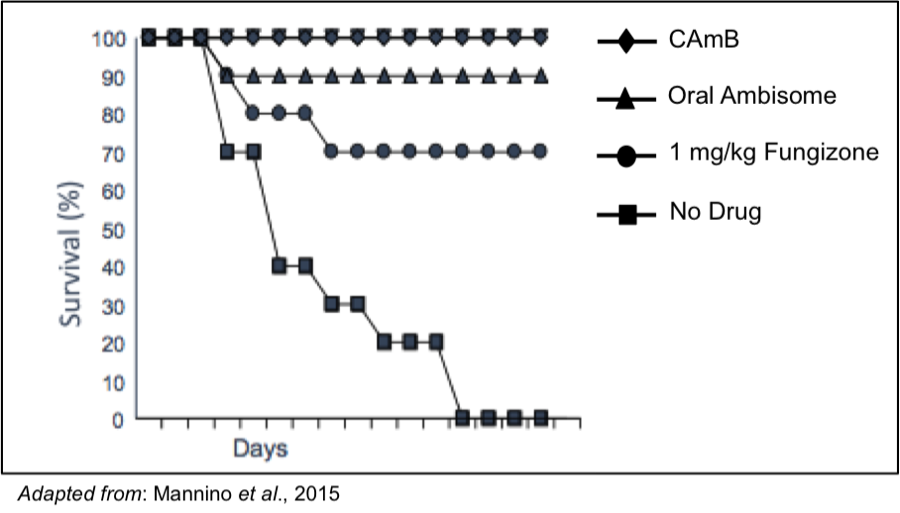
Overall survival was assessed for mice treated with no drug, oral ambisome (LAMB), Fungizone (1 mg/kg and 2 mg/kg), and CAmB (0.5, 2.5, 5.0, 10, and 20 mg/kg). All mice without treatment died by 12. Oral ambisome resulted in a 90% survival rate, Fungizone at 1 mg/kg resulted in a 70% survival rate, Fungizone at 2 mg/kg resulted in a 100% survival rate, while all doses of CAmB resulted in a 100% survival rate.
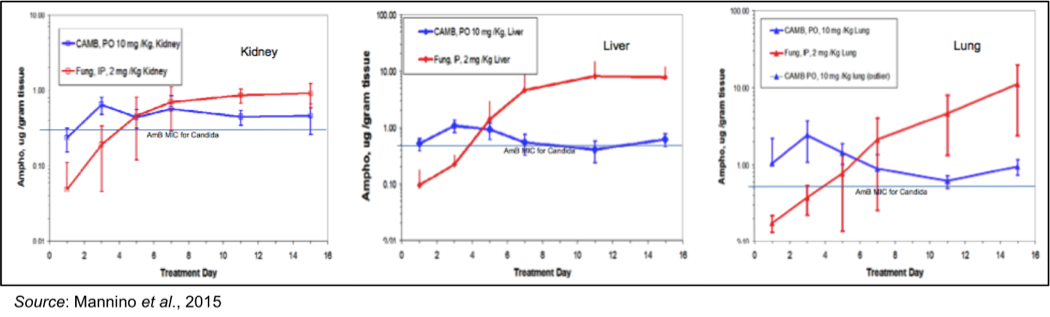
Lastly, the researchers quantified how much drug was found in the liver, lungs, and kidney beginning one day after treatment commenced and continuing through the end of the 15-day study. Interestingly, the amount of CAmB found in all three tissues was much higher at the beginning of the study (Days 1-3), but then tapered off and reached a steady state, while the level of Fungizone started low, but then steadily increased throughout the study. What this indicates is that the encochleated formulation results in rapid delivery of drug product to the sites of infection, but then as the infection is cleared, less drug is delivered to the tissues. The encochleated formulation works as its own feedback inhibitor, thus preventing the accumulation of drug, which could lead to a decrease in toxicity. The standard formulation of amphotericin B (Fungizone) continues to accumulate in the tissues with continued dosing, thus leading to the potential for harmful side effects in those tissues. It should be noted that the following graphs use a log scale on the Y-axis.
The previous graph is further corroborated by data obtained comparing the distribution of CAmB in healthy animals versus infected animals. The following chart shows that in healthy animals there is drug found in the plasma and urine along with in the lung, liver, and kidney. However, in infected mice, there is no drug found in the urine (ND = not detected), almost no drug found in the plasma (BLQ = below limit of quantitation), and a much higher concentration of drug found in the infected tissues compared to the healthy animals. Matinas’ technology is quite fascinating in that it results in the targeted delivery of drug where it is needed most in the body!
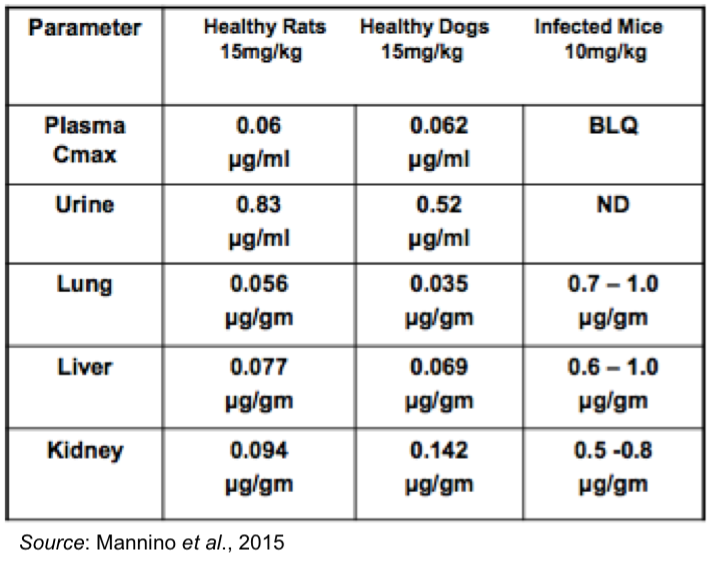
The main conclusion to be drawn from the studies presented on CAmB is that by using the lipid-crystal nano-particle formulation it is possible to change the pharmacokinetics, biodistribution, and tolerability of a drug substance. This results in the rapid accumulation of drug where it is needed most (infected tissues) without the accumulation of the drug to toxic levels inside the tissue. We are highly impressed with the preclinical data shown thus far for CAmB and are looking forward to reviewing data from human testing to determine if the same characteristics of the technology are maintained in patients.
Encochleated Amakacin Demonstrated In Vitro and In Vivo Activity Against Mycobacterium Avium
Mycobacterium avium causes disease in immunocompromised patients as well as lung infections in patients with chronic lung disease. The lung infections are particularly resistant to standard antibiotic treatment due to the formation of biofilms. Amikacin is an effective treatment for M. avium infections, however its use is limited due to the requirement for intravenous administration as well as the potential for severe nephrotoxicity. Matinas tested whether an encochleated formulation of amikacin (MAT2501) would be effective against an in vitro biofilm model and in vivo models of M. avium infection.
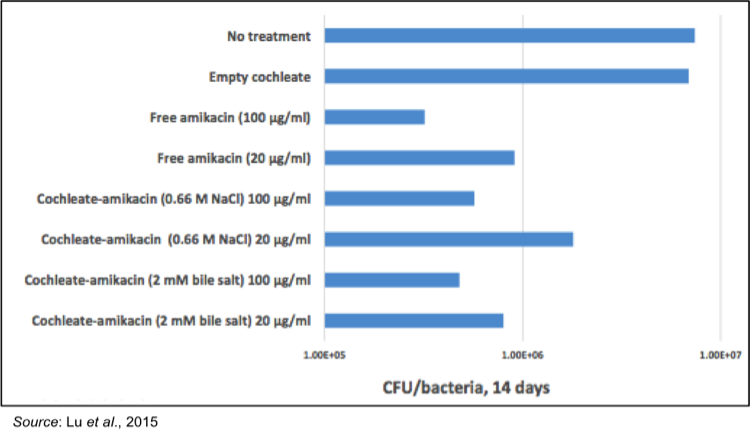
For the biofilm studies, A549 alveolar epithelial cells were seeded with M. avium bacteria and seven days was allowed for biofilm formation. Following treatment, the biofilm and epithelial cells were lysed and plated onto growth media to allow for bacterial cell counts. The results show that empty cochleate had no activity against M. avium infection, however both preparations of cochleate-amikacin (sodium and bile salt) were as effective as free amikacin.
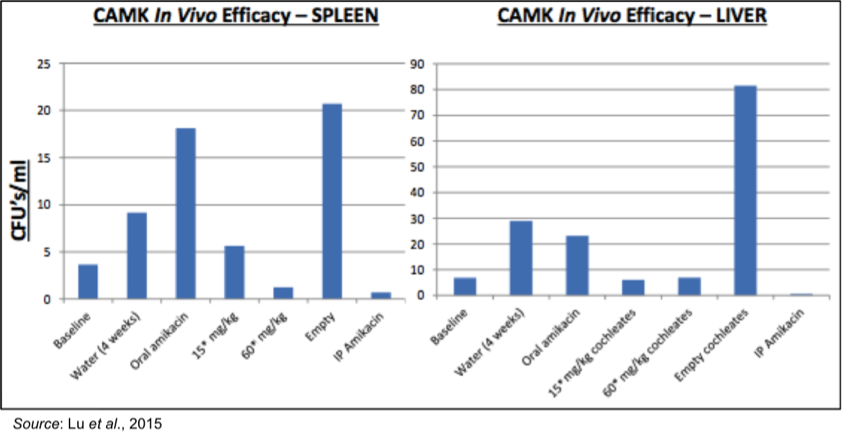
To test the ability of cochleate-amikacin (cAK) to treat a disseminated M. avium infection, mice were infected with M. avium intravenously one week prior to initiation of treatment with cAK, oral amikacin, empty cochleate, and amikacin delivered intraperitoneally (IP). A small number of mice were harvested one week after being infected to determine a baseline bacterial load. Following four weeks of daily treatment, livers and spleens from the mice were harvested and the bacterial load was quantified. Results showed that the higher dosage of cAK returned the bacterial loads to below baseline and was nearly as effective as IP amikacin, while orally administered amikacin showed little to no efficacy.
Very similar results were seen with mice in a lung infection model with M. avium subsp hominissuis. Following infection, baseline bacterial loads were determined after seven days in a group of mice and then once daily treatment was initiated for four weeks. Results showed that cAK was just as effective as IP amikacin at reducing bacterial loads with no toxicity observed for the cAK treated mice.
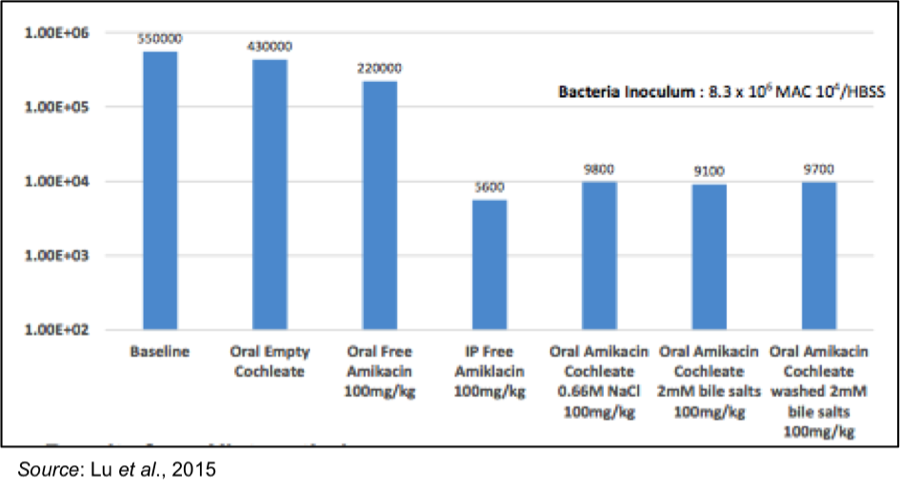
The conclusions from the studies with cAK are very similar to the ones from the studies with CAmB in that encochleated formulations of both amphotericin B and amikacin display similar antimicrobial activity to the non-encochleated formulations of the drug while minimizing toxicity. These properties would prove to be very valuable should these results hold up in clinical trials.
Huge Potential for MAT2203
Amphotericin B has activity against a broad spectrum of invasive fungi, and thus it was the standard of care for many systemic fungal infections. The drug is fungicidal, which means it kills the invading fungal infection, as opposed to azoles like fluconazole or voriconazole that are fungistatic (only halt the spread of the infection). Unfortunately, the high toxicity of amphotericin B, which shows up at around 1 mg/kg, is roughly equal to the therapeutic dose, thus creating a very small therapeutic window for amphotericin B use. Gilead’s liposomal formulation, AmBisome® has improved tolerability up to the 10 mg/kg range.
We believe amphotericin B, a broadly effective and powerful drug, has limited use today (approximately $500 million in worldwide sales of AmBisome® in 2014) because of the toxicity, mainly nephrotoxicity, of the drug. As a result of this toxicity, amphotericin B is primarily used either very early on in the treatment paradigm until toxicity shows up, or as a last resort for patients with few other options. Because the drug is administered via intravenous infusion, there is no out-patient use. As a result, when patients leave the hospital, they often leave on less effective azoles or echinocandins. In 2014, Pfizer (PFE) reported $756 million in sales of voriconazole (Vfend®), while Merck (MRK) reported $402 million in sales of posaconazole (Noxafil®). The former market leading product, Pfizer’s Diflucan® (fluconazole), reported peak sales of $1.2 billion in 2003 but is now available as a generic. In 2014, Merck reported $681 million in sales of caspofungin (Cancidas®) while Astellas reported $355 million in sales of micafungin (Mycamine®). These are less effective drugs with usage far greater than amphotericin B due to the fact that they are much less toxic.
We believe the value proposition for CAmB – being able to prescribe an oral amphotericin B product both in the hospital and after the patient goes home, in a broad population, without overt fears of nephrotoxicity – is rather powerful. In the more than 50 years that its been used, there have been no reports of resistance to amphotericin B, unlike what is now being seen with azoles and echinocandins (Kauffman et al., 2015). We believe this is something payers will look very favorably upon, as long hospital stays and resistant infections add significant cost to the system.
Depending upon the efficacy and safety profile, we believe an orally-available encochleated amphotericin B could have tremendous uptake. As noted above, Pfizer’s Diflucan® (fluconazole) posted peak sales in excess of $1.2 billion, and we see the drug as far less powerful than amphotericin B. The potential exists for a paradigm shift in how invasive fungal infections are treated in this country based on the concept of CAmB. Of course, this is all highly contingent upon successful clinical trial results. This is why we see the Phase 2a data coming in 2016 as a significant catalyst for Matinas’ shares.
Clinical Development Plan for MAT2203
The company recently announced it was granted approval to begin a Phase 2a open-label, dose-titration study to examine the efficacy, safety, tolerability, and pharmacokinetics of MAT2203 in hereditary immuno-deficiency patients with recurrent candidiasis infections that are refractory to standard therapies. The study is expected to enroll 16 patients and includes a 14-day treatment and evaluation period. Depending upon the clinical response, patients may receive up to 28 days of treatment or an increase in dose of MAT2203 up to two times with treatment extended for 54 days. We anticipate patient enrollment beginning in the fourth quarter of 2015 and results from the trial in 2016.
MAT2203 has been designated both a Qualified Infectious Disease Product (QIDP) and has been granted Fast Track designation by the FDA. QIDP designation was first introduced by the Generating Antibiotics Incentives Now (GAIN) Act of 2012, and any QIDP designated products receive an additional five years of market exclusivity upon approval by the FDA. The five-year exclusivity for QIDP products is added to already available five-year market exclusivity for new chemical entities (NCE) and seven-year exclusivity for orphan drug designation (ODD). Fast Track designation means that the company will be able to work closely with the FDA on the clinical development plan after the Phase 2a study is complete.
Conclusion and Recommendation
The lipid-crystal nano-particle technology that Matinas acquired from Aquarius Biotechnologies could be a game-changer in the development of new antimicrobial therapeutics. The potential for an orally available formulation of amphotericin B with limited toxicity could greatly expand the market for that medication (approximately $500 million worldwide in 2014). There are numerous examples of anti-fungal medications with limited toxicity’s having sales in excess of $500 million per year, and those medications are not as effective as amphotericin B. Based on the encouraging preclinical data seen thus far, we are looking forward to seeing how CAmB performs in the Phase 2a study, as this could give an early indication of how encochleated drugs will perform in a clinical setting and the market potential for those drugs.
In addition, the ability to encochleate multiple types of compounds means that there is a huge upside for the platform. In addition to the development of encochleated amphotericin B and amikacin, the company is planning to develop encochleated formulations for a number of other compounds, including vaccines, atovaquone, capreomycin, and meropenem.
A key inflection point for Matinas will be the Phase 2a results for MAT2203, as successful completion of the study would validate the opportunity that Matinas has with the cochleate technology. At this point, we believe that MAT2203 could be a $600-700 million drug, with the potential for significant upside should it prove to be highly safe and efficacious in clinical testing. We believe that MAT2501 could be a $500 million drug, as there are very limited treatment options for patients who suffer from antibiotic resistant Gram-negative infections. QIDP and Fast Track designation are also a possibility for MAT2501, which could increase its value further. All told, our model currently values Matinas at approximately $2.50 per share, and we continue to rate the stock a ‘Buy’.
READ THE LATEST FULL RESEARCH REPORT HERE
SUBSCRIBE TO ZACKS SMALL CAP RESEARCH to receive our articles and reports emailed directly to you each morning. Please visit our website for additional information on Zacks SCR and to view our disclaimer.