By: Nisha Hirani, MD and David Bautz, PhD
NASDAQ:TENX
Zacks Small Cap Research has initiated coverage of Tenax Therapeutics, Inc. See below for access to our 24-page report on the company.
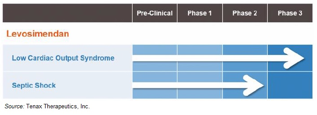
We are initiating coverage of Tenax Therapeutics, Inc. (NASDAQ:TENX) with a “Buy” rating and a price target of $10.00. Tenax Therapeutics, Inc. is a development-stage specialty pharmaceutical company focused on the identification, development, and commercialization of products for critical care patients. The company is based in Morrisville, NC. Tenax’s lead candidate, levosimendan, is currently being developed and evaluated in a Phase 3 trial for low cardiac output syndrome (LCOS) and a Phase 2 trial for septic shock (below). Outside of the U.S., the drug is currently approved and marketed as Simdax® (levosimendan i.v.) in more than 60 countries for patients with acute decompensated heart failure (ADHF). To date, according to the company, over 1 million patients worldwide have been prescribed the drug since its early 2000 launch.
As way of background, Tenax was first formed in 1967 as Rudmer, David & Associates, Inc., and later changed its name to Synthetic Blood International, Inc., and then to Oxygen Biotherapeutics, Inc. in June 2008. Six years later, in September 2014, the company was renamed Tenax Therapeutics, Inc. after acquiring the North American rights to levosimendan from Phyxius in November 2013. Previously, levosimendan was licensed by Phyxius from Finland-based Orion Corporation, which currently markets the drug under the brand name Simdax® in the EU. At this point, Tenax decided to suspend the development of Oxycyte®, a systemic perfluorocarbon (PFC) product for the treatment of traumatic brain injury, sickle cell pain crisis, decompression sickness, stroke, heart attack, and wound treatment, which had previously been the primary focus of Oxygen Biotherapeutics, and shifted all focus to levosimendan for the reduction of mortality and morbidity in cardiac surgery patients at risk of developing LCOS and for the indication of septic shock.
The U.S. Food and Drug Administration (FDA) has granted Fast Track status for levosimendan and has also agreed to Tenax’s Phase 3 clinical trial protocol under a Special Protocol Assessment (SPA) in 2012. The goal of the Phase 3 LEVO-CTS (Levosimendan in Patients With Left Ventricular Systolic Dysfunction Undergoing Cardiac Surgery On Cardiopulmonary Bypass) clinical trial is to evaluate if levosimendan administered before and during surgery will reduce the incidence of morbidity and mortality in cardiac surgery patients at risk of LCOS. As per management, the FDA has provided guidance that a single successful trial will be sufficient to support approval of levosimendan for the indication mentioned above. We believe that LEVO-CTS will most likely be completed during the second half of 2016, and look forward to reviewing the Phase 3 data once available. If all goes well, we think approval could occur at some point during the first half of calendar 2017.
Additionally, Tenax is collaborating with the Imperial College of London for the accelerated enrollment and completion of the ongoing Phase 2b LeoPARDS Trial (Levosimendan for the Prevention of Acute oRgan Dysfunction in Sepsis). The LeoPARDS trial aims to evaluate if levosimendan reduces the incidence and severity of acute organ dysfunction in adult patients who have septic shock, as well as assess its safety profile.
In our opinion, the Tenax development portfolio includes a novel product candidate that has the potential to address various critical care conditions with high unmet medical need. We view levosimendan as a relatively de-risked clinical development opportunity for the indication of LCOS due to the prior usage of the drug in over 1 million patients in over 60 countries around the world. We also view septic shock as an area of unmet clinical need, as the condition is often associated with high mortality, morbidity and critical care costs.
A Dangerous Situation: Low Cardiac Output Syndrome
When cardiac output is not at an optimal level, a situation known as low cardiac output syndrome, or LCOS, can arise. LCOS refers to the state when there is reduced cardiac output due to transitory dysfunction of the heart. It is associated with certain disease states as well as shock, and can occur in patients that have undergone cardiac surgery. Early diagnosis of LCOS is important in order to prevent complications, including death, which may result due to inadequate systemic perfusion (Massé et al., 2005). LCOS is often considered a form of acute heart failure, or AHF (Álvarez, 2008). Immediate management and treatment of LCOS is necessary in order to maintain proper nutrient delivery and oxygen supply to the periphery (Massé et al., 2005). LCOS is one of the most serious outcomes that can arise in cardiac surgery patients. It is often associated with high morbidity and mortality rates as well as increased costs and resources related to prolonged hospital and critical care stays (Kirklin et al., 1993; Rao et al., 1996; Levin et al., 2008).
Although we found that the reported incidence rates appear to vary across published data and were as high as 20% in certain studies, based on our research we believe that LCOS can occur in 5 to 10% of patients undergoing cardiac surgery (Rao et al., 1996; Álvarez, 2008). In addition, it can be associated with a 10 to 15 fold higher mortality or severe sequelae due to poor organ perfusion such as kidney failure and/or end stage renal disease (Cohn, 2007; Rao et al., 1996; Bojar, 2005; Maganti et al., 2005; Maganti et al., 2010). Currently, there are no approved therapeutics on the market that can prevent, reduce, or treat the occurrence of LCOS. There are certain risk factors for cardiac surgery patients that increase the chance for developing LCOS, including left ventricular dysfunction, prior coronary artery bypass graft (CABG) surgery, diabetes, being over the age of 70, and being female.
It is generally accepted that LCOS refers to the clinical condition when an individual is unable to maintain a cardiac index of > 2.2 L/min/m2 without relative associated hypovolemia (Pérez et al., 2012). Management usually involves treating the cause, alleviating symptoms, and stabilizing hemodynamics, with the goal to re-establish proper perfusion and oxygen to organs (Mathieu et al., 2011). Stabilizing an LCOS patient typically requires a complex treatment plan including the use of some combination of inotropic beta-adrenergic receptor agonists and/or phosphodiesterase III inhibitors, diuretics, vasodilatory agents, and/or mechanical assisted devices (such as intra-aortic balloon pump or a left ventricular assist device) (Levin et al., 2008; Mathieu et al., 2011). Traditional inotropes are drugs that either increase (positive inotrope) or decrease (negative inotrope) the strength of the muscular contraction of the heart, and have been used to manage cardiac hemodynamics in the short-term peri-operative setting, but can be associated with increased risk of morbidity and death (Maharaj et al., 2011; Mathieu et al., 2011). This leads us to believe that there is a major opportunity to improve hemodynamics and survival outcomes for patients with LCOS via novel treatment options and approaches.
The Levosimendan Story
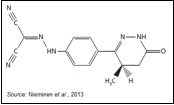
As mentioned above, there are currently no pharmacologic agents that are approved for the management, prevention and/or treatment of post-cardiac surgery LCOS. To address the issues outlined above surrounding LCOS, Tenax hopes to offer a solution with levosimendan, and believes that if administered pre- and peri-operatively, the incidence of LCOS and the associated morbidity and mortality could be decreased.
Tenax’s lead asset, levosimendan, is a novel, first-in-class calcium sensitizer/K-ATP activator for intravenous (IV) use in hospitalized patients, originally developed by Orion Corporation in Finland, and first launched in the EU in 2000 for the short-term treatment of acute decompensated heart failure (ADHF) where conventional therapy is not sufficient, and in cases where inotropic support is considered appropriate. Outside of the U.S., the drug is currently approved and marketed as Simdax® (levosimendan i.v.) in more than 60 countries around the globe for patients with ADHF. According to the company, over 1 million patients worldwide have been prescribed the drug, with significant off-label use of the drug in the EU. The patent for the Simdax® molecule in Europe expires in September 2015, and the product generated revenues in 2014 of approximately €47 million Euros (approximately $53 million USD at the exchange rate as of August 20, 2015).
Phyxius was granted the North American rights to levosimendan in 2011, and Tenax went on to acquire Phyxius in 2013. Tenax currently holds a license from Orion to develop and commercialize pharmaceutical products that contain levosimendan 2.5 mg/ml concentrate for solution for infusion / 5 ml vial in North America, under the brand name Simdax®. Tenax initiated a Phase 3 trial, which we will address in further detail below, in the third quarter of calendar year 2014. Under the terms of the agreement, Tenax must pay Orion a $2 million milestone payment upon FDA approval, $1 million upon Canadian approval, up to $13 million in potential commercial milestones payments based on achieving certain cumulative sales amounts, as well as tiered royalties based on net sales.
Tenax is currently developing the drug in the U.S. and Canada for the reduction of morbidity and mortality in cardiac surgery patients at risk for developing low cardiac output syndrome (LCOS). Levosimendan has been granted Fast Track status by the U.S. Food and Drug Administration (FDA), which has approved Tenax’s Phase 3 LEVO-CTS clinical trial protocol under a Special Protocol Assessment (SPA). Tenax is also pursuing an additional indication for levosimendan as it pertains to septic shock.
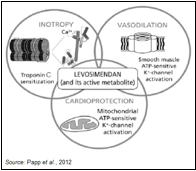
Triple Mechanism of Action of Levosimendan
Levosimendan is a calcium sensitizer/K-ATP activator, and the therapeutic effects are achieved via a triple mechanism of action (MOA) through increased force of muscular contractions (positive inotropic effect), vasodilation, and cardioprotection (right). The triple MOA of action helps differentiate levosimendan from other inodilators such as milrinone, dobutamine, and dopamine. It has been proposed that this triple MOA also helps to preserve heart function during cardiac surgery, and studies have demonstrated that levosimendan protects the heart and improves tissue perfusion while minimizing tissue damage during cardiac surgery. Many researchers believe that levosimendan’s triple mechanism of action may provide cardiac surgery patients with several benefits.
Scientific Evidence that Supports Levosimendan in Cardiac Surgery
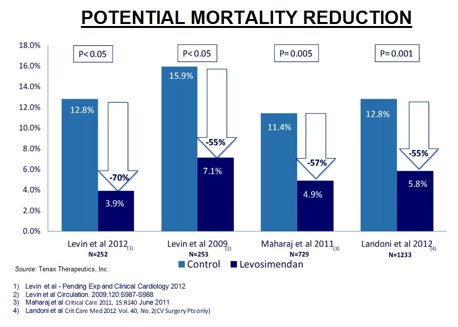
There is substantial scientific evidence that supports the use of levosimendan in cardiovascular surgery, with over 35 published clinical trials, meta-analyses, and articles appearing in peer-reviewed journals to date. Researchers have stated that levosimendan is one of the most studied inotropic agents to date (Toller et al., 2013), and we believe that interest surrounding the drug continues to rise. There is evidence of mortality reduction in some clinical trials of more than 50% (below), with positive trends in improvement of morbidity outcomes, hemodynamic and cardioprotective effects, renal function, as well as reduced hospital / ICU stays and costs. We believe that existing data demonstrates the potential value in cardiac surgery patients.
Orion/Abbott’s Clinical Development Program for Simdax®
Orion and Abbott Laboratories entered into a partnership under a marketing agreement for Simdax® in early 1998. Abbott gained worldwide rights to further develop and commercialize Simdax® in April 2004, assuming clinical and financial responsibility for R&D programs, while Orion retained rights to market the product in Finland, Sweden, Norway, Iceland and Denmark, with co-promotion rights in Hungary, Russia and Ukraine. Orion retained the patent rights to levosimendan and all rights to veterinary applications and non-injectable formulations such as orally administered levosimendan. In April 2007, it was announced that Abbott discontinued levosimendan development, and that additional Phase 3 studies would not be completed by the company. Orion reacquired all rights for levosimendan in May 2009, except for certain Latin American countries where Abbott markets the product.
Prior to gaining approval outside of the U.S., the clinical development program for Simdax® (levosimendan i.v.) involved close to 3,500 patients, many with worsening acute decompensated heart failure (ADHF). The trials are summarized in the table below:
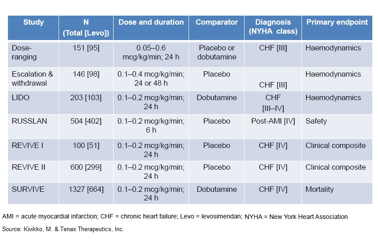
We believe that Tenax has taken levosimedan’s past, including successful and unsuccessful trial details, into serious consideration, especially in the design and execution of the Phase 3 LEVO-CTS trial for cardiac surgery patients with LCOS. We believe that this is imperative in order for Tenax to advance levosimendan successfully.
Levosimendan in Cardiac Surgery: Ongoing Phase 3 LEVO-CTS Trial
As mentioned above, levosimendan is currently being developed in North America by Tenax. Levosimendan has been granted Fast Track status by the U.S. Food and Drug Administration (FDA), which approved Tenax’s Phase 3 LEVO-CTS clinical trial protocol under a Special Protocol Assessment (SPA) in 2012.
In 2014, Tenax initiated “Levosimendan in Patients With Left Ventricular Systolic Dysfunction Undergoing Cardiac Surgery On Cardiopulmonary Bypass” (LEVO-CTS) Phase 3 trial to evaluate the efficacy of levosimendan in the reduction of the incidence of morbidity and mortality in cardiac surgery patients at risk of LCOS when levosimendan is administered before and during cardiopulmonary bypass. The study looks at the 30-day composite event rate of all-cause death, perioperative myocardial infarction, the need for dialysis, or the use of mechanical assist (intra-aortic balloon pump [IABP], left ventricular assist device [LVAD], extracorporeal membrane oxygenation [ECMO]) in patients with left ventricular systolic dysfunction (reduced ejection fraction) preoperatively undergoing cardiac surgery via cardiopulmonary bypass. LEVO-CTS is a double-blind, randomized, placebo-controlled trial. We believe it is important to point out that the well-renowned Duke Clinical Research Institute (DCRI) is conducting the trial, and helped design the Phase 3 protocol.
As of the September 14, 2015, 62 out of 70 total cardiac surgical sites across the U.S. were activated. Patient enrollment began in September 2014, and as of September 14, 2015, a total of 180 patients were enrolled. We believe that the goal is to enroll approximately 760 patients undergoing coronary artery bypass graft or mitral valve surgery who are at a risk of developing LCOS. We believe that management is focused on increasing enrollment efforts, and continues to take numerous steps in order accelerate the process. For instance, these efforts include identifying additional sites for the trial by expanding to Canada, increasing communication with current clinical sites by hiring two field based associates who will be in direct contact with the sites, and submitting a protocol amendment to the FDA to adjust inclusion criteria (adjusting EF from 25% to 35%, and no longer excluding COPD patients) to possibly increase the number of patients that quality for this trial. As per management, a response from the FDA regarding the protocol amendment is expected at some point in September 2015.
The trial has two arms, and in the experimental arm, patients will be administered 0.2 µg/kg/min of levosimendan for the first hour, followed by 0.1 µg/kg/min of levosimendan for an additional 23 hours (with infusion being initiated prior to surgery), while in the placebo comparator arm, patients will be given 0.2 µg/kg/min of placebo for the first hour, followed by 0.1 µg/kg/min of placebo for an additional 23 hours (above). We would like to mention that endpoints of the trial were selected based on available clinical scientific evidence. Cardiac surgery patient criteria include: (1) Isolated CABG LVEF ≤ 25%; (2) ≤ 35% CABG and/or mitral valve surgery; and (3) EF ≤ 35% CABG and aortic valve surgery (which is a recent amendment, and is expected to increases patient pool by 25%). The inclusion parameters above are intended to enhance the event rate and treatment effect. As per Tenax, a 32% event rate appears conservative, and a 35% treatment effect is conservative relative to 60-80% relative risk reduction in low EF clinical trials (DCRI Meta-analysis; Levin et al., 2012; Baysal et al., 2014).
Co-primary endpoints in the trial include: (1) “Dual”: death or mechanical assist (IABP, LVAD) through day 5, p<0.04 sufficient, and (2) “Quad”: death (through day 30), perioperative non-fatal MI (day 5), renal dialysis (day 30), or mechanical assist (day 5), p<0.01 sufficient, while secondary endpoints, which also intend to show the pharmacoeconomic benefit of the drug, include duration of ICU/CCU stay following surgery, and the incidence of LCOS. The safety endpoint is all-cause mortality through day 90, and since this an event-driven trial, there will be an event rate check at 200 patients with interim analysis at 50% and 70% total events to ensure anticipated event rate. The trial may be stopped for profound efficacy in “dual” endpoint.
It appears that low left ventricular ejection fraction (LVEF) cardiac surgery patients represent a high-risk population who experience a higher incidence of LCOS and more severe outcomes. Based on levosimendan’s established clinical profile that has demonstrated potential benefits in LCOS, we see the potential in the drug to reduce mortality and morbidity in cardiac surgery patients at risk for LCOS, as well as lowering hospital related / pharmacoeconomic costs. In our opinion, the data that is available appears to be promising; however we do believe larger multi-site randomized controlled trials, like LEVO-CTS, with the proper dosage protocols in place will offer much needed data to confirm the benefit of levosimendan in cardiac surgery patients. We view levosimendan as potentially being able to address an unmet need with the dual value proposition mentioned above.
As per management, the FDA has provided guidance that a single successful trial will be sufficient to support approval of the drug for this particular indication. The LEVO-CTS data readout is expected during the second half of calendar year 2016, and we are looking forward to reviewing the results once available. From start to finish, we believe that the trial will cost approximately $18 to $20 million. If all goes well, the company plans to request FDA Priority Review (6 months), and we think approval could occur at some point during the first half of calendar 2017. We are very much interested in watching the Tenax story unfold.
The Market Opportunity: Narrowing in on the Cardiac Surgery Market
When addressing certain advanced conditions of the heart, surgical intervention is often required, with the goal to improve quality of life and chance of survival in addition to reducing symptoms. According to the NHLBI, the most common type of heart surgery in adults in the U.S. is coronary artery bypass grafting (CABG), where a healthy artery or vein from the body is connected to a blocked coronary artery in order to improve blood flow to the heart.
Based on our research, we believe that CABG procedure volumes have declined in the U.S. since the late 1990s, and furthermore, the risk-adjusted mortality for CABG has also declined over the past decade (Mozaffarian et al., 2015). After consulting several sources, including the most recent Society of Thoracic Surgeon’s (STS) Database, we believe that the initial market opportunity in the U.S. for levosimendan (as per what the company is evaluating in LEVO-CTS) would include cardiac surgery patients requiring cardiopulmonary bypass as well as valvular surgery and congenital heart surgery patients resulting in approximately 320,000 procedures. STS has over 7,000 members across 90 countries, and was founded in 1964 as an international nonprofit organization in order to represent cardiothoracic surgeons, and other members of the cardiothoracic surgical team. We would like to mention that although isolated CABG procedures make up the largest portion of the STS database and seem to be declining, overall cardiac procedure rates seem to be increasing slightly year-over-year.
We believe that the market opportunity for levosimendan is quite large, as the drug is proposed to treat patients undergoing cardiac surgery at risk for LCOS, and a potential indication in septic shock. We believe that there is data that does support the use of levosimendan in other critical care indications, especially ones that require inotropic support, but it is still early for us to asses those settings. However, management does believe that there may be an opportunity in the future to expand to other indications such as non-cardiac surgical indications with heart disease; cardiogenic shock post-acute myocardial infarction; and severe acute decompensated heart failure.
Financial Summary & Capital Structure
On September 14, 2015, Tenax reported financial results for the first quarter fiscal year 2016 ended July 31, 2015. Tenax reported a net loss of $3.0 million or $0.11 per share for the first quarter fiscal year 2016, compared to a net loss of $2.2 million, or $0.08 per share in the same period in 2015.
Total operating expenses for the three months ended July 31, 2015 were $3.1 million compared to $2.4 million in the prior year. Research and development expenses for the first quarter fiscal year 2016 were $1.7 million, compared to $1.0 million in the same period in fiscal 2015. The increase was primarily due to increases in consulting and personnel costs, and costs related to the Phase 3 LEVO-CTS trial. General and administrative expenses for the first quarter fiscal year 2016 were $1.4 million, which was approximately the same for the same period in fiscal 2015. We expect to see quarterly R&D increases as Phase 3 LEVO-CTS progresses through the remainder of calendar year 2015 and into 2016.
As of July 31, 2015, Tenax had $43.9 million in cash, including the fair value of its short and long term marketable securities, compared to $48.1 million at April 30, 2015. We believe that Tenax has enough cash to fund activities through calendar year 2017, which should be sufficient to fund completion of Phase 3 LEVO-CTS trial.
Valuation & Recommendation
In our opinion, the Tenax development portfolio includes a product candidate that has the potential to address various critical care conditions with high unmet medical need. Currently, there are no approved drugs indicated for the prevention and/or treatment of LCOS. We view levosimendan as a relatively de-risked clinical development opportunity for the indication of LCOS due to the usage of the drug in over 1 million patients outside of North America. There is extensive scientific evidence that supports the use of levosimendan in cardiovascular surgery, with over 35 published clinical trials, meta-analyses, and articles. We also believe that the interest surrounding the drug continues to increase. We also view septic shock as an area of unmet clinical need, as the condition is often associated with high mortality, morbidity and critical care costs. In our opinion, LCOS and septic shock are potential large market opportunities because of the present day high mortality rates and insufficient standard of care practices in these patients. We think there is a demand for superior therapeutics in order to improve patient outcomes in both LCOS and septic shock, in addition to reducing the high costs associated with complications surrounding cardiac surgical patients.
We believe that the Tenax management team has the critical care, clinical, and commercial experience necessary to obtain North American approval of levosimendan. However, we do believe it is taking longer than initially expected to enroll patients in the Phase 3 LEVO-CTS trial. Although the LEVO-CTS trial timeline has been adjusted from when the first patient was enrolled back in September 2014, we are hoping that by focusing efforts on accelerating patient enrollment that the company stays on track with the currently projected second half of 2016 trial completion date, with data readout expected in the latter part of 2016.
Valuation Methodology
We assume approval of levosimendan in the U.S. during calendar year 2017, with product launch later in the year. We believe there is a high probability of approval given the success of the drug outside of the U.S, but will be dependent on positive Phase 3 data. In our opinion, Tenax shares remain significantly undervalued given the potential market opportunity for levosimendan.
For valuation purposes, we utilize a full DCF model based on some reasonable estimates of revenues with the following parameters:
Levosimendan Assumptions:
- Target Population & Revenue Assumptions:
We have assumed a current target population of 320,000 cardiac surgical procedures in the U.S., which is predominantly made up of approximately 280,000 major procedures and approximately 25,000 congenital procedures tracked using 2014 data from the Society of Thoracic Surgeon’s (STS) Database. We have assumed this surgical patient population is growing in line with historical norms of approximately 0.6% per year, and that about 50% of this group would be the appropriate target for levosimendan.
We believe levosimendan usage can lead to significantly improved outcomes and reduced post-operative hospital costs associated with complications of between $6,000 and $15,000 per patient. In our opinion, this translates into an attractive dual-value proposition in a clinical setting.
We have conservatively estimated that Tenax will be able to charge approximately $2,700 per patient, growing at approximately 2.5% per year. We assume initial penetration of approximately 6% in 2017, growing to a max penetration of 40% by 2024. We have also assumed that levosimendan receives Canadian approval in 2018, which represents an additional 10% of the previous year U.S. revenues.
- Margin/Expense & DCF Assumptions:
Our DCF model further makes the following assumptions in regards to expenses:
We have assumed long-term gross margins in the area of 80%. We have assumed operating expenses consisting primarily of R&D of approximately $10 million and G&A expenses of $6.5 million for fiscal year 2016. We assume long-term operating expenses and taxes (after taking into account net operating losses) to run around 12% of sales. We believe there is an 80% probability of success for levosimendan, given the success of the drug outside of the U.S. To take into account the cumulative risks discussed above, we have used a 15% discount rate. Since we are valuing cash flows, we are adding in the cash and marketable securities balance of $43.9 million at July 31, 2015.
Based on our assumptions, we calculate fair value for levosimendan and Tenax to be approximately $310 million. With a fully diluted share count of 34.6 million, this equates to a fair value target price of approximately $10 per share. If levosimendan proves to be successful in the cardiac surgical market, and if the company makes further progress with additional indications, including septic shock, we believe that there is the possibility for significant upside to this valuation.
READ THE FULL INITIATION REPORT HERE
Follow Nisha On Twitter @HiraniMD
SUBSCRIBE TO ZACKS SMALL CAP RESEARCH to receive our articles and reports emailed directly to you each morning. Please visit our website for additional information on Zacks SCR and to view our disclaimer.