By Grant Zeng, CFA
NASDAQ:ADXS
On April 18, 2016, Advaxis (NASDAQ:ADXS) announced clinical data from the Company’s ongoing Phase II study of its lead immunotherapy candidate, axalimogene filolisbac (AXAL), in patients with late-stage HPV-associated oropharyngeal cancer (HPVOPC).
Background of the Trial
This Phase II trial is a “window of opportunity” trial, which was designed to evaluate the effect of AXAL on anti-tumor immunity in the tumor immune microenvironment (TME) of patients with HPVOPC by conducting an analyses and comparison of the TME between pre-treatment tumor biopsy and post-treatment resected tumor tissue, as well as pre and post AXAL treatment blood samples.
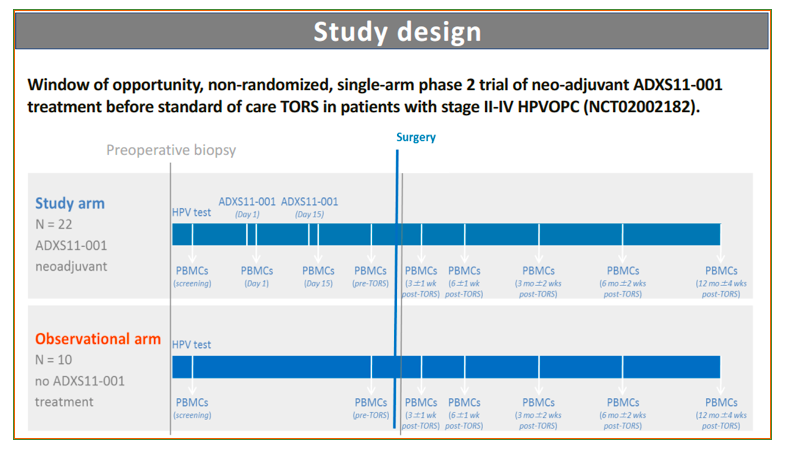
The trial has enrolled eight AXAL-treated patients and six no-treatment observational patients to date, with stage II-IV HPVOPC. The trial uniquely leveraged a 5-6 week “window of opportunity” between diagnosis and TORS (trans-oral robotic surgery) with curative intent, to administer two doses of AXAL treatment at 1x10⁹CFU 2 weeks apart. This unique clinical setting or “window of opportunity”, makes it possible to analyze and compare changes to the TME after the compressed regimen of AXAL treatment as well as pre and post treatment blood samples. In this limited timeframe, patients received two doses of AXAL separated by only two weeks, followed by TOR surgery 1-2 weeks after the second dose.
The Data Presented at AACR
The clinical data were selected for “Late Breaking Abstract” status and will be presented in the poster session of the American Association for Cancer Research (AACR) Annual Meeting on April 18, 2016. The poster (abstract LB-095) is titled “HPV E7 antigen-expressing Listeria-based immunotherapy (AXAL) prior to robotic surgery for HPV-positive oropharyngeal cancer enhances HPV-specific T cell immunity”
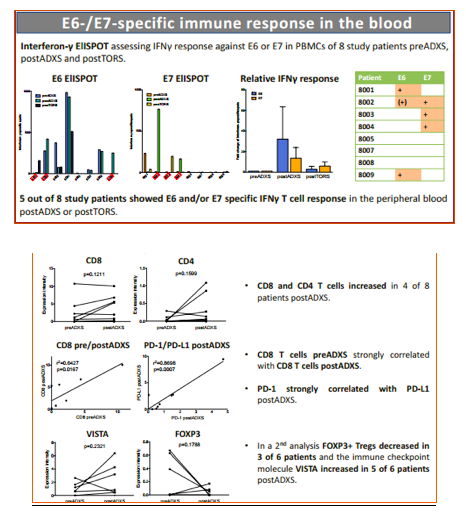
The data presented showed that HPV E7- and/or E6-specific T cell responses increased in the peripheral blood in five of the study patients. Increased infiltration of both CD4+ and CD8+ T cells were observed in the TME of four patients, with a reduction of FOXP3+ regulatory T cells within the tumors of 3/6 patients. Increased T cell responses to HPV E6 supports enhanced immune activity against additional tumor targets. Changes to the TME included cytotoxic T cell infiltration into the post-resection tumor, increased immune activation, a reduction of regulatory T cells, infiltration of cytotoxic T cells, and increased expression of inflammatory activation markers.
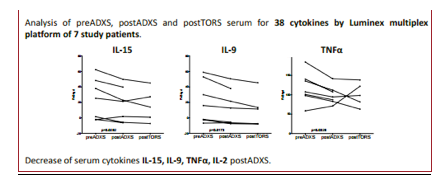
In addition, fluctuations of circulating serum cytokine (IL-15, IL-9, TNfa, IL-2 and MIP-1b) levels were observed potentially suggesting consumption by activated T cells and migration of T cells to the TME.
Our takeaway
While the data presented at the AACR are preliminary, we believe AXAL has the potential to increase the immune response in cancer patients.
We are pleased to see increased T cell response, evidence of epitope spreading, and signs of increased immune activation consistent with expansion and infiltration of activated T cells into the tumor. We are also pleased to see the trends towards a reduction in immuno-suppressive Tregs. Importantly, in several patients when compared to pre-treatment tumor tissue, post-treatment tissue analysis showed conversion of the TME into a site of active inflammation characterized by infiltration of activated T cells, and increased expression of activation markers including PD-1 and PD-L1.
We thinks the preliminary data are very encouraging and suggest that AXAL and the company’s Lm Technology has the potential to generate beneficial immunologic responses in patients with HPV+ head and neck cancer and other cancer patients.
SUBSCRIBE TO ZACKS SMALL CAP RESEARCH to receive our articles and reports emailed directly to you each morning. Please visit our website for additional information on Zacks SCR and to view our disclaimer.