By Grant Zeng, CFA
Earlier this morning (Feb 22), Amarantus (OTCQB: AMBS), provided an update on the status of its cGMP manufacturing technical transfer for producing ESS at Lonza Walkersville, Inc., a premier contract manufacturer providing cell and tissue-based products for clinical development.
The company announced that it has successfully completed the growth and testing components of its confirmatory engineering run in February 2016, and is now finalizing the documentation, sterilization validation, and auditing that is required to complete the technical transfer. Once the technical transfer is finished, which is expected to be in the first quarter of 2016, Amarantus will be operationally ready to supply ESS for the planned Phase II clinical study for the treatment of full thickness thermal burns covering over 50% of the body with the US Army.
Amarantus is planning three distinct clinical development programs for ESS, all of which have the opportunity to gain rapid market approval in various orphan dermatologic conditions:
1- Adult severe burns: Initiating a 10-patient Phase II clinical development program with US Army study under CRADA at ISR and two additional leading civilian burn center
2- Pediatric severe burns: Evaluating Phase III development program designs with leading pediatric burn center(s) in the United State
3- Giant Congenital Melanocytic Nevi (GCMN): Evaluating pivotal Phase III development program designs with leading dermatology center(s) in the United States
Near-Term Development Effort Is Focused on ESS for Indications in Rare Pediatric Diseases
In early October, 2015, Amarantus announced the Company's intention to strategically focus the majority of its resources on the development of Engineered Skin Substitute (ESS) program, with a focus for the treatment of rare pediatric diseases, including the treatment of pediatric severe burns and Congenital Giant Hairy Nevus. Management believes the ESS program represents a vast commercialization opportunity and its near term advancement is critical to the Company's overall business strategy. Additionally, treatments in development for rare pediatric diseases in the United States are eligible to receive Rare Pediatric Disease Designation (RPDD). The sponsor of a treatment that is approved by the FDA under the RPDD pathway is entitled to receive a Priority Review Voucher (PRV) that may be sold to other companies.
We noticed that recent two PRVs have been sold for an aggregate of $595 million to major pharmaceutical companies. In May 2015, Retrophin sold its PRV to Sanofi for total of $245 million and in August 2015, United Therapeutics sold its PRV to Abbvie for total of $350 million.
For Amarantus, the proceeds from the sale of a PRV will boost the company’s balance sheet without diluting existing shareholder base.
Further, we believe ESS has the potential for an accelerated regulatory pathway to market in multiple rare and ultra-rare pediatric diseases based on the data we have seen in preliminary review of the ESS program post-acquisition of Cutanogen Corporation. Given that the majority of the ESS-related expenses are fixed costs associated with GMP manufacturing, the company could gain economies of scale by accelerating the regulatory and clinical development of ESS for the treatment of rare and ultra-rare pediatric diseases.
Amarantus ESS Program
Amarantus’ engineered skin substitute (ESS) is a full thickness skin replacement product prepared from autologous (patient's own) tissue-engineered skin cells in development for the treatment of severe burns. It is a combination of cultured epithelium with a collagen-fibroblast implant that produces a skin substitute that contains both epidermal and dermal components. This model has been shown in preclinical studies to generate a functional skin barrier. Most importantly, self-to-self skin grafts for autologous skin tissue are less likely to be rejected by the immune system of the patient, unlike with porcine or cadaver grafts in which immune system rejection is a possibility.
In July, 2015, Amarantus completed the acquisition of Cutanogen Corporation from Lonza Walkersville, Inc. a subsidiary of Lonza Group Ltd. Cutanogen has an exclusive worldwide license to intellectual property rights associated with ESS. With this acquisition, Amarantus has engaged Lonza via a long-term services agreement to manufacture ESS under Good Manufacturing Practices (GMP) for human clinical trials, and subsequent commercial distribution.
Amarantus ESS has been used in an investigator initiated clinical setting in over 130 human subjects, primarily pediatric patients, for the treatment of severe burns up to 95% total body surface area and initial data on ESS looks outstanding.
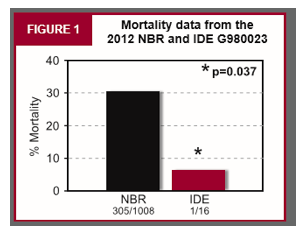
In one clinical study with 16 pediatric subjects treated with ESS (IDE G980023), 15 subjects survived for an overall mortality rate of 6.25% (1/16). This mortality rate is statistically lower (p=0.037; one-sample z-test) than the average rate of 30.3% (305/1008) reported in the National Burn Repository (NBR) for patients of comparable age and magnitude of injury.
ESS also demonstrated impressive data in the treatment of congenital giant melanocytic nevus (Plastic and Reconstructive Surgery. 2004;114(6):1523-1528).
ESS Development Plan
Based on the compelling data of ESS for the treatment of severe burn and congenital giant melanocytic nevus, ESS development will become the primary clinical development focus for Amarantus in the immediate future.
Amarantus plans to initiate the pending Phase II adult severe burn clinical study with the US Army in the first quarter of 2016.
The planned Phase II study will enroll 10 adult patients. This study is designed to evaluate the safety and efficacy of ESS compared to conventional split-thickness AG for the treatment of extensive, deep partial- and full-thickness thermal burns. A matched and randomized burn site format will be used to evaluate the successful graft take on excised deep partial- and full-thickness burns when grafted with either 1) unmeshed ESS or 2) meshed AG (the current standard treatment of split thickness AG).
This research study is divided into five study periods: (1) Screening Period of up to one week and (2) Pre-Grafting Period, which will last approximately 35-45 days, (3) Grafting Day(s), which are the day(s) on which grafts are applied (i.e., First Graft: Day 0 and the optional subsequent Grafting Day i.e., Second Graft: Day 0), (4) Post Grafting Observation Period, which begins with 28 days follow-up after each Grafting Day(s), and continues till Post-Operative Month (POM) 6 from the last Grafting Day, and (5) Anecdotal Observation Period.
In early August 2015, the company signed a Cooperative Research and Development Agreement (CRADA) with the U.S. Army Institute of Surgical Research (USAISR) and Rutgers University to expand the development of ESS for the treatment of deep partial- and full-thickness burn wounds in adult patients.
During the first quarter of 2016, Amarantus intends to engage the FDA in the filing of applications for rare pediatric disease designation, fast-track designation, orphan drug designation (ODD) and breakthrough designation pathways, as well as other pathways designed to accelerate time to approval. In parallel, the Company will also be aggressively pursuing non-dilutive funding.
The market for severe intractable severe burns is wide open, as there is truly no effective standard-of-care.
ESS has already been granted Orphan Drug designation by the U.S. FDA for the treatment of hospitalized patients with deep partial and full thickness burns requiring grafting. We believe positive Phase II data on ESS, likely to be reported in 2016, is another major potential valuation inflection for the company.
SUBSCRIBE TO ZACKS SMALL CAP RESEARCH to receive our articles and reports emailed directly to you each morning. Please visit our website for additional information on Zacks SCR and to view our disclaimer.