By
Grant Zeng, CFA
NYSE:CANF
Update On CF101 For Psoriasis
Phase III Trial Will Start in Fourth Quarter of 2016
In early June, 2016, Can-Fite (NYSE:CANF) submitted its protocol design to the European Medicines Agency (EMA) for a Phase III trial and registration plan for Piclidenoson (CF101) in the treatment of psoriasis. This follows a pre-submission meeting the Company had with the EMA.
The planned Phase III trial is a randomized, double-blind, placebo- and active-controlled study that will investigate the efficacy and safety of daily Piclidenoson administered orally compared to apremilast (Otezla®) in approximately 370 patients with moderate-to-severe plaque psoriasis. The study is designed to have four arms, Piclidenoson 2 mg, 3 mg, matching apremilast 30 mg, or matching placebo in a 3:3:3:2 ratio. Medication will be taken orally twice daily for 32 weeks in a double-blinded fashion.
The primary end point will be the proportion of subjects who achieve a Psoriasis Area and Severity Index (PASI) score response of ≥75% (PASI 75) at week 32.
Data from Can-Fite's former Phase II/III study showed that at weeks 24 and 32, Piclidenoson's efficacy as measured by PASI compares well to Otezla®, the recently registered oral drug, marketed by Celgene.
We estimate the company will initiate the Phase III study in fourth quarter of 2016. Can-Fite plans to conduct the study globally.
New Data Presented Showing Piclidenoson May Offer Efficacy Similar to Industry Leading Biologics Without Harmful Side Effects
On July 7, 2016, Can-Fite presented new findings of Piclidenoson (CF101) at Psoriasis 2016, the 5th Congress of the Psoriasis International Network, in Paris, France.
New mechanism of action data indicated that Piclidenoson inhibits two inflammatory cytokines, interleukin 17 (IL-17) and interleukin 23 (IL-23) which are known to play a major role in the inflammatory process of psoriasis.
Biologic drugs for the treatment of psoriasis currently on the market and in development also work via a similar mechanism of action by inhibiting IL-17 and IL-23. These systemic drugs offer good efficacy, however, as biologics they can cause serious side effects.
Piclidenoson binds to the Gi protein associated A3 adenosine receptor (A3AR), which is over- expressed in psoriasis patients. This binding action has shown to induce a robust anti-inflammatory effect by inhibiting IL-17 and IL-23 as demonstrated in in-vitro studies. An orally administered small molecule drug, Piclidenoson, potentially offers safety superior to biologics as shown in clinical studies in approximately 1,000 people.
The discovery of this new mechanistic pathway of Piclidenoson will position it as a strong drug candidate to treat psoriasis with potential efficacy similar to biologics on the market today, while potentially offering superior safety as a small molecule oral drug.
Phase II/III Data Published in Peer Reviewed Journal
Data from the company’s completed Phase II/III multicenter, randomized, controlled trial of Piclidenoson (CF101) in the treatment of moderate to severe psoriasis. was published in the August 2016 issue of Journal of Drugs in Dermatology.
The published study provides details regarding patient population, safety profile, and Piclidenoson's efficacy as compared to apremilast, a drug approved by the FDA to treat moderate to severe psoriasis and is marketed under the brand name Otezla® by Celgene.
While the Phase II/III study did not meet its primary efficacy endpoint at week 12, Piclidenoson did show a statistically significant improvement on week 32 in the PASI scores (50/75/90/100), a measure of efficacy in the treatment of psoriasis. Moreover, while biological drugs have been widely used in the past two decades for the treatment of moderate to severe psoriasis, these drugs can cease to be effective over time, with 67% of discontinuations attributed to loss of efficacy, based on a recent study.
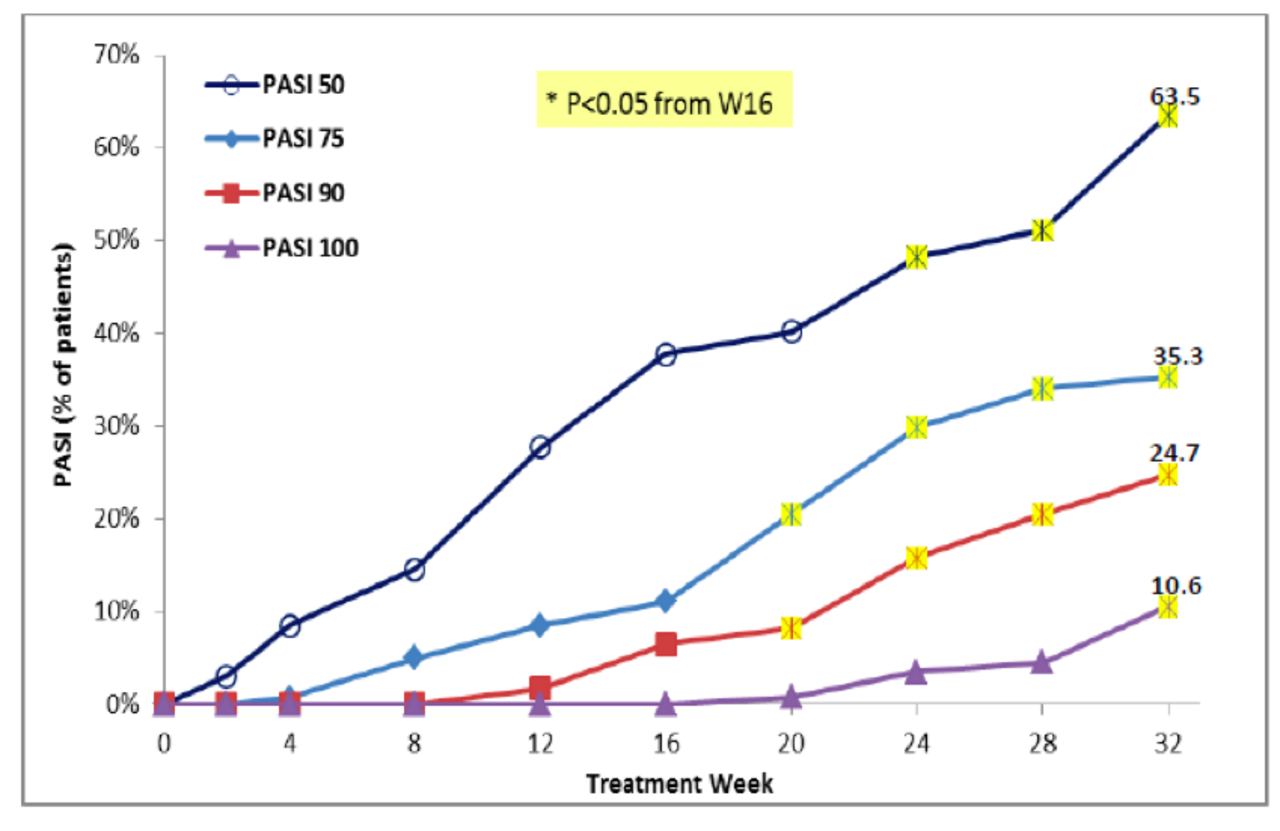
Importantly, data from the published study suggest Piclidenoson's efficacy continues to improve over time. The recently approved small molecule drug Otezla, appears to plateau in efficacy beyond week 16 based on data from a Phase III trial of Otezla, while the Phase II/III study of Piclidenoson shows it continues to improve in efficacy through week 32 and compares favorably to Otezla as early as week 24.
Update on CF101 Phase III Study for RA
On June 1, 2016, Can-Fite announced that it has reached agreement with the European Medicines Agency (EMA) on the final design of a global pivotal Phase III trial for its lead drug candidate, Piclidenoson (CF101), in rheumatoid arthritis (RA).
Following a successful meeting with the EMA, and based on guidance received from the European health regulatory body, Can-Fite plans to evaluate the efficacy and safety of Piclidenoson compared to methotrexate (MTX) in the treatment of early rheumatoid arthritis patients. The Company intends to initiate the Phase III trial in late 2016.
The EMA suggested Piclidenoson should be developed as an alternative to MTX, the most widely prescribed rheumatoid arthritis drug in the world. The EMA further suggested that this pivotal Phase III study will serve as the first of two pivotal studies required for drug approval.
The planned Phase III trial will be a randomized, double-blind, active and placebo-controlled trial to establish non-inferiority of Piclidenoson versus MTX, conducted in approximately 500 patients worldwide.
- Piclidenoson at 1 mg and 2 mg or placebo will be administered twice daily, and MTX or placebo will be administered once weekly.
- The primary endpoint will be Low Disease Activity as measured by Disease Activity Scores at week 12.
- The trial will also evaluate key secondary endpoints, including American College of Rheumatology (ACR) score 20, 50 and 70 and the correlation between A3AR expression at baseline and patients' response to Piclidenoson. Based on Can-Fite's Phase II clinical studies with CF101 in patients with active rheumatoid arthritis, the percentage of patients with high expression of A3AR is estimated to be approximately 70%.
- To establish longer-term clinical efficacy and safety, the trial will continue for a period of 24 weeks.
The company will file similar submissions in Canada and the U.S.
Over the several clinical experiences with CF101 for RA, Can-Fite has learned and identified the relationship between A3AR expression and response for CF101. Based on these findings, the company’s last Phase IIb trial demonstrated positive data of CF101 for the treatment of RA patients based on the level of A3AR expression. The planned Phase III trial uses the same criteria for screening RA patients, and therefore has a high possibility that it will replicate the results of the last Phase IIb trial.
Update on CF102
The Ongoing Phase II Trial of CF102 for Liver Cancer
Can-Fite initiated a global Phase II trial in December 2014. This is a randomized, double-blind, placebo controlled trial to be conducted in the U.S., Europe and Israel with an estimated 78 patients to be enrolled. CF 102 is being evaluated for efficacy and safety as a second-line treatment for advanced HCC in subjects with Child-Pugh B cirrhosis who failed Nexavar (sorafenib) as a first line treatment. Patients are treated twice daily with 25 mg of CF102.
The primary endpoint of the study is overall patient survival. Secondary endpoint include: time to progression (TTP), progression-free survival (PFS), objective response (OR) rate, and disease control (DC) rate.
CF102 has Orphan Drug Status in the U.S. and in Europe for the treatment of HCC. CF102 is approved for Compassionate Use for liver cancer by Israel's Ministry of Health.
Can-Fite anticipates completing the enrollment of approximately 78 patients in 2H16.
CF102 Expanded into NASH
In late November 2015, Can-Fite announced the expansion of its lead cancer drug candidate CF102 into new indication for non-alcoholic steatohepatitis (NASH).
The expansion is based on the compelling pre-clinical data on CF102 in the treatment of NASH. The company recently concluded preclinical study of CF102 in liver disease. In the study, CF102 revealed its capability to improve liver pathology in a NAFLD (non-alcoholic fatty liver disease)/diabetes animal model of NASH.
In the press release, the company summarized the preclinical data of CF102:
- CF102 had a statistically significant reduction in NAFLD activity score compared to placebo.
- CF102 reduced liver-to-body weight compared to placebo.
- Representative photomicrographs of H&E-stained liver sections showed improved pathology in animals receiving CF102 vs. placebo.
- CF102 decreased plasma ALT and triglycerides levels in the livers of NASH-model compared to placebo.
- Liver sections from the placebo group exhibited severe micro- and macrovesicular fat deposits, hepatocellular ballooning and inflammatory cell infiltration, whereas the CF102 treated group showed a significant decrease in steatosis, ballooning and lobular inflammation compared to the placebo group.
In prior preclinical studies, CF102 has shown efficacy in the treatment of liver regeneration and function following liver surgery.
On July 25, 2016, Can-Fite announced the completion of the protocol design for its upcoming Phase II trial of CF102 in the treatment of non-alcoholic fatty liver disease (NAFLD), the precursor to non-alcoholic steatohepatitis (NASH).
The Phase II study will be a multicenter, randomized, double-blinded, placebo-controlled, dose-finding study of the efficacy and safety of CF102 in the treatment of Non-Alcoholic Fatty Liver Disease (NAFLD). The study will enroll approximately 75 patients and will have three arms, including two different dosages of CF102 and a placebo, given via oral tablets twice daily.
- The study's primary endpoints will be percent change from baseline in liver triglyceride (fat) concentration measured by nuclear magnetic resonance spectroscopy (NMRS) and safety.
- Secondary endpoints include the effects of CF102 on metabolic abnormalities in patients with NAFLD; the effects of CF102 on relevant NAFLD related biomarkers; and an assessment of the pharmacokinetics (PK) of CF102 in patients with NAFLD.
- The A3 adenosine receptor (A3AR) biomarker will be evaluated prior to treatment and its correlation to patients' response to the drug will be analyzed upon study conclusion.
The study will be conducted in leading medical centers in Israel and is expected to be submitted to IRBs in the fourth quarter of this year.
Our Takeaway
We believe the expansion of CF102 into NASH represents an important milestone for Can-Fite in its clinical development.
Non-alcoholic fatty liver disease (NAFLD) is the build-up of extra fat in liver cells that is not caused by alcohol. It is normal for the liver to contain some fat. However, if more than 5% - 10% percent of the liver’s weight is fat, then it is called a fatty liver (steatosis). The more severe form of NAFLD is called non-alcoholic steatohepatitis (NASH). NASH causes the liver to swell and become damaged.
NAFLD affects about 30% of adults and 10% of children in the US, among which 10-30% will develop NASH. 25-40% NASH patients will develop progressive liver fibrosis, while 20-30% NASH patients with advanced fibrosis will develop cirrhosis, which could lead to liver cancer.
NAFLD/NASH represents a multibillion-dollar market, but currently there are no FDA approved medicines for the treatment of NAFLD/NASH.
CF102 is currently being evaluated as a second-line treatment for HCC through a global Phase II trial. The addition of NASH further expands CF102’s liver disease franchise.
CF102 has been granted orphan drug status and fast track designation for liver cancer by the US FDA. In October 2015, the European Medicines Agency (EMA) granted Orphan Drug Designation to CF102 for the indication of HCC.
For a free copy of the full research report, please email scr@zacks.com with CANF as the subject.
SUBSCRIBE TO ZACKS SMALL CAP RESEARCH to receive our articles and reports emailed directly to you each morning. Please visit our website for additional information on Zacks SCR and to view our disclaimer.