By Grant Zeng, CFA
OTC:GOVX
GeoVax (OTC:GOVX) has been busy in the past few months expanding its pipeline into new areas. We are pleased to see that the company has expanded into oncology immunotherapy program and the Zika vaccine program. The company is also collaborating with US army for the development of hemorrhagic fever vaccine program. Following are updates on these three programs.
GeoVax to Develop Vaccine against Zika Virus
In early February, 2016, GeoVax started a program to develop a vaccine for the prevention of Zika virus infections using its novel MVA-VLP vaccine platform. The company believes that it can rapidly advance a vaccine candidate to human clinical testing.
The Zika Epidemic
Recent outbreak of Zika virus in America makes the WHO to designate the Zika virus and its suspected complications in newborns an international public health emergency. The Zika epidemic, currently in 24 countries in the Americas, is transmitted by mosquitos and is expected by the WHO to reach most of the Western Hemisphere, infecting up to 4 million people by year’s end. The Centers for Disease Control and Prevention (CDC) has issued a travel advisory for people traveling to regions within the Zika virus outbreak, which include popular vacation destinations including Brazil, the site of the 2016 Summer Olympic Games. More than 30 cases have been reported in the United States, imported by travelers visiting affected regions.
Zika virus is a member of the Flaviviridae family, which includes dengue fever, yellow fever, Japanese encephalitis, tick-borne encephalitis, and West Nile viruses. There is an alarming association between Zika infections and severe birth defects, including over 4000 cases of microcephaly in Brazil since fall 2015, 270 of which showed confirmed evidence of infection. Microcephaly is a congenital condition marked by an abnormally small head and incomplete brain development. A potential link to Zika infection is also suspected in adults diagnosed with Guillain-Barré syndrome, a rare autoimmune disorder that can cause paralysis.
Other than mosquito control, no approved preventive or therapeutic products are currently available to fight Zika infections. Public health officials recommend avoiding exposure to Zika, delaying pregnancy, and following basic supportive care after infection. A vaccine is urgently needed to prevent a Zika pandemic.
GeoVax’s Vaccine Technology has the Potential to Target Zika Vaccine
GeoVax’s MVA-VLP vaccine platform is uniquely suited to apply to the Zika virus. This platform has been proven to produce in vivo non-infectious virus-like particles (VLPs) for both HIV and Ebola vaccines. We believe the MVA-VLP platform can demonstrate the same with Zika. Producing VLPs in the very person being vaccinated mimics a natural infection, stimulating the humoral and cellular arms of the immune system to recognize, prevent, and control the target infection. As an additional advantage, the company’s vaccine platform has already been proven safe in humans through multiple clinical trials involving over 500 individuals in the company’s HIV program.
In order to accelerate the development of Zika vaccine, GeoVax has also entered into a Collaborative Research Agreement with the University of Georgia to development the vaccine. UGA infectious disease researchers will develop vaccine antigens that elicit broadly reactive immunity against Zika viruses from different lineages and test those vaccines in pre-clinical models.
The Zika vaccine team in GeoVax will be led by its Senior Vice President of Research and Development, Farshad Guirakhoo, PhD. Dr. Guirakhoo played pivotal roles in the development and licensure of human vaccines against Flaviviruses including dengue and Japanese encephalitis. His extensive experience and expertise with Flavivirus vaccine development gives the company an advantage over competitors and will shorten the time until a Zika vaccine can be brought to market by GeoVax and its partners.
GeoVax Expands into Oncology Immunotherapy Program
On Dec 8, 2015, GeoVax announced that it has begun a new program to evaluate its MVA-VLP vaccine platform for use in cancer immunotherapy, and has entered into a Collaborative Research Agreement with the University of Pittsburgh for selection and testing of vaccine candidates.
Cancer vaccine or immunotherapy has become the key player in the fight against cancer. The FDA has recently approved a few cancer vaccines/immunotherapies. These include Provenge from Dendreon for the treatment of prostate cancer, Ketruda from Merck for the treatment of lung cancer and melanoma, Opdivo from Bristol-Myers Squibb for the treatment of melanoma, lung cancer and kidney cancer, and Yervoy from Bristol-Myers Squibb for the treatment of melanoma. The cancer immunotherapy will become a multibillion-dollar market in a few years.
Some tumor-associated antigens are over-expressed or aberrantly expressed in many types of cancer. These antigens in the actual tumors are often recognized as abnormal by patients' immune systems but are not sufficiently immunogenic to trigger an effective immune response. The tumor antigens must be presented to the body in a different form, or in a different way, to enlist the immune system in fighting the cancer. GeoVax’s MVA-VLP platform may be able to do exactly this.
The Company’s vaccine technology incorporates two vaccine delivery components:
- a recombinant DNA (deoxyribonucleic acid, the primer) and
- a recombinant poxvirus, known as MVA (modified vaccinia Ankara, the booster)
When used together, the recombinant DNA component is used to prime the immune response, which is then boosted by administration of the recombinant MVA component. However, in certain settings the recombinant MVA alone may be sufficient for priming and boosting the immune responses.
Both the DNA and MVA vaccines produce virus-like particles (VLP). Expression of multiple proteins by the vaccine is important because each protein provides targets for cytotoxic T-cells. Elicitation of a multi-target T-cell response limits immune escape, just as multi-drug therapies limit drug escape.
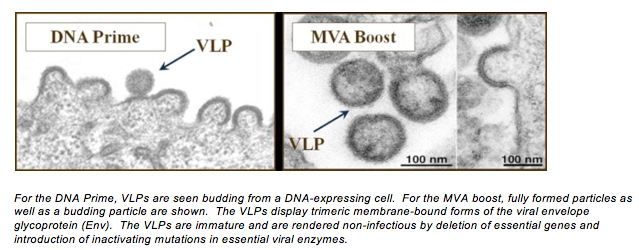
VLPs are designed to elicit:
- protective antibodies – block infection
- cytotoxic T cells – type of white blood cell that kills infected cells
Similarly, GeoVax believes that certain cancer antigens can be genetically modified and delivered using its MVA-VLP platform to train a patient's own immune system to selectively seek and destroy those cells bearing such antigens.
GeoVax’s MVA-VLP vaccine platform will allow co-expression of specific cancer antigens and immunomodulatory elements (if needed) tailored to induce a patient's humoral and cellular responses to effectively target and destroy cancer cells.
We welcome the company’s decision to expand its platform into the application of cancer immunotherapy. This will further demonstrate the broad utility of the company’s MVA vaccine vector beyond infectious diseases for a wide range of possible vaccines.
The cancer immunotherapy program is a new area for GeoVax. The company’s primary focus will continue to be infectious disease targets, as with its HIV and Ebola vaccine programs, but the application of its vaccine technology to oncology offers the prospect of addressing some very important unmet medical needs, as well as a significant opportunity to increase shareholder value.
The company has entered a research collaboration with the University of Pittsburgh, which will screen GeoVax’s antigen-expressing vaccine candidates using monoclonal antibodies and select vaccines for testing in animal models. The company intends to pursue additional collaborations with leading research institutions and others with novel cancer antigens or technologies suitable for use with its MVA-VLP platform.
GeoVax to Collaborate with USAMRIID on Testing of Hemorrhagic Fever Vaccine
On Feb 29, GeoVax announced that it has entered into a Cooperative Research and Development Agreement for Material Transfer with the United States Army Medical Research Institute of Infectious Diseases (USAMRIID) to collaborate on GeoVax’s effort to develop a vaccine against hemorrhagic fever viruses.
Pursuant to the agreement, GeoVax and USAMRIID will share materials and related information for in vitro and in vivo assessment of GeoVax’s MVA-VLP tetravalent vaccine against Ebola Zaire, Ebola Sudan, Marburg, and Lassa fever viruses.
Researchers at USAMRIID have generated and characterized, in great detail, a wide panel of anti-filovirus and Lassa virus antibodies with different specificities and functionalities. One of these antibodies is now part of ZMapp, an experimental drug comprising three chimeric monoclonal antibodies first tested in humans during the 2014 Ebola epidemic.
Hemorrhagic fever viruses fatal to humans are endemic to Africa where reservoirs remain in animal hosts such as bats, and as the 2014/15 Ebola epidemic showed, these viruses may quickly spread beyond the borders where the outbreak first begins.
GeoVax has demonstrated 100% protection in small animal models. The next step will be testing in non-human primates.
READ THE FULL RESEARCH REPORT HERE
SUBSCRIBE TO ZACKS SMALL CAP RESEARCH to receive our articles and reports emailed directly to you each morning. Please visit our website for additional information on Zacks SCR and to view our disclaimer.