By
John Vandermosten, CFA
NASDAQ:SBPH
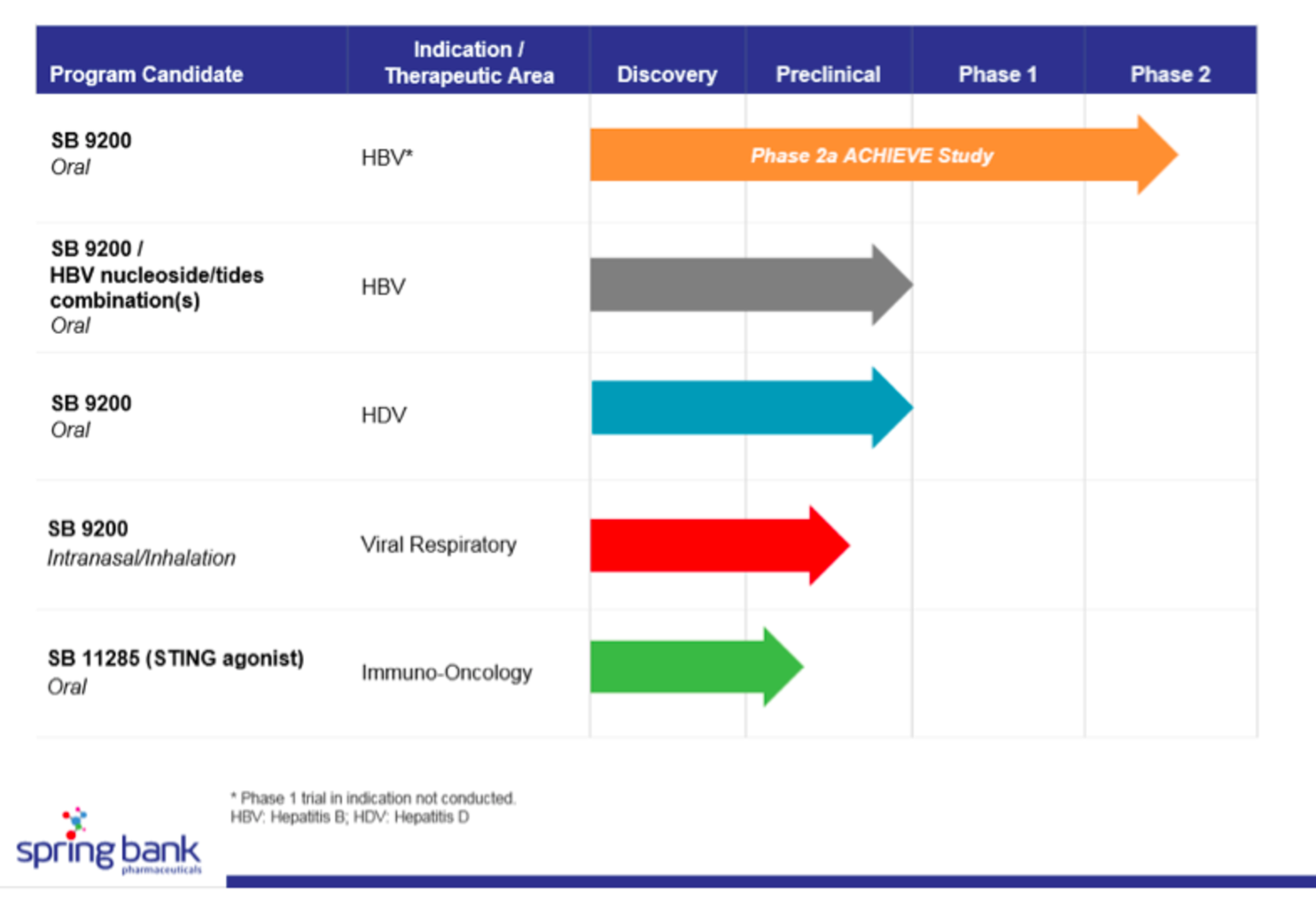
We are initiating coverage of Spring Bank Pharmaceuticals Inc. (NASDAQ:SBPH) with a $33.00 price target based on our estimates of a 2022 worldwide launch of Spring Bank’s lead compound, SB 9200 either alone or with a global pharmaceutical partner. SB 9200 is a small dinucleotide developed as a prodrug using the company’s small molecule nucleic acid hybrid (SMNH) platform technology. The product is designed to activate specific intracellular sensor proteins including RIG-I, NOD 2 and STING which activate the body’s immune system to fight viral infections including hepatitis B (HBV).
The company’s lead product is in Phase 2a trials for chronic HBV. SB 9200 is pan-viral and could be a future treatment option in addressing certain viral respiratory diseases, HIV latency, hepatitis D (HDV) and potentially other diseases caused by RNA viruses. The compound functions by selectively modulating the antiviral signaling proteins, RIG-I and NOD2, in virally-infected cells. This selective immune-modulation has the capability to up-regulate the host immune response and potentially destroy the virally-infected cell.
SBPH also has a very exciting immuno-oncology drug in the pre-clinical phase that targets the STING (STimulator of INterferon Genes) protein. Initial work performed by Spring Bank and others pursuing this pathway have engendered a lot of interest and investment given the promising early-stage preclinical data.
As of June 30 2016, Spring Bank held approximately $20 million in cash on its balance sheet and expects to burn from $3.5 to $4.5 million per quarter in clinical trial and operational costs. The company currently holds sufficient cash to complete the in-progress Phase 2a trial in chronic HBV patients and continue the preclinical development of the company’s fixed-dose combinations of SB 9200/nucleoside/nucleotides (referred to as “nucs”) and the STING agonist compound. Spring Bank will need to raise additional capital prior to the launch of future clinical trials in chronic HBV and the advancement of the IND-enabling efforts for the SB 9200/nucs fixed-dose combinations and the STING agonist compound.
Based on the anticipated length of the Phase 2a trial and the sequential cohort design of the study, we expect the initial topline data readout from the first treatment cohort to occur in 1H:17. The remaining escalating dose cohorts should read out as we progress through the second half of 2017 and into 1H:18. Assuming positive data from the Phase 2a study examining the monotherapy use of SB 9200 in chronic HBV at escalating doses followed by the sequential dosing of the antiviral tenofovir, the company plans to conduct a Phase 2b trial to look at the combined use of SB 9200 and tenofovir in chronic HBV patients. The company’s preferred strategy is to seek a partnership with a global pharmaceutical firm to continue the development program for SB 9200, pursue global market registrations, and ultimately market SB 9200 worldwide.
Given the large potential market of 240 million chronic cases of HBV, and the lack of an oral effective approved compound that effectively addresses the immunomodulatory approach to a potential functional cure, we have a very favorable view on the shares of Spring Bank and initiate with a target price of $33.00
INVESTMENT THESIS
Spring Bank Pharmaceuticals has developed a core technology that employs small molecule nucleic acid hybrid (SMNH) compounds that evolved from work done by one of the company’s founders in antisense technology and oligonucleotide–based therapeutics. SMNH uses small segments of nucleic acids including dinucleotides that can be administered orally and permeate the cell to target proteins that are critical to certain cell functions. Currently, the technology is focused on therapeutic applications in viral diseases, cancers, and inflammatory diseases.
The company’s lead product, SB 9200, is a panviral agent that has shown activity against a number of RNA viruses via its ability to modulate key proteins that are responsible for engaging immunity. The primary indication that is being pursued for SB 9200 in clinical development is the treatment of chronic Hepatitis B (CHB). The profile of SB 9200 is favorable given that many scientific, regulatory, and public health agencies have placed a high degree of importance on the development of a functional cure for CHB. The market for SB 9200 is substantially large, since the competitive environment lacks other immunomodulators in its class. Preliminary data generated to date suggest that off-target effects of SB 9200 are minimal; furthermore, the compound has shown antiviral activity in the first human trial against HCV.
The Hepatitis B virus (HBV) infects the liver and, according to the World Health Organization (WHO), is one of the most prevalent chronic viral infections in humans. The WHO estimates that 240 million people are chronically infected worldwide with approximately 6% of this total in the United States and Europe. It is anticipated that approximately one to two percent of the global total chronically infected population will constitute the addressable market in the initial year of launch. Currently, there is no effective functional cure for HBV, and the virus can only be suppressed through a lifetime of treatment using oral antiviral HBV DNA polymerase inhibitors. The novel action of SB 9200 may provide a functional cure for the disease by upregulating the key proteins responsible for allowing the body to activate its own immune response.
A functional cure for HBV is highly desirable since it permits a finite duration of therapy and potentially prevents the progression to the long-term negative effects of untreated CHB patients including cirrhosis, liver failure and liver cancer. There is a singificant unmet medical need for a functional cure due to the substantial size of the HBV population that is suffering from the chronic form of the disease, and the high level of morbidity and mortality that arise from cirrhosis and liver cancer. Currently, there are no other therapeutics in the market or in an advanced state of clinical development that can offer functional cures in CHB. If SB 9200 is found to be safe and effective as monotherapy or in combination with other compounds and approved for commercialization by global regulatory authorities, the product will be strongly positioned for favorable pricing and substantial market penetration.
SB 9200 could be devloped potentially as part of a combination therapy with antivirals and/or disease-modifying agents with differing mechanisms of action including siRNA compounds, capsid inhibitors, and compounds with other MOAs in early development . Similar to the approach used by Pharmasset [which is best known for developing sofosbuvir, Gilead’s (NASDAQ: GILD) Hepatitis C treatment], Spring Bank is cultivating relationships with other entities developing therapies for HBV. The hope is that SB 9200 will function as the backbone immunomodulator in combination therapy with nucleoside/nucleotide antivirals and/or disease-modifying agents with differing MOAs. This approach will help develop significant supportive data that can be published and obtain broader recognition and support for SB 9200 as a key component of the clinical efforts to achieve a functional cure in a sizable percentage of patients with chronic HBV.
Key reasons to own SBPH shares:
- Positive public health environment for the development CHB functional cure
- Potential addressable market size of near 4 million patients in the U.S. and EU alone
- Lack of other effective immunomodulators available in the market
- Promising proof of concept data in important animal models for chronic HBV
- SB 9200 was well tolerated in a Phase 1 study in Hepatitis C patients with no dose limiting toxicities and exhibited promising antiviral activity
- Company controls a proprietary technology platform that can be broadly applied in multiple therapeutic indications
- Background on Small Molecule Nucleic Acid Hybrid (SMNH) Platform
Nucleic acids are large polymers comprised of purine and pyrimidine nucleotides. SMNH compounds are smaller segments of nucleic acids and are prepared by use of combinatory chemistry. Typically, the SMNH technology is employed to create nucleic acid segments of up to 6 nucleotides long with substantial chemical modifications to provide druggable characteristics. In the case of dinucleotide compounds, two modified nucleotides are linked together. Spring Bank has discovered that the SMNH compounds bind to specific proteins that are part of the signaling pathway of cells. Modulating these interactions through agonism and antagonism supports broad therapeutic potential and provides an opportunity to target proteins and influence their complex biological functions in cells. The SMHN compounds are used to regulate the interaction between proteins and nucleotides or nucleic acids. SMNH-derived compounds are similar to the body’s own nucleotides and nucleic acids, allowing for more direct and selective action as compared to other small molecule approaches. Spring Bank has used structure-based drug design, combinational chemistry, structural biology and phenotypic screening approaches to develop compounds with attractive and desirable attributes. Successful compounds are able to bind to protein targets with high selectivity. The dinucleotides such as SB 9200 are designed to bind to specific regions in proteins associated with intracellular immunity and activate immunity for antiviral defense.
Additionally, SMNH compounds are designed to act directly on signaling protein receptors to either upregulate or downregulate their activity. This has led to the pursuit of several targeted pathways including cancer and inflammation. This is achieved by using different chemical modifications in SMNH compounds.
SB 9200
Using the SMNH technology, Spring Bank has developed SB 9200, which is designed to bind to RIG-I and NOD2, two cytosolic antiviral signaling proteins. SB 9200 is composed of two chemically modified nucleotides linked together. The compound is a prodrug that is rapidly absorbed and converted into its active moiety. It is taken up by the liver where it seeks out RIG-I and NOD2 and binds to them. The HBV virus is able to downregulate the natural antiviral functions of RIG-I and NOD2, thereby preventing the body’s natural immune defense from activating and killing the virus. When SB 9200 enters the cell, it restores interferon production by interacting with RIG-I and NOD2.
Exhibit I – Summary of Spring Bank Pharmaceutical Pipeline
Phase 1 Trial (Completed)
Phase 1 trials are employed to evaluate the safety, tolerability, pharmacokinetics and pharmacodynamics of a novel formulation in humans. The scientific literature and Spring Bank’s own research have shown that the target proteins that SB 9200 binds to, RIG-I and NOD2, are not activated in the cell in the absense of a virus, therefore, the usual healthy subject was not appropriate for a complete assessment of safety and tolerability. Given this constraint, Spring Bank sought treatment naïve, hepatitis C (HCV)-infected adults to conduct the trial.
The trial, A Multiple Ascending Dose Phase I Study of SB 9200 in Treatment Naïve Adults With Chronic Hepatitis C Infection, was a two-stage, multi-center study conducted in Australia and New Zealand in genotype 1 and genotype 3 treatment-naïve HCV-infected adults. Part A of the trial was an open-label, single ascending dose study in eight treatment-naïve, HCV-infected adults in fasted and fed states. In Part A, each subject in a particular dose group received a single oral dose of 100 mg, 200 mg, 400 mg or 800 mg of SB 9200, with subjects in each subsequent dose group receiving a pre-determined higher dosage than subjects in the preceding dose group. Part B of the trial was a randomized, placebo-controlled, multiple ascending dose study in 30 treatment-naïve adults infected with HCV. In Part B, subjects were randomized on a 6:2 basis to SB 9200 or placebo. Each subject in the SB 9200 arms received an oral dose of 200 mg, 400 mg or 900 mg of SB 9200 once daily for seven days, with subjects in each subsequent dose group receiving a higher dosage than subjects in the preceding dose group.
In the trial, SB 9200 was well tolerated in all dose groups, and there were no dose limiting toxicities or systemic interferon-like side effects such as flu-like symptoms or fever. Adverse events were mostly mild in severity. The one serious adverse event that was observed post-treatment in one subject, acute gallstone cholecystitis, was classified by the study investigator as unrelated to SB 9200. There was no relationship between incidences, severity or relationship of adverse events and the dose of SB 9200 received.
In addition to safety, the researchers assessed antiviral activity in both stages of the Phase 1 clinical trial. An antiviral response was seen at the 200mg, 400mg and 900 mg dose levels in both the single and multiple dose cohorts. Specifically, in the multiple ascending dose study, the peak individual serum HCV DNA drop improved from 1.5 log10 in the 200 mg dose cohort to 1.9 log10 in the 400 mg dose cohort. Increasing the dose to 900 mg did not increase the peak individual serum HCV DNA declines observed in patients in the 900 mg dose cohort. A 1.0 log10 reduction indicates a 90% reduction in virus concentration in the treated patient from baseline.
A statistically significant relationship between maximum or peak serum concentration, or Cmax, of SB 9200 and maximum suppression of HCV RNA on Day 7 was observed (p=0.015) after exclusion of two subjects in the multiple dose study with extreme Cmax values for SB 9200 in a retrospective analysis of the data.. The company also assessed biomarker data to further support SB 9200’s mechanism of action. This included measuring gene expression of ISG-15 and OAS-1, two genes typically associated with the induction of the interferon signaling pathway. The results demonstrated an increase in gene expression of ISG-15 and OAS-1 following administration of SB 9200.
The Phase 1 clinical trial demonstrated proof of principle of the mechanism of action of SB 9200 as a host antiviral immunomodulator. No interferon-like side effects were observed and SB 9200 was shown to be generally well-tolerated with no drug-related serious adverse events (SAEs) reported up to doses of 900 mg. The pharmaco-kinetic and safety data and the antiviral immunomodulatory activity observed in the Phase 1 clinical trial of SB 9200, and the preclinical and toxicology studies of SB 9200 that have been conducted, were sufficient to encourage the company to move SB 9200 forward into a Phase 2a clinical trial in chronic HBV patients.
Although SB 9200 demonstrated an antiviral effect in the Phase 1 trial in treatment naïve HCV patients, Spring Bank does not intend to pursue an HCV development program for SB 9200 given the effective therapies currently available.
Phase 2a Trial (In Progress)
The Phase 2a trial is a proof of principle, dose finding study titled “A Study Evaluating the Safety, Pharmaco-kinetics, and Antiviral Efficacy of SB 9200 in Subjects Infected with Chronic HBV (ACHIEVE).” The principle objectives for the trial are to evaluate the safety and antiviral effect of SB 9200 following 12 weeks of monotherapy. All patients will then be placed on tenofovir 300mg daily for an additional 12 weeks to see if sequential therapy can improve response. The study will establish the optimal dose for SB 9200 for HBV and define the pharmacokinetics of SB 9200 in CHB patients. Patients selected for the trial will have documented evidence of chronic HBV, must not be taking any anti-viral medications, have appropriate levels of HBV DNA and ALT, no evidence of hepatocellular carcinoma, and negative pregnancy test with no plans to conceive during the study.
The double-blind placebo-controlled Phase 2a study involves the administration of SB 9200 or placebo once daily for 12 weeks followed by the use of the antiviral, tenofovir 300mg, monotherapy for a total of 24 weeks of treatment in each patient cohort. The study has a sequential cohort design with each cohort representing an escalating dose of SB 9200. The study will consist of 80 patients and will be randomized with 20 patients per cohort; 16 of which will be on the active drug and 4 who will be given a placebo. Patients will be treated for 12 weeks on SB 9200 then all patients, including those administered placebo in the first 12 weeks will be given tenofovir for the following twelve weeks. Dosing will start at 25 mg and move up to 50 mg, 100 mg and 200 mg in subsequent cohorts.
The primary endpoint will be safety and >1log reduction in HBV DNA . The secondary endpoints will be a reduction in HBeAg and HBsAg. We believe that a a 0.5 log reduction in HBsAg in 30% or greater patients will indicate a successful trial because this exceeds the efficacy of interferon and the side effect profile is substantially better and administration is by tablet rather than an injection. Extensive virology and immunology substudies will be generated from this Phase 2a trial to potentially ascertain more information on relevant biomarkers, immune responses and other key factors.
In June 2016, Spring Bank dosed its first patient in the CHB Phase 2a trial and we expect to hear top-line data from the first cohort in the first half of 2017. Studies are currently taking place in Canada, and investigative sites in the countries of Hong Kong, Taiwan and Korea should come on-line over the next several months. Based on the sequential dosing design for the Phase 2a trial in CHB patients, the potential exists for multiple data readouts from the study in 2017 and the first half of 2018 as the various cohorts are completed. Management may provide updates on the trial as each cohort is completed and the data are fully analyzed.
Results from this Phase 2a trial in CHB patients will be the near-term driver for the stock. We assume that similar to interferon, that a marked reduction in surface antigen after the first 12 weeks will be a strong indicator of the patient’s ability to eventually clear the virus.
Phase 2b Trial
The company’s current plans for a potential Phase 2b trial in CHB patients forecasts a larger trial with 200 patients. This trial will compare the combination therapy of SB 9200 with a nucleoside/nucleotide analog and SB 9200 alone. The two most effective doses will be employed in the five arms of 40 patients each and since effective doses will already have been determined, the arms can run in parallel, reducing trial duration. We also note that despite engaging over twice the number of patients as the 2a study, the trial cost is only expected to be slightly greater than the 2a cost as Phase 2b will not perform in-depth virological and immunological studies. Following the initial investigatory therapy, patients will be given tenofovir for one year for long term follow-up.
In September 2016, the FDA, the European Medicines Agency (EMA), American Association for the Study of Liver Diseases (AASLD) and the European Association for the Study of the Liver (EASL) will meet in Virginia along with many of the key stakeholders working in the field of HBV to devleop standards for biotechnology and large pharmaceutical companies on trial design and desired endponts for potential HBV therapies. The results of this meeting will help the regulatory agencies develop guidance on how to proceed with HBV drug development, what is needed from Phase 2 and later trials and what endpoints are critical for validating potential Phase 3 studies.
Based on the trial design, and following additional funding, we anticipate Phase 2b trials will begin in 2018. Based on the trial size and objectives, we believe the 2b program should last for about a year and provide results in 2019.
Financial Position
As of June 30, 2016 Spring Bank Pharmaceuticals held approximately $20 million in cash and cash equivalents on its balance sheet. We believe this is sufficient to fund the entirety of the Phase 2a trial, which will take place over the next year. For the first six months ended June 30, 2016, Spring Bank consumed approximately $9.0 million in cash from operations and capital expenditures. The company holds no debt on its balance sheet. We anticipate a capital raise in the first half of 2017 in order to fund continued development of SB 9200 and potentially other projects.
Management has made clear that current cash levels are only sufficient to support the conclusion of the Phase 2a program. We anticipate that the company will have to raise an additional $20 million or more to fund the Phase 2b trial for SB 9200 and to support other pipeline programs. The actual amount of capital raised will be dependent on market conditions and estimated dilution at the time of issuance.
CONCLUSION
HBV is a global disease that chronically affects 240 million persons in the world and 14 million in the United States and Europe. Currently, there is no cure for HBV and the only currently approved therapies either have very low success rates or merely suppress the virus and require that the patient take the drug for the rest of their lives. SB 9200 has a favorable side effect profile compared to the only other approved immunomodulator and may also offer much higher levels of viral clearance than peginterferon alfa-2a therapy. Based on data in Phase 1 studies, side effects are minimal and no dose limiting toxicities were found.
Due to the lack of strong immunomodulating competitors, SB 9200 will likely have dominant pricing power. Competing therapies run from approximately $40,000 for interferon to hundreds of thousands of dollars over the lifetime of a patient for antivirals, providing substantial support for our pricing forecasts.
SB 9200 may show substantially higher efficacy when used as part of a combination therapy with antivirals or a disease modifying agent and we anticipate that the drug will eventually be used in conjunction with these complements when potentially approved in 2022.
The company’s lead compound has also shown promise in other RNA viruses such as RSV, rhinoviruses and HIV latency as it is able to upregulate RIG-I and NOD2 proteins which are key players in initiating the immune response. Currently, the technology is focused on stimulating the body’s immune response, addressing cancer and reducing inflammation, however, SMNH can target other proteins that can improve a multitude of other disease states.
A functional cure for HBV is extremely valuable as it replaces the currently lifetime of therapy for those with chronic HBV and also will prevent many of the long-term consequences of HBV including cirrhosis, liver failure and liver cancer. There is a dramatic need for a cure due to the substantial size of the HBV population that is suffering from the chronic form of the disease, and the high level of morbidity and mortality that arise from cirrhosis and hepatocellular carcinoma. Given that there are currently no other functional cures on the market or any that are in an advanced stage of development, SB 9200 has a very strong argument for favorable pricing and substantial penetration if found to be safe and effective.
Key reasons to own:
- Positive public health environment for the development CHB functional cure
- Potential addressable market size of near 4 million patients in developed markets alone
- Lack of other effective immunomodulators available in the market
- Promising proof of concept data in important animal models for chronic HBV
- SB 9200 was well tolerated in a Phase 1 study in Hepatitis C patients with no dose limiting toxicities and promising antiviral activity
- Oral therapy superior to infusion and other methods of delivery used for addressing HBV
- Fixed duration of therapy
- Company controls a proprietary technology platform that can be broadly applied in multiple therapeutic indications
- Based on cost of current therapies, compound has strong pricing opportunity
In summary, we are very optimistic regarding the promise of Spring Bank Pharmaceuticals’ core technology given the data generated to date and the important disease states pursued by the company’s portfolio of dinucleotides. We initiate SBPH with a target price of $33.00.
For a free copy of the full research report, please email scrinvestors@zacks.com with SBPH as the subject.
SUBSCRIBE TO ZACKS SMALL CAP RESEARCH to receive our articles and reports emailed directly to you each morning. Please visit our website for additional information on Zacks SCR and to view our disclaimer.