By Brian Marckx, CFA
OTC:LEDIF
TSX:LMD.V
Q4 and FY 2015 Financial Results: 47% Revenue Growth, Rapidly Improving Profitability….
LED Medical (TSX:LMD.V) (OTC:LEDIF) reported financial results for the fourth quarter and full year ending December 31st. Full year revenue of $13.1M came in slightly better than their preannounced expected revenue number of $12.5M (in January). As a reminder, earlier in 2015 LED was guiding for total revenue of $15M - $16M. Then in January they preannounced expected 2015 revenue of $12.5M – but also noted that they had current backlogged orders of $2.5M which should be recognized in Q1 2016. .
Q4 and full year 2015 revenue grew 20% and 47%, respectively, from the comparable year-earlier periods. While LED does not break out VELscope versus digital imaging sales, based on language and figures contained in the annual report and MD&A, it appears digital imaging accounted for most, or perhaps all, of the revenue growth in both periods. The supposition that digital imaging is the main impetus to revenue growth would also be supported by gross margin, which narrowed from almost 39% in 2014 to about 27% in 2015 – reflecting what we believe is lighter margin from the non-proprietary business (i.e. digital imaging), and to a lesser degree a non-recurring charge in Q3.
But the almost 50% top-line growth, coupled with some operating expense control more than offset the slimmer margin, resulting in operating loss improving by just better than $500k, or 9%, in 2015. So while we think there may be only incremental opportunity to improve on gross margin with the current product suite, barring VELscope-related growth significantly outpacing that of digital imaging, LED is demonstrating significant improvement in profitability even on “distributor-like” margins. And additional products, some of which may be higher margin than the average of the current portfolio, could come online - potentially in the very near-term.
Management made meaningful progress in right-sizing headcount and the cost structure during 2015 – with total employees going from 34 at the end of 2014 to 29 at the end of Q3 2015 and ending the year at 36. Operating expenses contracted by $390k from 2014 to 2015, which is about a 4% decrease – which coupled with the 47% increase in revenue over that same period highlights the progress that LED is making in righting their cost versus revenue ratio.
And with the broader and ever-expanding product portfolio comes the added advantage of greater customer diversification (i.e. less customer concentration risk). Q3 2015 marked the first quarter where no single customer accounted for 10% or more of the company’s sales, which was also the case for the full year 2015. This compares to 2014 when 16% of revenue was generated by customers which accounted for 10% or more of total revenue. The lower customer concentration should reduce risk of variability in sales.
LED exited 2015 with $2M in cash which was recently bolstered by the $1.4M (net) equity issuance in Q4. Cash used in operating activities was $5.1M in 2015 ($4.4M ex-changes in working capital, down from $5.0M in 2014). We model further improvement in the cash burn rate in 2016 on expectations of continued strong revenue growth, incremental widening of gross margin and additional progress in leveraging of the expense base. However, we also continue to expect LED to look to raise additional capital in 2016.
Recent highlights on the operational front include;
publication in the online version of JAMA – Otolaryngology – Head and Neck Surgery of the surgical margins study (more detail below)
the digital imaging business has been on a tear, fueled in large part from the rapidly growing product portfolio. The latest addition to their U.S. portfolio came in March of this year when LED announced that their new Tuxedo digital intraoral radiography system received FDA 510(k) clearance, allowing it to be sold in the U.S. Tuxedo is as billed as providing some of the highest image quality of any intraoral sensors on the market. Tuxedo, like most of LED’s imaging portfolio, looks to exploit the digital imaging market growth driven by the shift from analog dental film and imaging
successful resolution to FDA’s May 2014 Warning Letter regarding marketing language of VELscope Vx
Other Notables Include Potential Acquisition
In addition, other recent notable announcements were the approval for sale of VELscope VX in China and entry into a non-binding letter of intent to acquire 100% “of a growing and profitable technology company that would complement LED’s existing businesses and provides a platform to assist LED in achieving its strategic, long-term business objectives”. LED provided little other information about the potential acquisition, although did note that the revenues and assets of that company are less than LED’s and that they will announce terms of the acquisition following a due diligence period. This potential acquisition has not been figured into our financing assumptions or into our financial model but will be if and when appropriate.
Relative to China, VELscope VX received regulatory approval there in early August 2015 with sales handled by LED’s distributor, Geneformation Technology, Inc. to universities and hospitals, which are the major dental channels in China. While the country has a huge potential customer base and population, medical and dental product penetration in the country can be somewhat challenging. But, depending on the success of Geneformation, China could offer incremental revenue opportunity for LED. This will be something to keep an eye on.
LED has also recently intimated that they plan to beef-up their overall international VELscope effort given that the ex-U.S. market represents about two-thirds of the total market opportunity. We expect LED will look to gain marketing approval in other international territories, particularly spots in Europe and Asia. Following gaining requisite regulatory approvals, the next step will be to consummate distribution agreements in those regions of the world. While we model only incremental progress on this front in 2016 (given that regulatory approvals, in particular, can be a several-quarter process), we think next year may see additional and more significant contribution from growth in international VELscope sales.
Surgical Margins Study Published Online in JAMA – Otolaryngology – Head and Neck Surgery :
Results of a 246-patient retrospective study assessing the utility of fluorescence visualization (FV) via VELscope in reduction of locoregional recurrence of cancer and improving overall survival in patients undergoing oral cancer surgery was published online in the Journal of the American Medical Association – Otolaryngology – Head and Neck Surgery.
FV was used to determine surgical margins. It is important to determine exactly where the lesion should be excised as the majority of oral cancer surgeries inadvertently leave some cancerous tissue behind, due in large part to the fact that some tissue is beneath the surface and not visible to the naked eye of the surgeon. Patients 18 years and older diagnosed with high grade lesions or squamous cell carcinoma of less than 4cm and which underwent oral surgery were included. 154 of the 246 underwent surgery with FV guidance while the other 92, the control group, underwent conventional surgery. There were no significant differences between the FV and control groups in age, smoking history, anatomical site of the lesion, tumor size, and previous oral cancer.
Results: The use of fluorescence visualization in determining surgical margin significantly reduced the rate of localized cancer recurrence in high grade and early stage oral cancers.
Per JAMA Otolaryngology Head Neck Surg. Published online January 14, 2016. doi:10.1001/jamaoto.2015.3211 (http://bit.ly/1WXRldE): Among the 156 patients with squamous cell carcinoma , the 92 patients in the FV group showed significant reduction in the 3-year local recurrence rate, from 40.6% (26 of 64 patients) to 6.5% (6 of 92 patients) (P < .001). Among the 90 patients with high-grade lesions, the 62 patients in the FV group showed a reduction in local recurrence rate from 11 of 28 patients (39.3%) to 5 of 62 patients (8.1%) (P < .001). The data also indicated that, compared with conventional surgery, the FV-guided approach for squamous cell carcinoma was associated with less regional failure (14 of 92 patients [15.2%] vs 16 of 64 [25.0%]; P = .08) and death (12 of 92 patients [13.0%] vs 13 of 64 [20.3%]; P = .22), although these differences were not statistically significant.
This study provides additional validation of the utility of VELscope in identifying the presence of cancer. And while commercial use VELscope has been mostly to aid dentists with identification of oral mucosal abnormalities, including those associated with oral cancer, there is a growing body of evidence to suggest it may have broader applications. This includes with identifying surgical margins.
Along with this recently published study, Dr. Catherine Poh was also the lead investigator of Fluorescence Visualization Detection of Field Alterations in Tumor Margins of Oral Cancer Patients, a study published in Clinical Cancer Research in 2006. This was one of the first studies offering substantial evidence that VELscope can significantly improve on normal white light visualization of detection of oral cancer.
The study compared VELscope to assessment under normal lighting to determine the surgical margins. The respective margins determined by normal light and by VELscope were marked with a surgical pen. 122 oral mucosa biopsies were obtained from 20 surgical specimens (20 from the clinically apparent tumors, 36 from the margins determined to be abnormal by VELscope, and 66 from margins determined to be healthy by VELscope). Results showed that 32 of the 36 abnormal identified margins did indeed show histological changes (7 squamous cell carcinoma, 10 severe dysplasia, and 15 mild-to-moderate dysplasia). Meanwhile 65 of the 66 healthy identified margins were indeed normal with one showing mild-to-moderate dysplasia. Of the 20 clinically apparent tumors, 19 had abnormal margins that extended beyond what was clinically apparent (i.e. apparent under normal light). In addition, the investigators found that if a conventional 10mm clearance of the clinical tumor had been used, 50% of the tumors in the study would have had cancer or dysplasia at the margin, 30% of which showed severe dysplasia or carcinoma in situ (i.e. abnormal cells that may become cancer).
Dr. Poh notes in the January 26, 2016 press release that they are now working with head and neck surgeons in Canada to conduct a larger surgical margin study. The JAMA article also notes that “An ongoing multicenter, phase 3, randomized surgical trial has completed accrual, and the data will be used to validate the results of this study.” If and when a larger, randomized trial completes – and assuming positive results, this potentially could eventually lead to broader indications for VELscope and open it up to an additional and sizeable market.
LED Exploiting Growth in Dental Digital Imaging
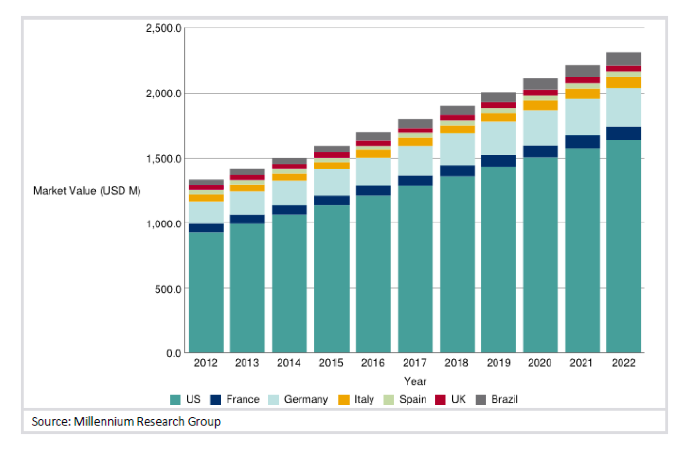
Market research supports LED’s view of a changing landscape in dental imaging, specifically an ongoing shift to greater demand for digital imaging. The U.S., LED's major focus, is also where the bulk the opportunity lies as it is the largest dental imaging market and is expected to grow from $991M in 2012 to $1.6B in 2022 (per Millennium Research Group).
CBCT Fastest Growing Dental Imaging Modality, LED Riding the Wave…
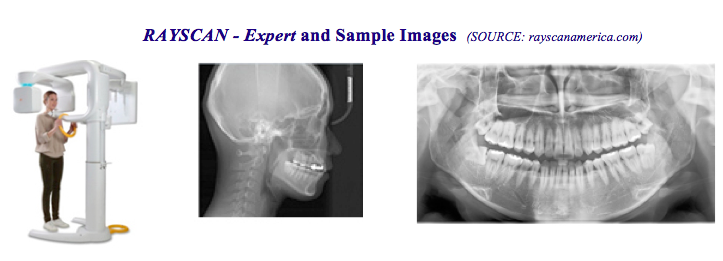
Cone beam computed tomography, or CBCT, are extraoral (i.e. - outside the mouth) scanners which rotate around the head during an exam, providing a 3600 view and with 3D images. Extraoral imaging is used to examine both the teeth and bones of the face and jaw, largely for the purposes of implantology (i.e. - assessment and planning of dental implants) and orthodontics. CBCT's ability to provide 3D images is viewed as a significant advantage to the 2D images provided by conventional extraoral imaging modalities. Unlike 2D X-rays, 3D imaging provides the benefit of viewing adjacent and anomalous structures which provides better accuracy and allows for improved visualization and treatment planning, particularly for more complex diagnoses.
A paper published in the October 2010 issue of The Journal of The American Dental Association titled Practical Applications of Cone-Beam Computed Tomography in Orthodontics cites several advantages of CBTC over conventional 2D imaging in orthodontics which provide for improved diagnosis and planning. And relative to utility in implantology, in June 2012 the American Academy of Oral and Maxillofacial Radiology updated their guidelines for dental implant imaging, recommending CBCT as the preferred method for presurgical assessment of dental implant sites.
In September 2013 Millennium Research Group published a research study on dental imaging industry trends titled Global Markets for Dental Imaging Systems 2014. The authors expect growth in the dental implant market and increasing demand for higher quality images will drive future sales of CBCT systems, which they predict will expand at a CAGR of approximately 15% globally and 16% in the U.S. over the ten year period of 2012 - 2022. The report further notes that CBCT is the fastest growing segment in dental imaging and is expected to continue to be so as dental professionals
LED began to capitalize on the expected significant growth in demand for CBCT systems in 2014 when the entered an agreement with Ray Co, Ltd, a former subsidiary of Samsung, to sell that company's RAYSCAN-Expert CBCT instrument in North America. And with roughly 60% of all CBCT systems residing in the U.S., the domestic market is where the lion's share of the business is.
Film-Based Imaging Being Replaced By Digital Imaging…
According to the 2013 Millennium Research Group report the global market for dental imaging will grow from $1.4B in 2012 to $2.3B in 2022, a CAGR of 5.5% which will be driven in part by the transition of film-based to digital-based imaging. Other factors also expected to facilitate this growth are greater demand for technologies that can increase patient flow (which also relates to the switch from film to digital imaging) as well as growing popularity of cosmetic dentistry procedures, such as veneers and orthodontics.
Intraoral imaging is used for the detection of cavities, to look at the roots of the tooth and to evaluate the health of area around tooth. There are two types of digital intraoral imaging systems; photostimulable phosphor plate systems (PSP plate systems) and digital X-ray sensors. PSP plate systems are indirect and involves a small plate (that is used in place of film) that is inserted into the mouth and then removed and digitally scanned. Digital sensors are direct, meaning that the sensor sends the data directly to a computer. PSP plate systems are more economical in terms of upfront costs but have disadvantages to digital sensors including that while sensors provide immediate results, scanning time with PSP plate systems can take up to two minutes.
Millennium Research expects film based modalities to be replaced by digital systems and for PSP plate systems to increase at a CAGR of about 2.6% in the U.S. over the next ten years. However, as practitioners are increasingly demanding improved workflow and patient throughput, the minutes lost waiting for scanning via PSP will drive even greater interest in digital X-ray sensors. Another advantage of digital X-ray sensors is their easy integration with electronic medical record systems. Millennium expects these advantages to push the U.S. digital X-ray sensor market up at a CAGR of about 4.4% over the next ten years.
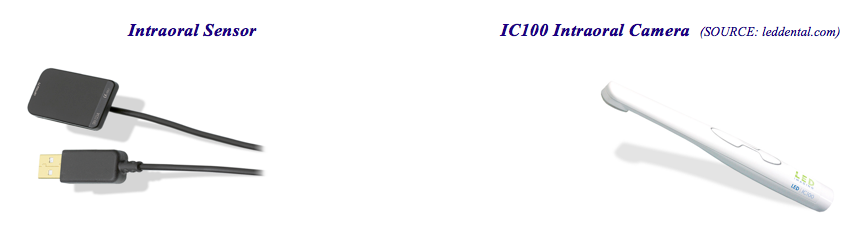
LED is also participating in this market. In May 2014 the company announced the introduction of LED IS100, a digital intraoral sensor, which the company is distributing in the U.S. The sensor is manufactured by Owandy, a France-based digital imaging company which has a presence in Europe but insignificant sales in the U.S., providing LED with a wide-open opportunity to exploit the domestic market. LED also introduced two intraoral cameras, IC100 and IC200.
Ray Co.and LED Dental expect a fairly regular flow of new product introductions and in April 2015 launched RIOSensor Digital Radiography System.
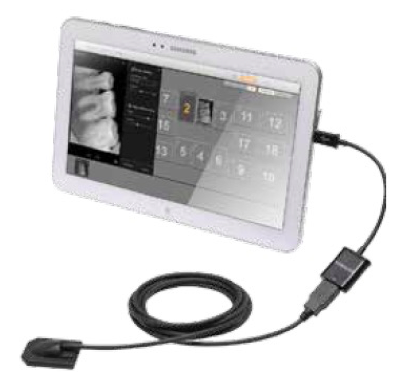
Then in March 2016 they announced that their new Tuxedo digital intraoral radiography system received FDA 510(k) clearance, allowing it to be sold in the U.S. Tuxedo is as billed as providing some of the highest image quality of any intraoral sensors on the market.
Imaging Software Ties In Intraoral / Extraoral Imaging
Imaging software is used to generate and store the images produced by intra- and extra-oral imaging modalities. In April 2014 LED announced the launch of open-architecture imaging software. The software is compatible not only with RAYSCAN-Expert but also with intraoral and extraoral devices from a variety of manufacturers. It also can be seamlessly integrated with any dental practice management suite.
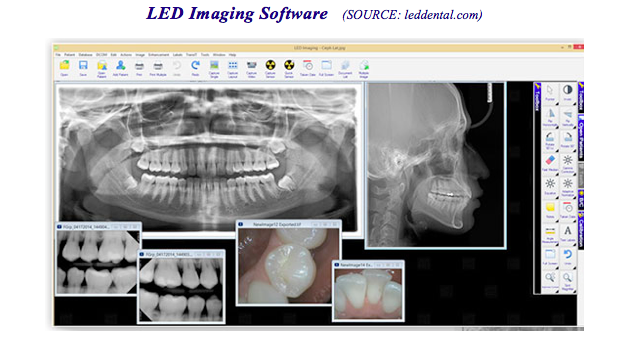
And as a complement to their software, April 2015 LED announced the launch of “LED Imaging Cloud” which provides dentists secure and easily accessible cloud storage of patient records and clinical data. Similar to personal and business computing, onsite data storage of medical and dental records via hard drives and servers is undergoing a rapid and massive shift to the cloud given the benefits of ease of access from any location, security and greater capacity. LED Imaging Cloud is compatible with both 2D and 3D data, allows for housing of all patient records on all workstations in one location and can be integrated with most imaging systems.
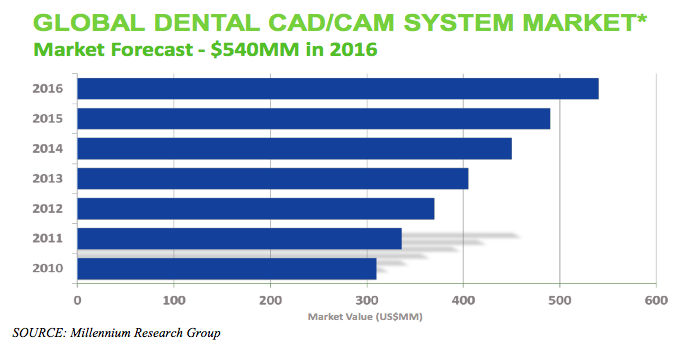
Software is a key piece in patient diagnosis and treatment planning. It is also used for computer-aided design/computer-aided manufacturing (CAD/CAM), a rapidly growing area in dentistry. CAD/CAM is used to design dental restorations such as veneers, crowns and prostheses but is still considered to be in the early adoption phase, leaving significant room for growth. Millennium Research expects the global CAD/CAM market to grow from approximately $320M in 2010 to $540M in 2016 (9% CAGR).
And LED made even more recent additions to its product portfolio, building on its quest to become a one-stop shop for dental imaging and related products and a full-product provider for practices converting from film to digital imaging.
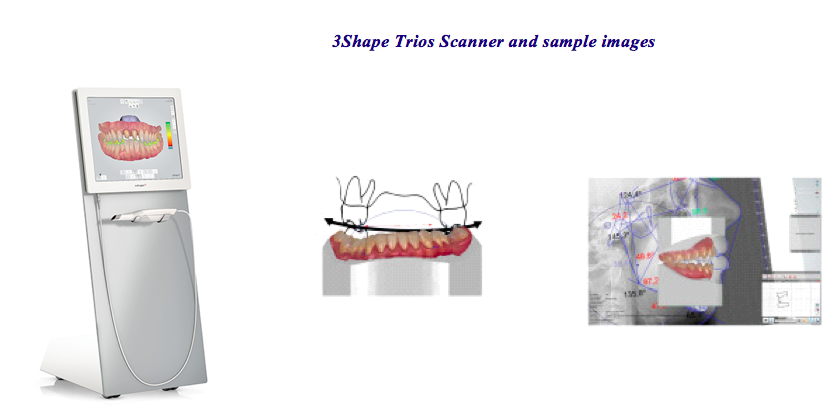
In mid-June 2015 the company announced that they will begin distribution of 3Shape's 3D intraoral digital impression and desktop scanner to the orthodontic market. The TRIOS 3 digital impressioning system further beefs up the company's burgeoning digital imaging product portfolio and provides more headway towards exploiting the high potential opportunity in the orthodontics space which has seen growing demand for higher quality imaging.
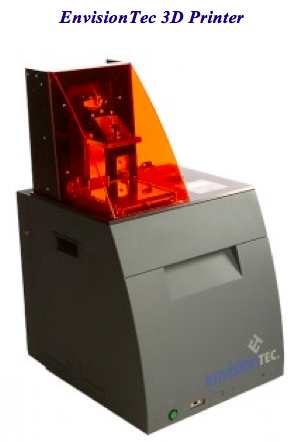
In August LED penned an agreement with EnvisionTec to distribute that company’s EnvisionTec 3D printers. The printers are used by dental and orthodontic practitioners and laboratories to make a variety of implants, materials and tools including crowns, bridges, models, surgical guides and other dental and orthodontic products. The addition of a 3D printer to LED’s product portfolio further enhances their ability to be a one-stop for dental imaging and related products and a full-product provider for practices converting from film to digital imaging. And with 3D being one the fastest growing segments in dental and orthodontics, their burgeoning product portfolio continues to strengthen their position to leverage one of the most attractive areas in the industry.
LED Making Rapid Progress in Tapping Imaging Market
The company has already made significant strides in tapping the digital imaging market since LED Imaging was formed in April 2014. They have signed partnership deals to distribute high potential digital imaging products throughout North America and commenced building a sales infrastructure to promote the products. LED is also in a somewhat unique and advantageous position in terms of distribution as they can leverage their already established VELscope customer base, which currently stands at approximately 13k dental practices.
And while the company has already brought several third-party digital imaging products under its distribution umbrella, management has indicated that they remain highly engaged with existing and other potential new partners with an eye on further expanding their dental imaging and technology product suite and expect their LED Imaging business to be a major driver of long-term growth of the company.
This early progress has already culminated in a significant increase in orders and revenue. Revenue grew 256% to $9.0M in 2014 and another 47% in 2015 to $13.1M. We currently model $17.7M in revenue for 2016, implying growth of 35% from 2015.
VELscope Also Remains a Focus
And while LED has dedicated considerable energy on building its imaging division, reviving sales of the company's proprietary oral cancer screening device, VELscope, also remains a priority. VELscope continues to hold the title of the world's leading adjunctive screening device for oral tissue abnormalities, including oral cancer. There are currently about 13k devices in use. But despite success in building a sizeable installed base, VELscope sales have recently lagged. Revenue fell from $6.3M in 2012 to $2.5M in 2013 in the midst of a change in distribution model (more recent figures have not been disclosed).
Since then the new management team has implemented changes related to VELscope distribution and optimized sales and marketing. This has included changing their distribution - from one which was heavily reliant on a single distributor to one which now will include several sales organizations. LED has made considerable progress in this regard. Since late 2013, the company has penned new distribution agreements with eight distributors including "majors" Patterson Dental, Henry Schein and DenMat Holdings. Optimization of the distribution model along with additional clinical evidence supporting the use of VELscope for oral cancer detection (including the recently published surgical margin data), is expected to culminate in additional growth in sales of the device.
And LED has recently begun looking at more “ways to expand adoption and the user base. This included partnering with the Oral Cancer Foundation in that organization’s recent initiative to promote more oral cancer screening. Under the relationship, LED provides a VELscope free of charge to dental practices that agree to perform at least three daily oral screenings over three years. While LED provides the instrument at no cost, they will charge the practices for the single-use consumable (i.e. disposable caps), which is where most of the margin is.
While these types of non-traditional marketing initiatives may not result in immediate ROI, they have the potential to broaden the user base over the long-term. And a larger user base is particularly valuable to a company like LED that uses a razor/razor blade revenue model in their VELscope segment which affords the potential for revenue and profitability to exponentially improve with just incremental growth in the installed base.
But much of the opportunity for growth of VELscope may lie outside of the U.S. and management is putting more efforts towards exploiting this. The company recently intimated that they plan to beef-up their overall international VELscope effort given that the ex-U.S. market represents about two-thirds of the total market opportunity. VELscope VX recently received regulatory approval in China and we expect LED will look to gain marketing approval in other international territories, particularly spots in Europe and Asia. Following gaining requisite regulatory approvals, the next step will be to consummate distribution agreements in those regions of the world. While we model only incremental progress on this front in 2016 (given that regulatory approvals, in particular, can be a several-quarter process), we think next year may see additional and more significant contribution from growth in international VELscope sales.
See below for access to our updated report on LED Medical.
READ THE FULL RESEARCH REPORT HERE
SUBSCRIBE TO ZACKS SMALL CAP RESEARCH to receive our articles and reports emailed directly to you each morning. Please visit our website for additional information on Zacks SCR and to view our disclaimer.