By John Vandermosten, CFA
On September 26, 2016, Lipocine Inc. (NASDAQ:LPCN)
announced top line results for their Phase 2b trial for LPCN 1111, the once per day oral testosterone replacement therapy. The study identified the appropriate dose for Phase 3 trials which we expect to begin following a 4Q:16 meeting with the FDA. The trial was a randomized, open label, two-period, multi-dose PK study that enrolled hypogonadal males into five treatment groups. The 14-day course of treatment found a good dose-response relationship and met both primary and secondary endpoints. According to the release, LPCN 1111 was well tolerated with no drug-related severe or serious adverse events reported.
Successful results from the 2b trial are a positive and increase the value of the LPCN 1111 program due to the anticipated transition to Phase 3 trials. We applied a 15% probability of success to this program during Phase 2 and will adjust the probability accordingly when Phase 3 trials begin.
Lipocine will have a meeting with the FDA in 4Q:16 to determine the trial design for the Phase 3 trial for LPCN 1111. When the company developed the Phase 3 trial for LPCN 1111’s predecessor, the once per day TRT therapy, the FDA required a 52 week extension study as Tlando was the first oral product in the class. Management believes that a study that requires another extension study would run about $25 million. However, now that the oral administration route is better understood, LPCN 1111 trials may be able to rely on the Tlando research to determine safety. If this is the case, then Lipocine will only need perform the efficacy study and costs will fall dramatically to an estimated $5 million.
Exhibit I – LPCN Pipeline
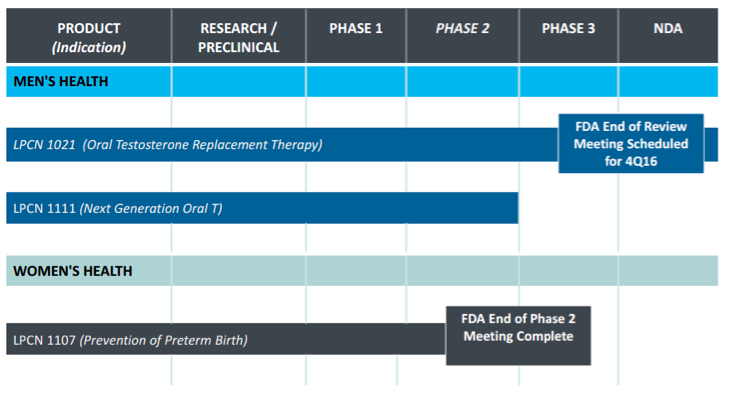
Despite the positive news for LPCN 1111, Lipocine’s largest valuation driver is related to the outcome of the resubmission for Tlando (LPCN 1021). We remind investors that there could be several requirements stemming from the resubmission of the NDA to the FDA that could span from a few months to over a year. Lipocine noted in the latest presentation that the post-CRL, Type A meeting will take place in 4Q:16, and we anticipate a late October target given the 30-day turnaround offered by the agency.
Based on current information, we outline three NDA resubmission scenarios for Tlando based on the outcome of the meeting with the FDA:
- No new data requirement, 2 month review
-Expect approval by year end
- No new data requirement, 6 month review
- Expect approval by April 2016
- Label bridging study requires, 6 month review
-Expect approval by 4Q:17
We will update our model accordingly as the company clarifies the details of the meeting with the FDA.
The company also has a 4Q:16 milestone for LPCN 1107, the oral product for prevention of recurrent pre-term birth. Lipocine met with the FDA at the end of August for the end of Phase 2 meeting and received guidance on the clinical path forward. The next meeting in the current quarter will clarify study design, protocol and the number of subjects.
CRL Background
On June 29, 2016, Lipocine disclosed that it had received a Complete Response Letter (CRL) from the FDA regarding the NDA submission for LPCN 1021 (Tlando).
The CRL highlighted deficiencies related to dosing as provided in the label. The Phase 3 trial protocol had adjusted dosing based on 15 blood draws taken over a 24 hour period; however, the proposed label only relied on only one blood draw to determine the proper titration. The FDA felt that this inconsistency would lead to dosing errors and as a result will require evidence to support a single point window after administration of Tlando where the patient is evaluated and up-titrated or down-titrated to achieve the optimal dose. Prior to the letter, management felt that the trial design was sufficient as it was based on the Phase 3 trial for Axiron, an Eli Lilly topical testosterone product which was approved in 2010.
Lipocine noted that the CRL did not include any language that questioned LPCN 1021’s efficacy, safety, adverse events, side effects or the effectiveness of Lipocine’s proprietary Lip’ral drug delivery technology.
Lipocine will require additional clarity from the FDA before taking the next step and has requested a Type A meeting, which we expect will occur in October 2016. Prior to the meeting there is a high degree of uncertainty as to what may be required to ultimately gain approval from the FDA. Based on our discussions with management, there may be several pathways of varying duration and expense required before a new application satisfies the regulatory agency.
If the FDA requires additional substantiation regarding an optimal titration point, then a label bridging study or efficacy study may be required with costs ranging from $1 to $5 million depending upon the agency’s needs. Under this scenario, we anticipate it could take from 12 to 15 months to obtain approval.
It is possible that a longer study may be required with additional expense in excess of $5 million and a duration on par with the 15-month SOAR trial. However, we think this is unlikely given the narrow focus of the CRL on titration and dosing requirements.
We do not believe that the FDA’s response threatens Lipocine’s Lip’ral technology or will have a materially negative impact on the other two programs in the pipeline. Lipocine anticipates consulting with the FDA regarding trial design following the end of the Phase 2 trials for LPCN 1111 (once-daily testosterone) and LPCN 1107 (pre-term birth) and expects to meet with the agency in later this year. We anticipate that Lipocine will make any and all adjustments necessary to ensure that dosing and titration protocols satisfy the FDA’s requirements for the other development programs.
Our Estimates
While the topline results from the LPCN 1111 trial and the expected launch of its Phase 3 trial are positives, the key issue impacting valuation is the outcome of the meeting with the FDA regarding Tlando. We anticipate updating our estimates when additional clarity regarding the lead program is available.
Conclusion
While the FDA’s issuance of a complete response letter will delay the launch of Tlando and potentially increase trial costs by several million dollars, we believe that the narrow focus of the FDA’s concerns and emphasis on dosing protocols rather than on a fundamental flaw with the Lip’ral technology support eventual approval. While the requirements to satisfy the FDA will only become clear after Lipocine meets with the agency, based on current information, we have conservatively estimated an additional twelve months will be required to launch Tlando placing first sales in 2018. We will adjust our model accordingly as additional details become available.
SUBSCRIBE TO ZACKS SMALL CAP RESEARCH to receive our articles and reports emailed directly to you each morning. Please visit our website for additional information on Zacks SCR and to view our disclaimer.