By Grant Zeng, CFA
NASDAQ:ORMP
Earlier today, the share price of Oramed (NASDAQ:ORMP) declined over 20%. We see no reason for this decline. As far as we know, the Company has not made any announcements, material or not, which would explain the downfall.
Our guess is that this may be short sellers speculating on the Phase IIb data of the company’s lead candidate ORMD-0801. As it stands, the data remains blinded/locked and there isn’t anyone who knows the results.
Top Line Data from Phase IIb ORMD-0801 Are Expected to be Available in 2Q16
On April 5, 2016, Oramed announced that all follow-up visits in the Company’s Phase IIb study of its oral insulin capsule, ORMD-0801, have been completed.
This is a double-blind, randomized, 28-day clinical trial designed to assess the safety and efficacy of ORMD-0801 in type II diabetics. The trial will evaluate ORMD-0801 over a longer treatment period (28-day vs 7-day in the Phase IIa study) and will have statistical power to give greater insight into the drug’s efficacy.
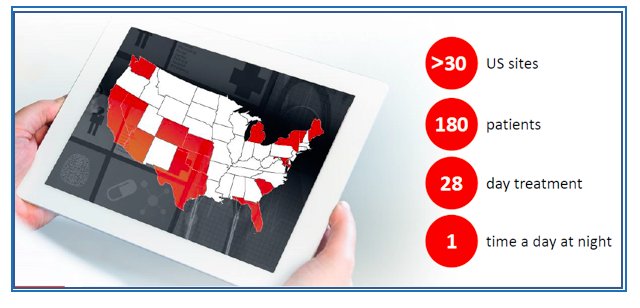
The Phase IIb trial was initiated on June 30, 2015 and conducted at 33 clinical sites in the United States.
The primary objective is the effect of ORMD-0801 on weighted mean night time glucose levels based on 2 nights of Continuous Glucose Monitor (CGM) data by comparison of the mean % change between baseline and week 4 of ORMD-0801 treatment and placebo groups. Safety and tolerability will also be assessed.
Top line data are expected to be available in 2Q16. We estimate a pivotal Phase III trial could start in late 2016 or early 2017 if Phase IIb data are positive.
The Unique Protein Oral Delivery (PODTM) Technology
Over the years, Oramed has developed a unique proprietary platform technology: protein oral delivery (PODTM) that allows for the oral delivery of protein drugs presently administrated only via injection.
There are many attractive advantages of oral drug delivery. These include increased patient comfort and compliance, reduced risk of infection, simpler application in pediatric medicine, first-pass metabolism preceding systemic exposure, and cost effectiveness. All these advantages have positioned oral delivery the most popular and preferred route of drug administration, especially for small molecules.
However, there are two major obstacles to the oral delivery of protein-based medications:
- Degradation by harsh acids and proteolytic enzymes within the gut;
- Absorption blocked by the physical barrier posed by the wall of the small intestine, which blunts translocation of large particles.
The end result is the jeopardization of the integrity and potency of orally ingested proteins. Thus, most protein-based pharmaceuticals cannot be taken in tablet form, and are typically provided in injectable forms, where they are delivered directly to the blood circulation.
Oramed POD™ (Protein Oral Delivery) technology has been uniquely designed to:
- protect orally delivered proteins from detrimental enzymatic activity within the gastrointestinal tract;
- and to enhance their absorption across the intestinal wall.
In order to prevent the degradation of proteins in the gastrointestinal tract, the active protein is encapsulated in a capsule that features a highly protective coating that remains intact in the most acidic segments of the gut, as well as enzymatic support provided by specialized protease inhibitors.
To promote the protein’s absorption, an absorption enhancer supplement is used to facilitate protein passing across the intestinal barrier.
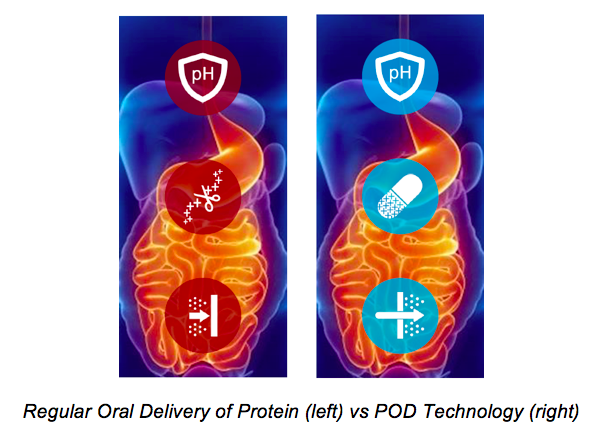
By preventing protein breakdown in the gastrointestinal tract and promoting its crossing the small intestine, this breakthrough solution brings oral protein drug delivery significantly closer to a reality.
Oramed PODTM technology allows insulin to travel from the gastrointestinal tract via the portal vein to the liver and then the bloodstream, revolutionizing the manner in which insulin is delivered. It enables its passage in a more physiological manner than current delivery methods of insulin. This technology is a platform that has the potential to deliver medications and vaccines orally that today can only be delivered via injection.
The Insulin Market
Insulin is one of the most important pharmaceuticals in the world and represents a multibillion dollar market. More than ninety years after the discovery of insulin, the therapy remains a staple of treatment for both type 1 and type 2 diabetes.
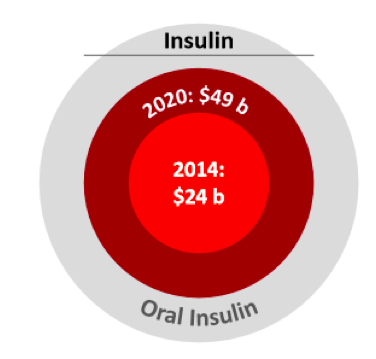
According to P&S Market Research, the global human insulin market was valued at $24 billion in 2014. The market is expected to grow at a compound average growth rate (CAGR) of 12.5% during the period 2015 to 2020, to reach $49 billion by 2020. This doesn’t take into account oral insulin and the potential to really enlarge this market via giving insulin earlier in the therapeutic paradigm. The growth is fueled by the growing prevalence of diabetes and the progressive nature of the disease.
On the basis of insulin type, the insulin analogs (modern human insulin) commands the larger share in the global market. The modern human insulin is expected to grow at a CAGR of 13% during 2015 to 2020. The modern human insulin can be further categorized as long acting human insulin, rapid acting human insulin and premixed human insulin; wherein, the long acting human insulin commands the largest share in modern human insulin market but the premixed human insulin exhibited the highest growth rate.
In Asia-Pacific, the human insulin market is expected to witness a higher CAGR of 13.9% during the period 2015 to 2020, to achieve $12 billion value by 2020.
The global human insulin market has a fragmented structure with large number of companies operating in the market. The key players in the human insulin market include Sanofi, Novo Nordisk A/S, Eli Lilly and Company, GlaxoSmithKline Plc, Pfizer, Inc., Merck & Co., and Julphar.
Advantage and Opportunity for ORMD-0801
We believe ORMD-0801 could command a nice market share in the global insulin market if approved. ORMD-0801 is an oral formulation of insulin and holds many advantages compared to injectable insulin including increased patient comfort and compliance, reduced risk of infection, simpler application in pediatric medicine, first-pass metabolism preceding systemic exposure, and cost effectiveness.
Specifically, endogenous insulin is produced by the pancreas and delivered to the body via the liver. Injected insulin is introduced directly to the bloodstream with only a fraction of it reaching the liver. This can cause excess sugar to be stored in fat and muscle which often results in weight gain. This may also cause hypoglycemia. While oral insulin (such as ORMD-0801) like natural insulin is delivered first to the liver. This should lead to:
- Better blood glucose control;
- Reduced hypoglycemia: liver metabolizes 80%;
- Reduced hyperglycemia: insulin closes down glucose overproduction/secretion;
- Reduced weight gain (neutral): vs. SC insulin focus on glucose disposal leads to substantial weight gain.
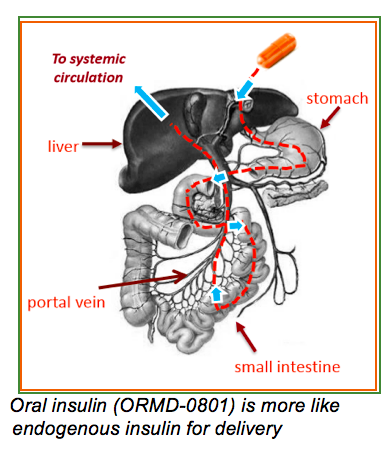
All these advantages position ORMD-0801 as a key player in the global inulin market.
Oramed is developing ORMD-0801 for both type 1 and type 2 diabetes, and targeting this new agent for the management of excessive production of glucose at night: a significant challenge in diabetes management.
Excessive nocturnal glucose production by the liver is frequently demonstrated in diabetes patients, which leads to a high fasting blood sugar (FBG), measured after an 8-hour fast. High FBG test results are a key concern in diabetes management. Current treatment is suboptimal. In only 20% of patients, blood sugar is regulated with medication and return FBG to normal levels.
The first indication of ORMD-0801 reduces excessive nocturnal glucose production in the liver by acting the same way that natural insulin does.
SUBSCRIBE TO ZACKS SMALL CAP RESEARCH to receive our articles and reports emailed directly to you each morning. Please visit our website for additional information on Zacks SCR and to view our disclaimer.