By
John Vandermosten, CFA
TSXV:RVX
Resverlogix Reports Fiscal Year 2016 Results
On July 28, 2016, Resverlogix Corp. (TSXV:RVX)
filed financial results for the fiscal year ending April 30, 2016 with the Alberta Securities Commission. The company reported no revenues and a net loss of ($19.7) million or ($0.20) per share. This compares to our estimates also of zero revenues and a net loss of ($16.6) million or ($0.16) per share. Total operational expenses for FY:16 were $20.0 million, increasing from the $8.5 million spent in the prior year. Full-year research & development expenses rose substantially, while general & administrative remained flat, with costs related to the BETonMACE clinical trial driving the majority of the increase.
Clinical costs totaled approximately $8.8 million with $7.5 million of the total allocated to the BETonMACE clinical trial and $0.7 million on biomarker studies. Regulatory costs comprised $0.2 million of the total and $0.4 million was spent on other clinical costs including sample analysis, consultants and insurance. Research and development expenses increased throughout 2016, culminating in expenses of $6.3 million in 4Q:16 as the BETonMACE trial successfully launched in October. Chemistry costs saw a material increase, rising to $2.3 million in FY:16 compared to $0.3 million in FY:15. Costs related to the development of the drug product manufacturing process and shipment of clinical supplies for the BETonMACE trial contributed to the $2 million change.
General and administrative costs of $4.3 million were essentially the same in both FY:16 and FY:15. This was a result of higher share based payments, business development and regulatory costs offset by lower corporate costs and professional fees.
As of April 30, 2016, cash was $28.1 million and long-term debt was $47.7 million. A transaction with Zenith related to the cancellation of a royalty agreement resulted in a $5.7 million cash payment by Zenith to Resverlogix following the end of FY:16 reporting period. Operating cash burn was $19.3 million for the year and approximately $1.6 million per month.
Expanded Renal and Orphan Programs
In 1Q:16, the company formed an International Renal Clinical Advisory Board (“RCAB”) for the future development of apabetalone into expanded renal indications. The RCAB is composed of six MDs and PhDs that will guide the development process. Shortly after, on July 21, 2016, Resverlogix announced that it had begun a Phase 1 pharmacokinetic (PK) trial in patients with severe renal impairment with apabetalone. The company is targeting this renal population to address a serious unmet need in an orphan population and may see accelerated development, approval and ultimately market adoption in pursuing this pathway.
The study’s primary goal is to confirm the favorable pharmacokinetic traits that have been observed in other apabetalone trials. The study is being conducted in New Zealand and expects to post results in the second half of 2016, after which additional renal impairment and dialysis trials will proceed based on favorable data. We hope to see a Phase 2 trial begin shortly after the completion of the data analysis and Resverlogix could potentially obtain approval in a renal indication under an orphan designation prior to an approval for high-risk cardiovascular disease.
The study will examine acute changes in Bromodomain and Extra-Terminal (BET) inhibition biomarkers for subjects with severe renal impairment. The company stated in its press release that “Two cohorts, each comprised of eight subjects, will be evaluated in the study. Cohort one will include subjects with end-stage renal disease (ESRD) not on dialysis, with an estimated glomerular filtration rate (eGFR) of less than 30 mL/min/1.73m2 while cohort two will include healthy individuals whose age, weight and gender will be matched to the renal impaired subjects. All subjects will receive a single oral administration of 100mg of apabetalone.”
While we do not currently include a valuation component for an orphan renal indication, we recognize the attractiveness of this pathway, find it to be an unqualified positive and will adjust our model accordingly as development details becomes more certain.
Publication of Study
In June 2016, the company announced that a pre-diabetes mellitus study performed by the Baker IDI Heart and Diabetes Institute was published in the journal 'Metabolism' under the title "Effects of the BET-inhibitor, RVX-208 on the HDL lipidome and glucose metabolism in individuals with prediabetes: A randomized controlled trial." The study concluded that apabetalone treatment impacted glucose metabolism and both the reduction in glucose absorption and its production are expected to be of benefit in patients with prediabetes mellitus.
Our Estimates
Resverlogix has increased the pace of investment into its portfolio of indications for apabetalone in recent months, launching a Phase 1 PK study with patients suffering from severe renal impairment. We anticipate that the company will continue to launch studies in other neighboring indications. Due to this acceleration in research and clinical activity, we have increased our estimates of research and development costs by $2 million in FY:17 and by $1 million in FY:18. This revision increases the loss per share by 2c in each of FY:17 and FY:18 shifting our loss per share to ($0.27) and ($0.28) respectively. We maintain our target price of CAD$5.00.
Resverlogix’s Epigenetics Platform Technology
The basis of Resverlogix’s epigenetics drug development platform involves targeting Bromodomain and Extra Terminal Domain (BET) proteins with the potential to impact cardiovascular disease, neurodegenerative diseases, diabetes, cancer, and autoimmune diseases. Acetylated lysine, a modified amino acid that is found in histones, binds to the two small bromodomain regions of BET proteins. Resverlogix has discovered BET protein inhibitors that specifically bind to BET bromodomains, thereby preventing them from binding to histones. This leads to modifications in certain gene activity involved in disease processes. Resverlogix is focusing the majority of its research efforts on the BRD2, BRD3, BRD4, and BRDT proteins.
The small molecule compounds identified by Resverlogix function via selective inhibition of BET proteins. They alter the activity of genes that play a key role in disease in relevant cell models, demonstrate oral bio-availability allowing for oral administration in the form of a pill, and demonstrate activity in animal models of human disease. Resverlogix is in the process of identifying and developing compounds for additional clinical indications with proprietary platform activities continuing to add to its growing portfolio of intellectual property needed to support the development of these assets.
Clinical Trials
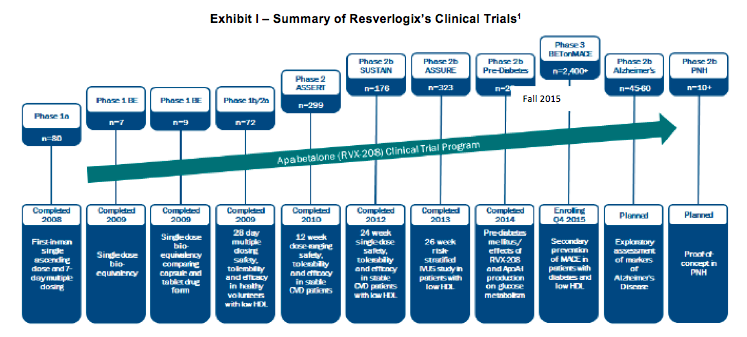
Resverlogix has completed many clinical trials to date. Apabetalone has been tested in over 1,000 patients in 12 countries, and clinical experience with apabetalone has demonstrated that BET inhibitors can be both safe and effective. Over the years, Resverlogix has gathered information from these studies and shifted focus to target patients with low HDL and diabetes with co-treatment of RVX-208 and rosuvastatin (Crestor®) and atorvastatin (Lipitor®) in its BETonMACE trial.
Prior to the BETonMACE trial, apabetalone has completed two Phase 2b trials named SUSTAIN and ASSURE in collaboration with the Cleveland Clinic. Furthermore, Resverlogix has performed thorough analysis of MACE in the Phase 2b clinical program; 35 MACE events were reported in both the SUSTAIN and ASSURE trials. This analysis demonstrated that treatment with apabetalone was associated with a 55% reduction in MACE. Apabetalone treated patients had a lower level of cumulative events of 6.7% vs. 15.1% (p=0.02) in the placebo treated group.
Furthermore, a beneficial effect of apabetalone on patients with diabetes mellitus was accentuated with a reduction in MACE that was lowered by 77% (p=0.01). BETonMACE will continue to focus on MACE reduction as the primary endpoint for the registration study.
Phase 3 “BETonMACE”
In October 2015, Resverlogix launched its Phase 3 “Effect of RVX-208 on Time to Major Adverse Cardiovascular Events in High-Risk Type 2 Diabetes Mellitus Subjects with Coronary Artery Disease” (BETonMACE) trial with lead drug apabetalone in high-risk patients with coronary artery disease (CAD) and type 2 diabetes mellitus (DM). The study is a large international multi-center, double-blind, randomized, parallel group, placebo-controlled clinical trial to determine whether treatment with apabetalone in combination with rosuvastatin or atorvastatin increases the time to MACE compared to treatment with rosuvastatin or atorvastatin alone.
The primary endpoint of the BETonMACE trial is designed to show a relative risk reduction of MACE, narrowly defined as a single composite endpoint of CV death, non-fatal myocardial infarction (“MI”) and stroke. The study is an event-based trial and will continue until at least 250 MACE events have occurred. MACE will be adjudicated by an independent committee and the study will be monitored by a data safety monitoring board. Management is seeking a 30% reduction in MACE as compared to the placebo arm.
Secondary endpoints include time to first occurrence of the composite broad MACE which includes the addition of hospitalization for CVD events (unstable angina and revascularization procedures), changes in lipoprotein concentrations (HDL and apolipoprotein A-1, changes in diabetes mellitus variables (glucose and glycated hemoglobin), change in alkaline phosphatase (“ALP”), changes in kidney function and additional safety and tolerability of apabetalone.
In order to be eligible to participate in the study, patients must have documented history of type 2 Diabetes Mellitus, experienced a recent (defined as 7-90 days prior to randomization) coronary artery disease (“CAD”) event including unstable angina, revascularization procedure or MI and have low levels of HDL (<40 mg/dL for males and <45 mg/dL for females). Standard of care high potency statin therapy shall consist of daily dose of either atorvastatin 40-80 mg or rosuvastatin 20-40 mg. After an initial screening period of 1 to 2 weeks during which subjects will be treated with standard of care statin therapy, subjects will be randomized to either apabetalone 100 mg twice daily or matching placebo with continued statin treatment. This combination treatment period will continue for up to 104 weeks.
Resverlogix believes that a Phase 3 MACE trial could confirm health benefits in CVD, diabetes, and CKD. The main objective of the trial will be to confirm MACE reduction by apabetalone as observed in SUSTAIN and ASSURE pooled analysis and also expand safety assessment. The study will be in a larger prospective setting with high-risk patients that have diabetes mellitus and low HDL-C (< 40 mg/dL for males and < 45 mg/dL for females who are post events). Management also plans to further explore the potential impact that apabetalone may have on inflammation, the complement and coagulation pathways, as well as on platelet improvement in these high-risk patients in the future Phase 3 trial.
As part of the BETonMACE trial, the study will examine a subset of the patients to test for impact on neuro-degenerative diseases and test for cognition. The subset will include patients over the age of 70 and perform a Montreal Cognitive Assessment (MoCA) test. The company anticipates that this could be from 200 to 300+ participants in the trial. This population group is the equivalent of a Phase 2 dementia trial built into BETonMACE.
BETonMACE will initially be conducted in Argentina, Mexico and various European cities with potential expansion into Asia through the partnership with Hepalink. U.S. sites are also a consideration as Resverlogix looks towards FDA approval in this adaptive trial that will target a minimum of 2,400 patients. As of April 30, 2016, Argentina, Belgium, Bulgaria, Croatia, Germany, Hungary, Israel, Mexico, Poland, Serbia, and Slovakia had received regulatory approval to open clinical investigator sites and were recruiting patients.
Orphan Disease Program
On September 24, 2015, Resverlogix announced the commencement of an Orphan Disease Program for Complement Mediated Diseases.
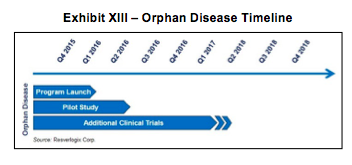
New data suggests that apabetalone downregulates different components of the complement and coagulations pathways, which are important to cardiovascular disease as well several orphan diseases. Resverlogix would like to further explore the potential of apabetalone in humans with overactive complement pathways.
There is potential for Resverlogix to study other complement mediated diseases, such as atypical hemolytic uremic syndrome (aHUS), and glomerulonephritis in conjunction with apabetalone as well as other pre-clinical BET inhibitors/follow-on compounds. Resverlogix does not currently have an orphan drug designation at this point, but the goal of the current Phase 1 PK study in renal intends to pursue this route. Management believes that orphan status will allow for the drug to reach the market before the pathway based on the BETonMACE trial.
Summary
Resverlogix’s lead product candidate, apabetalone, is the first selective BET bromodomain inhibitor in clinical trials for high-risk vascular disease. In the current Phase 3 BETonMACE trial, Apabetalone is targeting a very specific patient population with low HDL, type 2 diabetes mellitus and chronic kidney disease with a high cardiovascular risk for increased MACE. The trial is progressing with patient recruitment and trial site activation in Phase 3 BETonMACE. Currently, all planned countries including Argentina, Belgium, Bulgaria, Croatia, Germany, Hungary, Israel, Mexico, Poland, Serbia, and Slovakia have received regulatory approval to open clinical investigator sites and are recruiting patients.
As a reminder, our investment thesis for Resverlogix is based on a large and growing underserved market in cardiovascular disease. With a growing older population in the world, and in many cases a less healthy one than in previous generations, the addressable market for therapies that reduce cardiovascular risk is increasing. Apabetalone has shown an ability to positively impact major adverse cardiac events in early trials and we expect the current BETonMACE trial to confirm this hypothesis. There is also potential for the compound to address a number of other indications, including orphan diseases, PNH and aHUS. With a substantially large market and an anticipated high degree of efficacy, we forecast a rapid uptake of apabetalone following regulatory approval and forecast robust pricing ability given the anticipated pharmacoeconomics of the drug.
We believe that durable patent position and the forecasted pricing of apabetalone, combined with a management skill set surrounding CVD and diabetes and a novel approach to addressing the residual risk in high need CVD patients, support our price target. The company has secured access to approximately $37 million USD in new capital through licensing and stock purchase agreements with Hepalink and Eastern Capital, which we believe should fully fund the Phase 3 BETonMACE program.
We highlight that data from the BETonMACE trial will not likely be available until mid to late-2018, but we hope to see results from the interim futility analysis which will provide a first look after 125 MACE events. The recently announced complement-mediated orphan disease program could also provide further upside to our valuation, however at this time it is too early to include in our model. Additionally, apabetalone’s multimodal mechanism of action has led to the announcement of the current Phase 1 trial in renal disease, which may provide additional upside to our valuation. Currently, we believe the company is undervalued. We maintain our price target of CAD$5.00 per share.
READ THE FULL RESEARCH REPORT HERE
SUBSCRIBE TO ZACKS SMALL CAP RESEARCH to receive our articles and reports emailed directly to you each morning. Please visit our website for additional information on Zacks SCR and to view our disclaimer.