By
David Bautz, PhD
NASDAQ:TNXP
Business Update
On September 6, 2016, Tonix Pharmaceutical Holdings Corp. (NASDAQ:TNXP)
announced results from the company’s Phase 3 AFFIRM trial of TNX-102 SL in patients with fibromyalgia. The AFFIRM trial was a 12-week, randomized, double blind, placebo controlled trial of 519 patients who were given either 2.8 mg TNX-102 SL or placebo at bedtime in a 1:1 randomization.
Data from the trial did not achieve statistical significance in the primary efficacy endpoint of the proportion of patients who reported a 30% or greater decrease in pain from baseline (
P=0.095). The pre-specified statistical method utilized for the primary efficacy analysis counted all patients who withdrew from the study as non-responders, even if the reason for leaving the study had nothing to do with efficacy or tolerability. Another standard statistical method that takes into account the reasons for discontinuation showed statistical significance in the 30% responder analysis (
P=0.012).
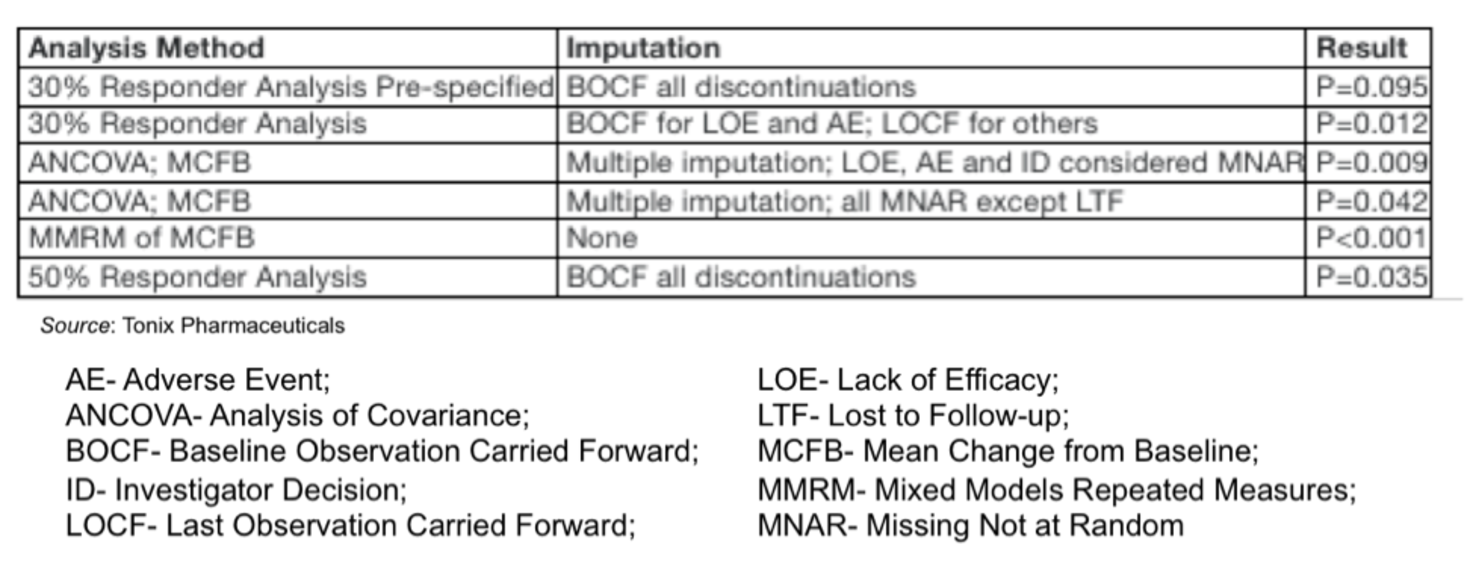
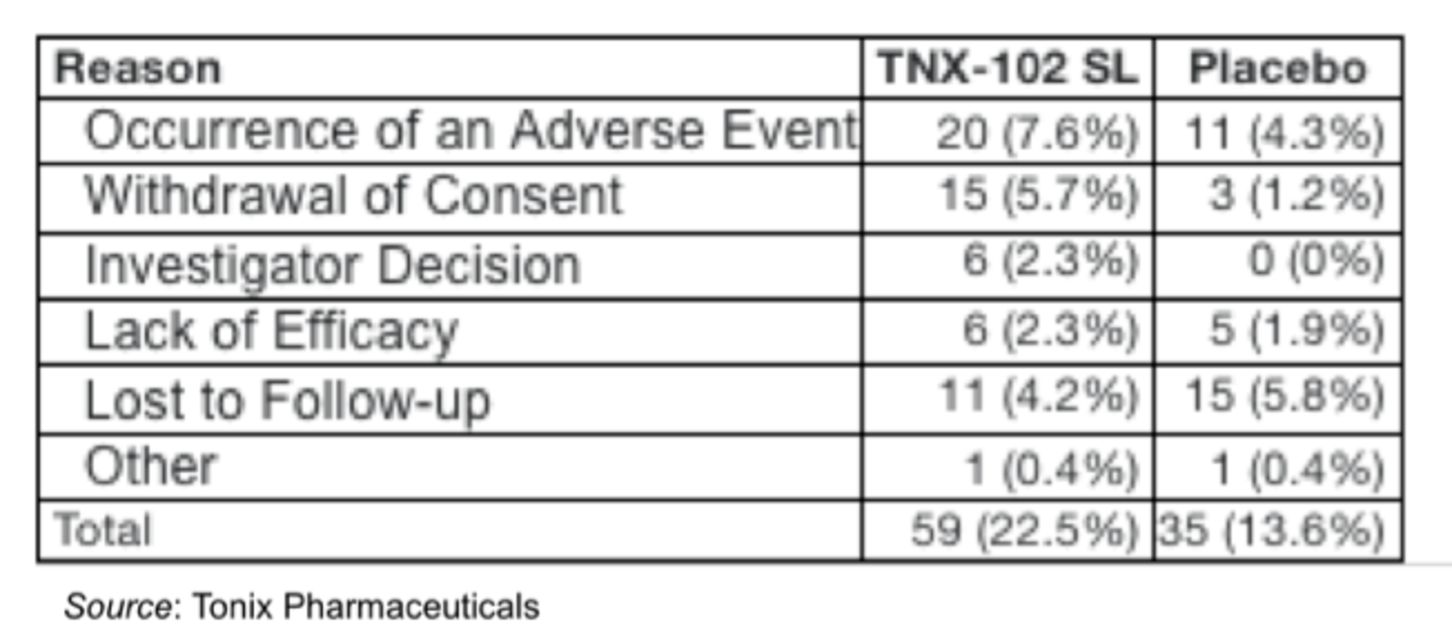
The company disclosed that an unexpected imbalance in patient discontinuations for reasons unrelated to efficacy or tolerability created a negative bias in the primary responder analysis. Any patient that discontinued the study, no matter what the reason, was labeled a non-responder without their results up to that point taken into consideration. As the following table shows, 15 patients treated with TNX-102 SL withdrew consent during the study compared to only three placebo-treated patients. Most of the other reasons for leaving the study were similar between the treatment groups.
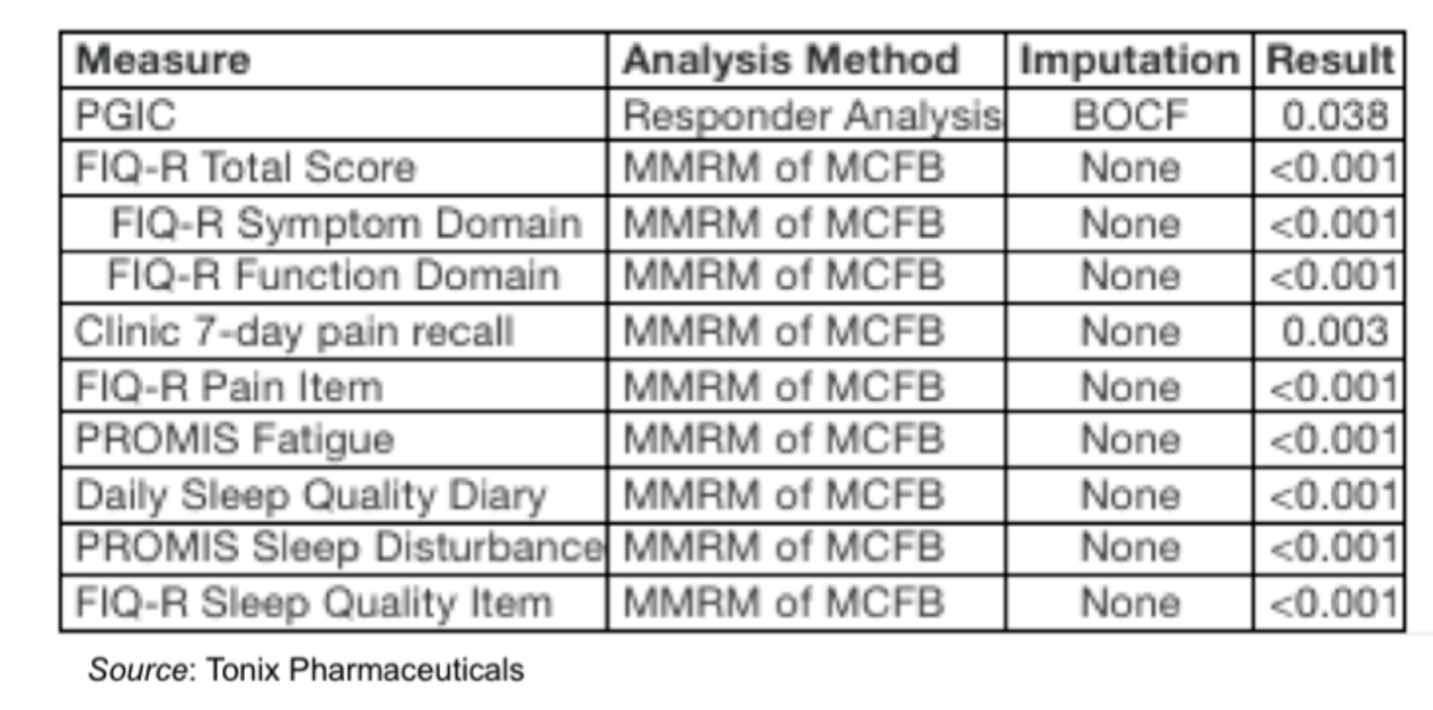
While the study did not meet the primary efficacy endpoint, TNX-102 SL did show statistically significant effects on pain in two other endpoints, Patient Global Impression of Change (PGIC) and Fibromyalgia Impact Questionnaire-Revised (FIQ-R), which assess global improvement and a range of fibromyalgia symptoms. Similar to the results seen in the Phase 2b BESTFIT study, results from the AFFIRM study also showed strong effects on improving sleep quality by the daily diary and the PROMIS sleep disturbance scale.
TNX-102 SL was well-tolerated and the adverse event profile was similar to what was seen in other trials. There were three serious adverse events (SAEs) reported in the active group and four reported in the placebo group, however no new safety signals were observed with multiple causal factors being involved for each SAE.
Attention Turns to PTSD
Tonix has decided to discontinue the fibromyalgia program and fully focus the company’s resources on the development of TNX-102 SL in post-traumatic stress disorder (PTSD). As a reminder, in May 2016 Tonix announced positive results from the AtEase Phase 2 clinical trial of TNX-102 SL in patients with military-related PTSD. The three-arm trial enrolled 231 participants, who were randomized to receive either 2.8 mg of TNX-102 SL (n=90), 5.6 mg of TNX-102 SL (n=49), or placebo (n=92) taken sublingually at bedtime daily for 12 weeks. The primary endpoint of the trial was the week twelve mean change from baseline in the total CAPS-5 (Clinician-Administered PTSD Scale) score in participants who received TNX-102 SL as compared to those who received placebo. Safety was also evaluated. The CAPS is a structured interview designed to make a categorical PTSD diagnosis and provide a total PTSD symptom severity score, and is considered the “gold standard” in PTSD assessment and corresponds to the DSM-5 diagnosis for PTSD. The assessor combines information on frequency and intensity of an item into a single severity rating (0-4) for the 20 DSM-5 PTSD symptoms, thus patients are assigned a score with a maximum of 80 points possible. A higher score corresponds to more severe PTSD and patients are categorized as follows:

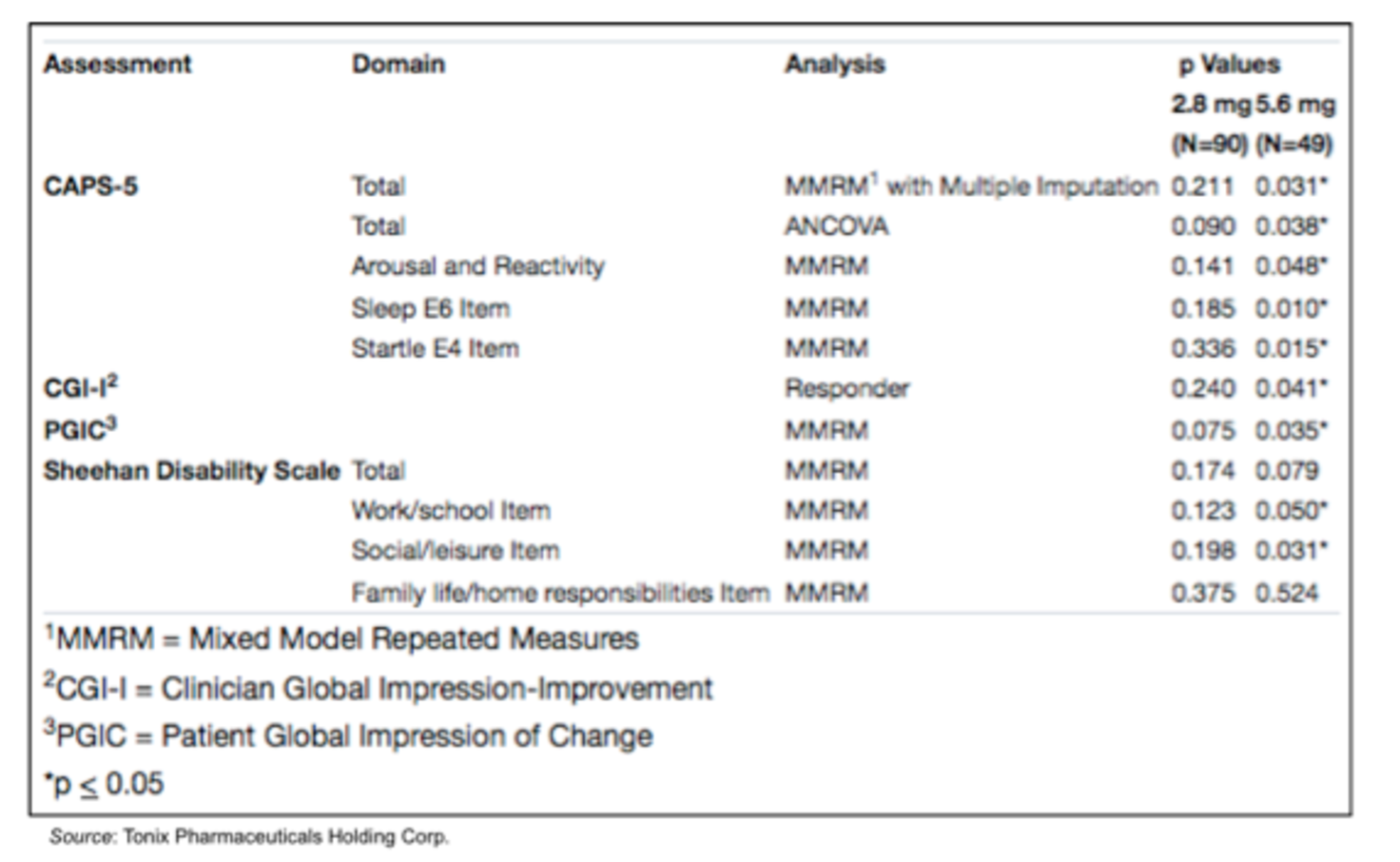
The following table gives results for various parameters of the AtEase study. The results showed that the 5.6 mg dose had a statistically significant effect on total CAPS-5 by two statistical analyses, mixed model repeated measures (MMRM) with multiple imputation (
P=0.031) and ANCOVA (
P=0.038). In addition, there was a statistically significant effect for various items that go into the CAPS-5 score, including the Sleep E6 item (
P=0.010), the Arousal and Reactivity criteria cluster (
P=0.048), and Startle E4 item (
P=0.015). The fact that the Arousal and Reactivity criteria cluster was significant is very important, as this set of symptoms has been notoriously difficult to treat in PTSD patients. The 5.6 mg dose was also statistically significant for the Clinician Global Impression-Improvement (CGI-I;
P=0.041) and the Patient Global Impression of Change (PGIC; P=0.035). Lastly, the percentage of those who finished the trial were 73% on placebo, 79% on 2.8 mg of TNX-102 SL, and 84% on 5.6 mg of TNX-102 SL. The fact that the highest retention rate was in the 5.6 mg dosage group potentially alludes to the clinical efficacy seen with that dose and the fact that the drug was well tolerated. In addition, attaining statistically significant results with a patient population of only 49 individuals means there was a substantial effect size for TNX-102 SL at the 5.6 mg dose. Thus, fewer patients will be required for properly powering Phase 3 studies than would have been necessary had there been a smaller effect size.
Side effects reported during the trial were generally mild. Patients who took TNX-102 SL experienced a higher degree of tongue numbness than those on placebo. However, this side effect has been seen previously in clinical trials involving TNX-102 SL, is usually transient, and often resolves within 30-45 minutes after administration. The following table lists adverse events that were reported by >5% of subjects in any treatment arm.
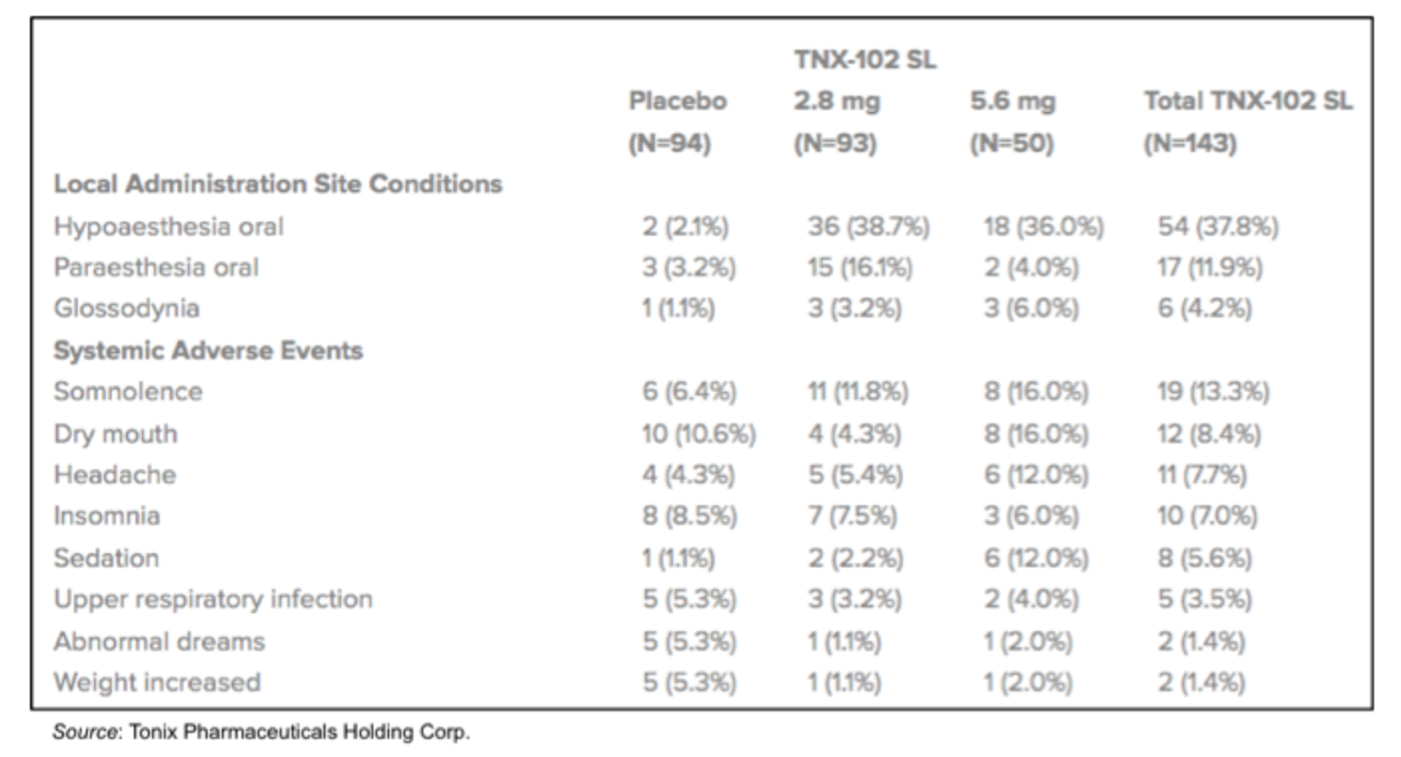 Next Steps in PTSD
The company is currently developing a Phase 3 program for the 5.6 mg dose of TNX-102 SL in PTSD. On August 29, 2016, the company
announced a successful end-of-Phase 2 meeting with the FDA with the meeting minutes indicating that positive results from two adequate, well-controlled Phase 3 efficacy and safety studies and long-term (six- and 12-month) safety exposure studies would support the registration of 5.6 mg TNX-102 SL for the treatment of PTSD. Importantly, the same primary endpoint that was used in the Phase 2 study will be used for both upcoming Phase 3 studies.
The first Phase 3 clinical trial will be in military-related PTSD and be similar to the AtEase study. The trial is likely to begin in the first quarter of 2017 and we anticipate enrollment of approximately 400-500 patients. Now that Tonix is familiar with recruiting for a study such as that, we expect enrollment to take approximately one year, with topline data under this scenario being available in the first half of 2018.
The second Phase 3 study would likely involve individuals with any type of PTSD, not just military-related. The reason for this is because recruiting for two studies in military-related PTSD would likely prove difficult, as there are many more civilian patients with PTSD than military-related. In addition, civilians with PTSD are more amenable to being treated for PTSD and are an easier patient population to treat. For example, the FDA approved sertraline for the treatment of PTSD based on studies involving only civilians, as a clinical trial of sertraline for military-related PTSD was unsuccessful.
Following completion of the 12-week double blind, randomized portion of each Phase 3 trial, patients may be eligible to enroll in open-label extension studies to provide sufficient long-term safety exposure data to support a new drug application (NDA) for TNX-102 SL in PTSD. We anticipate each of the trials costing approximately $10-$15 million to complete.
Conclusion and Valuation
Tonix is now a PTSD-focused company, as the company has decided to focus exclusively on this opportunity given the clear regulatory pathway and positive results seen in the Phase 2 AtEase study. The final minutes from the end-of-Phase 2 meeting with the FDA indicate that the same efficacy endpoint that was used in the AtEase study can be employed in the upcoming Phase 3 trials, thus somewhat de-risking this program. The first Phase 3 trial should initiate in the first quarter of 2017, with the second trial beginning later in 2017. We estimate that the trials will cost approximately $10 to $15 million each. Tonix exited the second quarter of 2016 with $31.2 million, thus additional financing will be necessary in order to complete the Phase 3 program. Whether that comes from partnerships, government grants, or the sale of equity or debt is unclear at this time, but it could represent a potential overhang on the stock in the near term.
We were disappointed by the results for the AFFIRM trial, and due to this we have made significant changes to our valuation model. Due to the company discontinuing the fibromyalgia program, we have also removed the program from our model, which had previously made up approximately 70% of the valuation. However, the opportunity in PTSD is significant, as we estimate potential peak sales of $650 million are possible with positive results from both upcoming Phase 3 studies. Our current valuation is $3 per share.
For a free copy of the full research report, please email scrinvestors@zacks.com with TNXP as the subject.
SUBSCRIBE TO ZACKS SMALL CAP RESEARCH to receive our articles and reports emailed directly to you each morning. Please visit our website for additional information on Zacks SCR and to view our disclaimer.