By
Anita Dushyanth, PhD
TSX:TLT.V
The National Cancer Institute (NCI) estimates that Glioblastoma Multiforme (GBM), a form of malignant brain tumor made up of star-shaped cells, accounts for 52% of all primary brain tumors and occurs primarily in adults between the ages of 45 and 70. It has poor prognosis, remains refractory to current treatment and had a mortality rate of 67% in 2015.
Theralase’s PDT technology for treatment of GBM: A five month old Fischer 344 rat was injected in the cerebral cortex with 5,000 rat glioblastoma tumor cells characterized by a 202% daily growth rate (aggressive). The cancer allows a dismal survival period of roughly four days without treatment. Ten days later, Rutherrin comprising of TLD-1433 PDC (5 mg/kg) + transferrin was injected intravenously via the rat's tail vein. The PDC was able to cross the blood brain barrier and was absorbed preferentially by tumor tissue through the transferrin receptor. The data also indicated a drug uptake that was 15x higher in GBM cells versus healthy brain tissue between four and 24 hours post injection, suggesting that an optimal time to activate the PDC. After 24 hours post injection, the Rutherrin infused animal brain was exposed to 200 mW/cm2, 808nm laser light with a total delivered energy of 600 J/cm2. 26 days post PDT, the daily growth rate reduced to 111%. As of October 12, 2016, the rat treated by the PDC Rutherrin was alive and had managed to survive 31 days post treatment (increase in survival rate by 575%) without any observed side effects. The findings were confirmed using MRI. Prior research has shown that in this same model, a competing drug, Amino Levulinic Acid (ALA), extended the survival period to merely eight days post treatment.
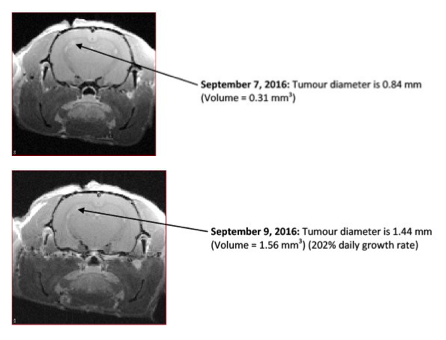
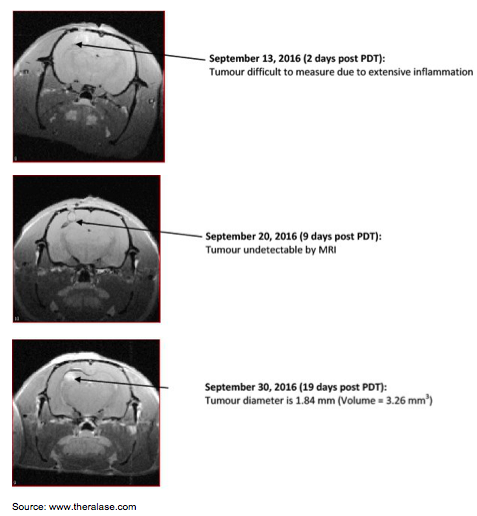
In rats with GBM, the current survival rate is roughly four days when untreated (equivalent to 6 months survival rate in humans). A two-day increase in median survival in rats with this aggressive tumor model would be equivalent to a 3 month survival rate in humans. Since the animal survived for 31 days post treatment (27 days longer than an untreated animal), it implies that there could be an estimated increase in survival of 81 months (more than six years) in humans. This result is remarkable when comparing the current median survival rate of about 14 months (just over one year) with extensive treatment including maximal surgical resection, radiotherapy and concomitant and adjuvant chemotherapy with temozolomide.
Although this study shows promising results in a single rat model, additional experiments employing different dose of PDC and laser light, wavelength of laser light used as well as dwell time after injection to activate the PDC need to be performed to optimize the treatment methodology, prior to designing a Phase 1b human clinical study for patients affected by GBM.
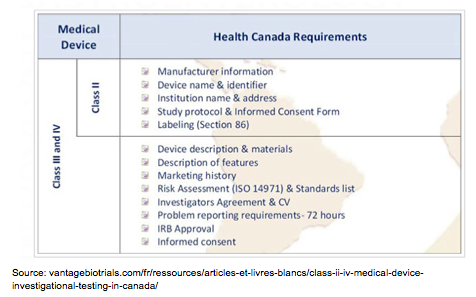
Navigating the regulatory landscape is not easy - ITA application still pending!
At the end of July 2016, Theralase (TSX:TLT.V) filed an ITA application with Health Canada in conjunction with the clinical trial application for its PDT technology employing TLD-1433 to be used in a Phase 1b clinical trial to treat patients with non-muscle invasive bladder cancer (NMIBC). Due to deficiencies identified by Health Canada in the original ITA application, the company received a series of six questions from the regulatory body in mid-September 2016 seeking additional information. Theralase submitted a comprehensive response by the end of September 2016. We think it is unlikely that Health Canada will respond before mid-November 2016 since it typically takes approximately 45 days to review the application. If the regulatory authority does not request further information from Theralase, then we are expecting a green light from Health Canada to commence the Phase 1b clinical trial by end of this year.
The TLC-3200 PDT system delivers green laser light (wavelength: 525nm) and the Dosimetry Fibre Optic Cage (DFOC) technology monitors a uniform distribution of light with correct dosage delivered precisely to the bladder wall. The Phase 1b trial will enroll patients with high risk, early stage bladder cancer (Ta/T1) or carcinoma in situ (TIS) NMIBC that are intolerant or refractory to Bacillus Calmette-Guérin (BCG), a bacteria originally used for the vaccination of tuberculosis, as well as those who are not candidates for/refuse radical cystectomy. The primary objective of this study is to evaluate the safety of PDT employing TLD-1433 and controlled laser light distribution via the TLC-3200 and TLC-3400 DFOC system. The secondary objective of this study is to evaluate the pharmacokinetics of TLD-1433.
Thus far, preclinical studies have demonstrated a high rate of destruction of NMIBC and GBM in brain cancer. In trials involving both cancers, PDC was introduced intravenously and intravesicaly with different activation wavelengths (near infrared versus green). This shows that the PDT technology is versatile and can be altered for different applications depending on the type/location of cancers. As the firm awaits the green light from Health Canada to commence its Phase 1b trial for NMIBC, it will be exciting to see preliminary results from this initial clinical stage trial in the near future. Additionally we think the company is not far behind to commence groundwork for obtaining regulatory approval to test their PDT technology for brain cancers.
For a free copy of the full research report, please email scrinvestors@zacks.com with TLT.V as the subject.
SUBSCRIBE TO ZACKS SMALL CAP RESEARCH to receive our articles and reports emailed directly to you each morning. Please visit our website for additional information on Zacks SCR and to view our disclaimer.