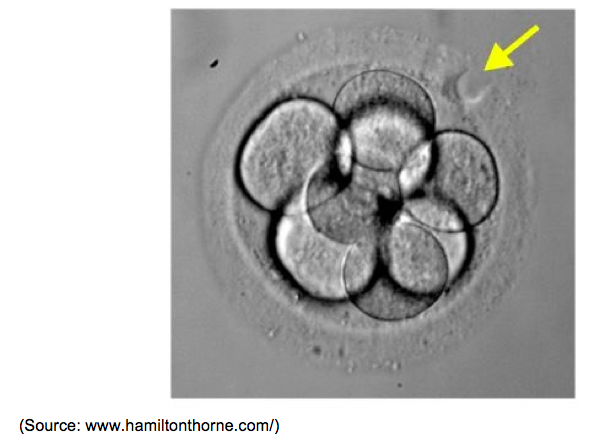
- Laser-assisted Hatching (LAH): Assisted hatching is used to help the embryo hatch from its protective outer shell, and promote implantation in the uterine wall after embryo transfer. LAH with the LYKOS or ZILOS-tk uses a highly focused infrared laser beam to remove the outer shell in precise increments. LAH requires less handling of the embryo and is quicker than mechanical or chemical methods. Therefore, the embryo spends less time outside the incubator.
Research Laser Applications
- Transgenic Animal Production: In the conventional procedure to produce a transgenic mouse, which lasts approximately nine months, gene targeted embryonic stems cells are injected into blastocyst of a mouse embryo. Breeding of the resulting chimeric mouse results in the transmission of the mutation required to obtain mutant mice for phenotypic studies. In the laser-assisted procedure, embryonic stem cells are injected beneath the outer shell of an early stage embryo. The resulting mice are entirely derived from the injected embryonic stem cells. These mice can be phenotyped directly, which saves roughly six months of preparation time when compared with the conventional procedure.
- In blastomere and trophectoderm biopsy, the laser assists in the removal of targeted cells for genetic testing. The human embryonic stem cell lines serve as an important model of the genetic disorders that they carry. Laser-assisted isolation of the inner cell mass may be applied for the derivation of new stem cell lines in a xeno-free system for future clinical applications.
- The laser system speeds up the process of enucleation to a matter of seconds, without eliciting damage to the egg. In addition to facilitating the removal of nuclear material via aspiration, the laser has been used to deactivate the DNA in zebrafish eggs. The laser system ablates cellular structures for developmental biology studies on organisms such as zebrafish, C. elegans, planaria, and slipper snails.
- Laser-assisted IVF may be performed to increase breeding efficiency of laboratory animals. By opening the outer shell of oocytes with the laser, increased levels of fertilization can be realized with certain inbred mouse strains or with poor quality sperm.
IMAGING SYSTEMS
The company also develops advanced image analysis systems, such as the Computer Aided Sperm Analysis (CASA) system and Oosight imaging system.
The CASA system measures sperm motility, concentration and motion characteristics, performs real-time morphometrics on live, motile images and records and saves video for later use. These systems provide image-based quantitative and objective analysis of the sperm to meet the needs of IVF clinics, toxicology testing and stem cell and regenerative medical research. Currently, the most popular method for evaluating sperm motility is using CASA.
The company’s Oosight system allows the user to visualize and quantify structures within an unfertilized egg that are not visible with conventional microscopy.
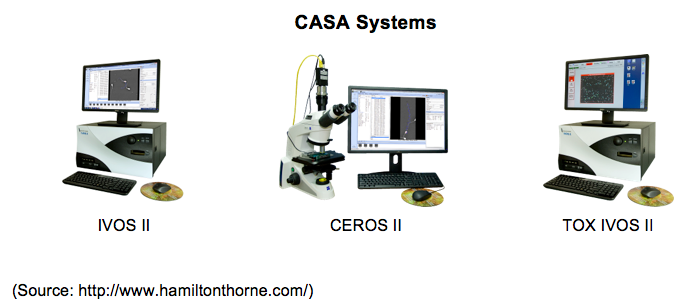
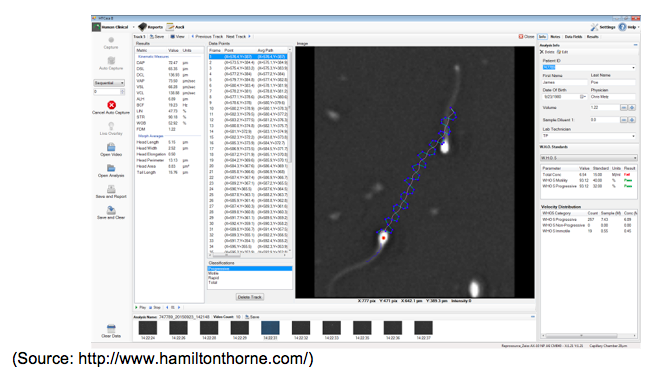
The CASA systems are comprised of an optical component and a computer installed with sperm motion analysis software. The CASA software has the capability to track cell motility, determine counts as well as analyze a cell’s kinematics/functionality in a manner that is adequate for routine clinical applications. Analysis results include sperm counts, concentration, motility, progressive motility, curvilinear velocity (VCL), straight line velocity (VSL), average path velocity (VAP), linearity (LIN), straightness (STR), amplitude of lateral head displacement (ALH) and beat cross frequency (BCF).
The Integrated Visual Optical System (IVOS) integrates the optical system within the unit, thus eliminating the need for an external microscope. The CEROS Sperm Analyzer uses an external negative phase contrast microscope for image visualization. The newer IVOS II platform features a streamlined, ergonomic design, high resolution digital camera, new software interface and enhanced mechanical performance. The CEROS II platform also features a high resolution digital camera and new software interface. The systems utilize phase contrast optics, an imaging frequency of sixty images per second as well as several user-adjustable settings to control more aspects of cell detection and static/non-progressive/progressive sperm motility differentiation.
Unlike microscopes with continuous fluorescent light, the IVOS has stroboscopic light source; this is beneficial when utilizing the IDENT fluorescent option, which allows motile sperm analysis under fluorescent illumination without adverse effect on sperm motility. With the VIADENT option, the IVOS permits the analysis of motility and viability on a live sample by combining analysis under phase contrast and fluorescent illumination sources. The TOX IVOS II system for sperm analysis has been validated in reproductive toxicology labs and is configured specifically for analyzing the intricacies of rat sperm.
The Dimensions II Strict morphology (human only), HT Morph (multi-species) and DNA Frag software are options available for either CASA II platform. The IDENT and VIADENT options require additional hardware and are available on the IVOS platform only.
The ART process involves harvesting sperm and eggs, using in-vitro fertilization procedures to create viable embryos, monitoring embryo development, testing for genetic disease and transferring best quality embryos with the goal of achieving a successful pregnancy. The Oosight® imaging system is used to help determine which harvested oocytes are at a high risk for producing embryos with abnormal chromosomes. This method is noninvasive, quantitative and reproducible and determines whether oocytes undergoing cryopreservation have abnormal structural integrity and are viable.
An additional tool is the CIVA™ imaging software which captures images and video from any connected microscopic workstation in the laboratory.
Imaging Applications
IMSI (Intracytoplasmic Morphologically Selected Sperm Injection)
Couples who struggle with compromised sperm parameters may undergo a treatment called intracytoplasmic sperm injection (ICSI). More recently, a new technique called intracytoplasmic morphologically selected sperm injection (IMSI), wherein a morphologically better quality, normal sperm is selected under high magnification to be used in the ICSI. This treatment is believed to have the potential to improve reproductive outcomes among couples undergoing an ART procedure. The IMSI-Strict software combines the motile sperm organelle morphology examination (MSOME) and Kruger strict criteria (for analyzing sperm morphology) in one analysis.
Sperm Analysis
Fertility Testing: The CASA system is used to measure sperm concentration, total sperm count, percent motility, percent progressive motility and morphology.
Reproductive Toxicology: The TOX IVOS II system is used to study male reproductive toxicology in rat models and the CEROS II system is used in fish models.
Animal Breeding: The animal breeding market is comprised of breeding boar for food, equine, wildlife, as well as companion animal breeding.
Biological Research: Sperm analyzers are used in a variety of medical and veterinary research applications.
MARKET
Fertility Market: The average age when a woman bears her first child has risen over time. As per CDC, roughly 20% of women in the U.S. have their first child after thirty-five years of age. About one-third of couples where the woman is older than thirty-five years of age encounter issues related to conception. The delay associated with child bearing can be attributed to several factors including having greater emphasis on careers (in women more so than in men), financial feasibility and marrying later in life. Besides the aforementioned factors, lifestyle factors such as smoking, alcohol consumption, obesity and stress are known to affect conception and child-bearing capabilities.
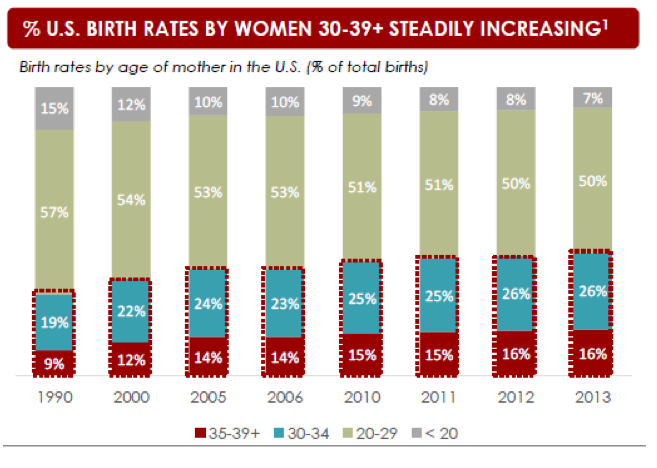
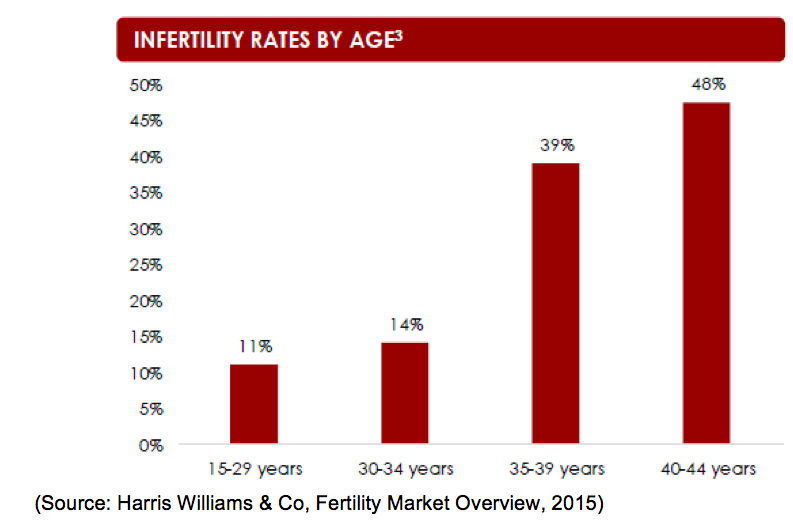
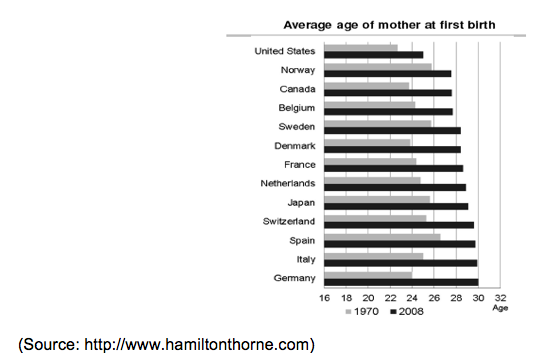
According to CDC, about 17% of women, married or otherwise, have trouble conceiving. The percentage of women, thirty years or older and who gave birth for the first time, increased from 5% in 1975 to 26% in 2010. Infertility seems to be positively correlated with age. The infertility rate increases to more than 35% for women aged thirty-five years and over.
In 2012, more than 480 ART specific fertility clinics were present in the U.S. IVF accounts for the majority of ART procedures. Current IVF treatments remain expensive (~$12,000) with relatively low success rates. Treatments over multiple cycles are often required to achieve a successful pregnancy. On average, the probability of having one or more children through an IVF procedure is ~30%. The increase in awareness of ART procedures as well as its acceptance socially has led to more couples seeking ART procedures.
The CDC estimates that ART accounts for more than 1% of total U.S. births. At the same time, an increasing number of same-sex parents driven by greater social acceptance and improved legal rights are expanding the population for donor sperm and other fertility services. It is estimated that up to 6 million children in the U.S. are parented by same-sex parents.
Europe and North America together account for roughly 80% of the total fertility market due to widespread awareness, adoption of new technologies and favorable legal structures. As per a report by Harris and William, the U.S. fertility market is valued at roughly $4 billion, of which ART is valued at approximately $2.5 billion. This sector is forecasted to grow at a CAGR of 4% for the next couple of years due to an increase in aging couples and infertility.
According to Market Research Store, a market research firm, the global IVF market is expected to grow at a CAGR of 7.0% from 2015 to 2021and approach north of $10 billion by 2021. Several factors are expected to drive market growth such as delaying of pregnancy by women due to professional and financial constraints, changing lifestyle, fertility disorders, among many others.
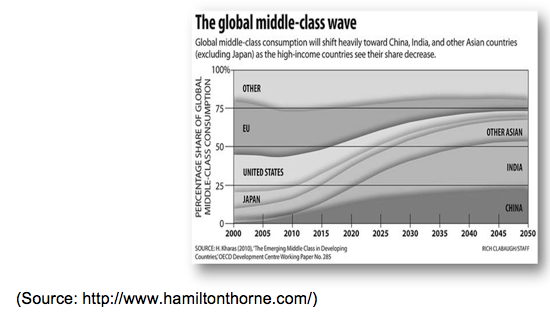
Globally, in developing economies, the fertility market is seeing a robust growth. Recent research has shown that growth in the Asian-Pacific belt has outpaced the growth in Western countries. This could be attributed to infertility arising from infections such as STDs as well as an increase in male infertility diagnoses in developing countries. Accelerating demand for IVF is expected in emerging markets as wealth and the size of the middle class grows. Further, the laws surrounding the fertility treatments in these regions are liberal, thus making these regions an attractive target for these services. Additionally, the growing awareness in reproductive health and increasing access to fertility treatment options are driving growth in this area.
As China's one-child policy was scrapped since January 1, 2016 fertility clinics got a boost in the number of clients attempting to use IVF procedures. Women who had only one child under the old policy and are over the age of 35 are using the opportunity to have more children through ART procedures. However, stringent regulations are enforced in the Chinese IVF market; gender selection is forbidden, birth licenses and marriage certificates are required, and advanced procedures are prohibited. The tight control by the Chinese government has resulted in the IVF business booming in Thailand, Vietnam, Australia and the U.S. as affluent Chinese couples are willing to travel abroad for such procedures. Therefore, the rising demand for fertility treatments by Chinese couples is good news for global IVF clinics. With ~60% of Hamilton Thorne’s revenues coming in from ex-U.S. sales, the global presence helps the company capitalize on the growing demand of IVF procedures in emerging markets.
Regenerative Medicine and Developmental Biology Research Market: Regenerative medicine is an arm of tissue engineering where cells are either regenerated, engineered or replaced in order to heal damaged tissues and organs. It offers hope for people who have conditions such as musculoskeletal, cardiovascular, neurological and orthopedic disorders that are beyond repair. Transparency Market Research values the annual regenerative medicine market at roughly $6.5 billion. Additionally, Hamilton Thorne’s target market encompasses more than 25,000 research establishments involved in developmental biology and cancer research.
Animal Breeding Market: There is an unprecedented increase in the demand for animal products including meat, and dairy in the U.S. as well as in global regions. Technologies that improve large-scale production efficiency, the quality of breeds and profitability are drivers of the animal genetics market. Research and Markets estimates this sector to grow at a CAGR of ~8% from 2014 to 2020. Hamilton Thorne’s sperm analysis systems used in animal breeding applications make up for roughly 15% of the firm’s business and stands to gain from this expanding market.
COMPETITORS
The infertility market is rapidly evolving. Competition across various markets is variable depending on the local demand and cost factors. The major competitors who have already gained a foothold in the developed economies include CooperSurgical, VitroLife, Cook, and Irvine Scientific, among many others, all of whom have products in the IVF landscape. The big players have substantially greater financial resources as well as larger established marketing teams, sales channels, distribution networks and support services. For instance, Vitrolife had expanded its market share to approximately 15% by broadening their product portfolio and focusing on marketing efforts.
While we think the competition could prove challenging to Hamilton Thorne, we also believe that the company offers novel devices that provide competitive differentiation. The first 1.48µm, non-contact laser to receive the FDA approval for clinical use in assisted hatching was the ZILOS-tk in 2004, followed by the Octax Laser Shot™ (MTG) in 2006 and the Saturn Active Laser System (Research Instruments) in 2008. Although assisted hatching has not been studied comparing different laser systems, Hamilton Thorne’s lasers offer some characteristics that might be advantageous to specific applications. For example, Research Instruments’ lasers are compatible with selected microscopes while Hamilton Thorne’s are compatible with all major brands of microscopes. Hamilton Thorne's line of laser systems have a built-in collimated red indicator beam that provides a focused red light that aids in firing the laser while looking through the microscope eyepiece. ZILOS-tk and LYKOS lasers indicate the safe zones surrounding the embryo using patented software displaying color-coded rings (Isotherm rings) for different temperatures around the perforation where the operation can be performed without causing any harm to the embryo. The Stiletto laser with controller software and an automated stage provides high speed scoring and separation of adherent cells in culture. The firm’s CASA software runs on their proprietary IVOS and its CEROS hardware platforms and calculates cell counts, cell concentrations, tracks and analyzes cell motion and provides data specific to individual applications. The IVOS is the only CASA system that has an integrated optical system within the unit. The IVOS sperm analyzer is equipped with an automated, built-in, heated stage for precise temperature control and sample positioning. With a breakthrough technology backed by patents and strong market demand, Hamilton Thorne should be able to grow their revenue in the coming years.
In the fragmented U.S. IVF market, M&A deals are active. In August 2015, Longitude Venture Partners and NovaQuest Pharma Opportunities Fund acquired California Cryobank Inc., which provides fertility, cellular therapy, and other fertility related services. In order to maintain a competitive advantage, Hamilton Thorne is constantly on the lookout for new outlets for growth in emerging markets and in overcoming the regional disparities in insurance coverage for such procedures.
Additionally, the company is also on the lookout for strategic investments in companies offering complementary products. The company recently (April 2015) completed a relatively small and simple deal in their first acquisition of Oosight product line from Perkin Elmer. This acquisition has been accretive to earnings for fiscal year 2015. The company is currently having active discussions and is likely to do acquisitions in complementary areas such as cell culturing, consumables, cryopreservation, diagnostics, image analysis and labware, which may be profitable and provide revenues in the $2-$5 million range.
Hamilton Thorne has adopted the route to effectively target market niches where IVF and research is still growing. The company’s products hold defendable patents in several regions globally. As the firm continues to acquire and further expand its business in the U.S. and global regions there is a possibility of seeing new complementary products being added to their portfolio.
REIMBURSEMENT
In general, generous coverage from government or third party insurance reduces the out-of-pocket expense for couples seeking IVF procedures. Reimbursement coverage varies widely in global regions. Israel, the E.U., Latin America and Africa have expanded reimbursement rates as health awareness and access to infertility treatment has become more widespread. In some European countries, ART comes under a standard insurance-covered benefit, while in the U.S. it is affordable only by the affluent. Therefore, a general trend seen in European countries is that the utilization of ART procedures is twice that of the U.S. and probably could be attributed partly to insurance coverage.
In the U.S., several states have passed laws stating that insurance companies need to provide limited or comprehensive coverage for couples seeking infertility treatment. The states that have mandated insurance that covers at least one IVF cycle are Arkansas, Connecticut, Hawaii, Illinois, Maryland, Massachusetts, New Jersey, and Rhode Island. Despite the few states that have mandated insurance coverage for IVF, it is restrictive and is not available to everyone.
This is because of the discrepancies in the legislation between the states based on the definition of infertility, the type of insurance plans under each mandate, and the treatments that are covered. Studies have shown an increase in the number of couples who opted for infertility treatment in states that mandated insurance for IVF procedures. We believe that the availability of mandated comprehensive insurance coverage could drive changes in utilization of such services in the U.S. and other global regions. Having said that, reimbursement alone is insufficient to assess the opportunity in the fertility space. This is because these couples have a strong desire to have children and are willing to pay out-of-pocket.
VALUATION/RECOMMENDATION
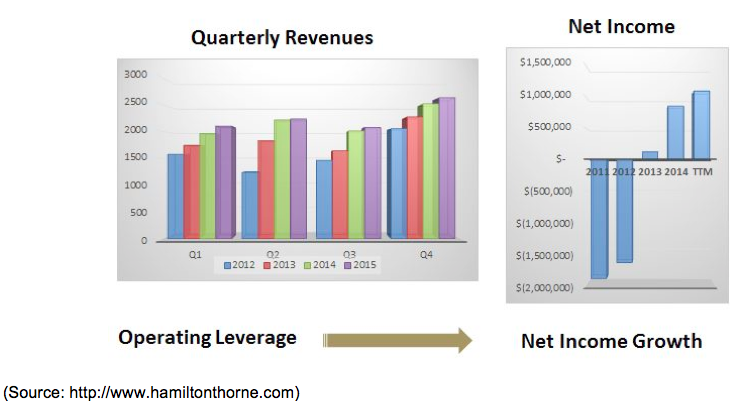
It is estimated that there are roughly 400 businesses involved in ART services (fertility clinics, donor banks, and reproductive endocrinologists) in the U.S. This is a ~$3 billion industry with 4% CAGR in the U.S. IVF and other interventional procedures fall under the higher end of the pricing spectrum. The 4% growth rate could be attributed to an expanding middle class that is postponing family planning due to an increased focus on careers. Market Research Reports expects the global IVF market to grow at a CAGR of about 12% and since ~ 60% of Hamilton Thorne’s sales are from distributors in over 60 countries worldwide, we anticipate a greater than 4% growth in Hamilton Thorne’s revenue. We also think sales of the firm’s products could be bolstered by the rising prevalence of obesity, which could fuel future demand for fertility treatments.
Management expects that growth in the sales of clinical lasers will be positively influenced by the continued adoption of assistive reproductive procedures as well as by strong growth in emerging markets. Further, since the company has diversified its product offerings, there is a wider customer base. We think such a strategy has the added advantage of smoothing out revenues over time.
Hamilton Thorne plans to introduce new hardware and software to its CASA platform, which should help drive sales of its image analysis systems at a higher rate than its laser systems. The company also plans to market the recently acquired Oosight product. Hamilton Thorne uses both direct and distribution approach to sales. The company’s sales to three major distributors account for roughly 10% of all revenues. Q4 2015 marked the twelfth straight quarter (since early 2013) of sequential revenue growth.
Currently Hamilton Thorne is operating in more than 60 countries. We like management’s strategy, which is to diversify their current product range further so they can pursue expansion into new markets. Last year’s (2015) addition of Oosight Imaging system was complementary to their laser offerings and could help in generating incremental sales by leveraging the firm’s established, world-wide distribution channels. Considering IVF is a rapidly-growing area and that there is increased adoption of IVF procedures in emerging markets we think there is potential for Hamilton Thorne to grow its sales internationally.
Based on the aforementioned factors and growth trends, we forecast revenue of ~$10 million in fiscal 2016. We think this momentum could continue in the coming years and model revenue to double by 2020. The organic revenue growth thus far has resulted in gross margin widening to ~65% from 59% in 2012. Simultaneously there has been an expansion of operating margins from 5% in 2013 to about 14% in 2015.
The federal legislation allows 20 years of net operating loss carryforwards which are applied to offset current/future taxable income. As of December 31, 2015, the company had a net operating loss carryforward of approximately $33 million, which begin to expire beginning 2020. Therefore, the company’s taxable income continues to be offset by the accumulated deficit.
The firm’s financial reserves are primarily used for business development. Management has been successful in controlling expenditures in the past. The firm does manufacture some of the components and subassemblies in its production process. Instead of committing to domestic manufacturing infrastructure which would put pressure on financial resources, the company contracts out the manufacturing to third parties. Hence, it enjoys low CapEx, which allows for lower depreciation expense, less capital tied up in fixed assets and, potentially, higher net income. Should management require capital in the near term, we believe they have the ability to raise additional financing, considering they have been very successful in acquiring funds in the past.
We are comparing HTL.V’s P/S to comparable companies such as Vitrolife and Research Instruments. In December 2015 CooperSurgical strengthened its position in the ART market by acquiring Research Instruments, a provider of high quality products developed specifically for micromanipulation and management of the IVF processes, for $51 million at 3x revenue multiple. We believe that Hamilton Thorne is very comparable to Research Instruments in terms of product offering and as such should command a similar multiple or higher if it were acquired.

With a discount rate of 9%, a terminal growth rate of 1.5% and 79 million fully diluted shares, our DCF model values the company at $45 million or $0.57 /share. This implies significant upside from the current trading price of $0.22/share (3/25/2016). The shares currently trade at a 1.8x revenue multiple, which is very conservative when compared to Vitrolife that trades at 10x revenue multiple. Based on the firm’s financial and operational progress in the past two years, we believe there has been significant de-risking. We believe the shares trade cheaper than fair value.
Insiders own approximately 48% of Hamilton Thorne’s outstanding shares. As a result, only half of the total 70 million can be actively traded. Despite the firm showing growth prospects, a strong balance sheet, and a stellar leadership team, there may be limited trading liquidity in the stock due to the limited float. An increase in the number of outstanding shares will help in increasing the stock’s liquidity.
Risks
Model-based assumptions are prone to large variations: Our projected revenue growth from the sales of Hamilton Thorne’s products from the current year and beyond is largely best-guesses based on growth in the fertility sector. Revenue could underperform relative to our model if the customer base does not grow at our assumed forecast or is less correlated to revenue growth than what we are assuming. Achieving our price objective includes competitive, reimbursement and financial risks.
READ THE LATEST FULL RESEARCH REPORT HERE
SUBSCRIBE TO ZACKS SMALL CAP RESEARCH to receive our articles and reports emailed directly to you each morning. Please visit our website for additional information on Zacks SCR and to view our disclaimer.