
OTC:AXIM
Summary• With legislative approval for the legalized use of marijuana-based compounds for medical purposes in 29 states, we expect medical cannabinoid stocks to be a prominent investment theme in 2018.
• During the fourth quarter of 2017, cannabis stocks climbed sharply (North American Marijuana Index +137%) reflecting increased investor interest and positive fundamental tailwinds.
• News on ongoing and completed clinical studies should drive increasing investor interest in medical cannabinoid stocks.
• AXIM Biotechnologies is well positioned to benefit from the overall medical cannabinoid investment theme and is expected to achieve significant milestones during 2018.
The Medical Cannabinoid Space 2018 appears to be the year for transformative change in the medical cannabinoid industry. The fundamental trends are acting as tailwinds that potentially could last for years. Structural changes (such as state-level legislation, the proliferation of clinical studies and the growing social acceptance of cannabis investments) are stimulating a thematic-investment case for medical cannabinoid.
The ETF industry has reacted to the budding demand for this particular investment-themed ETF. Making its debut on the Toronto Stock Exchange in April 2017, the Horizons Medical Marijuana Life Sciences ETF (TSX: HMMJ) sought to mimic the North American Medical Marijuana Index, a basket of publicly-listed North American companies with significant business activities in the marijuana industry. Subsequently in June, the ETF removed the word “Medical” from the fund's name and began to benchmark against the Solactive North American Medical Marijuana Index, which allowed the ETF to expand its holdings to a larger group of cannabis-related companies.
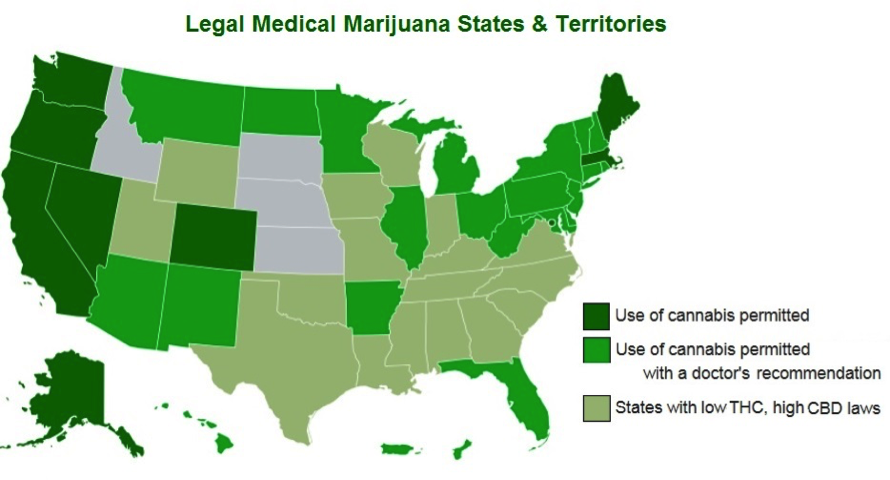
29 states have legalized the use of medical marijuana. The states include Alaska, Arizona, Arkansas, California, Colorado, Connecticut, Delaware, Florida, Hawaii, Illinois, Maine, Maryland, Massachusetts, Michigan, Minnesota, Montana, Nevada, New Hampshire, New Jersey, New Mexico, New York, North Dakota, Ohio, Oregon, Pennsylvania, Rhode Island, Vermont, Washington and West Virginia (see ProCon.org for further specifics). In addition, Washington DC, Puerto Rico and Guam allow the use of medical marijuana for patients. Additional states (Alabama, Georgia, Iowa, Kentucky, Louisiana, Mississippi, Missouri, North Carolina, Oklahoma, South Carolina, Tennessee, Texas, Utah, Virginia, Wisconsin and Wyoming) have more restrictive laws, which only allow the use of certain marijuana-based products (that are rich in CBD and low in THC) for limited medical purposes. As a result of the changes in legislation, many new medical marijuana dispensaries are being licensed.
Several firms have very optimist forecasts for the cannabis industry. Cowen & Co. anticipates total legal sales of cannabis-based products could reach $50 billion by 2026. Ameri Research forecasts that the global legal cannabis sales will grow to $63.5 billion by 2024 (representing a 21.1% CAGR) due to increased legalization of and further decriminalization for the use of cannabis-related products in North America and Europe. New Frontier Data expects the domestic legal cannabis market to grow to $24.1 billion by 2025 while Statista expects the medical cannabinoid market to grow to $2 billion in 2020 and then to $50 billion in 2029.
The medical cannabinoid industry is expected to be an important component in driving this growth, which is predicated on progress towards further legalization of cannabis and cannabis-based products. We expect the perception of cannabis-related companies to transform, which will lead to a higher level of acceptance by investors.
Brief Cannabinoid Primer
Cannabinoids are a class of chemical compounds that act on cannabinoid receptors, primarily located in the brain (type 1 aka CB1) and the immune system (type 2 aka CB2). Over 110 cannabinoids occur naturally in and have been isolated from cannabis plants, including hemp and marijuana. The most studied cannabinoids (and the two most abundant cannabinoids in cannabis) are tetrahydrocannabinol (THC) and cannabidiol (CBD).
Tetrahydrocannabinol (THC) is the primary psychoactive ingredient of the cannabis plant. By binding to the CB1 cannabinoid receptors in the brain, THC (primarily delta-9-tetrahydrocannabinol aka Δ9-THC, and also but to a lesser extent, delta-8-tetrahydrocannabinol aka Δ8-THC), alters various mental and physical functions by triggering a series of events that results in a change in the cell's activity. For example, levels of dopamine are enhanced and ultimately, the conversion of dopamine to norepinephrine creates a sense of mild euphoria.
On the other hand,
cannabidiol (CBD) is a cannabis compound that is non-psychoactive and actually counteracts the psycho-activity of THC. Though CBD has little binding affinity for the two CB1 and CB2 cannabinoid receptors, it activates several non-cannabinoid receptors, ion channels and various other receptor-independent channels. Through scientific and clinical research, it has been shown that CBD has many
beneficial therapeutic effects and numerous clinical trials for CBD-based pharmaceuticals are underway for a variety of medical conditions.
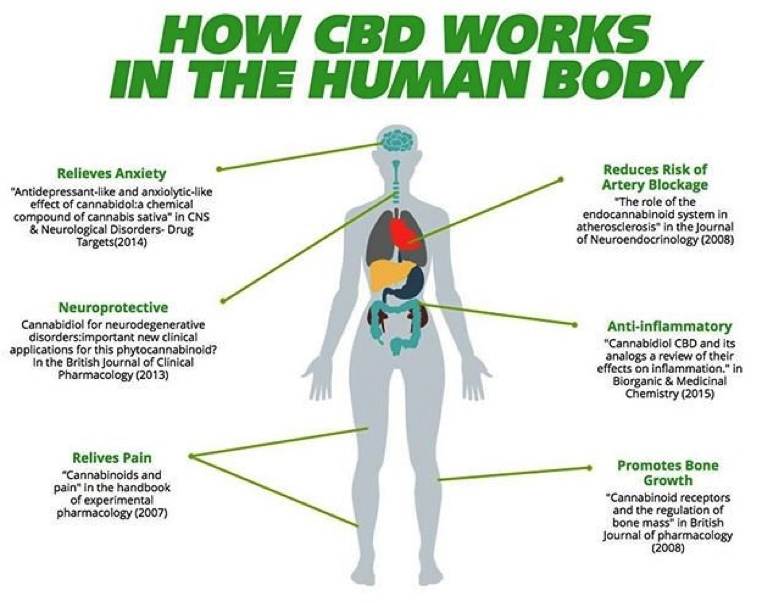
Cannabidiol has demonstrable therapeutic effects, including the reduction of pain, nausea and inflammation, along with relief from seizures, spasms and anxiety. Consequently, CBD appears to be a potential treatment for many medical conditions, including epilepsy, chronic pain, schizophrenia, post-traumatic stress disorder (PTSD), depression, multiple sclerosis, arthritis, diabetes, alcoholism and other disorders, in addition to helping patients undergoing chemotherapy. Also, CBD is being investigated for potential anti-cancer properties.
CBD is found in both the hemp and marijuana varieties of cannabis. However, hemp only has trace amounts of THC and is legal in all 50 states of the United States and therefore is being sold as a nutritional component and wellness supplement.
Mexico, Brazil and Paraguay have approved the use of CBD oil as a medication for chronic pain, Parkinson’s disease and epilepsy. On December 14, 2017, the
World Health Organization (WHO) officially recommended that CBD should not be scheduled as a controlled substance.
Clinical Studies There a several high profile biotechnology companies focused on the development and commercialization of medical cannabinoid products. Recent studies suggest that certain compounds derived from cannabis have the potential to reduce the number and severity of epileptic seizures, reduce the muscle spasms experienced by those with multiple sclerosis, slow the progression of Alzheimer’s and Parkinson’s’ diseases and provide anxiety relief for those suffering with PTSD.
EpilepsyIn March 2016, GW Pharmaceuticals plc (GWPH) successfully completed a Phase III clinical trial of Epidiolex® (a CBD derived drug)
for the treatment of Dravet syndrome, a rare form of epilepsy that affects infants, often beginning at around six months of age. Patients experience frequent seizures, poor seizure control and developmental delays. The 120-patient study demonstrated that Epidiolex reduced median monthly convulsive seizures by 39% over the 14-month treatment period. As a result, the FDA granted Fast Track designation and Orphan Drug designation to Epidiolex for the treatment of Dravet syndrome. Subsequently, GW Pharmaceuticals submitted New Drug Applications to the FDA for both Dravet syndrome and Lennox-Gastaut syndrome indications.
On May 25, 2017,
The New England Journal of Medicine published a study entitled
Trial of Cannabidiol for Drug-Resistant Seizures in the Dravet Syndrome. The trial showed that
CBD “reduced the frequency of convulsive seizures among children and young adults with the
Dravet syndrome over a 14-week period;” however, certain adverse events (including somnolence and an elevation of liver-enzyme levels) were experienced by patients in the cannabidiol group.
Pain ManagementThe $58.6 billion global market for pain management drugs is forecast to grow to $77.1 billion by 2023. Opioids have been the major growth driver due to their efficacy in managing severe chronic pain. However, the increased use of addictive opioid pain relievers has spawned a public health crisis. The Council of Economic Advisers estimated that in 2015, the cost of opioid abuse, addiction and related deaths the U.S. was over $504 billion. And according to the Centers for Disease Control, domestic drug overdose deaths increased 22% in 2016 to over 60,000.
New non-addictive pain management alternatives, such as medical cannabinoids, would appear to be a preferable solution. A recent study (Medical marijuana policies and hospitalizations related to marijuana and opioid pain reliever by Yuyan Shi, April 1, 2017) concluded that these new state medical marijuana policies are significantly associated with
reduced opioid-related hospitalizations. However, thus far, there is not yet an FDA-approved painkiller that is derived from cannabis.
AXIM BiotechnologiesThere are several companies that are pursuing the use of medical cannabinoid products to effectively address certain medical conditions. We would like to highlight
AXIM Biotechnologies (OTC:AXIM), a clinical-stage medical cannabinoid company focusing on the research, development and production of cannabis-based medical pharmaceutical products. AXIM is developing an
intellectual property (IP) portfolio comprised of
several proprietary delivery systems (see below) that address multiple medical indications, each with a large addressable market. In addition, the company is pursuing the development and sale of cannabis-based nutraceutical and cosmetic products.
Trans-mucosal, Controlled-release Delivery System (chewing gum)AXIM is actively engaged in conducting research in order to develop oral, trans-mucosal, controlled-release delivery systems (primarily
CBD-infused chewing gum treatments) for a variety of diseases.
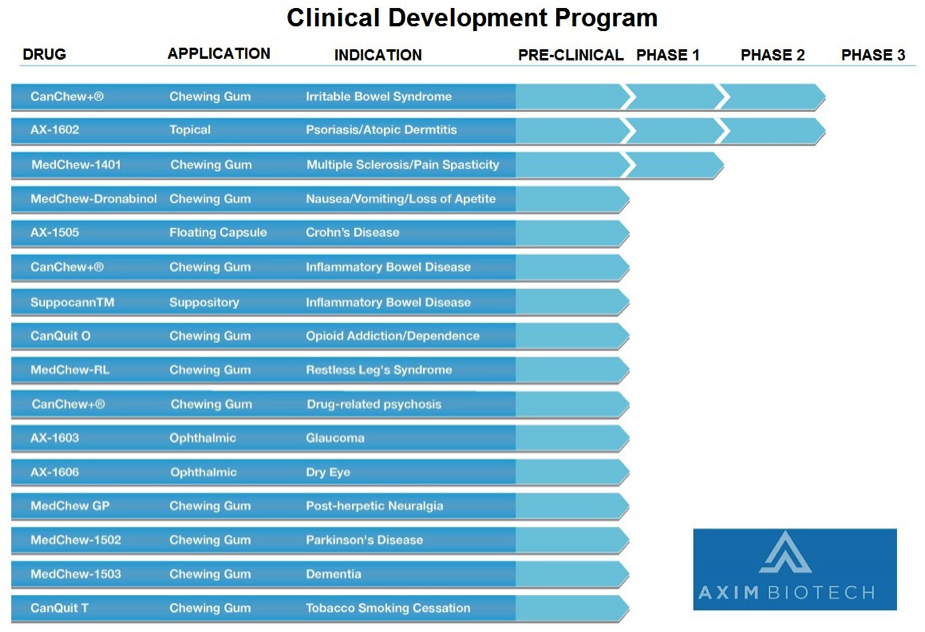
AXIM holds a patent covering the chewing gum delivery method for cannabinoids. The company is conducting multiple preclinical and clinical studies for cannabinoid-based therapies on an array of medical conditions with the trademarked products of
CanChew +® and MedChew Rx®:
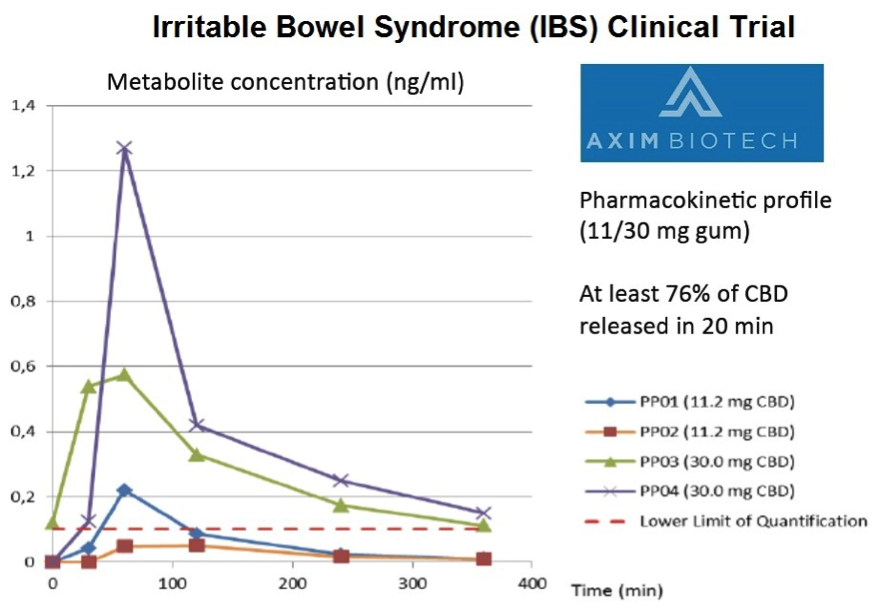
A 40-patient, 8-week Phase 2 clinical trial (NCT03003260) for the treatment of
irritable bowel syndrome (IBS) was completed in November 2017 for multiple sclerosis at the University of Wageningen in The Netherlands. AXIM’s mint-flavored CanChew + (which contains 50 mg of CBD) was well tolerated by the patients as no significant adverse side effects were observed. All participants experienced a decrease in their pain score. The study’s trend curve indicates that patients on
CanChew + experienced a 50% higher pain reduction than those on active placebo. AXIM plans to extend this 8-week study to one of longer duration with set dosing at set intervals.
A 15-patient Phase 1 study for the treatment of pain and spasticity associated with
multiple sclerosis (MS) was conducted during 2017 with
MedChew Rx, a gum containing 5 mg of CBD and 5 mg of THC. This and other research trials on MS are expected to continue into 2018; therefore, management anticipates registering MedChew Rx for the treatment of MS with the EMA (European Medicines Agency) and FDA (U.S. Food and Drug Administration) by the end of this year.
In July 2017, AXIM Biotechnologies entered into a Services Agreement with an unnamed Contract Research Organization to begin a clinical proof-of-concept study to treat
restless leg syndrome (RLS). The study is expected to treat about 30 participants with AXIM’s chewing gum product infused with both CBD and Gabapentin.
Also, AXIM is pursuing a plan to complete a
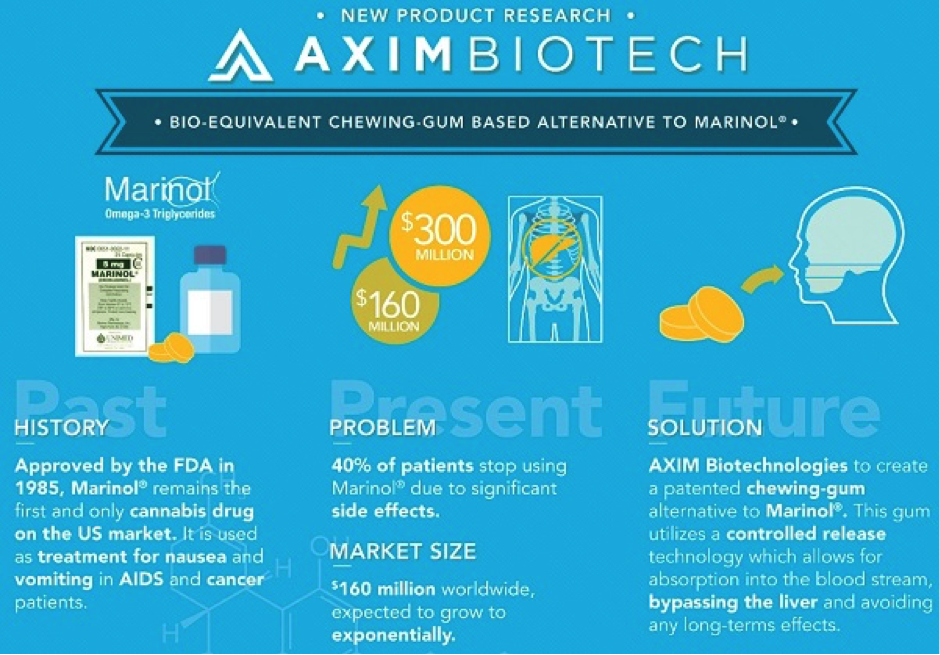
bioequivalence trial to compare the therapeutic equivalence (both in terms of efficacy and safety) of a new dronabinol-based, controlled-release chewing gum and the reference listed drug (RLD)
Marinol® (aka dronabinol). The study, officially titled
A Two Part, Open Label, Randomized, Four Period Cross-over Study to Compare the Bioavailability of Two Different Dronabinol Formulations in Healthy Male and Female Volunteers, is designed as a 50-participant clinical trial, which is anticipated to start in early 2018. If successful, AXIM and its controlled-substance API (Active Pharmaceutical Ingredient) partner will develop a dronabinol-based, controlled-release, chewing gum product, which should receive FDA approval in a matter of months for the same indications as Marinol, namely the treatment of:
• chemotherapy-induced nausea/vomiting (CINV) and
• anorexia associated with weight loss (as an appetite stimulant), including anorexia in patients with cancer or AIDS
The global market for dronabinol was $160 million in 2016 and is expected to grow dramatically based on increased drug availability, a change in public opinion towards medical cannabis, new methods of drug administration and the results from new clinical trials. Competitors in the market include AbbVie (ABBV) with Marinol, Akorn (AKRX) with dronabinol, PAR Pharmaceutical Companies/Endo International PLC /SVC Pharma LP (ENDP) with dronabinol and Insys Therapeutics (INSY), which in 2017 began to offer SYNDROS™ (dronabinol in an orally-administered liquid formulation). Akorn is in the process of being acquired by Fresenius Kabi AG, which is a part of Fresenius SE & Co. KGaA (DE: FRE), for approximately $4.3 billion.
Ophthalmic SolutionsIn October 2017, the United States Patent and Trademark Office granted a patent (by issuing a Notice of Allowance - Serial Number 14/982,610) to AXIM for a
cannabinoid ophthalmic solution developed for the treatment of
glaucoma and symptomatic relief of
conjunctivitis. The patent issuance sets the stage for the company’s clinical trials for AX-1603 and AX-1606 by Ora, Inc., a full-service Contract Research Organization (CRO) that helps bring new ophthalmic products from concept to market. In March 2017, AXIM retained the services of Ora to help with the development of AXIM’s ophthalmic products related to glaucoma and dry eye.
Topical Delivery System AXIM’s AX-1602 topical, transdermal cannabinoid product (under the trademark
ReneCann®) is being evaluated in a Phase 2 clinical trial for treatment of
psoriasis and
atopic dermatitis (a type of eczema) at the Dermatological Center Maurits Clinic in The Netherlands. Management also plans to target
vitiligo (a condition where patches of skin lose pigmentation) as an indication for the topical system.
Nutraceutical ProductThe company's flagship nutraceutical product is
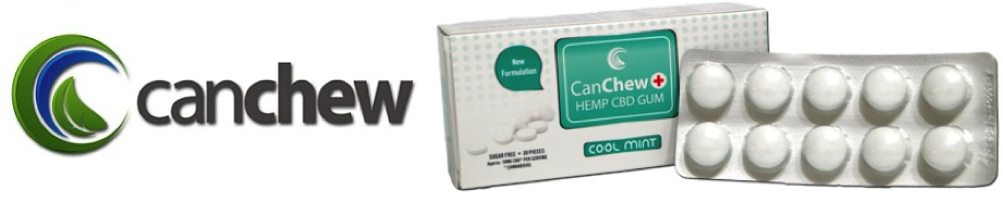
CanChew+, a CBD-infused chewing gum. Released in 2017, CanChew + is available in all 50 states and can be purchased online at canchewgum.com. Each piece of CanChew + gum contains 50 mg of CBD hemp oil and 10 mg of natural CBD (cannabidiol). AXIM is pursuing several delivery systems.
ConclusionAXIM Biotechnologies is in the process of developing medical cannabinoid solutions for the treatment of numerous diseases utilizing several delivery systems. In addition to the conditions listed above, management is targeting many other diseases, including inflammatory bowel disease (IBD), ulcerative colitis, Crohn’s disease, Parkinson’s disease, Alzheimer’s disease, dementia, attention deficit hyperactivity disorder (ADHD), PTSD and autism. Furthermore, the company intends to initiate a clinical trial for pain management on opioid-dependent patients.
We expect AXIM to continue to expand its medical cannabinoid product platform and advance a number of additional clinical programs. The marijuana industry and medical marijuana space currently are topics of considerable news flow and investor interest. AXIM’s press releases on its clinical trials will contribute to this supply of news coverage. If management successfully executes on its focused strategy and attains its goals, the company’s stock appears to offer significant upside for investors.
SUBSCRIBE TO ZACKS SMALL CAP RESEARCH to receive our articles and reports emailed directly to you each morning. Please visit our website for additional information on Zacks SCR.
DISCLOSURE: Zacks SCR has received compensation from the issuer directly or from an investor relations consulting firm, engaged by the issuer, for providing research coverage for a period of no less than one year. Research articles, as seen here, are part of the service Zacks provides and Zacks receives quarterly payments totaling a maximum fee of $30,000 annually for these services. Full Disclaimer HERE.