By
John Vandermosten, CFA
NASDAQ:TENX
READ THE FULL TENX RESEARCH REPORT
Third Quarter 2018 Review
During the third quarter Tenax Therapeutics, Inc. (NASDAQ:TENX) continued to prepare its Phase II levosimendan trial for PH-HFpEF enrollment. Efforts in the areas of contracting, budgeting, scheduling, investigational review board approvals and site set up dominated the executive schedule during the fall quarter. On November 14, 2018, the company
filed its Form 10-Q, providing a financial update for the July to September period.
No revenues were reported in the third quarter of 2018 for this clinical stage company. Research and development costs of $363,000 were up 43% on higher personnel and clinical & preclinical development spend. General and administrative expenses tipped the scale at $1.2 million, rising 13% compared to 3Q:17. The rise was also attributable to greater personnel costs related to the addition of the company’s new CEO and slight increases in other expenses partially offset by a decline in depreciation and amortization expense. Net loss for the period was ($1.5) million or ($1.05) per share.
Cash balance was $5.2 million and cash burn in the quarter was ($1.6) million. The company continues with no debt. We anticipate expenses picking up in 4Q:18 as the Phase II trial launches and begins enrollment.
Trial Design
On November 19th, Tenax
announced the activation of the first clinical research site for the PH-HFpEF trial at Stanford University School of Medicine. The trial was also given the acronym HELP: Hemodynamic Evaluation of Levosimendan in Patients with PH-HFpEF and is expected to enroll 36 patients over its life. Including the Stanford location, Tenax is expected to establish 12 to 15 sites throughout the US to enroll the anticipated population, some of which are expected to come on line in the next few weeks.
The process began in April when the FDA allowed Tenax to submit their Investigational New Drug (IND) application under the existing clinical protocol for levosimendan. The agency also addressed the company’s questions and provided guidance on the Phase II trial. Substantial safety work has been performed on levosimendan, eliminating the need for Phase I work. The FDA recognized that there are no approved drug therapies to treat PH-HFpEF patients and acknowledged this may eventually allow for a limited Phase III clinical program. Tenax will provide additional detail on the implications of a limited Phase III study at the End-of-Phase II Meeting for PH-HFpEF which we anticipate taking place in late 2019/early 2020.
After meeting with the FDA for the pre-IND meeting, Tenax refined its trial design to reflect the input provided by the agency. Based on details provided in the
corporate presentation and the press
release, the structure required fewer enrollees and a greater number of sites. The trial will enroll PH-HFpEF patients in an open trial and responders will be randomized into the placebo-control trial (see exhibit). The study is anticipated to enroll 36 PH-HFpEF patients in 12 to 15 sites with a trial duration of 14 to 18 months. Based on preliminary work, enrollees will have a pulmonary arterial pressure (PAP) equal to or greater than 35, a pulmonary capillary wedge pressure (PCWP) equal to or greater than 20, a cardiac index (CI) of less than or equal to 2.2, a left ventricular ejection fraction (LVEF) of over 40 and be NYHA Class IIb or III.
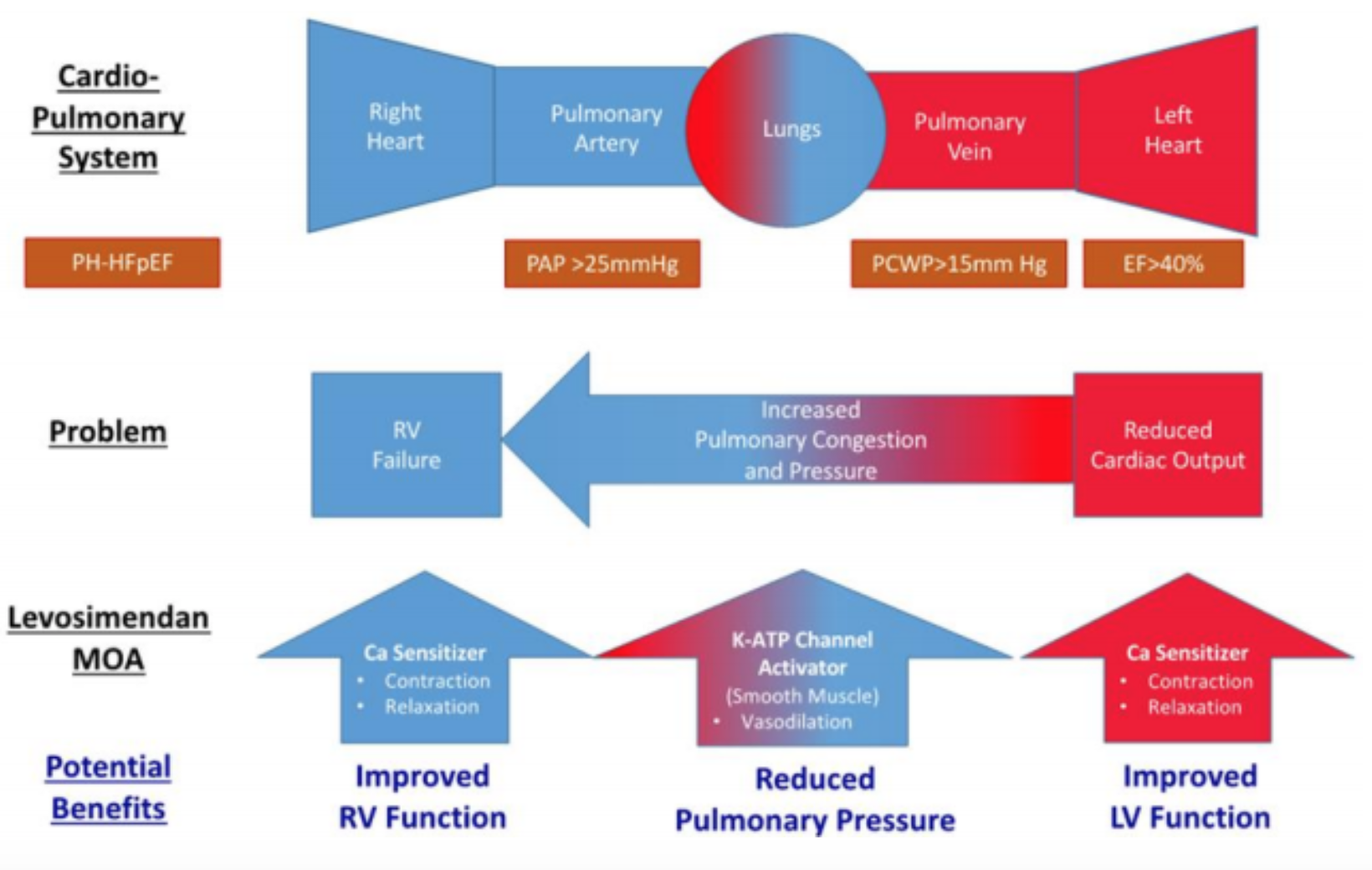 View Exhibit I
– Levosimendan Multiple Mechanisms
1 The primary endpoint of the study will be a change from baseline PCWP with bicycle exercise at Week 6. Expected secondary endpoints will relate to a change in resting PCWP under a variety of conditions, a change in resting & stressed CI, change in pulmonary vascular resistance (PVR) at rest & under stress, a global assessment at week six based on the Likert scale and length of exercise period, a physician’s assessment of functional class and clinical events, including death and hospitalizations.
Based on management commentary and what has been accomplished in pre-clinical and clinical work to date, infusion for several hours one time per week appears to be the most likely dosing regimen; however, this will be confirmed in Phase II work.
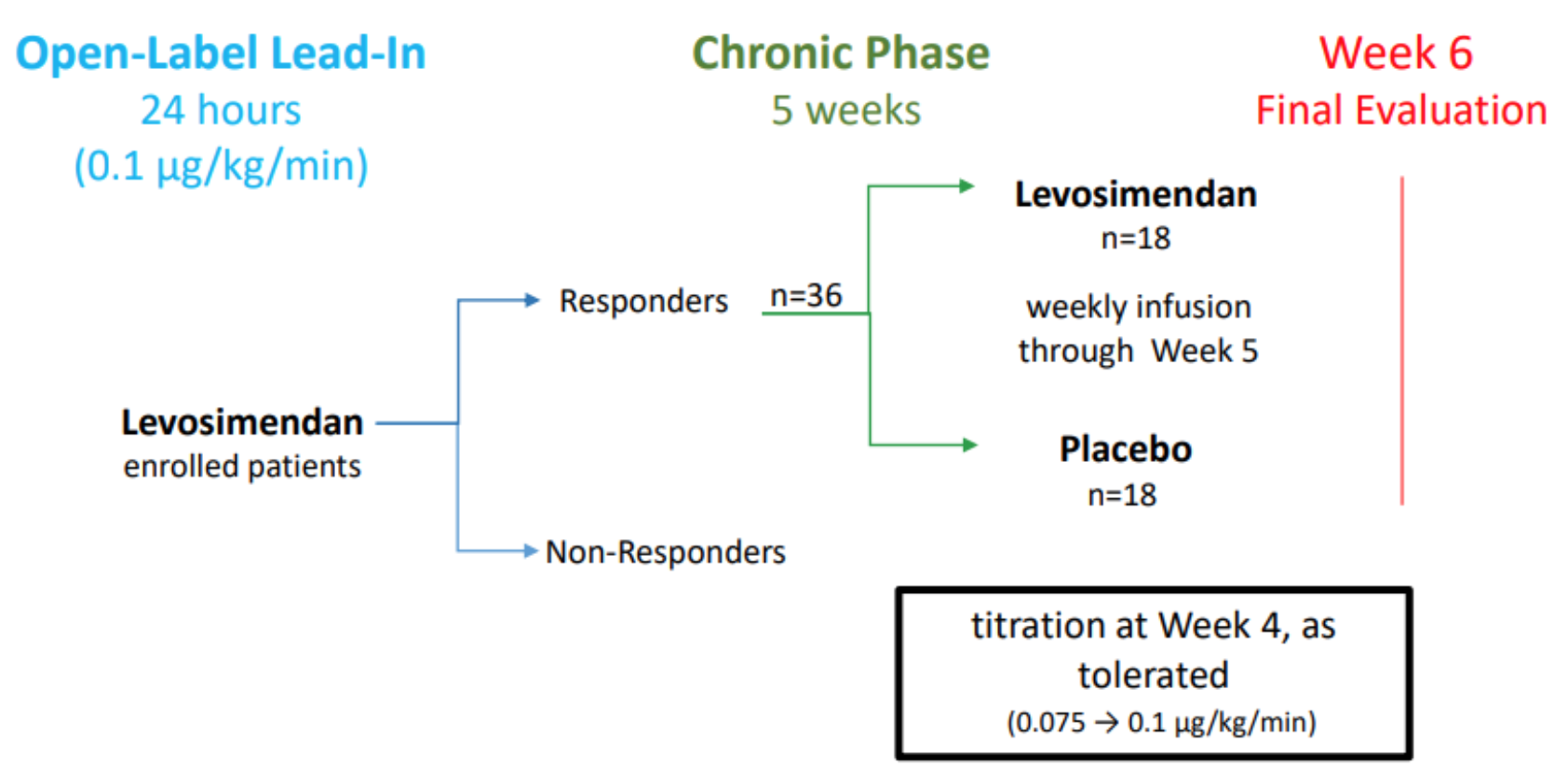 View Exhibit II
– Phase II Study Design
2Tenax S-1 Filing
On November 6th Tenax Therapeutics
filed an S-1 proposing to raise $10 million in equity capital to support operations into 2020. While the funds are not needed to launch the Phase II trial for Levosimendan, they should be sufficient to support the completion of the Phase II trial and the end of Phase II meeting with the FDA. Total direct trial cost is anticipated to be from $4.5 to $5.0 million.
Milestones
‣ Meet with FDA for Phase II Trial Design – 1Q:18
‣ Complete Phase II Design – 2Q:18
‣ Begin Trial Enrollment – 4Q:18
‣ Raise Capital – 4Q:18
‣ End of Phase II Meeting with FDA – 4Q:19 / 1Q:20
Summary
Activities in the third quarter were dominated by preparations for the launch of the PH-HFpEF trial. There was a delay relative to our initial expectations as the company worked through administrative issues with partner institutions, such as contracting and budgeting and IRB approvals. The first site has now been launched and we anticipate that Tenax will begin to enroll participants; however, initial enrollment rates may be slow due to the holiday calendar over the next six weeks.
Based on the research and analysis included in our initiation, we believe PH-HFpEF patients will benefit from Levosimendan’s mechanism of action and clinical trials can be pursued with a reasonable cost and time commitment. The indication is also in an area with no other approved treatments. Market size is material and with no other approved therapy available, pricing should be strong and penetration high.
SUBSCRIBE TO ZACKS SMALL CAP RESEARCH to receive our articles and reports emailed directly to you each morning. Please visit our website for additional information on Zacks SCR.
DISCLOSURE: Zacks SCR has received compensation from the issuer directly or from an investor relations consulting firm, engaged by the issuer, for providing research coverage for a period of no less than one year. Research articles, as seen here, are part of the service Zacks provides and Zacks receives quarterly payments totaling a maximum fee of $30,000 annually for these services. Full Disclaimer HERE.________________________________
1 Source: Tenax November 2018 Investor Presentation
2 Source: Tenax November 2018 Investor Presentation