By
David Bautz, PhD
NASDAQ:BCLI
READ THE FULL BCLI RESEARCH REPORT
Business Update
Data Presented at AAN Provides Additional Details on NurOwn®
During the 71st American Academy of Neurology (AAN), BrainStorm Cell Therapeutics, Inc. (NASDAQ:BCLI) presented two scientific abstracts that provided a detailed molecular characterization of neurotrophic factor production by NurOwn® and a correlation between cerebrospinal fluid biomarkers and clinical improvement in the Phase 2 ALS study.
“Molecular Characterization of VEGF Secretion by MSC-NTF Cells (NurOwn®): Therapeutic Implications in ALS”
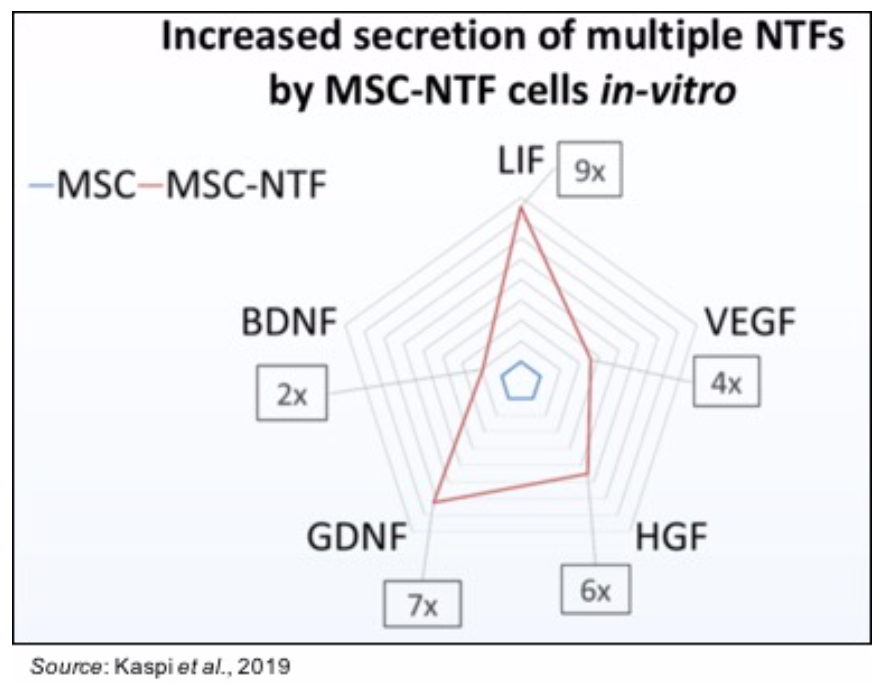
This study focused on determining the molecular differences between naïve mesenchymal stem cells (MSC) and MSC-NTF cells (NurOwn®) through a combination of mass spectrometry proteomics, gene expression analysis, and microRNA expression. The following radar plot shows the fold change in the secretion of various neurotrophic factors (NTFs) by MSC-NTF compared to MSC, which varied from 2x to 9x for the tested NTFs.
 View Exhibit I
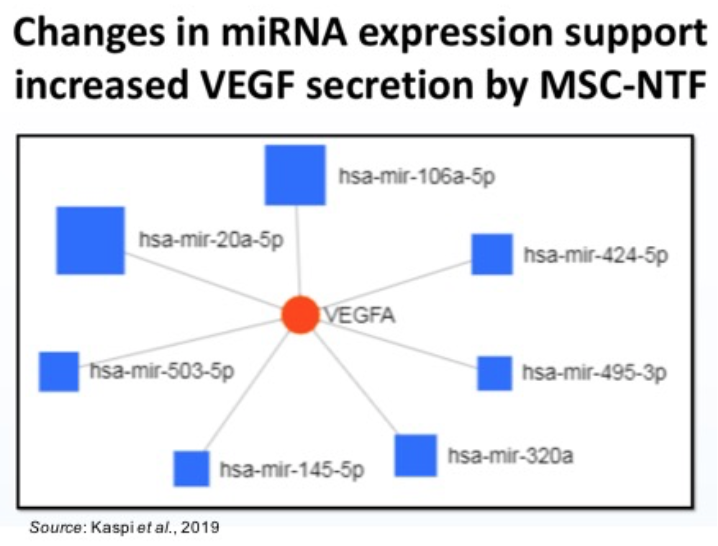
An analysis of microRNA expression revealed that 22 microRNAs were found to be significantly down regulated in MSC-NTF cells compared to MSCs. Of those 22, seven of them (shown in the following figure) are predicted to target vascular endothelial growth factor (VEGF), based on the miRNet algorithm.
 View Exhibit II
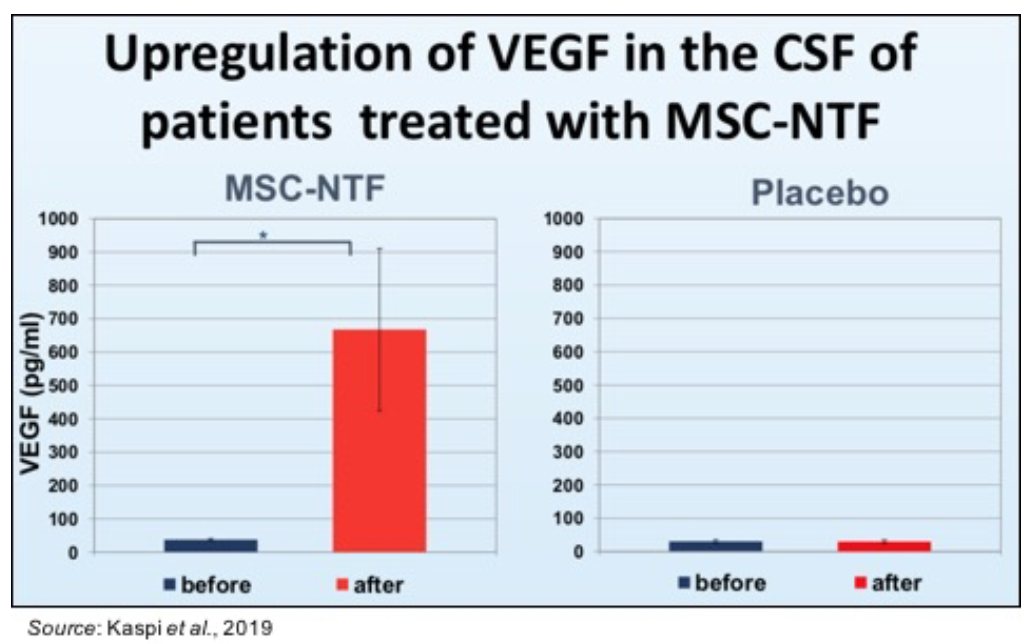
The down regulation of microRNAs that control expression of VEGF in MSC-NTFs should lead to increased expression of VEGF, which is what was seen in patients treated with MSC-NTF. The following graph shows a significant increase in the expression of VEGF (P<0.05) two weeks following intrathecal infusion of MSC-NTF with no increase seen in patients treated with placebo.
 View Exhibit III
This study gave insight into the potential mechanisms of action that may drive increased expression of NTFs in MSC-NTF cells, particularly VEGF. It is this increased expression of NTFs that is thought to contribute to neuroprotective and immunomodulatory mechanism to improve symptoms of ALS.
“Modulation of CSF Caspase-3 in MSC-NTF Cells (NurOwn®) in a Phase 2 ALS Study: Correlations with CSF Biomarkers and Clinical Response”
This study was designed to measure the level of caspase-3, which has been implicated in the pathogenesis of ALS (
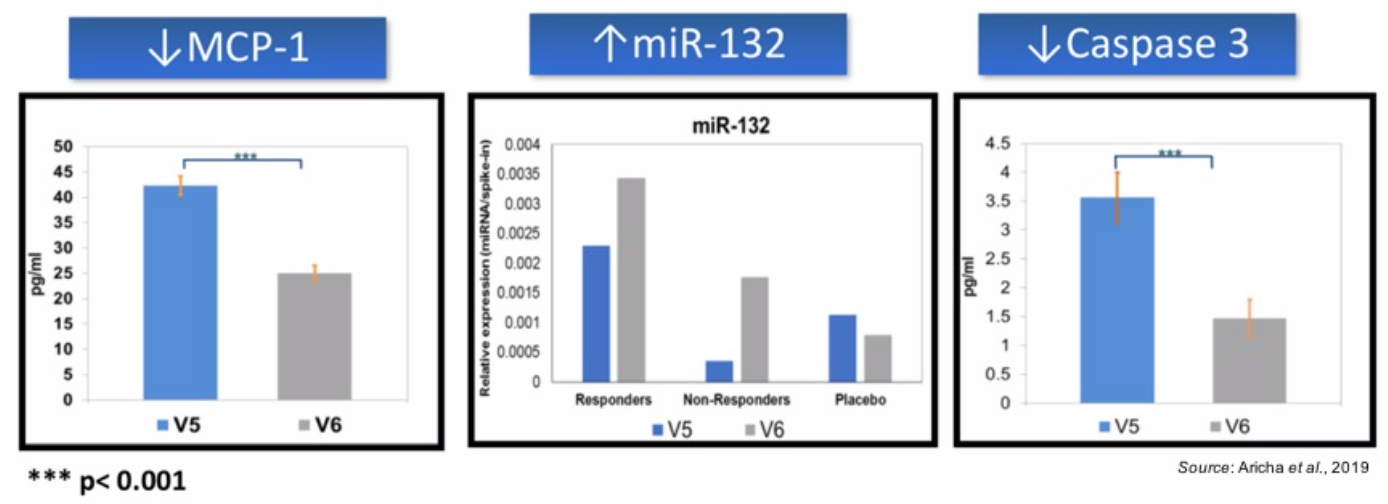
Boston-Howes et al., 2006), in cerebrospinal fluid as well as changes in caspase-3, NTFs, cytokines, and microRNA before and after administration of MSC-NTF. The following figure shows the change in MCP-1 (which is elevated in ALS patients [
Nagata et al., 2007]), microRNA-132, and caspase-3 in cerebrospinal fluid before (V5) and after (V6) treatment with MSC-NTF cells. Both MCP-1 and caspase-3 are significantly decreased following administration of MSC-NTF cells (P<0.001) while there was no change in any of those three targets in placebo treated patients (data now shown).
 View Exhibit IV
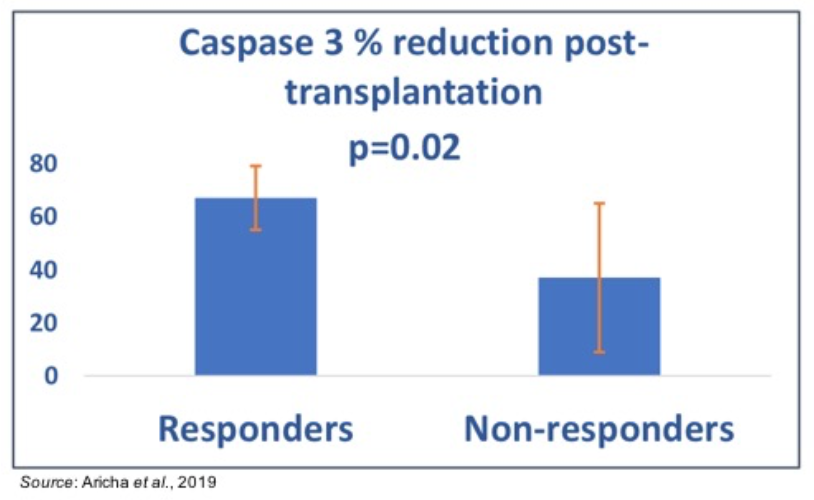
In addition to being reduced following treatment with MSC-NTF cells, a reduction in caspase-3 was also correlated with response to treatment. The following chart shows there was a significantly greater decrease in caspase-3 in cerebrospinal fluid in those patients who were considered responders in the Phase 2 trial compared with those considered non-responders (P=0.02).
 View Exhibit V
These data point to a reduction in caspase-3 in the cerebrospinal fluid of patients treated with MSC-NTF cells, which may be indicative of decreased neuronal apoptosis and could potentially be used as a biomarker to test for which patients are responding to treatment.
Enrollment in Phase 3 ALS Study to be Completed in 3Q19
BrainStorm is continuing to enroll patients in the Phase 3 clinical trial of NurOwn® (
NCT03280056) for the treatment of ALS. The trial is taking place at six leading U.S. Medical centers. It is a randomized, double blind, placebo controlled, multi-dose trial that is expected to enroll approximately 200 patients randomized 1:1 to NurOwn® or placebo. Cells will be extracted from each patient one time prior to treatment, with all administrations of NurOwn® derived from the same extraction of cells thanks to a cryopreservation process developed for long-term storage of mesenchymal stem cells (MSC). As in previous studies, there will be a 3-month run-in period prior to the first treatment with two additional NurOwn® treatments occurring two and four months following the first treatment. The primary outcome of the study is the ALSFRS-R score responder analysis.
The company is focusing the trial on faster-progressing ALS patients since these patients demonstrated superior outcomes in the Phase 2 trial of NurOwn®. According to the company, approximately 50-60% of ALS patients could be considered “fast progressors”, defined as those who lose at least one point per month in the ALSFRS-R score during the pretreatment run-in period, thus there is a large group of patients that could potentially be included in the trial.
The company has contracted with City of Hope’s Center for Biomedicine and Genetics to produce clinical supplies of NurOwn® for all of the centers participating in the Phase 3 trial. The company previously
announced that the Connell and O’Reilly Families Cell Manipulation Core Facility at Dana-Farber Cancer Institute will serve as a second manufacturing facility. Dana Farber was previously used as a manufacturing facility of NurOwn® in the Phase 2 trial. In addition to supplying NurOwn® for the ongoing Phase 3 trial, we believe the Dana Farber facility will likely be used to manufacture NurOwn® for any additional clinical indications the company decides to pursue.
Approximately 150 patients should be enrolled into the study by the end of May 2019. We estimate that the trial will be fully enrolled during the third quarter of 2019 and that topline results will be available in the second half of 2020.
Developing Exosomes for Treatment of Neurodegenerative Diseases
On April 30, 2019, BrainStorm
announced the expansion of its technology platform to include the development of exosomes for neurodegenerative diseases. Exosomes are nano-sized (40 – 100 nm) extracellular vesicles that can be used as delivery vehicles to transport multiple types of molecules (nucleic acids, proteins, etc.) to specific cell types, including across the blood brain barrier. In addition to being used as transporters, exosomes have a number of positive attributes including the ability to evade the immune system, long-term stability, and reduced manufacturing costs. We anticipate additional updates from the company regarding a lead central nervous system indication as the company moves development candidates through preclinical development.
First Patients Treated Under Hospital Exemption
In March 2019, BrainStorm announced that the Israeli Ministry of Health approved the company’s application for the Hospital Exemption (HE) program, which will allow for the treatment of 13 ALS patients with NurOwn®. The HE program is a regulatory pathway in Israel that allows for companies to partner with medical centers in Israel to allow for patients to receive benefit from custom-made, innovative, treatments where there is a critical unmet need and an absence of valid therapeutic alternatives.
The company recently
announced an important milestone that the first three patients have been treated under the HE program. In connection with treating those patients the company received approximately $1 million. We anticipate approximately 3 patients being treated per month under the program and we estimate the company could report approximately $3 million in revenue for the second quarter of 2019. Updates on the patients treated through the HE program will occur as needed.
Financial Update
On May 10, 2019, BrainStorm
announced financial results for the first quarter of 2019. As expected, the company did not report any revenues. Net R&D expenses for the first quarter of 2019 were $3.5 million compared to $1.0 million for the first quarter of 2018. The increase was primarily due to an increase in costs associated with the ongoing Phase 3 clinical trial along with increased costs associated with patents, travel, rent, and other activities. Those amounts included grants from both the Israel Innovation Authority (IIA) and the California Institute for Regenerative Medicine (CIRM), which were recorded as offsets to R&D expenses. Without accounting for the IIA and CIRM grants, R&D expenses were $5.2 million in the first quarter of 2019 compared to $2.0 million in the first quarter of 2018. G&A expenses in the first quarter of 2019 were $1.5 million compared to $1.3 million for the first quarter of 2018. The increase was the result of an increase in public relations costs and stock-based compensation. Net loss for the first quarter of 2019 was $5.0 million, or $0.24 per share, compared to a net loss of $2.3 million, or $0.12 per share, in the first quarter of 2018.
As of Mar. 31, 2019, BrainStorm had approximately $6.2 million in cash, cash equivalents, and short-term investments. This does not include the remaining commitments from the CIRM grant (approximately $3 million) or the IIA grant (approximately $1 million). We estimate the company has sufficient capital to fund operations past the data readouts for the ongoing ALS and MS clinical trials.
As of May 1, 2019, BrainStorm had approximately 21.7 million shares of common stock and when factoring in stock options and warrants a fully diluted share count of 27.8 million.
Conclusion
We continue to be baffled by the company’s sub-$100 million valuation, which we do not believe accurately reflects the potential for NurOwn®. Not only is BrainStorm undervalued based on the fact it is in Phase 3 testing with a product with a solid safety and efficacy record targeting a potential billion-dollar market, but on a comparative basis as well. We feel that an interesting valuation comparison can be made with Marker Therapeutics (MRKR), which uses autologous, non-engineered T cells to treat cancer. We believe this is similar to NurOwn® in that it uses the patient’s own cells with no genetic modification. Marker is currently in Phase 2 testing for its cell therapy product and has a valuation of $250 million, or approximately 3x BrainStorm’s current valuation.
BrainStorm has all the pieces in place to be successful, including a world-class management team, sufficient capital to complete the Phase 3 ALS study, and a data readout next year for an additional indication for NurOwn®. We estimate that if successful NurOwn® could attain peak sales of $500 million in MS alone, while in ALS we believe sales of $1 billion are possible. Our valuation for BrainStorm is currently $17.
SUBSCRIBE TO ZACKS SMALL CAP RESEARCH to receive our articles and reports emailed directly to you each morning. Please visit our website for additional information on Zacks SCR.
DISCLOSURE: Zacks SCR has received compensation from the issuer directly or from an investor relations consulting firm, engaged by the issuer, for providing research coverage for a period of no less than one year. Research articles, as seen here, are part of the service Zacks provides and Zacks receives quarterly payments totaling a maximum fee of $30,000 annually for these services. Full Disclaimer HERE.