By
David Bautz, PhD
TSX:ATE.V
READ THE FULL ATE.V RESEARCH REPORT
Financial Update
On December 19, 2018, Antibe Therapeutics, Inc. (TSX:ATE.V)
announced a warrant exercise of nearly all outstanding warrants with an expiration date in December 2018 that resulted in gross proceeds to the company of approximately CAD$1.6 million. A total of 7,066,001 warrants with an exercise price of CAD$0.22 were exercised. We estimate that the company exited the third fiscal quarter of 2019 ending Dec. 31, 2018 with approximately CAD$3.0 million and that the Phase 2b dose-ranging efficacy study is fully funded. We remind investors that the company still has approximately 21 million warrants outstanding that are “in-the-money” and could raise an additional CAD$3.1 million.
Business Update
Dose-Ranging Efficacy Study to Commence
Antibe is set to initiate Part 2 of the Phase 2b dose-ranging, efficacy study of its lead compound, ATB-346, in the first quarter of 2019. It will be a randomized, double blind, placebo controlled efficacy trial in approximately 250 patients suffering from osteoarthritis (OA). The primary endpoint is to evaluate the efficacy of three different doses of ATB-346. We anticipate topline results in the second quarter of 2019.
In 2016, Antibe
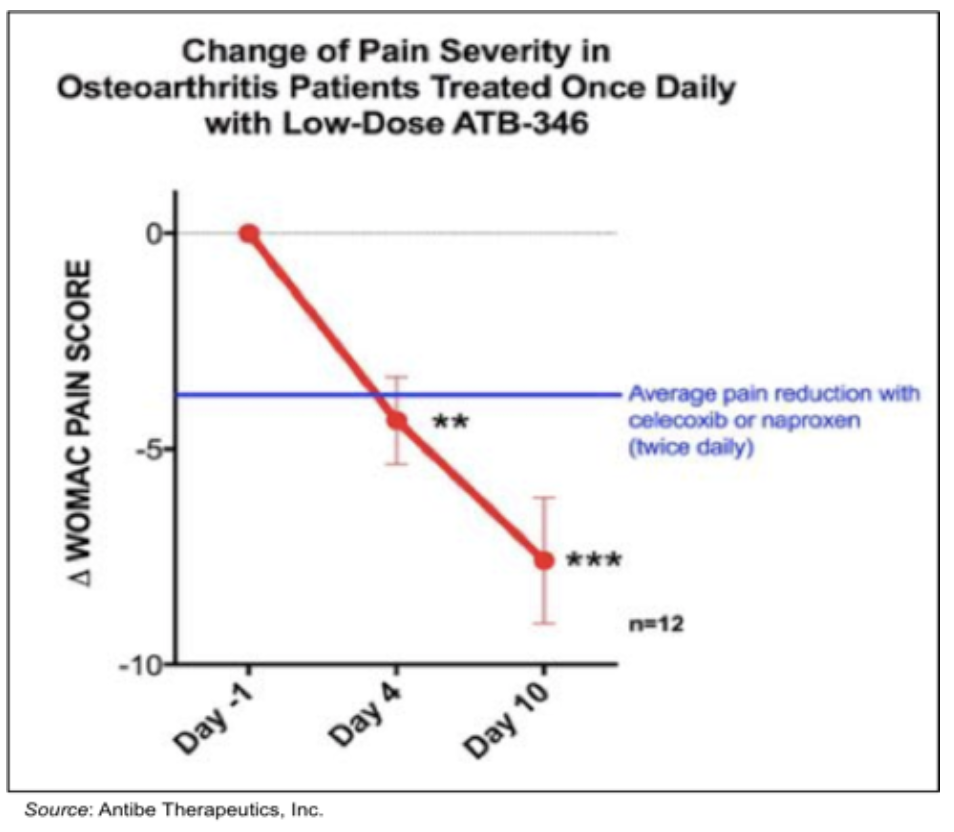
announced the successful completion of a Phase 2 study of ATB-346 in patients with OA of the knee. Twelve patients were treated once daily with 250 mg of ATB-346, which is only 1/6th of the typical daily dose of naproxen for treating osteoarthritis. The patients recorded their pain level one day prior to starting treatment and then again on days 4 and 10 of treatment using the WOMAC pain scale. The graph below shows the change in recorded pain level over the 10 days of the study. Previous studies show typical reductions in WOMAC pain scores for osteoarthritis patients taking celecoxib of approximately 4 units following one week of treatment, with no additional improvement beyond that with continued treatment (
Wittenberg et al., 2006). Thus, the average reduction of 7.6 units is quite impressive in that study population.
 View Exhibit I
Part 1 of Phase 2b Dose-Ranging, Efficacy Study Successfully Completed
In November 2018, Antibe
announced that it successfully completed the first part of the Phase 2b dose-ranging, efficacy study of ATB-346. The first part of the study was a metabolism study in order to better understand the unique metabolic profile of ATB-346. It was conducted in 24 healthy volunteers who were randomized to receive 150 mg, 200 mg, or 250 mg of ATB-346 once daily. As part of the study, data was collected on: 1) cyclo-oxygenase (COX) inhibition to determine the proper doses to use in the dose-ranging, efficacy portion of the study; 2) multiple blood draws to analyze ATB-346 metabolites; and 3) safety and tolerability data of the drug.
The results showed that COX inhibition of the 250 mg dose was consistent with previous studies and there was also marked inhibition seen with the two lower doses. The company is continuing to evaluate the metabolites of ATB-346 to better understand their properties.
ATB-346
ATB-346 uses the non-steroidal anti-inflammatory drug (NSAID) naproxen as a base molecule with a hydrogen sulfide releasing moiety covalently attached. Hydrogen sulfide (H2S) has been identified as an important gasotransmitter, a gas that serves as an important signaling molecule in the body. Other examples of gasotransmitters are nitric oxide (NO) and carbon monoxide (CO).
Antibe is developing ATB-346 as a solution to the dose-related gastrointestinal (GI) side effects associated with NSAIDs. These effects are a result of the inhibition of the COX-1 enzyme, which is responsible for the normal gastro-protective processes (
Roth, 1988). In addition, many NSAIDs are acidic molecules, resulting in irritation to the gastric mucosa. Dyspepsia, abdominal pain, and nausea are all common side effects of oral NSAIDs (
Makris et al., 2010). While these adverse events are manageable, more serious events are known to occur with oral NSAID use including upper GI bleeding, ulcers, and death (
Hernández-Díaz et al., 2000). According to The Arthritis, Rheumatism, and Aging Medical Information System, more than 100,000 Americans are hospitalized each year and more than 16,000 die from ulcers and GI bleeding linked to NSAID use.
With the discovery of COX-2, research and development efforts were directed at discovering compounds that inhibited COX-2 selectively in order to overcome the GI side effects. While COX-1 is constitutively expressed throughout the body, COX-2 is typically only expressed in inflammation, with the inhibition of COX-2 resulting in the desired clinical response of NSAIDs.
Selective COX-2 inhibitors, such as rofecoxib (Vioxx®), celecoxib (Celebrex®), and valdecoxib (Bextra®), were initially very popular with both physicians and patients for their ability to relieve pain with a significantly decreased risk of adverse GI events. For example, Vioxx achieved over $1 billion in sales in its first year on the market. However, some clinical trials of the COX-2 inhibitors showed that treatment led to an increased risk of adverse cardiovascular (CV) events (
Antman et al., 2007;
Kearney et al., 2006). These results led Merck to voluntarily recall Vioxx® in 2004, with Bextra® withdrawn from the market in 2005. In addition, the FDA required a black box warning on the label for Celebrex®.
While on the one hand non-selective NSAIDs are great at offering pain relief, they are accompanied by the threat of serious GI problems, including the development of intestinal damage and bleeding ulcers. Selective NSAIDs are very effective at mitigating pain and they cause significantly fewer GI effects, but they come with an increased risk of CV events. Thus, what is needed is an effective NSAID that does not increase a patient’s risk of serious GI or CV events.
Scientific Report on Phase 2b Trial of ATB-346
In August 2018, Antibe
announced the availability of a comprehensive report summarizing the data from the Phase 2b GI safety trial of ATB-346. The company had previously announced positive topline results from the study showing that 42.1% of naproxen-dosed subjects had GI ulceration compared to only 2.5% of subjects administered ATB-346 following two weeks of dosing. In addition, the report (which can be accessed
here) discusses key findings from secondary endpoints.
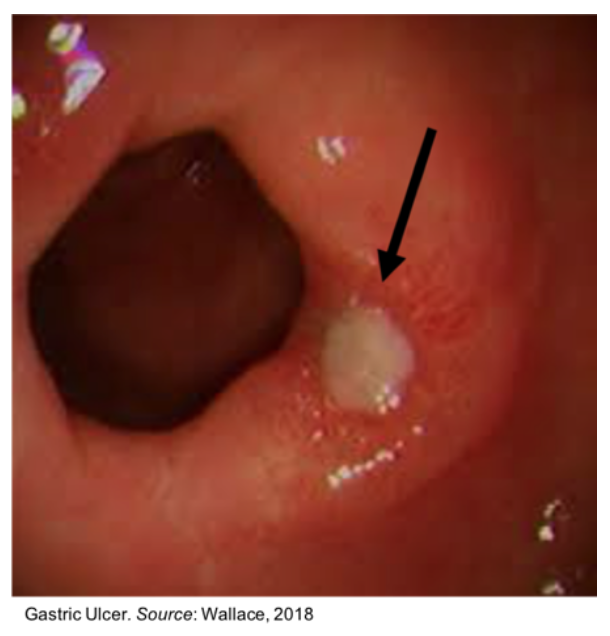
The Phase 2b study was designed to show superiority of ATB-346 in GI safety compared to naproxen through the quantitation of endoscopically observed gastric and duodenal ulcers that were ≥ 3 mm. The following figure shows what a gastric ulcer looks like.
 View Exhibit II
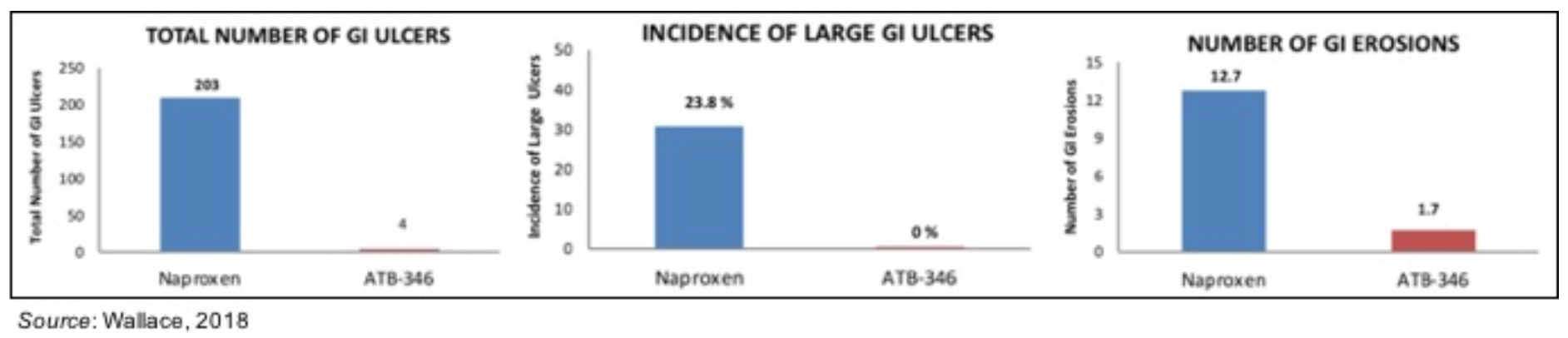
The primary endpoint of the study was achieved, as 53/126 (42.1%) naproxen-treated subjects had at least one ulcer ≥ 3 mm compared to only 3/118 (2.5%) ATB-346-treated subjects (P<0.0001). In addition, the following figures show that the total number of ulcers, the percentage of subjects with large ulcers (≥ 5 mm), and the number of GI erosions were all much higher in the naproxen-treated subjects compared to those administered ATB-346.
 View Exhibit III
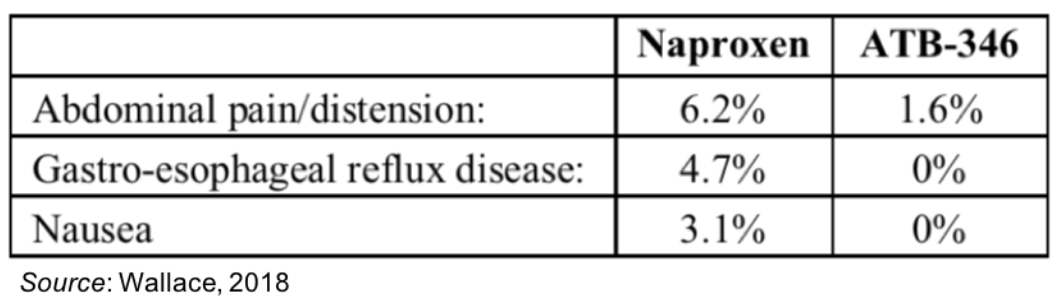
In addition to significantly decreasing the number of GI ulcers, subjects administered ATB-346 also showed fewer dyspepsia events, as shown in the following table.
 View Exhibit IV
While the incidence of GI ulcers is a very important outcome, it would not mean much if ATB-346 was not as effective as naproxen. While a full efficacy study will be conducted in the near future, data collected in this study showed that the level of COX activity (as measured by thromboxane, a substance produced mainly via the COX enzyme) was reduced similarly by both ATB-346 and naproxen (>94%).
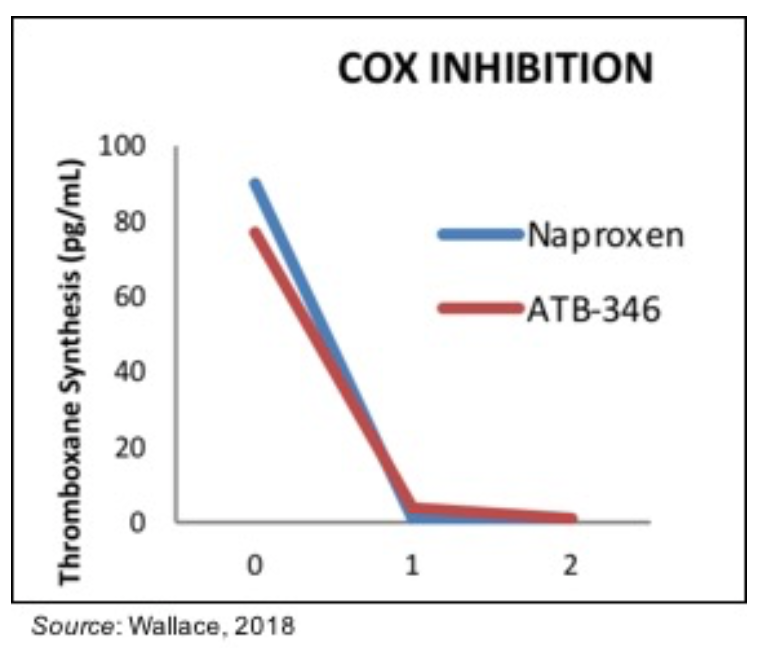 View Exhibit V
The report discusses metabolic differences between ATB-346 and naproxen. For the Phase 2b trial, ATB-346 was dosed once daily at 250 mg while naproxen was dosed twice daily at 500 mg each. Following the two weeks of naproxen dosing, the mean plasma concentration of naproxen was 52.1 μg/mL while after two weeks of dosing ATB-346 the mean concentration of naproxen was 14.2 μg/mL. The difference is explained by the daily dose of ATB-346 being approximately 1/4th that of the naproxen dose. ATB-346 has a much longer half-life than naproxen while still maintaining similar COX inhibition data when compared to naproxen. Ultimately, this should allow for once-daily dosing of ATB-346, which is much more favorable from a commercial standpoint.
From a metabolic standpoint, ATB-346 metabolism results in several “naproxen-like” molecules that may have COX inhibitory activity. Subjects administered naproxen either did not have these metabolites or they were at much lower concentration than in ATB-346-treated subjects. Further analysis of these compounds is ongoing and we anticipate the company obtaining additional insight into this phenomenon following the ongoing metabolism study.
From a safety standpoint, there were very few non-GI differences between ATB-346 and naproxen. There was no effect of ATB-346 on blood pressure, a similar low incidence between the two groups in regards to headache and dizziness, and some mild transient elevations of liver transaminases (ALT/AST) that were not clinically important. Specifically, in regards to ALT/AST, non-clinically significant transient elevations were seen in up to 7% of subjects in both treatment groups. Data from all clinical trials conducted with 250 mg ATB-346 once daily show a 4.7% overall incidence of clinically significant, transient elevation in ATL/AST, which is quite similar to the 4% rate seen in those prescribed the NSAID naproxen (
NIH).
Valuation
We believe the prospects for ATB-346 and the rest of Antibe’s pipeline are very good and we are looking forward to data from the dose-ranging efficacy portion of the company’s ongoing Phase 2b study in the second quarter of 2019. We model for approval of ATB-346 in OA followed by approval for multiple indications similar to celecoxib. ATB-346 has blockbuster potential and we believe sales in excess of $1 billion are possible in both the U.S. and E.U. with the data from the Phase 2 study lending support to that thesis. In addition, the potential for sales in excess of $1 billion is supported by the fact that Celebrex® (celeoxib) had peak sales of $2.9 billion even with a ‘black box’ warning regarding an increased risk of cardiovascular events with long-term use. We are confident that Antibe will be able to enter into a partnership with a global pharmaceutical company (most likely following completion of the upcoming efficacy trial) and we currently model for a 12% royalty with associated milestone payments.
Our current valuation for Antibe is CAD$1.80, clearly reflecting the fact that we believe there remains the potential for considerable upside, particularly with data from the dose-ranging efficacy study due in the second quarter of 2019.
SUBSCRIBE TO ZACKS SMALL CAP RESEARCH to receive our articles and reports emailed directly to you each morning. Please visit our website for additional information on Zacks SCR.
DISCLOSURE: Zacks SCR has received compensation from the issuer directly or from an investor relations consulting firm, engaged by the issuer, for providing research coverage for a period of no less than one year. Research articles, as seen here, are part of the service Zacks provides and Zacks receives quarterly payments totaling a maximum fee of $30,000 annually for these services. Full Disclaimer HERE.