By David Bautz, PhD
NASDAQ:ARWR
READ THE FULL ARWR RESEARCH REPORT
Business Update
Cardiometabolic Programs Offer Enormous Potential
In November 2020, Arrowhead Pharmaceuticals, Inc. (NASDAQ:ARWR) hosted KOL events for its lead cardiometabolic programs, ARO-APOC3 and ARO-ANG3. The company had previously announced encouraging results for each of those programs (see our previous update here) and provided a further update at the 2020 American Heart Association Scientific Sessions. The presentation for ARO-APOC3 can be found here and for ARO-ANG3 here.
ARO-APOC3
ARO-APOC3 is targeted to apolipoprotein C-III (APOC3), a component of very low density lipoprotein (VLDL) and an inhibitor of lipoprotein lipase. This program is currently focused on treating patients with severe hypertriglyceridemia (SHTG), which is characterized by a triglyceride (TG) level >500 mg/dL, and a history or high risk of pancreatitis. The goal of therapy is to reduce TGs to below 500 mg/dL in order to reduce the risk of acute pancreatitis (NCEP, 2002). In support of targeting APOC3, an APOC3 loss-of-function mutation results in lower TG levels (Jørgensen et al., 2014). Approximately 80-90% of APOC3 is produced in hepatocytes, thus making it an ideal target for the TRiM™ platform.
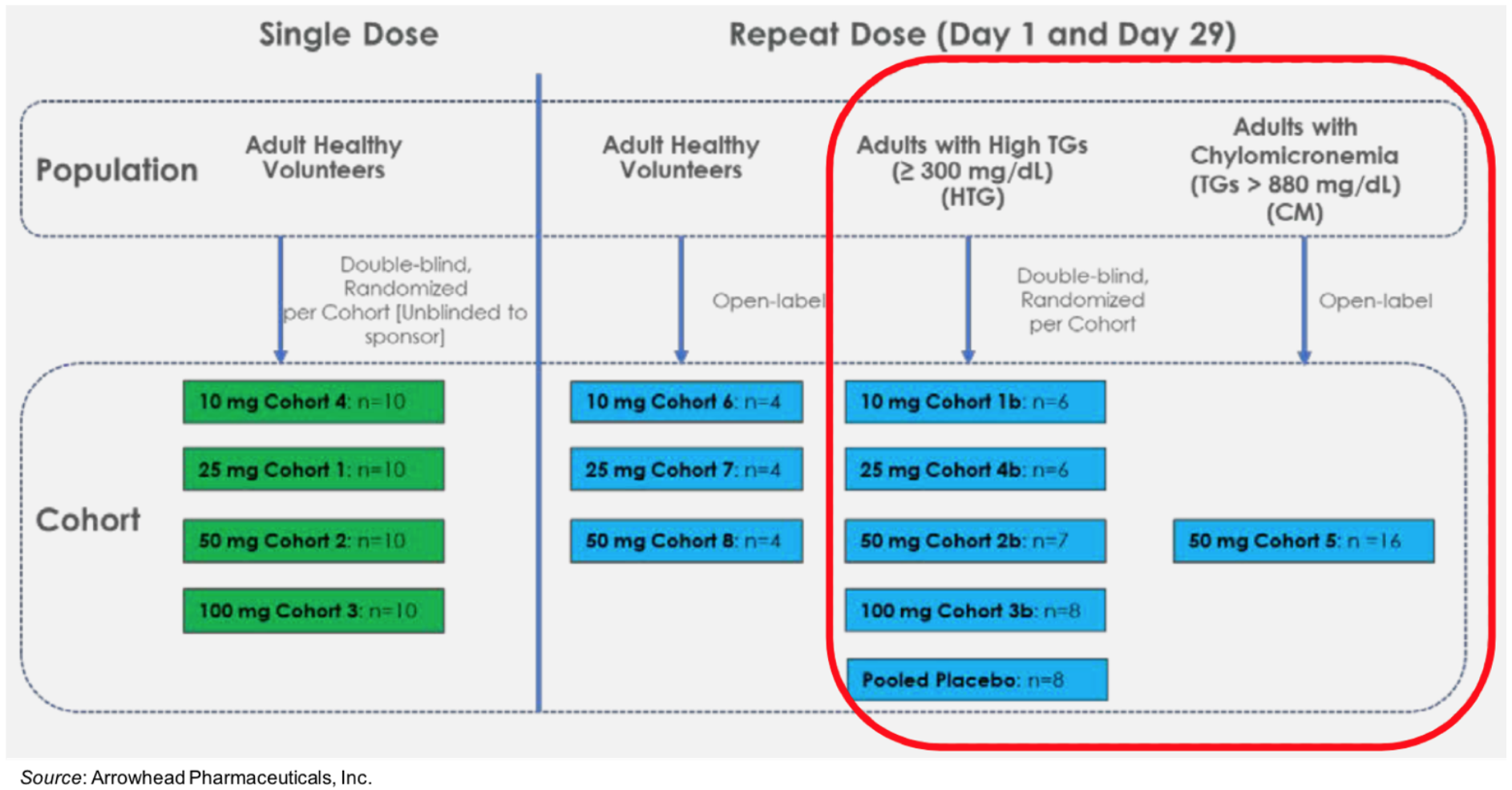
The following slide gives an overview of the Phase 1 trial of ARO-APOC3. Dosing occurred on Day 1 and Day 29 with follow-up to Day 113 (Week 16). Results from treatment of healthy volunteers was previously presented and this update concerned treatment of adults with high TGs (≥300 mg/dL) as well as those with chylomicronemia (TGs > 880 mg/dL). Results focused on changes in APOC3 as well as TGs, high-density lipoprotein (HDL) cholesterol, and non-HDL-C.
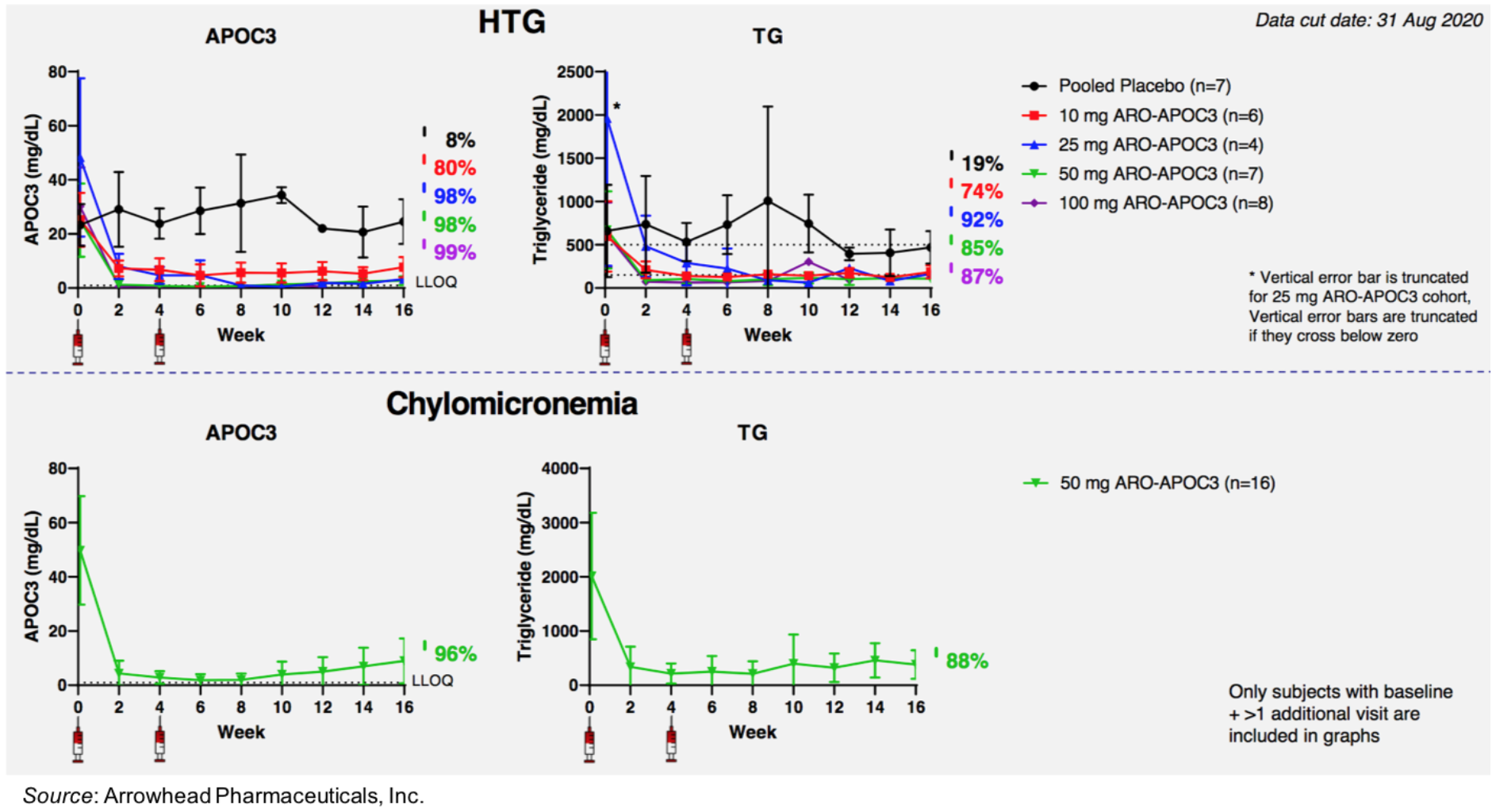
The following slide shows the percent change from baseline for APOC3 and TGs in patients with high TG and chylomicronemia. The % values to the side of each graph are maximal reductions for each cohort. Similar to what was shown previously in healthy volunteers, treatment with ARO-APOC3 resulted in maximum decreases in APOC3 levels of 80-99% and maximal decreased TG levels by 74-92% in high TG patients. Similar results were seen in chylomicronemia patients. With a target of getting TGs below 500 mg/dL these results far surpass that and could provide meaningful improvement for patient health.
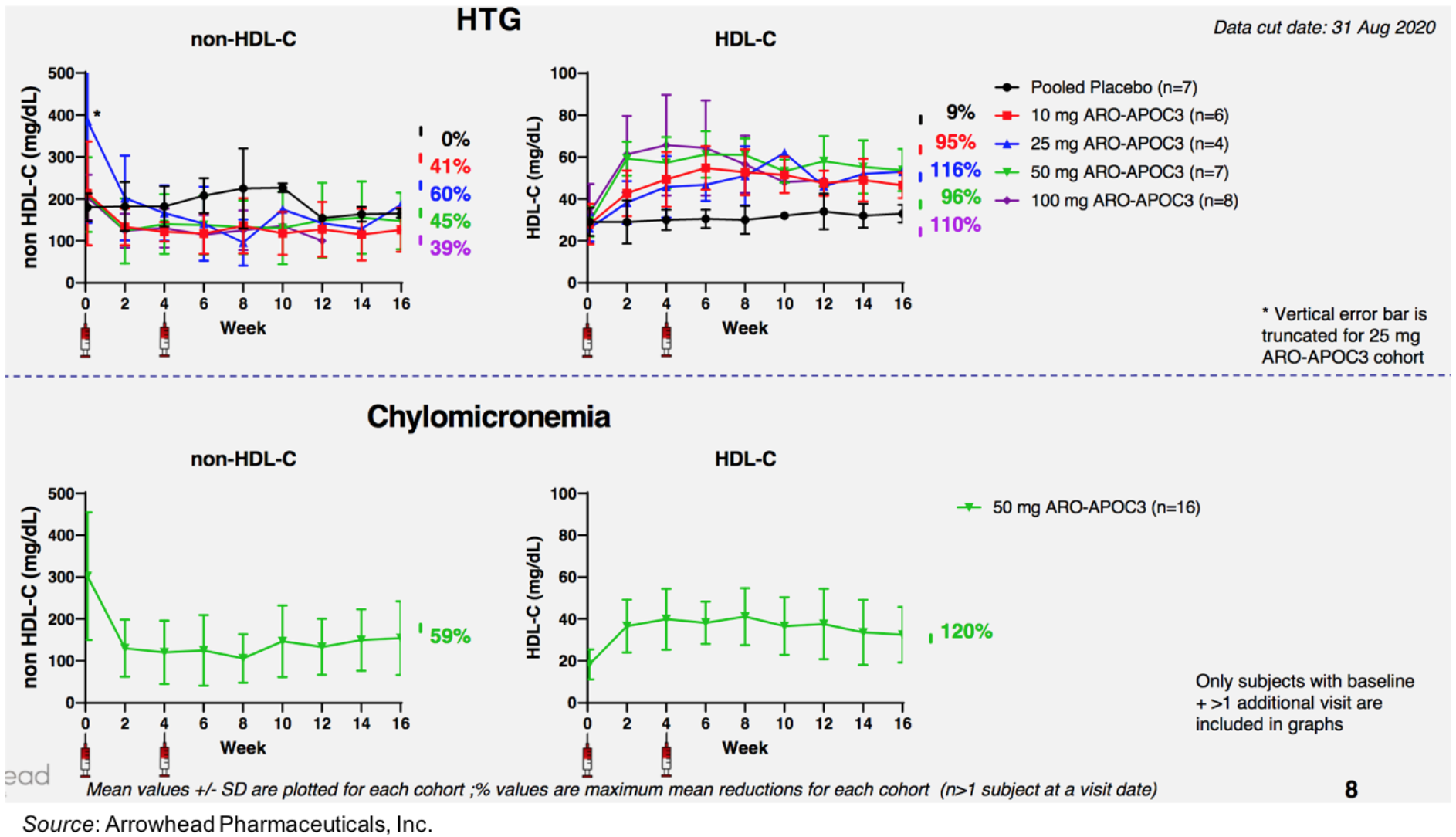
In addition to showing robust decreases in APOC3 and TG, treatment with ARO-APOC3 also results in maximal decreases in non-HDL-C of between 40-60% and maximal increases in HDL-C of >95%. Similar results are seen in both high TG and chylomicronemia patients.
We anticipate Arrowhead initiating a Phase 3 clinical trial of ARO-APOC3 in FCS patients in the first half of 2021. In addition, we anticipate a Phase 2 clinical trial in patients with severe hypertriglyceridemia (>500 mg/dL) and a Phase 2 trial in patients with high TGs (>150 mg/dL) initiating in the first half of 2021.
ARO-APOC3 Competition
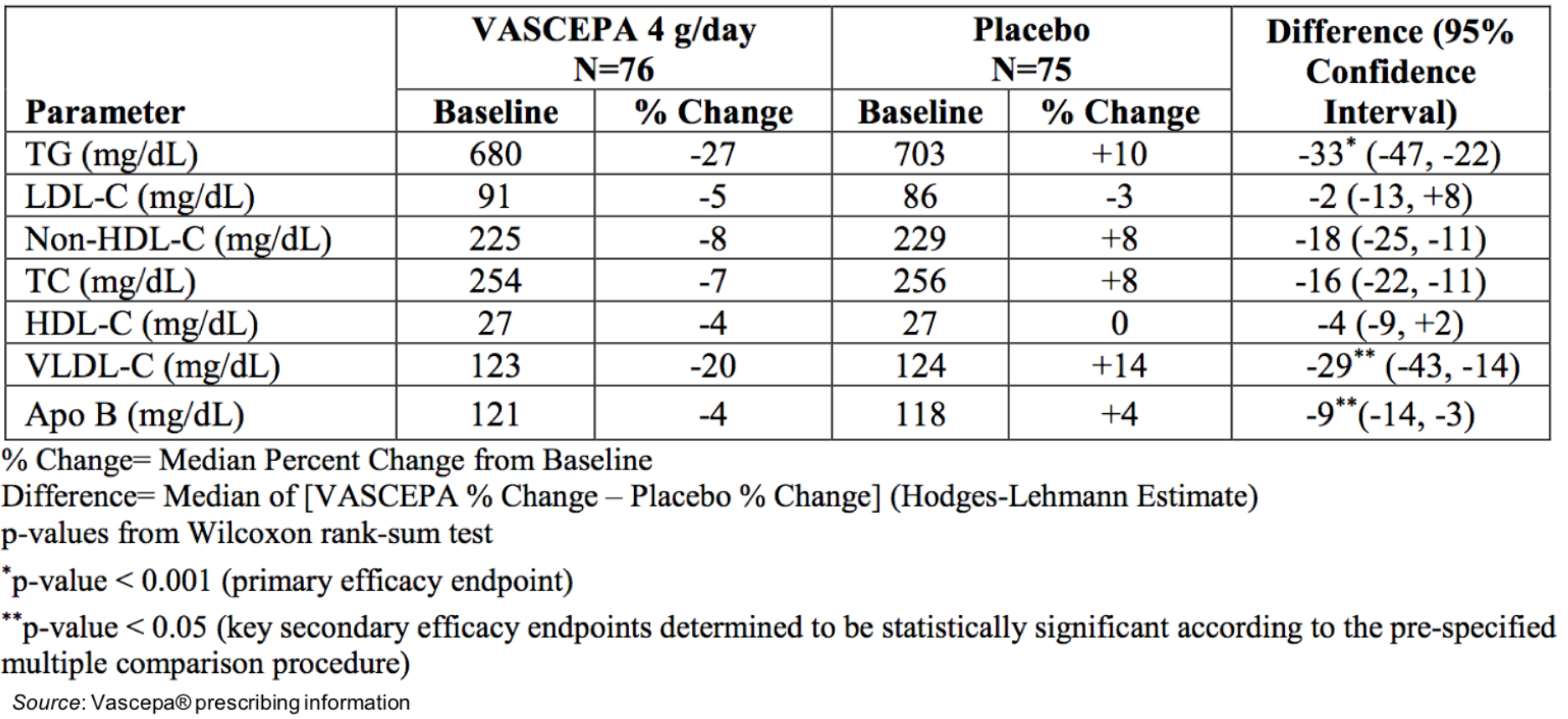
To put these results into perspective, the following table shows the results from a randomized, double blind, placebo controlled, study of patients with severe hypertriglyceridemia (>500 mg/dL) who were administered Vascepa® 4 grams per day for 12 weeks (Vascepa Prescribing Information). This is not a direct comparison between the results for ARO-APOC3 and Vascepa, but merely to show what current treatment options are able to accomplish in a high triglyceride patient population. The data for Vascepa shows that following 12 weeks of treatment with 4 g daily leads to a median 27% reduction in TG, a median 8% reduction in Non-HDL-C, and a median 4% reduction in HDL-C. We believe the data for ARO-APOC3 are far and away superior, particularly when it may only require a single dose every few months to achieve the desired results while Vascepa requires two doses daily.
An additional comparison can be made to AKCEA-APOCIII-LRX, which is being developed by Ionis Pharmaceuticals in partnership with Pfizer. Positive Phase 2 results were presented at the European Society of Cardiology (ESC) Congress 2020 in August 2020. Treatment of patients with hypertriglyceridemia showed a significant decrease in TG (mean change of -60% for 50 mg dose administered every 4 weeks) and APOC3 levels (approximately 70% decrease for 50 mg dose administered every 4 weeks). While these results are impressive, the fact that ARO-APOC3 has similar if not better results and may only need to be dosed once every 3 months (or longer) puts it at an advantage to the monthly dosing required for AKCEA-APOCIII-LRX. One advantage for Ionis’ drug is that it is further along in development with a Phase 3 clinical trial in FCS patients having just recently initiated.
ARO-ANGPTL3
ARO-ANG3 is focused on treating patients with mixed dyslipidemia and potentially metabolic diseases through targeting angiopoietin like protein 3 (ANGPTL3). ANGPTL3 loss-of-function mutations lead to low levels of LDL, VLDL, HDL, and TG (Musunuru et al., 2010), with one study showing an ANGPTL3 loss of function associated with a 34% reduction in odds of coronary artery disease (CAD) (Stitziel et al., 2017). Just like APOC3, the majority of ANGPTL3 is produced in hepatocytes, also making it an ideal target for the TRiM™ platform.
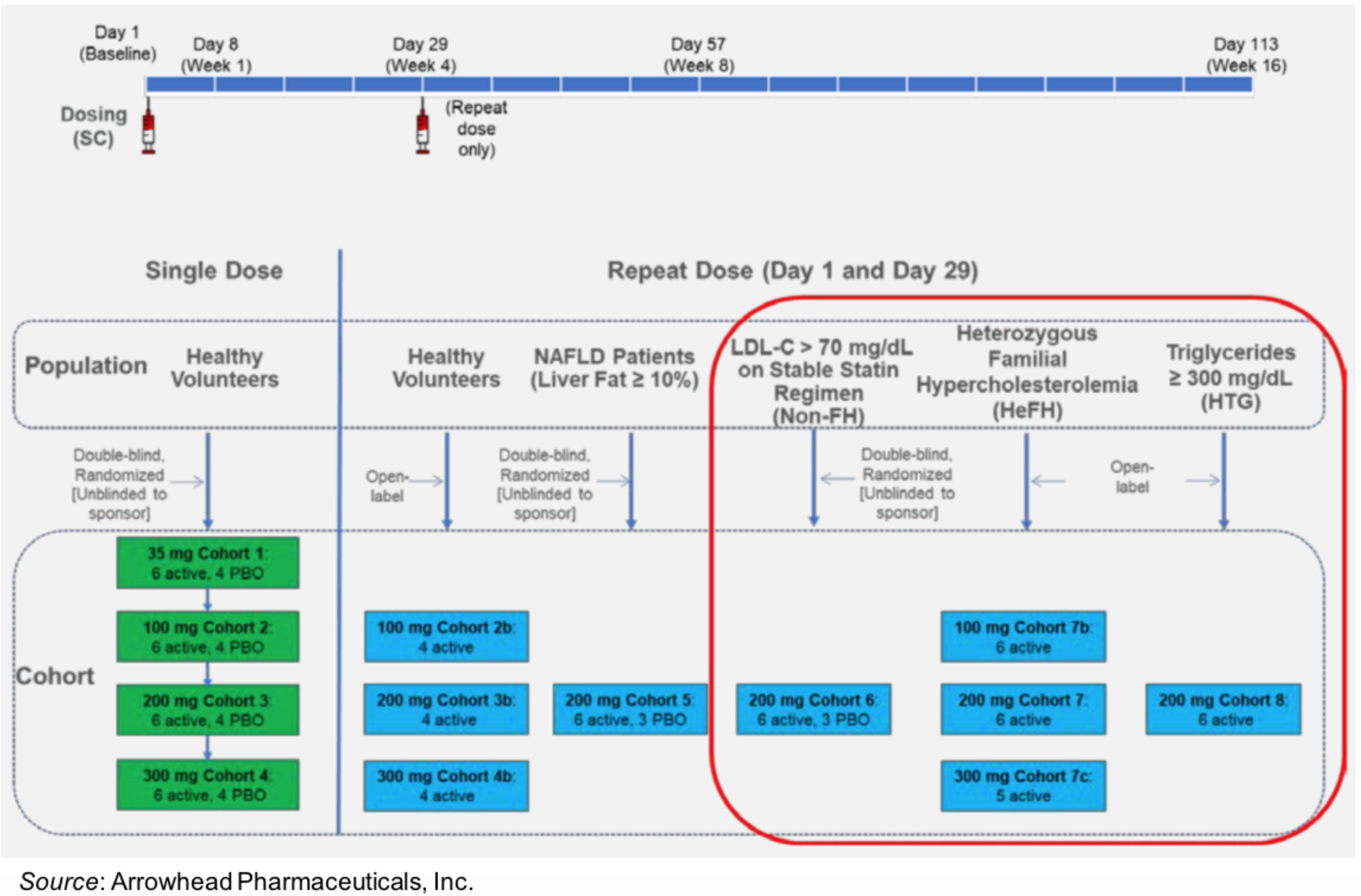
The following slide gives an overview of the Phase 1 trial of ARO-ANG3. The data recently presented focused on patient populations with heterozygous familial hypercholesterolemia (HeFH), patients on stable statin therapy that continue to have LDL-C > 70 mg/dL, and patients with hypertriglyceridemia (>300 mg/dL).
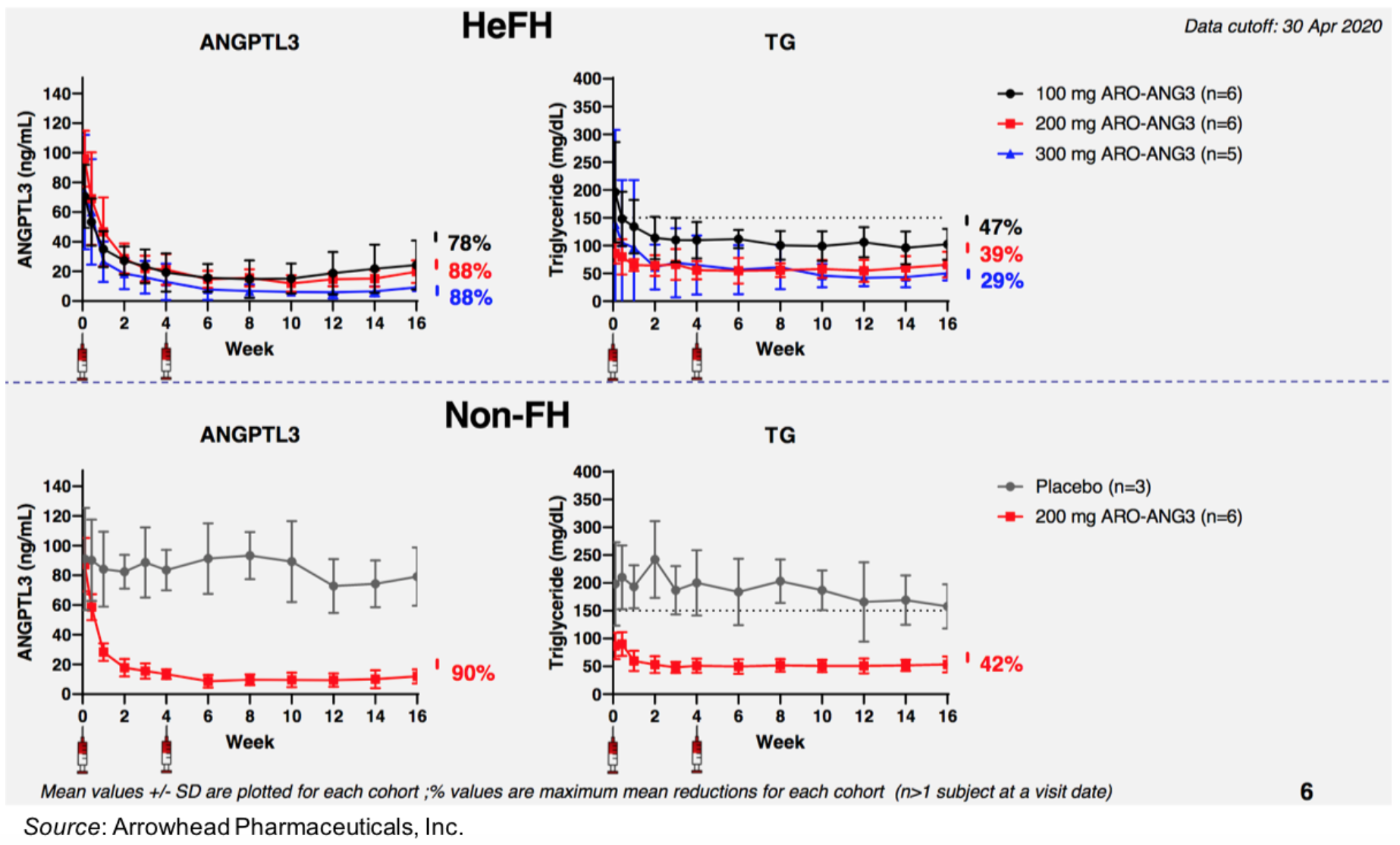
The following figure shows that ARO-ANG shows similar activity in both HeFH and non-FH patients, with average decreases of approximately 80-90% in ANGPTL3 and average decreases from baseline in TG of approximately 30-40%.
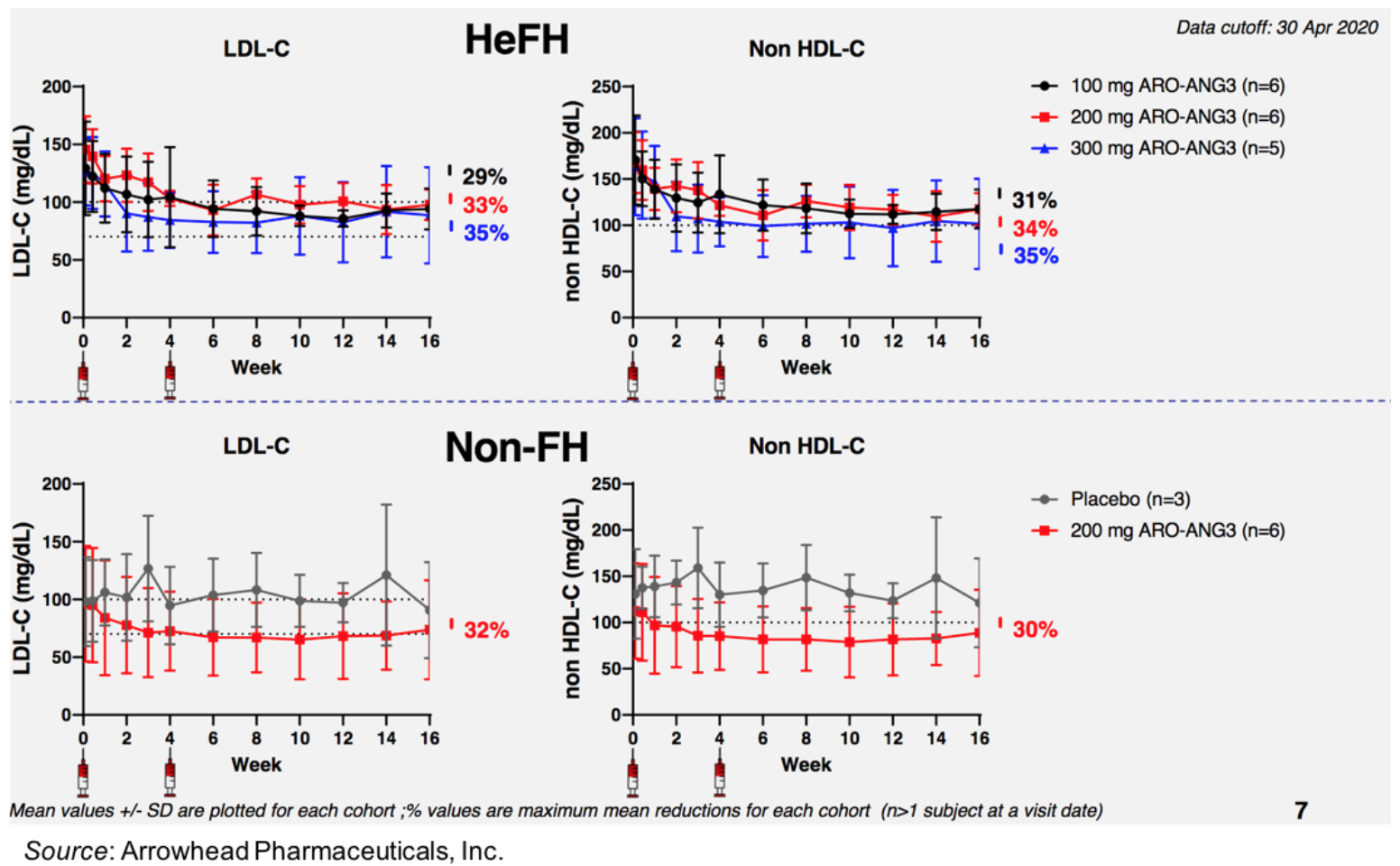
In addition, ARO-ANG3 lowered both LDL and Non HDL-C by an average of approximately 30-35% in FH and non-FH patients.
We anticipate Arrowhead initiating a Phase 2 dose finding study of ARO-ANG3 in patients with TGs >150 mg/dL in the first half of 2021 that could lead to a Phase 3 trial in mixed dyslipidemia patients (N =1500) along with a Phase 3 CV outcomes trial (N = 15,000) initiating in the second half of 2023.
ARO-ANG3 Competition
Ionis Pharmaceuticals is developing vupanorsen (formerly AKCEA-ANGPTL3-LRx), a drug that targets ANGPTL3, for the reduction of cardiovascular disease risk. Earlier in 2020, the company announced positive Phase 2 results for the drug showing an approximately 50% reduction in least squares mean triglycerides from baseline. In addition, there was an approximate 40% reduction in VLDL-C and an approximately 10% reduction in LDL-C. Pfizer recently initiated a Phase 2b study of vupanorsen in statin-treated patients with elevated non-HDL-C and TGs.
In August 2020, Regeneron Pharmaceuticals, Inc. (REGN) submitted a BLA for evinacumab as an adjunct to other lipid-lowering therapies in patients with homozygous familial hypercholesterolemia (HoFH). The PDUFA date for evinacumab is Feb. 11, 2021.. Evinacumab is a monoclonal antibody that targets ANGPTL3. In the Phase 3 ELIPSE HoFH trial, HoFH patients (with a mean baseline LDL of 255.1 mg/dL even on maximum doses of lipid-lowering therapy) had a relative reduction from baseline in LDL cholesterol of 47.1% (Raal et al., 2020). Regeneron is also evaluating evinacumab in a Phase 2 clinical trial in patients with primary hypercholesterolemia (HeFH) or non-HeFH patients with a history of clinical CVD (NCT03175367).
Positive Interim Results for ARO-AAT
On November 13, 2020, Arrowhead announced positive interim results from the company’s Phase 2 AROAAT2022 open label clinical trial of ARO-AAT in patients with alpha-1-antitrypsin deficiency (AATD). A copy of the poster that was presented at AASLD can be found here.
A total of four patients with homozygous PiZZ AATD and evidence of fibrosis at screening were administered three doses of ARO-AAT at weeks 0, 4, and 16. Liver biopsies were performed at baseline and at week 24. Results showed reductions in serum Z-AAT of 86-93% and total intra-hepatic Z-AAT reductions of 72-95%. Importantly, three out of four of the patients had reductions in Z-AAT polymer of 68-97%. The reductions in Z-AAT were accompanied by reduction of ALT (36-66%) and GGT (43-58%) in all patients. In addition, three out of four patients showed a reduction of >20% in FibroScan® values and a reduction of >30% in serum Pro-C3, a marker of fibrogenesis.
These data are very encouraging and point to ARO-AAT having a clear, positive impact on AATD. Arrowhead is also conducting the Phase 2/3 SEQUOIA trial in AATD patients in which treatment will continue for approximately two years. Given the unexpectedly positive results seen at the six-month timepoint in AROAAT2002, the company may consider approaching regulators to streamline and accelerate the SEQUOIA study.
As a reminder, in October 2020 Arrowhead announced a collaboration with Takeda Pharmaceutical Company Ltd. for the co-development and co-commercialization of ARO-AAT for the treatment of AATD. The company announced the closing of that agreement on Nov. 25, 2020. Arrowhead will receive an upfront payment of $300 million and is eligible to receive up to $740 million in development, regulatory, and commercial milestones. The agreement calls for the companies to co-develop ARO-AAT in the U.S. under a 50/50 profit-sharing structure and for Takeda to receive an exclusive license to commercialize ARO-AAT outside the U.S. with Arrowhead receiving a tiered royalty of 20-25% on net ex-U.S. sales.
Financial Update
On November 23, 2020, Arrowhead announced financial results for the fourth quarter and fiscal year (FY) 2020 that ended Sep. 30, 2020. Total revenue recorded for FY 2020 was $88.0 million, compared to $168.8 million for FY 2019. Revenue in FY2020 is related to the recognition of a portion of the $252.6 million initial transaction associated with the agreement with Janssen. In addition, in the current period the company recognized a $20 million payment from Amgen for the initiation of a Phase 2 clinical trial for AMG 890. Revenues in FY2019 were related to the recognition of a portion of the $252.6 million initial transaction associated with the agreement with Janssen.
R&D expenses for FY2020 were $128.9 million compared to $81.0 million in FY2019. The increase was primarily due to increased salaries, clinical trial costs, and increased discovery efforts. G&A expenses for FY2020 were $52.3 million compared to $26.6 million for FY2019. The increase was primarily due to increased salaries, professional services, facility costs, and stock-based compensation.
Arrowhead exited FY2020 with approximately $453 million in cash, cash equivalents, short-term investments, and long-term investments. In October 2020, Arrowhead signed a collaboration with Takeda for the co-development and co-commercialization of ARO-AAT for the treatment of AATD, which included an upfront payment of $300 million.
As of November 16, 2020, Arrowhead had approximately 102.8 million shares and, when factoring in stock options and restricted stock units, a fully diluted share count of approximately 110.8 million.
Conclusion
Arrowhead continues to produce positive data for its lead development candidates. ARO-APOC3 and ARO-ANG3 both show very impressive reductions in triglycerides and other lipoproteins in addition to exhibiting strong on-target effects with benign safety profiles. The development pathways are becoming a bit clearer now for those two candidates, with ARO-APOC3 set to enter a Phase 3 clinical trial for FCS and Phase 2 dose finding studies in different patient cohorts with elevated TGs in the first half of 2021. For ARO-ANG3 we anticipate a Phase 2 dose finding study to initiate in the first half of 2021 that could lead to a larger CV outcomes trial in 2023. Based on the outstanding clinical results seen thus far for both programs, we are increasing our estimated peak worldwide sales estimates for ARO-APOC3 to $3 billion and for ARO-ANG3 to $4.5 billion. This has increased our valuation to $75 per share.
SUBSCRIBE TO ZACKS SMALL CAP RESEARCH to receive our articles and reports emailed directly to you each morning. Please visit our website for additional information on Zacks SCR.
DISCLOSURE: Zacks SCR has received compensation from the issuer directly, from an investment manager, or from an investor relations consulting firm, engaged by the issuer, for providing research coverage for a period of no less than one year. Research articles, as seen here, are part of the service Zacks provides and Zacks receives quarterly payments totaling a maximum fee of $40,000 annually for these services. Full Disclaimer HERE.