By David Bautz, PhD
NASDAQ:BTAI
READ THE FULL BTAI RESEARCH REPORT
Business Update
TRANQUILITY Readout Possible in 4Q20
BioXcel Therapeutics, Inc. (NASDAQ:BTAI) is currently conducting the Phase 1b/2 TRANQUILITY clinical trial of BXCL501 for the acute treatment of agitation in patients with dementia, including Alzheimer’s disease (AD). The multicenter, randomized, double blind, placebo controlled, ascending dose trial is designed to evaluate the safety, efficacy, tolerability, and pharmacokinetics of BXCL501 in patients age 65 and older who exhibit acute agitation associated with all forms of dementia. It is an adaptive trial design and will evaluate multiple doses of BXCL501 or matching placebos. Thus far, the company has completed dosing two cohorts (30 μg and 60 μg) in a total of 30 patients and has initiated a third dosing cohort at 90 μg. The company may report topline results for the TRANQUILITY trial in the fourth quarter of 2020 unless the trial proceeds to additional dosing cohorts, which will depend on the safety and tolerability of BXCL501 in the 90 μg dosing cohort.
Positive Results in Phase 3 SERENITY Trials
On July 20, 2020, BioXcel announced positive results from the SERENITY (Sub-Lingual DExmedetomidine in Agitation Associated With SchizophRENIa and Bipolar Disorder STudY) trials of BXCL501 for treating agitation in patients with schizophrenia and bipolar disorder. The SERENITY I trial was a randomized, double blind, placebo controlled parallel group adaptive trial in patients with schizophrenia or schizoaffective disorder (n=381) that were randomized to receive 120 μg BXCL501, 180 μg BXCL501, or placebo. The SERENITY II trial was a randomized, double blind, placebo controlled parallel group adaptive trial in patients with bipolar disorders (n=378) that were randomized to receive 120 μg BXCL501, 180 μg BXCL501, or placebo.
SERENITY I
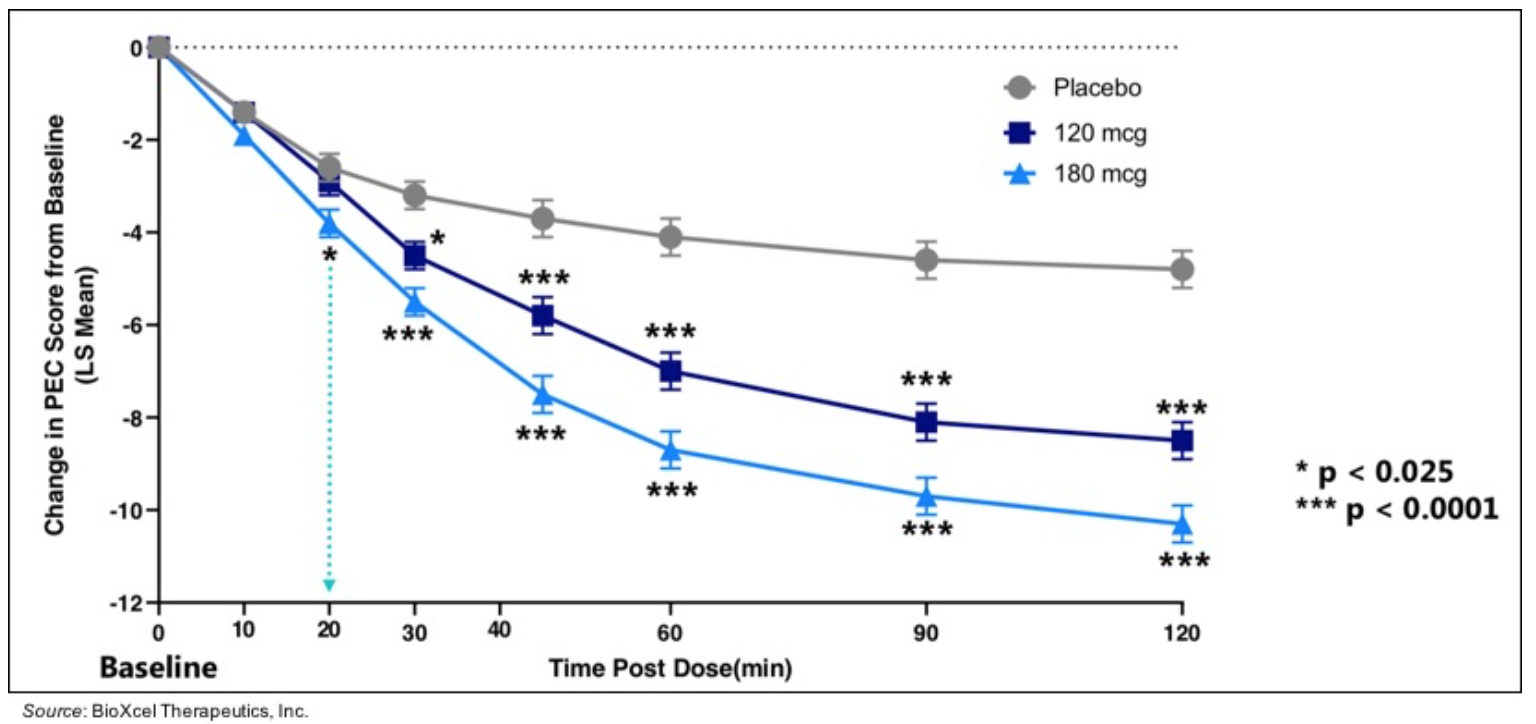
The following graph shows the robust response seen in decreasing PEC scores in schizophrenia patients treated with BXCL501 compared to placebo. The results for the 180 μg arm became significant starting at 20 minutes after dosing and the separation from placebo continued to increase out to 120 minutes.
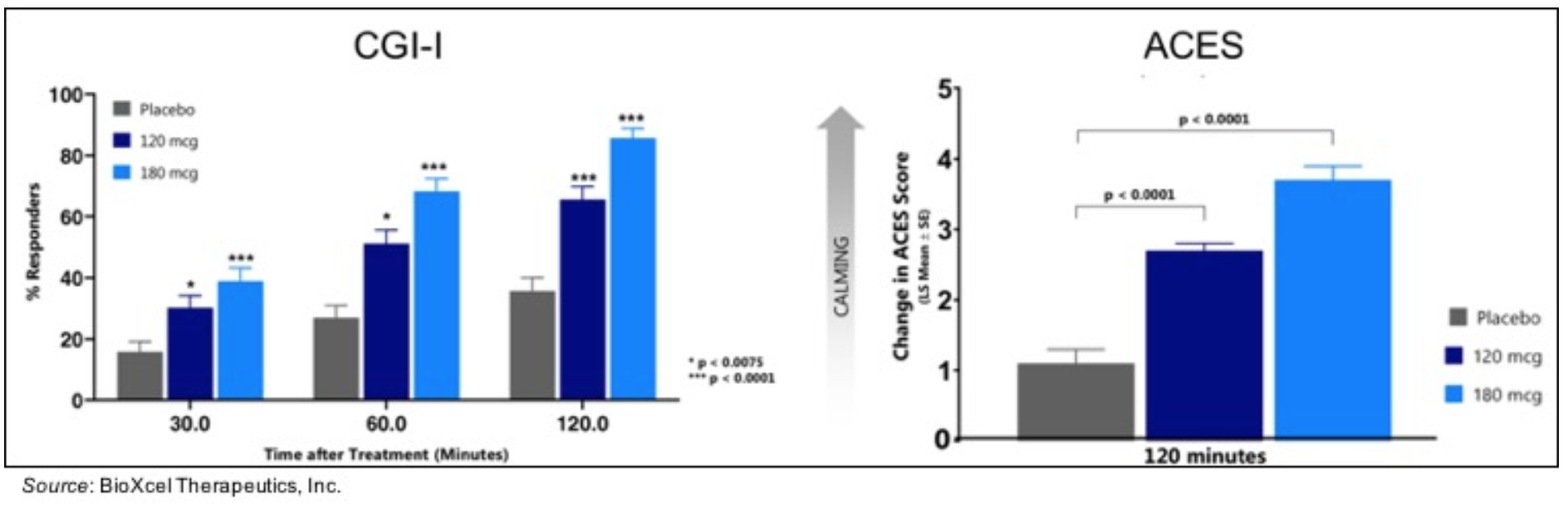
Clinically meaningful responses were also seen in the clinical global impression improvement scale (CGI-I) and the agitation and calmness evaluation scale (ACES), as shown in the following figures. The results from these secondary endpoints lend further support to the clinically meaningful effect that BXCL501 has on agitated patients.
SERENITY II
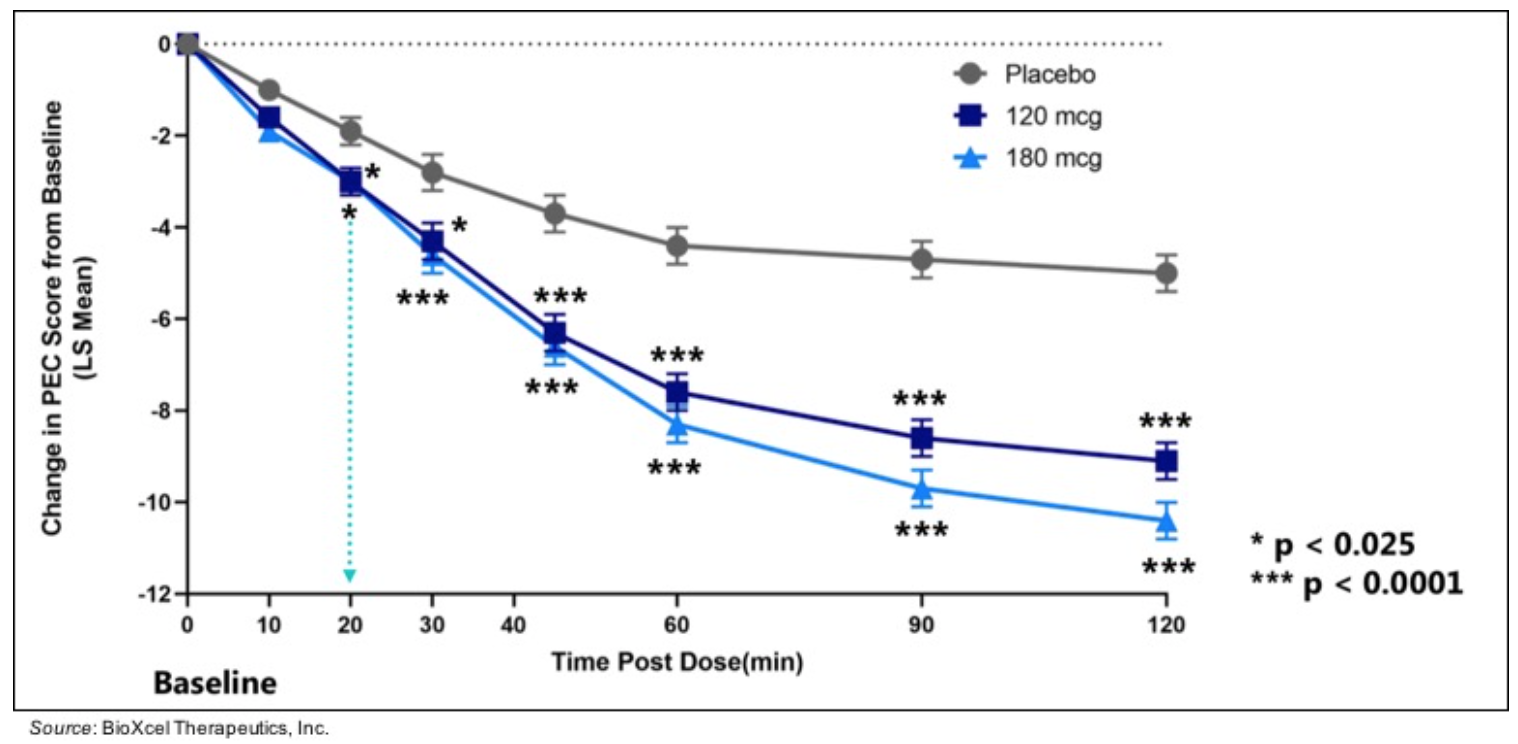
Very similar results were seen in SERENITY II, with patients administered BXCL501 experiencing a robust and highly statistically significant decrease in PEC compared to placebo. Similar to SERENITY I, the difference from placebo became statistically significant at the 20-minute mark.
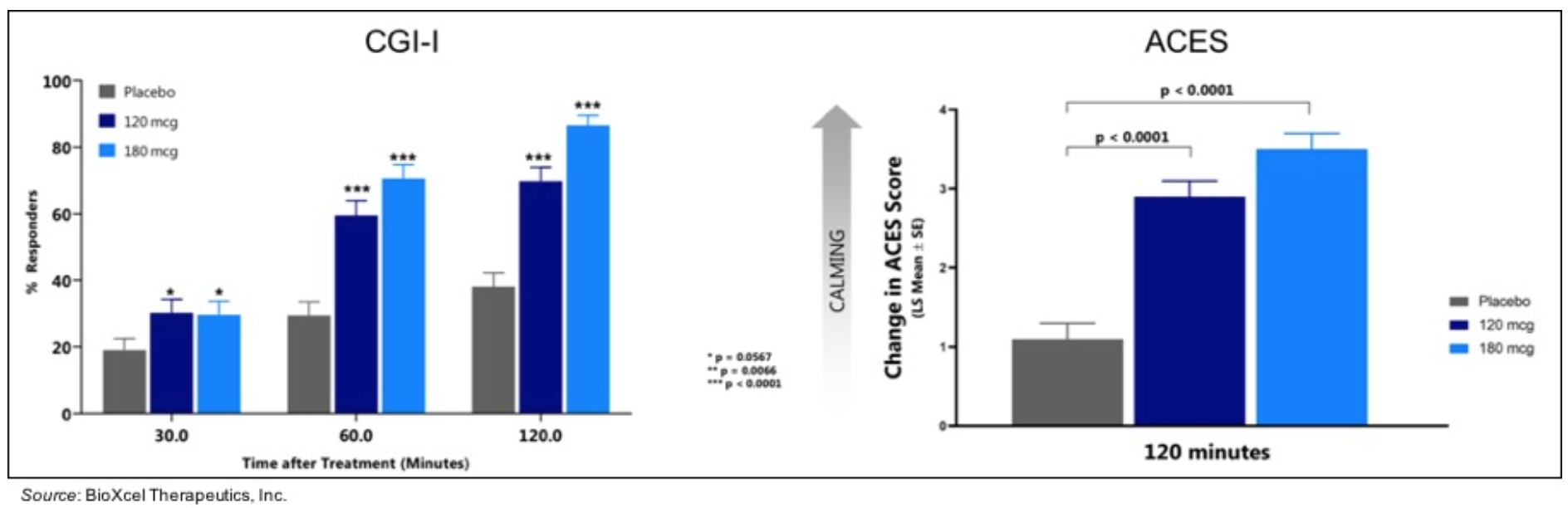
Just as in SERENITY I, results from SERENITY II showed clinically meaningful responses in the CGI-I and the ACES, as shown in the following figures.
Importantly, there were no serious adverse events reported and the tolerability was comparable in both of the SERENITY trials. In addition, all patients were able to self-administer the treatments.
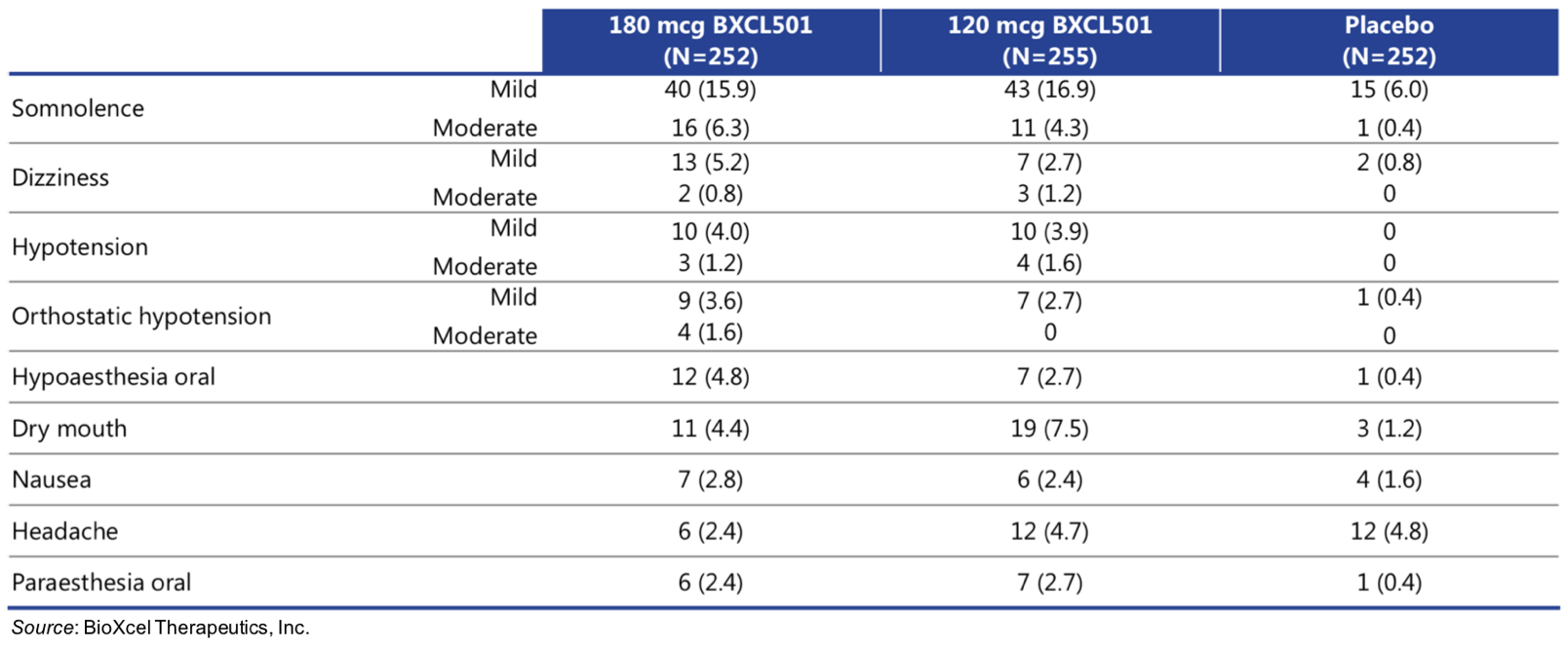
BioXcel will be meeting with the FDA in October 2020 for a Pre-NDA meeting where we anticipate the company learning whether BXCL501 will qualify for Priority Review (which could reduce the review time from 10 months to 6 months). We anticipate the NDA being filed in the first quarter of 2021, with an approval possible in the fourth quarter of 2021 or the first quarter of 2022 (depending upon if it is granted Priority Review).
BXCL501 Compares Favorably with Adasuve®
Adasuve® (loxapine) inhalation powder was approved in 2012 for the treatment of agitation associated with schizophrenia or bipolar disorder. It is administered using a handheld, single-use inhaler. It was approved based on the results of two Phase 3 trials in schizophrenia and bipolar patients with agitation (Lesem et al., 2011; Kwentus et al., 2012; Faden et al., 2019).
The following table gives a comparison between the 10 mg dose of inhaled loxapine and the two doses of BXCL501. The 180 μg dose of BXCL501 is superior to Adasuve® in both change in PEC score as well as the percentage of PEC responders (defined as a ≥40% improvement in PEC score) while the 120 μg dose of BXCL501 is highly comparable.
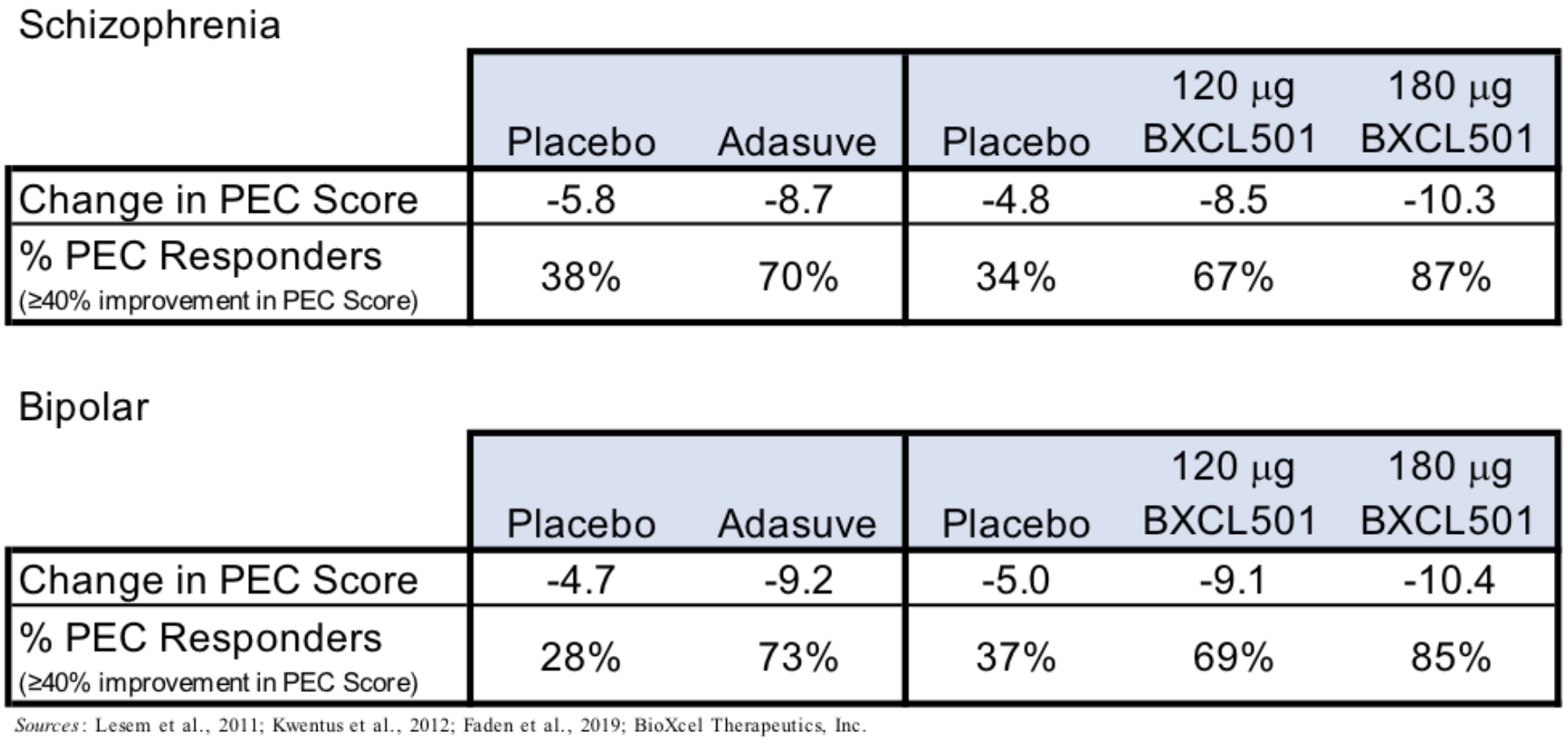
While clinically successful, Adasuve® has yet to be commercially successful based on the fact that it has a black box warning and Risk Evaluation and Mitigation Strategy (REMS) associated with its potential to cause bronchospasm. In addition, there is a black box warning for an increased risk of death in elderly patients with dementia-related psychosis treated with antipsychotic drugs.
In discussing the potential for inhaled loxapine to treat acute agitation associated with schizophrenia or bipolar disorder, Faden et al. state that:
“An ideal medication for the treatment of agitation would be efficacious, tolerable, non-painful, and have a rapid onset of action” (Faden et al., 2019).
Based on the SERENITY data we believe this perfectly describes BXCL501 and clinicians would welcome the opportunity to treat agitated patients with the drug.
Phase 2 Trial in Delirium to Initiate in 2020
BioXcel will be initiating a Phase 2 clinical trial of BXCL501 in patients with delirium later in 2020. The trial is planning to include patients who experience agitation in the intensive care unit (ICU) associated with and without COVID-19. In July 2020, the company announced the initiation of a compassionate use program for BXCL501 to investigate its use in treating delirium in patients suffering from COVID-19 in the ICU. There have been numerous reports in the media about COVID-19 patients suffering from delirium and agitation after having been admitted to the ICU, particularly in patients that were put on ventilators (see here and here). Treating delirium represents another large potential market opportunity and we look forward to updates for this program later this year.
BXCL701 Update
BXCL701 (talabostat) is an oral small molecule immunomodulator designed to activate the innate immune system through inhibition of dipeptidyl peptidase (DPP) 8/9 and fibroblast activation protein (FAP). The drug has been tested in over 700 patients through multiple clinical trials, thus there exists a large amount of data on its safety, tolerability, proof of mechanism, and single-agent anti-tumor activity. BioXcel is developing BXCL701 as a treatment for treatment-emergent neuroendocrine prostate cancer (tNEPC) and other solid tumors.
BXCL701 in tNEPC
BioXcel is currently conducting a Phase 1/2 clinical trial of BXCL701 in combination with Keytruda® (anti-PD-1 mAb) in patients with tNEPC (NCT03910660). It is a single arm, open label trial to examine the safety, pharmacokinetics, and anti-tumor activity of the combination of BXCL701 and Keytruda®. The company recently initiated a separate dosing cohort of castration-resistant prostate cancer (CRPC) patients who had failed chemotherapy and at least two lines of second-generation anti-androgens based on preliminary evidence of activity in that population. We anticipate initial efficacy data from this trialbeing reported later in 2020.
BXCL701 in Solid Tumors
In Dec. 2019, BioXcel announced the initiation of a single center, open label Phase 2 trial to evaluate BXCL701 in combination with a checkpoint inhibitor in multiple advanced solid tumors (NCT04171219). The trial is taking place at MD Anderson Cancer Center with the goal of identifying tumor types that are amenable to combination therapy with Keytruda® and BXCL701. Outcomes being evaluated include overall response rate, progression-free survival, and duration of response along with the safety of the combination therapy. In June 2020 the safety portion of the trial was completed and in August 2020 the efficacy bar was met for both arms of the trial (checkpoint naïve and checkpoint refractory). We anticipate initial efficacy data to be presented at a scientific conference later this year.
BXCL701 in Pancreatic Cancer
BioXcel is conducting a Phase 1/2 clinical trial of BXCL701 in combination with NKTR-214 and avelumab (anti-PD-L1 mAb). The company has entered into a collaboration agreement with both Nektar Therapeutics, in which Nektar will supply NKTR-214 and share in the costs of the combination trial, and Merck KGaA, which will supply avelumab.
A safety run-in study of NKTR-214 and avelumab is currently being conducted, as those two agents had not previously been studied together. Once the safety of those two agents in combination is established, then additional patients can be treated with all three agents.
Financial Update
On August 14, 2020, BioXcel announced financial results for the second quarter of 2020. As expected, the company did not report any revenues. Net loss for the second quarter of 2020 was $21.4 million, compared to a net loss of $8.5 million for the second quarter of 2019. R&D expenses for the second quarter of 2020 were $17.9 million, compared to $6.5 million for the second quarter of 2019. The increase was primarily due to an increase in clinical trial expenses. G&A expenses in the second quarter of 2020 were $3.5 million, compared to $2.1 million for the second quarter of 2019. The increase was primarily due to increased professional fees, salaries, and non-cash compensation costs.
As of June 30, 2020, BioXcel had cash and cash equivalents of approximately $65.5 million. In July 2020, the company raised net proceeds of $187.5 million from the sale of 4 million shares of common stock at $50 per share. We estimate that the company has sufficient capital to fund operations well into 2022. As of August 11, 2020, the company had approximately 22.4 million shares outstanding and, when factoring in stock options, a fully diluted share count of approximately 26.5 million shares.
Valuation
We look forward to the outcome of the pre-NDA meeting with the FDA regarding the NDA filing for BXCL501 in treating agitation in patients with schizophrenia or bipolar disorder along with potential topline results from the TRANQUILITY trial in the fourth quarter of 2020, depending on whether the company pursues an additional dosing cohort beyond 90 μg. We aren’t concerned with the slight delay in the readout of the TRANQUILITY trial and are glad to see management is taking the time to get to the optimal dose for a Phase 3 trial. Our valuation is maintained at $118.
SUBSCRIBE TO ZACKS SMALL CAP RESEARCH to receive our articles and reports emailed directly to you each morning. Please visit our website for additional information on Zacks SCR.
DISCLOSURE: Zacks SCR has received compensation from the issuer directly, from an investment manager, or from an investor relations consulting firm, engaged by the issuer, for providing research coverage for a period of no less than one year. Research articles, as seen here, are part of the service Zacks provides and Zacks receives quarterly payments totaling a maximum fee of $40,000 annually for these services. Full Disclaimer HERE.