By David Bautz, PhD
NASDAQ:INMB
READ THE FULL INMB RESEARCH REPORT
Business Update
Testing DN-TNF Platform as Treatment for COVID-19
On April 20, 2020, INmune Bio, Inc. (NASDAQ:INMB) announced that the company will be testing the company’s dominant-negative tumor necrosis factor (DN-TNF) platform as a treatment for COVID-19 caused by the novel coronavirus SARS-CoV-2.
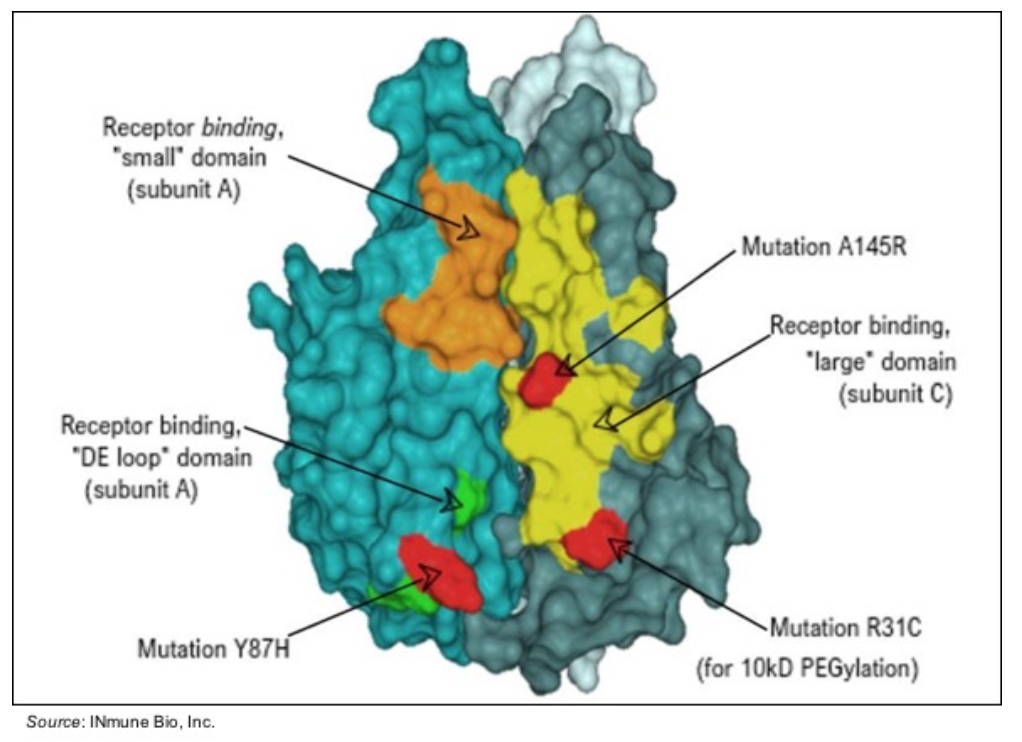
The DN-TNF platform is based on an engineered protein that is nearly identical to soluble TNF (sTNF) except for two point mutations in the coding sequence and the addition of polyethylene glycol (PEG) to increase its half-life in circulation (Steed et al., 2003). The following figure shows the crystal structure of the DN-TNF protein.
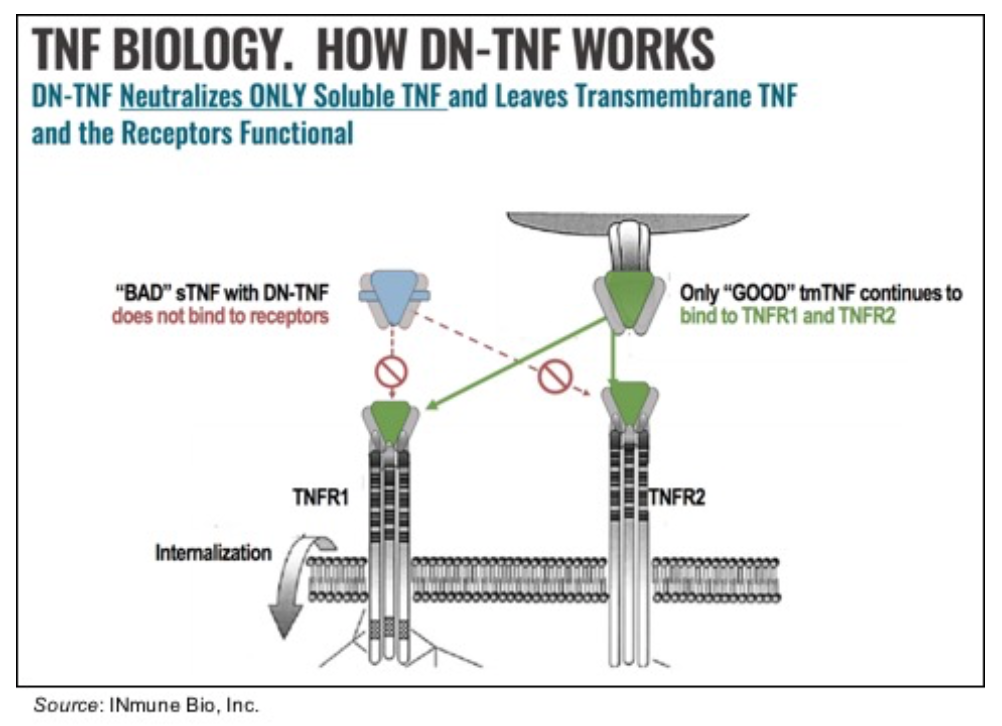
TNF is an inflammatory cytokine that is expressed on the cell surface (known as transmembrane TNF, tmTNF) and can be cleaved by TNFα-converting enzyme to produce a trimeric sTNF, which is found circulating in the bloodstream. sTNF is predominantly responsible for inflammatory responses while tmTNF is predominantly responsible for immune-mediated responses. DN-TNF only neutralizes sTNF and does not interfere with tmTNF, as shown in the following figure.
There are numerous pieces of evidence to support targeting TNF in patients with COVID-19. Multiple studies show that COVID-19 patients have elevated levels of pro-inflammatory cytokines in their blood, including IL-1, IL-6, and TNF (Huang et al., 2020; Gong et al., 2020). A case report from France showed positive results using an anti-IL-6 antibody to treat a COVID-19 patient, thus showing that cytokines are an important mediator of the disease (Michot et al., 2020).
TNF is implicated in multiple inflammatory diseases and positive results are seen when inhibiting the molecule. Blockade of TNF in a mouse model of severe respiratory syncytial virus (RSV) and influenza leads to a reduction in weight loss, disease severity, and fluid infiltration (Hussell et al., 2001). In rheumatoid arthritis patients, blocking TNF results in decreases in both IL-6 and IL-1 (Charles et al., 1999). Lastly, a reduction in adhesion molecules is seen following anti-TNF therapy, which is important as they are involved in capillary leak (Paleolog et al., 1998).
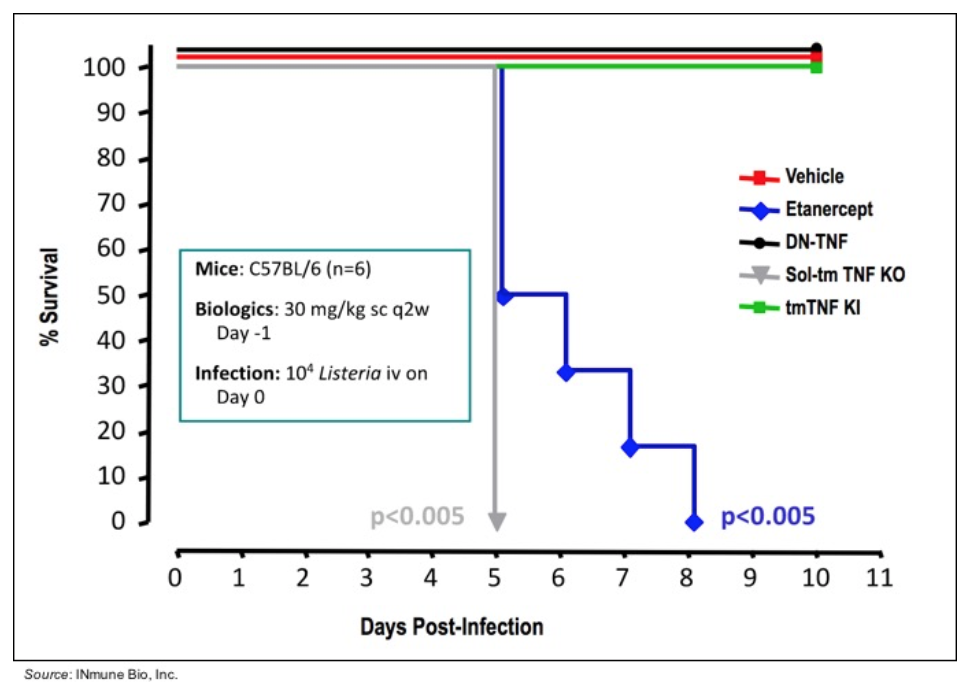
While TNF appears to be a valid target for treating COVID-19, there is a risk of immunosuppression with currently available anti-TNF therapies that can lead to opportunistic infections (Ali et al., 2013). However, DN-TNF therapy does not carry the risk of immunosuppression. The following graph shows survival in a mouse model of Listeria infection. All mice treated with etanercept die by eight days following infection, however all mice treated with DN-TNF survive the entire experiment, showing that DN-TNF therapy does not cause immunosuppression like other anti-TNF therapies.
Phase 2 Trial
While the details of the trial design are still being finalized, we believe it will be a two-arm trial that will involve approximately 150 patients randomized 1:1 to either standard of care plus placebo or standard of care plus two doses of DN-TNF (the first upon admission to the hospital and the second a week later). Patients will be eligible for the study if they are hypoxic but do not require admission to the intensive care unit (ICU) or the use of mechanical ventilation. The goal of the study is to determine if DN-TNF treatment can prevent patients from progressing to the point where they need mechanical ventilation and/or support in the ICU. INmune Bio has applied for a grant from BARDA to support the trial, and while the study may not be as large without that support we anticipate the company moving forward in this indication regardless whether an award is granted or not.
Conclusion
Testing DN-TNF as a treatment for COVID-19 is certainly warranted given the aforementioned data indicating that cytokines are involved in cytokine storm in COVID-19 patients and the fact that DN-TNF is not immunosuppressive. We look forward to updates regarding the trial, including whether the company is able to secure non-dilutive funding to support the study. Our current valuation is $19/share.
SUBSCRIBE TO ZACKS SMALL CAP RESEARCH to receive our articles and reports emailed directly to you each morning. Please visit our website for additional information on Zacks SCR.
DISCLOSURE: Zacks SCR has received compensation from the issuer directly, from an investment manager, or from an investor relations consulting firm, engaged by the issuer, for providing research coverage for a period of no less than one year. Research articles, as seen here, are part of the service Zacks provides and Zacks receives quarterly payments totaling a maximum fee of $30,000 annually for these services. Full Disclaimer HERE.