By David Bautz, PhD
NASDAQ:MNOV
READ THE FULL MNOV RESEARCH REPORT
Business Update
MN-166 to be Developed for Severe Pneumonia and ARDS
On March 9, 2020, MediciNova, Inc. (NASDAQ:MNOV) announced that based upon preclinical results that were recently published the company will develop MN-166 (ibudilast) as a treatment for severe pneumonia and acute respiratory distress syndrome (ARDS). ARDS results in the small blood vessels of the lung leaking fluid that fills up the alveoli, thus preventing proper oxygen exchange (Stevens et al., 2018).
There are many causes of ARDS, including infections (e.g., pneumonia), severe burns, pancreatitis, inhalation of smoke or chemicals, or other serious illnesses. An excessive inflammatory response appears to be involved in the pathogenesis of ARDS (Li et al., 2019). Current treatment options involve supportive care while the lungs heal, which involves oxygen therapy supplied through a ventilator. There are no pharmacological treatments specifically for ARDS and approximately 40% of hospitalized patients die from it (Siegel et al., 2020).
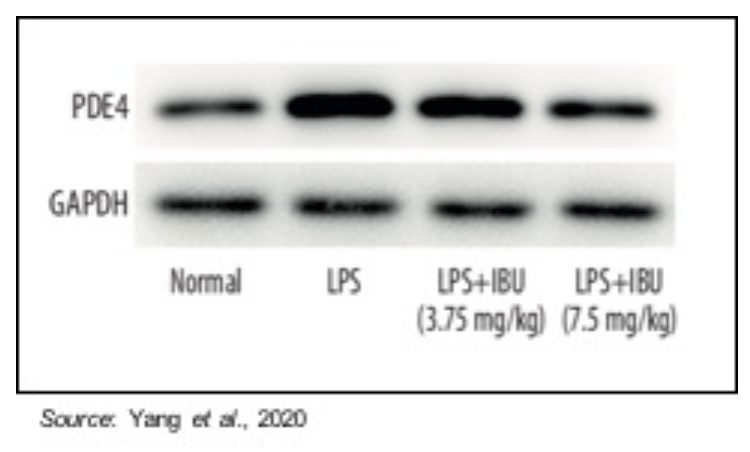
In a preclinical study, MN-166 was studied for its effectiveness on neonatal ARDS in a mouse model in which ARDS is induced with lipopolysaccharide (LPS) (Yang et al., 2020). Mice were divided into four groups of 10 each: a control group, a LPS-induced group, and two MN-166 treatment groups (3.75 and 7.5 mg/kg). The following figure shows that PDE4, which MN-166 is an inhibitor of, is increased by LPS stimulation and that treatment with MN-166 decreased this overexpression of PDE4 in lung tissue in ARDS mice.
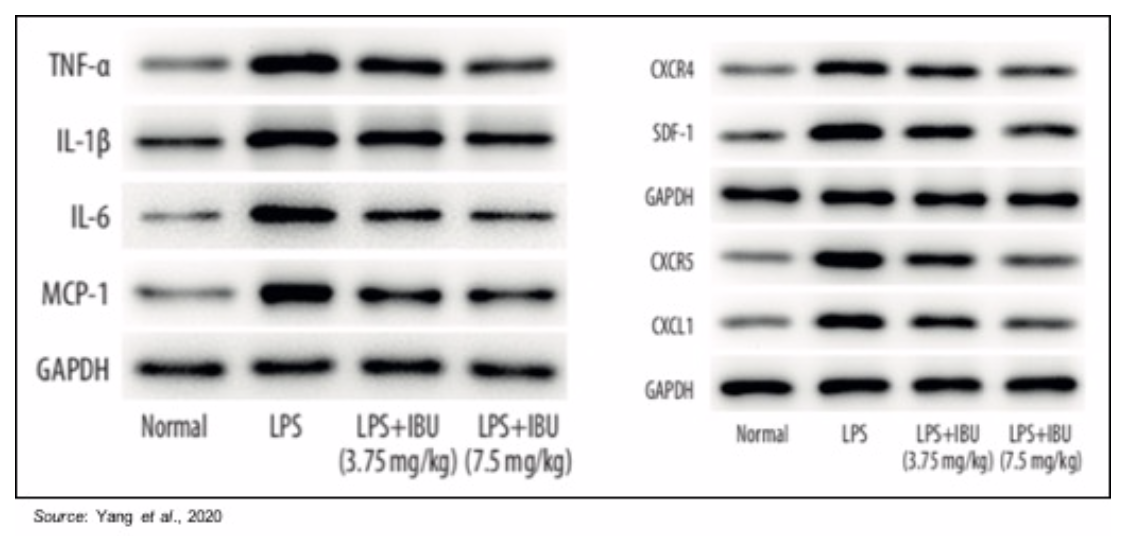
In addition to decreasing the expression of PDE4, treatment with ibudilast also decreases the abnormal overexpression of different inflammatory cytokines, including TNF-a, IL-1b, IL-6, and MCP-1, and inflammatory chemokines, including CXCL1, CXCR4, and CXCR5.
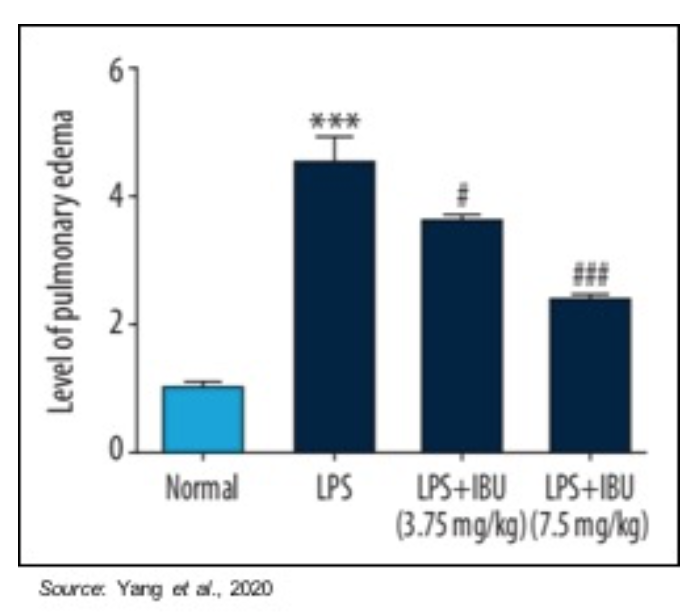
Pulmonary edema was evaluated using the pulmonary edema score to indicate the amount of water accumulation in the lungs after pulmonary damage. Pulmonary edema was significantly reduced by MN-166 treatment (P<0.001). These results suggest that MN-166 may be able to reverse pulmonary edema which is very important to the recovery of the patient.
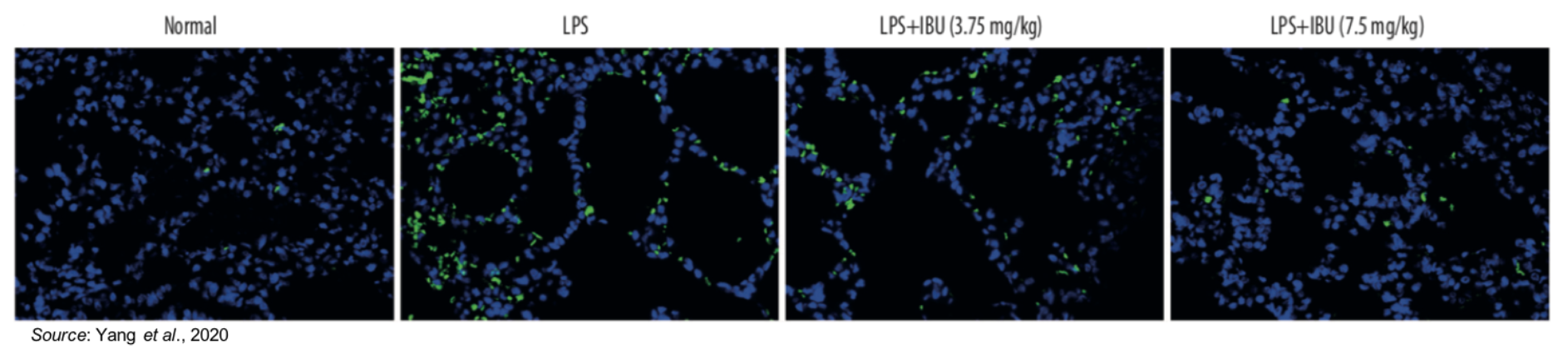
The effect of MN-166 on lung cell apoptosis was also investigated. The following figure shows a TUNEL staining assay (which measures apoptosis; indicated by bright green) in which apoptosis is prevalent in the untreated LPS sample, however the amount of apoptosis is decreased by MN-166 treatment, thus showing the drugs ability to protect against pulmonary injury.
Conclusion
Treatment with MN-166 protects against pulmonary damage in an ARDS mouse model through suppression of inflammatory cytokines and chemokines and decreasing lung cell apoptosis. Its ability to reduce pulmonary edema may enable a higher percentage of patients to recover and survive. Since ARDS can be brought on by severe lung infections, such as by the currently circulating novel coronavirus, MN-166 may prove to be a valuable treatment option for critically ill patients. We look forward to updates on the progress of MN-166 in treating ARDS and severe pneumonia. Our current valuation for MNOV is $24 per share.
SUBSCRIBE TO ZACKS SMALL CAP RESEARCH to receive our articles and reports emailed directly to you each morning. Please visit our website for additional information on Zacks SCR.
DISCLOSURE: Zacks SCR has received compensation from the issuer directly, from an investment manager, or from an investor relations consulting firm, engaged by the issuer, for providing research coverage for a period of no less than one year. Research articles, as seen here, are part of the service Zacks provides and Zacks receives quarterly payments totaling a maximum fee of $30,000 annually for these services. Full Disclaimer HERE.