By John Vandermosten
NASDAQ:PHIO
READ THE FULL PHIO RESEARCH REPORT
Up and Coming Milestones:
‣ PH-762 (ACT – Melanoma with partner) into clinic – 2021
‣ PH-762 (IT) into clinic - 2021
Second Quarter 2020 Financial & Operational Update
Phio Pharmaceuticals Corp. (NASDAQ:PHIO) reported second quarter 2020 results and filed its Form 10-Q on August 12, 2020. From April 2020 to date, Phio has presented at multiple scientific and investor conferences. This includes discussion of Intasyl’s cell modification abilities in ACT at ASGCT, results regarding Intasyl candidates’ tumor growth suppression at ASCO and additional detailed data for PH-804 at AACR. Phio hosted a KOL event with Dr. Robert of the Gustave Roussy Institute on intratumoral therapy with self-delivering RNAi and treatment for melanoma in June. Work continues with PH-762, PH-894 and PH-804 advancing the candidates towards the clinic. The company anticipates in-human studies for ACT and intratumoral applications for PH-762 to begin in 2021.
No revenues were recognized for the second quarter in either the current or prior comparable period. Total expenses for 2Q:20 were $1.7 million, down 19% from prior year levels. This was composed of research and development expenditures of $0.8 million and general and administrative expenditures of $0.9 million. R&D expenses were down 32% reflecting a decrease in the use of an outside temporary labor consultant and a reduction in patent-related expenses. G&A fell 3% on lower stock-based compensation expense. Net loss was ($1.7) milion or ($0.34) per share on 4.97 million average diluted shares outstanding.
As of June 30, 2020, cash stood at $18.9 million. Phio participated in the Paycheck Protection Program (PPP) loan program and received $231,000, carried as debt. Cash burn was ($2.0) million for the quarter compared to ($1.9) million in 2Q:19. Cash from financing was a net $7.6 million, reflecting a $4.0 million registered direct offering, net proceeds from warrant exercise of $3.8 million and loan proceeds from the PPP. We estimate that current cash reserves are sufficient to sustain the company for at least the next 18 months.
Management has indicated that there are minor supply chain and third-party vendor delays as a result of the coronavirus pandemic; however, PH-762 is expected to enter the clinic in 2021.
Collaborations
One of the bright spots for Phio has been the collaborations forged over the last year. New and existing partners continue to leverage the Intasyl platform to execute on their own cutting-edge technologies. Phio’s leading efforts are largely centered on adoptive cell therapy (ACT) and intratumoral (IT) injection and the platform has demonstrated both efficacy and flexibility in altering the expression of targets both in lymphocytes and tumor cells. In March 2020, the company called upon Medigene’s expertise to assist in the development of clinical candidates in conjunction with Helmholtz Zentrum München.
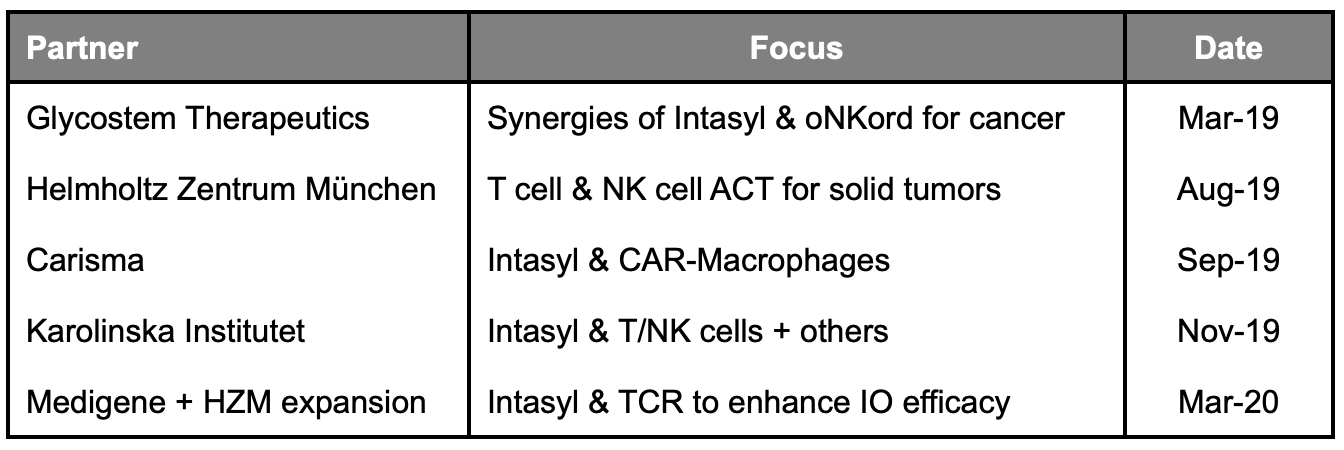
Exhibit I – Recent Partnerships and Partnership Expansions1
KOL Call
On June 12, 2020, Phio hosted a key opinion leader (KOL) call featuring Caroline Robert, M.D., Ph.D., the Head of Dermatology Unit at Gustave Roussy and co-director of the Melanoma research Unit at INSERM 981 Paris-Sud University. Dr. Robert presented the major clinical milestones shaping the melanoma landscape, best performing current treatments, their challenges, and the next innovative approaches planned, including Phio’s self-delivering RNAi (Intasyl) technology. Dr. Robert started the presentation with a brief overview of the current, most effective immunotherapy for melanoma, a combination immunotherapy of Anti PD-1/CTLA-4 which has a 50-55% overall survival at four years2. While far more effective than chemotherapy alone, which had a response rate of 10-15%, Dr. Robert voiced her frustration that treatment efficacy struggled to improve beyond the 50-55% response rate for the past several years3. She then proceeded to explain the advantages to neoadjuvant therapy, or administering the adjuvant before surgery instead of after, such as early determination of the efficacy of the adjuvant, ability to assess the necessity for additional adjuvant, and possible tumor reduction. Neoadjuvant immunotherapy also has the additional advantage of stimulating tumor infiltrating lymphocytes in a process that can scavenge micro-metastases and thereby support long-term remission. Robert continued with an explanation of intratumoral immunotherapy, which improves T cell priming and avoids systemic toxicity while using less drug and saving cost. While intratumoral injection provides the opportunity to affect tumor infiltrating lymphocytes, the downside is that monoclonal antibodies do not distribute readily through tissue and do not diffuse well. The antibodies only work on extra-cellular targets, can have unwanted off-target effects on proteins similar to the target and compete with other antibodies in combination therapies. Robert proposed intratumoral RNAi as a solution and outlined planned investigation in murine models using Phio’s Intasyl to target a variety of immunotherapy receptors/checkpoints.
Posters
Phio presented a poster on May 12th at the American Society of Gene & Cell Therapy (ASGCT) 2020 Annual Meeting, which was held virtually. The poster highlighted the differences between gene editing and gene silencing to sponsors of adoptive cell therapy (ACT), making the case for using Intasyl to improve success in efforts to overcome resistance in the treatment of solid tumors. The poster highlighted the differences between CRISPR Cas9 and RNAi, emphasizing Intasyl’s chemical modifications that enable uptake of the siRNA. PH-762’s ability to transiently silence 90% or more of PD-1 expression in human T cells was compared to CRISPR Cas9’s permanent 20% gene disruption of PD-1 in human TCR T cells and 50% protein silencing of PD-1 in CD19 CAR-T. The poster also noted the more advanced regulatory status of RNAi, with products already FDA approved for this class compared to the investigational product status of gene editing leaders. The poster concluded that ACT developers can consider Intasyl and its many advantages when searching for ways to improve the effectiveness of their manufactured cells.
At ASCO20 Virtual Scientific Program that took place at the end of May, Phio presented a poster detailing in vivo results from PH-762 and PH-894 and updating pre-clinical readouts with TIGIT-targeting Intasyl, PH-804. PH-762, PD-1-targeting Intasyl, and PH-894, BRD4-targeting Intasyl, were both shown to completely control tumor growth in a Hepa 1-6 murine model. Intratumoral injections were administered days 1, 4, 7 and 10 and evaluated against a positive mAb control, a non-targeting control, and saline buffer with both doses (0.5mg and 2mg) for both PH-762 and PH-894 achieving statistical significance. PH-762 was confirmed to silence PD-1 surface expression on TILs isolated from the tumor. Regarding PH-804, in vivo work demonstrated tumor growth inhibition in a murine model of colorectal carcinoma (CT26). 0.5mg and 2.0mg PH-804 arms were dosed on days 1, 3, 7 and 10 and compared to positive and non-targeting controls and phosphate buffered saline (PBS). Results demonstrated dose-dependent tumor growth inhibition and was statistically significant for the 2.0 mg/dose treatment arm. Results also confirmed TIGIT mRNA silencing in tumor infiltrating lymphocytes isolated from treated tumors. Analysis of the tumor micro-environment demonstrated dose-dependent increase in number and activation of cytotoxic effector T cells as shown by expression of CD25 and CD69 biomarkers.
In a presentation at the American Association for Cancer Research (AACR) 2020 Virtual Annual Meeting II, Phio published additional data and detail supporting the potential for PH-804 as an immuno-oncology therapeutic with TIGIT suppressing action in the tumor microenvironment. Results demonstrated the knockdown of both mRNA in TILs and TIGIT protein of tumor cells in vitro, showing the ability of Intasyl to modify expression in tumor cells as well. In addition to PH-804 tumor growth inhibiting data, the confirmation of in vivo mRNA knockdown and increased number of T cells in the TME, the publication also added color, showing that CT26 murine models did not display overt signs of toxicity or fluctuate in bodyweight compared to the controls. The poster also featured added analysis of T cell recruitment and activation as evidenced by flow cytometric data: there were increased numbers of CD8+ T cells in absolute and relative terms in the TME of animals in the 2 mg arm.
Pipeline Candidates
Phio’s pipeline includes lead candidate PH-762 for melanoma, PH-894 for solid tumors, and PH-804 for a variety of immuno-oncology targets. Lead candidates are pursuing both ACT and IT applications. ACT applications may find seamless integration into existing third-party commercial T cell production.
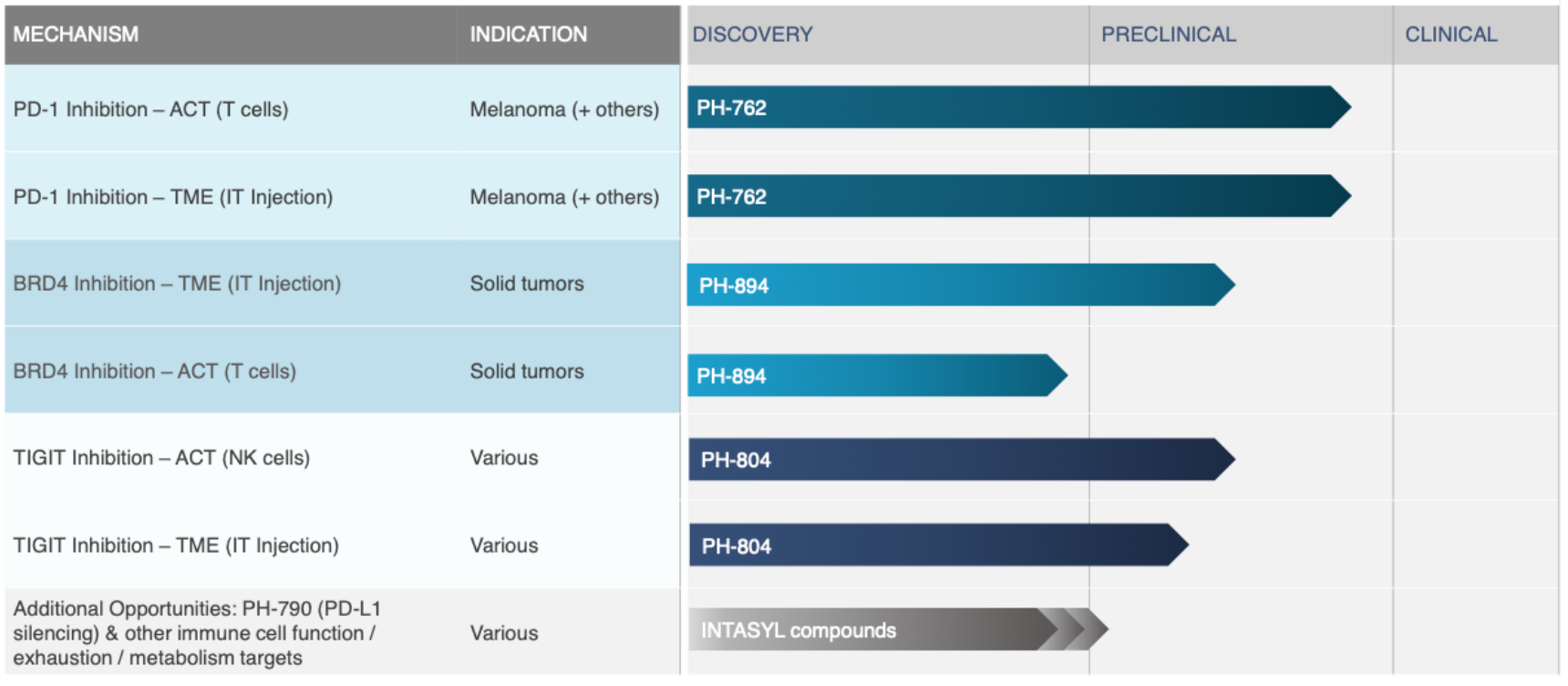
Exhibit II – Phio INTASYL Immuno-Oncology Pipeline4
Milestones:
‣ Partnership/Sale of Dermatology and Ophthalmology Programs – TBD
‣ Expansion of collaboration with Helmholtz Zentrum München & Medigene – March 2020
‣ Investigational New Drug (IND) enabling study results for PH-762 – 2020
‣ PH-762 (ACT – Melanoma with partner) into clinic – 2021
‣ PH-762 (IT) into clinic - 2021
Summary
Phio continues to advance its pipeline towards the clinic and engage in additional collaborations; however, the coronavirus pandemic has slowed the march towards in-man studies. With some understandable supply and contractor delays related to the pandemic, management has guided to entering the clinic next year, in 2021. This will give plenty of time for the team to prepare the components of the IND. Meanwhile Phio maintains a lean operation. There are many synergies among the targeted indications in preclinical work which should reduce costs and provide the greatest number of ultimate options for Intasyl development. Immuno-oncology is an attractive area for development as the FDA frequently provides preferential consideration for candidates pursuing a cancer indication and there is broad demand for therapies in this domain. Phio’s Intasyl platform has many favorable characteristics including low cost, a high degree of safety, and the ability to enhance the IP of partner products among other benefits. Phio has indicated that they maintain sufficient cash to support activity into next year, a runway that may be extended with funds generated from asset sales or accessing funds under purchase agreements.
We think it is necessary for Phio to develop a partnership with a peer that can provide both funding and validation of the company’s projects. A partnership will also have the benefit of increasing investor interest in the company. While Phio has an impressive portfolio with clinical data supportive of safety and efficacy, financial support will be critical to their ultimate success. As it is too early to assign a valuation to the immuno-oncology platform, we continue to base our current valuation on the Phase II assets RXI-109 and Samcyprone. We remind investors that we attach a value to development programs as they enter the clinic and will assign a value to PH-762, PH-894 and PH-804 at that time.
SUBSCRIBE TO ZACKS SMALL CAP RESEARCH to receive our articles and reports emailed directly to you each morning. Please visit our website for additional information on Zacks SCR.
DISCLOSURE: Zacks SCR has received compensation from the issuer directly, from an investment manager, or from an investor relations consulting firm, engaged by the issuer, for providing research coverage for a period of no less than one year. Research articles, as seen here, are part of the service Zacks provides and Zacks receives quarterly payments totaling a maximum fee of $40,000 annually for these services. Full Disclaimer HERE.
________________________
1. Table created by the author
2. https://www.ejcancer.com/article/S0959-8049(20)30076-9/abstract
3. https://www.ejcancer.com/article/S0959-8049(20)30076-9/abstract
4. Source: Phio Corporate Presentation, May 2020