By John Vandermosten, CFA
NASDAQ:TENX
READ THE FULL TENX RESEARCH REPORT
Tenax Therapeutics, Inc. (NASDAQ:TENX) completed enrollment of its Hemodynamic Evaluation of Levosimendan in Patients with PH-HFpEF (HELP) and announced that the last patient has completed their final visit as of April 9. This 37 patient open-label trial achieved an 84% initial response rate for screened patients, and is expected to finish collecting data during 2Q:20. Topline results are expected to be available late in the second quarter of 2020.
On March 30, Tenax filed its 2019 Form 10-K with the SEC. No revenues were reported in the period and operating expenses totaled $8.6 million. Net loss per share was ($1.35). Full year research and development costs of $3.5 million rose 180% from the $1.2 million spent in the prior period as the HELP trial was underway screening and enrolling patients. General and administrative expenses totaled $5.1 million, down 10%. Lower bonuses, a reduction in stock based compensation and decreased travel led to the change. Net loss for the period was ($8.4) million or ($1.35) per share.
Cash and securities balance was $5.4 million as of December 31, 2019 and cash burn totaled ($7.6) million for 2019. The company continues with no debt. We anticipate a decrease in expenses in the second half as the HELP trial undergoes finalization, data lock up and data analysis.
The HELP Trial
In November 2018 Tenax announced the activation of the first clinical research site for the PH-HFpEF HELP trial at Stanford University School of Medicine. In March 2019, the first of what would eventually be 371 patients was enrolled in the trial. By March 12th 2020 all patients had been enrolled and by April 9th the final patient completed their final visit. Top line data is expected to be reported during 2Q:20. Now that the HELP trial is preparing finalization leading to lock up, we anticipate data collection and analysis to take place over the next months. Many data points were collected during the study, which will provide fertile ground for researchers to develop academic papers on the results. We anticipate presentations in the academic community and at conferences in the latter half of the year. Tenax management will develop its own materials and Phase III trial design to present at the end of Phase II meeting with the FDA prior to year-end.
A Phase III trial may begin in 2021, assuming the HELP trial results are favorable. Its design is highly dependent on the results and strength of signal generated by the current Phase II. A rough estimate of time, cost and size of the registrational trial range from 18 to 36 months, $30 to $50 million and 200 to 300 patients. While none of these estimates have been confirmed by the company, we believe they are reasonable ranges based on the likely outcome of a successful Phase II.
HELP Trial Design
Required thresholds for inclusion in the trial call for patients with pulmonary arterial pressure (PAP) equal to or greater than 35, a pulmonary capillary wedge pressure (PCWP) equal to or greater than 20, a cardiac index (CI) of less than or equal to 2.2, a left ventricular ejection fraction (LVEF) of over 40 and be NYHA Class IIb or III. The primary endpoints of the study are:
‣ Change from baseline PCWP with bicycle exercise (25 watts) at Week 6
‣ Detect a greater than or equal to 4.8 mmHg change in PCWP from baseline
Expected secondary endpoints will relate to a change in resting PCWP under a variety of conditions, a change in resting & stressed CI, change in pulmonary vascular resistance (PVR) at rest & under stress, a global assessment at week six based on the Likert scale and length of exercise period, a physician’s assessment of functional class and clinical events, including death and hospitalizations.
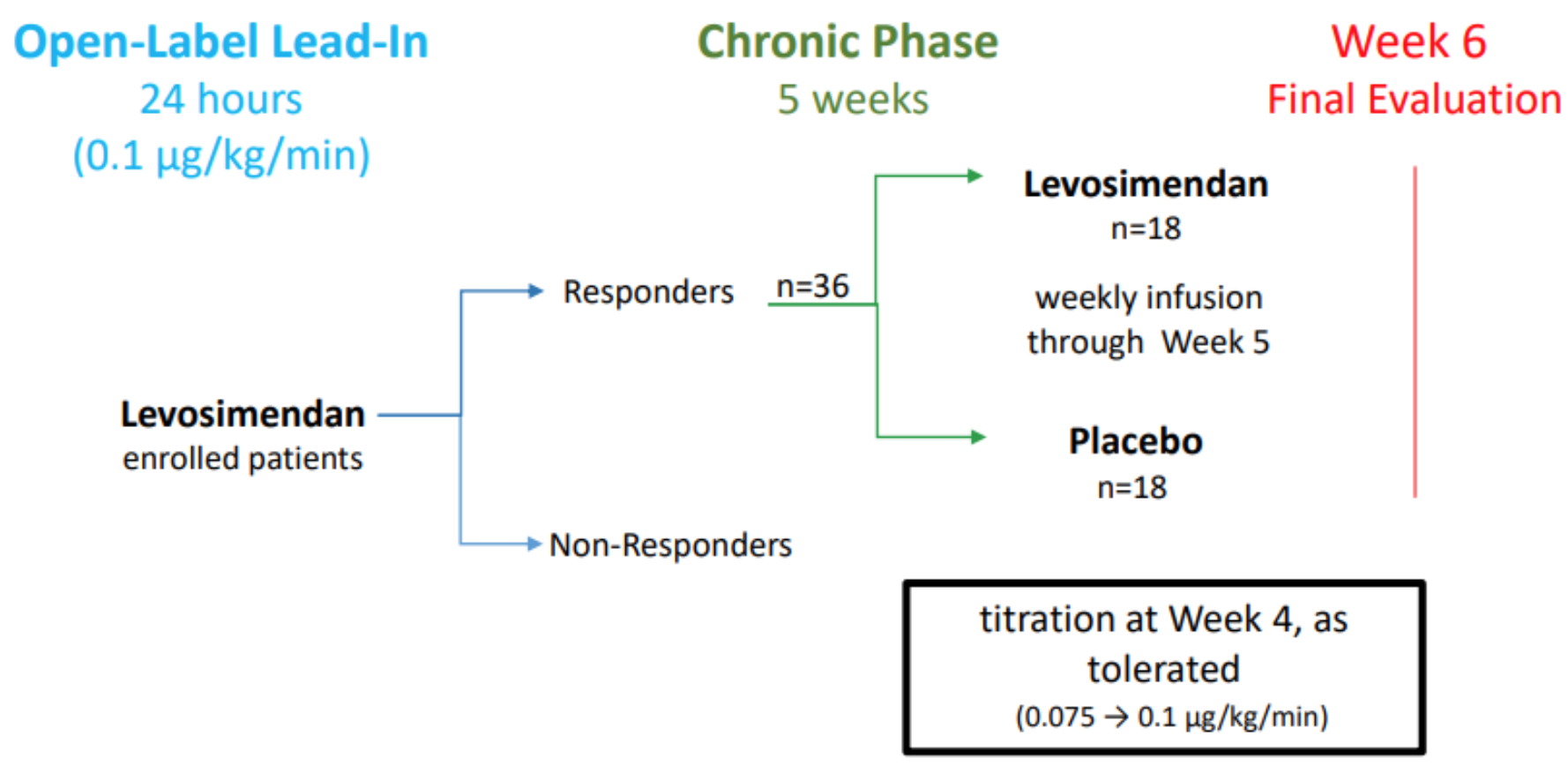
Exhibit I – Phase II Study Design2
Since our last report in November, Tenax provided a trial update on January 13th which we discussed in a short note. At that time, twenty-four patients had been enrolled and average PCWP for successfully screened patients (responders)3 was 7.6 mmHg, well above the defined threshold for inclusion of 4.0 mmHg.
The HELP study uses a 24-hour, once per week infusion regimen of between 0.075 to 0.100 µm/kg/min via home-based intravenous infusion using an ambulatory infusion pump. The home-based approach allows for a less frequent infusion regimen as compared to what would be possible in a hospital setting.
Update on PH-HFpEF Unmet Need
Tenax provided a review of the unmet need in its latest corporate presentation dated February 2020. The review reminded investors of the over two million PH-HFpEF patients in the United States who lack a treatment and suffer from high mortality and a poor quality of life. There are five groups of pulmonary hypertension and only Group 1 has approved treatments. This group comprises 3% of the total population of PH, in contrast to Group 2, which makes up 68%. Group 2 is the population that Tenax is pursuing with its Levosimendan trials.
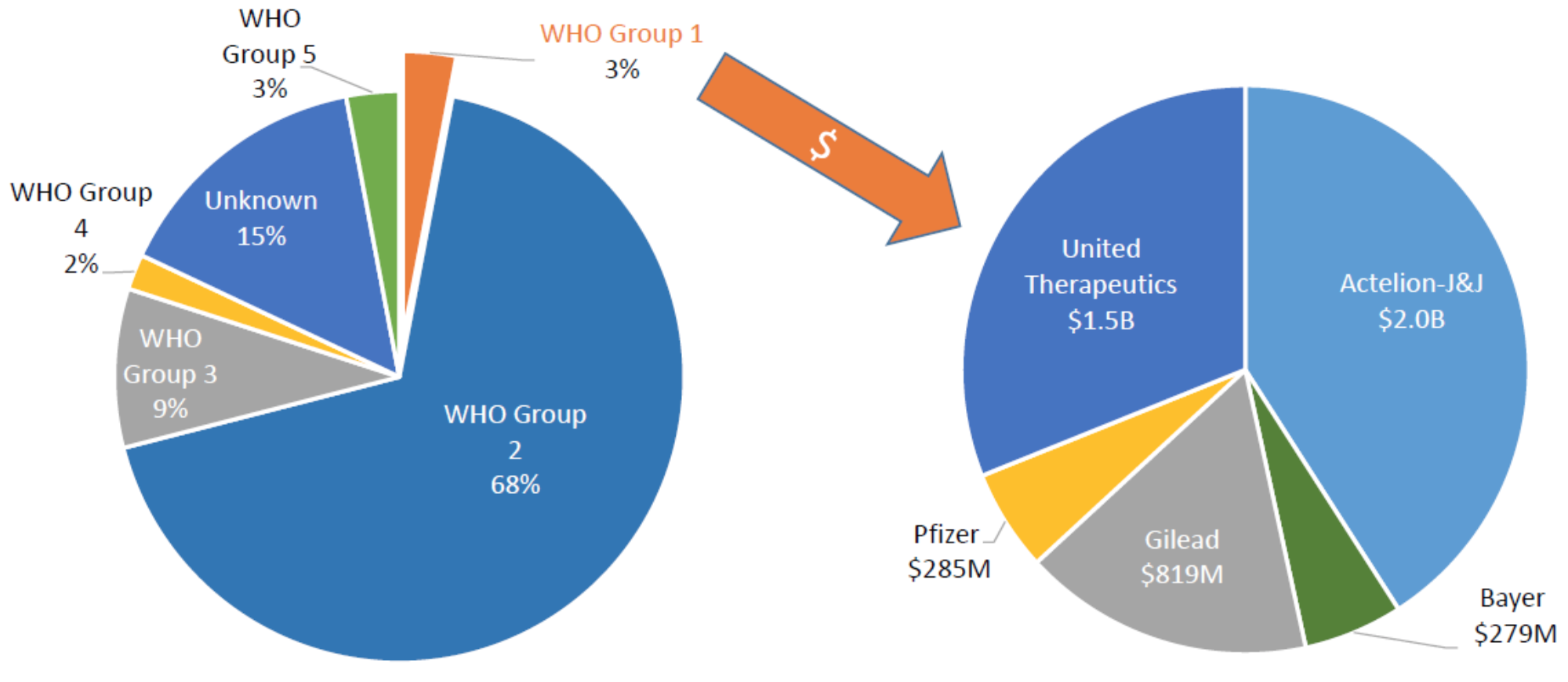
Exhibit II – PH Prevalence and Market Size4
Several other studies have been launched in PH-HFpEF, using a variety of products including Bosentan, Macitentan and Riociguat. However, none of these trials demonstrated an effective treatment for the condition and further pursuit for these candidates in this indication was abandoned.
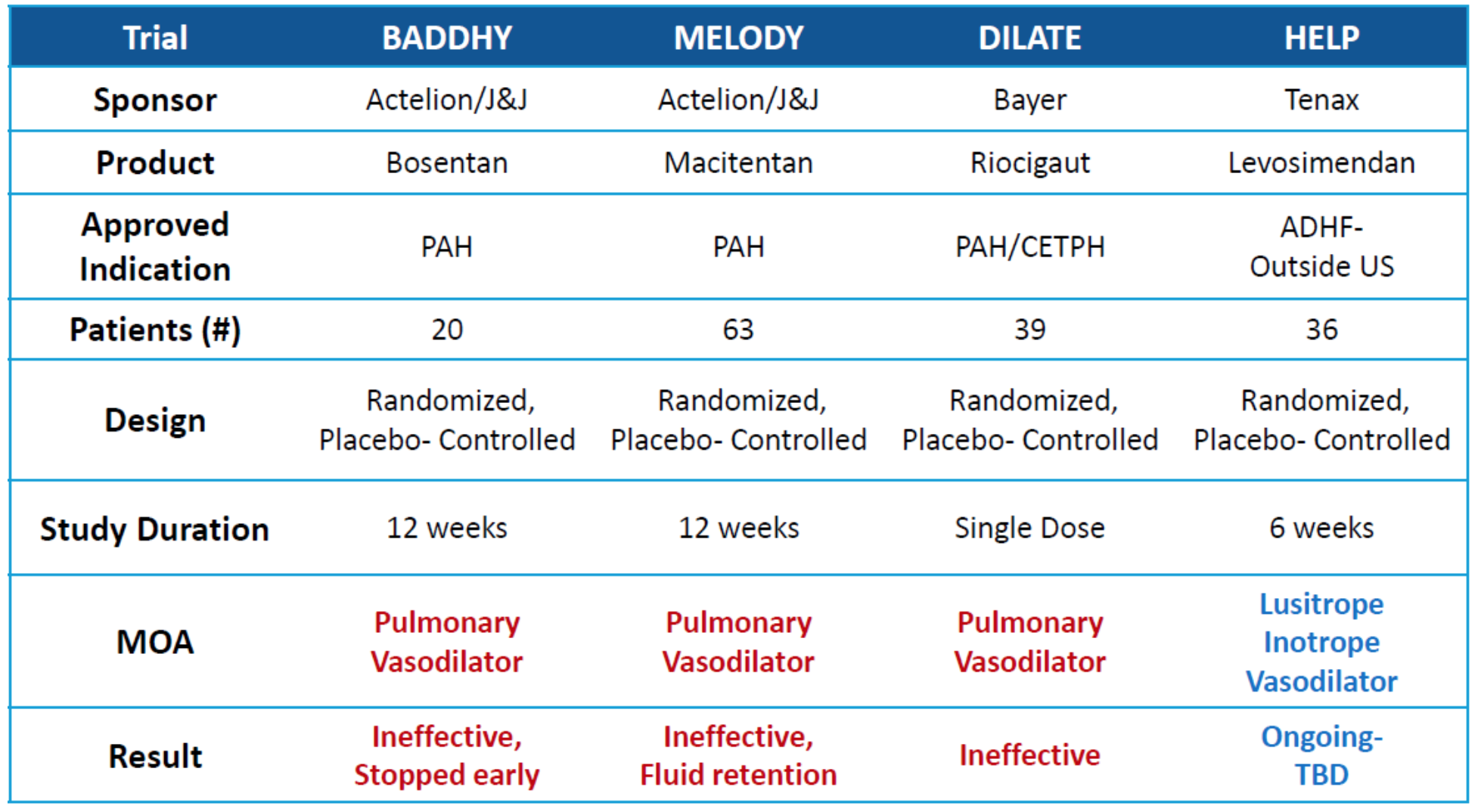
Exhibit III – Trials Conducted for PH-HFpEF5
Milestones
‣ Activate First Sites – November 2018
‣ Enroll First Patient – March 2019
‣ Full Enrollment – 1Q:20
‣ Last Patient, Last Visit – April 2020
‣ Topline data announced – June 2020
‣ End of Phase II Meeting with FDA – 2H:20
‣ Launch Phase III – 2021
Summary
Now that the HELP trial has been fully enrolled and the last patient has had their last visit, we anticipate a second quarter 2020 topline readout. Based on the research and analysis included in our initiation, we believe PH-HFpEF patients will benefit from Levosimendan’s mechanism of action and clinical trials can be pursued with a reasonable cost and time commitment. The indication is also in an area with no other approved treatments. Market size is material and with no other approved therapy available, pricing should be strong and penetration high.
SUBSCRIBE TO ZACKS SMALL CAP RESEARCH to receive our articles and reports emailed directly to you each morning. Please visit our website for additional information on Zacks SCR.
DISCLOSURE: Zacks SCR has received compensation from the issuer directly, from an investment manager, or from an investor relations consulting firm, engaged by the issuer, for providing research coverage for a period of no less than one year. Research articles, as seen here, are part of the service Zacks provides and Zacks receives quarterly payments totaling a maximum fee of $30,000 annually for these services. Full Disclaimer HERE.
_____________________________
1. The trial originally targeted 36 patients and exceeded this number by 1.
2. Source: Tenax September 2019 Investor Presentation. https://s3.amazonaws.com/cdn.irdirect.net/PIR/942/3392/TENX%20Investor%20Presentation%20Jan%202019.pdf
3. Following the initial administration of Levosimendan to determine whether or not the patient is a responder, responders are given five additional 24-hour infusions of Levosimendan over the subsequent five weeks.
4. Source: Tenax Corporate Presentation, February 2020. Pulmonary Hypertension Association Strange G, et al. Heart. 2012;98(24):1805
5. Source: Tenax Corporate Presentation, February 2020.