By John Vandermosten
NASDAQ:TENX
READ THE FULL TENX RESEARCH REPORT
TENX Up and Coming Milestones
‣ Presentation of data at conference – Fall/Winter 2020
‣ End of Phase II Meeting with FDA – 4Q:20
‣ Launch Phase III – 2022
Second Quarter 2020 Financial and Operational Review
Tenax Therapeutics, Inc. (NASDAQ:TENX) has completed its Hemodynamic Evaluation of Levosimendan in Patients with PH-HFpEF (HELP) trial and announced positive results on June 2nd. HELP study results were positive and meaningful for key measures critical to a successful Phase III trial. The six minute walk test generated statistically significant results that were 29 meters greater for the Levosimendan group compared to the placebo group and a reduction in pulmonary capillary wedge pressure (PCWP). We expect further analysis and the development of an academic paper on the results to be presented at an upcoming conference. Tenax will hold an end of Phase II meeting with the FDA in the fourth quarter to identify next steps and accept feedback to design a Phase III.
Following the end of the quarter, Tenax raised $8.0 million in a registered direct and private investment in public equity (PIPE) offering priced at the market of $1.03/share. The company also added two new directors to the board, Steven Boyd and Keith Maher, MD. Both individuals are principals from Armistice Capital, which contributed to the aforementioned capital raise.
On August 14th, Tenax filed its 2Q:20 Form 10-Q with the SEC and posted a press release the following business day. No revenues were reported in the period and operating expenses totaled $2.1 million. Net loss per share was ($0.23). Second quarter research and development costs of $0.9 million rose 34% from the $0.6 million spent in the comparable period reflecting greater expenditures for the Phase II HELP study. The uptick in spend was attributable to higher contract research organization costs, additional clinical research associates to help manage the trial and increased patient enrollment costs. General and administrative expenses totaled $1.3 million, up 9%. Higher personnel costs related to stock options, vacation costs and salary increases, greater expenditure for insurance premiums Increased legal fees, investor relations costs and insurance costs were partially offset by lower legal fees. Net loss was ($2.1) million or ($0.23) per share.
Cash and securities balance was $4.6 million as of June 30, 2020 and cash burn totaled ($2.2) million for 2Q:20. Cash from financing was $1.9 million and represented flows from warrant exercise and a Paycheck Protection Program (PPP) loan of $245,000. The loan has a two year term and may be forgiven under certain circumstances. We anticipate a decrease in expenses for the balance of 2020 and in 2021 as the HELP trial undergoes finalization, data lock up and data analysis and papers are drafted for conference presentation. We anticipate that the majority of 2021 will be spent designing the Phase III trial, identifying sites and preparing for first enrollment. Additional funds of $8 million gross were raised following the end of the quarter through the issuance of 7.8 million shares and prefunded warrants.
New Directors
Tenax added two new directors to its board from Armistice Capital that were made in conjunction with a recent investment. They are Steven Boyd and Keith Maher, MD. Armistice made an $8 million investment in the company’s equity securities and joined the board of directors to help guide the company’s advance as they launch a Phase III program and chart the future course of the firm. We anticipate that Armistice’s increased involvement with Tenax can help the company raise capital in subsequent rounds and also identify partners for either advancing Levosimendan or identifying new candidates. In addition to his role on the board of Tenax, Steven is Chief Investment Officer of Armistice with a long history working in health care equities and long short investment funds. Dr. Maher is Managing Director at Armistice, focusing on healthcare and a history at top tier investment firms. We see these additions to the board a material positives and a vote of confidence by Armistice.
HELP Trial Results
In early June Tenax announced topline results from its Phase II Hemodynamic Evaluation of Levosimendan in Patients with PH-HFpEF1 (HELP). We include the text and exhibits from our report following the announcement below. Results were complemented by a conference call with company CEO Tony DiTonno, CFO Michael Jebsen and Scientific Advisory Board chair and expert in the field of PH and PH-HFpEF, Dr. Stuart Rich.

Exhibit I – HELP Trial Logo2
HELP study results were positive and statistically significant for key measures critical to a successful Phase III trial. The distance for the six minute walk test3, which has been used as a primary endpoint in other pulmonary hypertension trials, was 29 meters greater for the Levosimendan group compared to the placebo group. This measure had a p-value of 0.0329, better than the 0.05 threshold required for statistical significance.
Other important measures, such as pulmonary capillary wedge pressure (PCWP) at rest, with legs up and during exercise were all directionally correct; however, the primary endpoint of PCWP during exercise was not statistically significant. These additional measures helped to provide additional detail on the drugs mechanism and effect and are not expected to be assessed in Phase III. Below is a summary of the data as presented by Tenax. Additional analysis was performed to determine the statistical significance of the difference between the arms on all three measures using a mixed effect model that used treatments as factors and position as a random effect. It generated a p-value of 0.0475.
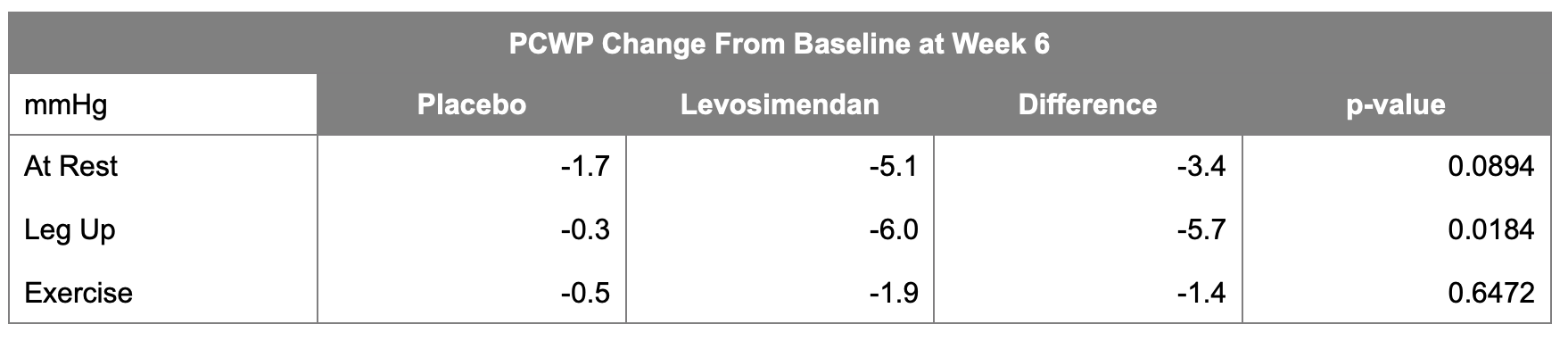
Exhibit II – Summary of HELP Trial Data4
The trial’s primary goal was to determine safety for extended use of Levosimendan, to further determine the mechanism of action of the drug and to help inform the design for Phase III. Other secondary measures that were obtained in this effort include right atrial pressure (RAP) and mean pulmonary arterial pressure (mPAP)5. These measures examined the change in pressure compared to baseline at rest, with legs up and during exercise. Data were all directionally correct and with the exception of mPAP during exercise, were all statistically significant. A comparison of Levosimendan patients relative to baseline is provided in the subsequent exhibits.
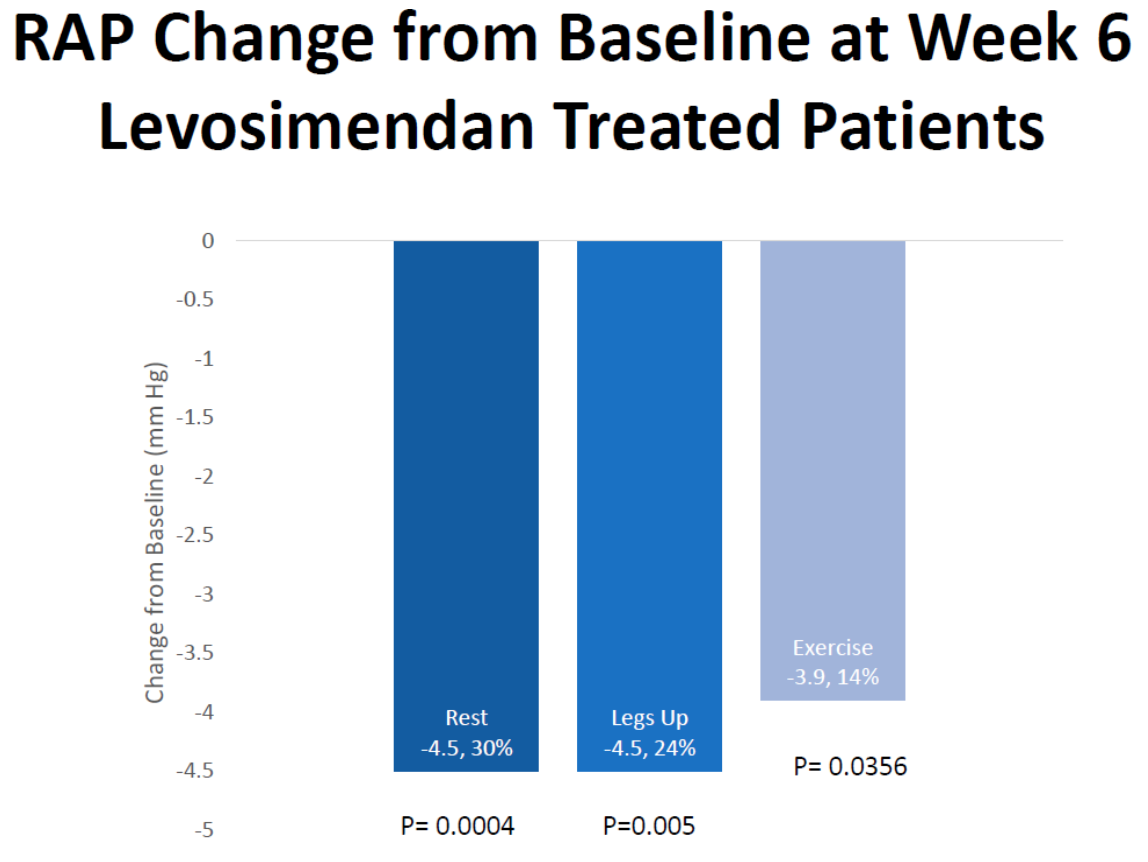
Exhibit III – RAP vs. Baseline6
___________________________________
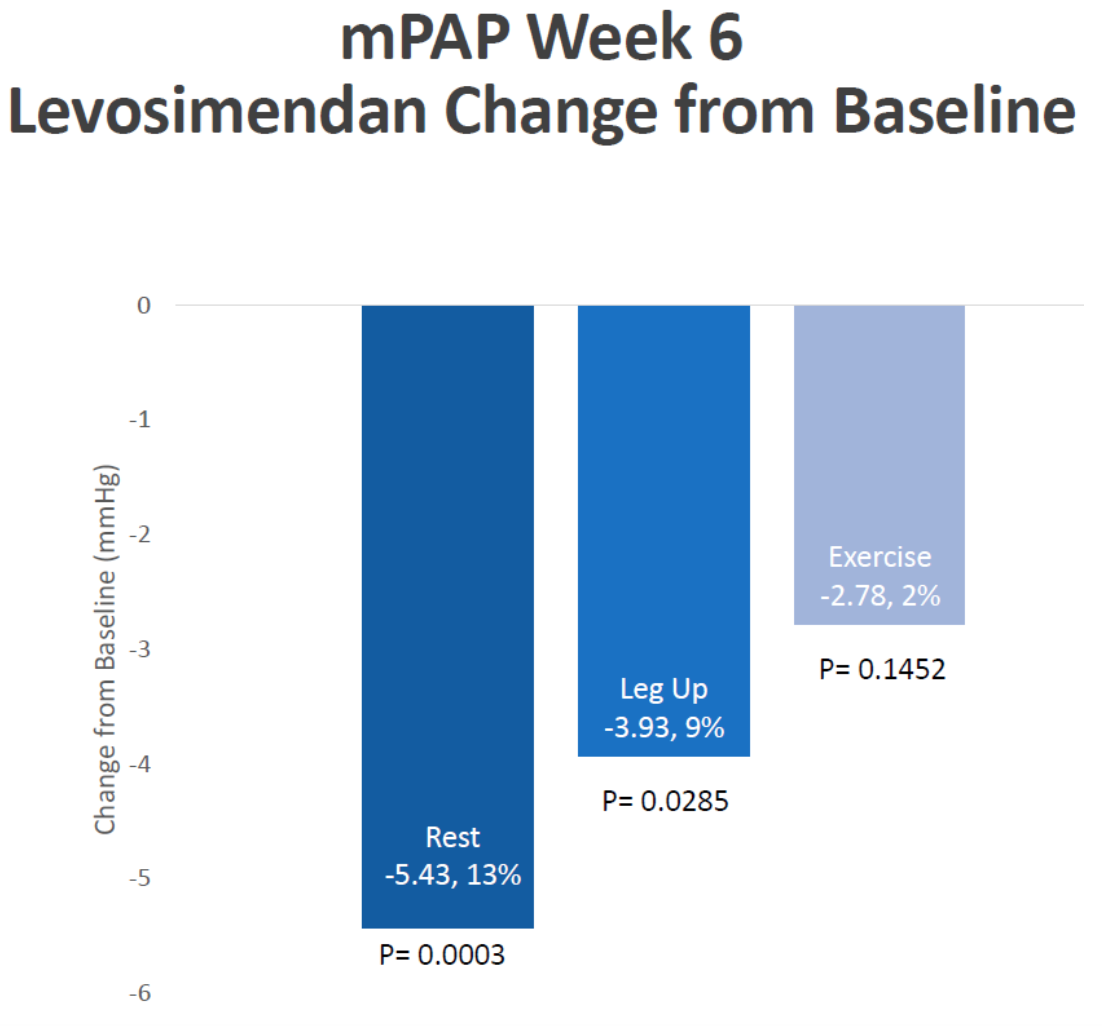
Exhibit IV – mPAP vs. Baseline7
Safety was a strong point in the trial. Levosimendan has a long history of use in Europe and is well understood in treatment of acute decompensated heart failure. However, the drug has not been used as chronic therapy. Going into the trial, the FDA was concerned about treatment emergent adverse events related to hemodynamic issues and development of atrial and ventricular arrhythmias. These were not observed and the majority of adverse events were mild. Headache was the most common side effect, with three incidents observed in the Levo group compared to one event in the placebo group. Severe adverse events were related to infections and infestations or device related infections which were attributed to failure to employ current best practices for a peripherally inserted central catheter (PICC) line. Dr. Rich’s is well versed in effective use of PICC lines and he believes this issue can be successfully addressed in Phase III.
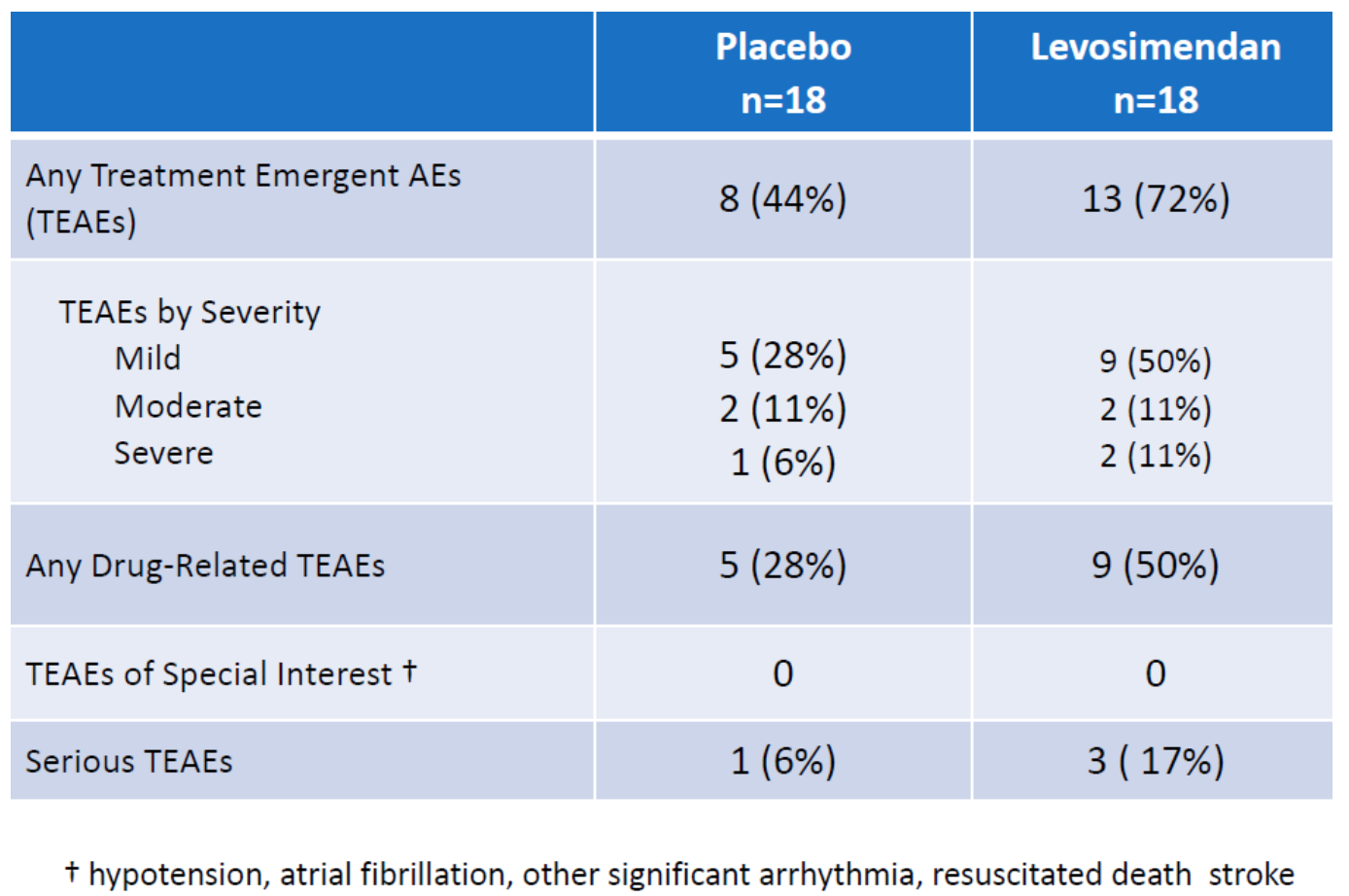
Exhibit V – Treatment Emergent Adverse Events8
The Phase II trial provided substantial support for advancing Levosimendan to the next stage that includes publication of results in a major cardiovascular journal, request for an end-of-Phase-II meeting with the FDA and preparation for a Phase III trial. We expect further announcements related to these milestones in the coming months as the team continues to work through the data. While it is too early to determine Phase III trial design, based on commentary and precedent we think it is likely that the six minute walk test will be the primary endpoint for a Phase III. Our best estimate is that this trial may begin in 2021. A rough estimate of time, cost and size of the registrational trial range from 18 to 36 months, $30 to $50 million and 200 to 300 patients. While none of these estimates have been confirmed by the company, we believe they are reasonable based on precedent.
Summary
The HELP trial has ended and Tenax is now seeking regulatory guidance on next steps. The strong results from this Phase II study attracted further investment from Armistice Capital, a group that may catalyze additional funding to move forward into a pivotal study. Based on management’s guidance we expect an end of Phase II meeting with the FDA in the fourth quarter, after which details on the construction of a Phase III trial will be provided. Tenax has generated strong data for the PH-HFpEF indication with statistically significant results for the six minute walk test and other parameters that we think will be required in a Phase III. Based on the research and analysis included in our initiation, we believe PH-HFpEF patients will benefit from Levosimendan’s mechanism of action and clinical trials can be pursued with a reasonable cost and time commitment. The indication is also in an area with no other approved treatments. The market is sizeable and with no other approved therapy available, pricing should be strong and penetration high.
SUBSCRIBE TO ZACKS SMALL CAP RESEARCH to receive our articles and reports emailed directly to you each morning. Please visit our website for additional information on Zacks SCR.
DISCLOSURE: Zacks SCR has received compensation from the issuer directly, from an investment manager, or from an investor relations consulting firm, engaged by the issuer, for providing research coverage for a period of no less than one year. Research articles, as seen here, are part of the service Zacks provides and Zacks receives quarterly payments totaling a maximum fee of $40,000 annually for these services. Full Disclaimer HERE.
___________________________________
1. Pulmonary Hypertension in Heart Failure with Preserved Ejection Fraction (PH-HFpEF)
2. Source: Tenax Corporate Presentation for HELP trial topline, June 2, 2020.
3. The 6 Minute Walk Test is a sub-maximal exercise test used to assess aerobic capacity and endurance. The distance covered over a time of 6 minutes is used as the outcome by which to compare changes in performance capacity.
4. Author’s own work.
5. The is the average of systolic and diastolic pressures.
6. Source: Tenax Corporate Presentation for HELP trial topline, June 2, 2020.
7. Source: Tenax Corporate Presentation for HELP trial topline, June 2, 2020.
8. Source: Tenax Corporate Presentation for HELP trial topline, June 2, 2020.