By David Bautz, PhD
NASDAQ:VKTX
READ THE FULL VKTX RESEARCH REPORT
Business Update
New Data Presented at EASL 2020
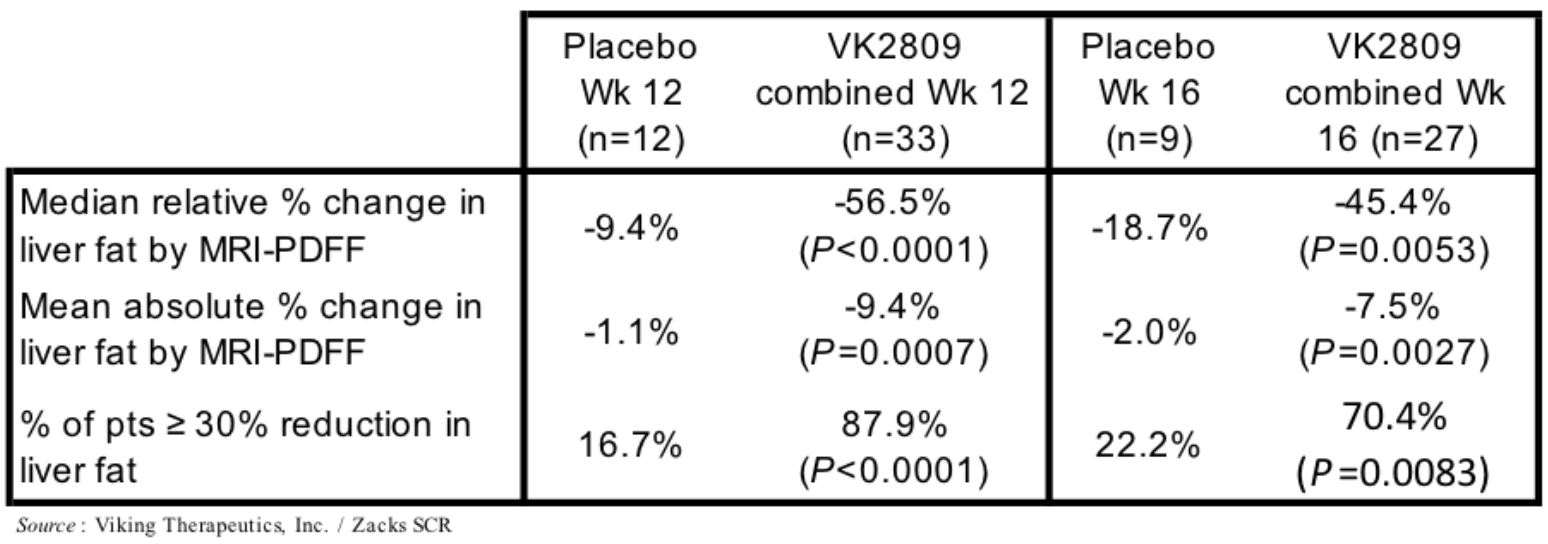
On August 28, 2020, Viking Therapeutics, Inc. (NASDAQ:VKTX) announced new data from the Phase 2 clinical trial of VK2809 in patients with non-alcoholic fatty liver disease (NAFLD) and elevated low density lipoprotein (LDL) cholesterol were presented at EASL 2020. The new results showed that patients treated for 12 weeks with VK2809 continued to show a statistically significant decrease in liver fat at Week 16, which was four weeks after the last dose was administered. In addition, consistent liver fat reductions were seen in patients regardless of baseline characteristics or the presence of various NASH risk factors.
The following table shows the results for median relative percent change in liver fat, mean absolute percent change in liver fat, and the percentage of patients who experienced a ≥30% reduction in liver fat at Week 12 and at Week 16. Dosing for this study concluded at the end of Week 12 and patients then came in to get another MRI scan at Week 16 to determine the durability of effect after dosing was concluded. Some of the patients were not able to come back for the scan at Week 16, which is why the number of patients for the placebo and VK2809-treated groups is lower for Week 16. The results show that at Week 16 there continues to be a statistically significant decrease in liver fat in patients treated with VK2809 compared to placebo. The increases seen in the placebo group at Week 16 are due to 3 ‘non-responders’ unable to get an MRI scan. For example, at Week 12, 2/12 (16.7%) placebo patients had a ≥30% reduction in liver fat while at Week 16 it was 2/9 (22.2%). Not included in this table but disclosed by the company is that 100% of the patients receiving 5 mg VK2809 daily were still responders at Week 16.
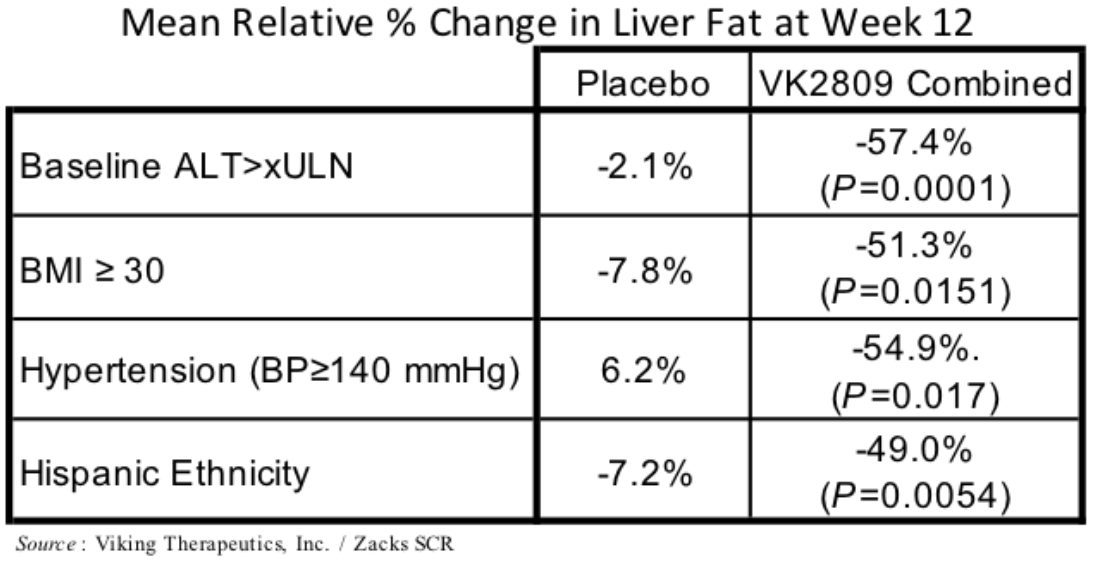
In addition to examining results at Week 16, the company also presented data on liver fat reductions in patients stratified by various baseline characteristics and the presence of common risk factors for NASH. Regardless of increased alanine aminotransferase (ALT), a high body mass index (BMI), hypertension, and Hispanic ethnicity, the decrease in liver fat was consistent and statistically significant compared to placebo.
Conclusion
The results presented by Viking at EASL 2020 are highly encouraging and show the durability of effect for liver fat reduction in patients treated with VK2809, including the fact that 70% of patients remain responders (≥30% reduction in liver fat) four weeks following the completion of dosing. It is also very encouraging that similar levels of liver fat reduction were seen in patients regardless of baseline characteristics or NASH risk factors. While we didn’t expect these data to move the stock appreciably, we view it as one more piece of evidence showing VK2809’s potential as a best-in-class treatment for NASH. The company is continuing to enroll patients in the ongoing Phase 2b VOYAGE trial, which is examining the efficacy, safety, and tolerability of VK2809 in patients with biopsy-confirmed NASH, and we currently expect enrollment to conclude in the first half of 2021. With no changes to our model, our valuation remains at $22.
SUBSCRIBE TO ZACKS SMALL CAP RESEARCH to receive our articles and reports emailed directly to you each morning. Please visit our website for additional information on Zacks SCR.
DISCLOSURE: Zacks SCR has received compensation from the issuer directly, from an investment manager, or from an investor relations consulting firm, engaged by the issuer, for providing research coverage for a period of no less than one year. Research articles, as seen here, are part of the service Zacks provides and Zacks receives quarterly payments totaling a maximum fee of $40,000 annually for these services. Full Disclaimer HERE.