By David Bautz, PhD
NASDAQ:BTAI
READ THE FULL BTAI RESEARCH REPORT
Business Update
Highlights from BXCL501 KOL Event
On February 19, 2021, BioXcel Therapeutics, Inc. (NASDAQ:BTAI) hosted a Key Opinion Leader (KOL) virtual symposium that focused on BXCL501, the company’s lead investigational, proprietary, orally dissolving thin film formulation of dexmedetomidine. Below we share highlights from each of the talks, which focused on the need for improved therapeutics in the area of schizophrenia/bipolar disorder agitation, dementia related agitation, and opioid withdrawal symptoms. The presentation can be found here.
Scott Zeller, MD – Schizophrenia/Bipolar Disorder Related Agitation
Dr. Zeller is the Vice President of the Acute Psychiatry Vituity and an Assistant Clinical Professor at the University of California, Riverside. He has personally seen over 90,000 emergency psychiatric patients and has experience with patients who have all levels of agitation, with the vast majority being mild to moderate.
Dr. Zeller began his talk by providing an overview of what he sees as an emergency psychiatric physician, which entails approximately 1500-1800 emergency psychiatric patients at a unit per month, with approximately 20% of those being agitated during their stay. On top of that, approximately 50% have conditions that put them at risk for agitation. The key to helping agitated patients is to intervene early to promote good outcomes.
Some of the acute care goals of treating agitation include:
• Reduce dangerous behaviors, anguish, and agitation – the key to a successful outcome in an expedited manner is to calm the patient (preferably using verbal de-escalation) so that the patient is not a threat to themselves or the caregivers
• Rapid calming, regaining control, and reduction in symptoms while minimizing side effects, without oversedation – verbal de-escalation is the preferred intervention; medication can be used alongside verbal de-escalation with an ideal treatment being one that has few side effects and preferably will not lead to sleep, which can increase a patient’s stay in the emergency department
• Avoid use of physical restraints – patients are more trusting when not restrained and restraint use results in an increased length of stay in emergency departments by an average of 4.2 hours
• Treat while creating therapeutic alliance with patient – patients will also be more trusting if they are able to be involved in selecting a medication
The 2005 Expert Consensus Guideline Series – Treatment of Behavioral Emergencies (Allen et al., 2005) includes the following goals of emergency intervention: 1) calming the patient without sedation (preferred); 2) mild sedation to the point of drowsiness but not sleep. In regards to selecting medications, the most important factors to consider include:
- Acute (immediate) effect on behavioral symptoms
- Speed of onset
- Patient’s history of response to the medication
- Limited risk of side effects
- Patient preference
- Ease of administration
In addition, Project BETA (Best practices in Evaluation and Treatment of Agitation) recommends that medications used to treat agitation not act like chemical restraints, but that appropriate agents are chosen to treat symptoms. In addition, medications should be used to calm the patient, not induce sleep, and that the patient should be involved in medication selection, with oral a preferred route over IM.
With the aforementioned ‘ideal parameters’ in mind, Dr. Zeller than proceeded to cover the various pharmacological agents that are used to treat agitation, along with their benefits and limitations, as shown in the following table.
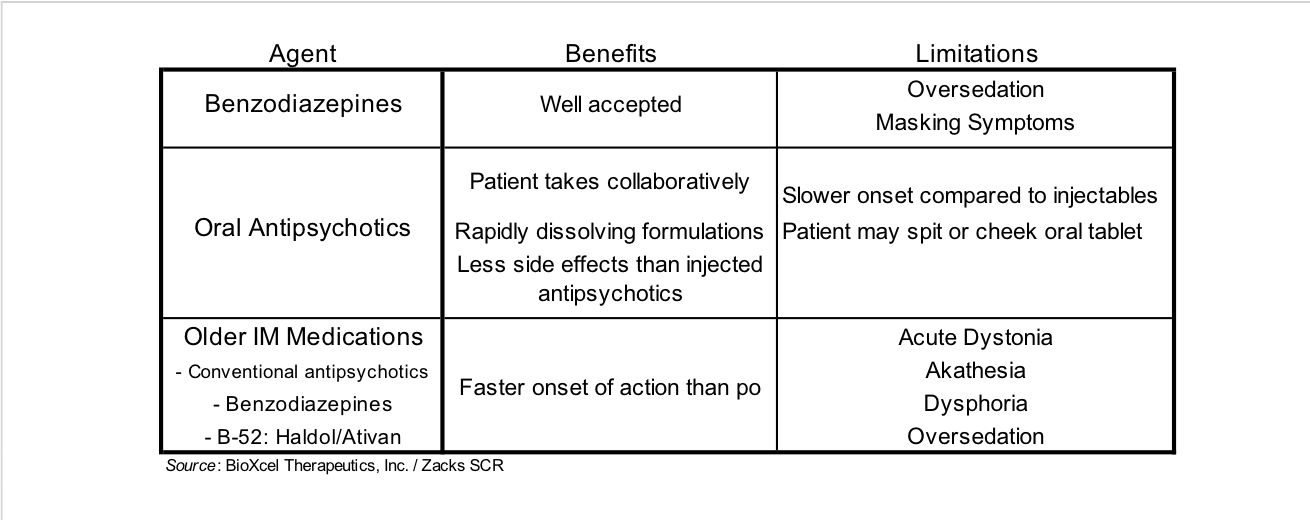
A number of the agents currently used to treat agitation have a number of shortcomings, including the risk of oversedation. There are a number of complications that come with oversedation, including an inability for the medical examiner to do a full evaluation, the patient is unable to answer questions or take care of themselves, a psychiatric consult will not evaluate the patient until they are fully awake, most receiving hospitals are unwilling to consider a patient transfer until they are alert, and an unconscious patient not receiving treatment is taking up valuable room in the emergency department.
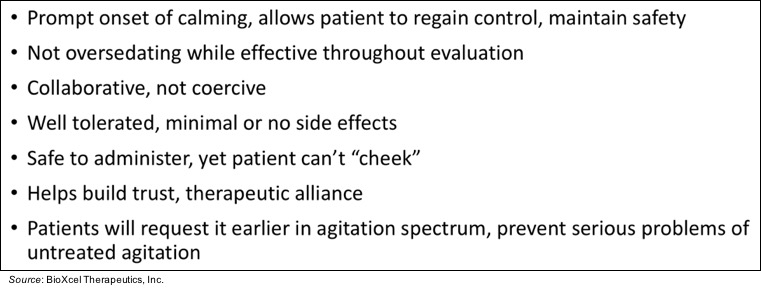
In closing, Dr. Zeller listed the characteristics of an ‘ideal agent’ for treating agitation, which are shown below. We believe that BXCL501 possesses many of these attributes and would be a welcome addition to a doctor’s armamentarium for treating agitation in schizophrenia and bipolar disorder.
Larry Ereshefsky, PharmD – Dementia Related Agitation: Overview and Pipeline
Dr. Ereshefsky is a retired professor of Psychiatry, Pharmacology, and Pharmacy at the University of Texas. He is also the Chief Scientific Officer of APEX Innovative Sciences and Follow the Molecule.
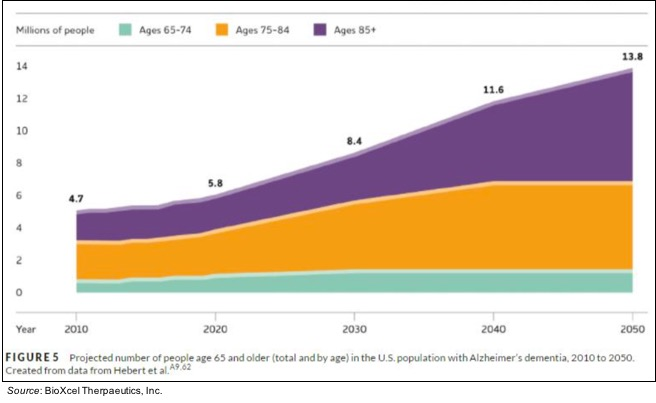
Dr. Ereshefsky began his presentation with an overview of the Alzheimer’s disease (AD) population in the United States. As shown in the following chart, there are an estimated 5.8 million American’s age 65 and older that are living with AD dementia in 2020, which equates to approximately 1 in 10 people from that age group. In addition, the number of patients with AD is expected to increase significantly over the next 30 years due to the aging population.
As AD progresses, neuropsychiatric symptoms (NPS) (e.g., apathy, sleep disturbances, affective syndrome, psychosis, aberrant mood behavior, and agitation/aggression) become more prevalent (~90% risk in patients with AD). Agitation/aggression are seen in approximately 45% of AD patients over a five-year period and is clinically significant in approximately 20% of people with dementia in community settings and in nearly 50% in assisted/long-term care facilities.
The presence of NPS impacts morbidity and mortality in dementia patients. A 2015 study of 355 AD patients in Cache County, UT showed that agitation/aggression was associated with more rapid progression of dementia (hazard ration = 2.946; P=0.004) and earlier death (hazard ratio = 1.942; P=0.004) (Peters et al., 2015). Quality of life and impairment of daily activities are also adversely impacted by NPS, and it is behavior, not worsening cognition, that drives transition to more expense care for dementia patients, thus there is a strong pharmaco-economic incentive to treating agitation in these patients.
In regards to current therapeutic options, Dr. Ereshefsky noted that there are no treatments approved for agitation in dementia, and the therapies that are used have multiple problems with them:
- Antipsychotics: These carry a black box warning and have been associated with impaired cognition, metabolic syndrome, and stroke
- Benzodiazepines: These carry a black box warning and have been associated with impaired cognition and increased risk of falls
- SSRIs (citalopram): In a 2014 clinical trial, citalopram was more likely to cause worsening of cognition and QT interval prolongation
Dr. Ereshefsky then covered guidelines for prescribing treatments for the elderly with NPS. He noted it’s important to target the drug to the symptom, thus for someone with hallucinations and delusions they will likely be responsive to antipsychotics or pimavenserin while someone with agitation and anxiety may response to drugs to anxiolytic effects. The key is to start at a low dose and increase slowly, use only one drug at a time at the lowest effective dose, and review the patient for emergence of adverse events often since the elderly are more likely to develop extrapyramidal effects that often don’t emerge until during treatment.
Alan Breier, MD – Agitation & Dementia: Unmet Need, Advances in Treatment
Dr. Breier is a Senior Professor of Psychiatry; Vice-Chair for Clinical Research; Chief, Indiana University Psychotic Disorders Program; and Director, Prevention and Recovery Center at the Indiana University School of Medicine.
He began his presentation with an overview of the number of patients currently with dementia and how this number is expected to increase substantially in the coming decades. He then discussed how agitation is a common condition in dementia patients and that it is difficult to manage, particularly since agitation worsens as the severity of dementia progresses. Dr. Breier also highlighted the fact that no FDA approved treatments are available for treating agitation in dementia patients and he discussed the safety concerns of commonly used agents.
Dr. Breier highlighted a study he had worked on while an employee at Eli Lilly that compared intramuscular olanzapine, lorazepam, and placebo in acutely agitated patients with dementia (Meehan et al., 2002). The results showed that both IM olanzapine and IM lorazepam were effective in treating agitation, however during the time the trial was going on, the FDA began to review the use of antipsychotic drugs in dementia patients (which ultimately led to a ‘black box’ warning for all antipsychotic drugs regarding their use in elderly patients with dementia-related psychosis). Thus, during review of the IM olanzapine data, the heightened concerns regarding antipsychotic drugs resulted in approval not being granted, which Dr. Breier believes was the proper course of action given what we know now about the use of antipsychotics in dementia patients.
Following the ‘black box’ warning being issued for antipsychotics in 2005, their overall use in elderly patients with dementia decreased and the use of other non-approved drugs that have worse safety profiles increased (e.g., benzodiazepines). However, in 2015 the American Geriatric Society Beers Criteria Expert Panel recommended that benzodiazepines be avoided in dementia patients as they can increase the risk of cognitive impairment, delirium, falls, and fractures and in 2020 the FDA issued a ‘black box’ warning for all benzodiazepine medications that addresses the risk of abuse, addiction, physical dependence, and withdrawal reactions.
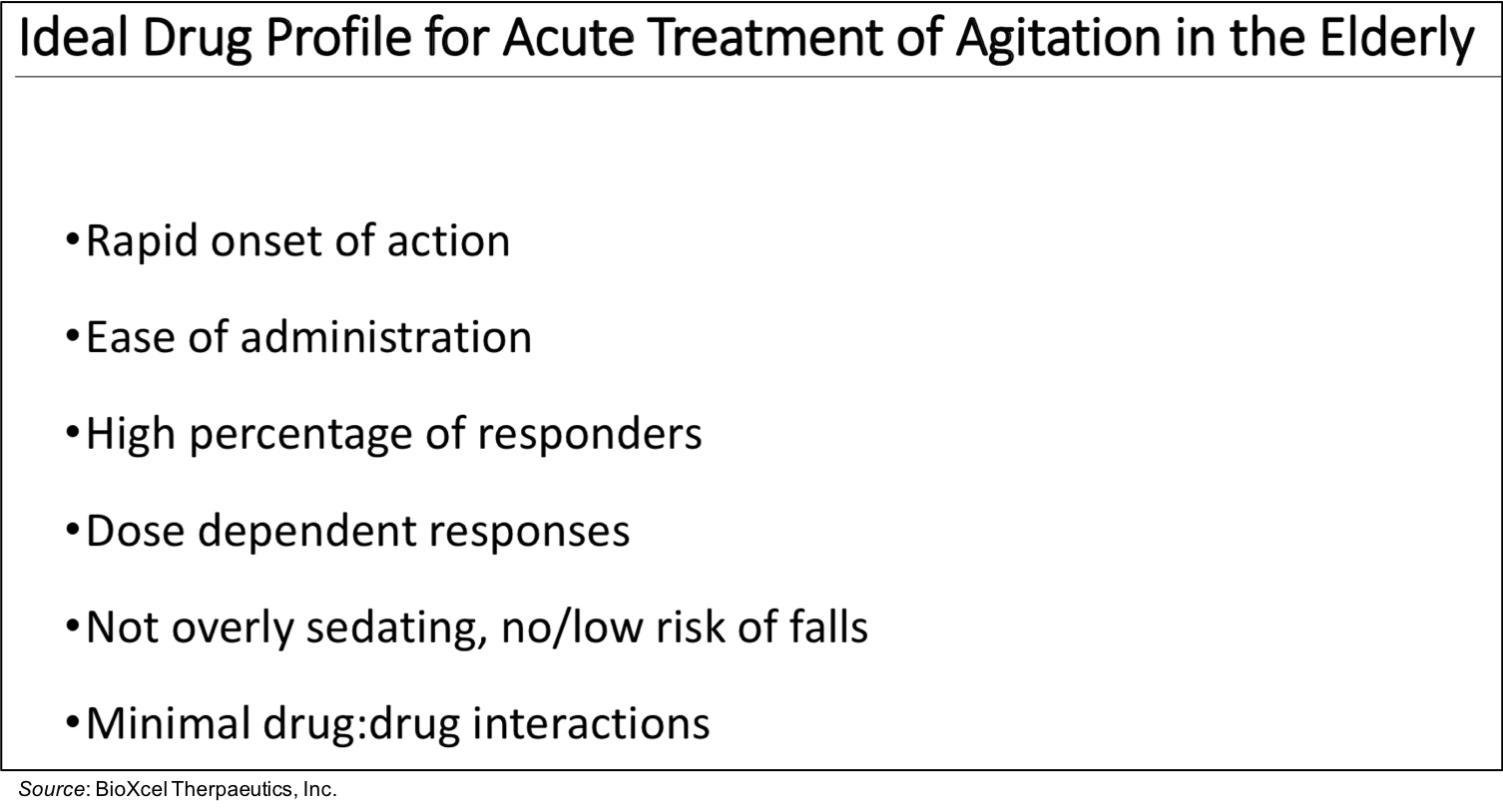
According to Dr. Breier, the aforementioned all supports the notion that safe and effective therapies for treating agitation in dementia patients are desperately needed, particularly drugs that that have novel mechanisms of action, with the targeting of noradrenergic signaling being a particularly promising area of research. Dr. Breier would like to see the following characteristics in an ‘ideal therapy’ for treating agitation in dementia patients, and we believe that BXCL501 possesses a number of these attributes.
Thomas Kosten, MD – Opioid Withdrawal
Dr. Kosten is the JH Waggoner Chair and Professor of Psychiatry, Pharmacology, Immunology, Pathology, and Neurosciences of the Dan Duncan Institute for Clinical and Translational Research at the Baylor College of Medicine.
He began his presentation by discussing the ongoing opioid epidemic in this country and the fact that in 2018 approximately two million individuals suffered from opioid use disorder and that five lives are lost to opioid overdose every hour. In addition, the total cost of the opioid epidemic is staggering as between treatment, lost wages, and tax revenues it has cost the country greater than $1.5 trillion total (Altarum.org).
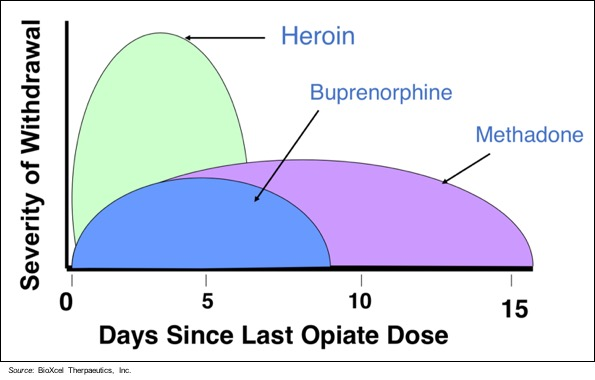
The problem with opioids is that they are so addictive and it is incredibly difficult to break that addition. Some of the symptoms of opioid withdrawal include tremors, nausea, vomiting, anxiety, irritability, and insomnia. These symptoms can be quite severe, and Dr. Kosten stated they can even cause death if they are severe enough and no treatment is provided. The following chart shows in general terms the severity of withdrawal symptoms over time for various opioids, with heroin causing more severe withdrawal symptoms than either buprenorphine or methadone but over a shorter period of time. Buprenorphine (most commonly) and methadone are both used as long-term treatments for heroin addiction due to the fact that the withdrawal symptoms of those two are not as severe as heroin even though they last longer. However, to be free of opioid dependence their use needs to stop at some point. Clonidine with and without naltrexone is currently used for breaking buprenorphine dependence, however according to Dr. Kosten it is “not the optimal drug.”
Dr. Kosten discussed the type of patients that are seeking treatment from opioid addiction, including those who abuse prescription opioids (which has decreased in recent years due to a cutback in overall prescribing of opioids), illicit heroin users (which has gone up in part because of a decrease in the availability of prescription opioids), post-opioid overdose patients, those who are currently being maintained on buprenorphine (approximately one million in the U.S. right now, patients with chronic pain that are on high doses of opioids, and those looking to stop long-term analgesia (e.g., cancer patients who have reached a very high level of opioid use need to be detoxed so that their body can be ‘reset’ and their level of opioids can be restarted at lower doses that are effective following detoxification).
When stopping opioid dependence, Dr. Kosten stated that opioid withdrawal is going to have to be dealt with either at the end of treatment, such as with someone who has been switched onto buprenorphine, or at the beginning of treatment (which is the typical choice for most patients) and medications that alleviate symptoms of withdrawal can facilitate the breaking of dependence.
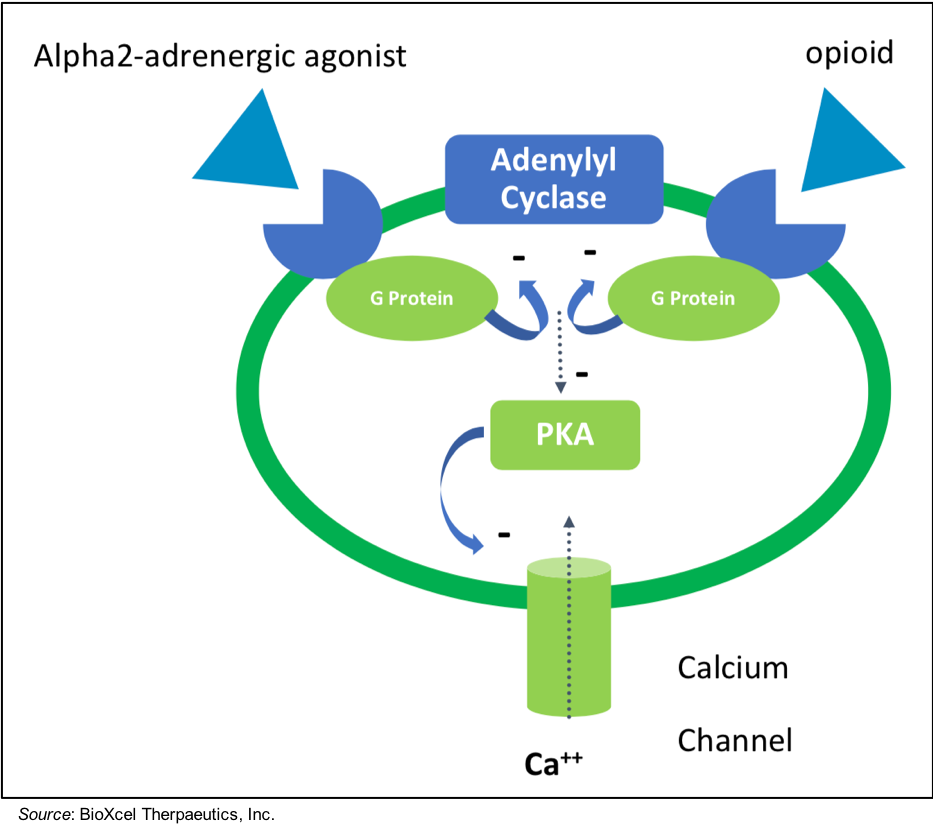
The neurobiology of withdrawal was then discussed, starting with the areas of the brain that are affected by opioids, which are the locus coeruleus and the amygdala. Opioids have direct effects on those two areas of the brain, with the locus coeruleus being involved in the norepinephrine mediated ‘hyper arousal’ function while the amygdala is related to anxiety and addiction. In addition, both of those areas of the brain are modulated by activity of the alpha-2-adrenergic receptors. The following cartoon shows a simplified drawing of a neuron in which both opioids and alpha-2-adrenergic agonists ‘turn down’ activity of the neuron through the adenylyl cyclase pathway. This ultimately results in an inability of the cell to release norepinephrine, thus the underlying cause of the opioid withdrawal symptoms decreases. The ability to use the alpha-2-adrenergic system is important, because unlike opioids there is no risk of addiction while still offering the same outcome, which is a decrease in withdrawal symptoms.
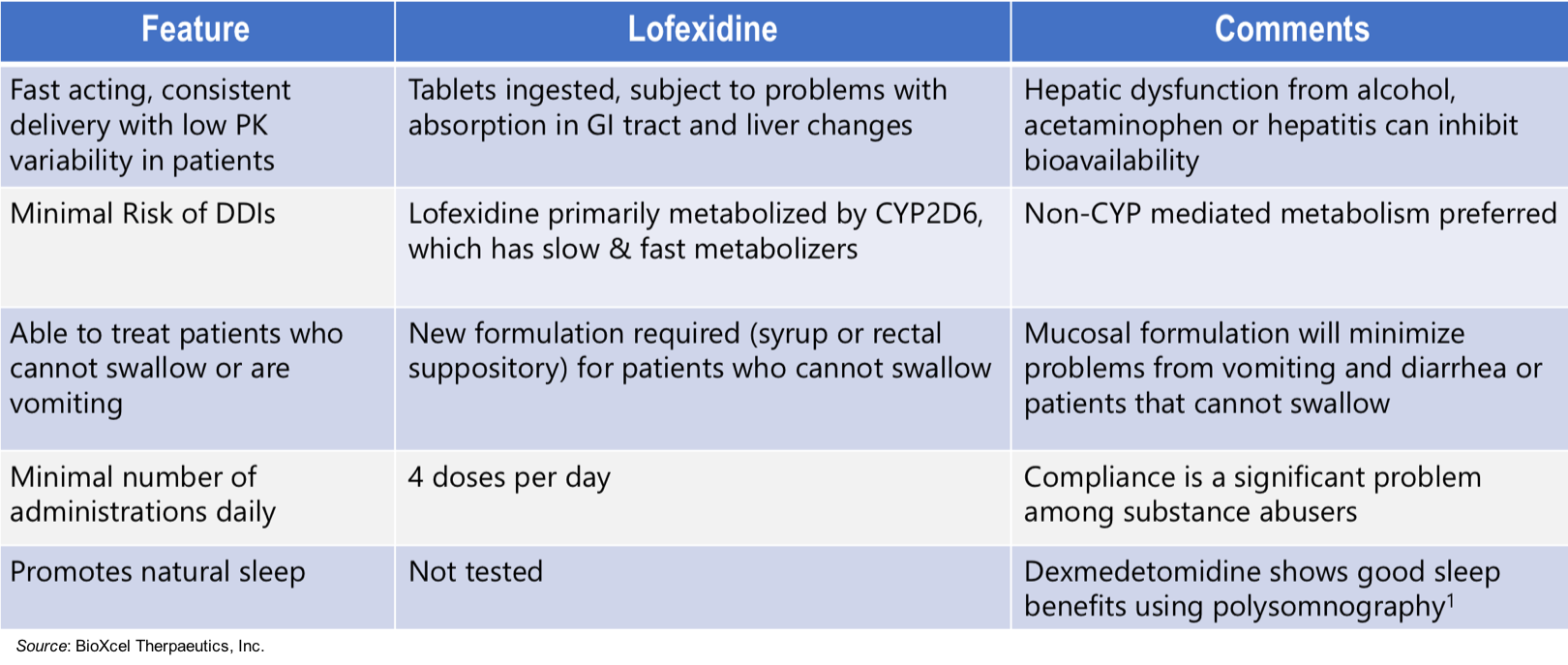
Dr. Kosten then discussed the ‘optimal features’ for a non-opioid drug to treat withdrawal, with some of those features in the table below. He included lofexidine as a comparator due to the fact that it was recently approved for the treatment of opioid withdrawal. The takeaway from the table is that lofexidine is not an ideal drug and there is an opportunity for a more optimized drug in the opioid withdrawal space.
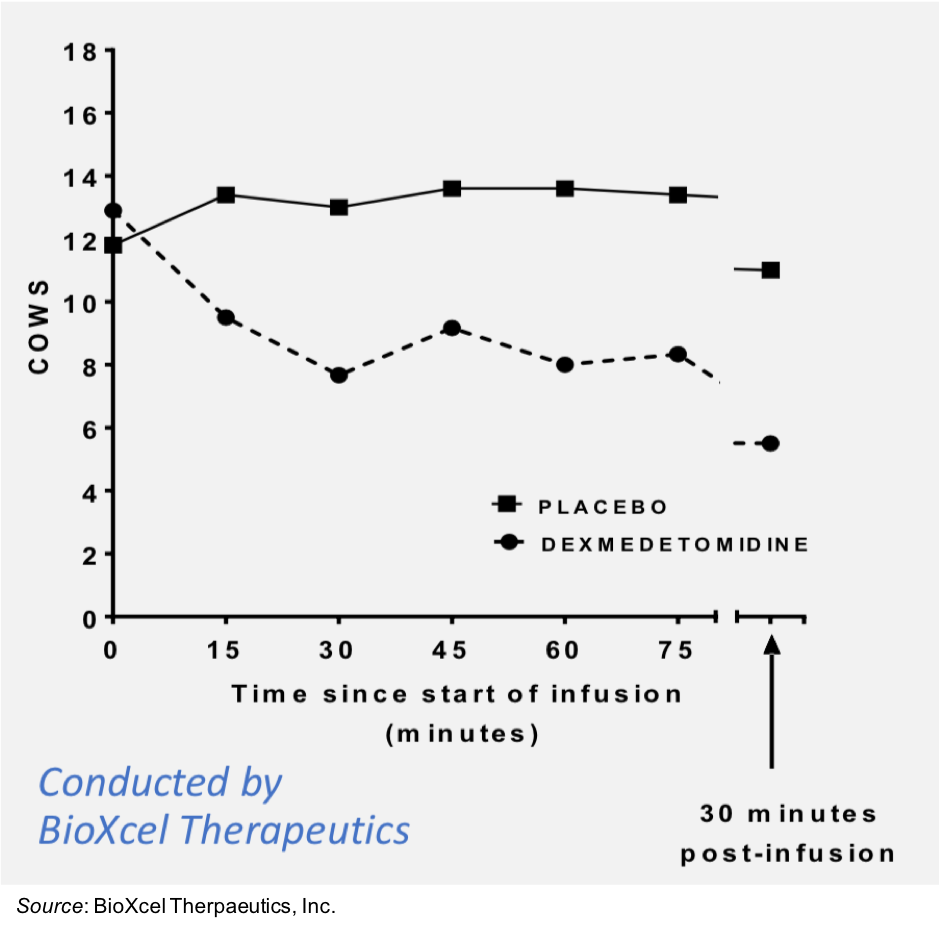
A randomized, double blind, placebo controlled proof-of-concept study of IV dexmedetomidine (Precedex) showed that it was effective in reducing symptoms of opioid withdrawal in 16 patients with opioid use disorder. All patients entered with a Clinical Opiate Withdrawal Scale (COWS) score of 9-15 points and the stopping criterion was a 50% drop in COWS. The drug was administered in a step-wise escalation of IV infusion rate until the stopping criterion was met. The following graph shows that within 15 minutes of starting the infusion there was a substantial drop in withdrawal symptoms and by 30 minutes there was an approximately 50% reduction in symptoms that was maintained out to 75 minutes (when the infusion was stopped). In addition, 30 minutes after the infusion was stopped there was a further reduction in COWS, which was highly statistically significantly different from placebo.
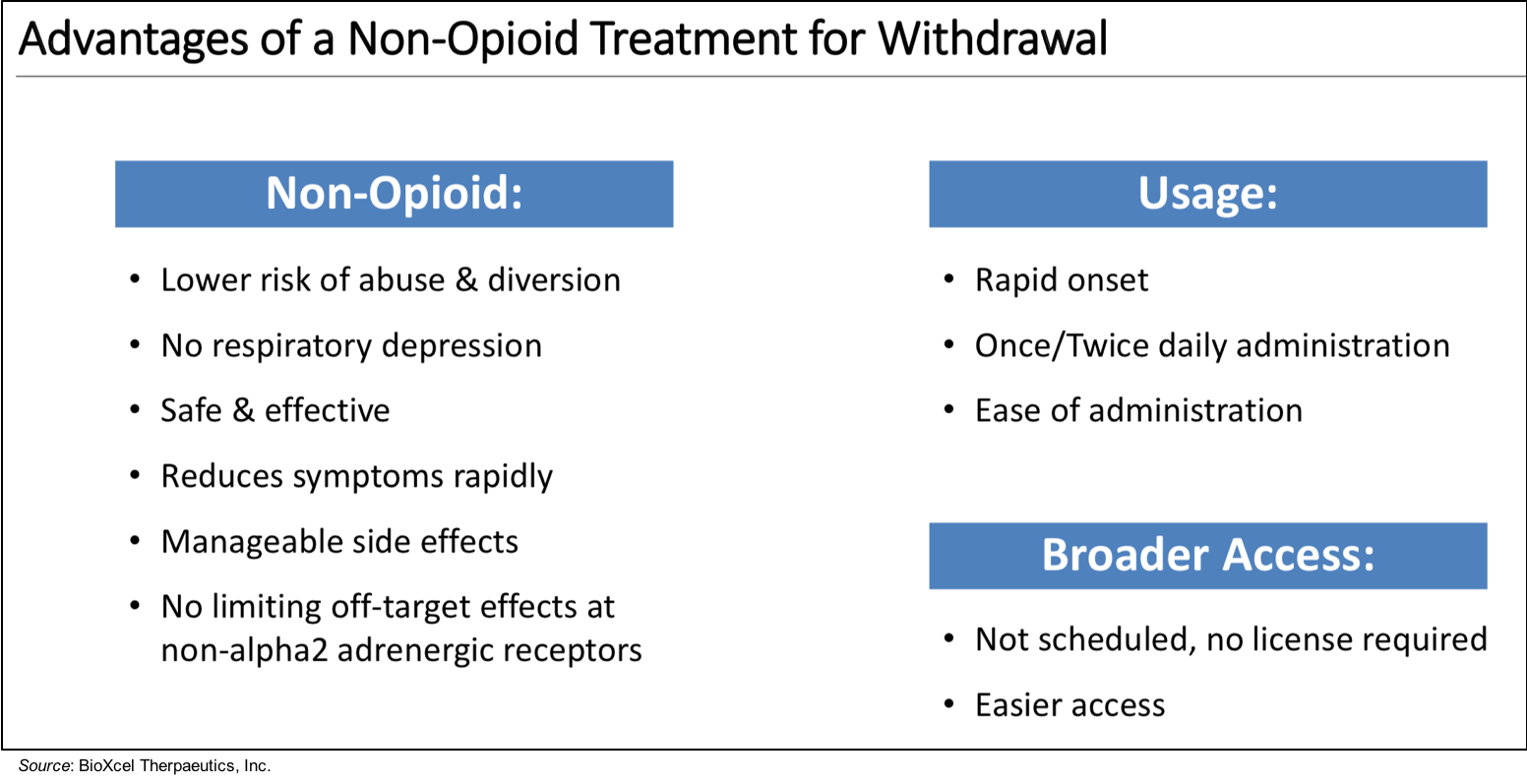
Lastly, Dr. Kosten listed the advantages of a non-opioid treatment for opioid withdrawal, which are shown below. Just as in the other indications, we believe that BXCL501 has a number of positive attributes that, if proven effective, would make it a welcome addition to the opioid withdrawal treatment arsenal.
Conclusion
The KOL event on BXCL501 was highly informative, with the overarching theme being that there are significant gaps in the quality of therapies available for treating agitation and opioid withdrawal compared to what treating physicians would like to have in an ‘ideal therapy’. We believe that BXCL501 shares a number of characteristics with what would be considered an ‘ideal therapy’ for these indications and that it could provide a significant benefit to patients. Each of the indications discussed during the KOL event represents a significant opportunity for BXCL501. We forecast peak sales of approximately $1 billion for treating agitation in schizophrenia and bipolar disorder, approximately $1 billion for treating opioid withdrawal, and approximately $2 billion for treating agitation in dementia with our current valuation for BTAI at $145.
SUBSCRIBE TO ZACKS SMALL CAP RESEARCH to receive our articles and reports emailed directly to you each morning. Please visit our website for additional information on Zacks SCR.
DISCLOSURE: Zacks SCR has received compensation from the issuer directly, from an investment manager, or from an investor relations consulting firm, engaged by the issuer, for providing research coverage for a period of no less than one year. Research articles, as seen here, are part of the service Zacks provides and Zacks receives quarterly payments totaling a maximum fee of $40,000 annually for these services. Full Disclaimer HERE.