By John Vandermosten, CFA
NASDAQ:LTRN
READ THE FULL LTRN RESEARCH REPORT
Third Quarter 2021 Financial and Operational Results
On November 1, 2021, Lantern Pharma, Inc. (NASDAQ:LTRN) announced third quarter 2021 financial and operational results, filed its form 10-Q with the SEC and hosted a video webcast to review the quarter’s accomplishments.
Highlights year-to-date include:
➢ Launched ADC program with Califia Pharma - January 2021
➢ Raised $69 million in equity - January 2021
➢ Signed agreement with Piramal Pharma for fill and finish of LP-300 - January 2021
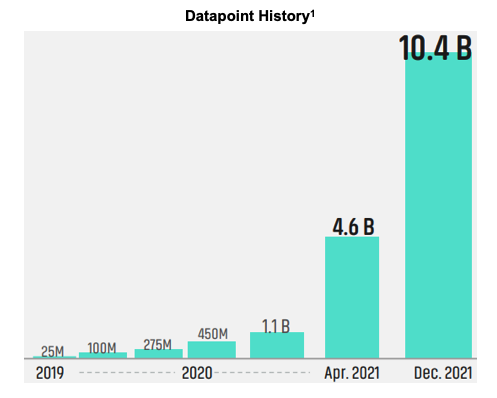
➢ Surpassed accumulation of 4.6 billion curated datapoints using RADR - April 2021
➢ Expanded LP-184 into ATRT indication - April 2021
➢ Actuate Therapeutics collaboration using RADR for GSK3β drug candidate 9-ING-41 - May 2021
➢ Reacquisition of rights for LP-100 from Allarity Therapeutics - July 2021
➢ LP-184 orphan drug designation granted for pancreatic cancer, GBM & malignant gliomas – August 2021
➢ LP-184 preclinical data announced for GBM – August 2021
➢ Strategic collaboration with Deep Lens – September 2021
➢ Partnership with Code Ocean to identify drug development collaborations – October 2021
➢ RADR accumulation of more than 10 billion datapoints – November 2021
Lantern generated no revenues in the third quarter and expended $4.1 million on operations during the three month period producing a net loss of ($4.1) million, or ($0.36) per share.
For the third quarter ending September 30, 2021 and versus the second quarter ending September 30, 2020:
➢ Research & development expenses totaled $3.0 million, rising 393% from $601,000 on increase in product candidate manufacturing expenses, the payment of upfront funds to Allarity and other expense increases;
➢ General & administrative expenses rose 8% to $1.2 million from $1.1 million, due to higher business and corporate development expense, a rise in legal & patent related fees and higher stock option expense, partially offset by a decrease in other expenses;
➢ Net loss was ($4.1) million, or ($0.36) per share, compared to ($1.7) million, or ($0.36) per share;
As of September 30, 2021, cash and marketable securities on the balance sheet were $73.8 million. Cash burn in the third quarter was ($4.7) million, up materially from the ($2.9) million consumed in the prior year period largely due to the payment of manufacturing related expenses of $1.1 million and the $1.0 million upfront payment to Allarity. No cash from financing was generated during the quarter.
Datapoint Milestone
Lantern’s RADR platform now include over 10 billion datapoints, a 10-fold increase from a year prior. The collection of new data helps accelerate the discovery of new indications for existing assets, helps identify new drug candidates and indications and recognizes new combination approaches. The datapoint growth was driven by work performed in bladder, pancreatic, brain and blood cancers.
RADR helps define and develop combination approaches between Lantern candidates and other approved oncology products, guide the prioritization of indications, populations and settings for use, and identify new candidates for research and development. The data generated is expected to find new opportunities in cancers where there has not yet been material success.
The next phase of growth for data collection will target antibody drug conjugate (ADC) development and predict the best candidates for combination therapies. This process is expected to reduce risk and accelerate development in drug development while identifying critical biomarkers essential to de-risking development. A 2021 article by Dr. Parker at the University of Toronto highlighted the benefits of using biomarkers to improve success rates in oncology, further supporting Lantern’s approach.
Reacquisition of LP-100 Rights from Allarity
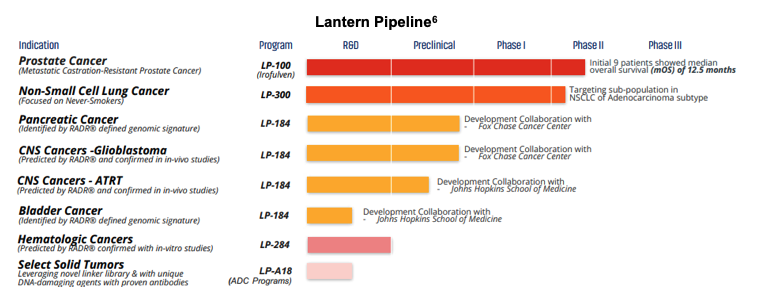
Lantern reacquired global rights to its candidate LP-100 from Allarity Therapeutics, publicized in a press release on July 27, 2021. The candidate is in Phase II trials that enrolled 9 out of 27 targeted subjects. The purpose of the Phase II trial is to evaluate the anti-tumor effect of combination LP-100 and prednisolone in mCRPC2 patients who progressed on androgen receptor targeted therapy and those pretreated with docetaxel. An interim analysis of the nine patients revealed a median overall survival (mOS) of 12.5 months, directionally improved compared to other, similar fourth-line treatment regimens for mCRPC that have ranged from 7.1 to 9.9 months. The nine patients included had been screened by Allarity’s Drug Response Predictor (DRP).
The terms of the reacquisition of the candidate included a payment to Allarity of $1.0 million upfront, and an additional $1.0 million over 24 months based on manufacturing and trial enrollment milestones, and an additional $16 million based on IP license milestones and regulatory filings and approvals in the US and EU. If commercialized, Allarity will receive low to mid-single-digit royalties on net sales.
The reacquisition also included the developed clinical protocol for an intended study in bladder and prostate cancer with ERCC2/3 gene mutation. Lantern also received an exclusive license to use Allarity’s companion diagnostic, DRP, in future development and commercialization of LP-100.
Reacquiring LP-100 expands Lantern’s options for the development of the candidate in other indications. Based on the promising initial data from the ongoing Phase II study and with the knowledge of DNA damage repair and NER pathway drivers of efficacy, LP-100 may demonstrate potential beyond mCRPC.
LP-184 Positive Preclinical Data
On July 20, 2021, Lantern announced positive data from the ongoing pancreatic cancer collaboration with the Pancreatic Cancer Institute at Fox Chase Cancer Center. The preclinical data demonstrated that LP-184 produced significant tumor shrinkage in a murine pancreatic cancer xenograft model. The animal study evaluated the drug over eight weeks. Tumors in untreated mice grew over eleven-fold while tumors in treated mice shrank by over 90%. Mice were treated with once-weekly dosing at 3 mg/kg over the course of the study. No tumors were present in one out of the four treated mice, and in the remaining three mice the average remaining tumor was 7% of the original tumor. In contrast, the untreated tumors were 146-fold larger than the remaining treated tumors.
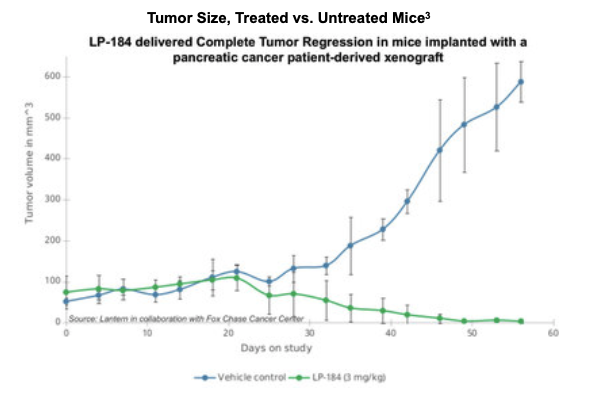
In addition, work was conducted on six pancreatic cancer cell lines and five patient-derived xenograft ex vivo tumor models. Significant reduction of cells and cell growth was observed across all cell lines and models with IC50 values in the 45-270 nM range. Data from this work are expected to be published and will also be incorporated into Lantern’s RADR AI platform. Lantern expects to advance the collaboration with Fox Chase Cancer Center.
CRISPR silencing of PTGR1 resulted in no response by pancreatic cancer cells to the drug. The knockout data confirmed PTGR1 as a driver of cytotoxicity in LP-184, validating RADR’s predictions. PTGR1-expressing pancreatic cancer cells had heightened response to LP-184 with IC50 values in sub-100nM range. PTGR1 expression could qualify patients for treatment, in the clinic and beyond, with LP-184.
Dr. Astsaturov, who leads these studies at the Fox Chase Cancer Center, further characterized the LP-184-sensitive tumors. Tumors that had nucleotide excision repair (NER) and homologous recombination (HR) pathway deficiencies had two-fold increased sensitivity to LP-184, representing additional biomarkers that could identify patient responders, and other cancers with similar properties. Potential other mutations and deficient genes could include BRCA1, BRCA2, ATM, ATR, ERCC2, ERCC3, ERCC4, ERCC5, ERCC6, FANCD2, RAD51 and PALB2.
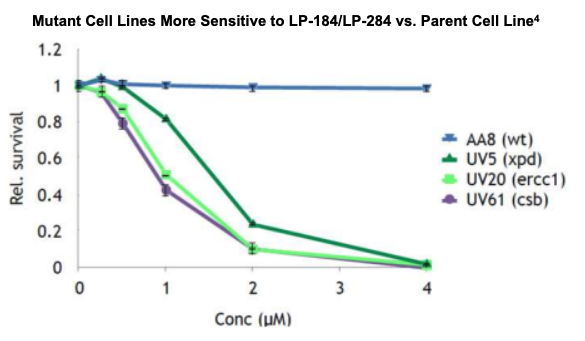
Analysis of RADR’s data indicates that 35-40% of pancreatic cancer transcriptomes have elevated PTGR1 expression and may be appropriate for treatment with LP-184. Lantern is in discussions with Dr. Astsaturov, and other key opinion leaders in pancreatic cancer, regarding the first in-human clinical studies of LP-184.
Collaboration with Actuate Therapeutics
On May 3, 2021, Lantern announced that it had entered into a research and development collaboration with Actuate Therapeutics. In the collaboration, Lantern will apply its RADR Artificial Intelligence (AI) platform to the development of 9-ING-41, a glycogen synthase kinase-3β (GSK-3β) inhibitor targeting cancer and fibrotic diseases. 9-ING-41 is participating in multiple Phase II clinical trials targeting myelofibrosis and pancreatic cancer. Application of RADR is expected to speed the development of Actuate’s lead candidate by identifying important biomarkers relevant to matching the right patient with the right drug. Using a biomarker for patient stratification can dramatically improve the likelihood of regulatory approval.5 In the collaboration, Lantern received 25,000 shares of Actuate restricted stock based on meeting development milestones and may receive additional equity if results from the collaboration are utilized in future development efforts.
Actuate Therapeutics is a private biopharmaceutical company founded in 2015, with activities centered on agents that target GSK-3β, and based on intellectual capital developed in the laboratories of Dr. Alan Kozikowski at the University of Illinois-Chicago and the Center for Developmental Therapeutics at Northwestern University.
Phase II Clinical Trial For LP-300
Lantern expects to launch a Phase II trial for LP-300 in never-smoker non-small cell lung cancer (NSCLC) patients in the next several months. Problems related to equipment and materials at the drug manufacturer led to a delay in delivering product to clinical sites for LP-300. Since our last update, partner Deep Lens has been added to enable faster recruitment of suitable patients in the never-smoker NSCLC study. The partner’s technology will search through thousands of medical records to match the most appropriate patients with the objectives of the trial. 20 sites are expected to enroll from 4 to 5 patients each, helping achieve the 90-patient target.
The company is interacting with the FDA and other regulatory bodies to refine the design of the trial and is seeking approval from investigators and institutional review boards. Lantern expects to use a combination treatment that includes doublet chemotherapy. The trial is expected to be a two-year, multi-center study enrolling 90 patients equally split between two arms of standard of care chemotherapy and standard of care chemotherapy + LP-300. Subjects enrolled in the study will have been diagnosed with adenocarcinoma NSCLC with little to no history of smoking and no prior chemotherapy. Beyond assessing the response to treatment in the target population, the trial will also serve to assess the efficacy of LP-300 in combination with chemotherapy on non-smokers, compare efficacy of LP-300 in non-smoking males and non-smoking females, further investigate safety, toxicity and tolerability and investigate biomarkers. Endpoints are expected to be overall survival, progression-free survival, objective response rate, identification of gene signatures correlated with potential LP-300 efficacy from matched tumor tissue analysis and protection against chemotherapy-induced nephrotoxicity.
�Milestones
➢ LP-100 (mCRPC)
◦ Responsibility for trial transferred to Lantern – July 2021
◦ Refine and simplify trial design – 2021/2022
➢ LP-300 (non-smoker NSCLC)
◦ Collaboration with Deep Lens to accelerate recruitment – 3Q:21
◦ Launch of 90 patient Phase II – 4Q:21 / 1Q:22
➢ LP-184 (pancreatic cancer)
◦ Granted orphan designation
◦ Host KOL event – November 18, 2021
◦ Develop and submit IND - 2022
◦ Phase I trial – 2022
➢ LP-184 (GBM)
◦ Preclinical results from collaborative research program – November 2021
◦ Launch Phase I/II study - 2022
➢ LP-184 (ADCs)
◦ Preclinical studies launched – 4Q:21
◦ Preclinical data available – 2Q:22
◦ IND development – 2022
➢ LP-284
◦ Data presentation at American Society of Hematology (ASH) conference – December 2021
➢ Analyst day – December 2021/January 2022
Summary
With the reacquisition of LP-100, Lantern expands both its in-house portfolio and the opportunity to identify potential in candidates beyond the primary indication. Lantern reports third quarter results with a healthy cash position and sufficient runway after its recent $69 million raise. With such a position, Lantern has support to take steps to advance its pipeline, such as completing clinical trials in both GBM and ATRT, and Phase I trials in its ADC program.
Management anticipates 2022 to be a year of continued growth and progress with six programs in the pipeline and a large war chest of cash to fund preclinical and clinical work for years to come. We anticipate the start of the Phase II LP-300 study in NSCLC among non-smokers in 1Q:22, and look forward to IND-enabling studies of LP-184 in multiple solid tumors, continued advancement of the ADC program and continued investment in RADR’s growing dataset. Management also expects to disclose additional PTGR1 over-expressing tumors as indications for LP-184. LP-284 has emerged as a contender in hematologic cancers based on an evaluation by RADR and in-vitro studies.
For added detail on Lantern’s proprietary AI development platform, RADR, and for background on indications and Lantern’s clinical candidates, please refer to further discussion in our initiation.
SUBSCRIBE TO ZACKS SMALL CAP RESEARCH to receive our articles and reports emailed directly to you each morning. Please visit our website for additional information on Zacks SCR.
DISCLOSURE: Zacks SCR has received compensation from the issuer directly, from an investment manager, or from an investor relations consulting firm, engaged by the issuer, for providing research coverage for a period of no less than one year. Research articles, as seen here, are part of the service Zacks SCR provides and Zacks SCR receives quarterly payments totaling a maximum fee of up to $40,000 annually for these services provided to or regarding the issuer. Full Disclaimer HERE.
________________________
1. Source: Lantern Pharma Third Quarter Earnings Call Presentation, November 2021.
2. Metastatic castration resistant prostate cancer (mCRPC)
3. Source: Lantern Pharma Second Quarter Earnings Call Presentation, July 2021.
4. Source: Lantern Pharma Third Quarter Earnings Call Presentation, November 2021.
5. Parker, J.L., Kuzulugil, S.S., Pereverzev, K., Mac, S., Lopes, G., Shah, Z., Weerasinghe, A., Rubinger, D., Falconi, A., Bener, A., Caglayan, B., Tangri, R. and Mitsakakis, N. (2021), Does biomarker use in oncology improve clinical trial failure risk? A large‐scale analysis. Cancer Med, 10: 1955-1963. https://doi.org/10.1002/cam4.3732
6. Source: Lantern Pharma Third Quarter Earnings Call Presentation, November 2021.