By John Vandermosten, CFA
NASDAQ:TLSA
Clinical Results for Second SPMS Patient
In a September 20th press release, Tiziana Life Sciences PLC (NASDAQ:TLSA) noted continued clinical improvements in its 2nd secondary progressive multiple sclerosis (SMPM) patient. The most relevant achievement was an improvement in walking and stability after three additional months of intranasal foralumab treatment. A previous update on this patient provided in early June also showed favorable PET imaging data after three months of treatment. See our previous note which details this early progress.
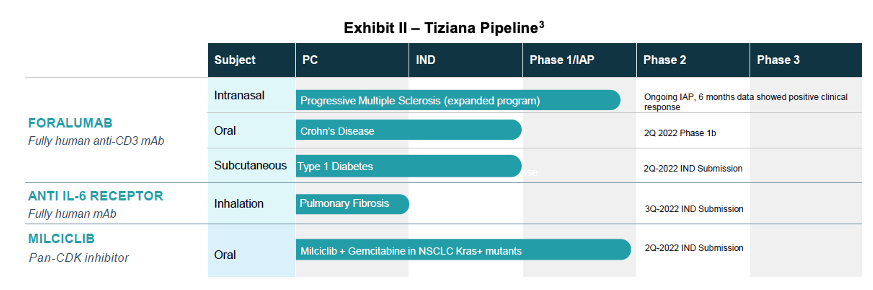
In the first update, the ~40-year-old patient in the trial exhibited clinical improvements on several measures, including positron emission tomography (PET) analysis, neurologic exam and the timed 25-foot walk test after three months of treatment. The results from the second patient are consistent with the results from the first which were reported in a March 10th press release. Based on the data gathered from the first two subjects, Tiziana has requested and the FDA has cleared enrollment of eight more eligible SMPS patients to receive intranasal foralumab, a fully human anti-CD3 monoclonal antibody therapy, under the Expanded Access Program. Four of these patients are expected to be enrolled before year end 2022.
The six-month update for the second patient provided measurable improvements in walking ability from baseline following 10.5 treatment cycles of foralumab. The 0.5-point improvement in the Expanded Disability Status Scale (EDSS) was the difference between walking 100 meters using a cane to walking 100 meters without the use of one, equivalent to moving from a score of 6.0 to 5.5. The patient’s pyramidal, or muscle weakness, score remained stable and did not worsen. PET imaging will take place in 4Q:22 to confirm improvements in microglial activation.
Patient Response
The second patient was diagnosed with SPMS in 2014 and over the subsequent eight years, the magnitude of his disability increased. After enrolling, the patient was administered three months of treatment with intranasal foralumab at 50 mcg, three times per week for two weeks, followed by one week off of treatment. Improvement was measured by PET imaging and by neurologic examination. A 10-30% reduction in microglial activation was observed in the PET imaging across the thalamus, cortex, white matter and cerebellum, which is similar to the ranges observed in the first patient. See link here for the discussion on the results for the first patient and detailed background on SPMS.
Next Steps
The positive data from the first two patients was shared with the FDA, which granted permission for Tiziana to add eight more SPMS patients to the trial. Reassuring safety results supported the option to use higher levels of dosing, and for all patients going forward, doses may be titrated up to 100 mcg three times per week1 to investigate the potential clinical benefits from higher doses. Tiziana expects to enroll four patients before year end and then enroll four more in 2023 when nasal foralumab has demonstrated a beneficial effect. The next PET scan for the second patient will occur in 4Q:22.
Concurrent with the enrollment and evaluation of additional patients, Tiziana expects to be in contact with the FDA to work on the design for a Phase II study that will evaluate a larger group and prepare for pivotal trials. Based on company commentary we expect that subsequent enrollees will be added at multiple sites to maintain independence in monitoring and analysis. Data from all 10 patients may be available near the end of 2023, but could take longer depending on imaging and analysis availability.
Management is looking ahead to the next steps required to conduct a Phase II trial; however, it is still too early to settle on a design as there is insufficient information for the FDA to clear additional work. We expect that Tiziana will be in the background preparing all the elements necessary for a Type C meeting with the FDA. Results of the meeting will support development of meaningful endpoints that would be required for a trial that would lead to approval. Some of Tiziana’s considerations regarding the trial include the use of pharmacoeconomic elements that support the economic case for prescribing, use of proper diagnostics to screen patients and inclusion of critical endpoints and metrics that support the cost effectiveness of new care.
While only two patients have contributed to the data so far, the positive response is supportive of further investigation for this condition that affects near 300,000 individuals around the globe. While there are a few treatments for the SPMS, the agents act by modulating or suppressing the peripheral immune response and have limited effect on progressive forms of multiple sclerosis, resulting in an unmet need.
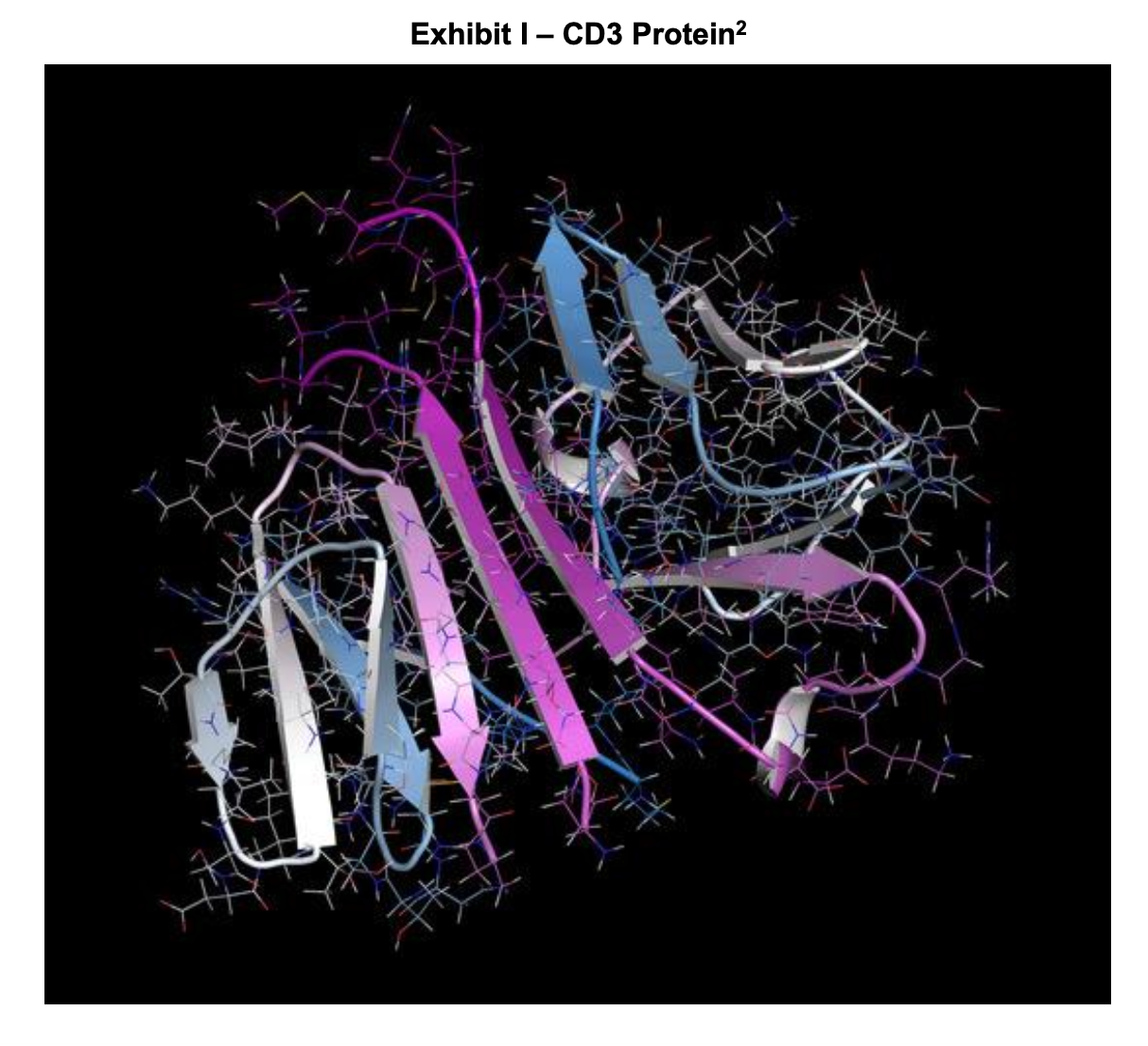
Foralumab is designed to reduce inflammation by targeting CD3, a protein receptor that appears on immune T cells. Preclinical studies have shown that anti-CD3 can suppress the activity of T cell subsets and enhance the function of regulatory T cells, which temper the inflammatory activity of other immune cells.
SPMS Background
Tiziana enrolled its first SPMS subject in May 2021 through the Individual Patient Expanded Access program. The effort is investigating lead candidate, foralumab, using an innovative, intranasal formulation. The biologic is able to bring balance to the immune system by stimulating Tregs and reducing proinflammatory cytokines. Dysregulation in these elements are present in a number of neurodegenerative diseases, including multiple sclerosis. In the first patient, investigators observed the upregulation of Tregs and the suppression of cytokines after six months of treatment.
SPMS represents an advanced stage of multiple sclerosis with few treatment options and has a severe impact on a patient. Three-month results released in January of this year provided sufficient evidence of safety and efficacy to justify the enrollment of a second SPMS subject. On March 10, 2022, topline data for the full six months of evaluation was reported, and a key opinion leader (KOL) event was held to further detail results and offer discussion with the study’s principal investigators.
Operational Highlights
New Chief Medical Officer
We were recently introduced to Tiziana’s new Chief Medical Officer (CMO) and acting Chief Scientific Officer (CSO), Matthew W. Davis, MD, RPh, who was hired in July. He has officially taken the reins of the company bringing a wealth of experience from the FDA and a number of Tiziana’s distinguished pharmaceutical peers. Some of his former roles include CSO and CMO of Endo Pharmaceuticals, CMO for Lupin and URL Pharma. He is a urologist and surgeon by training, and has developed products including colchicine, Lidoderm, Sculptra and QWO.
Dr. Davis’ goals at Tiziana are to focus on the efficient structure of clinical trials with an eye towards efficiency and design that supports FDA approval. His reasoning favors the selection of screening and primary endpoints that avoid expensive or infrequently available diagnostics on the front end which may limit effective use of the candidate. Scoring that can be performed in office by physicians rather than costly imaging is preferred when implementing trial design.
Presentations on Intranasal Foralumab
Tiziana presented several posters and an interview at the Preserving the Brain scientific conference at the Fondazione Prada in Milan, Italy. The exhibition runs from September 16 to October 10, 2022 at Fondazione Prada’s Milan venue. The materials presented by the company include:
➢ Posters
o Effect of nasal anti-CD3 (foralumab) in animal model of Progressive Multiple Sclerosis (MS)
o Effect of nasal anti-CD3 (foralumab) in healthy subjects
o Effect of nasal anti-CD3 (foralumab) in patient with Progressive MS
➢ Patient interview by Dr. Weiner of Brigham & Women’s Hospital
Foralumab Grant
The ALS Association has provided a grant to researchers at Brigham and Women’s Hospital to study foralumab nasal spray as a potential treatment for amyotrophic lateral sclerosis (ALS) as shared in a recent press release. The Lawrence & Isabel Barnett Drug Development Program grant funds preclinical research projects that can evolve into new ALS treatments or support research for repurposing existing medications for ALS. The grant targets therapies that will likely reach the clinic within three years.
The proposed study supported by the grant will evaluate an animal model of ALS to measure the impact of foralumab on microglial activation. This work will build off of the foundation of other efforts using foralumab in multiple sclerosis which have produced the suppressive activity on inflammation of targeting the CD3 protein. Success in reducing microglial inflammation has further implications for other neurodegenerative diseases beyond MS and ALS including Alzheimer’s disease, the last of which, Tiziana expects to pursue in an investigational new drug (IND) application.
Summary
Tiziana has shown early success with its first two patients in the SPMS trial with continued improvements in the second patient as shown in the EDSS walk test. Additional SPMS subjects will be added as the year progresses and we expect to see topline data from the study in 2023 or 2024, depending on the pace of enrollment and analysis. The company plans to make progress in other neurodegenerative efforts and recently announced its intent to submit an investigational new drug application for intranasal foralumab in Alzheimer’s Disease patients. We expect to hear updates on the SMPS enrollment progress and advancements in other programs as we move into 2023.
SUBSCRIBE TO ZACKS SMALL CAP RESEARCH to receive our articles and reports emailed directly to you each morning. Please visit our website for additional information on Zacks SCR.
DISCLOSURE: Zacks SCR has received compensation from the issuer directly, from an investment manager, or from an investor relations consulting firm, engaged by the issuer, for providing research coverage for a period of no less than one year. Research articles, as seen here, are part of the service Zacks SCR provides and Zacks SCR receives quarterly payments totaling a maximum fee of up to $40,000 annually for these services provided to or regarding the issuer. Full Disclaimer HERE.
________________________
1. The regimen is a three times per week for two weeks followed by one week off of treatment.
2. Source: Shutterstock: Image 642347122
3. Source: April 2022 Tiziana Corporate Presentation. Note-some timing details have been updated since the April presentation.