By John Vandermosten, CFA
NASDAQ:KA
READ THE FULL KA RESEARCH REPORT
Robust Data Generation from Multiple Programs
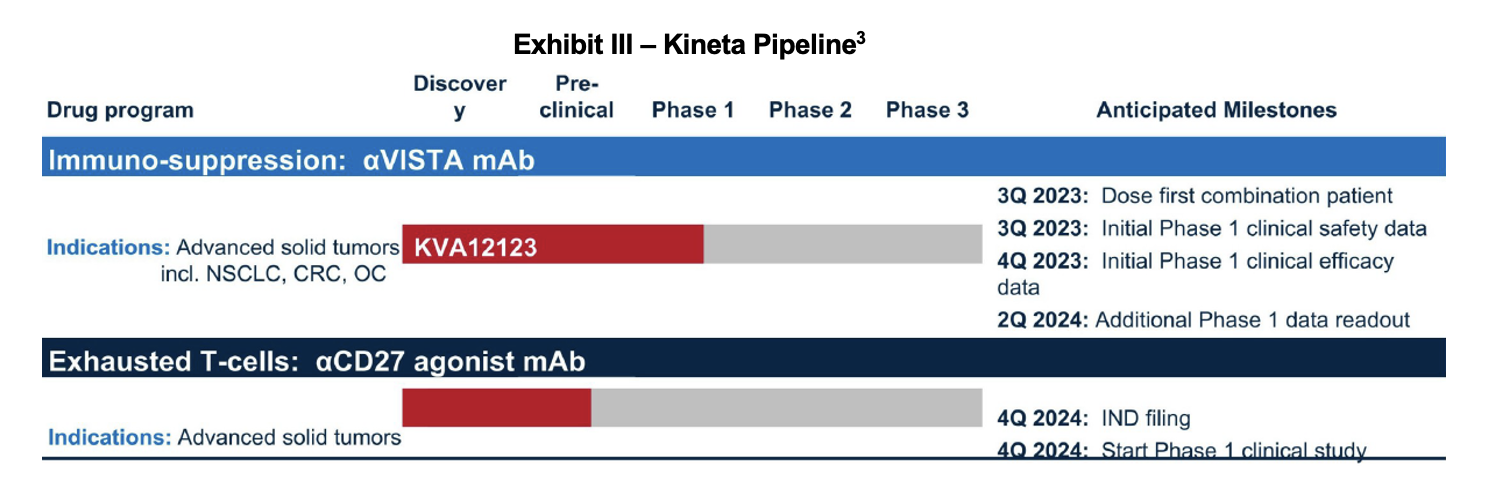
Kineta, Inc. (NASDAQ:KA) has weathered an active fall with participation in several investor conferences, presentation of data from its anti-CD27 and KVA12123 programs, completion of a small capital raise and a signing of a new research agreement to evaluate VISTA biomarker expression. The lead program, KVA12123, is ongoing and we expect to see initial clinical efficacy data later this quarter.
KVA12123 Monotherapy Safety & Biomarker Data
An October 3rd press release outlined initial findings from Kineta’s Phase I/II clinical trial evaluating KVA12123 in the VISTA-101 clinical trial. The first three monotherapy dose levels were evaluated and produced no dose limiting toxicities. The investigational therapy was well tolerated by subjects and no cytokine related adverse events were observed. KVA12123 produced a greater than dose proportional pharmacokinetic profile achieving greater than 90% VISTA receptor occupancy (RO) across subjects in the 30 mg dosing cohort.
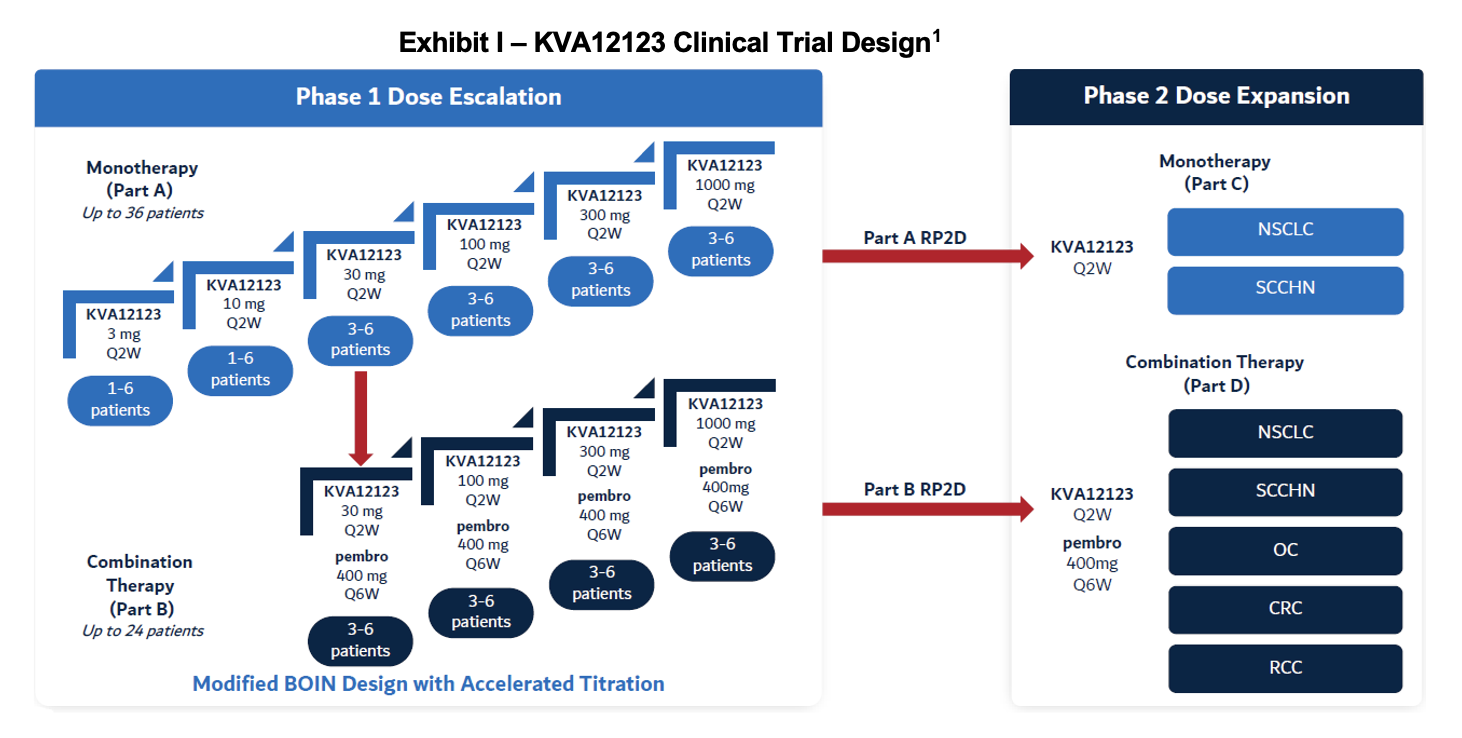
The VISTA-101 trial enrolled 11 subjects with advanced solid tumors in the first three monotherapy dose-escalation cohorts, where subjects received either 3, 10 or 30 mg of KVA12123 by intravenous (IV) infusion every two weeks. Enrollees were heavily pretreated with multiple prior lines of therapy including chemotherapy, radiation, and immunotherapy. In the first three monotherapy cohorts, KVA12123 was well tolerated at all doses and no dose limiting toxicities (DLTs) were observed. Furthermore, as KVA12123 was engineered to mitigate adverse events associated with cytokine release syndrome (CRS), the study is closely monitoring proinflammatory cytokines that are associated with CRS (IL-6 and TNFα) in the Phase I portion of the study. No evidence of CRS or proinflammatory cytokine induction have been observed at any dose level with KVA12123 in the initial cohorts.
To develop the recommended Phase II dose, Kineta developed a proprietary assay to evaluate VISTA RO on immune cells from patients treated with KVA12123. Greater than 90% VISTA receptor occupancy was achieved at the 30 mg dose. Furthermore, pharmacokinetic analyses demonstrated a greater than dose-proportional increase in drug exposure across all evaluated doses, consistent with target-mediated drug disposition at lower doses. Kineta will continue escalating monotherapy dose cohorts of KVA12123 in Part A and initiate Part B of the study to evaluate KVA12123 in combination with pembrolizumab. Initial monotherapy efficacy data are anticipated in 4Q:23 and will be presented, along with safety data, at an upcoming medical conference.
Background on the KVA12123 Clinical Study
Following the clearance of the investigational new drug (IND) application by the FDA in November 2022, Kineta began preparations for its Phase I/II clinical study evaluating KVA12123 as a single-agent and in combination with pembrolizumab in patients with advanced solid tumors. The initial timeline for the study called for a start to the trial before year-end 2022, which was achieved, and a report of interim results by late 2023. A summary of the trial has been posted on clinicaltrials.gov under NCT05708950.
Kineta is collaborating with Merck through the latter’s contribution of pembrolizumab (Keytruda) to the alliance and seeks to determine the safety and efficacy of KVA12123 both alone and in combination with the PD-1 inhibitor pembrolizumab. Secondary endpoints include pharmacokinetics, immunogenicity, tumor response as per Immunotherapy Response Evaluation Criteria in Solid Tumors (iRECIST) standards and objective response rate (ORR). The study will be conducted in four parts: The first two will focus on dose escalation (single-agent and in combination), and the second two will focus on dose expansion (single-agent and in combination). Up to 10 dose escalation cohorts will be evaluated in Phase I and results will determine a recommended Phase II dose. Maximum tolerated dose will also be identified. Exploratory endpoints will examine receptor occupancy (RO), chemokine and cytokine levels in blood, immune cell populations in blood and VISTA expression in the tumor pre-and post-treatment.
Adult patients with advanced or metastatic solid tumors that have progressed or have been non-responsive to standard-of-care therapies are eligible to enroll. Up to 60 patients will be enrolled for the Phase I portion. Phase II will narrow the patient population primarily for non-small cell lung cancer (NSCLC), head and neck squamous cell carcinoma (HNSCC), ovarian cancer (OC), colorectal cancer (CRC), renal cell carcinoma (RCC) and potentially other malignancies.
On April 12th, the company announced that the first patient had been dosed and confirmed that initial data from the Phase I portion would be provided before the end of 2023. On April 17th, Kineta provided an update on the trial noting that tissue and serum samples would be collected to isolate predictive biomarkers.
To further develop the VISTA biomarker, Kineta entered into a research agreement with Fred Hutchinson Cancer Center in mid-September. The arrangement will evaluate VISTA expression as a potential biomarker in cancer patients from Kineta’s ongoing Phase I/II clinical trial evaluating KVA12123, the company’s VISTA blocking immunotherapy, alone and in combination with pembrolizumab.
The goal of the work is to evaluate VISTA expression as a biomarker to guide patient selection and treatment optimization for VISTA-targeted therapies. No standardized method exists for identifying patients that will respond well to VISTA. Development of a standardized evaluation of the marker may potentially inform the Phase II study design for KVA12123 and predict favorable responses to treatment. The screen is expected to be similar to the PD-L1 scoring method for using PD-1 / PD-L1 checkpoint inhibitors.
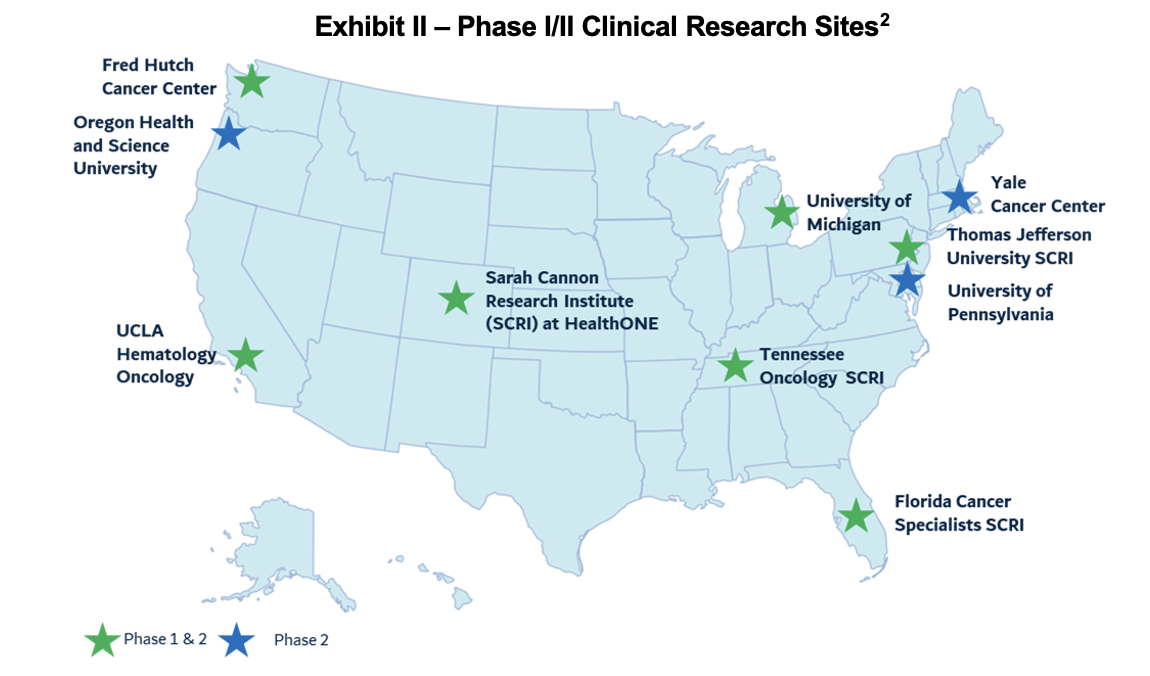
In conjunction with its August 11th 2Q:23 earnings release, Kineta reiterated its intention to report topline data from the trial by the end of the year. New patients continue to be recruited and seven trial sites have been engaged to conduct the study.
Kineta plans to pursue expedited pathways to approval, if available. Several regulatory routes allow for more rapid evaluation and approval of drug candidates. The company has identified Fast Track and Accelerated Approval as possible options. The FDA’s Fast Track requires that a drug demonstrate the potential to address an unmet need for a serious condition. It provides several benefits to the sponsor including closer collaboration with the FDA, rolling review of the drug’s Biologic License Application (BLA), eligibility for Accelerated Approval and Priority Review among other supportive measures. Accelerated Approval is a program intended for serious conditions that qualify as unmet medical needs. The pathway allows for surrogate endpoints to be used, which may greatly accelerate the clinical trial process. As a condition of accelerated approval, the sponsor is required to conduct post-marketing studies to confirm the anticipated clinical benefit.
These programs may allow Phase II data to be used to support a BLA and shorten the length of the trial by using objective response rate (ORR), progression-free survival (PFS) or other intermediate measures to evaluate efficacy. Using these endpoints would reduce the time required to evaluate efficacy as opposed to overall survival (OS), which is considered the most stringent standard for assessing clinical benefit. If a surrogate endpoint is used for provisional approval, OS will likely be required for the primary endpoints in confirmatory trials. To maintain a conservative stance, our estimates assume that Kineta will advance into Phase III trials after Phase II and will not benefit from an expedited pathway. Upon confirmation of either Fast Track or Accelerated Approval, we will adjust the model accordingly.
Our estimates call for the ongoing Phase I study to be completely enrolled by year-end 2023, followed by the start of the Phase II in 3Q 2024. We expect the Phase II to take 24 months to finish, followed by a Phase III in 2026 which would complete in late 2027. A BLA is expected to be compiled and submitted to the FDA in 2028 and, if granted, approval and commercialization would come in 2029. For other regions around the world, we anticipate a one-year delay in the submission of a drug application, suggesting that additional regions will grant approval by 2030 and beyond. We discuss the details of our estimates further in the valuation section of our initiation report.
Capital Raise
On October 4th, Kineta announced a $3 million registered direct offering and that it had entered into a definitive agreement for the sale of 890,208 shares or pre-funded warrants at a price of $3.37/unit. 890,208 warrants with an exercise price of $3.25 were also issued along with the units with a duration of five- and one-half years. On October 5th, Kineta closed the offering raising gross proceeds of $3 million. HC Wainwright acted as the exclusive placement agent for the offering.
AACR Presentation of Anti-CD27 Preclinical Data
Dr. Thierry Guillaudeaux, Kineta’s Chief Scientific Officer presented a poster entitled CD27 is a New Promising T-cell Co-stimulatory Target for Cancer Immunotherapy at the American Association for Cancer Research (AACR) Special Conference on Tumor Immunology and Immunotherapy, on October 3, 2023 in Toronto, Ontario, Canada. The goal of the work summarized in the poster was to perform in vitro and in vivo assessments to identify an anti-CD27 agonist antibody lead candidate.
In summary, Kineta’s leading monoclonal antibody (mAb) candidates showed high affinity binding to both human and cynomolgus monkey CD27, as well as high specificity against CD27, with no cross-reactivity detected against other members of the tumor necrosis factor receptor super family (TNFRSF). Additionally, none of the selected mAbs block the binding of CD27 natural ligand, CD70.
Strong agonist proprieties on T cell proliferation and activation after engagement of NFkB-mediated CD27 signaling as well as NK cell activation were also observed in the study. The lead mAb showed antitumor efficacy in vivo in solid and hematological mouse tumor models as a single agent or in combination with other immunotherapies.
SUBSCRIBE TO ZACKS SMALL CAP RESEARCH to receive our articles and reports emailed directly to you each morning. Please visit our website for additional information on Zacks SCR.
DISCLOSURE: Zacks SCR has received compensation from the issuer directly, from an investment manager, or from an investor relations consulting firm, engaged by the issuer, for providing research coverage for a period of no less than one year. Research articles, as seen here, are part of the service Zacks SCR provides and Zacks SCR receives quarterly payments totaling a maximum fee of up to $40,000 annually for these services provided to or regarding the issuer. Full Disclaimer HERE.
________________________
1. Kineta April 2023 Corporate Presentation
2. Kineta corporate presentation, June 2023.
3. Kineta August 2023 Presentation