By David Bautz, PhD
NASDAQ:IMNN
READ THE FULL IMNN RESEARCH REPORT
Business Update
R&D Day Highlights Potential for IMNN-001
On November 10, 2025, Imunon, Inc. (NASDAQ:IMNN) held an R&D day that featured presentations from ovarian cancer thought leaders and principal investigators from the Phase 3 OVATION 3 study and Phase 2 minimal residual disease (MRD) clinical trial. The presentation slides can be found here, and an overview of the presentations is given below.
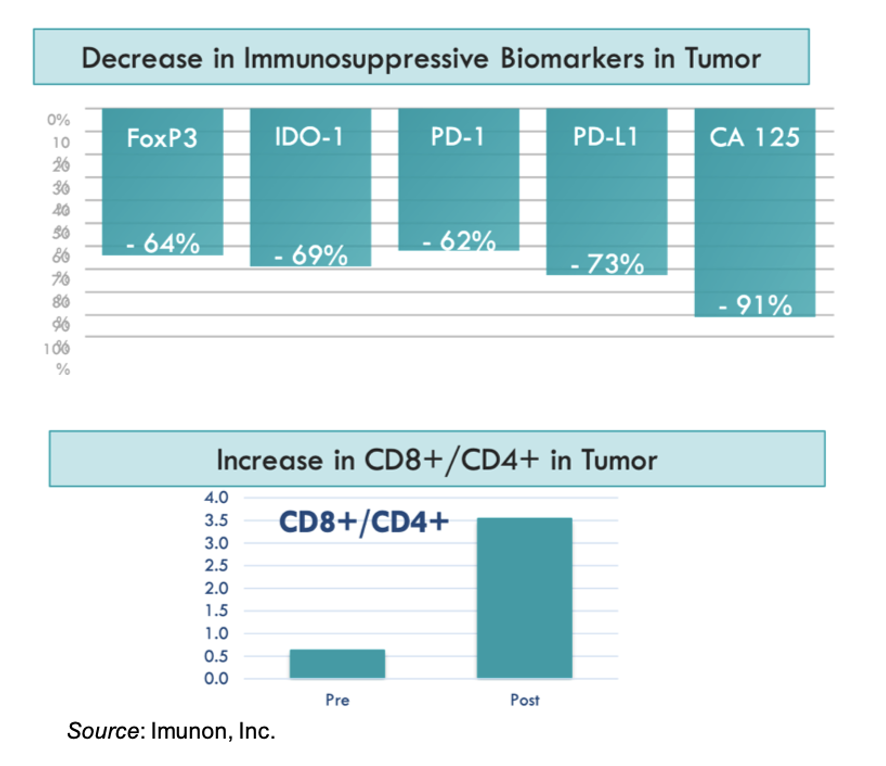
Premal Thaker, M.D. – Dr. Thaker was a principal investigator of the Phase 1 and Phase 2 trials for IMNN-001. She provided an overview of the unmet need in ovarian cancer, including the fact that the frontline standard of care has not changed for 30 years. In addition, Dr. Thaker showed how IMNN-001 increased cytokine levels at the tumor, along with an increase in anti-cancer dendritic cells and effector memory T cells. The following image shows how treatment with IMNN-001 results in a decrease in immunosuppressive biomarkers in the tumor (e.g., FoxP3, IDO-1, PD-1, etc.) that in turn results in an increase in the CD8+/CD4+ ratio.
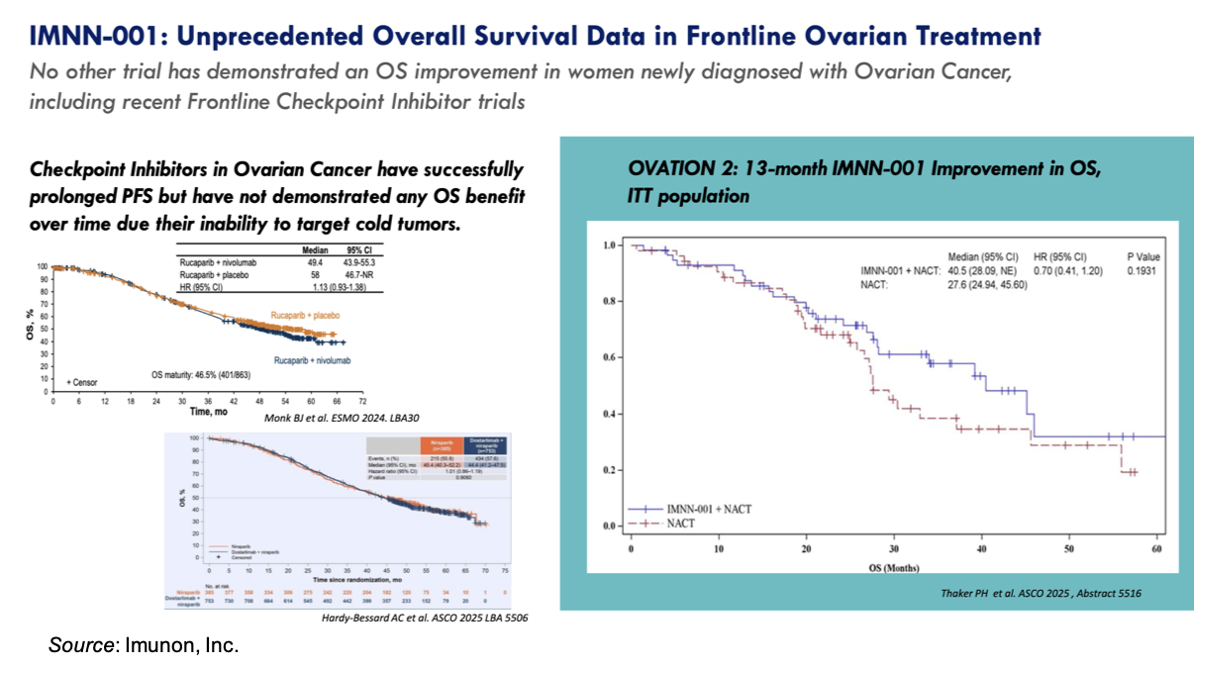
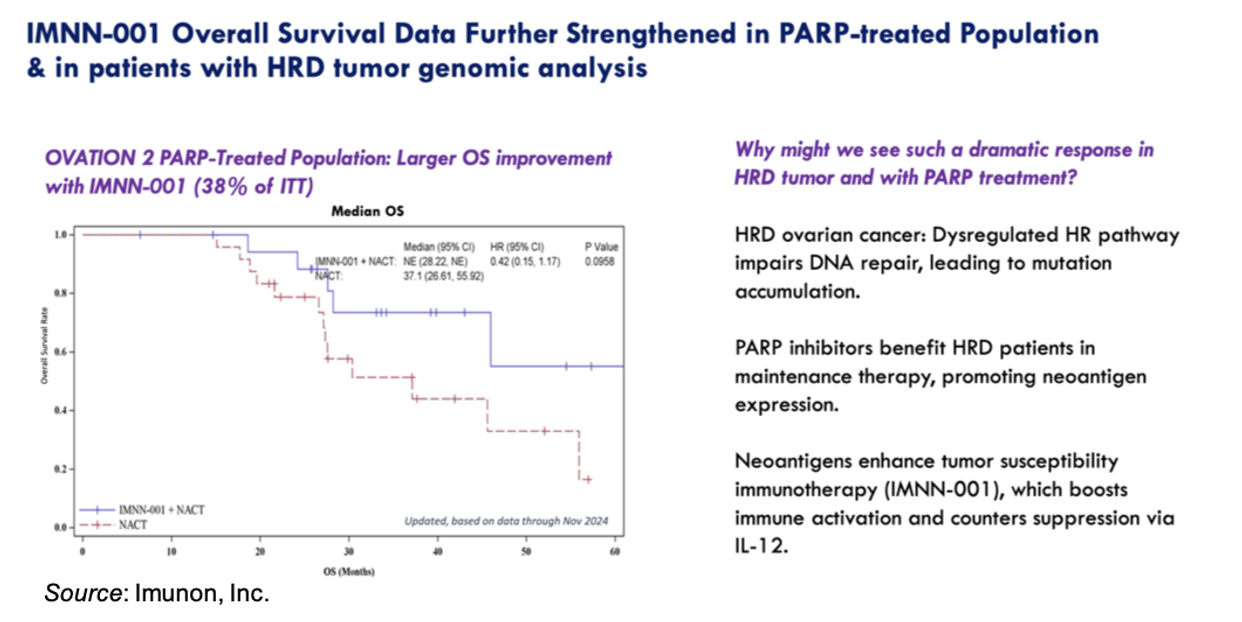
Dr. Thaker also showed the improvement in overall survival (OS) seen with IMNN-001 treatment in the Phase 2 OVATION 2 trial. This is in contrast to no OS benefit seen from recent trials testing the checkpoint inhibitor’s nivolumab and dostarlimab. The OS benefit was even more pronounced in patients being treated with PARP inhibitors. This is possibly due to the increase in neoantigen expression by PARP inhibitors, which enhances tumor susceptibility through immune activation by IMNN-001.
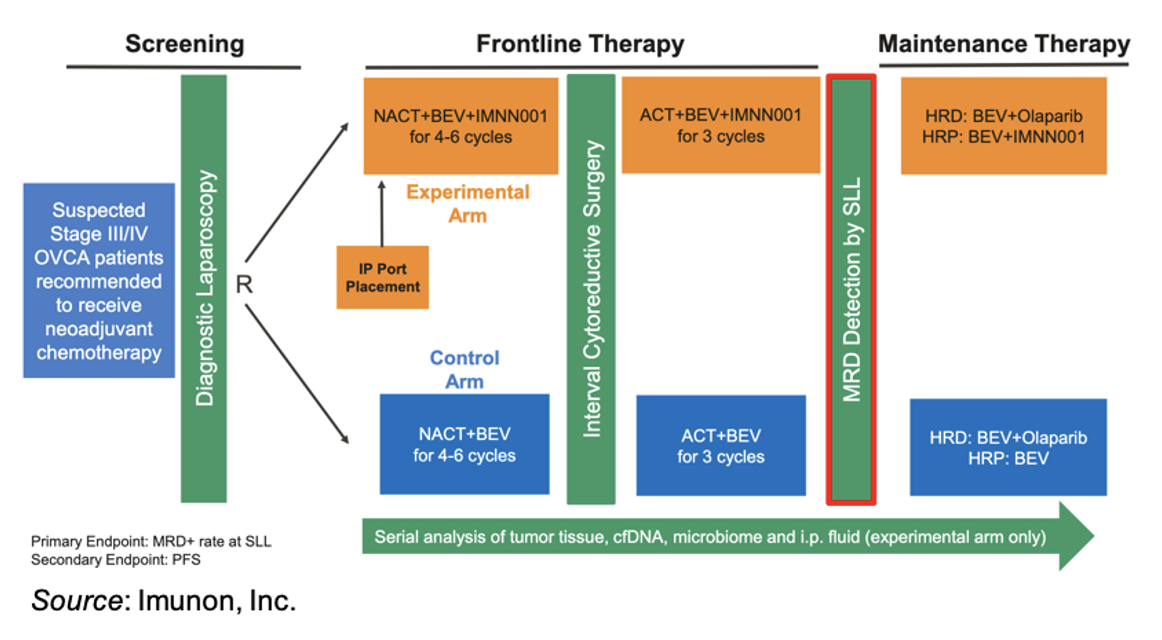
Amir Jazaeri, M.D. – Dr. Jazaeri shared data from the Phase 2 minimal residual disease (MRD) study of IMNN-001, including the safety, tolerability, and translational insights that have been garnered thus far. The study is designed to build off the efficacy signal from the OVATION 2 trial with the addition of bevacizumab (an anti-VEGF-A monoclonal antibody). An outline of the trial is given below. The primary outcome of the study is minimal residual disease (MRD) by second look laparoscopy (SLL).
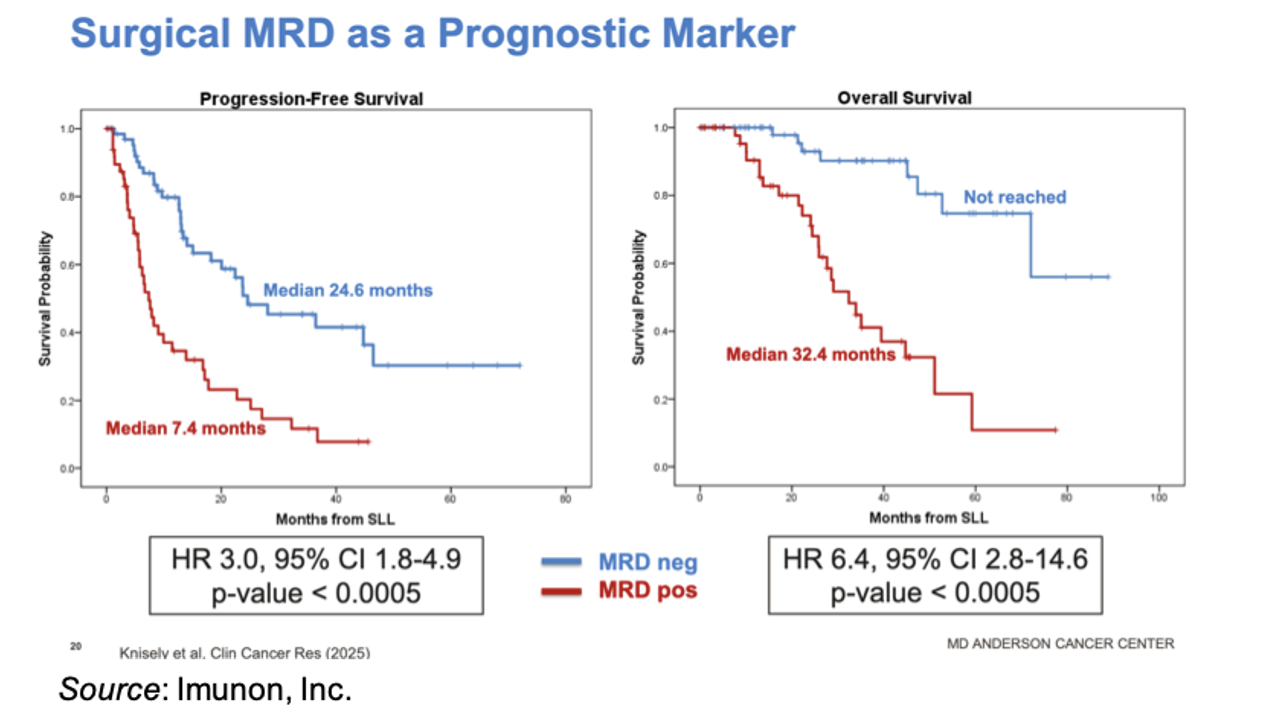
Results from a recently published study by Dr. Jazaeri (see figure below) showed that ovarian cancer patients who were MRD negative at SLL had much better outcomes in progression-free survival and overall survival (Knisely et al., 2025). Thus, the hypothesis of this study is that the combination of IMNN-001, bevacizumab, and chemotherapy in the neoadjuvant and adjuvant stage will increase the likelihood of patients being MRD negative at SLL and lead to better PFS and OS outcomes.
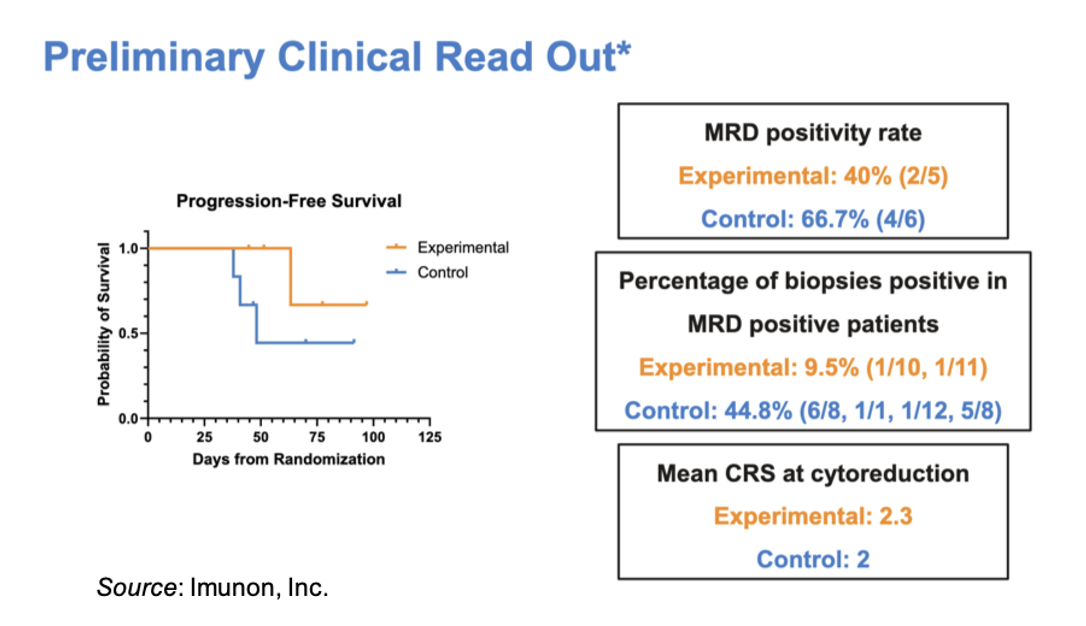
Thus far, a total of six patients in the control arm and five patients in the active arm have made it to SLL, with 4/6 patients in the control arm being MRD positive and only 2/5 patients in the active arm being MRD positive. A very early look at PFS is shown below, with the active arm having a lower MRD positivity rate and what looks to be superior PFS. These data are preliminary, and the study is planning to enroll a total of 30 patients, thus, it will be interesting to see if this trend holds for the full study population.
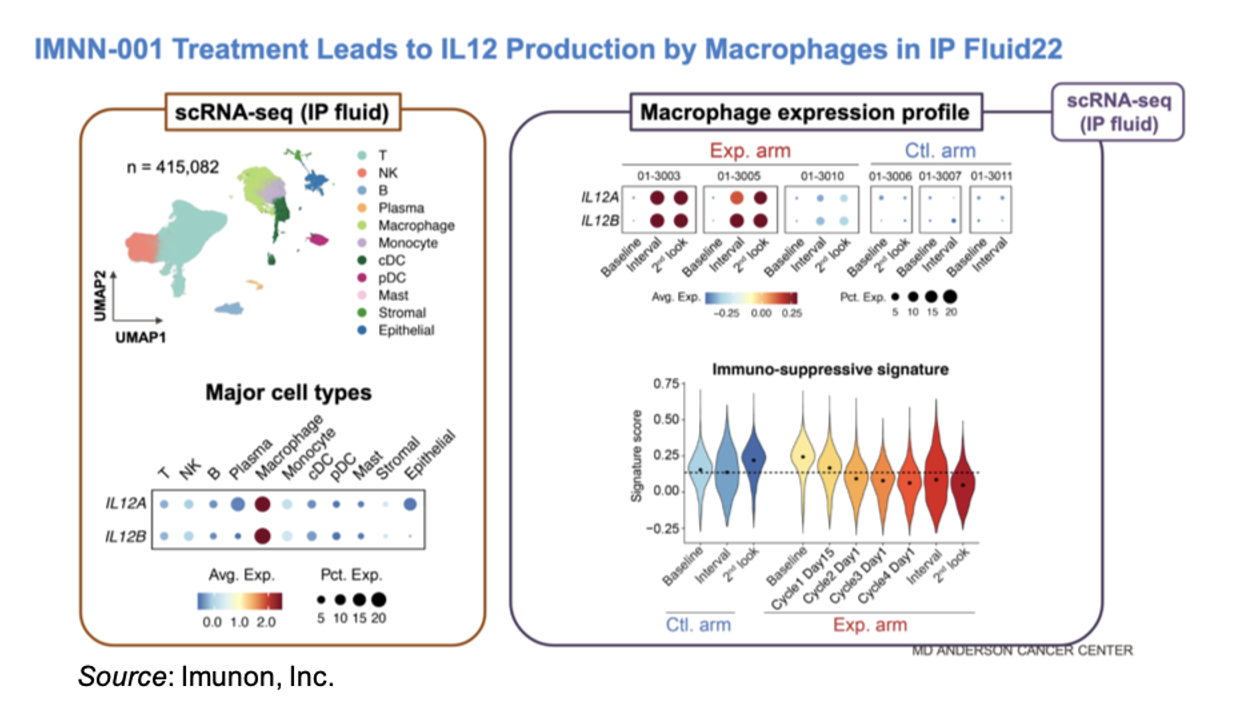
In addition to the clinical data, Dr. Jazaeri also shared translational data that focused on how IL-12 treatment reshapes the tumor microenvironment and impacts immune activation. The following figure shows results of immune cell analysis of peritoneal fluid that examined IL-12 expression across a wide range of cell types. The data showed that IMNN-001 is preferentially taken up by macrophages and leads to IL-12 expression in those cells, which is shown in the scRNA-seq data on the left. The data on the right specifically examined macrophage gene expression for different study participants, which showed little to no IL-12 expression at baseline but that increases substantially for two of the IMNN-001-treated individuals following neoadjuvant and adjuvant treatment with IMNN-001. There was no increase of IL-12 expression in the macrophages of control patients.
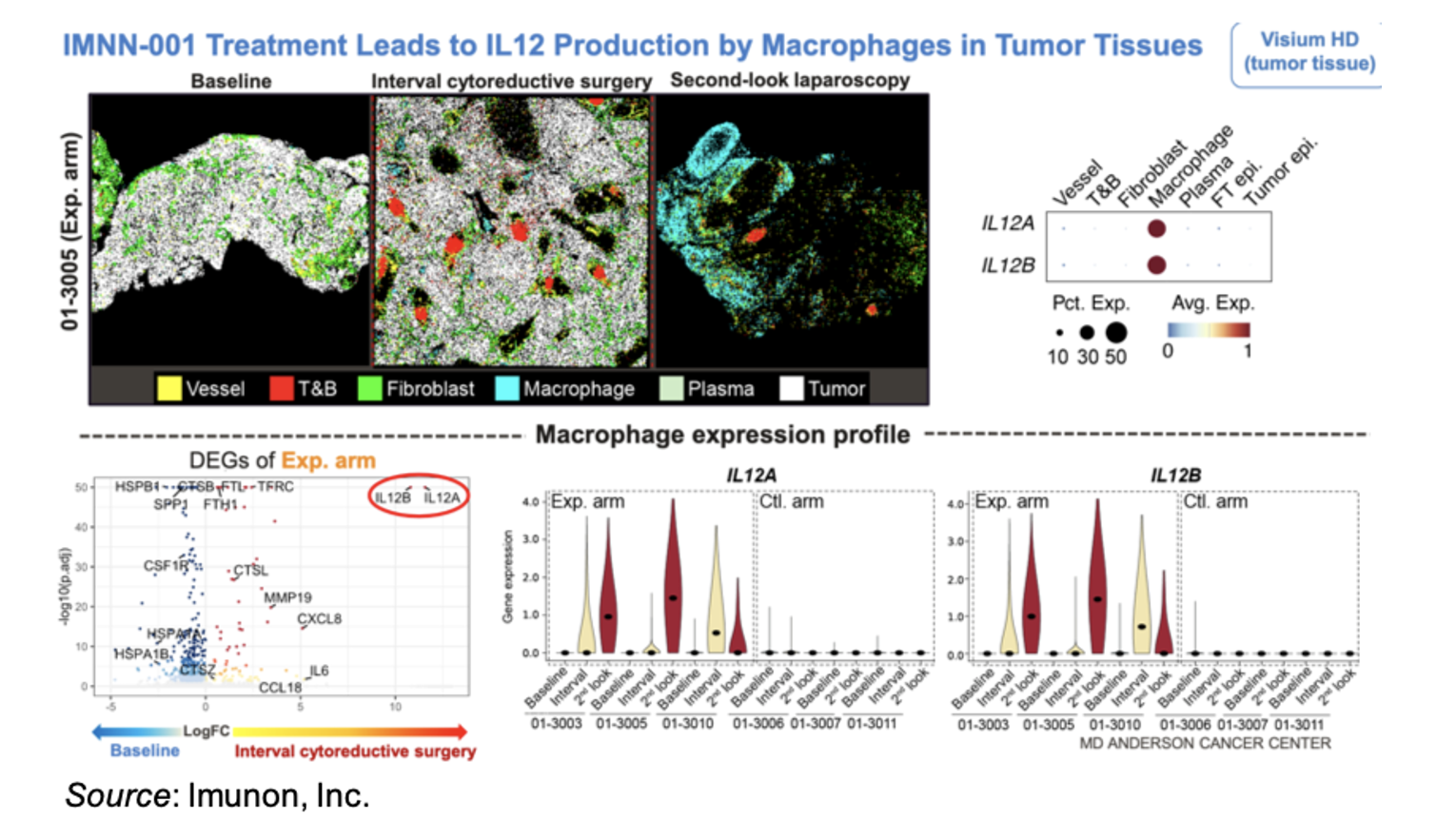
This increased expression of IL-12 is present in macrophages in tumor tissue as well. The following image shows tumor tissue taken from a patient treated with IMNN-001, which shows no immune cells in the tumor at baseline, followed by an increase in T cells, B cells, and macrophages at the interval cytoreductive surgery and SLL. The data also shows that it is only macrophages that show an increase in IL-12 expression, which is not seen in samples taken from control-treated patients.
In summary, this Phase 2 study is evaluating the clinical value of MRD, with 19 of a planned 30-patient cohort having been enrolled thus far. Patients have been successfully treated with IMNN-001, and the drug has continued to exhibit a favorable benefit/risk profile. The translational data from the study shows that macrophages are the main cells that take up IMNN-001, which induces robust expression of IL-12 by macrophages in the peritoneal fluid and in tumor tissue. This IL-12 expression appears to coincide with both macrophage and T cell activation. In addition, the increased IL-12 expression in the tumor microenvironment is leading to tumor inflammation and increased immune activity.
Giorgio Paulon, PhD – Dr. Paulon provided an overview of the statistical properties of the OVATION 3 trial. The following slide shows when the different interim readouts are expected to occur, with the first interim analysis occurring after 68 events in the homologous recombination deficient (HRD) positive population, a second interim analysis after 101 events, and a final analysis after 135 events. Early success for the HRD population could lead to a BLA filing for accelerated approval while the full trial continues in the intent-to-treat population.
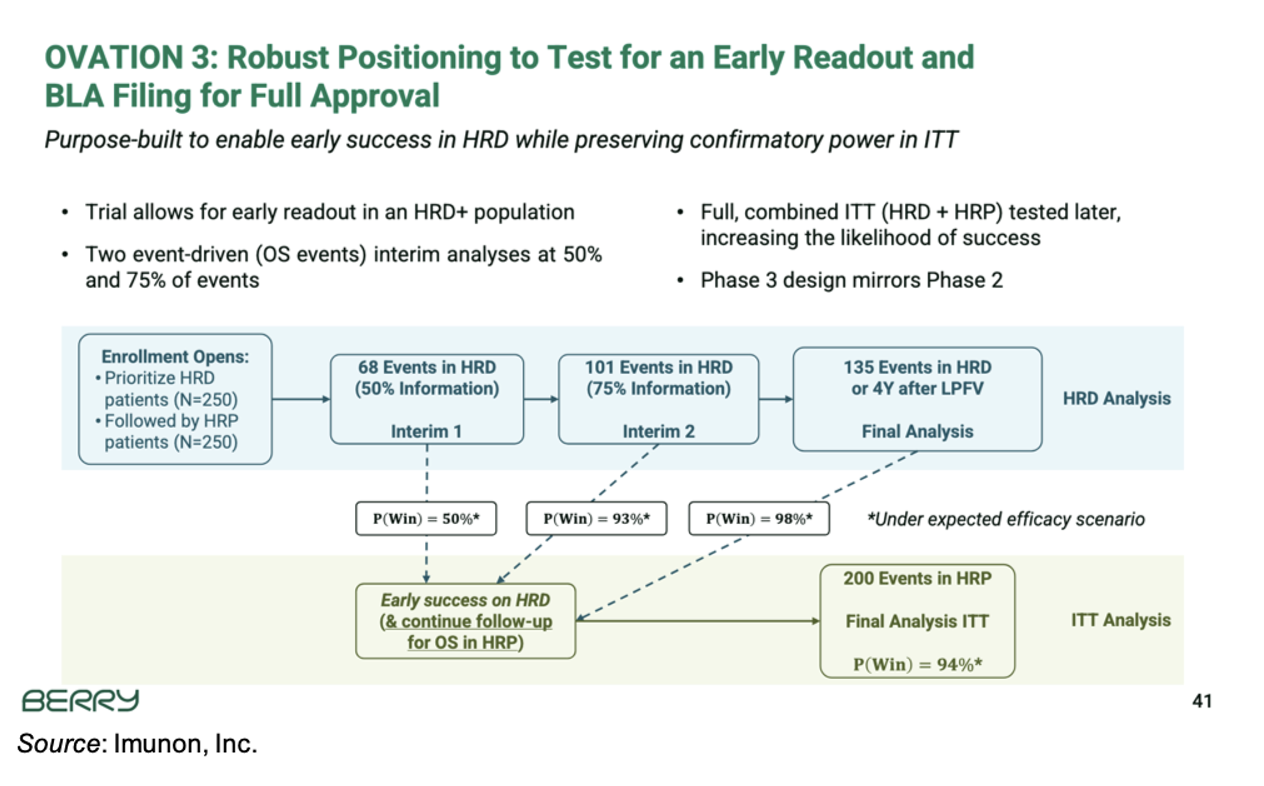
Dr. Paulon also discussed how the trial is approximately 98% powered, assuming an outcome in hazard ratio (HR) that is similar to what was seen in the OVATION 2 trial. Even under very conservative assumptions, in which the estimated HR is much weaker than what was seen in the OVATION 2 study, the trial is still 82% powered. Thus, we are highly confident that the OVATION 3 study will be positive at either the first or second interim analysis in the HRD positive population, which could dramatically reduce the time to market for the drug.
New Translational Data Presented at SITC
Imunon recently presented new translational data from the OVATION 2 trial at the Society for Immunotherapy of Cancer (SITC) 40th Annual Meeting. A copy of the poster can be found here. The data showed the changing levels of various cell types in the tumor microenvironment both pre- and post-IMNN-001 treatment. Importantly, a number of biomarkers of immune stimulation (CD8+/Tregs, CD8+/IDO+, CD8+/MDSC) were increased while a number of biomarkers of immune suppression (Tregs, CD4+, MDSCs) were decreased.
Financial Update
On November 13, 2025, Imunon announced financial results for the third quarter of 2025. As expected, the company did not report any revenue during the third quarter of 2025. R&D expenses in the third quarter of 2025 were $1.9 million compared to $3.3 million in the third quarter of 2024. The decrease was primarily due to lower costs associated with the OVATION 2 study, the Phase 1 PlaCCine DNA vaccine trial, and the development of the PlaCCine DNA vaccine technology. G&A expenses in the third quarter of 2025 were $1.6 million compared to $1.7 million for the third quarter of 2024. The decrease was primarily due to lower employee-related expenses.
As of September 30, 2025, Imunon had approximately $5.3 million in cash and cash equivalents. During the third quarter of 2025 the company received $4.5 million in net proceeds from the exercise of warrants and sales under the ATM facility. We estimate the company has sufficient capital to fund operations into the first quarter of 2026, however substantial additional capital will be necessary to complete the OVATION 3 trial. As of November 10, 2025 Imunon had approximately 3.1 million common shares outstanding and, when factoring in stock options and warrants, a fully diluted share count of approximately 4.3 million.
Conclusion
We enjoyed the R&D day as it showcased both the robust clinical and translational data that the company continues to collect for IMNN-001. The review of the statistical plan for the OVATION 3 trial further strengthened our belief that the trial will readout positive at either the first or second interim analysis in the HRD positive population. While the full trial is expected to be enrolled by the end of 2028, a positive readout in the HRD positive population would position the company to be able to file for early approval while the full trial completes. Financing is still an issue, and while the company currently has enough capital to fund operations into the first quarter of 2026, additional funds will be necessary to complete the OVATION 3 trial. However, given the robust nature of the data from the OVATION 2 study and the exciting translational data that the company has recently been sharing, we believe that the company will be able to successfully acquire the necessary capital to complete the OVATION 3 trial. With no changes to our model, our valuation remains at $45 per share.
SUBSCRIBE TO ZACKS SMALL CAP RESEARCH to receive our articles and reports emailed directly to you each morning. Please visit our website for additional information on Zacks SCR.
DISCLOSURE: Zacks SCR has received compensation from the issuer directly, from an investment manager, or from an investor relations consulting firm, engaged by the issuer, for providing research coverage for a period of no less than one year. Research articles, as seen here, are part of the service Zacks SCR provides and Zacks SCR receives payments totaling a maximum fee of up to $50,000 annually for these services provided to or regarding the issuer. Full Disclaimer HERE.