By John Vandermosten, CFA
NASDAQ:LNTH
READ THE FULL LNTH RESEARCH REPORT
Lantheus Holdings, Inc. (NASDAQ:LNTH) began 2025 with a pair of potentially transformational acquisitions. As we look towards the earnings report next week, we update investors on the latest deals and review the company’s prospects. Lantheus is aggressively using the cash generated from its successful Pylarify PET imaging agent to forge relationships and add new assets to its portfolio. We believe that Lantheus seeks to become one of the preeminent radiopharmaceutical companies in the industry with a portfolio of imaging and therapeutic assets in new modalities to identify and treat disease. Lantheus has recognized the immense opportunity in Alzheimer’s disease following the approval of Leqembi and Kisunla and the development of many other β-amyloid and Tau tangle therapies. Patients who may be appropriate for the new treatments require confirmation of the disease, which may be more precisely achieved with Lantheus’ neurology assets. The company is advancing legacy uses for radiopharmaceuticals in oncology and refining its TechneLite generator business line as well as the numerous partnerships forged in the Definity product line.
We forecast revenue growth in 2024 at the high end of the guidance range of $1.50 to $1.52 billion. Since the details on revenues and expenses for the two announced acquisitions are slim, we make only minor adjustments to our model. We anticipate that Lantheus will provide additional information on the impact of acquiring these businesses when they close later this year. In a later section, we summarize the details of these anticipated transactions with Life Molecular Imaging and Evergreen Theragnostics.
Other News
Beyond the news of the acquisition of LMI and Evergreen, Lantheus appointed a new board member, presented at the American Society of Clinical Oncology (ASCO) Genitourinary Cancers Symposium and announced its earnings reporting date of February 26th.
A January 30th press release announced the appointment of Phuong Khanh (P.K.) Morrow, M.D. to Lantheus’ Board of Directors. Dr. Morrow will serve on the Science and Technology Committee bringing her oncology experience at Takeda and CRISPR Therapeutics to the board. She also worked at Amgen and the University of Texas MD Anderson Cancer Center, bringing additional institutional knowledge in the cancer space.
Lantheus presented Pylarify data at the ASCO Genitourinary Cancers Symposium in San Francisco. The conference which took place from February 13th to 15th provided an audience for two poster presentations. Titles of the posters are listed below.
- Early Detection of Recurrent Prostate Cancer Using 18F-DCFPyL PET/CT in Patients with Minimal PSA Levels
- Presented by Ida Sonni, University of California, Department of Radiation Oncology
- The Role of Conventional Imaging and Piflufolastat F18 in Newly-Diagnosed and Recurrent Prostate Cancer Patients: Preliminary Observations from the PYLARIFY Registry
- Presented by Neal Shore, Carolina Urologic Research Center
Lantheus will report 2024 operational and financial results and host a conference call on February 26th. The earnings call will begin at 8:00 am ET and can be accessed here. Details of the event are shared in a press release.
Lantheus to Buy Life Molecular Imaging
Lantheus announced its intent to acquire Life Molecular Imaging Ltd. (LMI) for $350 million in cash and an additional $400 million in potential earn out and milestone payments in a January 13th press release. LMI’s sole commercial product is NeuraCeq, a globally approved[1] F-18 radioactive diagnostic agent for positron emission tomography (PET) imaging of the brain to evaluate β-amyloid neuritic plaque density. Neuraceq was approved in 2014 and is protected by various patents that expire over the years of 2029 to 2032. The deal also includes LMI’s commercialization force and five development candidates including a Tau agent designated PI-2620. Details of the transaction were included in a press release and Form 8-K filing. A conference call was held on January 13th providing additional color. The transaction is expected to close in 2H:25.
If consummated, the acquisition would provide Lantheus with an established beta amyloid imaging agent, a global manufacturing network, a commercialization team which can accelerate the launch of other neuroimaging products and relationships with manufacturers, hospitals, imaging centers and neurologists around the world. The combination is also expected to enhance Lantheus’ R&D capabilities and drive organic revenue growth by 200 to 300 basis points over the next three years. It is anticipated to be accretive to adjusted EPS within twelve months.
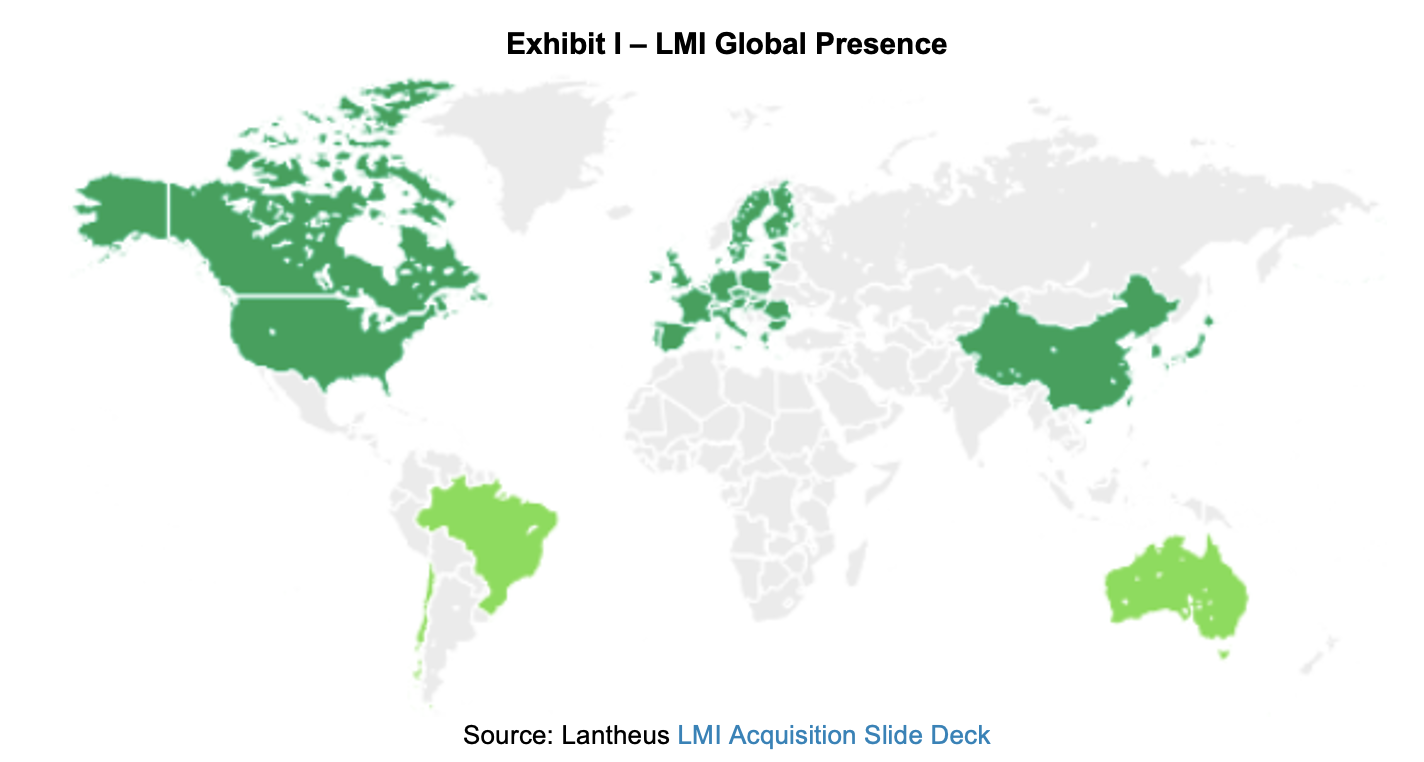
LMI revenue for the fiscal year ending September 30, 2024 was R$1,845 million or $96.6 million,[2] of which $36 million represented an upfront payment by Lantheus for RM2 sublicensing rights. NeuraCeq is LMI’s primary source of revenue and grew year on year driven by a 92% increase in doses. Other contributors to topline include demand for LMI’s radiopharmaceuticals in clinical trials and research and development services for clinical research organizations. LMI has 14 active manufacturing sites in the United States and 22 in the EU. The business segment has 138 employees as of the end of the company’s fiscal year.
The surge in sales of NeuraCeq doses was driven by the approvals of two new disease modifying therapies: Kisunla and Leqembi. These monoclonal antibodies are amyloid targeting treatments used to treat Alzheimer’s disease (AD) and are the first new effective products in almost 20 years approved for the condition. In addition to its commercialized product, NeuraCeq, LMI has a pipeline of other radiotracer products that are in various stages of development.
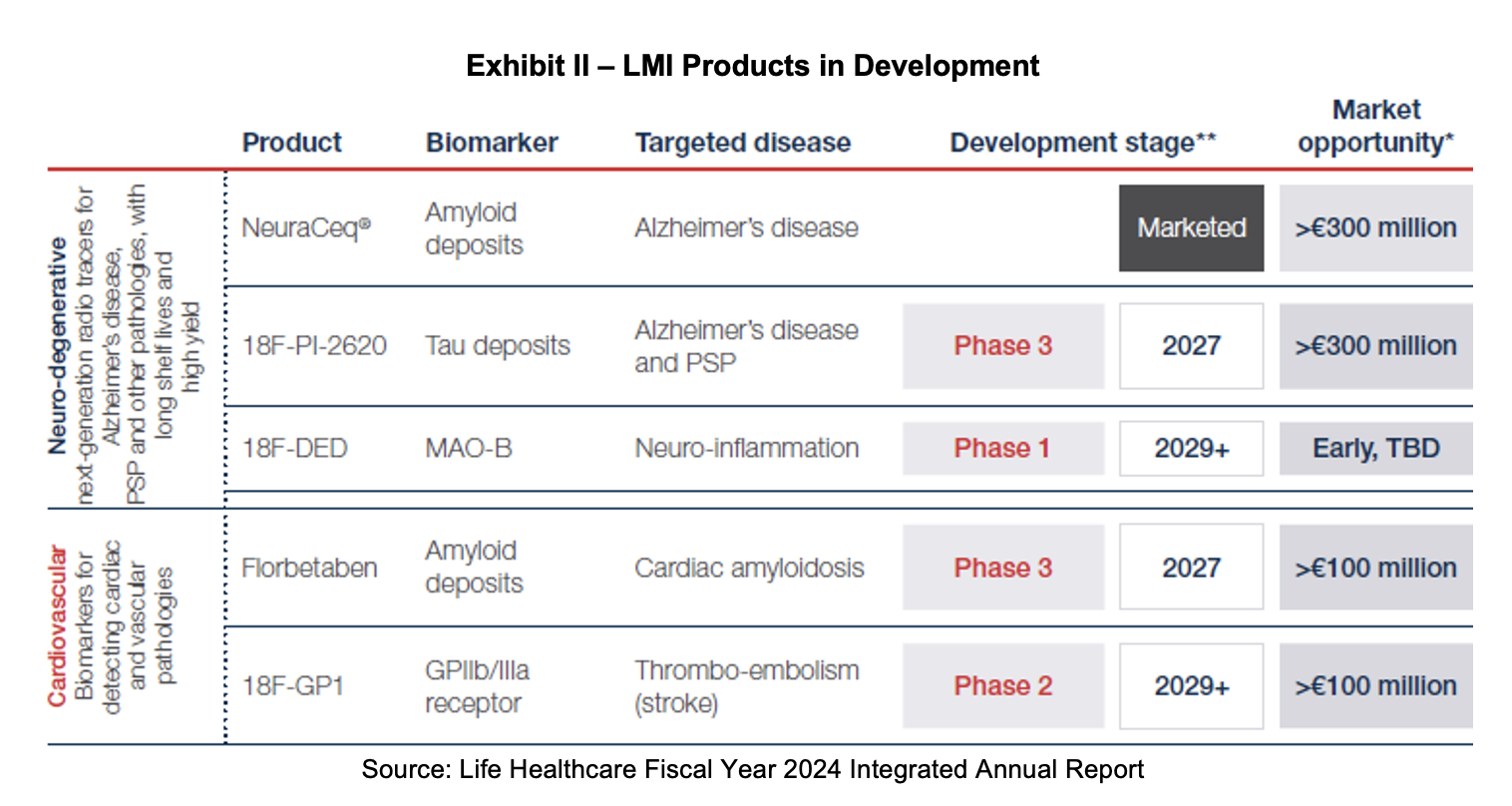
Lantheus anticipates a substantial growth opportunity in AD diagnostics and a total addressable market size of $1.5 billion in 2030 and $2.5 billion by mid-2030. The combination with LMI is expected to advance Lantheus’ entry into the AD market by one year and into the beta amyloid market by two years. This will pave the way for the launch of Lantheus’ own NAV-4694 and MK-6240 for imaging beta amyloid and Tau respectively. Growth for NeuraCeq is substantial and management has indicated that the recent revenue growth trajectory is about 80% on an annual basis with adoption of new disease modifying therapies driving the demand.
Lantheus to Buy Evergreen Theragnostics
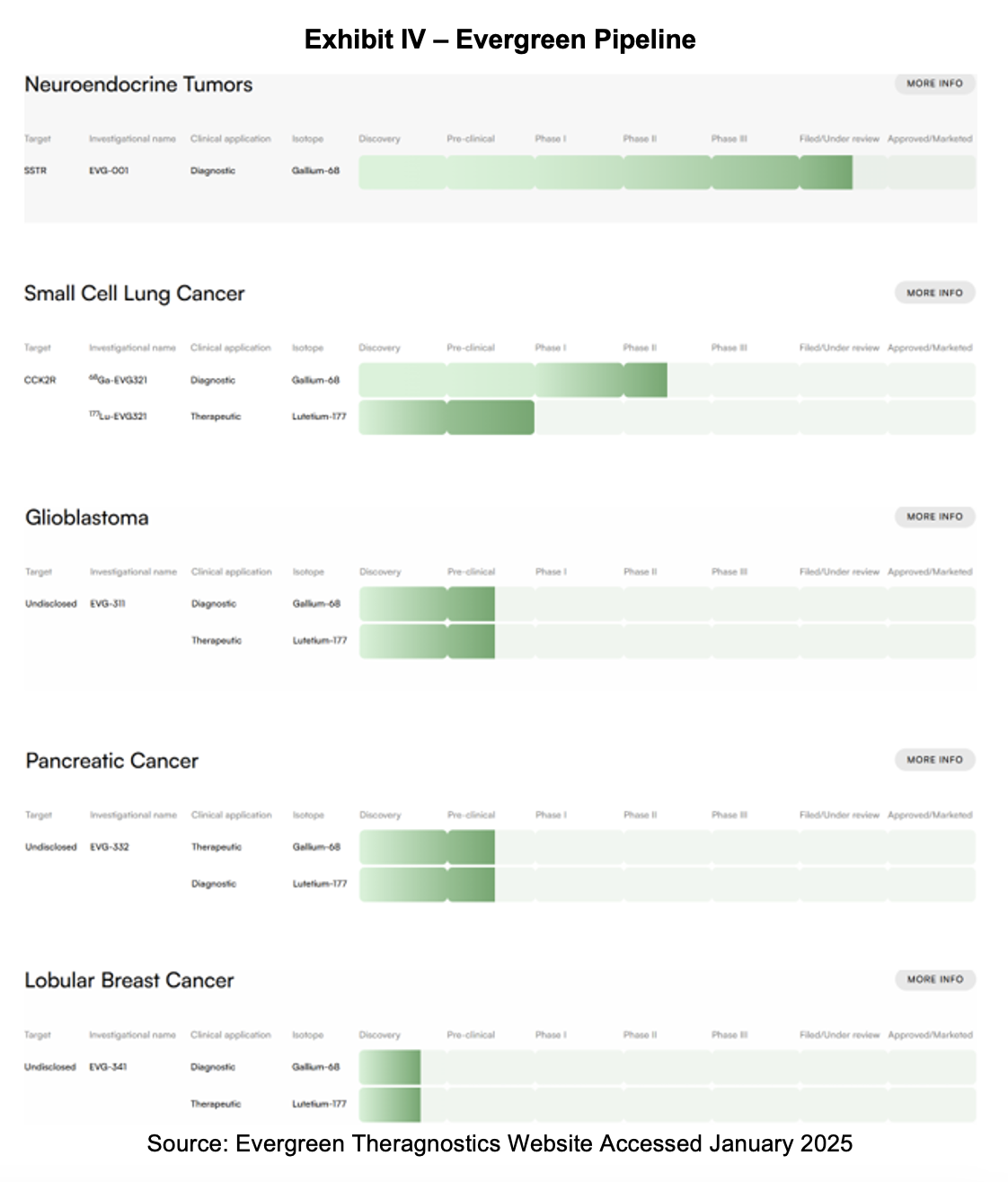
Just two weeks after the LMI communication, Lantheus announced a second acquisition signaling the intent to buy private company Evergreen Theragnostics for $250 million in cash plus milestones valued at $752.5 million. The company’s most advanced product, Octevy, is a positron emission tomography (PET) diagnostic for certain neuroendocrine tumors (NETs). It could be a complementary imaging agent for Lantheus’ PNT2003 therapy. Octevy is under review by the FDA and is expected to be approved in time for product commercialization in 2026. Evergreen is developing several other candidates with one in Phase II studies and the others at preclinical stages. Additional information was provided in a Form 8-K filing and webcast. The transaction is expected to be dilutive to earnings following its close due to research and development costs and launch related activities for Octevy. 18 months after close, the contribution of Life Molecular Imaging and Evergreen is expected to be accretive to earnings. Management estimates that the total addressable market for somatostatin NET PET diagnostics is $200 million or 50,000 patients per year. By the next decade this could be $300 to $400 million or 65 to 85 thousand patients.
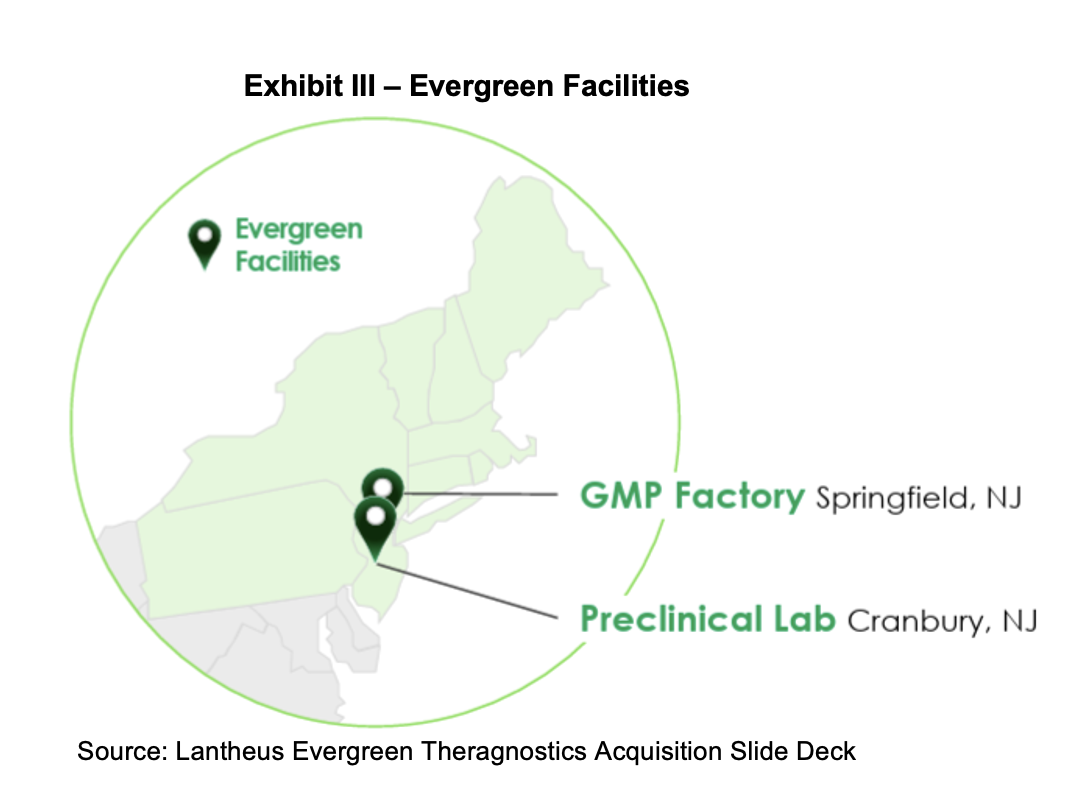
Beyond its pipeline of diagnostic (Gallium-68) and therapeutic (Lutetium-177) radionuclides, Evergreen owns a Contract Development and Manufacturing Facility (CDMO) in Springfield, New Jersey and a discovery lab in Cranbury, New Jersey. The CDMO is 14,000 square feet and is certified for good manufacturing practice (GMP) standards. The discovery lab is 6,500 square feet and houses a preclinical facility and vertically integrated laboratory.
Lantheus management expects that Octevy will be approved on a similar timeline to PNT2003 and both can be commercialized as a theranostic pair. This effort will be executed by partners. Evergreen has signed previous agreements for sales and distribution of Octevy with radiopharmacies UPPI and Jubilant Radiopharma.
In the accompanying press release, Lantheus highlighted its supporting rationale for the acquisition:
- Adds manufacturing infrastructure
- Revenue generating CDMO business
- Isotope flexibility
- Supply for clinical trials
- Diversified manufacturing capabilities
- Contribution from Octevy, if approved, to create theranostic pair with PNT2003 in NETs
- Multiple early-stage oncology assets
- Access to drug discovery and early-stage development platform
- Acceleration of development, life cycle management and intellectual property portfolio
Summary
Lantheus kicks off 2025 with two bold acquisitions which may position the company to play a dominant role in many promising areas in the radiopharmaceutical space. With respect to the LMI acquisition, Lantheus’ combination will provide a head start in AD commercialization activities where it has two next-generation imaging assets that provide improved precision over older agents. After folding in the global sales team already focused on AD, Lantheus can immediately launch its product and gain faster access to formularies and physicians. Evergreen offers research, development and manufacturing assets, development assets as well as a diagnostic agent in NETs that is a complement to PNT2003. The drug discovery and development assets may help Lantheus more quickly and efficiently develop new radiopharmaceuticals, increasing the long-term value of the company. We look forward to more detail on the potential for the acquisitions and on performance expectations during the call next Wednesday.
SUBSCRIBE TO ZACKS SMALL CAP RESEARCH to receive our articles and reports emailed directly to you each morning. Please visit our website for additional information on Zacks SCR.
DISCLOSURE: Zacks SCR has received compensation from the issuer directly, from an investment manager, or from an investor relations consulting firm, engaged by the issuer, for providing research coverage for a period of no less than one year. Research articles, as seen here, are part of the service Zacks SCR provides and Zacks SCR receives quarterly payments totaling a maximum fee of up to $40,000 annually for these services provided to or regarding the issuer. Full Disclaimer HERE.
________________________
[1] NeuraCeq is commercially approved in the US, Canada, Europe, the UK Switzerland, China, Japan, South Korea and Japan. The product is supplied to Australia on a named patient basis, to Chile according to local legislation and Brazil by simplified notification scheme.
[2] This amount is calculated by using the January 2024 exchange rate of 19.09 South African Rand to 1 US dollar.