By John Vandermosten, CFA
NASDAQ:RADX
READ THE FULL RADX RESEARCH REPORT
Radiopharm Theranostics Limited (NASDAQ:RADX) held another key opinion leader (KOL) event in late September. This episode’s topic was treatment and imaging of brain metastases as an introduction to discussions about Radiopharm’s lead candidate RAD101. RAD101 targets fatty acid synthase (FASN), which is expressed in many brain metastases. The KOL event covered treatment of brain metastases using Gamma Knife, also known as stereotactic radiosurgery (SRS). It further reviewed the company’s pivalate technology and its targeting mechanism. The presentation summarized the data seen to date and the unmet need in brain metastases. Further discussion highlighted active and anticipated clinical trials evaluating the imaging agent. The presentation was hosted by Radiopharm’s Chief Medical Officer, Dr. Dimitris Voliotis and began with an introduction of the featured speaker, Dr. Ramji Rajendran.
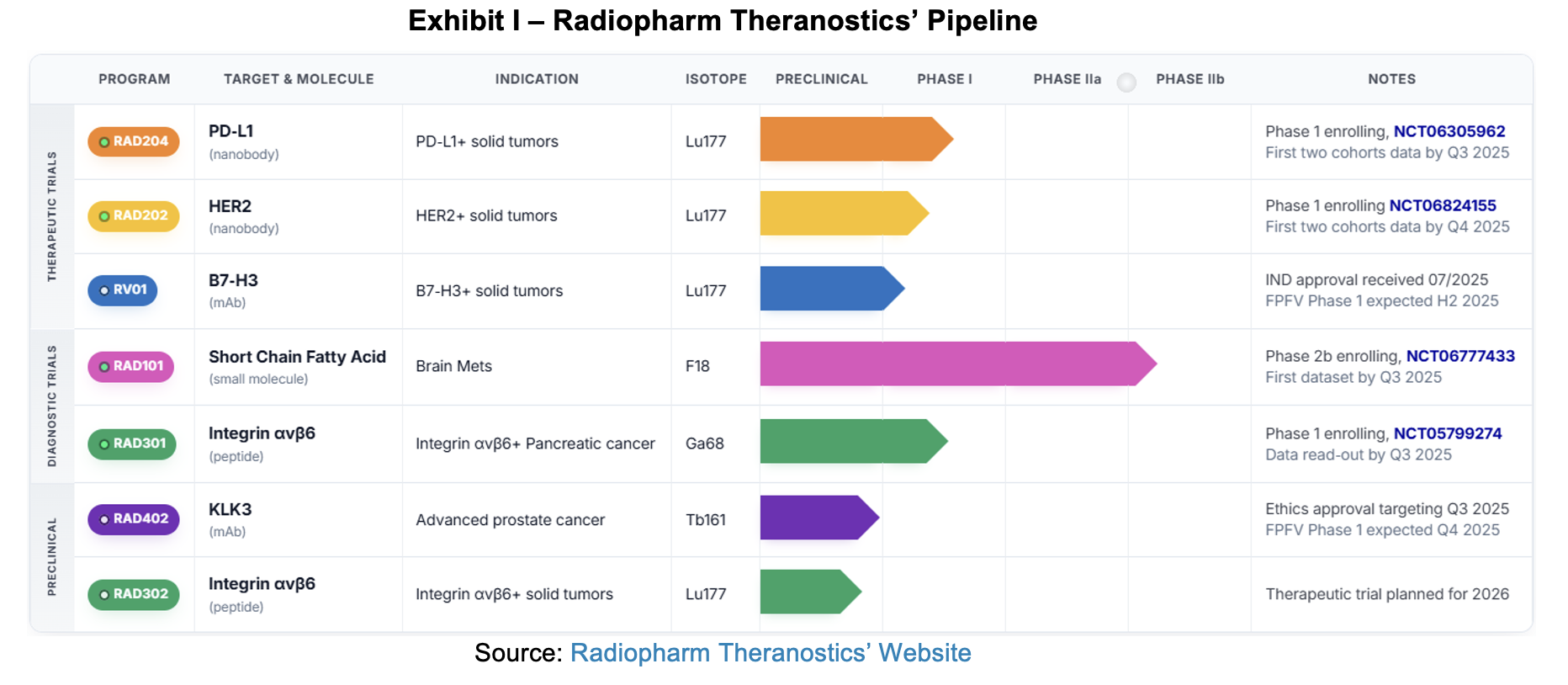
Fatty Acid Synthase (FASN) Radioimaging Agent
The September 24th KOL event featured Dr. Ramji Rajendran of the Alexian Brothers Medical Center in Chicago. He completed his M.D. and Ph.D. in a combined program at the University of Illinois at Urbana-Champaign and is board certified in Radiation Oncology. He serves as the Medical Director of the Department of Radiation Oncology and Illinois Gamma Knife Center at Ascension Alexian Brothers Medical Center. Dr. Rajendran’s expertise spans a wide range of advanced radiation therapy techniques, including Intensity-Modulated Radiation Therapy (IMRT), Stereotactic Body Radiation Therapy (SBRT) and Gamma Knife radiosurgery. His research contributions include work in prostate organ motion, proton radiation therapy and radiation therapy for breast and thoracic tumors.
Dr. Rajendran’s presentation began with a review of brain metastases which are becoming more common as patients live longer. This gives the disease more time to spread. Detection is also improving, as more sensitive diagnostic tools can detect brain metastases that were previously too small to be found. Greater cancer incidence also contributes to the likelihood of brain metastases. While all cancers can spread to the brain, the types most likely to do so are lung, breast, colon, kidney and melanoma.
Dr. Rajendran then introduced stereotactic radiosurgery (SRS) which, despite its name, is a non-surgical radiation therapy technique. It is used to treat abnormalities, small tumors, and certain functional disorders in the brain and, in some cases, the spine or other parts of the body. It is commonly used to treat brain tumors, vascular malformations and other functional disorders and tumors. In Dr. Rajendran’s practice, the Leksell Gamma Knife is used.
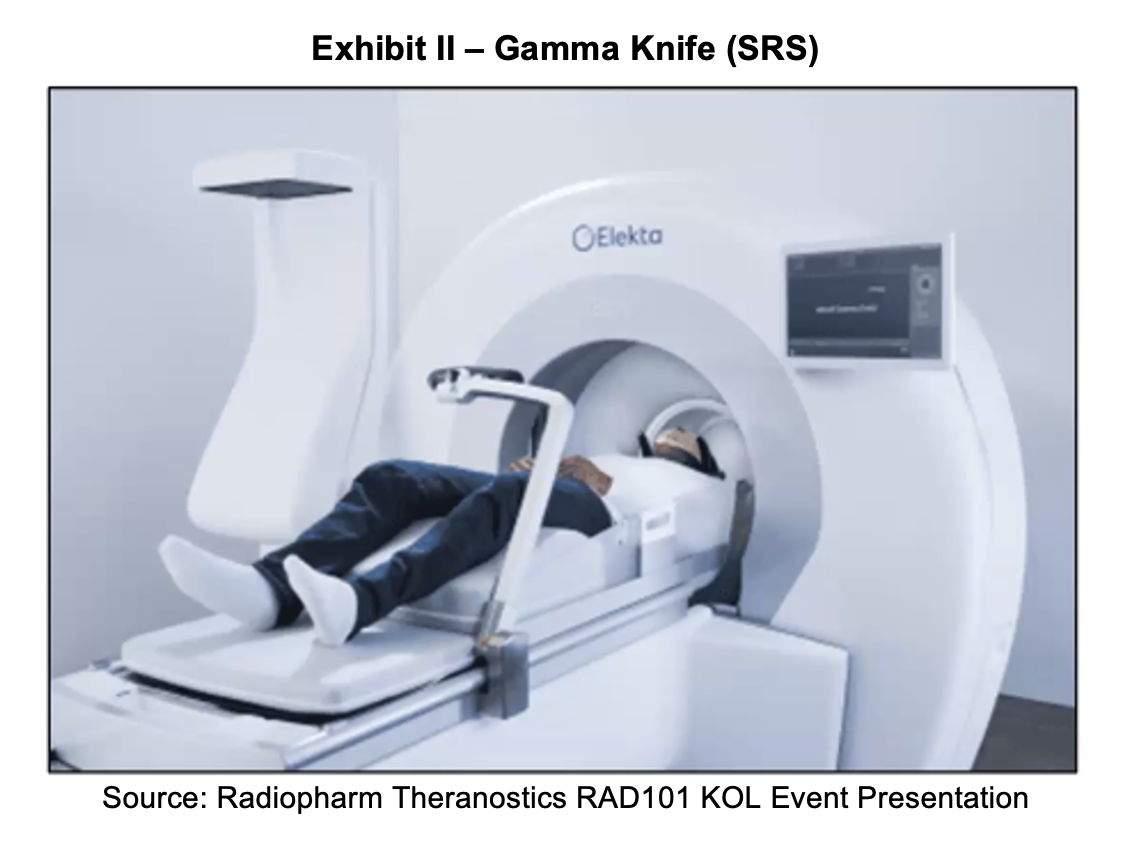
Radiopharm’s guest speaker proceeded to share several examples of successes using SRS targeting brain metastases with the primary cancer of non-small cell lung cancer and melanoma. In both cases, the procedure was able to shrink the tumor leaving only a small scar. Patients with large tumors would not initially receive SRS. Rather the metastasis would be resected and then SRS would be used to address the tumor bed to prevent recurrence. A patient with several brain metastases may require whole brain radiotherapy and systemic treatments.
In the months following SRS treatment, the area the tumor originally occupied may expand in size. The necrotic tissue in the center of the tumor mass does not allow imaging making it difficult to determine if the tumor is again growing or that the area is inflamed and swelling as the body tries to clear the mass. At this point, the tools that are now available are insufficient to guide the optimal treatment. Providers must wait and see if the swelling subsides or the tumor expands to determine the best course forward. Waiting may also allow the tumors to grow and spread. In this case, the availability of an imaging agent that can discern between tumor necrosis and tumor progression would dramatically improve clinical care.
RAD101
In an effort to help these patients who have received SRS treatment Radiopharm is developing RAD101. The agent may clarify whether or not the cancer is in remission or is progressing. The radiopharmaceutical agent is a Fluorine-18 linked fluoropivalate alternatively called Pivalate which can be detected by PET or PET/MRI scanners. RAD101 targets short chain fatty acids in suspected recurrent brain metastases called fatty acid synthase (FASN) which rapidly accumulates in tumor cells due to its inability to be fully metabolized in the same way as natural fatty acids. The agent can help determine whether tissue in the brain is inflamed (pseudo-progression) or is a progressing tumor that requires additional treatments such as surgery or further SRS.
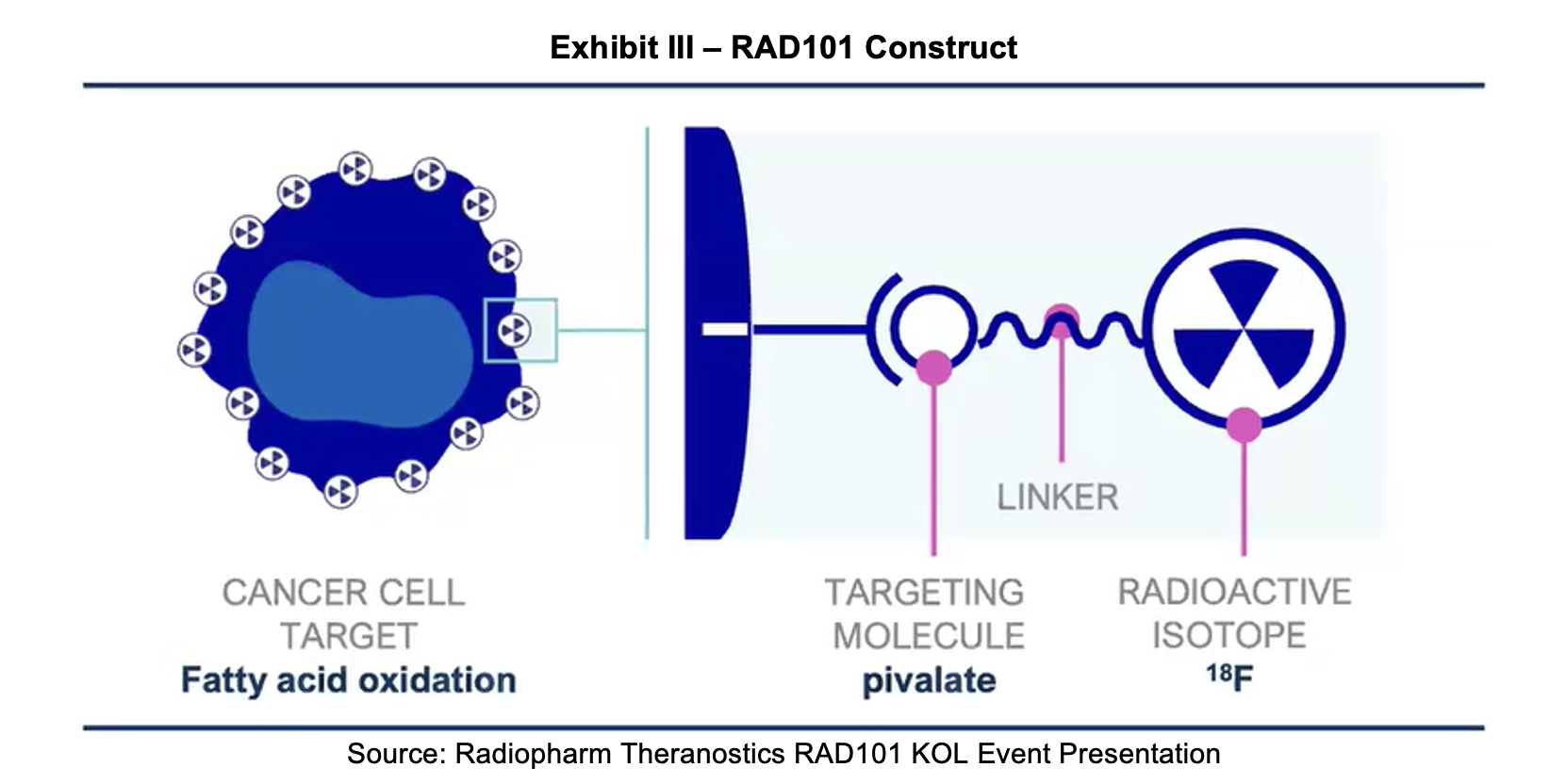
Radiopharm’s Chief Medical Officer, Dimitris Voliotis, took the reins from Dr. Rajendran to introduce RAD101. He identified approximately 300,000 new subjects that are diagnosed with brain metastases in the United States every year which comprise a material market size. Dr. Voliotis introduced data from the company’s ongoing Phase IIb study, where an interim readout has demonstrated high tracer uptake in all brain metastases subjects irrespective of primary tumor origin.
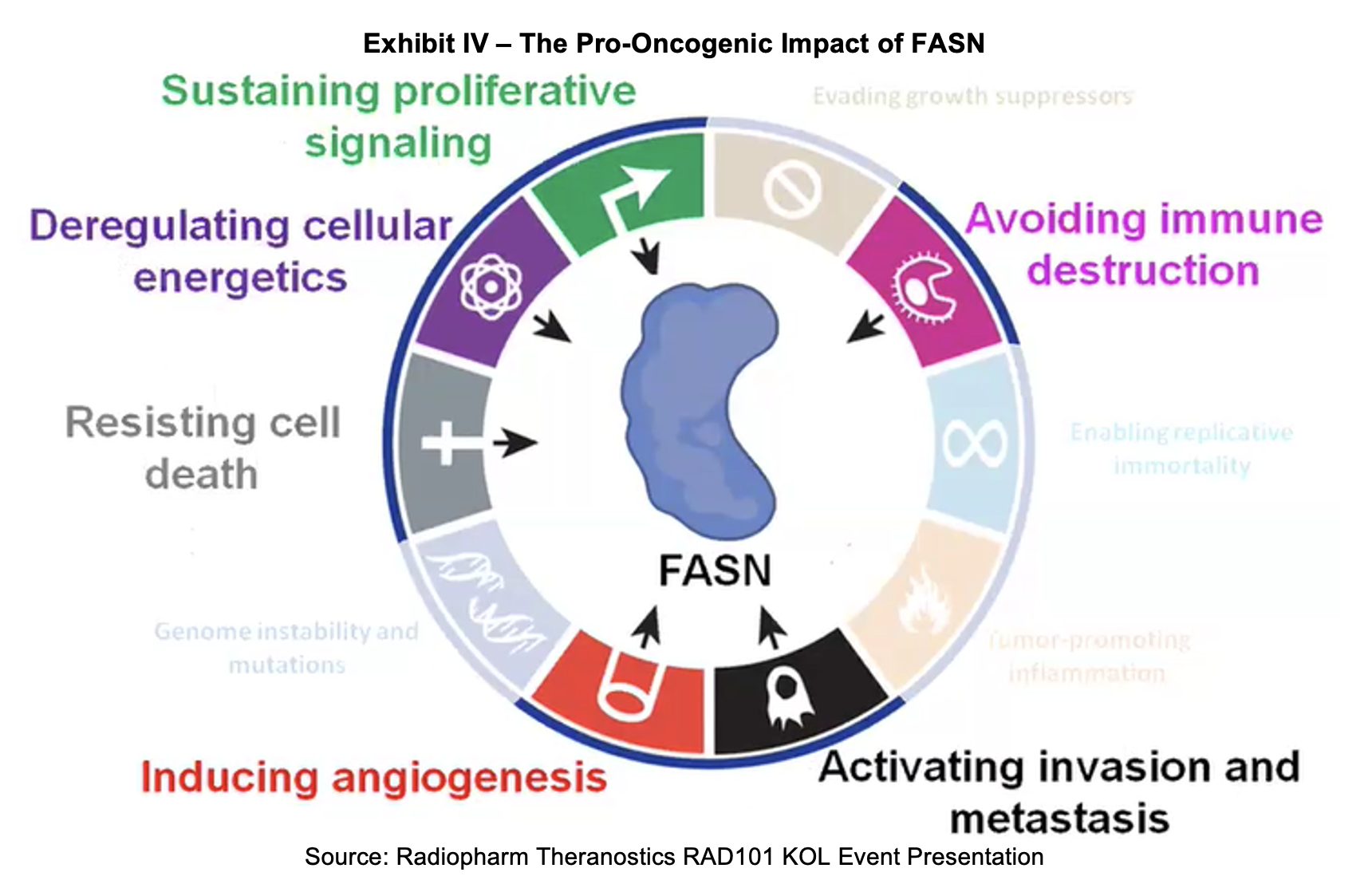
The reason why this imaging approach is effective is related to the low lipid availability in the brain. When a tumor is not able to source the free fatty acid nutrients that it needs to survive, it synthesizes its own. Metabolic reprogramming in cancer cells enables them to synthesize their own fats to survive in a process called de novo lipogenesis. This adaptation can make brain metastases more aggressive and resistant to therapies that are effective against the primary tumor. FASN has a pro-oncogenic impact on the tumor microenvironment allowing cancer cells to avoid immune destruction, activating invasion and metastasis and inducing angiogenesis among other factors.
Preclinical work with RAD101 demonstrated uptake in implanted murine and human breast adenocarcinoma cells, which allows for localization of metastases. The most common types of cancers that produce brain metastases are non-small cell lung cancer (NSCLC), triple-negative breast cancer (TNBC), HER2-positive breast cancer, HR positive breast cancer and melanoma.
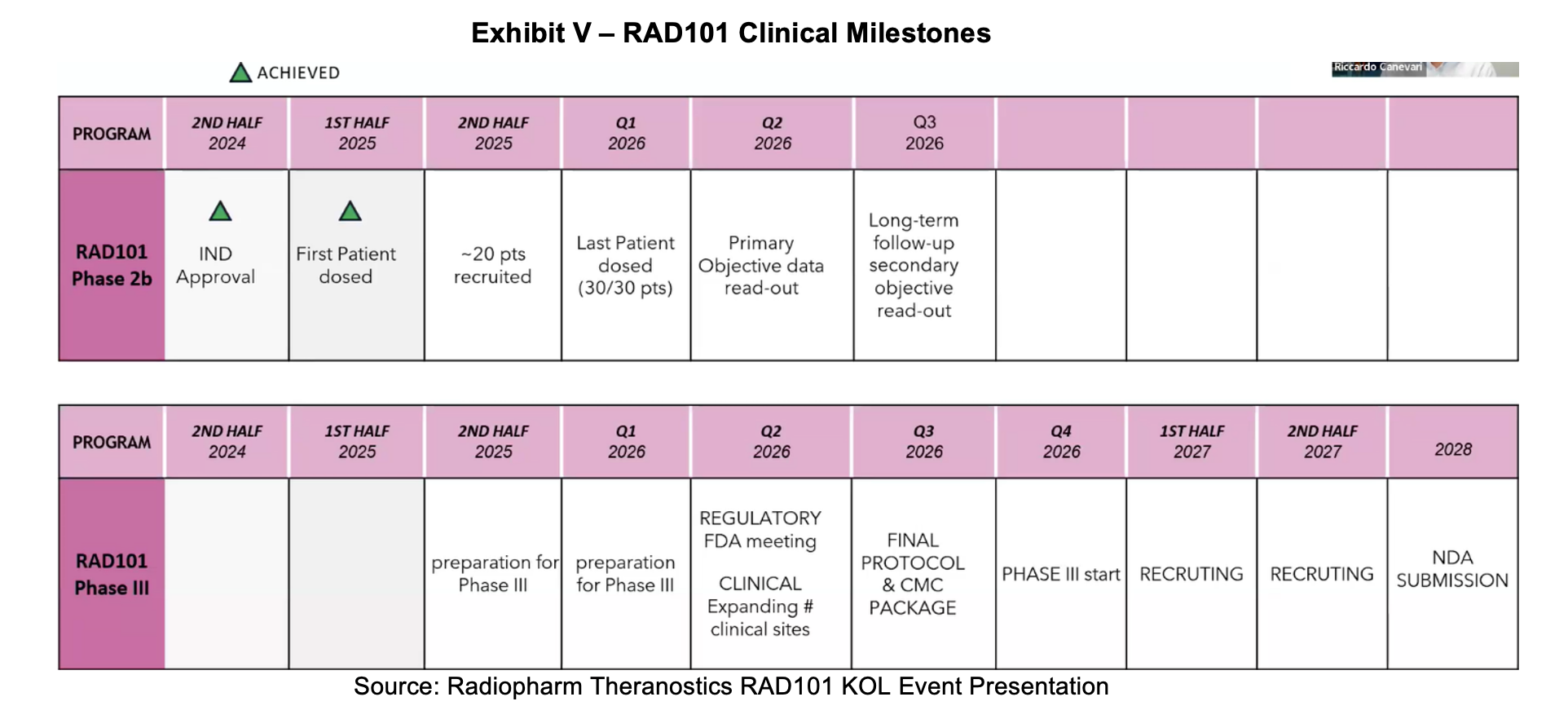
RAD101 has been the subject of preclinical work, Phase I and Phase II clinical trials. A Phase III study is planned and would be a global study evaluating 150 patients. In research conducted to date, the trials have shown that high uptake of RAD101 is inversely correlated with survival and can act as an important biomarker for guiding treatment. The ongoing Phase IIb study is enrolling patients with a known history of brain metastases who are suspected of relapse or progression after SRS. The trial endpoint is agreement between PET and MRI lesion imaging and comparison with a six-month follow up after imaging. Early interim data and full enrollment are expected in 2H:25 with a Phase II read out in 1H:26.
CEO Summary
Radiopharm’s CEO, Riccardo Canevari, provided additional detail on Radiopharm’s Phase IIa RAD101 study. The work was conducted in 22 patients, and only half of them were evaluated after SRS. The Phase IIb is evaluating 30 patients in 5 different centers. He expects the trial to be fully recruited before year end 2025 and to read out in 2Q:26. Given the positive data generated to date, Radiopharm is in the process of planning its Phase III trial for RAD101 and believes that it can start it by late 2026. The trial should enroll about 150 patients and take 12 – 15 months to fully enroll. If the trial is able to maintain this timeline, Radiopharm could submit its new drug application in 2028. The following exhibit provides the company’s anticipated timelines.
SUBSCRIBE TO ZACKS SMALL CAP RESEARCH to receive our articles and reports emailed directly to you each morning. Please visit our website for additional information on Zacks SCR.
DISCLOSURE: Zacks SCR has received compensation from the issuer directly, from an investment manager, or from an investor relations consulting firm, engaged by the issuer, for providing research coverage for a period of no less than one year. Research articles, as seen here, are part of the service Zacks SCR provides and Zacks SCR receives payments totaling a maximum fee of up to $50,000 annually for these services provided to or regarding the issuer. Full Disclaimer HERE.