By David Bautz, PhD
NASDAQ: ABEO
READ THE FULL ABEO RESEARCH REPORT
Business Update
Three Patients Treated in 1Q26, Seven Patients In-queue
Abeona Therapeutics, Inc. (NASDAQ: ABEO) is continuing the commercial launch of Zevaskyn®, with three patients treated in the first quarter of 2026 and one patient treated, one patient biopsied, three patients scheduled to be biopsied, and three more patients with biopsies in progress in the second quarter of 2026. Thus far, more than 100 patients have been identified through qualified treatment centers (QTC) and non-QTC physicians, and those patients are in the process of being referred. The three patients treated in the first quarter of 2026 were covered by commercial payers, while the one patient treated in the fourth quarter of 2025 was covered by Medicaid. Approximately 95% of commercially insured lives in the U.S. are now covered by published policies, and there have been no final payer denials or patient attrition thus far.
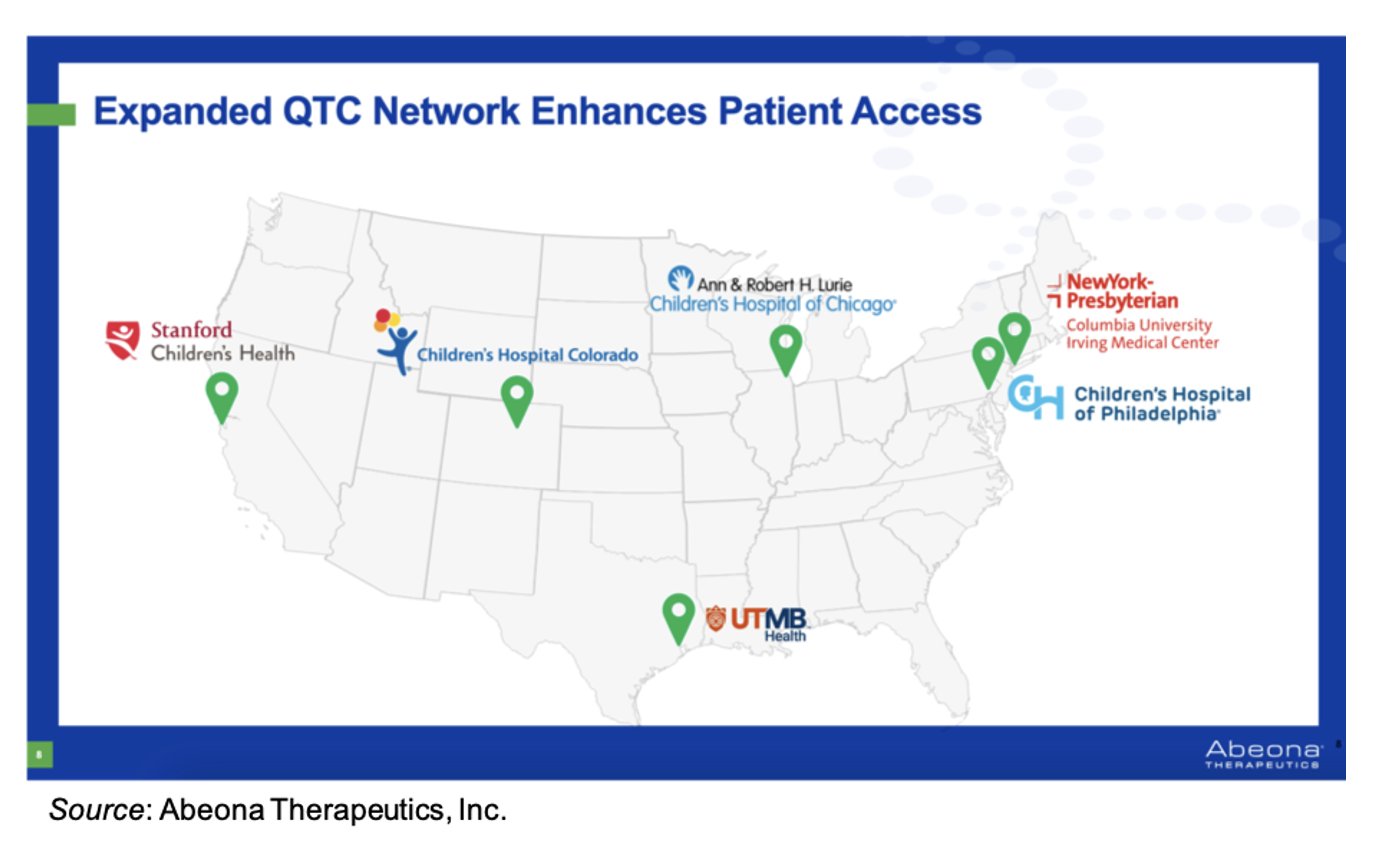
In April and May 2026, Abeona announced the activation of two new QTCs at New York-Presbyterian/Columbia University Irving Medical Center in New York City and Children’s Hospital of Philadelphia. The company now has six QTCs active across the U.S., as shown in the following figure.
In-licenses Novel T Cell Therapy Technology
Abeona recently announced the in-licensing of ABO-701, a novel engineered T cell therapy that targets Prostate-Specific Membrane Antigen (PSMA), a validated target for advanced prostate cancer, which is responsible for >30,000 cancer deaths in the U.S. each year.
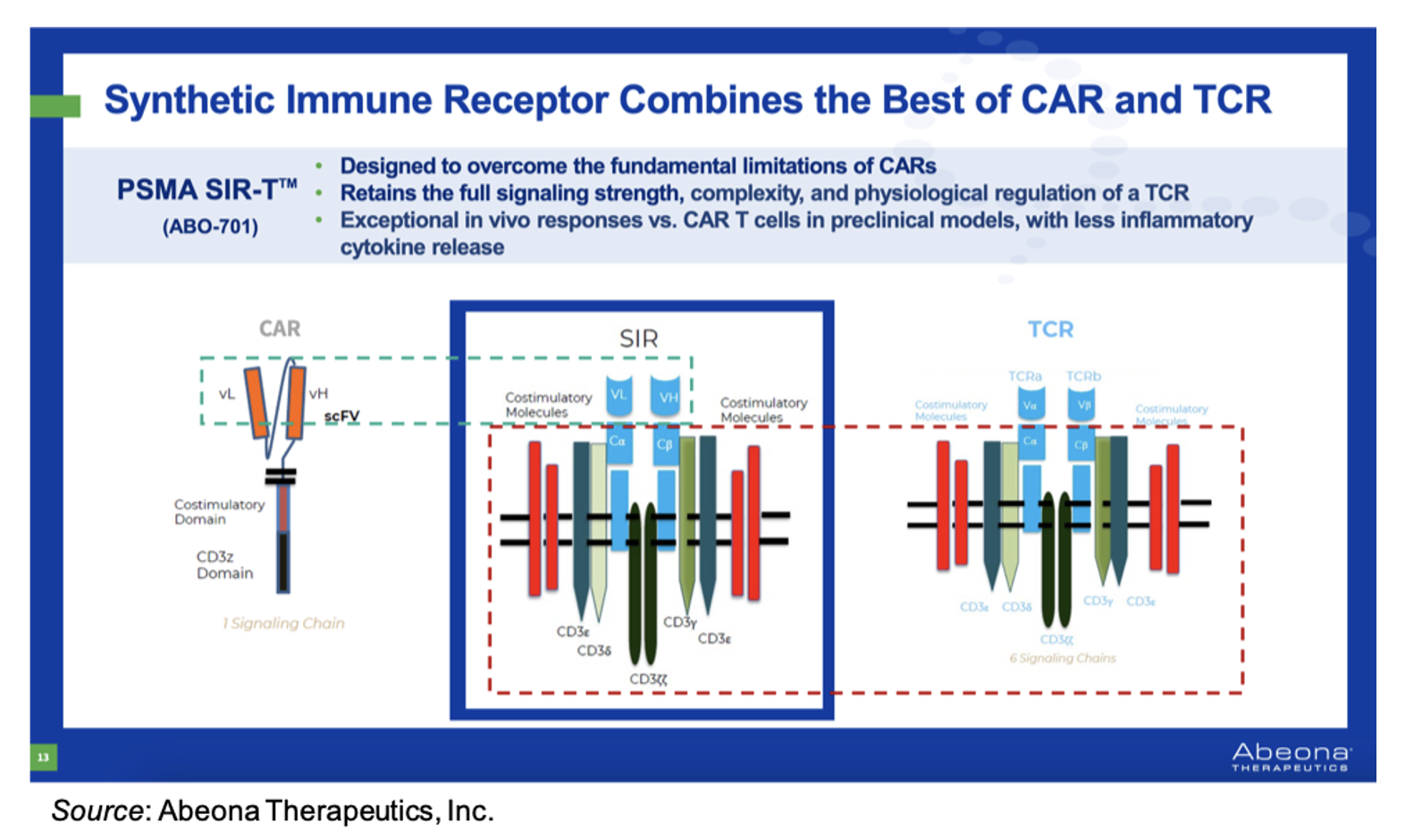
ABO-701 is based on the Synthetic Immune Receptor (SIR-T) technology, which combines the best features of chimeric antigen receptor (CAR-T) and T Cell Receptors (TCR). The following slide shows how a SIR uses an antibody binding domain for target engagement along with the same co-stimulatory molecules found in a TCR. This allows for SIRs to be designed to a tumor-associated antigen while retaining the physiological regulation of a TCR.
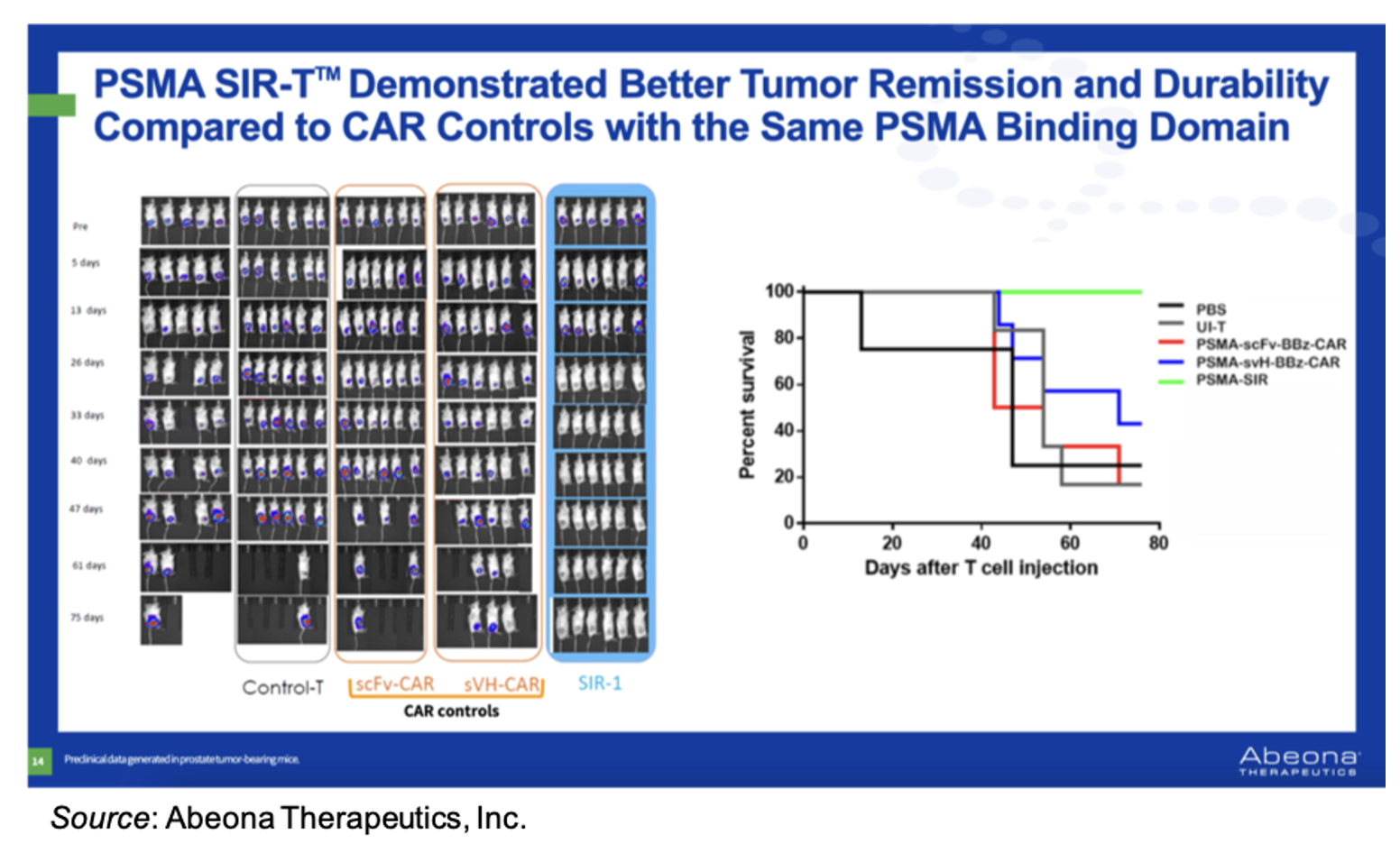
The preclinical results for PSMA SIR-T™ are very encouraging, as the product shows better tumor remission and durability compared to CAR-T controls with the same PSMA binding domain. The images on the left show tumor growth in mice, with all mice treated with PSMA SIR-T showing complete tumor regression, which led to 100% of mice surviving the experiment compared to less than 50% for any of the other treatment groups. For a full overview of the SIR technology and the preclinical data that has been generated thus far, investors should view the presentation by the inventor of the SIR technology, Dr. Preet M. Chaudhary.
Abeona is planning to file an Investigational New Drug (IND) application and commence first-in-human studies with ABO-701 in the second half of 2027. In addition to prioritizing ABO-701, the company has deprioritized its ophthalmology programs.
Financial Update
On May 13, 2026, Abeona announced financial results for the first quarter of 2026. The company reported net product revenue of $8.7 million, which represented a quarter-over-quarter increase of $6.3 million compared to $2.4 million in the fourth quarter of 2025. Cost of sales for the first quarter of 2026 were $2.7 million, which was a quarter-over-quarter increase in cost of sales of $1.7 million compared to $1.0 million in the fourth quarter of 2025. R&D expenses in the first quarter of 2026 were $9.6 million compared to $9.9 million for the first quarter of 2025. The increase included a single up-front payment of $7.0 million for in-licensing of the PSMA-SIR-T asset. Without that transaction, R&D spending decreased by $7.4 million. The reduction was primarily due to costs capitalized into inventory and engineering runs and other production costs that are no longer considered research and development. SG&A costs in the first quarter of 2026 were $19.5 million compared to $9.8 million for the first quarter of 2025. The increase was primarily due to the company’s commercial transition that included $5.4 million in personnel and stock-based compensation, $1.9 million of certain engineering and training expenses previously classified as R&D that were transitioned to SG&A, and the remainder due to other commercial costs related to Zevaskyn.
Abeona exited the first quarter of 2026 with approximately $168.3 million. As of May 8, 2026, the company had approximately 57.0 million shares outstanding and, when factoring in stock options and warrants, a fully diluted share count of approximately 71.0 million.
Conclusion
The commercial launch of Zevaskyn is proceeding well, and in the current quarter, Abeona announced that one patient has been treated, one patient has been biopsied, and six patients either have a biopsy scheduled or scheduling is in progress. The company has achieved 95% coverage of commercial lives in the U.S., and there have been no issues thus far with payer denials. The SIR-T technology looks very interesting, which includes preclinical data showing complete tumor regression using the PSMA SIR-T product. Thus, we will be monitoring the development of ABO-701 very closely as the company works to advance the product into clinical testing in 2027. We have added ABO-701 to our model, and while the product is likely at least seven years away from approval, a successful prostate cancer therapy would likely generate multi-billion-dollar peak revenues. Our valuation is now $14 per share.
SUBSCRIBE TO ZACKS SMALL CAP RESEARCH to receive our articles and reports emailed directly to you each morning. Please visit our website for additional information on Zacks SCR.
DISCLOSURE: Zacks SCR has received compensation from the issuer directly, from an investment manager, or from an investor relations consulting firm, engaged by the issuer, for providing research coverage for a period of no less than one year. Research articles, as seen here, are part of the service Zacks SCR provides and Zacks SCR receives payments totaling a maximum fee of up to $50,000 annually for these services provided to or regarding the issuer. Full Disclaimer HERE.