By David Bautz, PhD
NASDAQ: ARWR
READ THE FULL ARWR RESEARCH REPORT
Business Update
SHASTA-3 and SHASTA-4 Data Presented at ESC 2026
On August 30, 2026, Arrowhead Pharmaceuticals, Inc. (NASDAQ: ARWR) announced the presentation of results from the SHASTA-3 and SHASTA-4 trials of plozasiran in patients with severe hypertriglyceridemia (sHTG) at the European Society of Cardiology (ESC) 2026 Meeting. Highlights from the data presentation include:
- Mean triglyceride (TG) reductions of 79% and 81% compared to placebo in SHASTA-3 and SHASTA-4, respectively
- >90% of plozasiran-treated patients achieved TG <500 mg/dL at Month 12; >50% achieved TG <150 mg/dL
- Pooled results showed a significant reduction in acute pancreatitis (AP) events across the whole sHTG population of 78% compared to placebo
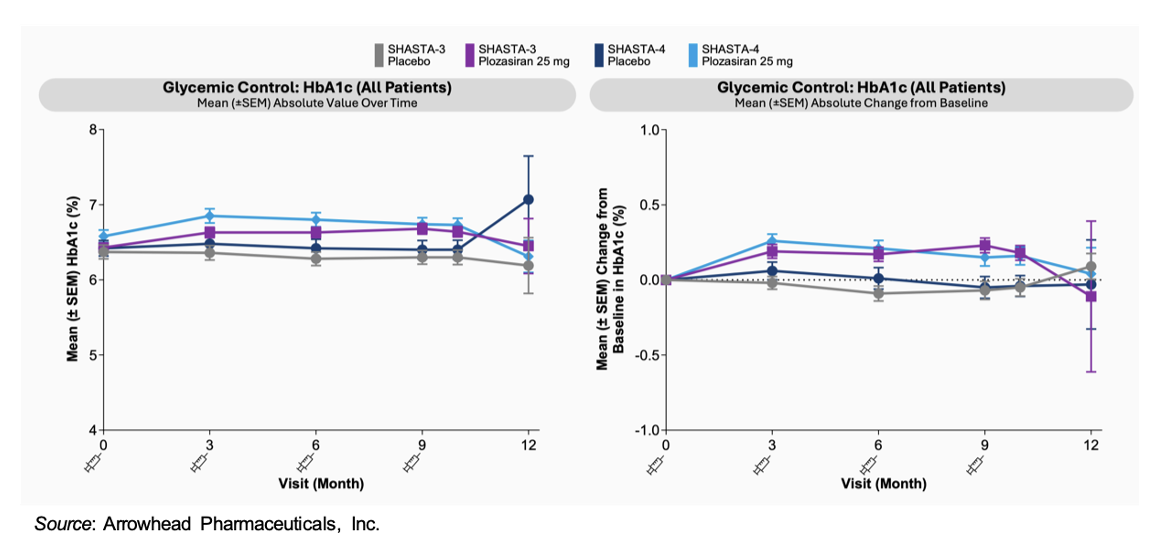
- No significant increase in mean HbA1c over time
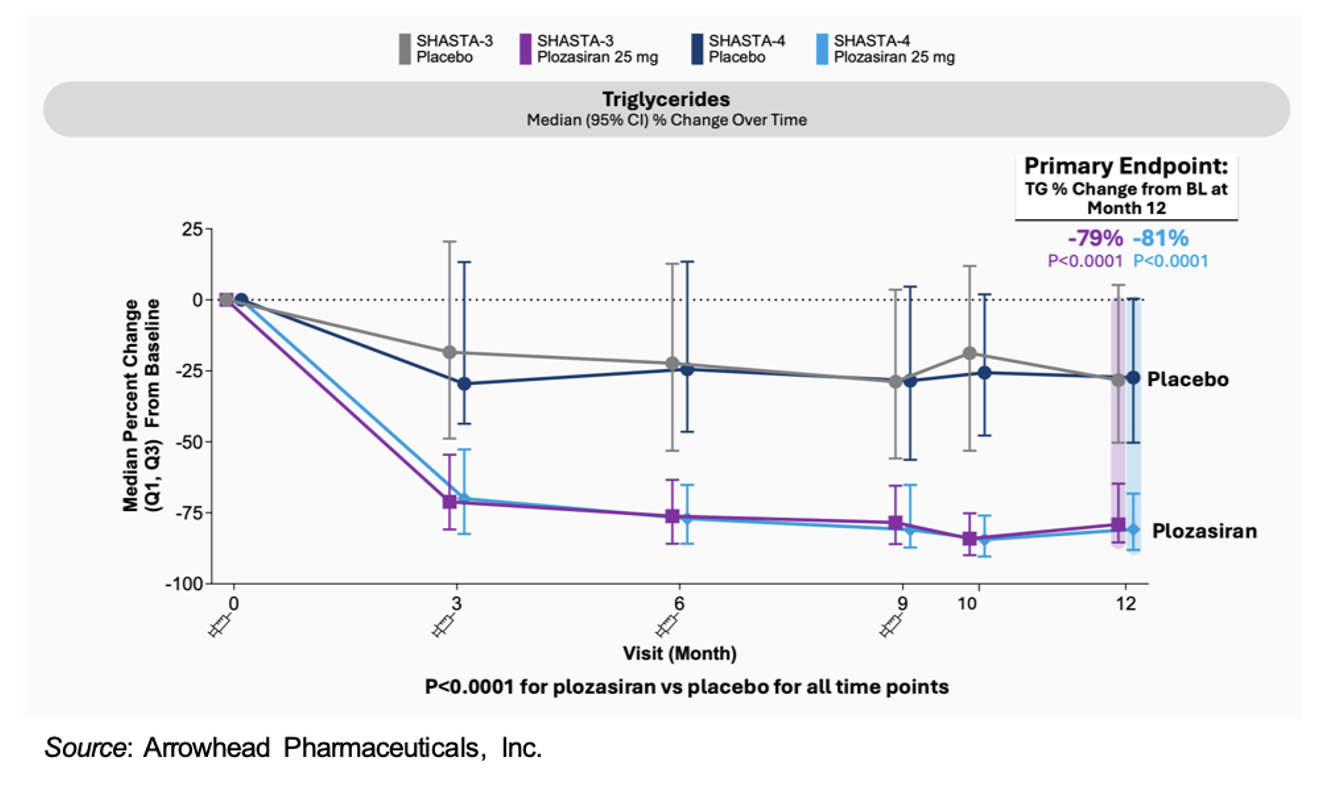
The following figure shows the decrease in TG over the course of the study. By Month 3, treatment with plozasiran had resulted in a statistically significant decrease in TG compared to placebo with the results at Month 12 showing the 79% and 81% decreases for SHASTA-3 and SHASTA-4, respectively. Both of those results were highly statistically significant with P < 0.0001.
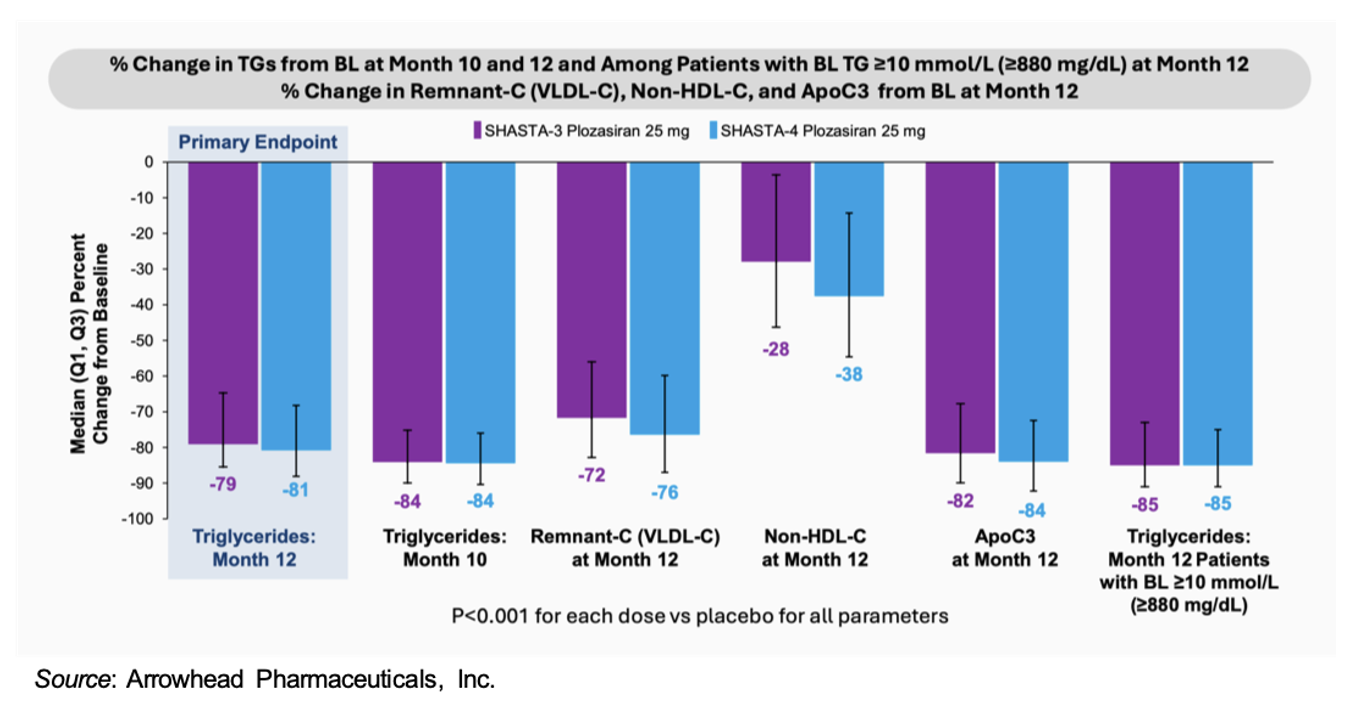
Not only were there significant effects on TG level, but also on a number of other lipid parameters, including remnant cholesterol, non-high-density lipoprotein (non-HDL) cholesterol, and ApoC3, as shown in the following figure. All of the parameters tested showed significant decreases compared to placebo (P<0.001). In addition, for patients with baseline TG ≥ 880 mg/dL, there was an 85% decrease in TG level at Month 12 in both the SHASTA-3 and SHASTA-4 trials.
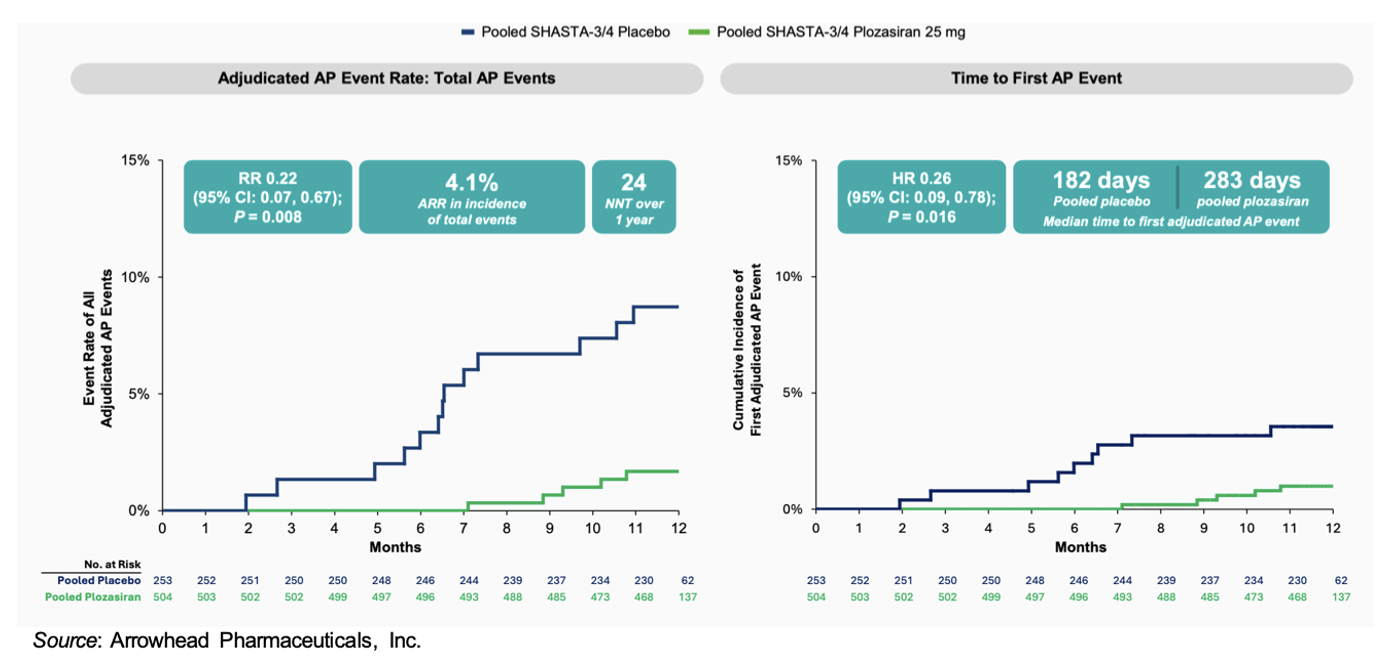
The SHASTA-3 and SHASTA-4 trials included a pre-specified pooled analysis of AP events. Treatment with plozasiran resulted in a 78% decrease in the rate of all AP events compared to placebo (P=0.008), which corresponded to a 4.1% absolute risk reduction and a number needed to treat to prevent one AP event over one year (NNT) of 24. The figure on the right shows the mean time to first adjudicated AP event, which was 182 days for placebo-treated patients compared to 283 days for plozasiran-treated patients (P=0.016).
Plozasiran continued to exhibit a favorable safety and tolerability profile, with overall adverse events (AEs) similar between groups. While worsening glycemic control was reported in 14% of pooled plozasiran patients compared to 8.7% of pooled placebo patients, the following chart shows that there was no worsening of HbA1c over the 12 months of the trial.
Conclusion
The SHASTA-3 and SHASTA-4 trials resulted in the best-case scenario for plozasiran: the drug dramatically reduced TG levels across the sHTG population, including in patients at highest risk for developing AP, plozasiran treatment resulted in a statistically significant decrease in AP events, and the drug had a favorable safety and tolerability profile. Arrowhead is planning to file a supplemental new drug application (sNDA) for plozasiran for the treatment of sHTG before the end of 2026. After acquiring a priority review voucher (PRV) last month, Arrowhead is planning to use it for the sNDA, which decreases the review time from the standard 10 months to 6 months. We believe the SHASTA-3 and SHASTA-4 data makes plozasiran very competitive in the sHTG market, particularly given its effect on AP events. We look forward to updates on the sNDA filing as the year progresses and to a potential launch of plozasiran in sHTG, pending approval, in 2027. With no changes to our model, our valuation remains at $100.
SUBSCRIBE TO ZACKS SMALL CAP RESEARCH to receive our articles and reports emailed directly to you. Please visit our website for additional information on Zacks SCR.
DISCLOSURE: Zacks SCR has received compensation from the issuer directly, from an investment manager, or from an investor relations consulting firm, engaged by the issuer, for providing research coverage for a period of no less than one year. Research articles, as seen here, are part of the service Zacks SCR provides and Zacks SCR receives payments totaling a maximum fee of up to $50,000 annually for these services provided to or regarding the issuer. Full Disclaimer HERE.