By John Vandermosten, CFA
NASDAQ: CRDF
READ THE FULL CRDF RESEARCH REPORT
Updated Results from CRDF-004
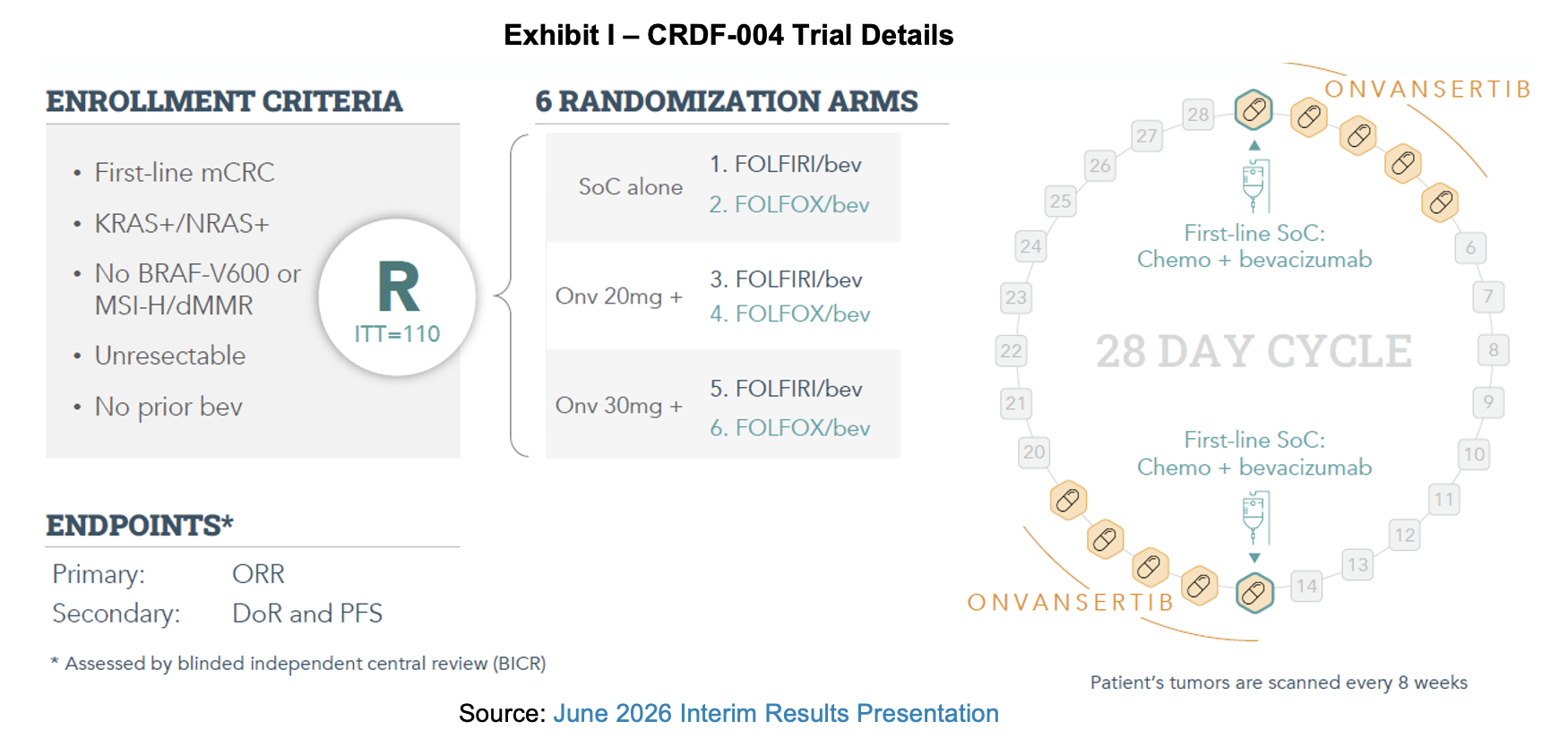
Cardiff Oncology, Inc. (NASDAQ: CRDF) presented interim data from its CRDF-004 trial at the 2026 American Society of Clinical Oncology (ASCO) Annual Meeting in Chicago. The event took place from May 29th to June 2nd, 2026. The oral presentation was entitled Onvansertib plus standard-of-care chemotherapy plus bevacizumab in first-line RAS-mutated metastatic colorectal cancer (mCRC): Interim results from the phase 2 randomized CRDF-004 trial. It reiterated topline data from the Phase II CRDF-004 trial, highlighting 72.2% overall response rate (ORR) for the 30 mg + FOLFIRI[1] + bevacizumab (bev) arm compared to 42.1% ORR in the control arm, which consisted of FOLFIRI + bev. Data was presented by Heinz-Josef Lenz, MD, in a rapid oral session.
Dr. Lenz also participated in Cardiff’s conference call held on June 3rd, along with another key opinion leader (KOL), Josep Tabernero, MD, PhD. Company management was represented by CEO Mani Mohindru, PhD. The call included a presentation which summarized the findings as of the March 18th, 2026, cutoff. Nine of 36 patients in the Onvansertib + FOLFIRI/bev arm remain on treatment, while only 1 patient remains on treatment in the FOLFIRI/bev arm. Depth of response for the onvansertib group is also notable with seven of the onvansertib patients achieving near complete or complete responses compared to none in the control group.
New data included breakdowns by subgroup showing consistent benefit in each for ORR and progression free survival (PFS). When the 30 mg onvansertib + FOLFOX[2] arm was compared to the FOLFOX arm, there was no meaningful benefit. Cardiff provided a rationale for the difference in performance between FOLFIRI and FOLFOX, acknowledging the multi-pronged impact on angiogenesis from irinotecan, onvansertib, and bev.
Rationale for Onvansertib Synergy with FOLFIRI
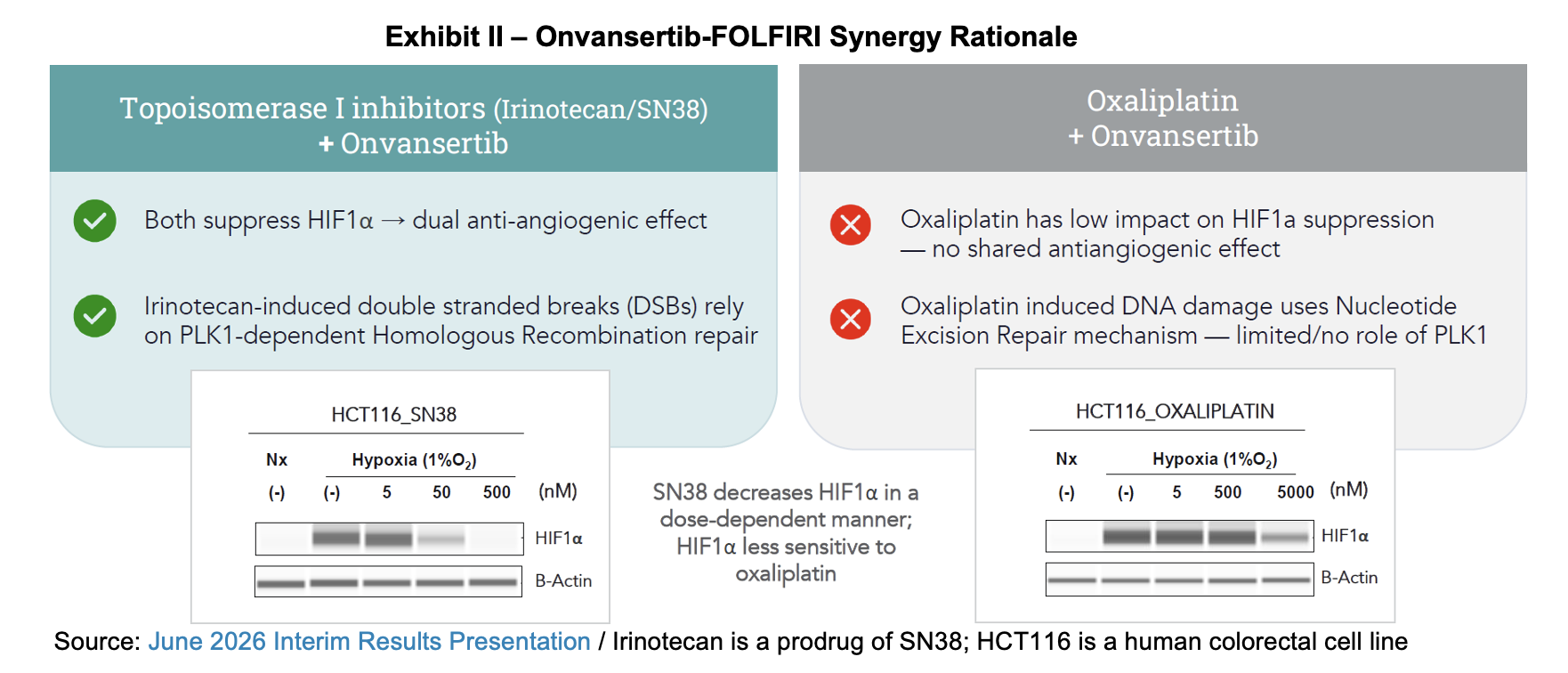
The CRDF-004 data show improved performance for the FOLFIRI arms in both ORR and hazard ratio relative to the FOLFOX arm. During Cardiff’s presentations, stakeholders have repeatedly sought an explanation for the difference between the two chemotherapy standards of care. In response, the Cardiff team developed a mechanistic rationale for onvansertib’s synergy with FOLFIRI but not FOLFOX. They conclude that onvansertib and irinotecan both cause HIF1-α suppression, which has anti-angiogenic effects. Irinotecan induces DNA damage primarily by targeting topoisomerase I, which is essential for relieving torsional strain. Onvansertib inhibits the DNA-repair pathway that is activated following irinotecan-induced DNA damage, creating synergy between the two. FOLFOX is thought to be less effective because oxaliplatin has a low impact on HIF1-α suppression and no shared antiangiogenic effect. Oxaliplatin-induced DNA damage uses nucleotide excision repair and excludes PLK1. Oxaliplatin acts as a platinum-based alkylating-like agent that directly binds to the DNA architecture, forming physical obstructions that block replication and transcription.
CRDF-004 Latest Data
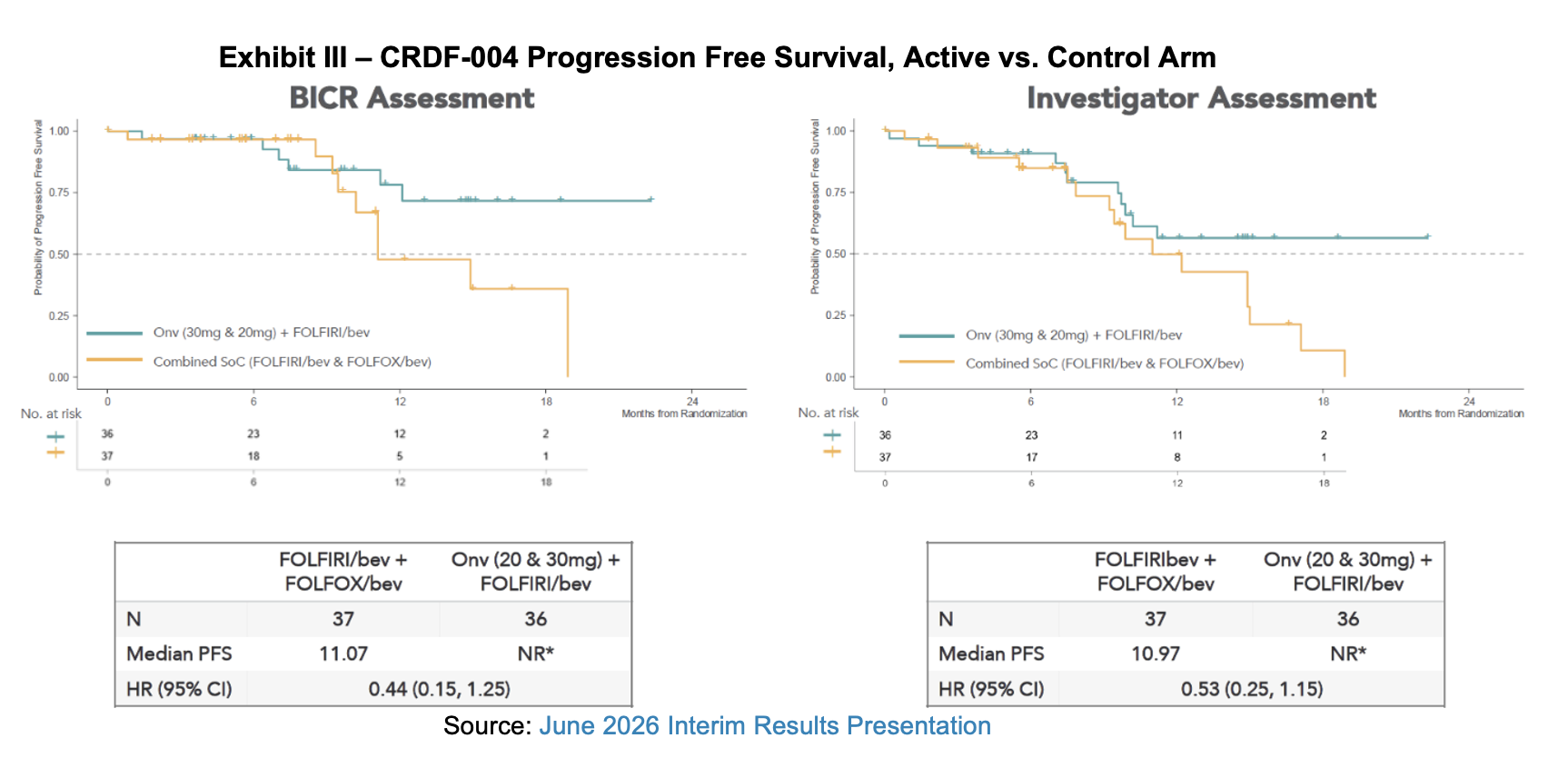
CRDF-004 is ongoing and has not yet reached median PFS (mPFS) in either the 20 mg or 30 mg arms as of the March 18th, 2026 data cut. While ORR was unchanged from the previous update in February 2026, numerous hazard ratios were reported, and the categories presented were not consistent between the January update and the June update, making direct comparisons difficult.[3] We see the combined 30 mg + FOLFIRI/bev HR as the relevant number, as this is the regimen that will be investigated in the pivotal trial. In January, the blinded independent central review (BICR) HR was reported as 0.38 for onvansertib 30 mg vs. FOlFIRI/bev. While still compelling, in June, the HR for this group was reported as 0.55 for the BICR assessment and 0.57 for the investigator assessment.[4] The confidence interval for both crossed 1, thwarting statistical significance, but an expected result given the small N. The deterioration in the HR may have contributed to share price weakness following the ASCO presentation.
The trend for mPFS was a consistent positive in both the January and June updates. For both period observations, mPFS had not yet been reached for either the 20 mg and 30 mg onvansertib + FOLFIRI/bev arms, signaling a durable benefit for a material portion of the population. This was consistent for both the BICR and investigator assessment approaches.
Cardiff’s presentation included several data breakdowns that examined the performance of the 30 mg onvansertib + FOLFIRI/bev group. In almost all categories (age, liver only disease, side of tumor, etc.), the onvansertib group offered ORR and PFS benefits (slides 17 and 18). Toxicities were reviewed on slide 19. We focus on the 30 mg onvansertib arm +FOLFIRI/bev safety profile, which, in our opinion, was not materially different than the FOLFIRI control arm, especially when looking at Grade 3 or greater events. Cardiff noted that onvansertib showed no unexpected, overlapping, or new toxicities when compared to the FOLFIRI or FOLFOX arms.
Importantly, the CRDF-004 trial achieved its key goals and endpoints, generating a 30% improvement in ORR in the 30 mg arm. mPFS has not yet been reached, illustrating the favorable survival benefit of onvansertib. The main objective of CRDF-004 was to determine whether adding onvansertib to standard first-line therapy could improve outcomes in patients with RAS-mutated metastatic colorectal cancer, and to identify the best regimen to move into Phase III. CRDF-005 is the trial intended to formally test ORR and PFS with adequate statistical power.
Nerviano Dispute
Earlier this year, Nerviano Medical Sciences sent written notice to Cardiff alleging that it was in a material breach of the onvansertib license agreement between the two. Brief details of the interaction were included in the 2025 Form 10-K. Nerviano attributed the breach to the failure of Cardiff to name a Nerviano employee as joint inventor for US patents 12,144,813 and 12,263,173. Cardiff maintains that there is no breach and that the agreement does not require Cardiff to name Nerviano employees on patents that have been developed exclusively by Cardiff. It seeks injunctive relief requiring Nerviano to continue performing under the agreement and for the court to declare that it did not breach the agreement. Details of the event are in a Form 8-K filed on May 19th, 2026. On May 27, 2026, Nerviano notified Cardiff that it was terminating the agreement. Cardiff asserted that the termination notice was legally ineffective, factually unsupported, and procedurally improper, and that it would continue to perform under the agreement.
The patent licensed by Nerviano has an expiry of May 2030, and it is likely that a full five years of patent term extension (PTE) will be allowed. With the PTE, the effective end of protection related to Nerviano’s intellectual property is 2035. We believe that the wording in the original license arrangement will be key to the outcome. As equity analysts, we do not provide legal opinions and lack complete visibility into the patents' development; however, we can point investors to the language in the agreement dated March 13th, 2017, with Cardiff’s predecessor Trovagene. The language states that Trovagene/Cardiff has entire rights to intellectual property it solely develops:
10.2 Ownership of Inventions. Subject to the terms hereof, including the licenses and other rights granted hereunder, all Inventions shall be owned as follows:
- Nerviano shall own the entire right, title and interest in and to all Inventions (including all patents and other intellectual property rights thereto) made solely by its employees or others acting on behalf of Nerviano (or solely by such persons and Third Parties performing work for Nerviano) in the performance of the Development Plan or other activities undertaken under this Agreement (“After-Developed Nerviano Inventions”). All After-Developed Nerviano Inventions will be included in the license and right granted under Article 3 above;
- Trovagene [now Cardiff] shall own the entire right, title and interest in and to all Inventions (including all patents and other intellectual property rights thereto) made solely by its employees or others acting on behalf of Trovagene (or solely by such persons and Third Parties performing work for Trovagene) in the performance of the Development Plan or other activities undertaken under this Agreement;
(c) The Parties shall jointly own all Joint Inventions (as defined below). Nerviano’s rights in and to each Joint Invention (including all patent rights and other intellectual property rights to it) will be included in the license and rights granted under Article 2 above, and, subject to such license and rights, each Party may make, use, sell, keep, license or assign its interest in Joint Inventions and otherwise undertake all activities a sole owner might undertake with respect to such Joint Inventions, without the consent of and without accounting to the other Party. “Joint Inventions” means Inventions for which it is determined, in accordance with United States patent law, that both: (i) one or more employees, consultants or agents of Nerviano or any other persons obligated to assign such Invention to Nerviano; and (ii) one or more employees, consultants or agents of Trovagene or any other persons obligated to assign such Invention to Trovagene, are joint inventors.
AACR Poster
Cardiff presented a poster at the 2026 American Association for Cancer Research (AACR) Annual Meeting held in San Diego, California, from April 17 to 22. The title of the poster is PLK1 inhibitor onvansertib potentiates the antitumor efficacy of trastuzumab deruxtecan (T-DXd) and reverses its resistance in therapy-resistant HER2-low breast cancer models. It summarized preclinical work that examined the combination of trastuzumab deruxtecan (T-DXd) (Enhertu) with onvansertib and its effect on patient-derived xenograft models. Tumor volumes were measured using monotherapy of T-DXd and onvansertib, and the combination of the two compared with a control. The xenograft models consistently showed that the combination therapy limited and even reversed tumor growth.
The poster concluded that onvansertib enhances T-DXd efficacy and overcomes its resistance across triple negative breast cancer (TNBC) and hormone receptor positive (HR+) breast cancer models. The combination induces synergistic DNA damage and apoptosis. The authors claim that PLK1 inhibition offers a strategy to deepen and prolong T-DXd response in advanced HER2-low breast cancer resistant to first-line therapies.
Next Steps for Onvansertib
Following meetings with the FDA, Cardiff has essentially finalized its design of the anticipated Phase III registrational trial for onvansertib in 1H:26. The trial will be designated CRDF-005 and will evaluate 30 mg of onvansertib with FOLFIRI and bev vs. the standard of care of FOLFIRI/bev in first line RAS-mutated mCRC. In its May 2026 investor presentation, management provided a preliminary trial design that seeks to enroll first line mCRC patients that are KRAS and NRAS positive, presenting unresectable tumors. Dual primary endpoints are anticipated to be ORR and PFS, with secondary endpoints of DoR and OS.
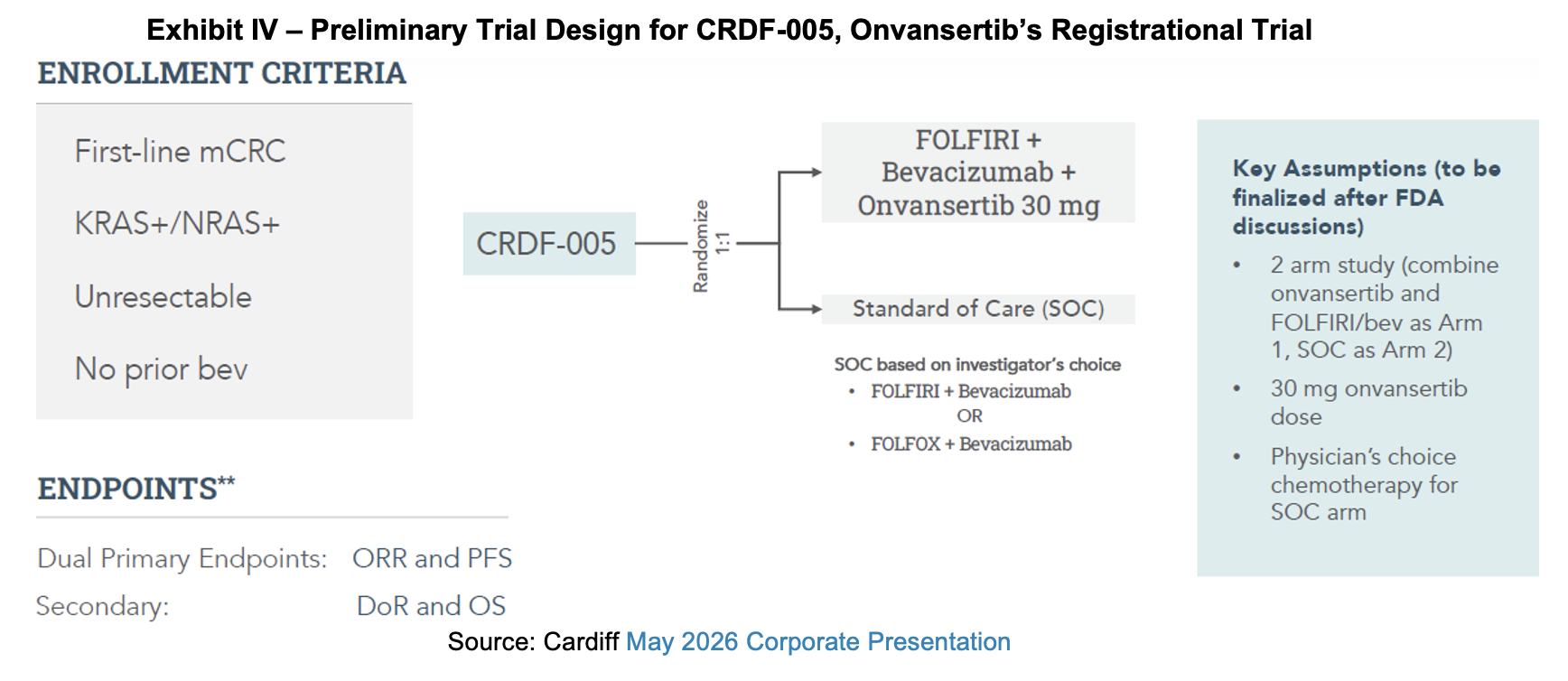
The trial is expected to enroll approximately 640 patients and is designed with greater than 90% statistical power for its key efficacy endpoints, including PFS and ORR. The FDA has indicated the potential for accelerated approval based on ORR and durability of response. While Cardiff has received its input from the FDA, the company is awaiting feedback from the European Medicines Agency (EMA). We anticipate a focus on raising capital in the near term and a launch in 2027.
Updates to Estimates and Valuation
We update our valuation to reflect the anticipated cost of the Phase III study and timing for its start. In our initiation, we had anticipated that the Phase III would begin mid-year 2026; however, this is unlikely given the absence of a timeline by management. We think a 2027 start to the trial is more likely at this point. This change pushes back all of our regulatory milestones and sales estimates by six months.
Part of the delay is due to the capital raise necessary to fund the Phase III. Cardiff’s CEO made it clear during recent presentations that Cardiff must secure significant capital prior to the start of the trial. While the anticipated cost of the study was not given, management provided a framework to estimate it. CRDF-005 is expected to enroll 640 patients at a cost of approximately $200,000 to $300,000 per patient. This provides a cost range of $128 to $192 million. The midpoint is about 5% to 10% higher than our initial numbers.
We reduce our probability of success from 60% to 50%, which previously reflected a smooth path forward for onvansertib. The recent increase in tension between Nerviano and Cardiff raises the risk profile, and our probability of success is now more aligned with a more historical level of 50% for Phase III assets. While we think the publicly available contract language favors Cardiff’s position, the dispute raises the possibility of delays and loss of the license.
The result of the adjustments to our model generates an updated valuation of $7.50 per share.
Company Pipeline
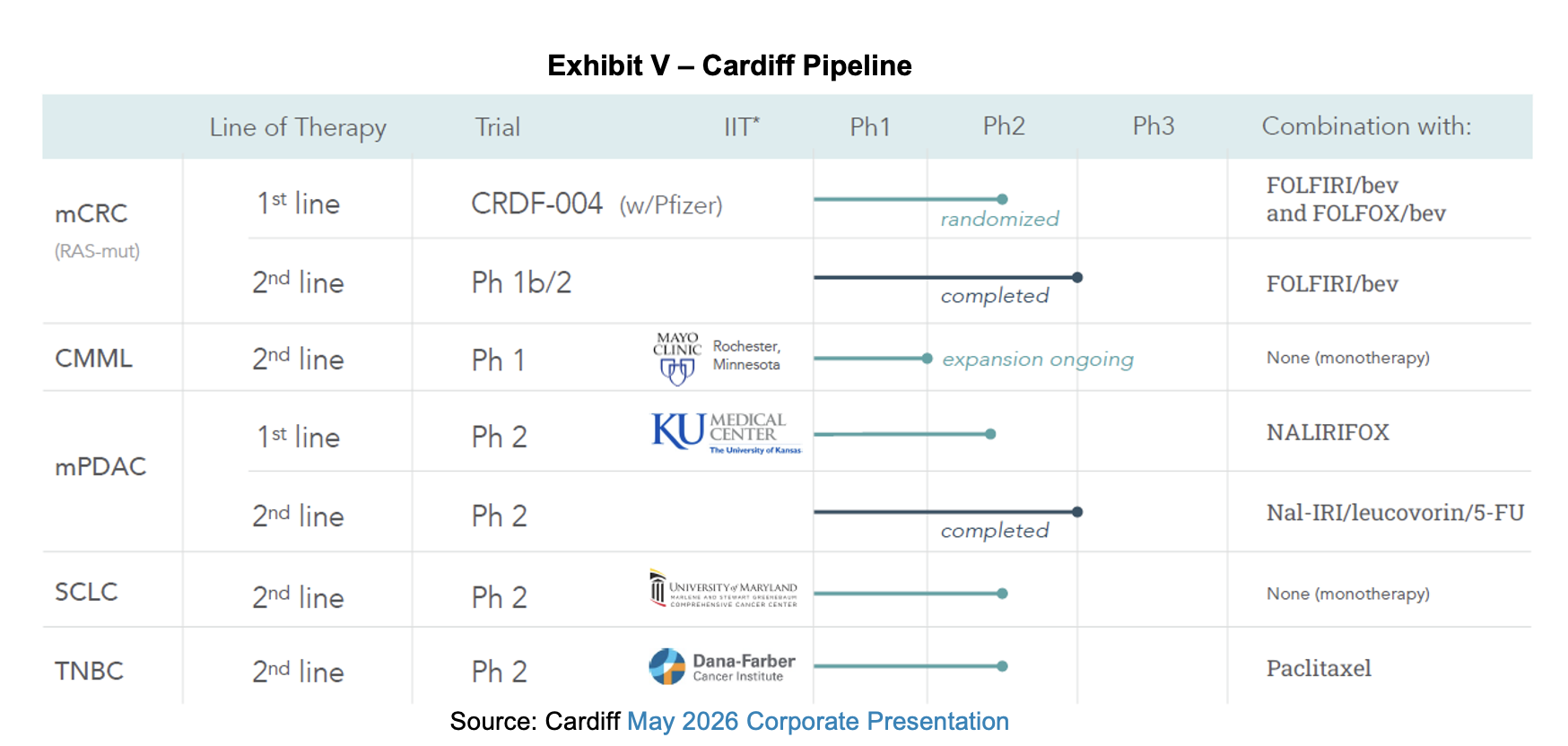
Milestones
- Topline release from CRDF-004 – January 27th, 2026
- Nerviano sends notice alleging material breach of onvansertib licensing agreement – February 2026
- Investor Presentation at Oppenheimer Healthcare Life Sciences Conference – February 2026
- Presentations at TD Cowen, Barclays & Leerink healthcare conferences – March 2026
- Mani Mohindru appointed President and CEO – April 2026
- Meetings with FDA for Phase III trial design – April 2026
- Josh Muntner appointed as Chief Financial Officer – April 2026
- Ajay Aggarwal, MD, appointed as Chief Operating Officer – April 2026
- Onvansertib and trastuzumab poster presentation at AACR – April 2026
- Cardiff files suit against Nerviano disputing breach of license agreement – May 2026
- ASCO presentation of CRDF-004 data – June 2nd, 2026
- Webcast to discuss Phase II CRDF-004 data – June 3rd, 2026
- Jefferies Global Healthcare Conference Participation – June 4th, 2026
- Further details provided on Phase III and regulatory strategy – mid-2026
- Launch of Phase III onvansertib trial (CRDF-005) – 2027
Summary
Cardiff updated results for CRDF-004 as of March 18th, 2026, reporting a less favorable HR, but a continuation of PFS in more than half of the onvansertib population. This indicates continued separation between the onvansertib group and the control and extension of survival. We update our valuation based on the new data, a later start to the CRDF-005 trial, and operating cost adjustments to our model. Cardiff and license partner, Nerviano, are in dispute, and while it appears that Cardiff holds the dominant position, risk remains until the dispute is settled. We adjust our valuation to $7.50 per share.
SUBSCRIBE TO ZACKS SMALL CAP RESEARCH to receive our articles and reports emailed directly to you each morning. Please visit our website for additional information on Zacks SCR.
DISCLOSURE: Zacks SCR has received compensation from the issuer directly, from an investment manager, or from an investor relations consulting firm, engaged by the issuer, for providing research coverage for a period of no less than one year. Research articles, as seen here, are part of the service Zacks SCR provides and Zacks SCR receives payments totaling a maximum fee of up to $50,000 annually for these services provided to or regarding the issuer. Full Disclaimer HERE.
________________________
[1] FOLFIRI is a combination chemotherapy regimen that includes folinic acid, fluorouracil and irinotecan.
[2] FOLFOX is a combination chemotherapy that includes folinic acid, fluorouracil and oxaliplatin.
[3] In Cardiff’s presentation, the PFS HRs were combined then separated for BICR and Investigator Assessment, then combined and separated for the 20 and 30 mg doses. It did not provide a HR for the same population in both presentations, frustrating direct comparisons.
[4] Due to the low number of BICR progression events, Cardiff noted that it used a combined BICR/investigator approach for the PFS events and used the earliest date measured as a conservative estimate.