By Steven Ralston, CFA
OTCQX: DYLLF | ASX: DYL
READ THE FULL DYLLF RESEARCH REPORT
SUMMARY OF RECENT EVENTS
- Continuing Development of flagship Tumas Project
- Greg Field Assumed role of CEO on February 2, 2026
- Sensitivity Analysis of Tumas Project to the Price of Uranium
- Mulga Rock Project Update
- Potential Production Profile of Tumas & Mulga Rock Projects
- Alligator River Project Update
- Commentary on Price of Uranium
Deep Yellow Limited (OTCQX: DYLLF) (ASX: DYL) is an advanced-stage uranium exploration & development company with projects in Namibia and Australia. The management's strategy involves developing its flagship Tumas Project in Namibia toward production while also advancing the Mulga Rock and Alligator River Projects, both situated in Australia and acquired through a merger with Vimy Resources Limited in August 2022.
A broad array of pre-construction activities is designed to prepare the Tumas Project for a rapid execution of full-scale construction once the Final Investment Decision (FID) is made to formally approve the capital expenditures necessary to proceed with the full-scale development and construction of the Project. The ongoing pre-construction work includes optimizing engineering plans, preparing the mine site and developing the required infrastructure. The FID is contingent on a uranium price that economically justifies the development of a greenfield uranium project.
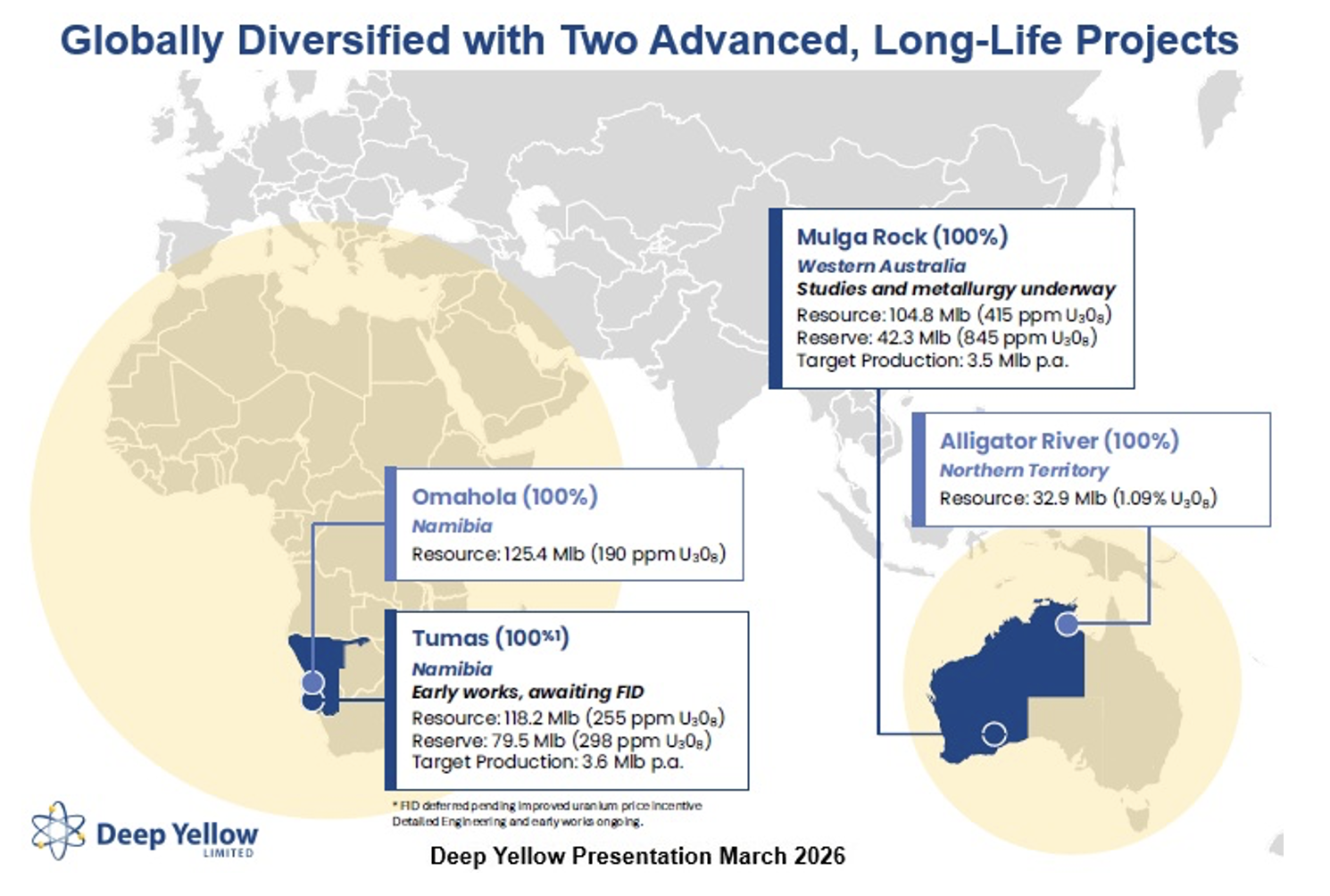
TUMAS PROJECT in Namibia (100%)
Strategically, management continues to utilize the FID deferral period by re-risking the Tumas project through pre-production work streams. Over the last four months, bulk earthworks, which commenced in October 2025, were at least 70% complete in mid-March compared to 24% as of mid-December 2025.
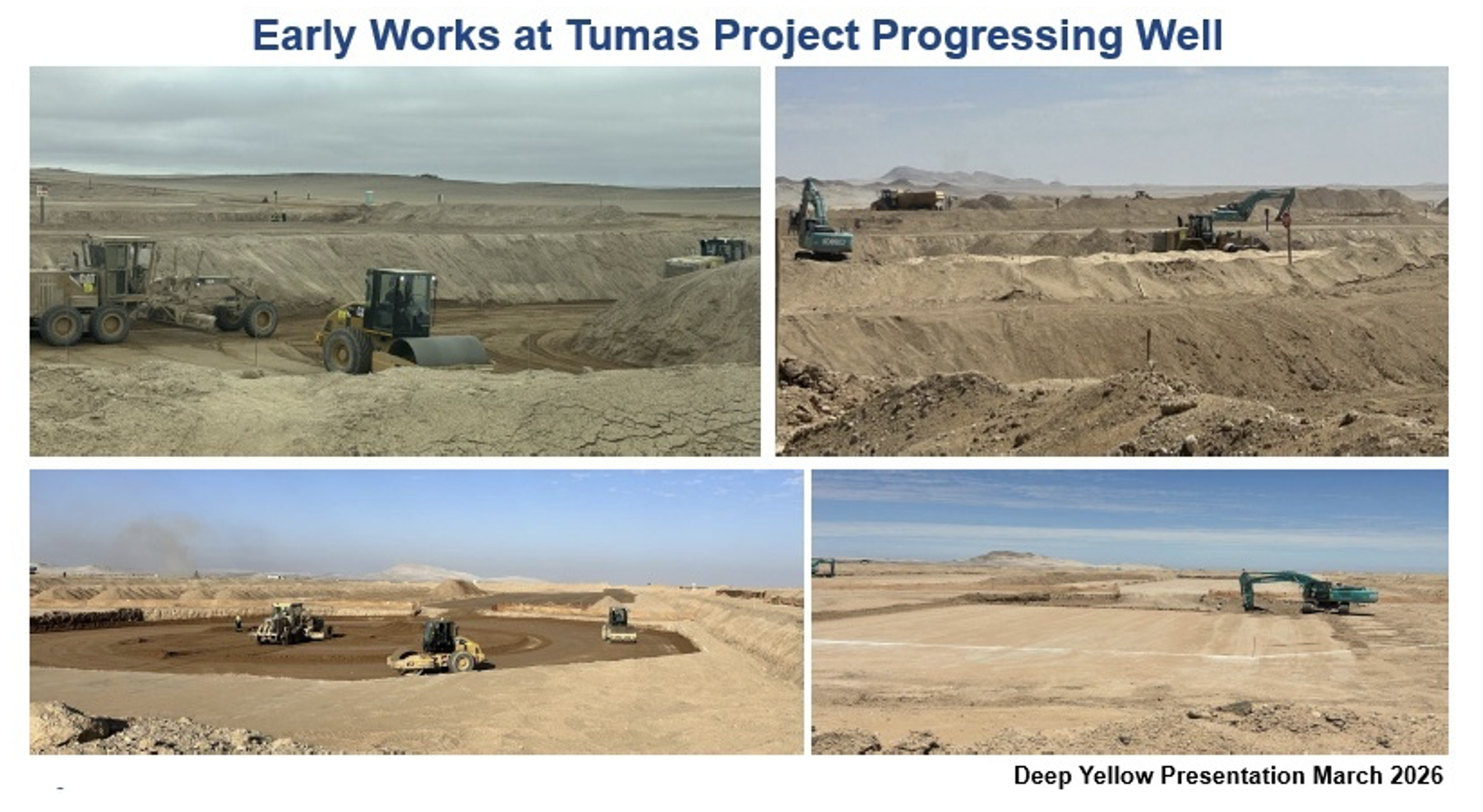
The company’s latest presentation provided the first photographic evidence of physical earthworks progress. The scope of the bulk earthworks program includes excavating to competent ground conditions, terracing for the process plant, constructing laydown areas and backfilling, as well as completing the perimeter access roads. The completion of the bulk earthworks program is expected to be in April 2026.
Detailed engineering has advanced from 44% complete in July 2025 to over 65% complete of Phase 3 as of late February 2026.
Procurement of major equipment has progressed to over 70% tendered compared to partial advancement in July 2025. In late 2025, orders for vendor data were placed on all long lead equipment.
Power Supply Agreement with NamPower: A significant milestone was the execution of the Power Supply Agreement (which is subject to the FID). The agreement defines a 22 km, 220 kV dedicated power line; the power supply grid connection is in the detailed design phase. The power system is planned to be supplemented by solar componentthrough a BOOT (Build, Own, Operate and Transfer) arrangement, which is targeted to supply 30%+ of the mine’s power requirements. Negotiations with a preferred supplier for the BOOT contract are continuing.
Water Supply: Deep Yellow will be responsible for the design and construction of the 65 km water pipeline and any associated infrastructure. The preliminary design has been completed, and the company has received tenders for a design & construction contract. Negotiations with NamWater for a Water Supply Agreement are continuing.
2026 Timeline: The Tumas Project schedule timeline slide in the company’s March 2026 presentation frames the FID target window within2026, with construction, infrastructure and mining activities mapped up to 2029. The timeline also explicitly notes that offtake strategy is “aligned with retaining maximum exposure to long-term market fundamentals.” Management is waiting for uranium prices increase to a level that reflects the upcoming structural supply gap.
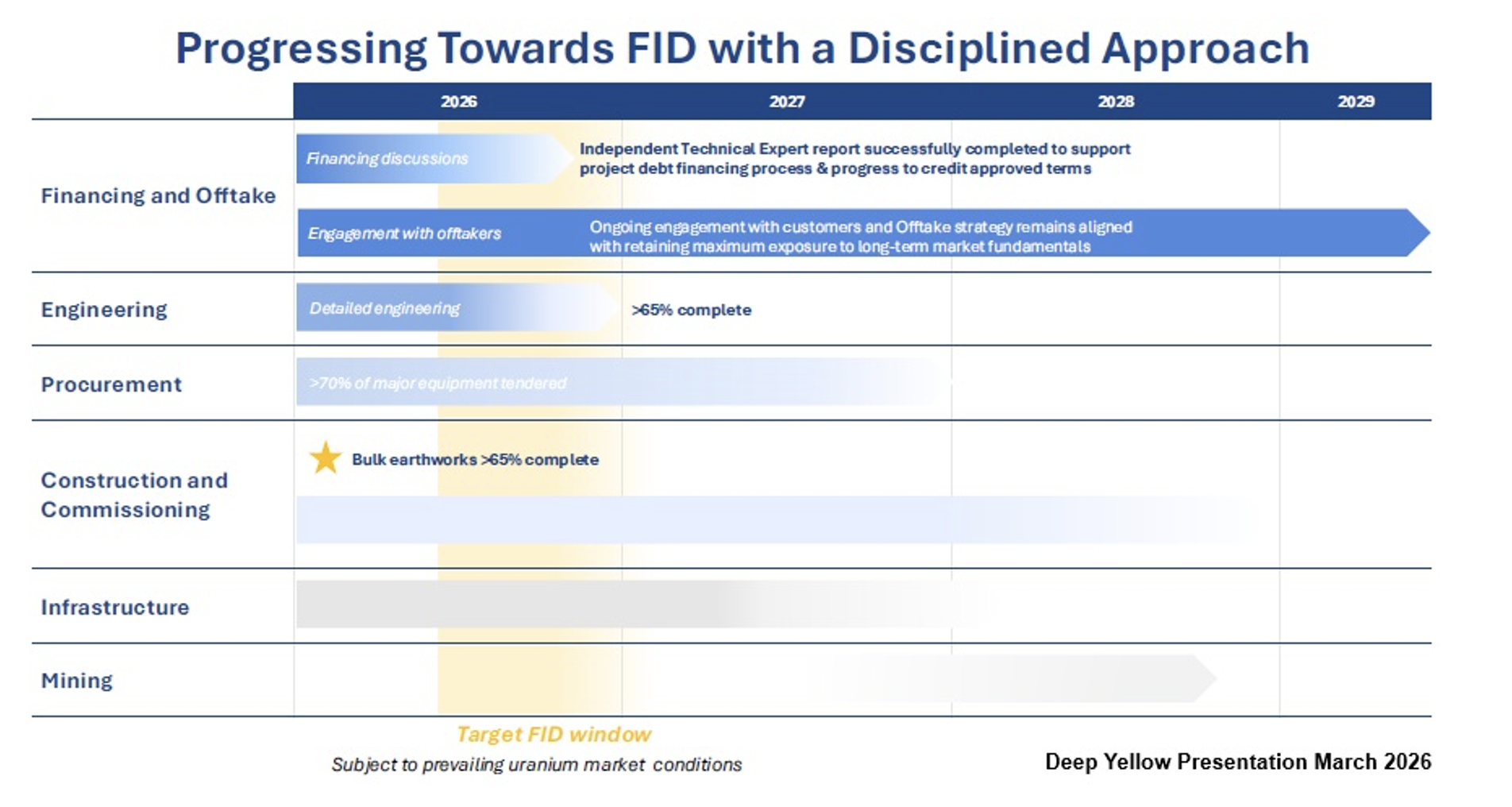
Management continues to effectively execute on its staged development strategy in order to position the Tumas Project for rapid commencement of the construction phase once the uranium market supports the economics for initiating this greenfield project. Management continues to target 3Q of calendar 2027 for first production from Tumas.
Sensitivity Analysis of Tumas Project to the Price of Uranium
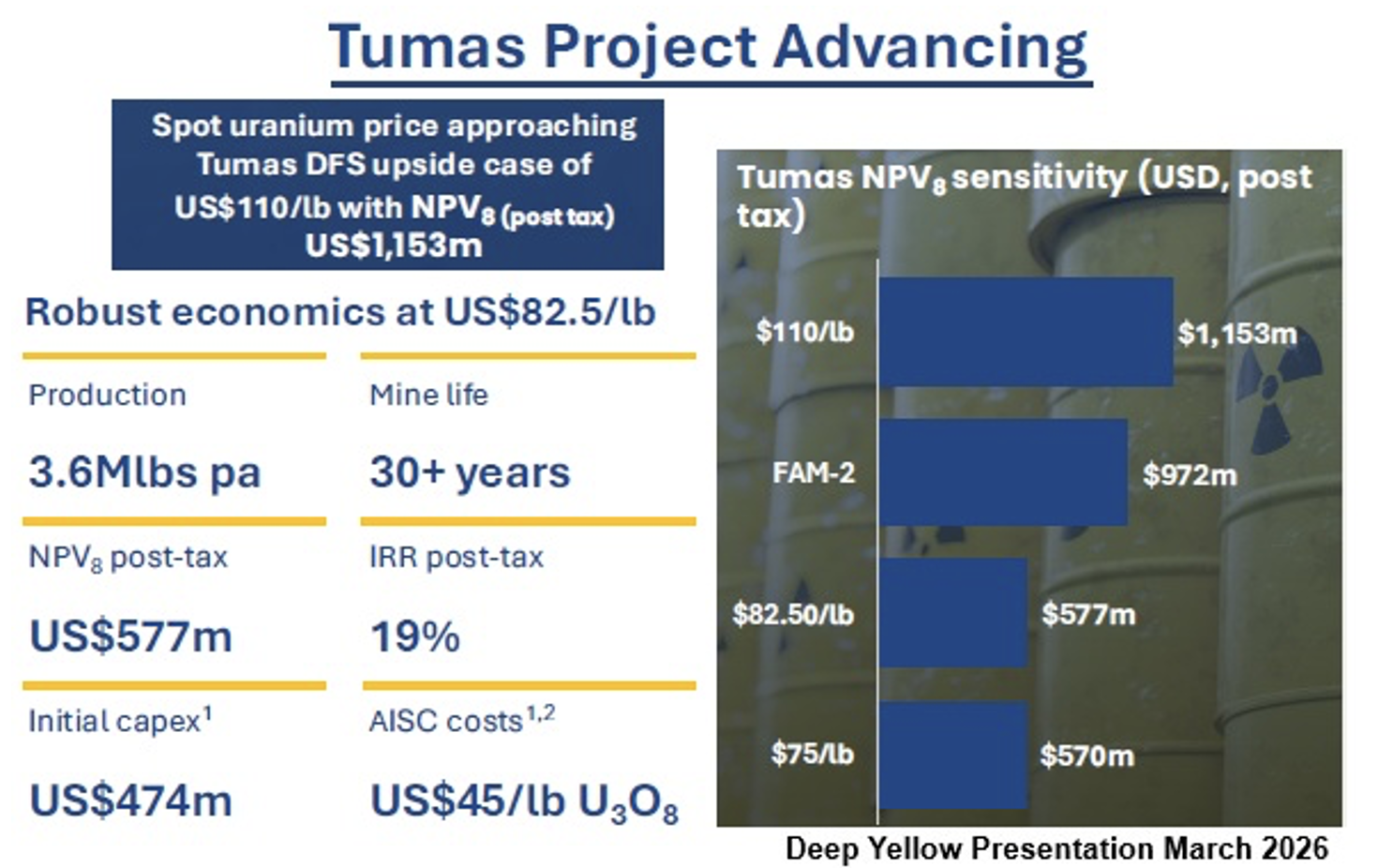
The company’s March 2026 presentation provided some key economic metrics from the 2025 Tumas DFS, along with an NPV8sensitivity bar graph under four U3O8 price scenarios (US$75/lb., US$82.50/lb., Trade Tech FAM-2 scenario and US$110/lb.). Though some economic metrics at US$82.50/lb. U3O8 price scenario are displayed, with the long-term contract price at US$91.50 per/lb., it appears, in our opinion, that the FID is dependent on a price between US$100/lb. and US US$110/lb. The economics include a by-product credit for vanadium pentoxide (V2O5, aka red cake).
The 2025 Tumas DFS was first made available through a 65-page Annexure to a news release titled "Final Investment Decision Deferred for Tumas Project" on April 5, 2025.
https://api.investi.com.au/api/announcements/dyl/68edf25d-927.pdf
LEADERSHIP TRANSITION
On December 2, 2025, the Board of Directors appointed Greg Field as CEO, but due to a non-compete obligation, his tenure was initially expected to commence no later than May 1, 2026. However, on January 14, 2026, the Board confirmed that Greg Field would assume the role of CEO on February 2, 2026.
Mr. Field brings complementary production and operating mining capabilities. Mr. Field has extensive considerable execution skills and experience in multiple large-scale resource projects, including the Oyu Tolgoi copper & gold underground project in Mongolia, the Rincon lithium processing plant in Argentina and the AP60 aluminum smelter in Canada.
It is pertinent to mention that quite a few members of Deep Yellow’s technical team have extensive uranium experience and had critical roles in the development, construction and operation of the of the Langer Heinrich and Kayelekera uranium mines. In addition, Ausenco Services Pty Ltd, which was selected as the preferred EPCM (Detailed Engineering and the Engineering, Procurement and Construction Management) contractor for the Tumas Project in June 2025, has specialized uranium processing expertise.
MULGA ROCK PROJECT in Western Australia (100%)
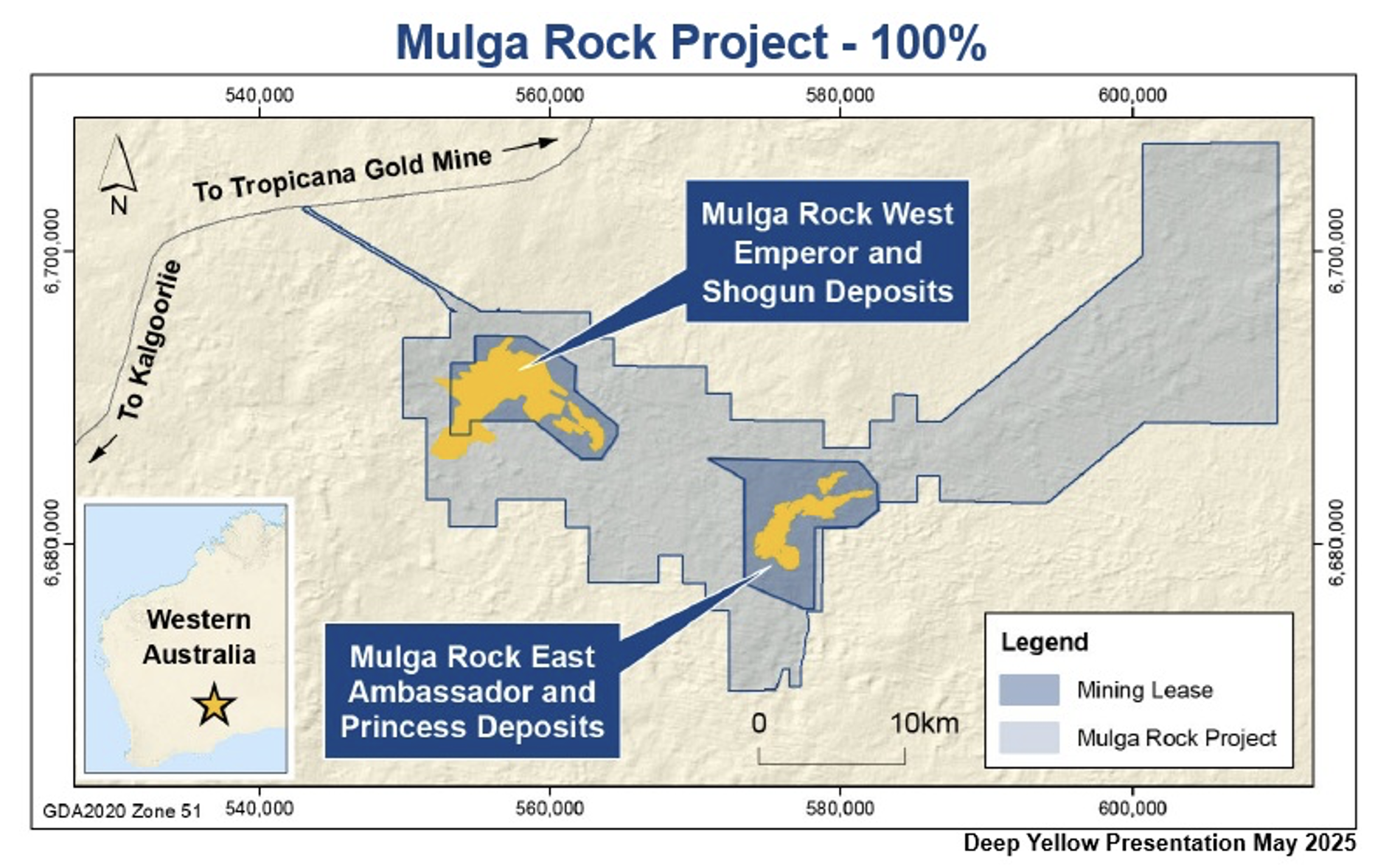
Acquired through the acquisition of VIMY, the Mulga Rock Project, which is located in Western Australia, has two mineralized areas, Mulga Rock East (consisting of the Ambassador and Princess deposits) and Mulga Rock West (Emperor and Shogun deposits). Deep Yellow’s primary focus in Australia is on the major resource areas in Mulga Rock East.
Mulga Rock is the only uranium play in Western Australia that has been granted mining leases and development approval, thereby reaching "Substantial Commencement" status, which clears the pathway to development under Western Australia mining regulations.
The current MRE is104.8 Mlbs. U3O8 Eq.
Mulga Rock Project Update
Since the results of the mini-pilot program were reported in July 2025, development work at Mulga Rock has focused on trade-off studies and process refinement work. The mini-pilot program tested extraction techniques and metal separation & recovery processes. The results provided sufficient data to revise the process flowsheet for the MRP in which uranium, base metals (Cobalt, Copper and Nickel) and rare earth elements (REEs) can be recovered. Trade-off studies are currently underway.
In late October 2025, Atlas Geophysics completed ground gravity and passive seismic surveys in order to explore for northeasterly extensions of the Mulga Rock East deposits. This geophysical work is a low-cost, early-stage project to start exploring for additional resources at Mulga Rock. The ground gravity survey consisted of acquiring data from 2,025 new gravity stations at spacings of 50 m to 100 m. The seismic survey consisted of 213 new passive seismic stations at spacings of 200m. Final deliverables were received in early November 2025, but the preliminary results are still in the process of being interpreted.
Revised Definitive Feasibility Study
A revised Definitive Feasibility Study incorporating uranium, base metals and rare earth elements is anticipated to be completed in the third quarter of calendar 2026. Process operating costs are expected to benefit greatly from the production cost credit due to the addition of critical minerals (base metals and rare earth elements) as byproducts. Also, there will be a complete revision of the Ore Reserve Estimate (ORE) with updates to the mining method, grade control, costs and scheduling.
Metallurgical Test Work (FY 2025)
During fiscal 2025, a mini-pilot plant tested the beneficiation of 1.4 tonnes of selected composite bulk samples (composed of fresh ore collected through a diamond core drilling program at the Ambassador deposit). The test work results validated and further optimized the processing methods to recover uranium, base metals and rare earth elements (REEs) at the Mulga Rock Project. The results fundamentally transformed the Mulga RockProject from a uranium-only project to a multi-metal operation with improved economics and lower operating costs by utilizing critical mineral revenue offsets.
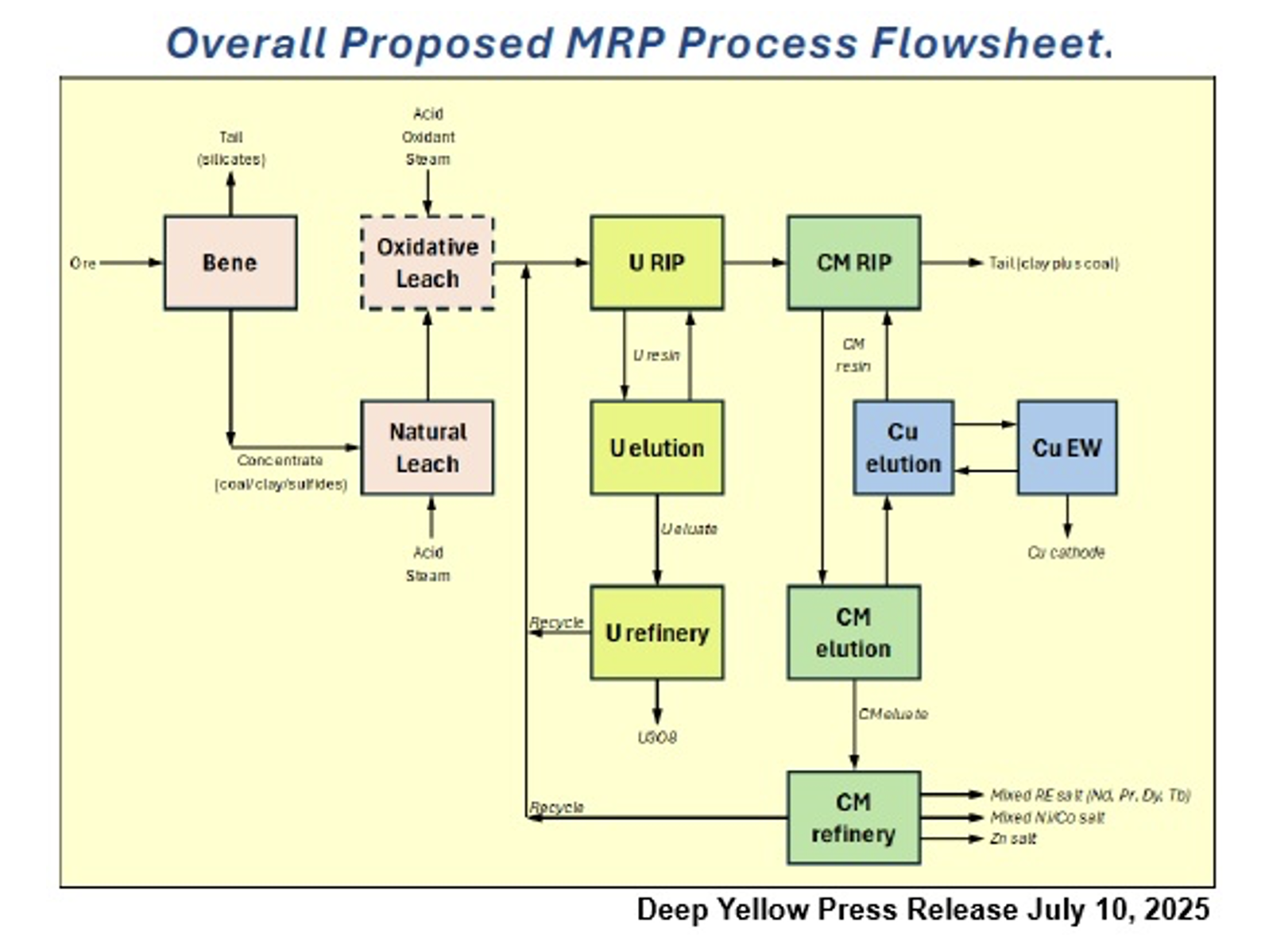
Two major breakthroughs occurred during the development of an updated process design for Mulga Rock. First, a pathway was developed to commercially extract uranium from a lignite deposit. Second, an innovative process was developed that allows the use of in-pit saline processed water, which eliminates the need for freshwater (and a freshwater borefield) in the process. Incorporating the advancements made during the mini-pilot plant test is expected to materially reduce operating costs (through the benefits from by-product production) and the environmental impact (by using in-pit saline processed water).
Other than the breakthroughs mentioned above, the process flow sheet involves beneficiation, natural & oxidative acid leaching of the beneficiation concentrate, a uranium Resin-in-Pulp (RIP) extraction circuit, a base metal &critical mineral RIP extraction circuit, uranium elution and refining, critical minerals elution refining and then in-pit tailings disposal (i.e., backfilling abandoned open pit surface mines with tailings).
The results of the 3-month mini-pilot plant metallurgical study were released on July 10, 2025. Overall indicated recoveries from the mini-pilot plant test were uranium 85%, nickel 50%, cobalt 50%, copper 77%, zinc 89%, and Rare Earth Elements (REEs), specifically neodymium, praseodymium, dysprosium and terbium 50%.
POTENTIAL PRODUCTION PROFILE of TUMES & MULGA ROCK PROJECTS
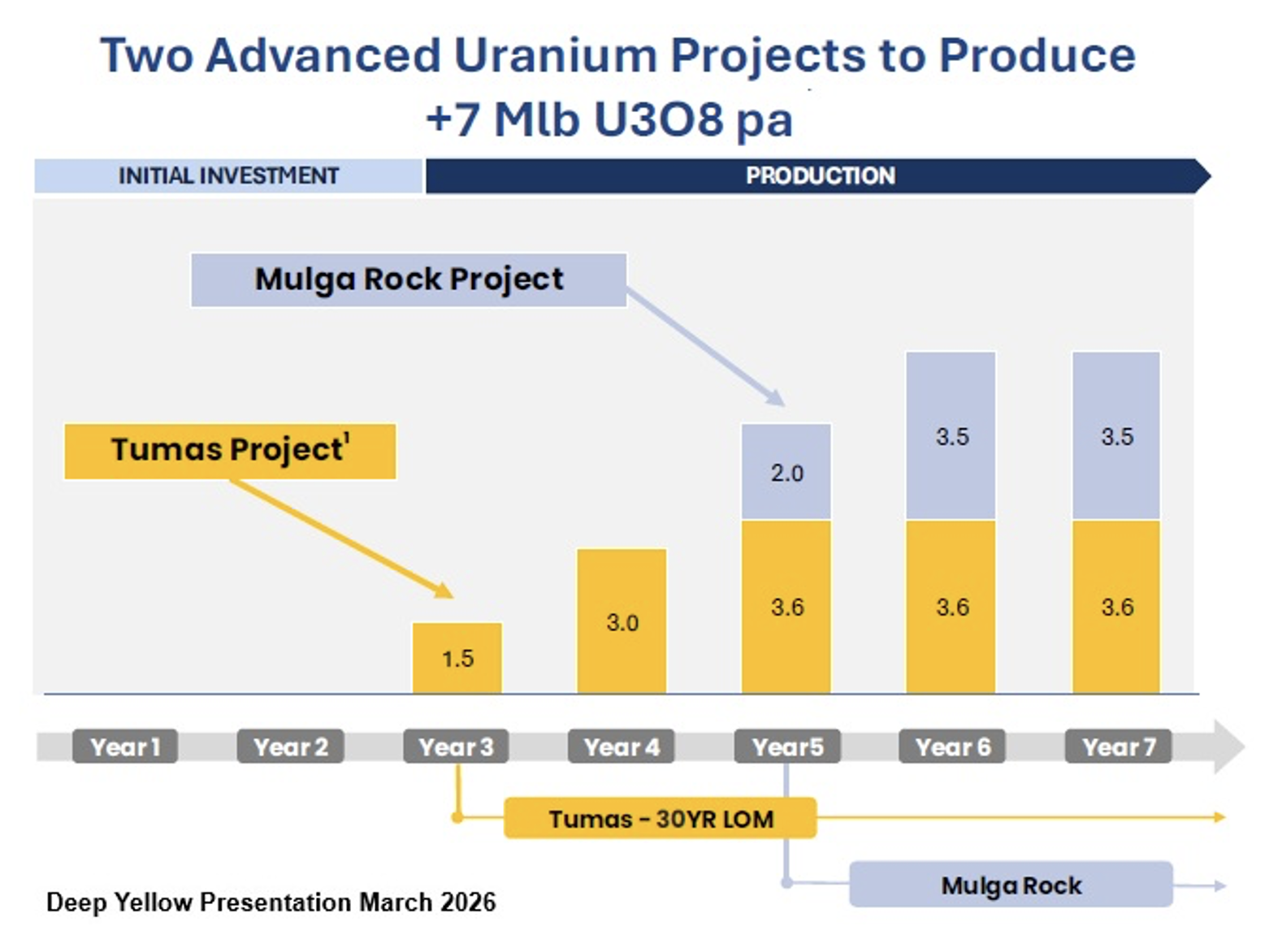
The March 2026 corporate presentation also provided an expectation for the company’s production profile. By year 7, annual production is expected to reach 7.1 Mlbs.
ALLIGATOR RIVER PROJECT in the Northern Territory (100%)
Alligator River Project Update
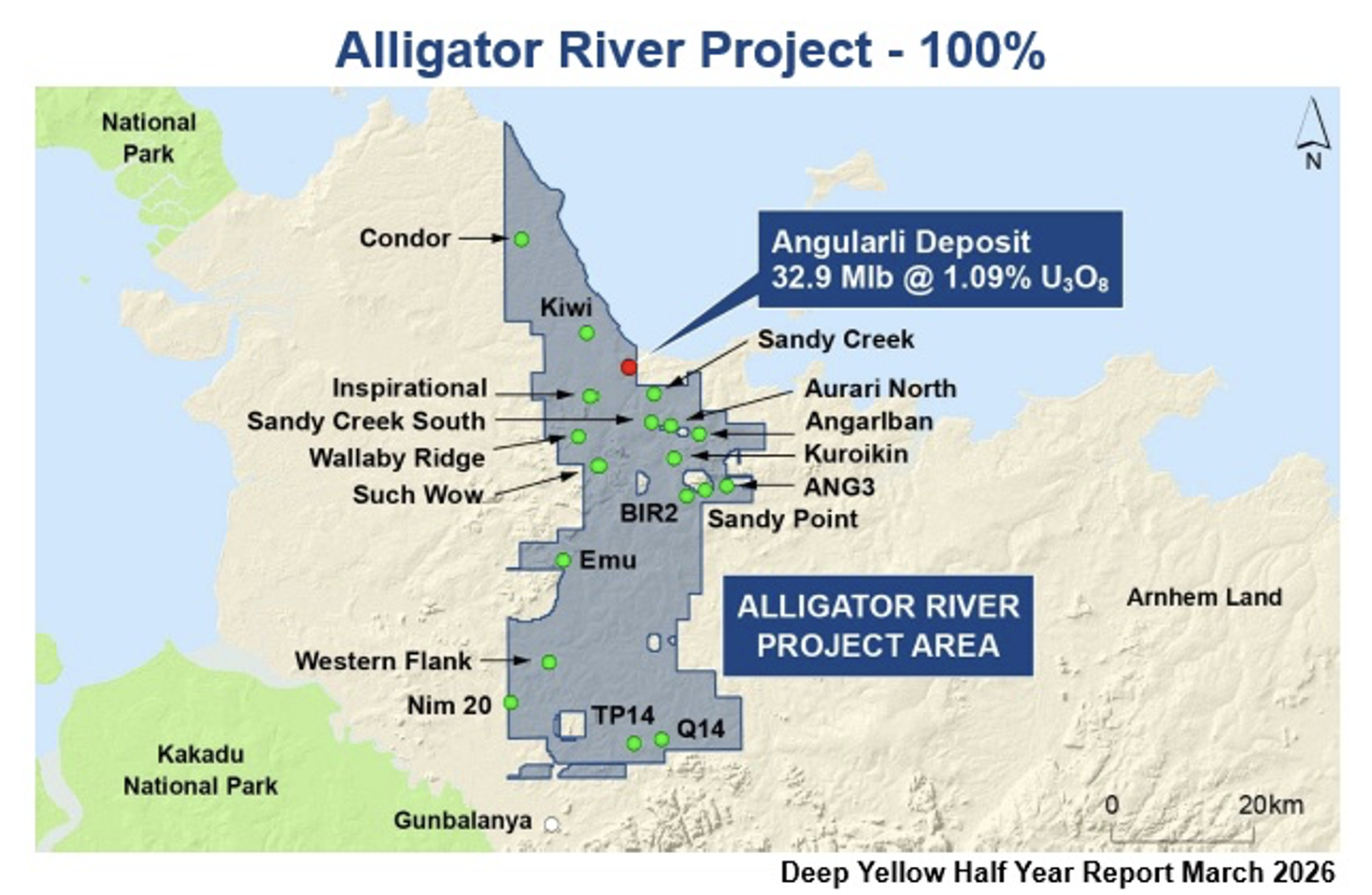
In the second half of calendar 2025, Deep Yellow completed exploratory field and drilling programs at the Alligator River Project in the Northern Territory of Australia. In addition to geological mapping, surface soil & rock chip geochemical sampling and targeted high-resolution geophysical seismic surveys, a 10-hole (4,660m) drilling program was completed targeting priority prospects at the Such Wow, TP14, Q14 and Angularli. The Northern Territory Government co-funded the drilling program at the Q14 and TP14 prospects.
A drill program was conducted between August 27th and November 3rd, 2025, which was comprised of 10 diamond core holes (2,754m) and 9 RC holes (1,906 m). A drilling highlight was at the previously untested Q14 prospect, where drill hole ARRC0025 intercepted a 22 m wide zone (from 78m–100m) with 8m at 458 ppm eU3O8 from 84 m, which was confirmed by diamond twinhole ARDD0025, which returned 3m at 523 ppm eU3O8 from 77m. In addition, the geology at Q14 shares features with the historic Nabarlek deposit.
At Such Wow, drilling intersected strongly altered sandstones within a strike-slip fault corridor identified that are consistent with unconformity-related uranium deposits.
High-resolution seismic surveys at the Condor prospect indicated the prospectivity for Ranger-style uranium mineralization.
Additionally, part of the surface soil sampling included termite mound sampling, which identified several strong geochemical anomalies north of the Angularli deposit that were subsequently targeted by the drill program.
The 2025 exploratory programs advanced management’s geological understanding of the Alligator River Project.
UPDATE ON THE URANIUM INDUSTRY
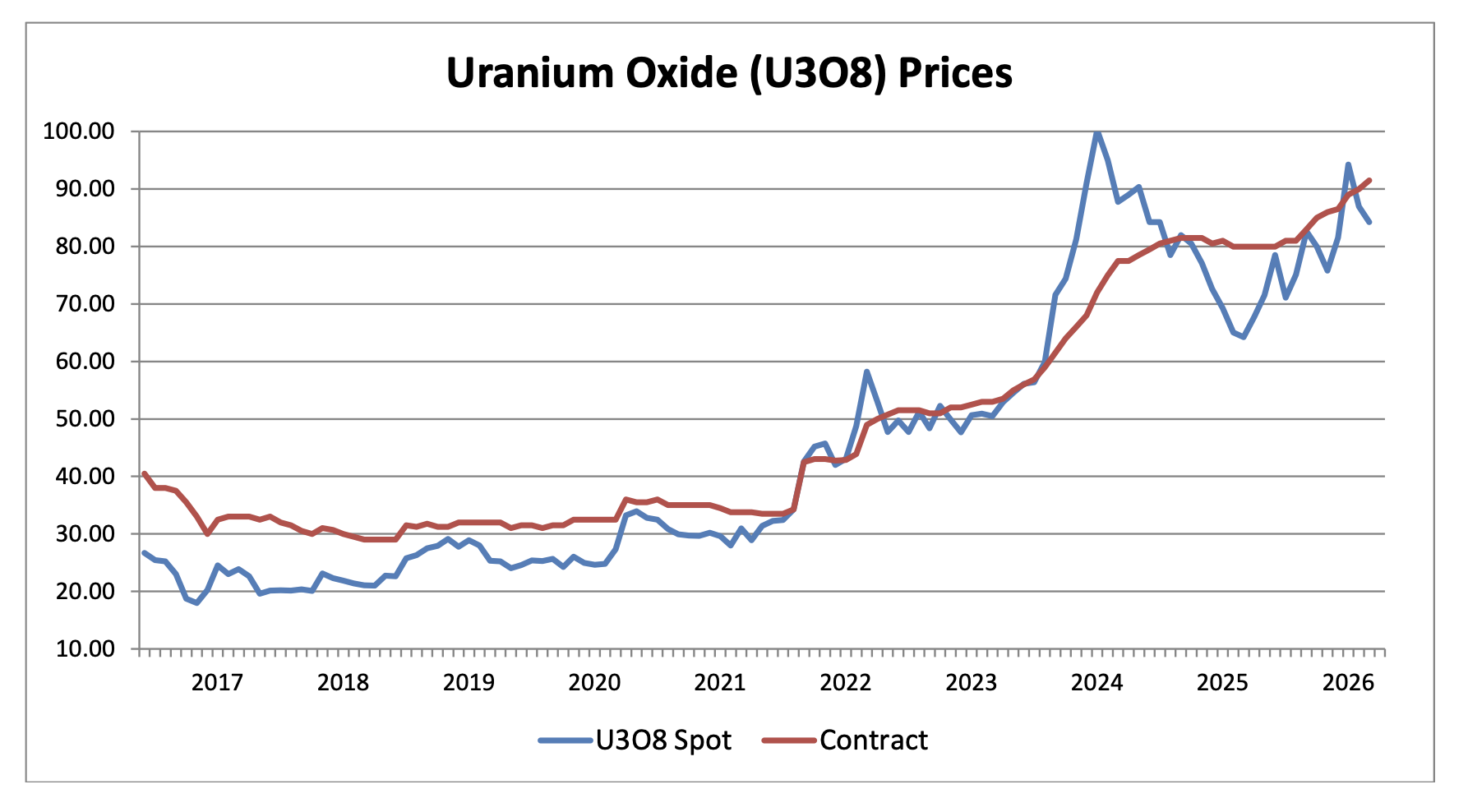
The spot price of U3O8rallied 46.8% from $63.50 per lb. U3O8 in mid-March 2025 to $94.28 per lb. in January 2026, before easing down to $84.25 in March 2026. Meanwhile, the long-term contract price has risen 14.4% to US$91.50 per/lb. from $80.
In November 2025, contract volume through the first nine months of 2025 had been very low, with only 50 Mlbs having been contracted in the long-term contract market, well below the estimated level of global replacement of 180 Mlbs +/- 25 Mlbs. However, a surge of demand for 66 Mlbs during the fourth quarter brought the full-year 2025 total volume to 116 Mlbs. Utility buyers started reacting to the realization that the structural supply deficit is deepening. Major producing mines are entering the end of their production cycles, coupled with declines in secondary supply. Nevertheless, despite the 4Q rally, the annual volume of 116 Mlbs remained below the estimated replacement rate.
For a brief period in January 2026, the uranium market shifted into backwardation, when the spot market traded at a premium to the contract market. This was a sign of a tightening near-term market that often precedes and later coincides with periods of increased demand, usually driven by nuclear-powered utilities shifting from deferred to active procurement as forward inventory coverage tightens. Currently, nuclear-powered utilities hold roughly 18–24 months of inventory versus a traditional target of 30–36 months.
VALUATION
Broadly speaking, the public uranium companies can be grouped into three segments: producers, development companies and exploration companies. Producers are actively mining and generating revenues. Exploration companies are prospecting and/or drilling to establish mineral resources. In between these two segments are the development companies that already have established resources and are advancing through the process to bring a mine in operation, generally from the point of initiating a Pre-Feasibility Study to the actual construction of a mine. The comparable companies to Deep Yellow fall into this category.
Further, the comparable companies have been narrowed through quantitative factors, particularly those with a market capitalization over $700 million and trading above $1.00 per share. This process captures a range of well-funded junior uranium development companies, which are listed in the table above. Currently, the P/B valuation of these comparable companies is depressed in the 2.88-to-12.08 range. With the expectation that Deep Yellow’s stock can attain a P/B ratio of 5.4, our valuation price target is US$2.54.
SUBSCRIBE TO ZACKS SMALL CAP RESEARCH to receive our articles and reports emailed directly to you each morning. Please visit our website for additional information on Zacks SCR.
DISCLOSURE: Zacks SCR has received compensation from the issuer directly, from an investment manager, or from an investor relations consulting firm, engaged by the issuer, for providing research coverage for a period of no less than one year. Research articles, as seen here, are part of the service Zacks SCR provides and Zacks SCR receives payments totaling a maximum fee of up to $50,000 annually for these services provided to or regarding the issuer. Full Disclaimer HERE.