By David Bautz, PhD
NASDAQ: FBLG
Business Update
Phase 1/2 Trial of CYWC628 Underway
On June 3, 2026, FibroBiologics, Inc. (NASDAQ: FBLG) announced that the first patients have been dosed in the Phase 1/2 trial of CYWC628, the company’s allogenic fibroblast cell therapy that is being developed for the treatment of diabetic foot ulcers (DFUs). Approximately 120 individuals are expected to be enrolled in the study that will test topically administered allogenic fibroblast-spheroid cell-based therapy compared to standard of care (SoC). Treatment will last for up to 12 weeks with either a high or low dose of CYWC628 plus SoC or SoC alone. Outcomes being examined include safety and wound healing, along with the collection of key clinical data to support CYWC628 as a potential cell therapy for chronic wound management. An interim analysis will be performed following six weeks of treatment to assess the safety and efficacy endpoints.
Fibroblasts have excellent therapeutic potential in the treatment of DFUs due to the critical role they play in every stage of wound healing, including hemostasis, inflammation, proliferation, and remodeling. Importantly, fibroblasts are the key cells that secrete extracellular matrix proteins that maintain all the tissues and organs in the body.
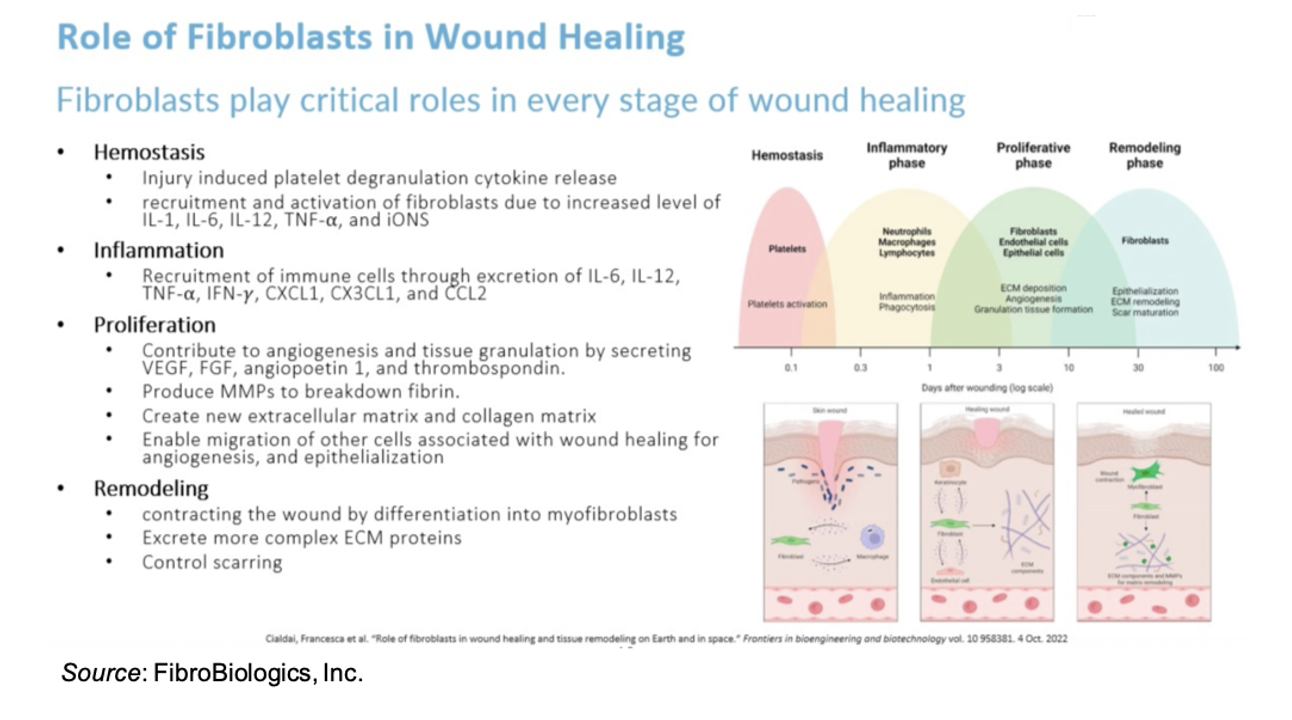
The company does not utilize single cell fibroblasts for treatment, but instead a fibroblast spheroid, which is composed of approximately 3,000 fibroblasts and is administered to the top of the wound, at which time the cells migrate from the surface of the wound and release various cytokines and growth factors to initiate the wound healing process. The use of spheroids is more practical from a therapeutic perspective as they have higher viability than single cells, they don’t require pre-culturing before administration, they can be easily frozen and thawed, and they have a significantly higher potency and efficacy compared to single cells.
Background on Diabetic Foot Ulcers
Diabetic foot ulcers (DFUs) affect approximately 19 million individuals worldwide, with approximately 1.6 million in the U.S. (Armstrong et al., 2023). It’s estimated that approximately 19-34% of patients with diabetes will develop a foot ulcer during their lifetime and the incidence rate for recurrence is 40% within one year and 65% within five years (Armstrong et al., 2017). Two of the leading risk factors for developing foot ulcers are peripheral neuropathy (sensory, motor, and autonomic) and peripheral vascular disease. These conditions can combine to cause alterations to a patient’s foot and decrease their awareness to injuries, thus resulting in ulcer formation.
Standard treatment for DFUs includes debridement, off-loading, managing any infection, moisture control, and adequate glycemic control. Chronic foot ulcers that are resistant to treatment are the precursors to amputation in 80% of cases. Approximately 50-60% of ulcers become infected and require broad spectrum antibiotics, with 20% of moderate to severe infections leading to lower extremity amputations. Diabetics who develop a foot ulcer have a 5-year mortality rate of approximately 30%, which then exceeds 70% for those with an amputation (Armstrong et al., 2023). Hence, the necessity to quickly treat diabetic foot ulcers is of the utmost importance for a patient’s health.
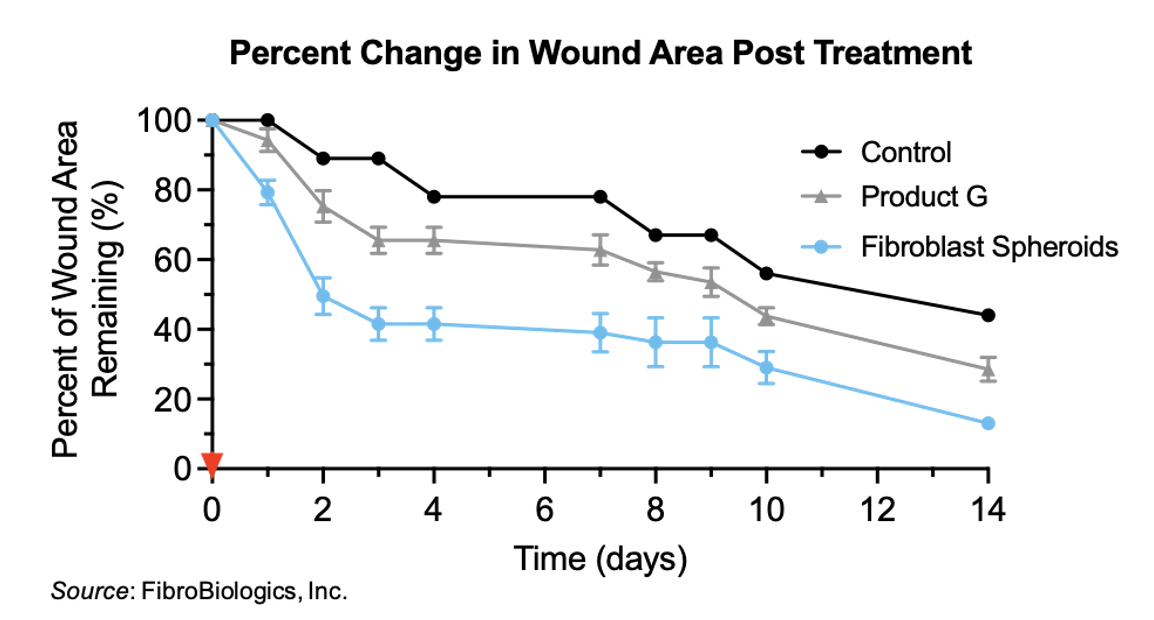
FibroBiologics has conducted preclinical experiments for the treatment of wounds in a diabetic mouse model. The following graph shows wound closure following a single treatment of a wound with control, an FDA approved DFU treatment (Grafix™), and fibroblast spheroids. The results show that there was a 58.5% reduction in wound size within four days of treatment for the fibroblast spheroid-treated wounds compared to a 34.5% reduction in wound size for Grafix and 22% for control-treated wounds, which was significant at all time points evaluated.
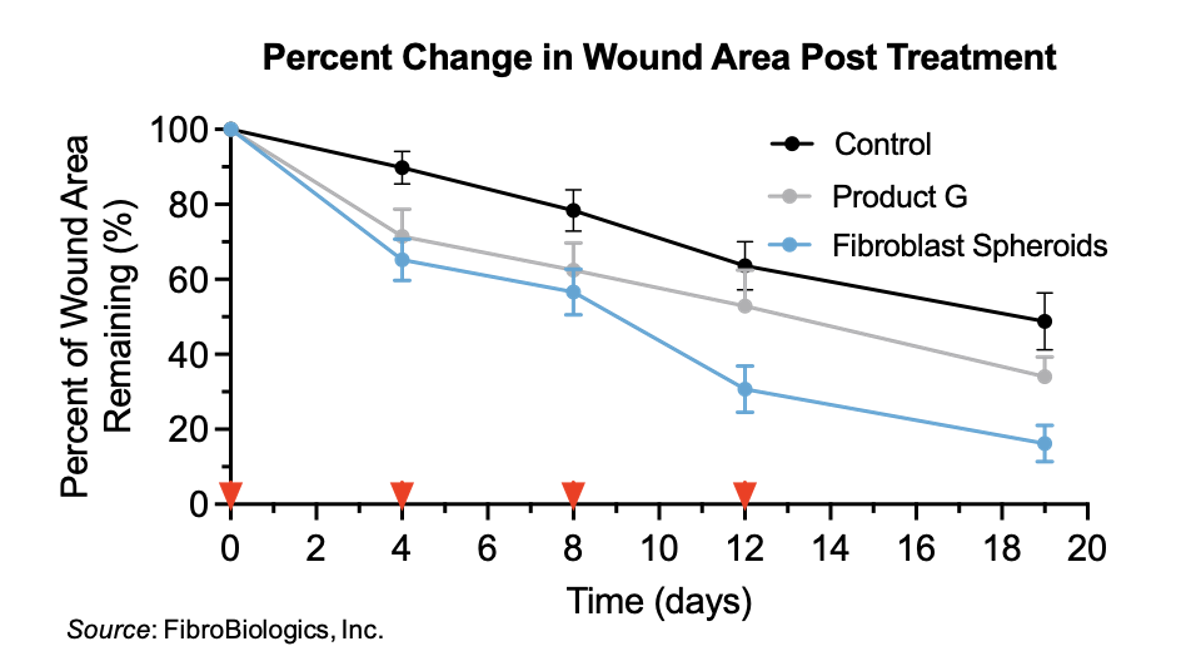
A separate model tested the ability of multiple treatments to improve wound closure. The following graph shows wound closure following four treatments with a control, Grafix, and fibroblast spheroids. The results show that at Day 19, there was an average 83.8% wound closure for fibroblast spheroid-treated wounds compared to 66.0% for Grafix (P<0.05) and 51.2% for control-treated wounds (P<0.01).
Conclusion
The initiation of the Phase 1/2 trial of CYWC628 is a major milestone for FibroBiologics. The company has compiled extensive preclinical data showing the potential for fibroblast therapy in the treatment of chronic wounds and we look forward to the results from the Phase 1/2 trial. These data will be critical to the company both to better understand the role fibroblasts can play in healing DFUs as well as how fibroblast-based therapy can be utilized to treat chronic disease conditions.
SUBSCRIBE TO ZACKS SMALL CAP RESEARCH to receive our articles and reports emailed directly to you each morning. Please visit our website for additional information on Zacks SCR.
DISCLOSURE: Zacks SCR has received compensation from the issuer directly, from an investment manager, or from an investor relations consulting firm, engaged by the issuer, for providing research coverage for a period of no less than one year. Research articles, as seen here, are part of the service Zacks SCR provides and Zacks SCR receives payments totaling a maximum fee of up to $50,000 annually for these services provided to or regarding the issuer. Full Disclaimer HERE.