By David Bautz, PhD
NASDAQ: ICU
READ THE FULL ICU RESEARCH REPORT
Business Update
Statistically Significant Survival Benefit Shown for QUELIMMUNE®
On October 22, 2026, SeaStar Medical Holding Corp. (ICU) announced the presentation of new positive data at the American Society of Nephrology (ASN) Kidney Week 2026. A copy of the presentation can be found here. The analysis compared survival in QUELIMMUNE-treated pediatric patients from the post-approval SAVE registry (along with one non-registry patient that had life-threatening acute kidney injury [AKI]) with clinically aligned cohorts from Kids’ Inpatient Database (KID), the largest publicly available, all-payer pediatric inpatient care database in the U.S[1]. A multi-pronged analytic approach was used that included both Bayesian and frequentist methods across primary, landmark, and time-to-event analyses. Highlights from the presentation include:
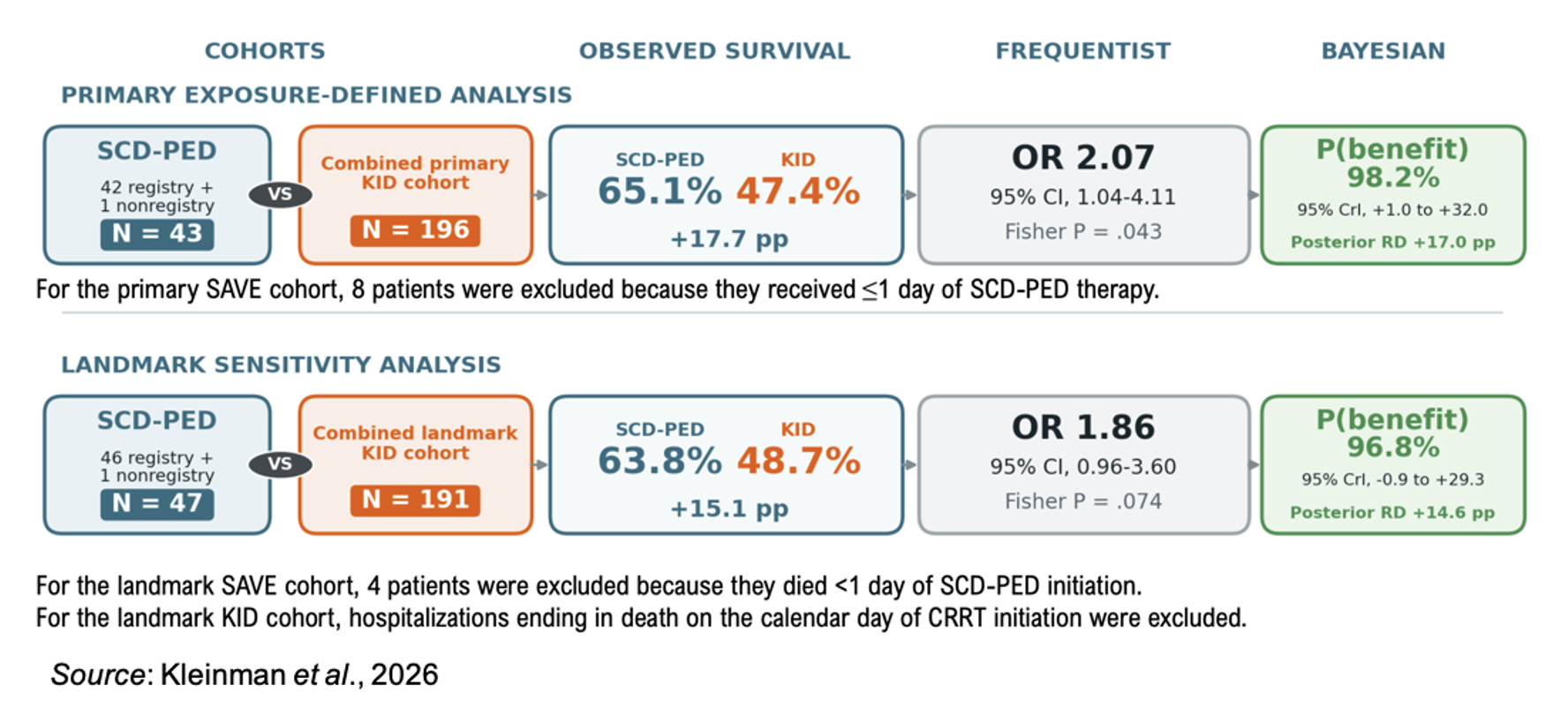
- At Day 90, 65.1% of patients treated with QUELIMMUNE were alive, compared to 47.4% for the KID cohort (P=0.0434; OR 2.07; 95% CI 1.04-4.11). The Bayesian probability of higher survival in QUELIMMUNE patients was 98.2%.
- Treatment with QUELIMMUNE resulted in a statistically significant survival to hospital discharge when compared to KID (P=0.04).
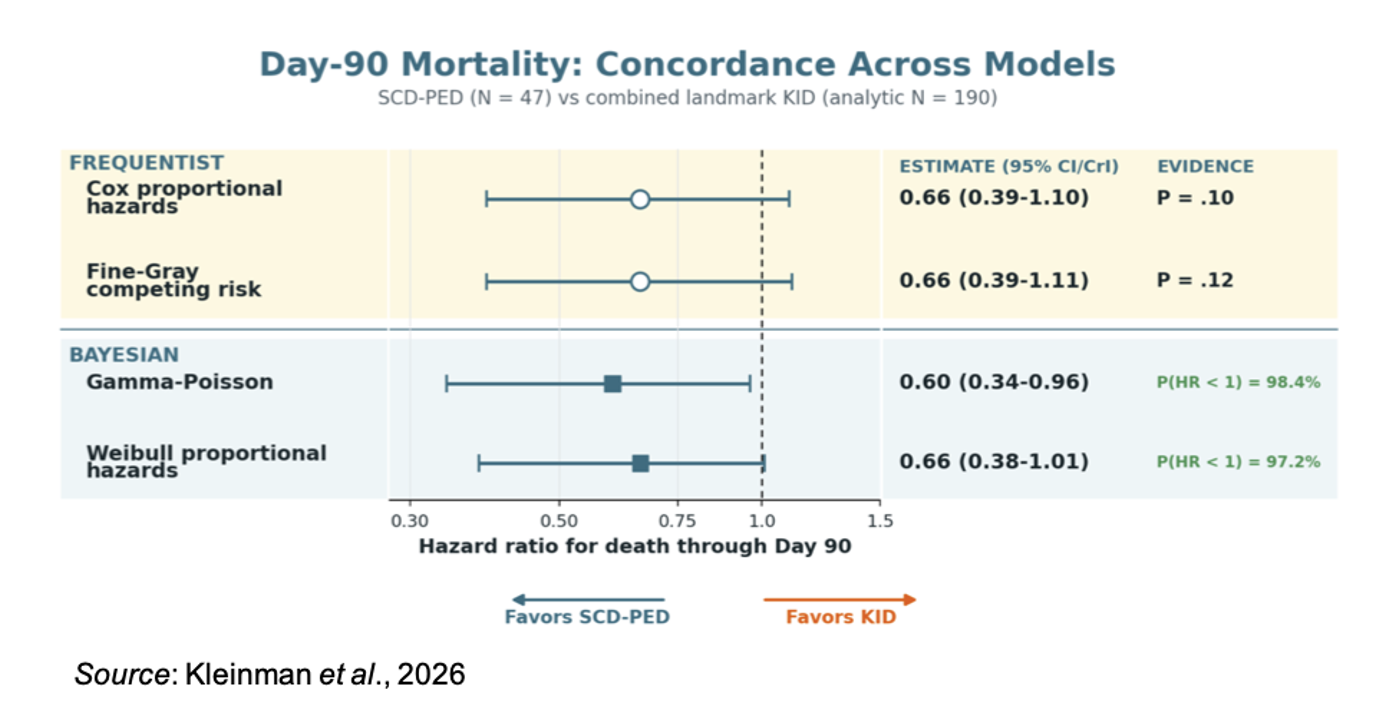
- The QUELIMMUNE cohort was favored in all four Day 90 mortality models, which showed 34% to 40% reduction in estimated hazard of mortality (HR range, 0.60-0.66).
- Renal Replacement Therapy (RRT) Independence was shown in 20 of the 24 survivors (83%) in the QUELIMMUNE cohort. These patients did not require RRT at baseline and RRT independence was shown at 90 Days.
- There were no device-related Adverse Events (AEs) in patients treated with QUELIMMUNE. In addition, all new bloodstream infections (12% overall and 6% during treatment) that occurred within 28 days of initiating QUELIMMUNE therapy were found to be unrelated to the device by an independent data and safety monitoring board.
Poster Presentation
This was an exploratory observational external-control cohort study that compared 50 SAVE + one non-registry case to two cohorts of patients from KID (KID 2019 and KID 2022). The eligible KID cases included patients who were ≥ 1 year old with sepsis, continuous RRT (CRRT), invasive mechanical ventilation (IMV), and vasopressor (VP) use or shock. There were two QUELIMMUNE analytical cohorts: Primary (>1 day of QUELIMMUNE therapy) and Landmark sensitivity (survival beyond 1-day post-initiation). The endpoints examined were survival at Day-90 (primary), Day-28, Day-60, and hospital discharge.
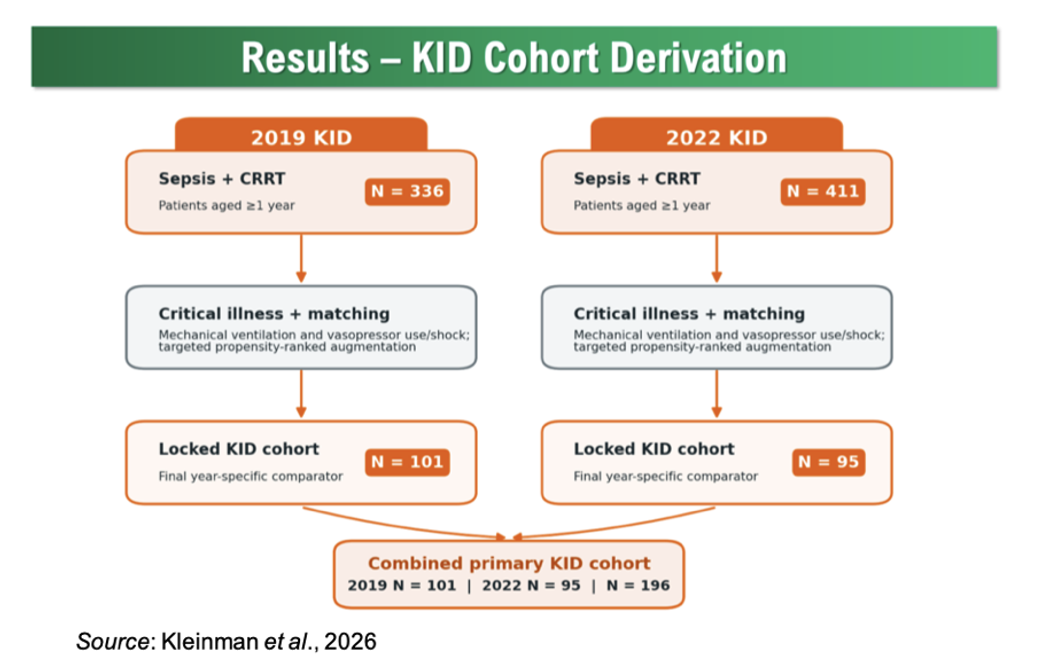
The following figure gives a breakdown of the KID Cohorts showing 101 cases in the KID 2019 cohort and 95 cases in the KID 2022 cohort for a total of 196 cases overall. There was 100% CRRT and >95% IMV and VP use/shock in both cohorts. Extracorporeal membrane oxygenation (ECMO) use was 33%-34% in SAVE compared to 28%-29% in KID. Other characteristics were similar between the cohorts except for age, with KID patients having a higher median age.
The results for Day-90 survival are shown below for both the primary and landmark analyses. For the primary SAVE cohort, eight patients were excluded due to receiving ≤ 1 day of QUELIMMUNE therapy. For the landmark SAVE cohort, four patients were excluded because they died < 1 day of starting QUELIMMUNE therapy. For the landmark KID cohort, any hospitalizations that resulted in death on the day CRRT was initiated were excluded. Treatment with QUELIMMUNE was associated with a higher 90-Day survival compared with the combined KID cohort in the primary analysis and showed directionally higher survival in the landmark analysis.
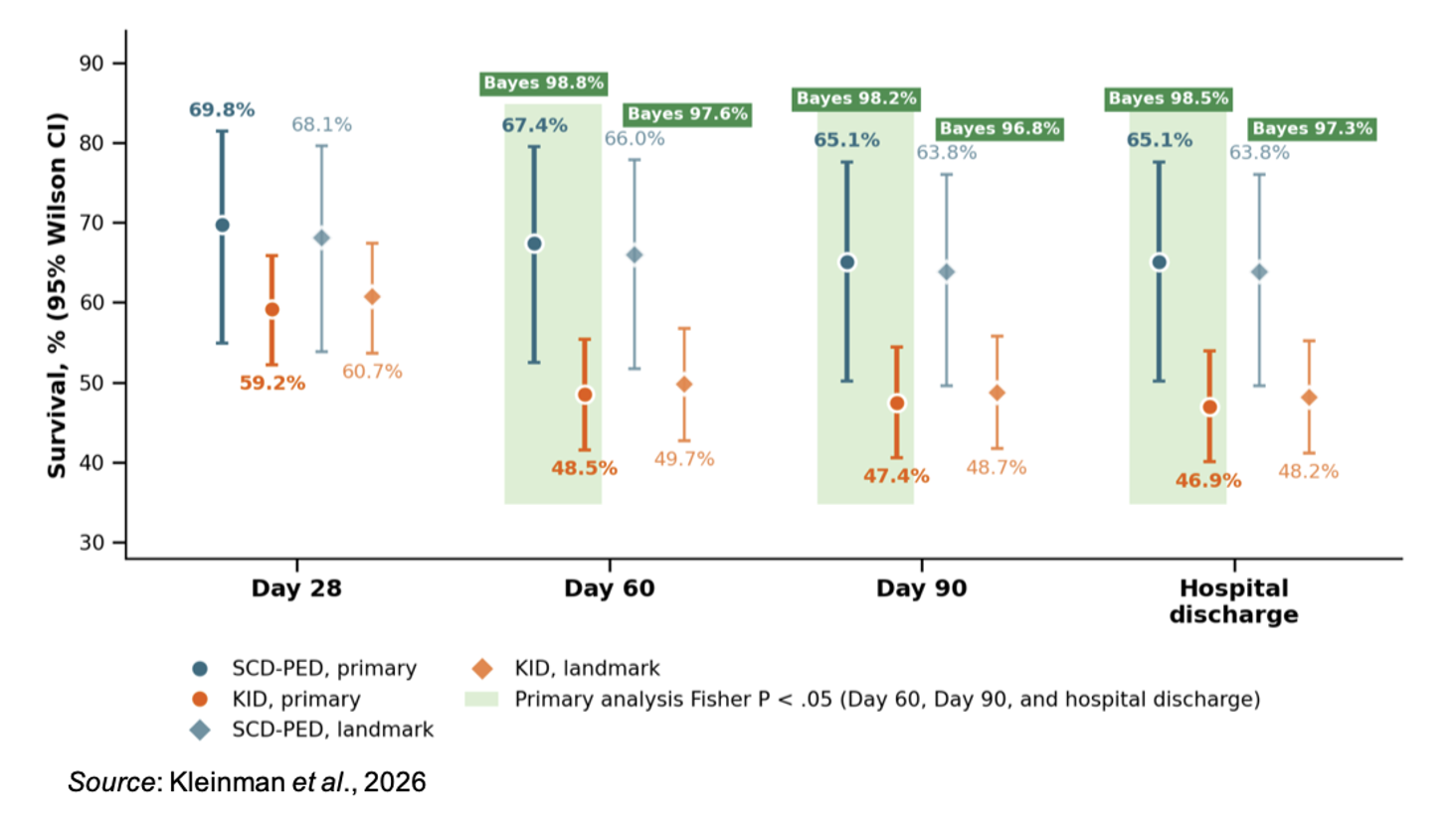
This survival benefit associated with QUELIMMUNE use was seen at all time points in both analyses and Day-60, Day-90, and in-hospital survival met the frequentist threshold in the primary analysis and exceeded the 95% Bayesian threshold in both analyses.
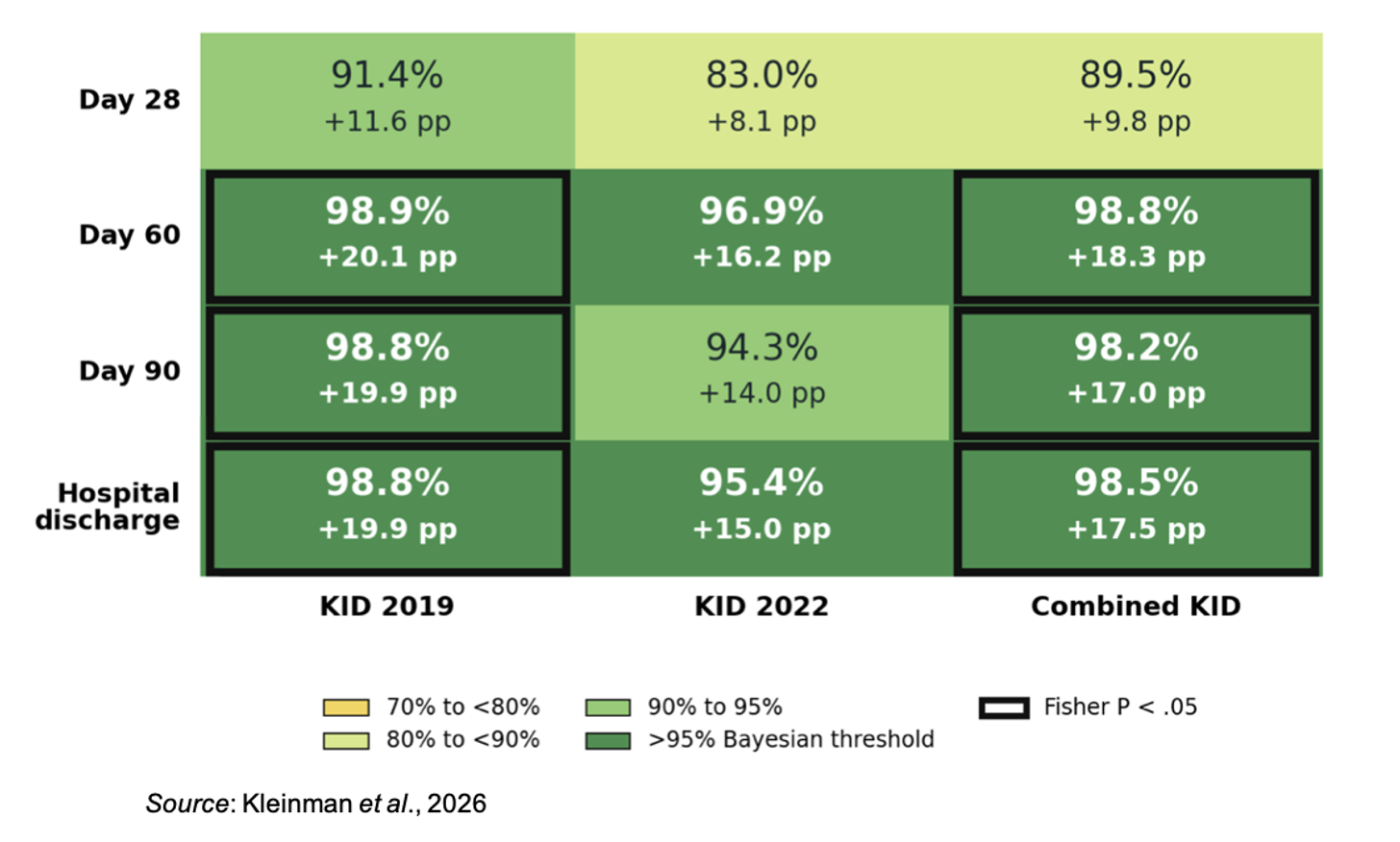
A survival analysis was performed comparing the SAVE data with each KID cohort and the combined cohort at Day 28, Day 60, Day 90, and hospital discharge. Each cell in the following image shows the posterior probability and posterior mean absolute survival difference (SAVE – KID). All 12 comparisons favored QUELIMMUNE treatment and eight of the 12 comparisons exceeded the predefined 95% Bayesian threshold.
Lastly, the following figure provides the outcome for four Day-90 mortality models, with all four models favoring QUELIMMUNE treatment and both Bayesian models exceeding 95%.
Breakthrough Device Designation for SCD Therapy
On October 7, 2026, SeaStar Medical announced that the U.S. FDA has granted Breakthrough Device Designation for its Selective Cytopheretic Device (SCD) therapy for the treatment of hyperinflammation in adult patients with sepsis or septic condition. Breakthrough Device Designation provides for accelerated development, assessment, and review for FDA approval of medical devices for life-threatening or irreversibly debilitating diseases or conditions. This is the seventh Breakthrough Device Designation for the SCD therapy that includes:
- Immunomodulatory dysregulation in adult patients with acute kidney injury;
- Systemic inflammatory response in adult cardiac surgery;
- Systemic inflammatory response in pediatric cardiac surgery to prevent post-operative adverse complications and outcomes;
- Acute or chronic systolic heart failure and worsening renal function due to cardiorenal syndrome awaiting LVAD implantation;
- Chronic systemic inflammation in end-stage renal disease (ESRD) requiring chronic dialysis;
- Adult patients with Hepatorenal Syndrome (HRS)
Financial Update
On October 5, 2026, SeaStar Medical announced the exercise of certain outstanding warrants to purchase up to 854,002 shares of SeaStar Medical’s common stock having exercise prices ranging from $6.38 to $7.62 per share at a reduced exercise price of $3.866 per share for gross proceeds of $3.3 million. In consideration for the exercise of those warrants, the company issued new warrants to purchase up to 1,708,004 shares of common stock at an exercise price of $3.616 per share, with 854,002 warrants set to expire five years after the effective date of the Resale Registration Statement and 854,002 warrants set to expire 18 months after the effective date of the Resale Registration Statement.
Conclusion
The data presented at ASN 2026 provides additional evidence that QUELIMMUNE is having a positive impact on survival in a population that is in desperate need of additional life-saving treatment options. Combined with the fact that there were no device-related adverse events reported, we believe these compelling data will drive further uptake of QUELIMMUNE at children’s hospitals nationwide. As a reminder, we continue to anticipate enrollment in the ongoing NEUTRALIZE-AKI trial in adult AKI patients to be completed by the end of 2026 or the first quarter of 2027 and the PMA application to be completed and submitted by the end of 2027. With no changes to our model, our valuation remains at $12.00.
SUBSCRIBE TO ZACKS SMALL CAP RESEARCH to receive our articles and reports emailed directly to you. Please visit our website for additional information on Zacks SCR.
DISCLOSURE: Zacks SCR has received compensation from the issuer directly, from an investment manager, or from an investor relations consulting firm, engaged by the issuer, for providing research coverage for a period of no less than one year. Research articles, as seen here, are part of the service Zacks SCR provides and Zacks SCR receives payments totaling a maximum fee of up to $50,000 annually for these services provided to or regarding the issuer. Full Disclaimer HERE.
________________________
[1] Data Source: The authors acknowledge the source of the data as the Kids’ Inpatient Database (KID), Healthcare Cost and Utilization Project (HCUP), Agency for Healthcare Research and Quality, Interpretations and conclusions from these data are those of the authors and do not constitute the findings, policies, or recommendations of the U.S. Government, the U.S. Department of Health and Human Services, or AHRQ.