By David Bautz, PhD
NASDAQ: MTVA
READ THE FULL MTVA RESEARCH REPORT
Business Update
Additional DA-1726 Data Demonstrate Significant Reduction in Uric Acid
MetaVia, Inc. (NASDAQ: MTVA) announced on November 12, 2026 additional positive interim results from Part 3B of the Phase 1 clinical trial of DA-1726 that showed a statistically significant reduction in serum uric acid following 16 weeks of once-weekly treatment. Mean uric acid levels in DA-1726-treated participants (n=15) declined by 1.02 mg/dL from a baseline of 5.89 mg/dL (P<0.001), compared with a 0.45 mg/dL increase from a baseline of 4.80 mg/dL in the placebo group (n=4). This resulted in a placebo-adjusted reduction of 1.47 mg/dL (95% CI: -2.0 to -0.9; P<0.001).
One interesting aspect of the finding is that participants entered the study with mean uric acid levels already within the normal range, suggesting that the reduction was not simply a result of correcting elevated baseline levels. Elevated uric acid has been associated with hepatic fat accumulation, insulin resistance, and alcohol consumption, making the finding potentially relevant to MetaVia’s new focus on metabolic dysfunction and alcohol-associated liver disease (MetALD) and alcohol-associated liver disease (ALD). The company believes the reduction in uric acid, combined with the previously reported improvements in liver fat, body weight, and glycemic control, supports the potential for DA-1726 to deliver broader metabolic benefits beyond weight reduction alone.
The uric acid findings complement the previously reported Part 3B interim results, which demonstrated a 68.1% placebo-adjusted reduction in liver fat, a 13.5% placebo-adjusted reduction in body weight, and a 0.24 percentage-point placebo-adjusted reduction in HbA1c. In addition, all five DA-1726-treated participants with baseline liver steatosis achieved MRI-proton density fat fraction (MRI-PDFF) levels below 5% by Day 109.
Completion of Extended 24-Week Phase 1 Part 3A Study
On November 17, 2026, MetaVia announced that the last patient had completed the final study visit in the extended 24-week Phase 1 Part 3A clinical trial of DA-1726. The company elected to extend the treatment period from the original 16 weeks to 24 weeks, with participants receiving 48 mg of DA-1726 once weekly for an additional eight weeks. MetaVia reported that encouraging preliminary safety and tolerability observations supported the decision to extend treatment, providing an opportunity to further evaluate the durability of treatment effects and longer-term safety.
The Part 3A and Part 3B studies used differing dosing regimens. In Part 3A, participants continued treatment at 48 mg weekly during the extension period, while Part 3B evaluated a 16-week titration regimen in which participants received 16 mg for four weeks, 32 mg for four weeks, and the target dose of 64 mg for the final eight weeks. The two study parts should therefore provide complementary information regarding the clinical profile of DA-1726, including the effects of different dose levels and treatment durations.
The completion of Part 3A is another important milestone as MetaVia prepares to transition DA-1726 into Phase 2 development. In particular, the additional eight weeks of treatment should provide insight into whether the reductions in body weight and metabolic parameters observed during the initial treatment period can be maintained with longer exposure. The extension also provides additional safety and tolerability information that could help guide dose selection for subsequent studies. We believe the full results from Parts 3A and 3B, which we anticipate in the first quarter of 2027, will be an important catalyst for MetaVia as it prepares to initiate a 48-week Phase 2 study in up to 150 patients with MetALD and ALD during the second half of 2027.
Preclinical Data Presented at ObesityWeek 2026 Highlight Differentiated Metabolic Effects of DA-1726
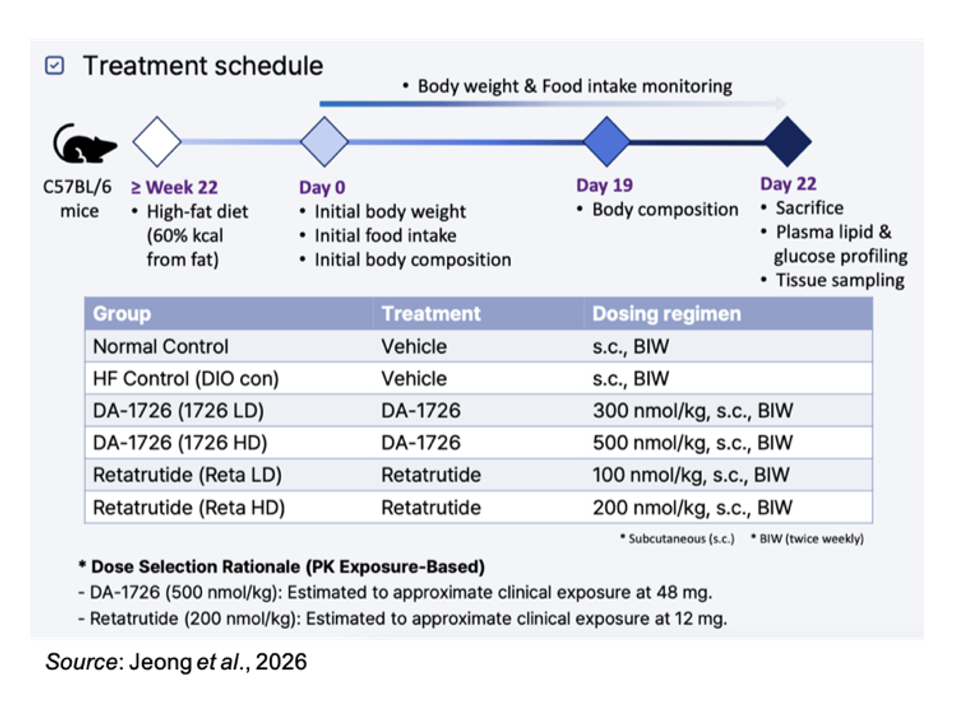
On November 16, 2026, MetaVia announced positive preclinical data from a head-to-head study comparing DA-1726 with retatrutide, Eli Lilly’s investigational triple GLP-1/GIP/glucagon receptor agonist. The data were presented at ObesityWeek 2026 in a poster titled “DA-1726 Demonstrates Comparable Weight Loss and Distinct Metabolic Profile Compared with Retatrutide.” A copy of the poster can be found here. The study evaluated the effects of the two compounds on body weight, food intake, body composition, plasma metabolic parameters, and gene expression associated with thermogenesis and energy expenditure in diet-induced obese (DIO) mice. The following image gives an overview of the study protocol, in which animals received twice-weekly subcutaneous injections of DA-1726 at doses of 300 or 500 nmol/kg or retatrutide at doses of 100 or 200 nmol/kg for approximately three weeks. The higher doses were selected based on pharmacokinetic exposure estimates intended to approximate clinical exposures of 48 mg for DA-1726 and 12 mg for retatrutide.
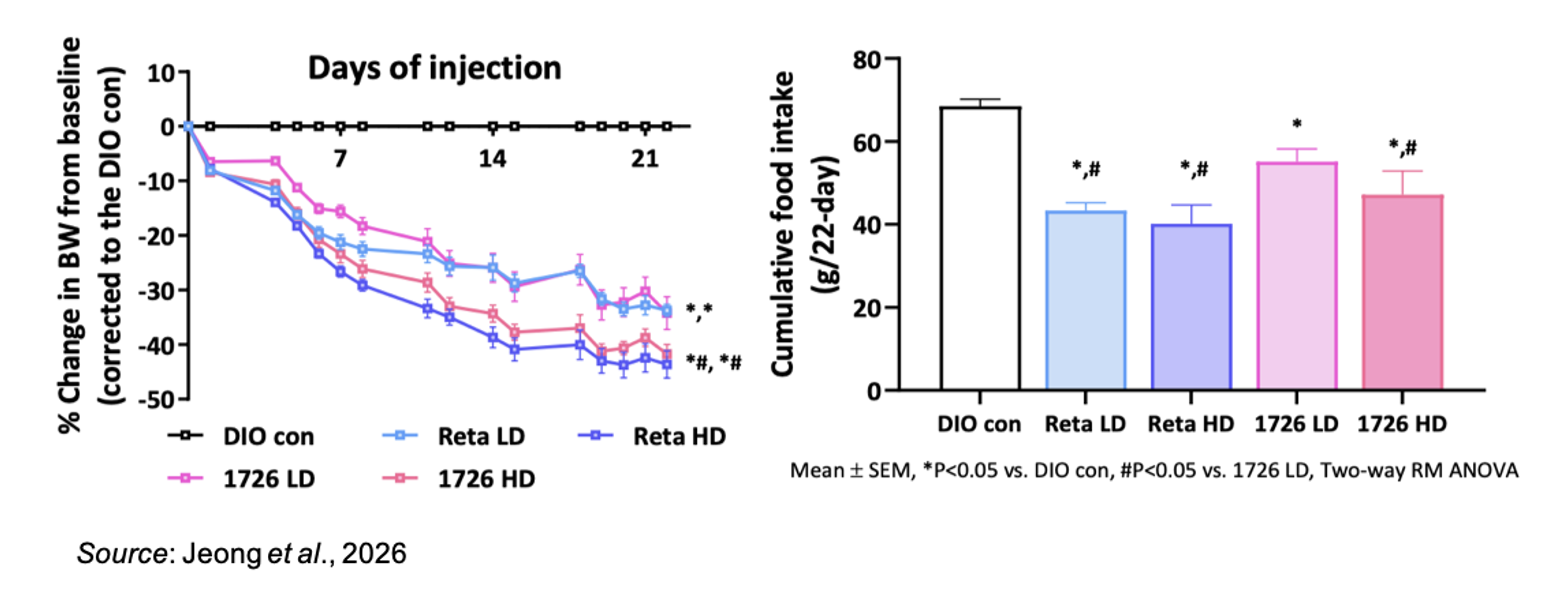
The following figure shows the decrease in body weight (left figure) and the cumulative food intake (right figure) over the course of the study. Compared to DIO control mice, DA-1726 produced body weight reductions of 34.2% and 41.7% at the low and high doses, respectively, compared to reduction of 33.7% and 43.6% with retatrutide. Thus, the two compounds demonstrated comparable weight loss at both levels. Interestingly, DA-1726 achieved similar weight loss with less suppression of food intake. Food intake declined 19.6% and 31.2% with low- and high-dose DA-1726, respectively, compared with reductions of 36.7% and 41.4% with retatrutide. Both compounds also demonstrated comparable effects on body composition, including substantial reductions in fat mass.
One of the most interesting findings from the study was the effect of DA-1726 on fibroblast growth factor 21 (FGF21), a hormone involved in the regulation of lipid and carbohydrate metabolism. DA-1726 produced a statistically significant increase in hepatic Fgf21 gene expression (P<0.05) along with increased liver FGF21 protein and circulating FGF21 levels (P<0.001 at the higher dose). The compound also induced greater expression of genes associated with brown adipose tissue thermogenesis and white adipose tissue browning compared with retatrutide. At the higher dose, expression of thermogenesis-related genes, including Ucp1, Ppargc1a, and Fgf21, was increased in brown and inguinal white adipose tissue, with several markers demonstrating significantly greater expression than observed with high-dose retatrutide.
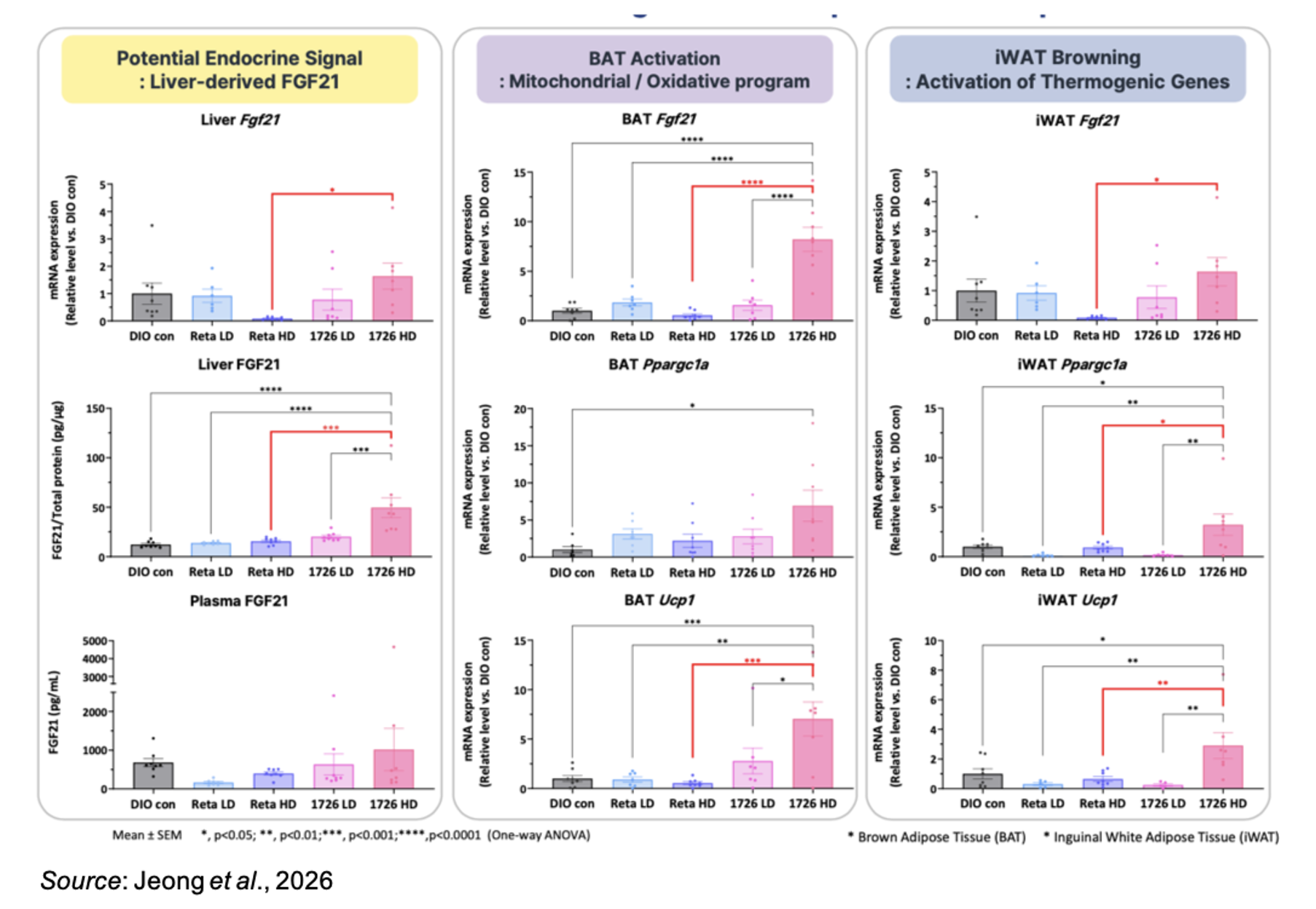
We believe the findings from this study are particularly interesting in the context of MetaVia’s decision to prioritize DA-1726 development in MetALD and ALD rather than compete directly in the increasingly crowded obesity market. Improvements in hepatic fat accumulation, lipid metabolism, and glucose regulation could be important therapeutic objectives in these populations beyond weight reduction alone. And while the importance of the observed changes in Fgf21 expression and thermogenesis remain to be seen, we believe these results provide additional mechanistic support for DA-1726 and support the evaluation of the compound in liver-related metabolic disease.
Financial Update
On November 13, 2026, MetaVia announced financial results for the third quarter of 2026. As expected, the company did not report any revenues in the third quarter of 2026. R&D expenses for the third quarter of 2026 were approximately $2.6 million compared to approximately $1.9 million for the third quarter of 2025. The increase was primarily due to higher direct R&D expenses related to DA-1726 product development, partially offset by lower indirect consulting experience. G&A expenses were approximately $2.1 million for the third quarter of 2026 compared to approximately $1.6 million in the third quarter of 2025. The increase was primarily due to higher legal and professional fees, consulting expenditures, and employee compensation and benefits.
As of September 30, 2026, MetaVia had approximately $8.8 million in cash and cash equivalents. As of November 9, 2026, MetaVia had approximately 6.7 million shares outstanding and, when factoring in stock options and warrants, a fully diluted share count of approximately 15.7 million.
Conclusion
The recent developments for MetaVia represent a series of positive steps for the company as it advances DA-1726 toward development in MetALD and ALD. The additional uric acid findings are noteworthy because they suggest that DA-1726 may have broader metabolic effects beyond its demonstrated reductions in liver fat and body weight. The ObesityWeek preclinical findings provide further mechanistic support for DA-1726, particularly the increased Fgf21 expression and evidence of greater energy expenditure relative to retatrutide. Lastly, the completion of the extended 24-week Phase 1 Part 3A study sets up the next major catalyst for the company in the first quarter of 2027 and should provide important information regarding the durability of treatment effects and longer-term tolerability. With no changes to our model, our valuation remains at $25 per share.
SUBSCRIBE TO ZACKS SMALL CAP RESEARCH to receive our articles and reports emailed directly to you. Please visit our website for additional information on Zacks SCR.
DISCLOSURE: Zacks SCR has received compensation from the issuer directly, from an investment manager, or from an investor relations consulting firm, engaged by the issuer, for providing research coverage for a period of no less than one year. Research articles, as seen here, are part of the service Zacks SCR provides and Zacks SCR receives payments totaling a maximum fee of up to $50,000 annually for these services provided to or regarding the issuer. Full Disclaimer HERE.