By David Bautz, PhD
NASDAQ: MTVA
READ THE FULL MTVA RESEARCH REPORT
Business Update
Treatment with DA-1726 Shows No Evidence of Cardiovascular Changes
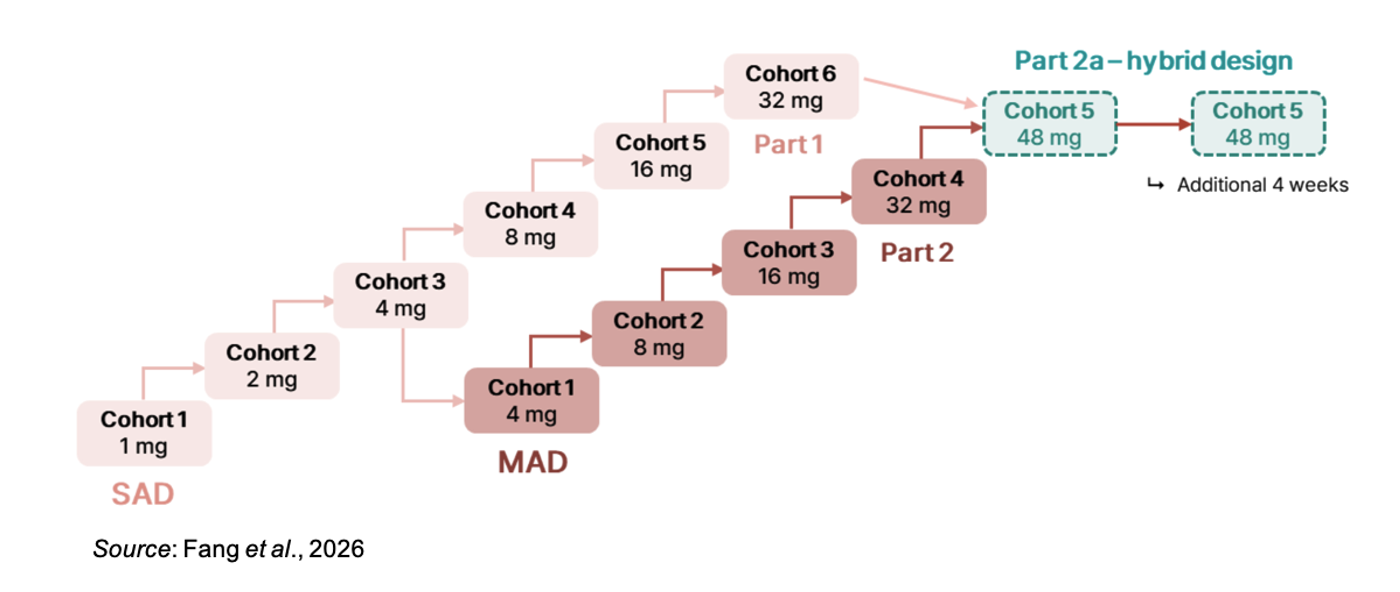
On May 26, 2026, MetaVia, Inc. (NASDAQ: MTVA) announced the presentation of new Phase 1 data for DA-1726, the company’s oxyntomodulin analog agonist that targets glucagon-like peptide-1 receptors (GLP1R) and glucagon receptors (GCGR). The data were presented in a late-breaking poster session at the European Association for the Study of the Liver Congress 2026 (EASL 2026). The Phase 1 study included both single ascending dose cohorts and multiple ascending dose cohorts at different dose levels, as shown below. The presentation at EASL included data from the 48 mg cohorts.
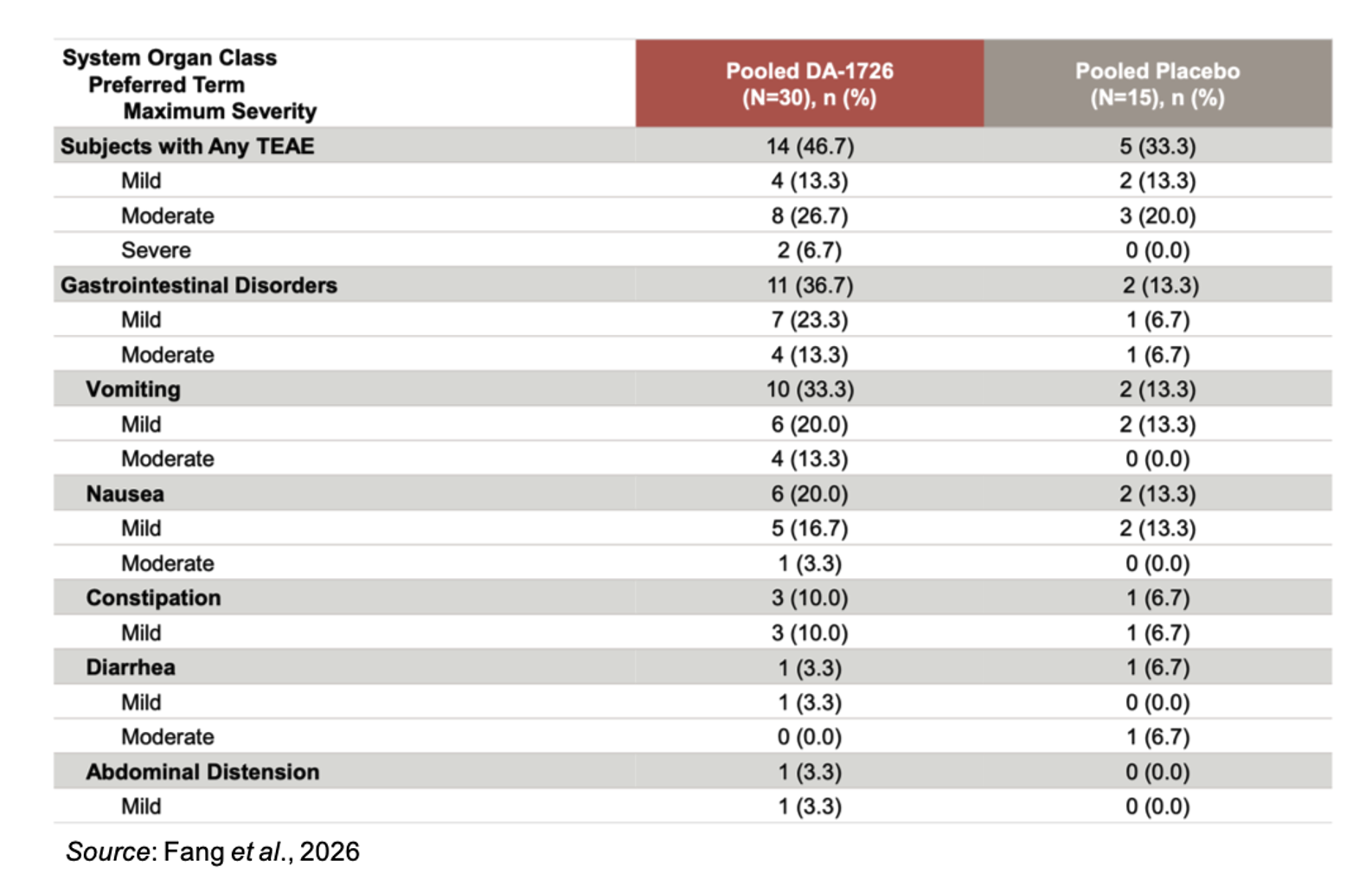
Thus far, DA-1726 has had a favorable tolerability profile, as shown in the following table. Gastrointestinal adverse events (AEs) have been mostly mild-to-moderate in severity as well as being transient. There have been no serious AEs reported or any treatment-related discontinuations.
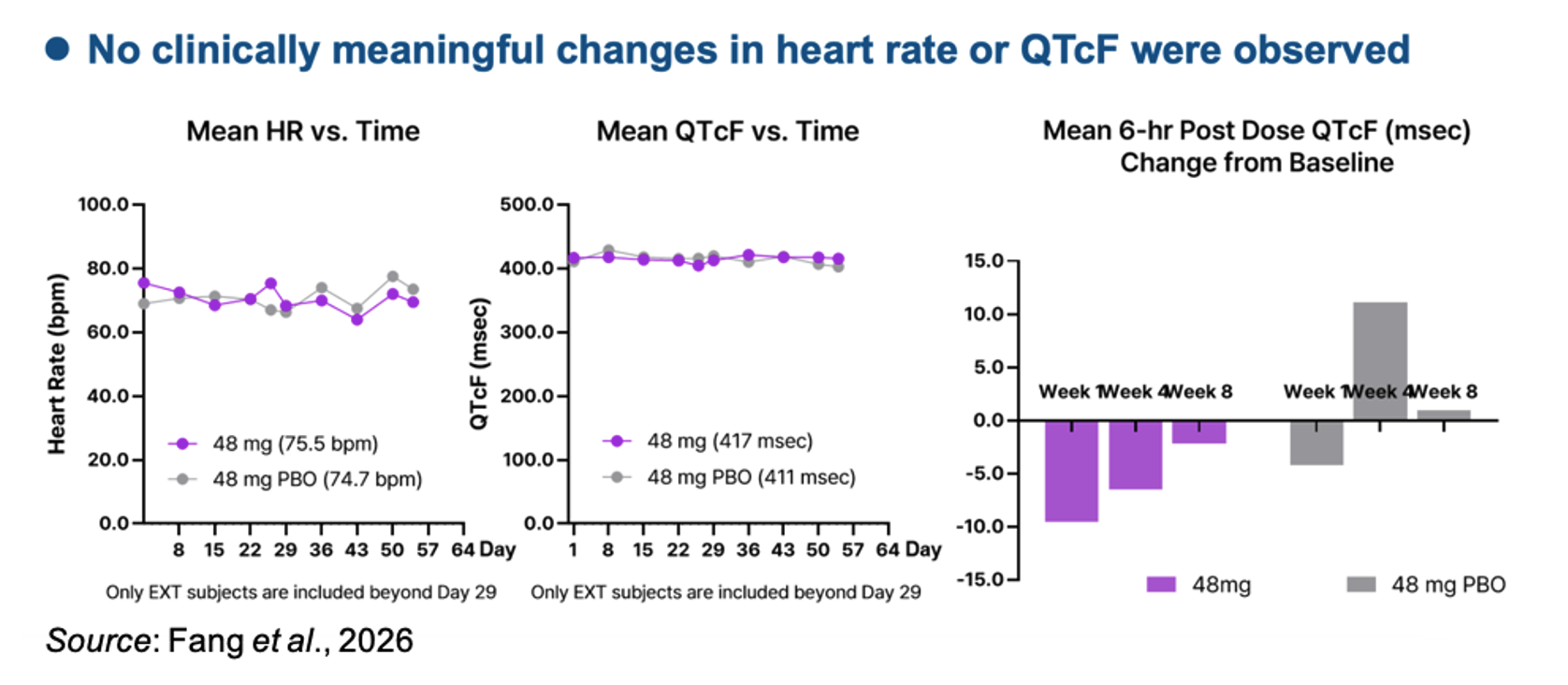
Perhaps most importantly of all, there have been no clinically meaningful changes in heart rate or QTcF, which is the corrected QT interval (the time it takes for the heart’s lower chambers to electrically reset between beats) adjusted for heart rate using the Fridericia correction formula. A rising QTcF suggests there may be altered cardiac ion channel activity (a potential arrhythmia risk), which can occur with some pharmaceuticals. Normal absolute QTcF numbers are generally <450 msec for men and <470 msec for women. As the QTcF rises >500 msec, it can be cause for concern. In addition, drugs that target glucagon receptors can theoretically increase heart rate more so than pure GLP-1 agonists. The data for DA-1726 show that the QTcF values remain near ~410-420 msec, and show no increase toward 500 msec. In fact, if anything, the QTcF numbers decrease slightly for those treated with DA-1726. In addition, the recorded heart rates remained roughly stable (65-75 bpm). Thus, we see no effect, thus far, of DA-1726 on cardiovascular parameters.
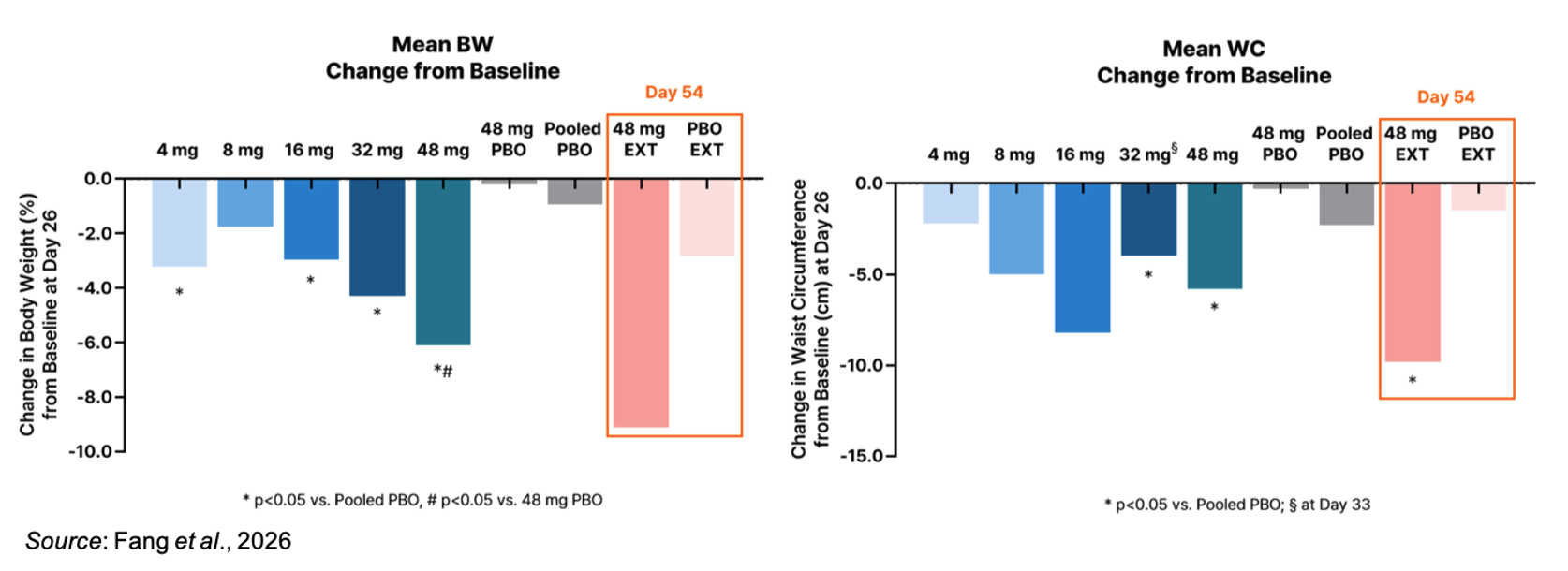
In regards to body weight (BW), DA-1726 48 mg showed an average decrease of -6.1% at Day 26 and -9.1% at Day 54, with no plateau seen. Waist circumference (WC) also showed a substantial reduction of -5.8 cm at Day 26 and -9.8 cm at Day 54.
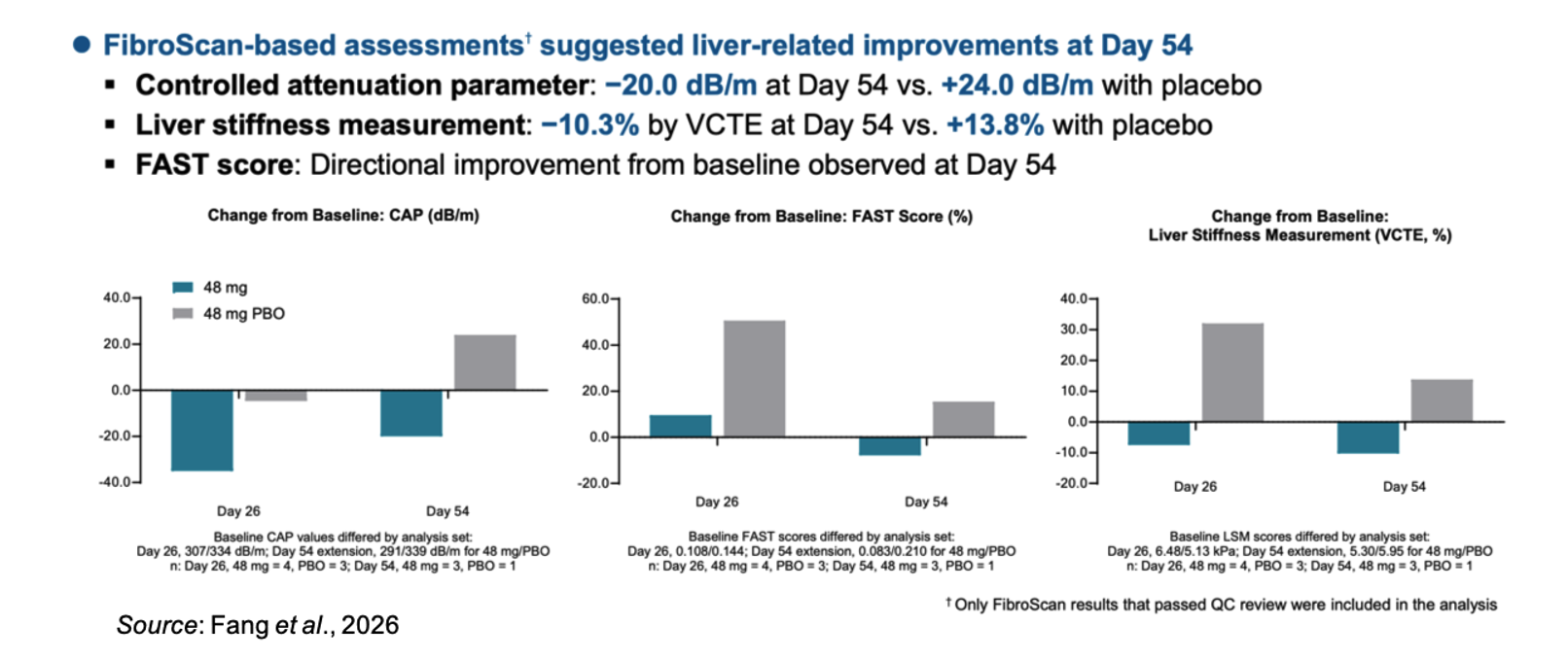
Lastly, FibroScan was utilized to monitor liver fat (CAP), fibrosis/inflammation (Liver Stiffness), and a marker of active fibrotic MASH (FAST Score). Treatment with DA-1726 resulted in a decrease in CAP score, which signifies a reduction in liver fat. This is in contrast to placebo-treated patients that saw an increase in CAP score. The same trend was true for Liver stiffness, which showed a decrease for DA-1726 treated participants compared to an increase for those treated with placebo. Lastly, the FAST score showed a directional improvement from Day 26 to Day 54 for those treated with DA-1726. While the sample size is small, these data point to DA-1726 showing preliminary signs of improving liver fat accumulation and liver health biomarkers after only eight weeks of treatment.
Overall, we view the data collected so far for DA-1726 as very encouraging in regards to weight loss and its potential in liver health while showing no obvious cardiac safety concerns.
Phase 1 Part 3 Trial of DA-1726 Continues
In April 2026, MetaVia announced the first patient was dosed in the company’s Phase 1 Part 3 study of DA-1726. The trial is planning to enroll 40 obese but otherwise healthy individuals across two parts, with 20 subjects per part randomized 4:1 (16 active; 4 placebo). Part 3A will evaluate a one-step titration regimen with 16 mg DA-1726 for four weeks followed by 48 mg DA-1726 for 12 weeks. Part 3B will evaluate a two-step titration regimen, with 16 mg DA-1726 for four weeks, 32 mg DA-1726 for four weeks, and 64 mg DA-1726 for eight weeks. The primary endpoints include monitoring adverse events (AEs), serious adverse events (SAEs), treatment-emergent adverse events (TEAEs), and AEs leading to discontinuation. Secondary and exploratory endpoints including pharmacokinetic (PK) profiling and evaluation of metabolic, glycemic, lipid, and body composition measures, including weight, waist circumference, and body mass index (BMI). We anticipate topline results in the fourth quarter of 2026.
Conclusion
We are glad to see that there are no obvious cardiac safety signals thus far for DA-1726 and we are hopeful this will help to quell any investor hesitation that may exist due to the compounds targeting of glucagon receptor. The company will continue to collect safety and tolerability data on the drug, however at this point we are confident that DA-1726 is unlikely to have any cardiovascular issues. We look forward to the topline results for Phase 1 Part 3, which we continue to anticipate in the fourth quarter of 2026. With no changes to our model, our valuation remains at $30 per share.
SUBSCRIBE TO ZACKS SMALL CAP RESEARCH to receive our articles and reports emailed directly to you each morning. Please visit our website for additional information on Zacks SCR.
DISCLOSURE: Zacks SCR has received compensation from the issuer directly, from an investment manager, or from an investor relations consulting firm, engaged by the issuer, for providing research coverage for a period of no less than one year. Research articles, as seen here, are part of the service Zacks SCR provides and Zacks SCR receives payments totaling a maximum fee of up to $50,000 annually for these services provided to or regarding the issuer. Full Disclaimer HERE.