By John Vandermosten, CFA
NASDAQ: RADX
RAD 101 Phase IIb Second Interim Data Analysis
Approximately three months after the first interim readout from the RAD 101 Phase IIb trial, Radiopharm Theranostics Limited (NASDAQ: RADX) announced a second interim analysis on March 24th, 2026. The new data includes results from the first 20 out of 30 patients. 90% of the treated patients (18/20) dosed with RAD 101 achieved concordance between Positron Emission Tomography (PET) imaging and Magnetic Resonance Imaging (MRI), which is the primary endpoint. The results showed significant and selective tumor uptake of RAD 101 in brain metastases. Standard of Care (SoC) imaging relies on MRI, but does not fully differentiate between necrotic tissue and active tumor, which generates equivocal results.
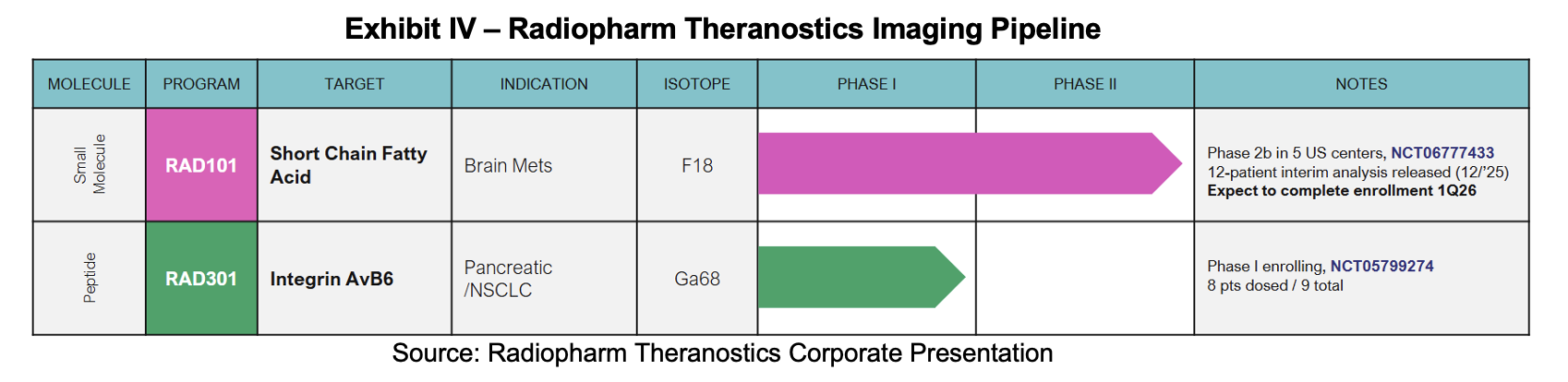
As of the interim report date, the trial had enrolled 27 of the targeted 30 patients, and Radiopharm believes that it is on track to complete the trial in April 2026. Topline results are expected in the May and June timeframe. These will help guide interactions with the FDA to design the pivotal trial required for registration. The webcast that followed the press release included Radiopharm CEO Riccardo Canevari, Chief Medical Officer Dr. Dimitris Voliotis, and principal investigator on the trial Dr. Harshad Kulkarni.
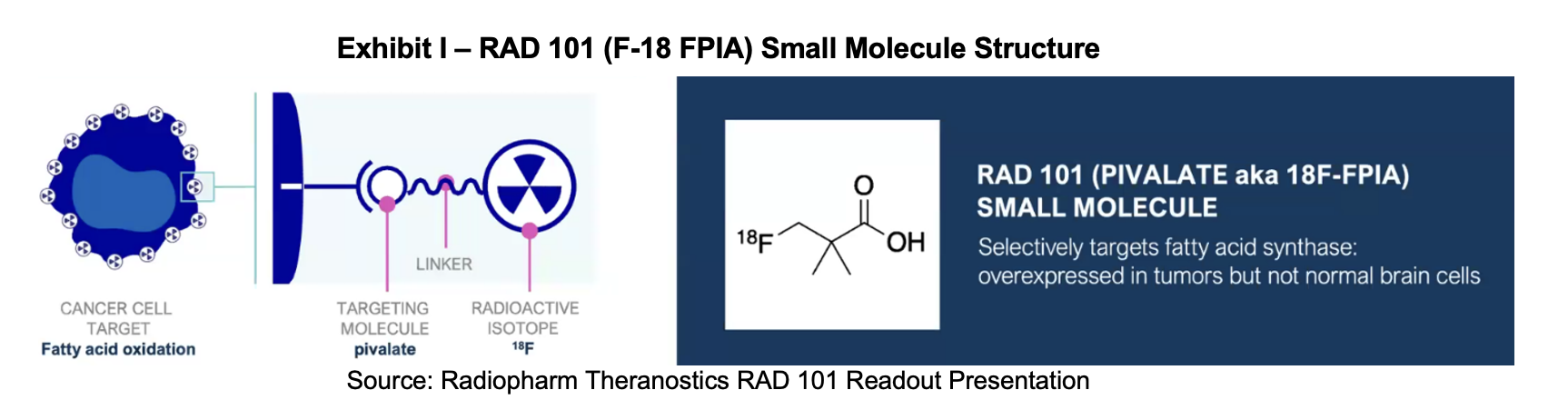
The program began with an introduction by Dr. Voliotis who provided background on the trial and placed it in context of the approximately 300,000 new cases diagnosed annually with early identification and treatment of brain metastases. Monitoring and treatment of patients following stereotactic radiosurgery (SRS) is hindered by the limitations of MRI imaging. Neuroradiologists have difficulty differentiating necrotic tissue in previously treated brain metastases patients from active tumor. A solution may be RAD 101, which is taken up by tumors in the brain that require fatty acid synthase (FASN) to survive and grow. This is possible because the brain is lipid-poor, forcing metastatic cells to produce their own fatty acids through increased FASN-mediated de novo lipogenesis to survive in the nutrient-scarce environment.
RAD 101 Clinical Trial Progress
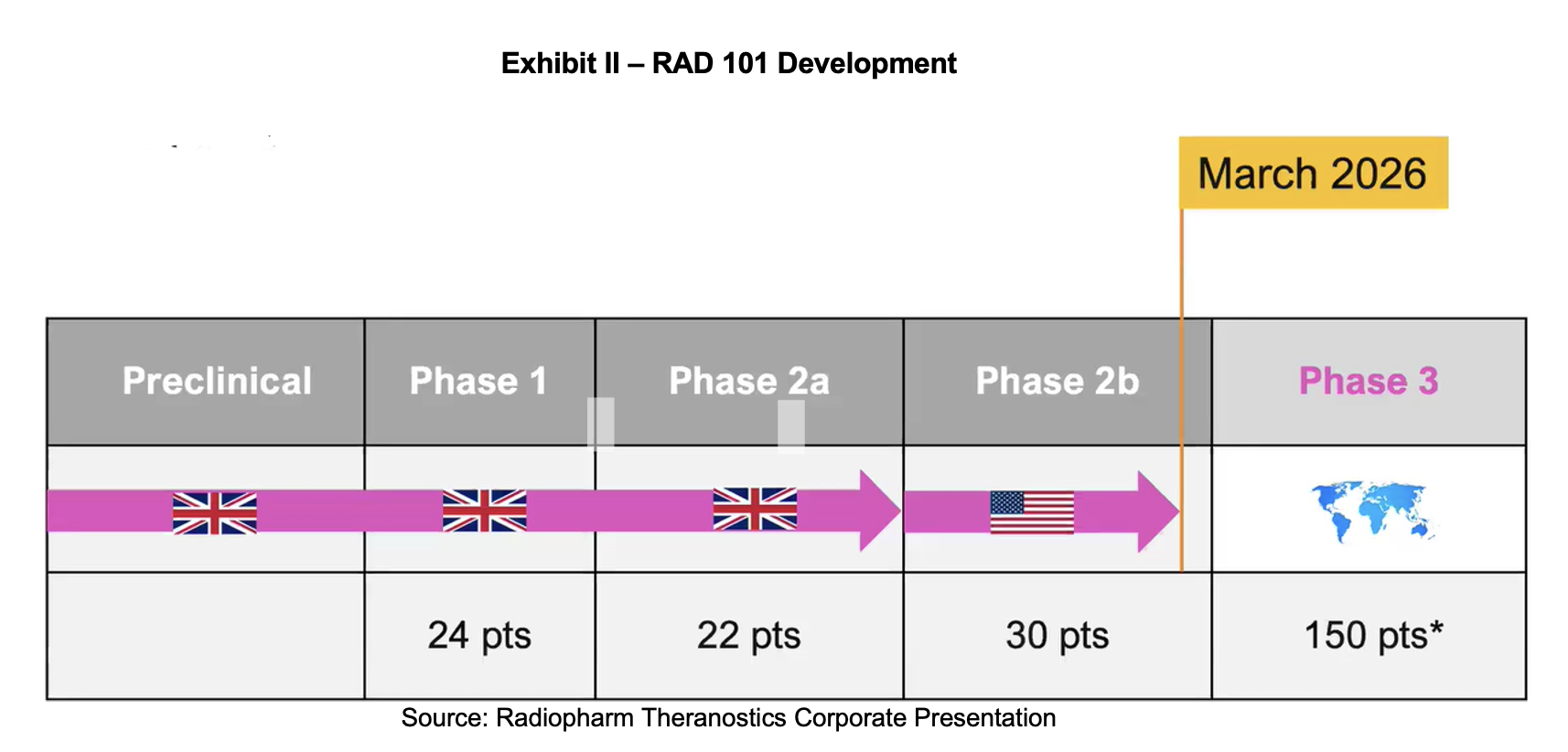
RAD 101 has been the subject of preclinical work, Phase I, and Phase II clinical trials. A Phase III study is planned and is expected to be a global study, potentially evaluating 150 patients. In research conducted to date, the trials have shown that high uptake of RAD 101 is inversely correlated with survival and can act as an important biomarker for guiding treatment. The ongoing Phase IIb study is enrolling patients with a known history of brain metastases who are suspected of relapse or progression after SRS. The trial endpoint is agreement between PET and MRI lesion imaging and comparison with a six-month follow-up after imaging. The Phase IIb is active and recruiting patients and should provide topline data in 1H:26.
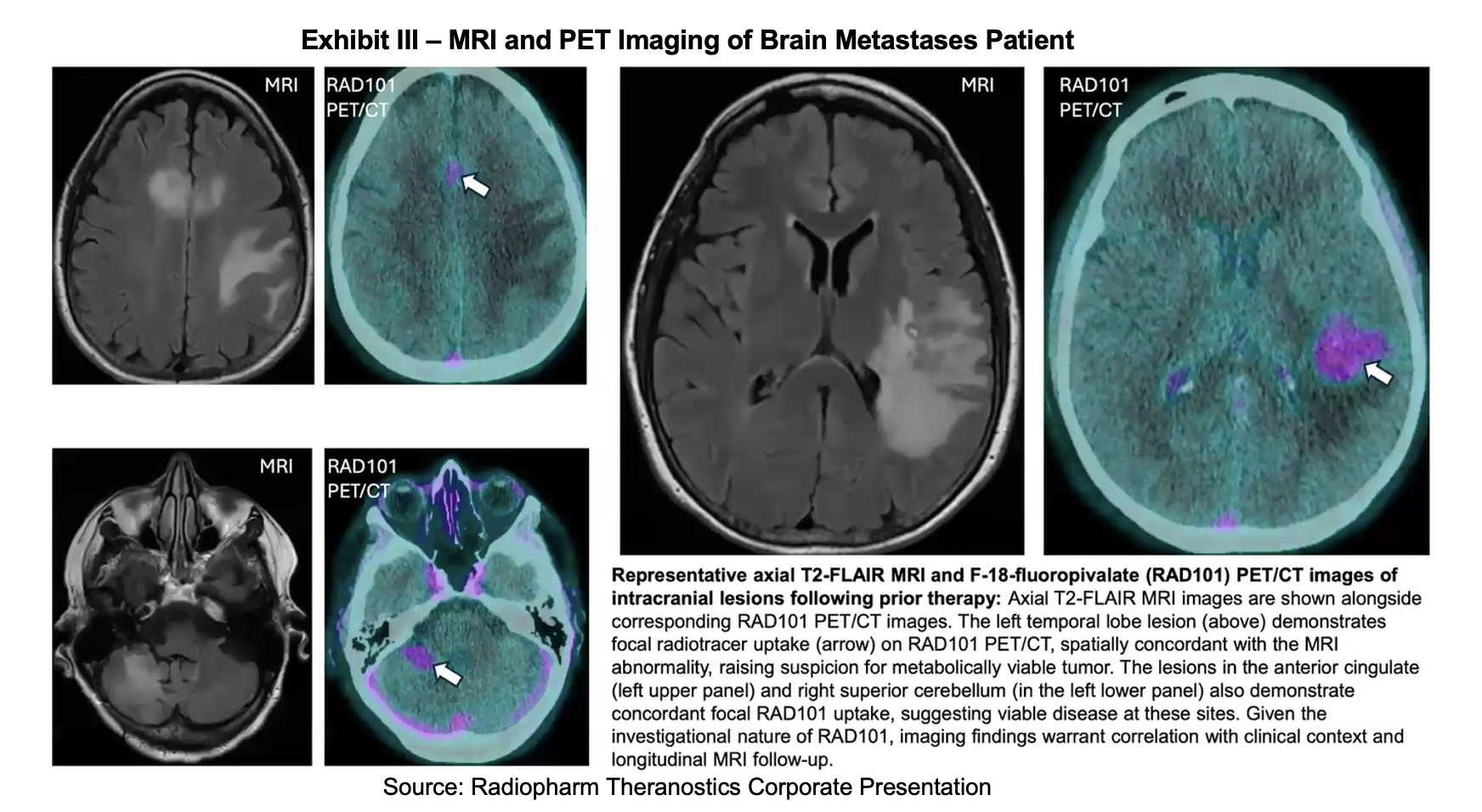
In one example presented during the webinar, a breast cancer patient who had received SRS was imaged following surgery. On the left half (the black and white photo) of the image pairs in the exhibit below, MRI imaging of the tumor region is inconclusive; however, PET/CT imaging on the right with RAD 101 shows uptake of the radiotracer and the presence of FASN activity. In the lower left portion of the exhibit, the pair of images provides an example of RAD 101 clarifying a tumor that was barely visible in the MRI. The pair of images on the right side is a clear example of tumor presence. This is one of many RAD 101 instances presented by Dr. Kulkarni.
As explained by Dr. Kulkarni, the benefits of RAD 101 are twofold. It can help identify active metastases sooner than would be possible using MRI alone and can show that a tumor is not present, preventing unnecessary additional SRS treatments. In other circumstances, where the MRI appears to show necrotic tissue only, the metastases may have returned. Using MRI alone would require an extended observation time to confirm the tumor. By using RAD 101, the tumor is identified sooner, allowing for life-saving treatment. The benefit can both prevent unnecessary harm and justify earlier treatment when needed.
Dr. Kulkarni concluded that RAD 101 addresses the unmet need of an information deficit from MRI imaging and may have a significant impact on the treatment management of brain metastases.
Audience Questions
What trial results would be considered a success? Dr. Voliotis responded that being able to identify the tumor earlier will give a better chance to prolong survival.
Two patients did not show concordance with the MRI (2/20). Why not? Dr. Voliotis noted that the tumors were very small and the PET did not show metabolic activity. It was not determined at that time if there was tumor or not. In these cases, the team would have to wait and re-image to see if there is metabolic activity later. It could also be that the MRI generated a false positive. Assuming this is the case, RAD 101 even further demonstrates its utility. Dr. Kulkarni continued, noting that this should not be seen as a negative for the study and it could prevent overtreatment. In many cases, a biopsy is not possible to confirm and there is not another way to verify tumor activity.
Is the FDA meeting scheduled yet? Radiopharm will request an FDA meeting in the May/June timeframe for a meeting expected in the July or August timeframe. The team needs to wait for the final results to request a meeting. Radiopharm is working on the protocol for the pivotal trial and they will discuss the protocol with the FDA.
Is there any business development activity for RAD 101? Riccardo did not confirm any activity given the sensitive nature of any discussions if they exist.
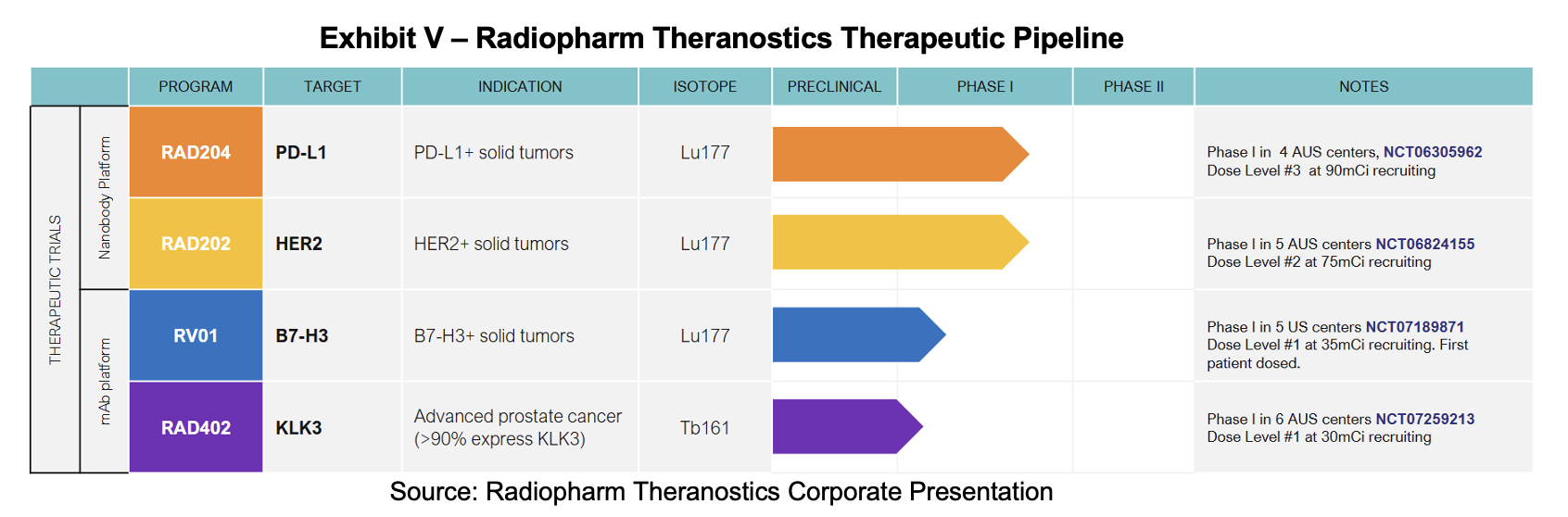
Company Pipeline
Summary
Radiopharm presented its second interim update on the progress of the RAD 101 trial, continuing to show exceptionally high rates of concordance between RAD 101 treated patients and MRI. As the last few patients are enrolled, we expect management to consult with the FDA to prepare for a pivotal study which should begin in 2H:26.
SUBSCRIBE TO ZACKS SMALL CAP RESEARCH to receive our articles and reports emailed directly to you each morning. Please visit our website for additional information on Zacks SCR.
DISCLOSURE: Zacks SCR has received compensation from the issuer directly, from an investment manager, or from an investor relations consulting firm, engaged by the issuer, for providing research coverage for a period of no less than one year. Research articles, as seen here, are part of the service Zacks SCR provides and Zacks SCR receives payments totaling a maximum fee of up to $50,000 annually for these services provided to or regarding the issuer. Full Disclaimer HERE.