By John Vandermosten, CFA
OTCQB: RVPH
READ THE FULL RVPH RESEARCH REPORT
Reviva Pharmaceutical Holdings, Inc. (OTCQB: RVPH) reported first quarter 2026 results following the announcement of the implementation of a new strategy intended to extend the patent life of brilaroxazine. Despite the prospect of materially extended intellectual property (IP) life, news of the company’s delisting from the NASDAQ caused a violent reaction in its share price. Reviva has sufficient capital to begin its RECOVER 2 Phase III trial in fall 2026. It is waiting for a response from the FDA regarding its formulation change before it will begin. Patient enrollment is anticipated in 3Q:26 and trial completion approximately one year later. Reviva requires an additional $35 million two to three quarters down the road to maintain this timeline and to fund the second half of the trial.
Operational and Financial Results
On May 13th, 2026, Reviva reported 1Q:26 financial and operational results and filed its Form 10-Q with the SEC. Reviva generated no revenues in 1Q:26 and posted an operational loss of $3.2 million, halving the prior year’s loss due to the completion of the RECOVER open label extension (OLE) study last year. For the quarter ending March 31st, 2026, and versus the same prior quarterly period:
- Research & development expense totaled $1.4 million, down 65% from $4.1 million, with the change attributable to lower salaries and wages, external research and development costs, and a shift towards lower-cost post-data readout activities and trial wind-down efforts;
- General & administrative expenses totaled $1.8 million, declining 24% from $2.4 million on account of lower stock-based compensation and legal expenses, lower consultant and professional expenses, and lower employee related expenses, partially offset by higher legal expenses;
- Other income of $79,000 compared to $111,000 with the difference almost entirely attributable to less interest and other expense;
- Provision for taxes was $3,000 compared to $5,000 related to payment of state and foreign taxes;
- Net loss was $3.2 million vs $6.4 million, or $0.46 and $2.64 per share, respectively.[1]
As of March 31st, 2026, Reviva held $22.2 million in cash on its balance sheet. 1Q:26 cash burn was $3.8 million while cash flows from financing were $11.6 million. Financing transactions from a public offering and an ATM facility were slightly offset by repayment of short-term debt. The company estimates that the balance is sufficient to start the RECOVER 2 trial and to support operations into 1Q:27.
Letter to Shareholders
On behalf of Reviva Pharmaceuticals Holdings, Chief Executive Officer, Dr. Laxminarayan Bhat, composed a letter to shareholders acknowledging the difficult path over the last year. The missive justified the capital raises over the last 10 months, citing the priorities of strengthening the balance sheet, supporting operations to achieve the next milestone, and developing brilaroxazine to address schizophrenia and potentially other neuropsychiatric indications. The letter illuminates the pathway ahead for the RECOVER 2 trial and introduces new intellectual property related to brilaroxazine’s formulation that may extend its patent life.
The most recent capital raise generated $10 million in gross proceeds, bringing cash on the balance sheet to $23 million following the transaction. The amount provides sufficient funds to support the initiation of the RECOVER 2 trial in 2Q:26, enroll first trial patients in 3Q:26, and support further trial and operational costs until 1Q:27.
The news that can most significantly impact brilaroxazine’s valuation is the new composition of matter patent that Reviva has filed. If granted by the United States Patent and Trademark Office (USPTO) and if the FDA agrees to the proposed development strategy, it will reset brilaroxazine’s patent clock. The patent was filed earlier this year, which would provide protection for brilaroxazine that will expire in 2046. Not only would this provide brilaroxazine with additional patent protection for the schizophrenia indication, but it would also have implications for other indications in bipolar disorder, major depressive disorder, and Reviva’s other pipeline targets that would use the same formulation.
While the exact modification has not been disclosed, management indicates that the new formulation will use Generally Recognized as Safe (GRAS) substances that are expected to enhance the properties of the Active Pharmaceutical Ingredient (API). Salt and polymorph changes are the most common modifications and are allowed by the FDA, but must be approved. These changes can change and improve solubility, bioavailability, and stability, among other features. Salt changes require new supporting Chemistry, Manufacturing and Controls (CMC) and pharmacokinetic (PK) data prior to approval. If a drug has already received marketing approval, a Prior Approval Supplement (PAS) or New Drug Application (NDA) is required, which requires substantially more time, effort, and cost to execute. Polymorph changes require a CMC update and potentially bridging studies if bioavailability is affected. The FDA allows changes to a drug’s formulation but requires supportive data that is part of the development and registration process. If there is a change in the formulation between trials, the agency requires data showing that the new formulation is bioequivalent or that the change does not negatively impact the product's profile.
If the changes to the formulation are allowed by the FDA, then Reviva could see a dramatic extension of intellectual property (IP) protection. The formulation of brilaroxazine used in the RECOVER trial was supported by a composition of matter patent that expires in November 2030. The new filed patent could extend this to 2046. Before all of this can be integrated in our model, the new patent must be reviewed and granted, and the FDA must allow the change.
We expect to see a busy next few months at Reviva that will be occupied by trial preparation activities, interactions with the FDA to permit the new formulation of brilaroxazine, and first enrollment in RECOVER 2. The trial is expected to run for about a year, and the program will require additional capital midway through. The trial should wrap up and provide a topline readout before year end 2027. This sets up Reviva for an NDA submission in early 2028 for FDA review.
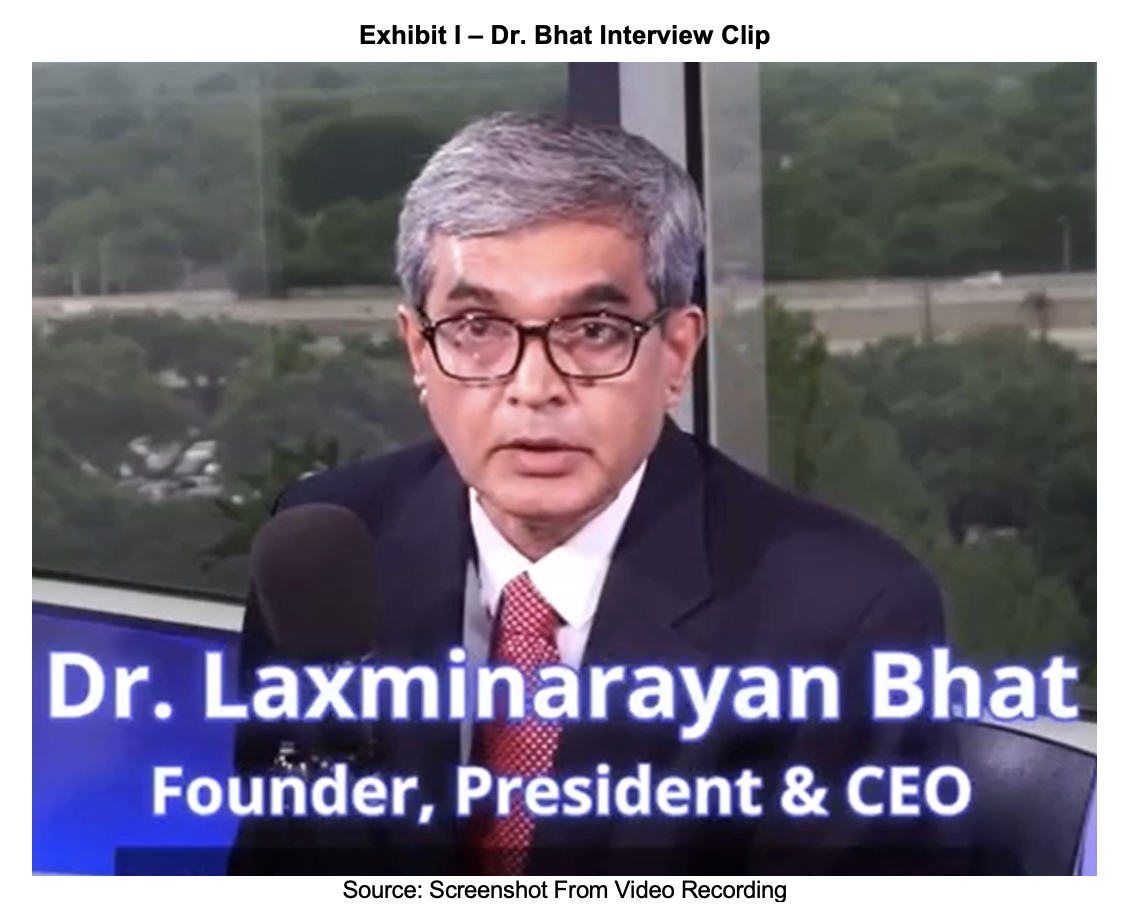
Dr. Bhat discussed many of the details provided in the shareholder letter in a video series. He provides more information on the anticipated formulation change and its patent implications, among other topics, in the associated clips. Links to the excerpts are provided below.
SUBSCRIBE TO ZACKS SMALL CAP RESEARCH to receive our articles and reports emailed directly to you each morning. Please visit our website for additional information on Zacks SCR.
DISCLOSURE: Zacks SCR has received compensation from the issuer directly, from an investment manager, or from an investor relations consulting firm, engaged by the issuer, for providing research coverage for a period of no less than one year. Research articles, as seen here, are part of the service Zacks SCR provides and Zacks SCR receives payments totaling a maximum fee of up to $50,000 annually for these services provided to or regarding the issuer. Full Disclaimer HERE.
________________________
[1] We adjust prior year earnings per share using a 1:20 reverse stock split effective March 9th, 2026.