By Steven Ralston, CFA
NYSE: VNRX
READ THE FULL VNRX RESEARCH REPORT
EXECUTIVE OVERVIEW
VolitionRx Limited (NYSE: VNRX) continues to advance its multi-pillar epigenetics platform through mid-2026, generating a continued stream of clinical validation across Nu.Q NETs, Nu.Q Cancer, and Capture-Seq. Management has simultaneously decreased operating expenses, which were reduced in the most recent quarter by 32% year-over-year on a 25%-27% reduction in headcount in the R&D and sales & marketing areas. Another commercial partner was added through a collaboration agreement with Sysmex Corporation (TYO: 6869, OTCPK: SSMXY) in June, joining existing relationships with Werfen (antiphospholipid syndrome), Hologic (Nu.Q Discover co-marketing) and Revvity (formerly PerkinElmer), whose automated platform underpins Volition's CE-marked Nu.Q NETs test in Europe. Management indicates that active discussions continue with more than a dozen additional diagnostics and liquid biopsy companies across its three main technology pillars.
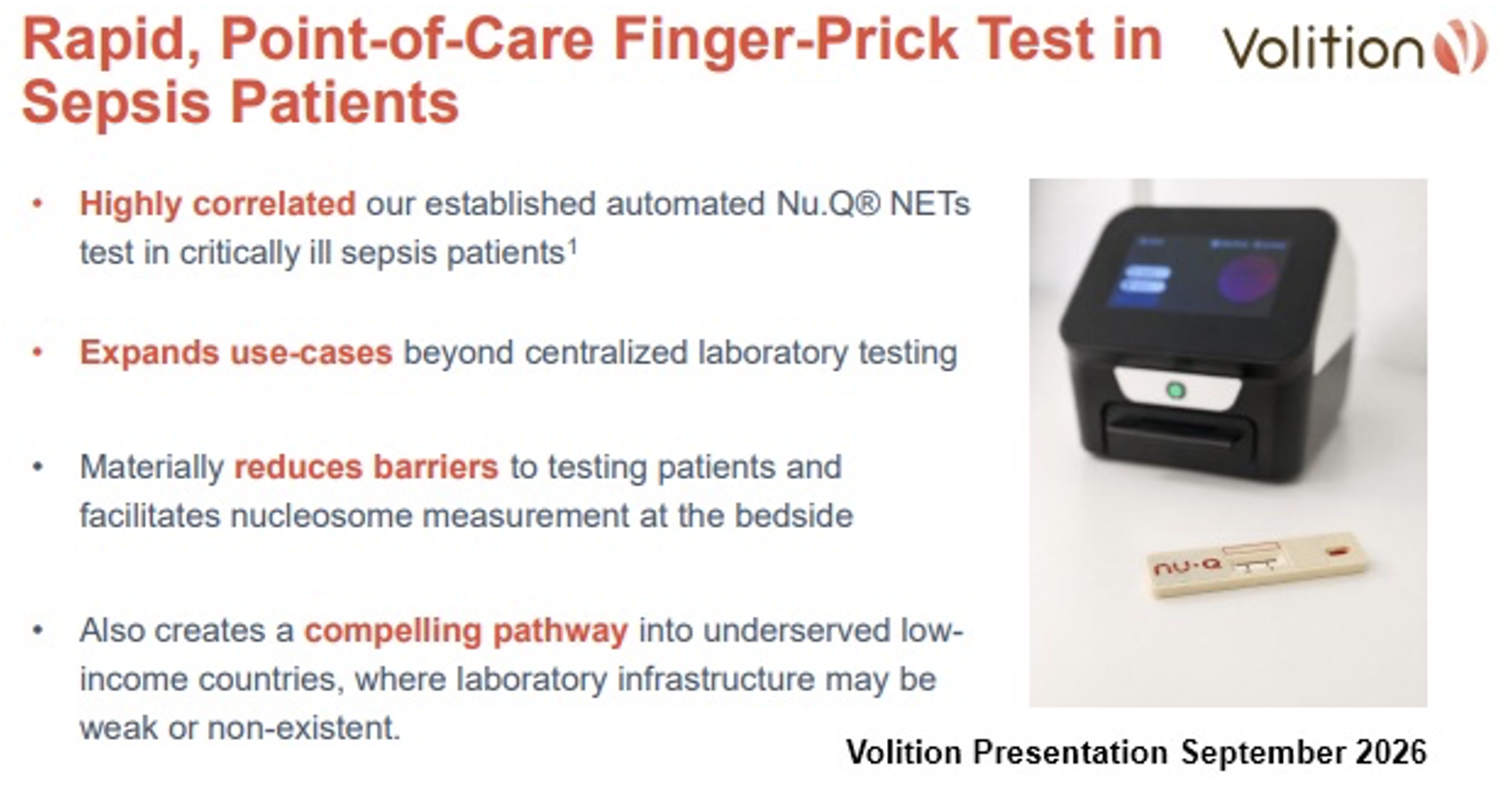
Significant Progress with Point-of-Care Breakthroughs, primarily for Sepsis: In July, clinical evaluations of the Nu.Q NETs lateral flow test for whole venous blood samples were shown to be strongly correlated with those processed in an automated central laboratory. Then, in the next month, August, a finger-prick point-of-care test using capillary blood samples was also determined to be highly correlated with the Nu.Q NETs test processed through a centralized laboratory, enabling the rapid receipt of results (minutes instead of hours) that could support quicker therapeutic decision-making.
Sepsis Clinical Trial in France: The French government-sponsored DETECSEPS study is scheduled to launch in the fall of 2026. The study will prospectively triage and risk-stratify patients at risk of deterioration and progression to sepsis. The study will be using Nu.Q NETs as the sole biomarker for real-world early sepsis detection.
A Mayo Clinic collaboration in a clinical study extended Nu.Q NETs into trauma care, a new clinical indication, with the study demonstrating sharply elevated nucleosome levels in trauma patients, particularly those who went on to develop venous thromboembolism.
Capture-Seq technology reached a milestone with its first peer-reviewed paper in July and a September 2026 presentation at ESMO MAP demonstrating that the platform detected 49 of 49 cancers, including early Stage I/II cases, with no false positives in one validation cohort. Nu.Q Cancer generated supportive data with two pre-print papers in lung cancer and a clinical study paper in ovarian cancer.
In August, a peer-reviewed paper provided a retrospective analysis of the SISPCT trial (971 patients, 33 ICUs). The paper concluded that elevated levels of H3.1 nucleosomes at admission are independently associated with mortality and acute kidney injury (AKI) requiring renal replacement therapy (RRT).
Management continues to pursue a reimbursement pathway in France for the Nu.Q Lung Cancer test, with a decision anticipated later in 2026 and the potential entry into clinical use by year-end. The reimbursement dossier is being supported by Hospices Civils de Lyon.
Nu.Q Vet (Feline): During 2026, management expects to publish a feline lymphoma clinical study in a peer-reviewed journal, which should trigger a $5 million milestone payment from Antech/Heska on the nine-month anniversary of the publishing date or on the first commercial sale of the monitoring test for lymphoma in felines. Volition officially submitted the clinical manuscript for peer review in May 2026. The manuscript is currently still undergoing peer review.
On September 14, 2026, VolitionRx prepaid the outstanding balance on the $7,500,000 Lind Senior Secured Convertible Promissory Note dated May 20, 2025. The $2,400,000 Lind Senior Secured Convertible Promissory Note (dated January 7, 2026) remains outstanding in the amount of $2,041,667. This action relieves about 75% of the dilution associated with the Lind Notes.
PRESENTATIONS, PAPERS & POSTERS (mid-2026)
Nu.Q NETs (Sepsis)
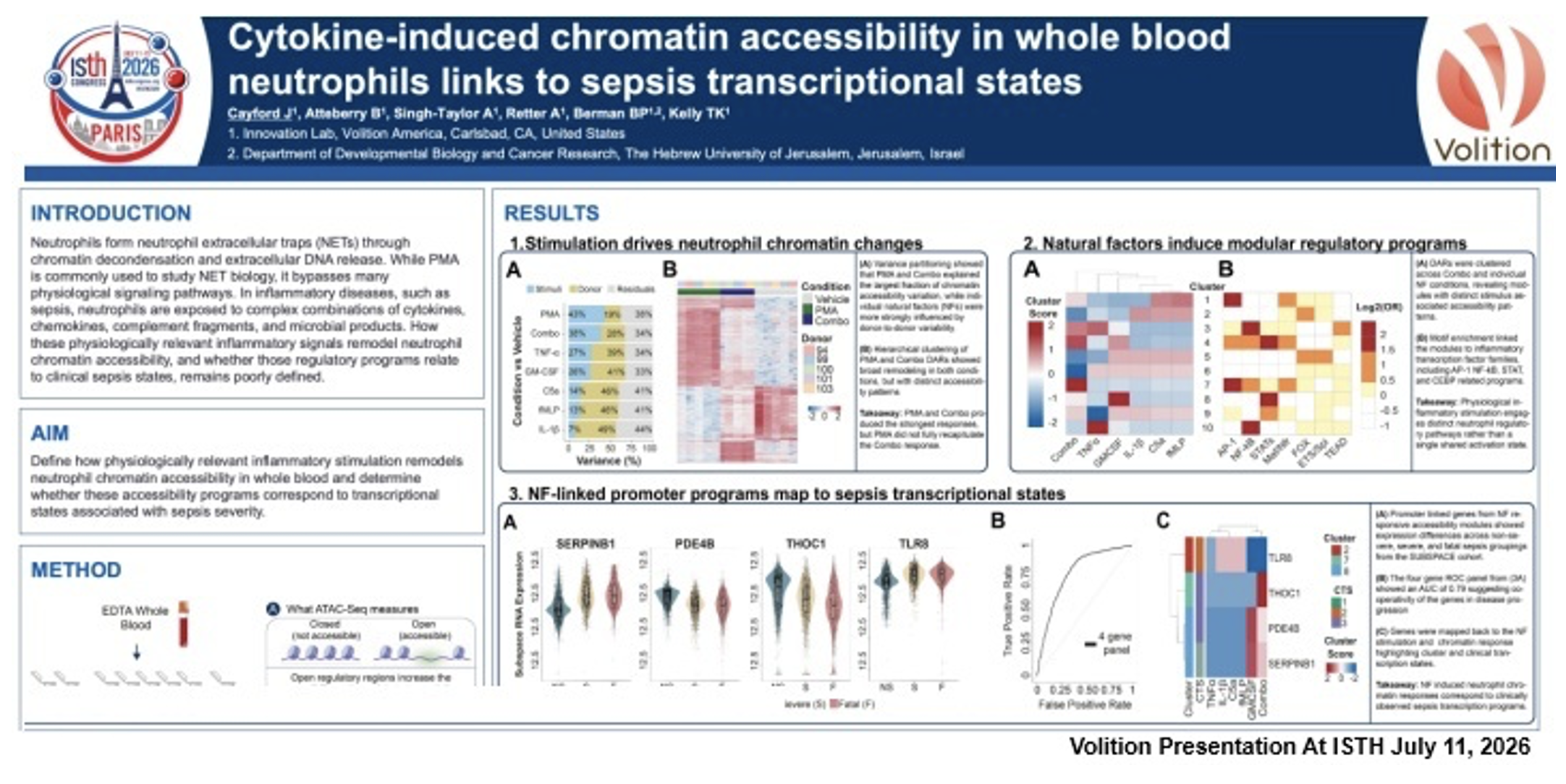
Discovery of Method to Identify Progression of the Severity of Sepsis: On June 10, 2026, Volition's research team published a paper titled "Cytokine-induced chromatin accessibility in whole blood neutrophils links to sepsis transcriptional states" by Justin Cayford et al. in Frontiers in Immunology. The study used ATAC-Seq to profile chromatin accessibility in neutrophils stimulated with relevant inflammatory factors (TNF-α, GM-CSF, fMLP, C5a, and IL-1β), both individually and in combination. The combined stimulus induced a chromatin response. When integrated with two published sepsis cohorts (VANISH and SUBSPACE), the neutrophil chromatin accessibility programs related to severity states of patients. Four genes (TLR8, THOC1, PDE4B, and SERPINB1) achieved an AUC (Area Under the Curve) over 0.70, and when combining all four genes, an AUC of 0.79 was achieved for separating non-severe from severe/fatal sepsis. The authors characterized this study as hypothesis-generating rather than diagnostic. The work was funded by VolitionRx and contributes to the company's proprietary platform.
https://volition.com/wp-content/uploads/2026/06/fimmu-17-1796580.pdf
Lateral Flow Test for Point-of-Care Quantification of Nucleosomes: On July 8, 2026, Volition announced the results of a blinded study, which was conducted as part of the SUMMIT program. Whole venous blood samples from 25 hospital patients in Intensive Care or the Emergency Department were tested by a Nu.Q Nets assay through both an automated central laboratory and a simple bedside lateral flow device. The bedside results, which are delivered within minutes, are strongly correlated with those processed through an automated central laboratory, which requires hours to process.
On August 12, 2026, Volition announced that results from a lateral flow finger-prick point-of-care test are also highly correlated with the Nu.Q NETs test processed through a centralized laboratory: the Spearman correlation was 0.85, and the Pearson correlation was 0.88. This is a major advancement toward making the results of Nu.Q NETs test available at the point of care using capillary blood samples within minutes, which would enable quicker clinical decision-making.
https://ir.volition.com/news-events/press-releases/detail/897/volition-demonstrates-utility-of-rapid-point-of-care-finger-prick-test-in-sepsis-patients
Clinical Validation of Nu.Q H3.1 Biomarker in Sepsis: On August 3, 2026, a peer-reviewed paper titled “H3.1 Nucleosomes to Predict Renal Replacement Therapy and Mortality in Sepsis—A Secondary Analysis of the SISPCT Randomized Control Trial,” by Caroline Neumann et al., was published in the journal Critical Care Medicine. The study is based on a retrospective analysis of the SISPCT (Sodium Selenite and Procalcitonin Guided Antimicrobial Therapy in Severe Sepsis), a randomized controlled trial led by Professor Michael Bauer of Jena University Hospital in Germany. The study included 971 patients with sepsis or septic shock who had plasma H3.1 levels measured at admission, and 927 patients with complete RRT-outcome data, all drawn from 33 ICUs in Germany. A total of 443 patients (45.6%) presented with sepsis and 520 patients (53.6%) were in septic shock. Admission H3.1 levels were higher in patients with septic shock than sepsis (median, 921.84 vs. 432.71 ng/mL; p < 0.001). The study concluded that elevated levels of H3.1 nucleosomes at admission are independently associated with mortality and acute kidney injury (AKI) requiring renal replacement therapy (RRT). Specifically, every log-10 increase in baseline H3.1 concentration raised the 28-day risk of needing RRT by 80%.
https://www.ovid.com/jnls/ccmjournal/pdf/10.1097/ccm.0000000000007270~h31-nucleosomes-to-predict-renal-replacement-therapy-and
Nu.Q NETs (Traumatic Injury)
Study on Traumatic Injury: On May 28, 2026, Volition announced the publication of a clinical study in the journal SHOCK titled "Quantification of Circulating Nucleosomes Using Novel Assays Shows Elevated Levels in Patients After Traumatic Injury" by Sergio M. Navarro et al. Conducted in collaboration with the Mayo Clinic, the pilot study analyzed plasma from 639 trauma patients, along with 10 healthy volunteers, using the Nu.Q H3.1 and Nu.Q H3R8 Citrulline assays. Trauma patients exhibited elevated nucleosome levels (H3.1 levels averaged 359.7 nanograms per mL) compared to the healthy controls (H3.1 levels averaged 22.3 ng/mL). Significantly higher H3.1 levels (H3.1 levels averaged 828.4 ng/mL) were observed in patients who subsequently developed VTE (venous thromboembolism). The findings extend the potential application of Volition's biomarkers beyond sepsis into trauma care and possibly into other critical care settings. Volition is supplying the Mayo Clinic with an IDS i10 automated analyzer (the established Nu.Q automated platform) during Q3 2026 to assist Dr. Park in developing a trauma patient model.
https://www.ovid.com/jnls/shockjournal/abstract/10.1097/shk.0000000000002807~circulating-nucleosomes-are-elevated-in-trauma-patients-with

Nu.Q NETs
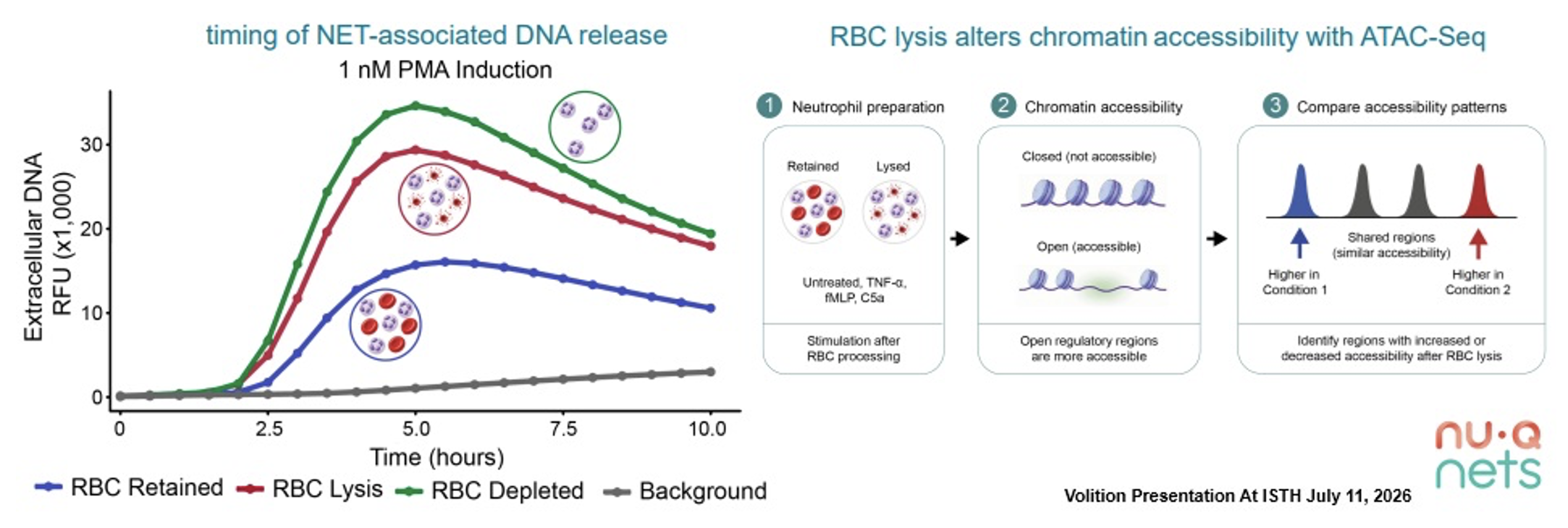
ISTH 2026 Presentation and Poster: On July 11, 2026, at the International Society on Thrombosis and Haemostasis (ISTH) 2026 Congress, Volition's Justin Cayford, PhD, delivered a presentation titled "Red blood cell lysis modulates neutrophil extracellular trap release in response to physiological inflammatory stimuli," along with a companion poster from the Cytokine-induced chromatin paper (see above). The presentation examined three different red blood cell processing methods for neutrophil isolation and how each processing technique affected both the timing of NET-associated DNA release and downstream chromatin accessibility. The study demonstrates the importance of sample handling and the use of physiologically relevant models in NET-based assay development.
https://volition.com/wp-content/uploads/2026/07/Cayford_Final_talk_ISTH2026.pdf
Nu.Q Cancer (Lung Cancer) – Nu.Q H3K27Me3 Assay
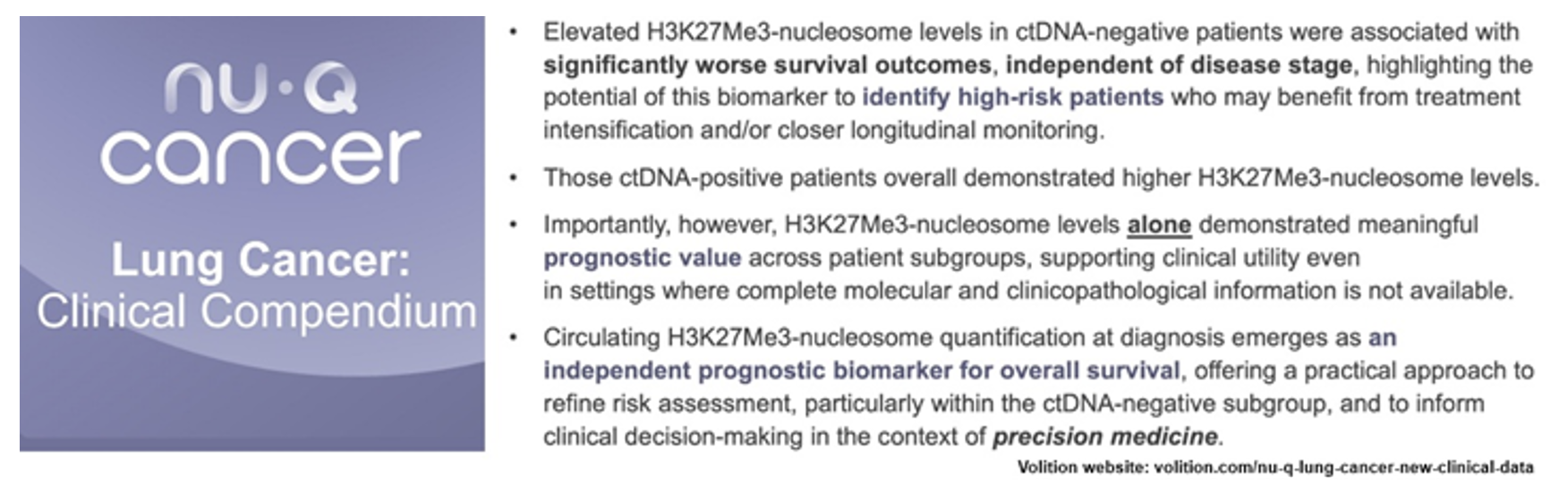
Lung Cancer Prognostic Preprint Paper: On July 7, 2026, a preprint (i.e., a paper that has not yet been peer-reviewed by a journal) titled "Prognostic value of circulating H3K27Me3-nucleosomes in newly diagnosed lung cancer patients" by Kotronoulas et al. was posted to Research Square. The retrospective study analyzed plasma from 617 treatment-naïve lung cancer patients using targeted NGS for ctDNA alongside Nu.Q immunoassay for circulating H3K27Me3-nucleosomes. Among 514 patients with at least eight months of follow-up, those with H3K27Me3 levels below 56 ng/mL had significantly longer overall survival than those above that threshold (26 vs. 12 months, p<0.0001), a relationship that held even in ctDNA-negative patients (29 vs. 12 months, p<0.0001).
https://www.researchsquare.com/article/rs-9880337/v1
Lung Cancer Treatment-Intent Cohort Preprint Paper: Also related to Nu.Q Cancer, a preprint (a paper yet to be peer-reviewed) titled "Prognostic value of baseline circulating trimethylated H3K27 nucleosomes in treatment-intent cohorts of non-small cell lung cancer" by Piecyk et al. was posted to SSRN. The paper is a retrospective analysis of plasma samples collected in the ONCOPRO study. The study stratified non-small cell lung cancer (NSCLC) patients (n=64) into three treatment-intent cohorts to evaluate the association between baseline circulating H3K27Me3 levels and both overall and progression-free survival across the treatment spectrum. Patients with H3K27Me3 nucleosome levels below the median experienced significantly improved clinical outcomes. The study concluded that there is a potential prognostic value for circulating H3K27Me3 nucleosomes in metastatic NSCLC.
https://papers.ssrn.com/sol3/papers.cfm?abstract_id=7198235
Lung Cancer Clinical Compendium Video: On July 17, 2026, Volition released a video titled "Nu.Q Cancer: Lung Cancer Clinical Compendium," in which Dr. Andrew Retter reviews the accumulated clinical data supporting Nu.Q Lung Cancer.
https://volition.com/nu-q-lung-cancer-new-clinical-data/
Nu.Q Cancer (Ovarian Cancer)
Phase II CHIVA Trial Sub-Study: On July 30, 2026, a clinical study titled "Baseline value and longitudinal kinetics of circulating nucleosomes during neo-adjuvant chemotherapy in newly diagnosed ovarian cancer: Results from a GINECO/GINEGEPS study of the randomized phase II CHIVA trial" by Pauline Corbaux et al. was published in Translational Oncology. Using Nu.Q assays, the study measured H3K27Me3 and H3K36Me3 nucleosomes from 148 patients enrolled in the Phase II CHIVA trial and found that levels were significantly elevated compared to 201 healthy controls. A lower baseline H3K36Me3 was independently associated with a higher likelihood of complete interval cytoreductive surgery, while a lower baseline H3K27Me3 was independently associated with longer progression-free survival. Funded by AstraZeneca, the study represents Volition's first published data supporting Nu.Q nucleosome biomarkers as a complementary prognostic tool in ovarian cancer.
https://volition.com/wp-content/uploads/2026/07/CHIVA.pdf
Nu.Q Capture-Seq
Capture-Seq Methodology Paper: On July 21, 2026, Volition's paper titled "Direct analysis of transcription factor protected cfDNA in plasma by ChIP-seq: measurement of altered CTCF binding in cancer is a novel biomarker for liquid biopsy" by Pamart et al. was published in Clinical Epigenetics, a peer-reviewed publication subsequent to the preprint posted to Research Square on March 16, 2026. This paper is Volition’s first peer-reviewed paper related to the Capture-Seq technology.
The paper showcased Volition’s Capture-Seq methodology that physically enriches ultrashort DNA fragments in the blood, including CTCF transcription factor-bound DNA, by removing 99.7% of background DNA, which results in a 180-fold enrichment (17,900%). The study analyzed three independent cohorts (n=49, n=4, and n=14). The patient sample results provide proof-of-concept for the use of plasma CTCF-cfDNA nucleoproteins as biomarkers, supporting Capture-Seq's potential as a novel class of liquid biopsy biomarker for multi-cancer early detection.
https://link.springer.com/article/10.1186/s13148-026-02205-x
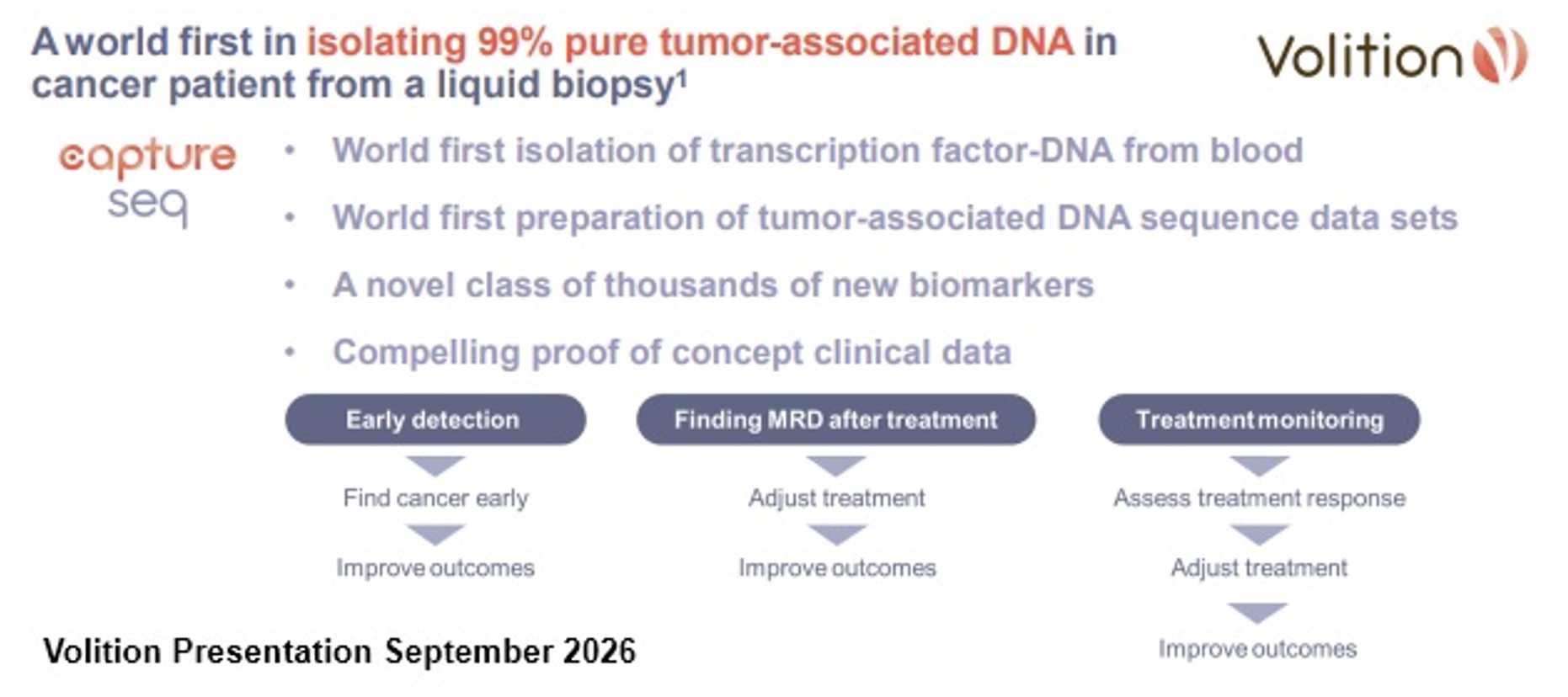
Capture-Seq - Early Stage I Solid Cancer Detection abstract: On September 10, 2026, Dr. Andrew Retter presented an abstract titled "Early stage I solid cancer detection by direct ChIP-seq of short CTCF-protected plasma ctDNA," in the main auditorium at the European Society of Medical Oncology Molecular Analysis for Precision Oncology (ESMO MAP) Conference in London. The Capture-Seq method isolates CTCF-protected plasma ctDNA from background cell-free DNA bound to nucleosomes.
The presentation highlighted the use of Capture-Seq technology for the detection of early-stage I solid cancers in two independent cohorts. In one, the methodology detected 49 of 49 cancers (including 23 early-stage I/II cases) with no false positives; there were 21 healthy controls. In the other, 13 of 14 later-stage cancers (93%) were detected; the cohort included 10 healthy controls.
Results from another blinded validation cohort, consisting of 81 subjects (59 colorectal and lung cancer patients and 22 healthy controls), detected 95% of stage I and II cancers.
https://volition.com/presents-early-stage-i-solid-cancer-detection-at-the-esmo-map-conference/
Nu.Q NETs (Summary Slide 2020-2026)
Nu.Q NETs Summary Slide (2020-2026): On July 26, 2026, Volition released a Summary Slide (and accompanying YouTube video) condensing the scientific and clinical evidence for the Nu.Q NETs H3.1 assay over the last 6 ½ years. The findings of many studies demonstrate that the Nu.Q H3.1 assay can help distinguish sepsis from non-infectious systemic inflammation, and the assay is highly correlated with disease severity, providing a tool for prognostic utility. The studies include the 971-patient German multi-center ICU SEPNET study by Neumann et al., the 1,713-patient MARS cohort by Filippini et al., and the 832-participant U.S. multi-center DXOCRO study by Kotronoulas et al. The Summary Slide also includes the French government-sponsored DETECSEPS study, which is scheduled to launch in the fall of 2026 and will prospectively triage and risk-stratify patients.
https://volition.com/wp-content/uploads/2026/07/NETs-summary-slide-July-26-1.pdf
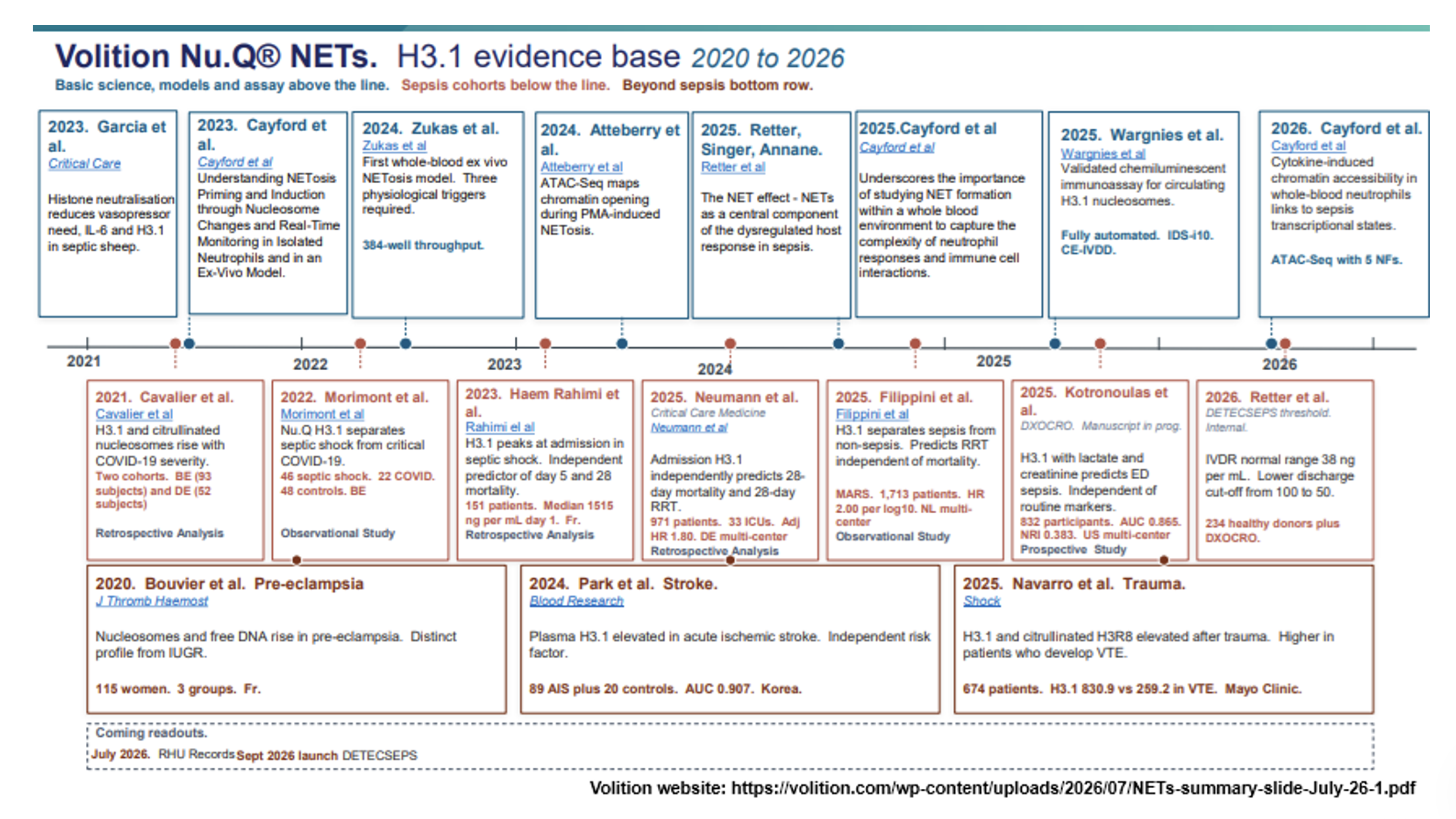
Video Presentation of Summary Slide is titled "Volition Advances Nu.Q NETs Platform Towards Commercialization": https://www.youtube.com/watch?v=jzeBP83EiPw
AGREEMENTS (HUMAN SPACE)
Collaboration Agreement with Sysmex
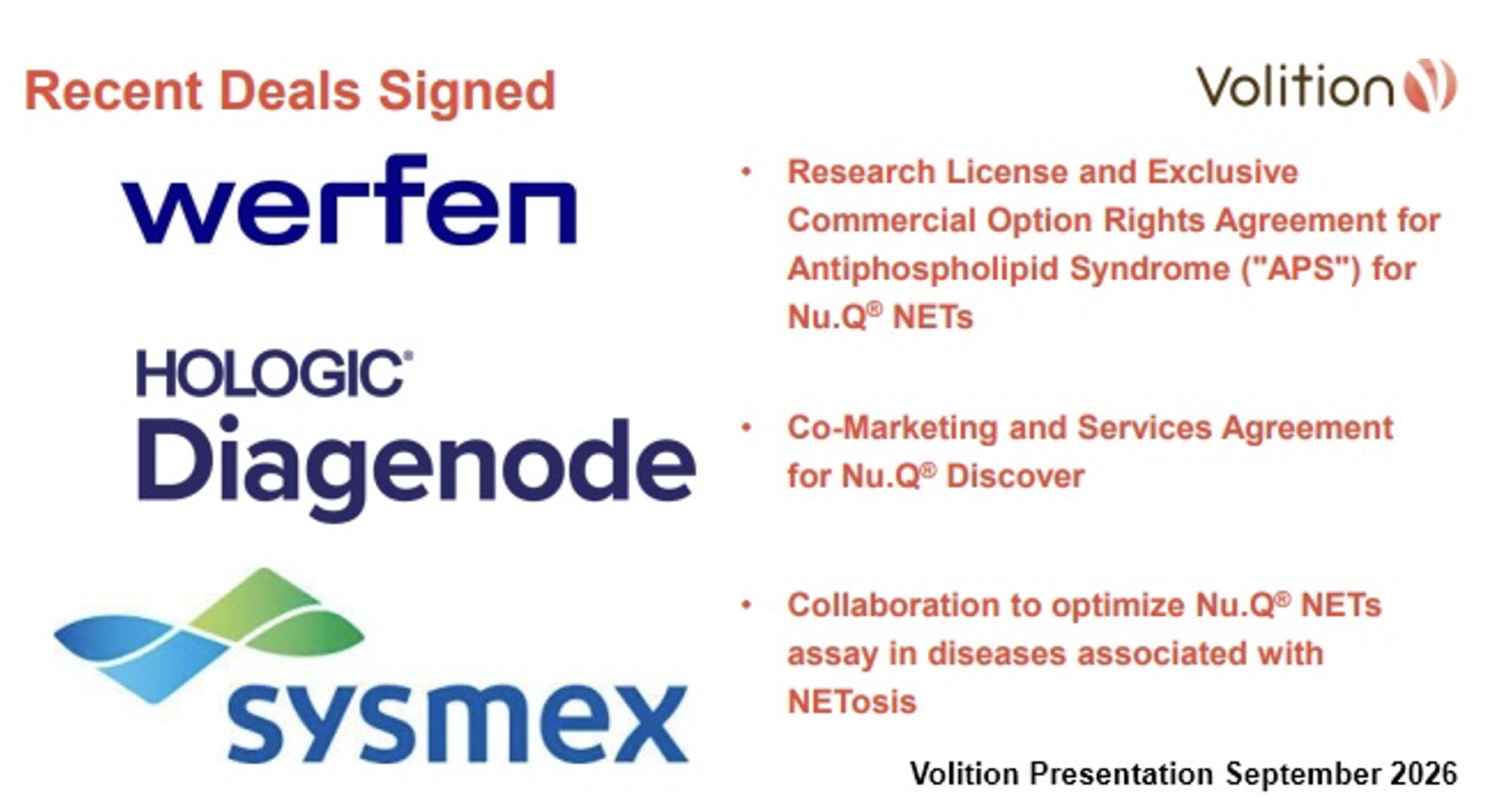
In mid-June of 2026, Volition announced a collaboration agreement with Sysmex Corporation (TYO: 6869, OTCPK: SSMXY), a multi-billion-dollar market capitalization company listed on the Tokyo Stock Exchange. Sysmex is a global leader in the field of in vitro diagnostics for hemostasis and thrombosis, where neutrophil extracellular traps (NETs) play an important role. This agreement marks Volition's third human licensing deal. The Nu.Q NETs assay has already been transferred onto Sysmex's platform, and Sysmex has commenced the optimization phase in diseases associated with NETosis.
Commercial Relationship with Revvity
Volition has a multi-year existing commercial relationship with Revvity, whose automated IDS i10 platform serves as the gold-standard instrument for Volition's CE Mark Nu.Q NETs assay in Europe; IDS is a wholly-owned subsidiary of Revvity (NYSE: RVTY), which was formerly known as PerkinElmer prior to 2023. Under the current arrangement, Revvity co-markets Volition's CE Mark Nu.Q NETs kits to hospitals across Europe, with the product already reaching dozens of hospital sites.
Volition Entered into a Research License for APS with Werfen S.A.
In September 2025, VolitionRx signed its first human licensing deal. The agreement is a Research License for Antiphospholipid Syndrome (APS) with Werfen S.A., which is headquartered in Barcelona and has eight (8) Technology Centers located in Spain (1), Germany (1), and the United States (6). Under the out-licensing agreement, Werfen has access to the components of Volition's Nu.Q H3.1 NETs assay and is investigating the assay’s clinical utility in managing APS patients. Werfen’s work is being conducted at its Immunoassay Technology Center, which is located in Lliçà d’Amunt (approximately 30 kilometers north of Barcelona). Volition’s Nu.Q NETs assay has already successfully transferred to Werfen’s AcuStar platform. Also, Volition and Werfen have entered into an Exclusive Commercial Option Rights Agreement for APS. APS is an autoimmune disorder that affects approximately four million people worldwide. The full terms of the agreement are confidential.
Volition Entered into a Co-Marketing Agreement for Nu.Q Discover Services
In September 2025, Volition signed a co-marketing agreement with Hologic Diagenode (NASDAQ: HOLX) for marketing Volition’s Nu.Q Discover services to Hologic's large client base and also at conferences & on webinars. The initial term is one (1) year; however, the agreement could expand into an exclusive arrangement.
EXPECTED MILESTONES IN 2026

Nu.Q Vet (Feline): During 2026, management expects to publish a feline lymphoma clinical study in a peer-reviewed journal, which should trigger a $5 million milestone payment from Antech/Heska on the nine-month anniversary of the publishing date or on the first commercial sale of the monitoring test for lymphoma in felines. Volition officially submitted the clinical manuscript for peer review in May 2026. The manuscript is currently still undergoing peer review.
Pathway for Improved Market Access through Submission of Reimbursement Dossier for Nu.Q Assay: Volition is working towards the submission of a reimbursement dossier in France under the "Innovative Procedures Outside the Nomenclature," which is a framework that allows for the early and temporary support of innovative procedures. The reimbursement application for the Nu.Q Cancer Lung Cancer test is being supported by the Hospices Civils de Lyon (France's second-largest university hospital) and two other French institutions. If the dossier is classified as admissible, the determination of eligibility for reimbursement coverage typically occurs within five months. The achievement of a reimbursement regimen would be a major milestone. If approved within the typical 5-month timeframe, management anticipates that the Nu.Q Lung Cancer test will enter clinical use in France by 4Q 2026 and potentially advance to routine clinical use in 2027.
Initiative to Transition Nu.Q NETs from IVDD to IVDR to Improve Market Access & Clinical Adoption in Europe: Volition’s Nu.Q NETs assay received the CE mark designation in May 2022 with a broad claim for detecting and monitoring diseases with a NETs component under the requirements of the In Vitro Diagnostic Directive (IVDD), a self-certification framework. Volition is now pursuing a transition to the new In Vitro Diagnostic Regulation (IVDR) directive, a rigorous regulatory system that would have profound implications in promoting clinical adoption of the company’s assays in Europe. The critical requirements for the upgrade involve significant medical and technical documentation, which management believes can be achieved through the government-backed DETECSEPS program (an evaluation for the early detection of sepsis) in France. Management believes this program is on track to launch in 3Q 2026.
Licensing Agreements for Human Diagnostic Applications: Volition continues to be in active discussions with at least 12 diagnostics and liquid biopsy companies. The discussions range from due diligence and technology transfer to clinical sample evaluation and contract negotiations, particularly under the Nu.Q NETs, Nu.Q Cancer and Capture-Seq pillars. In addition to the Collaboration Agreement with Sysmex Corporation (TYO: 6869, OTCPK: SSMXY) announced in 2Q 2026, management anticipates additional human licensing agreements to be signed in 2026.
RECENT FINANCIAL REPORT
On August 13, 2026, after the market close, VolitionRx reported financial results for the second quarter ending June 30, 2026. Total revenues decreased 2.0% YOY to $398,657, compared to $406,688 in the second quarter of 2025. There was not any Service revenue (contract lab services) due to the timing of the completion of contracts and the lumpy nature of Nu.Q Discover’s revenue recognition. There are several projects in the pipeline earmarked for completion beyond the end of the second quarter. Product revenue from sales of the Nu.Q Vet cancer screening test and H3.1 kits increased 62.8% to $398,657, driven by higher Nu.Q Vet revenue and the continued recognition of deferred revenue under the Heska agreement.
Operating expenses decreased 32.1% YOY. R&D expenses declined 33.8% YOY and 36.9% sequentially as the number of full-time equivalent (FTE) personnel declined by 25% to 36. Sales and marketing expenses decreased 47.4% YOY (35.6% sequentially) as the number of FTE personnel decreased 27% to 8. G&A expenses decreased 25.0% YOY and 16.1% sequentially to approximately $2.21 million, primarily due to lower personnel expenses from a 31.6% YOY reduction in FTE personnel, though somewhat offset by higher legal and professional fees. The release of bonus provisions for personnel aided in the reduction of personnel expenses in all three line items of operating expenses.
Net cash used in operating activities decreased approximately 17.5% YOY to roughly $1.73 million a month during the second quarter of 2026.
VALUATION
Utilizing a financial model based on DCF methodology, which forecasts out to 2032 and uses a 15% discount rate (based on CAPM), a 2% terminal growth rate, and a terminal P/S multiple of 0.53, the indicated value of VNRX is $2.11 per share.
SUBSCRIBE TO ZACKS SMALL CAP RESEARCH to receive our articles and reports emailed directly to you. Please visit our website for additional information on Zacks SCR.
DISCLOSURE: Zacks SCR has received compensation from the issuer directly, from an investment manager, or from an investor relations consulting firm, engaged by the issuer, for providing research coverage for a period of no less than one year. Research articles, as seen here, are part of the service Zacks SCR provides and Zacks SCR receives payments totaling a maximum fee of up to $50,000 annually for these services provided to or regarding the issuer. Full Disclaimer HERE.