By M. Marin
NASDAQ: GMEX
READ THE FULL GMEX RESEARCH REPORT
GMEX developing technical infrastructure to support expansion into AI-enabled robotics
Technology company GMEX Robotics Corporation (NASDAQ: GMEX) is developing technical infrastructure to support its development and commercialization of AI-powered robotics and intelligent automation solutions. GMEX plans to serve core sectors where demand for robotics is strong and expected to grow. The company believes that it can draw on management’s expertise to oversee its strategic expansion and become an important player in the robotics space.
2026 is a transformational year as GMEX develops systems centered on actuation, sensor fusion, and machine learning (ML), among other key functions to enhance the utility of its robotics offerings. To advance its integrated "Terminal + Brain" closed-loop operating system that connects the mobility of robotics with the brain of AI, GMEX is creating a portfolio of automated solutions that operate in real-world settings.
Among various upgrades, GMEX introduced a proprietary modular vision sensor mounting structure, which is designed to eliminate maintenance bottlenecks in manufacturing and aligns with the company’s goal to offer turnkey solutions that are easy to implement, operate, and maintain.
GMEX is leveraging strategic M&A to complement its organic measures. The company plans to acquire a stake in MediaMeta.Ai to enhance its capabilities in social intelligence. MediaMeta develops AI designed to enable robots and technologies to understand social context. The pending acquisition is expected to add AI related to human behavioral modeling to enable robots to understand human social context and behavior and thereby improve robot-human collaborations and improve its commercial prospects as GMEX continues to move its solutions forward.
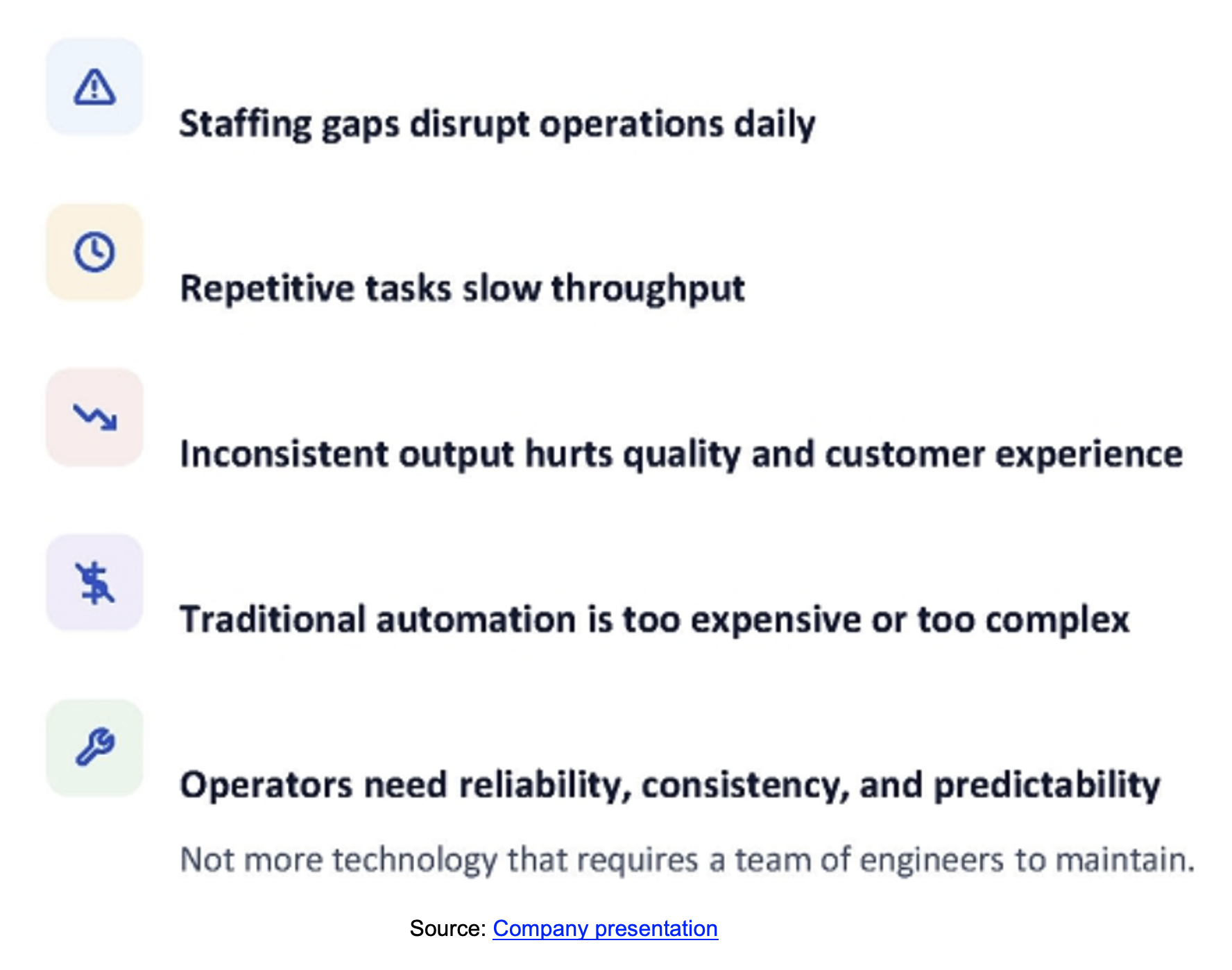
The company is expanding its leadership team and technical workforce to support its initiatives. GMEX recently appointed a new President of U.S. Operations, Brian Hartzband, to head its North American commercial expansion and develop strategic partnerships and customer relationships in the region. The company is designing its solutions portfolio to address multiple challenges facing – or expected to face in coming years – organizations operating in its target markets. Such challenges include, for example, labor shortages and quality control issues that hurt the reliability of manufacturing output, among other issues.
Initially, GMEX intends to focus on three core pillars: Consumer and Commercial Robotics; AI-Driven Hardware and Innovation & Ecosystem, to offer applications for supply chain and logistics services, collaborative and industrial automation, including in factories and warehouses, and resource exploration and excavation for the mining sector.
The GMEX platform addresses multiple challenges enterprises face, including labor shortages and variability in efficiency and productivity. In the hospitality sector, 87% of hotels reported staffing shortages in 2025. In production facilities, manufacturers face mounting issues hindering their ability to maximize output and quality consistency and minimize bottlenecks.
The company believes several recent milestones offer proof-of-concept that validate its strategy, including receiving its first deployment order with a leading Australian hospitality food and beverage group for the planned deployment of at least 50 intelligent kitchen robotics systems.
GMEX has also entered into a Letter of Intent to acquire an equity interest in a California-based company focused on physical AI connectivity solutions and wireless Systems-on-Chip (SoC) technology, which is expected to boost the performance of GMEX Robotics’ emerging Transportation & Logistics business.
The Total Addressable Market (TAM) for AI-enabled intelligent systems is sizable and characterized by growth. The hospitality sector, for example, “is experiencing a technological transformation,” according to a recent report that notes that “The Hospitality robots market reached $0.61 billion in 2025 and is expected to hit $1.84 billion by 2030.” On the industrial front, factory automation fleets continue to expand.
SUBSCRIBE TO ZACKS SMALL CAP RESEARCH to receive our articles and reports emailed directly to you. Please visit our website for additional information on Zacks SCR.
DISCLOSURE: Zacks SCR has received compensation from the issuer directly, from an investment manager, or from an investor relations consulting firm, engaged by the issuer, for providing research coverage for a period of no less than one year. Research articles, as seen here, are part of the service Zacks SCR provides and Zacks SCR receives payments totaling a maximum fee of up to $50,000 annually for these services provided to or regarding the issuer. Full Disclaimer HERE.