By David Bautz, PhD
NASDAQ: MTVA
READ THE FULL MTVA RESEARCH REPORT
Business Update
Multiple Presentations for DA-1726 and Vanoglipel at ADA 2026
On June 8, 2026, MetaVia, Inc. (NASDAQ: MTVA) announced the presentation of new late-breaking data on DA-1726 and vanoglipel at the American Diabetes Association (ADA) 2026 Scientific Sessions. A copy of each of the posters can be found here. The presentations included new pharmacokinetic (PK) data from the Phase 1 study of DA-1726 and combination data with vanoglipel and metformin in a diet-induced obese mouse model with mild hyperglycemia and vanoglipel and resmetirom in a diet-induced obese mouse model of metabolic-associated steatohepatitis (MASH).
Safety, Tolerability, Pharmacokinetics, and Pharmacodynamics of DA-1726, an Oxyntomodulin Analogue: Phase 1 Higher-Dose Cohort Results
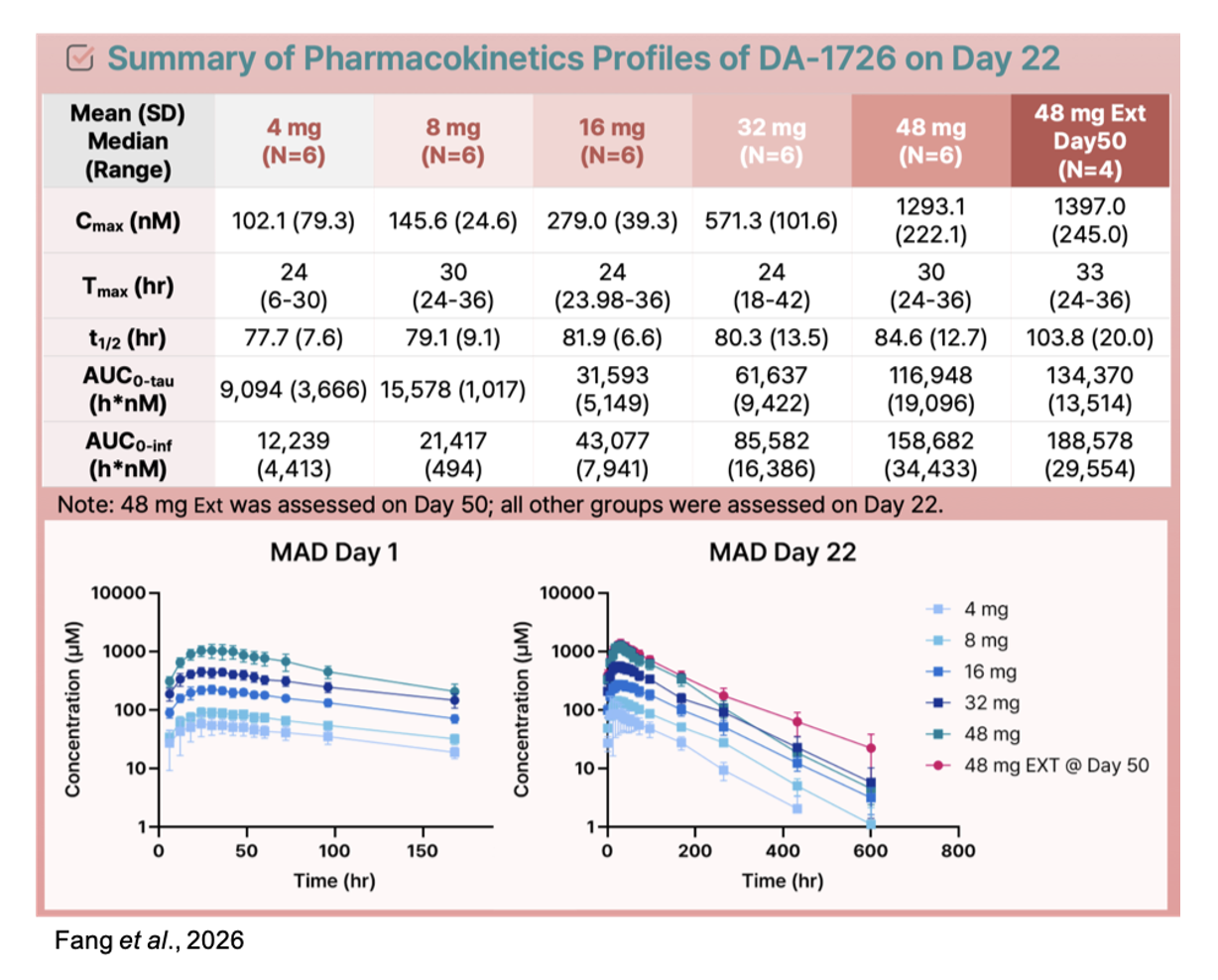
This poster presented interim results from the ongoing Phase 1 clinical trial of DA-1726. For a review of the weight loss and safety data, see our previous report here. New data presented at ADA included PK data on Day 22. The following chart and graph show that DA-1726 exhibited linear and dose-proportional PK data along with supporting once weekly dosing.
As a reminder, the company is currently conducting Part 3 of the Phase 1 study of DA-1726. The trial is planning to enroll 40 obese but otherwise healthy individuals across two parts, with 20 subjects per part randomized 4:1 (16 active; 4 placebo). Part 3A will evaluate a one-step titration regimen with 16 mg DA-1726 for four weeks, followed by 48 mg DA-1726 for 12 weeks. Part 3B will evaluate a two-step titration regimen, with 16 mg DA-1726 for four weeks, 32 mg DA-1726 for four weeks, and 64 mg DA-1726 for eight weeks. The primary endpoints include monitoring adverse events (AEs), serious adverse events (SAEs), treatment-emergent adverse events (TEAEs), and AEs leading to discontinuation. Secondary and exploratory endpoints include pharmacokinetic (PK) profiling and evaluation of metabolic, glycemic, lipid, and body composition measures, including weight, waist circumference, and body mass index (BMI). We anticipate topline results in the fourth quarter of 2026.
Synergistic Effects of Vanoglipel and Metformin on Glycemic Control and Body Weight Reduction in a Diet-Induced Obese Mouse Model
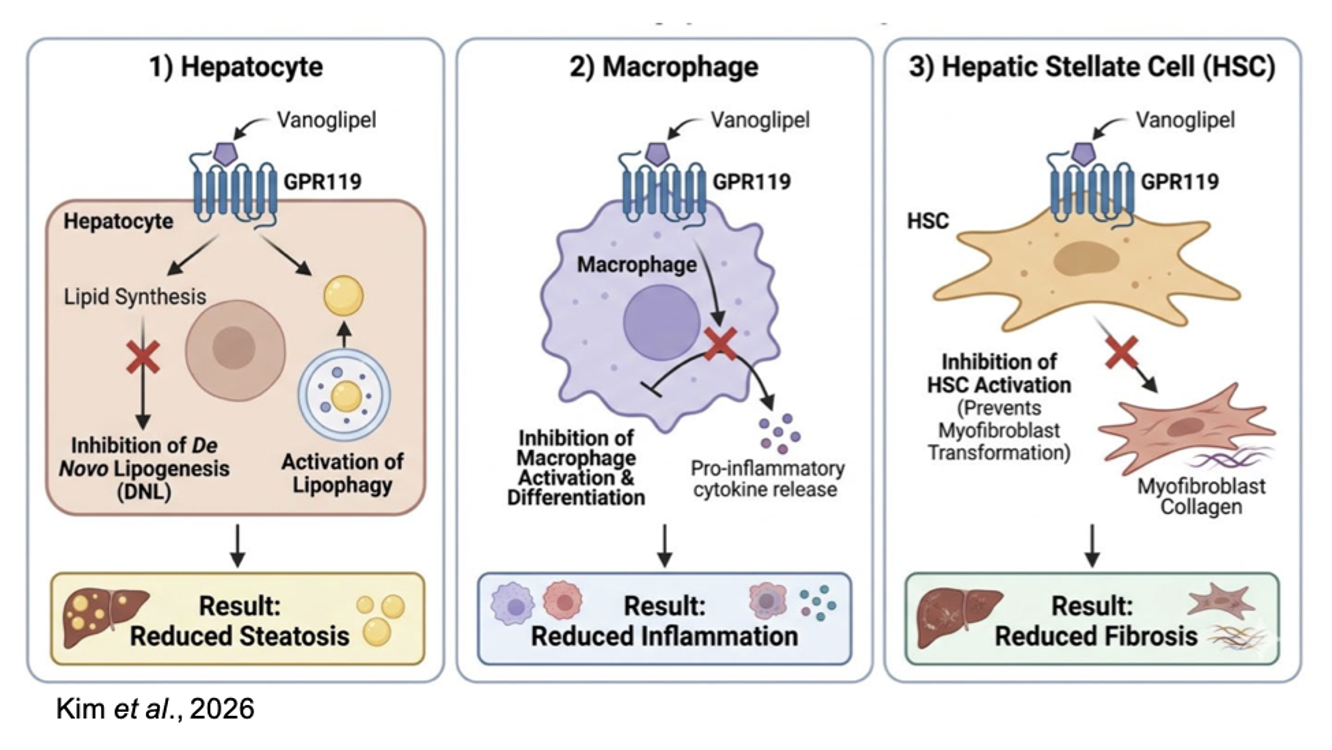
Vanoglipel (DA-1241) is a first-in-class G-protein-coupled receptor 119 (GPR119) agonist that has shown hepatoprotective effects along with improved glucose and lipid control in presumed MASH patients (NCT06054815). The following image gives an overview of the proposed mechanism of actions of vanoglipel. Binding of vanoglipel to hepatocytes leads to reduced steatohepatitis, binding to macrophages results in reduced inflammation, and binding to hepatic stellate cells (HSC) results in reduced fibrosis.
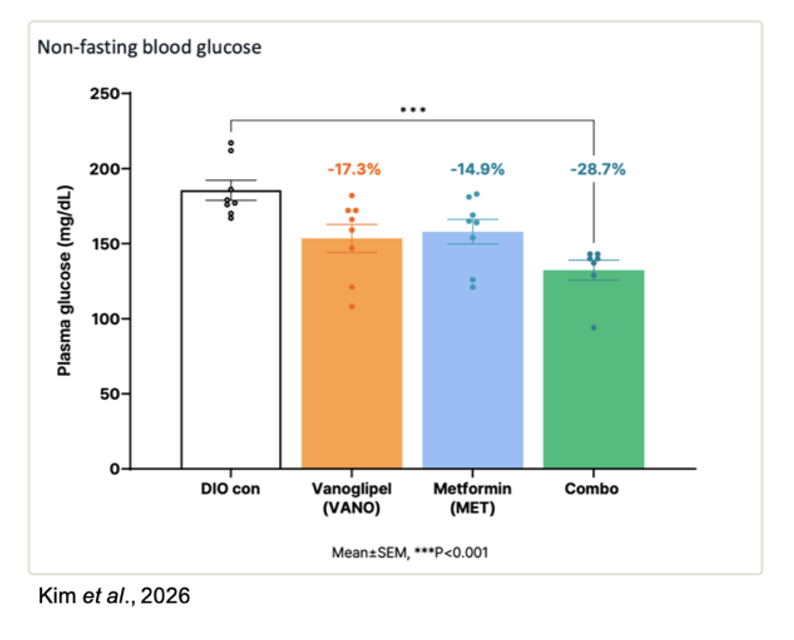
In this preclinical study, vanoglipel was tested as a monotherapy and in combination with metformin in a diet-induced obesity (DIO) mouse model with mild hyperglycemia. Mice were fed a high-fat diet (HFD) for 17 weeks to induce obesity with mild hyperglycemia and then treated for approximately three weeks with vehicle control, vanoglipel 100 mg/kg/day, metformin 300 mg/kg/day, or a combination of vanoglipel and metformin. The results showed a number of positive outcomes for the combination treatments compared to the monotherapy, including:
- The combination therapy reduced non-fasting blood glucose by -28.7% compared to -17.3% for vanoglipel and -14.9% for metformin.
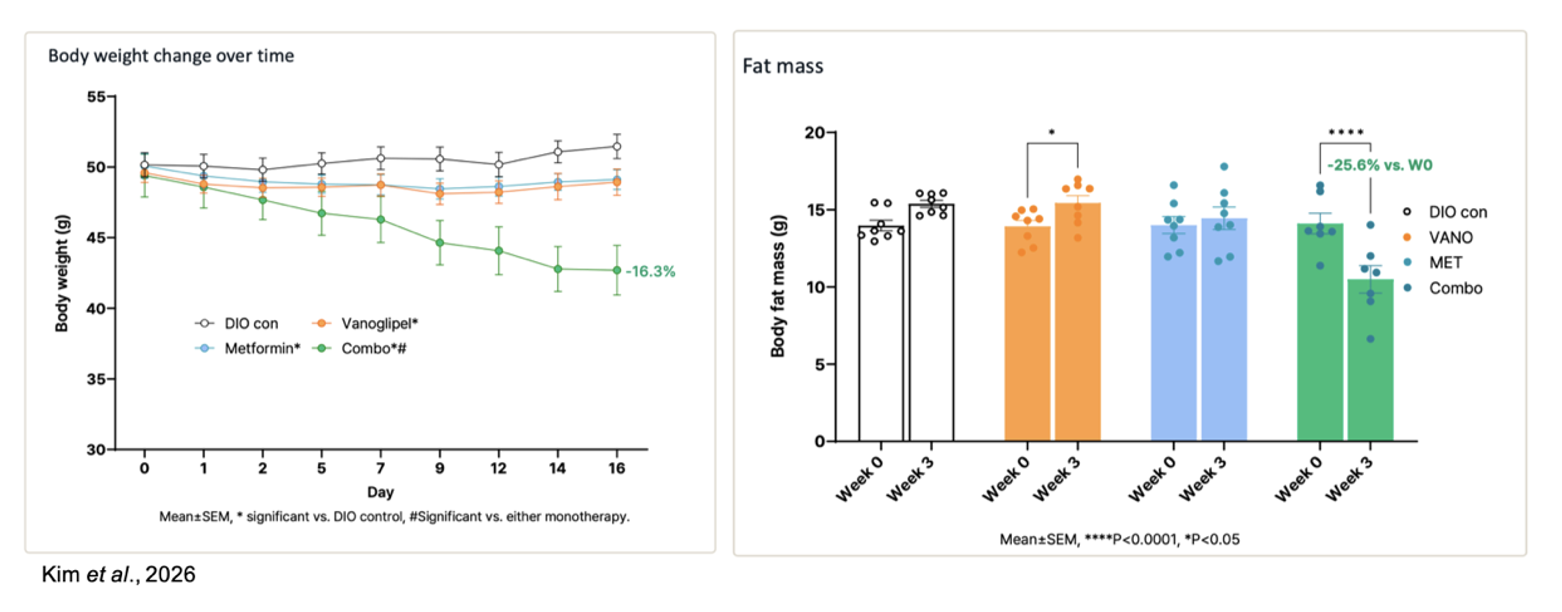
- The combination therapy resulted in a -16.3% reduction in body weight compared to approximately 4% for each monotherapy. In addition, this was accompanied by a reduction of -3.6 g of fat mass compared to the control and monotherapy groups that gained 0.4-1.4 g of fat mass.
- The body weight reduction and fat mass loss appears to be a function of significantly decreased food intake. The reduction in food intake may have been a result of increased expression of GLP-1 (6.4-fold) and Peptide YY (1.5-fold). In the following image, the graph on the right shows a clear correlation between total food intake and the change in body weight.
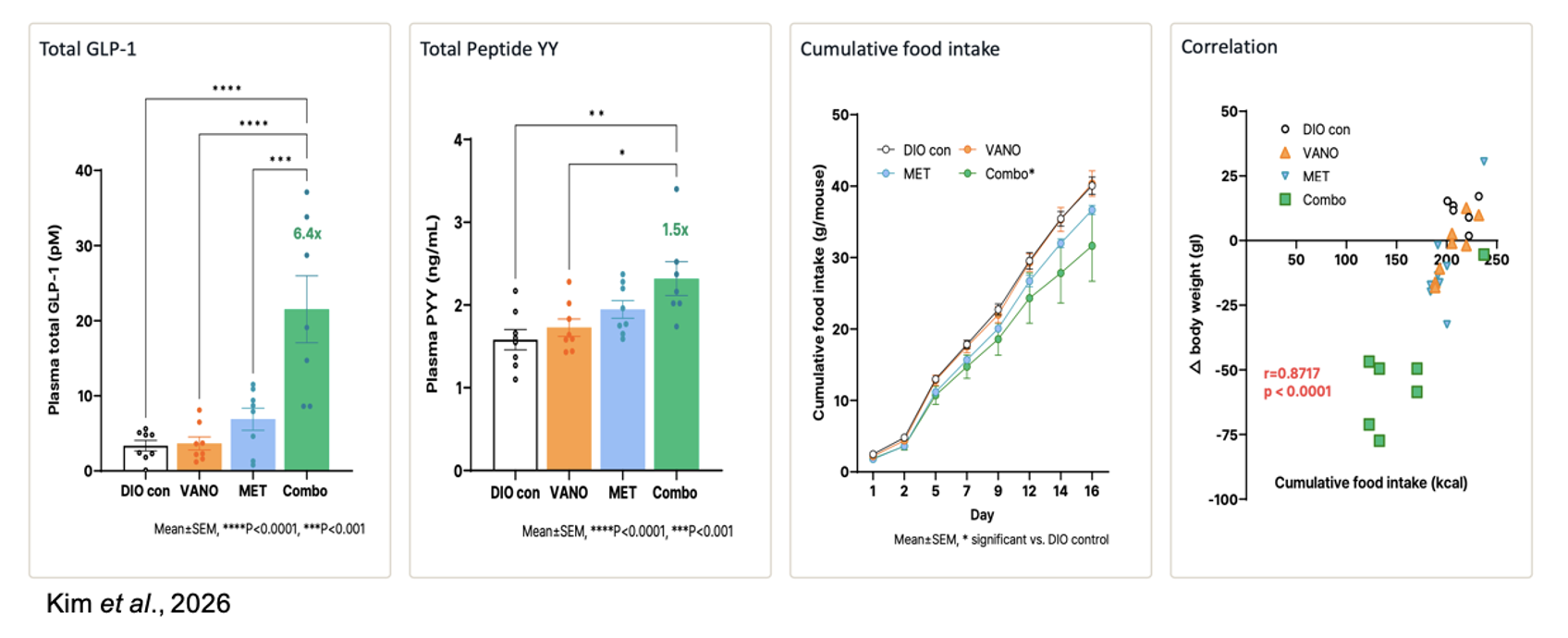
In summary, the combination of vanoglipel and metformin resulted in synergistic metabolic benefits in DIO mice with type 2 diabetes and obesity, including decreased body weight, better glycemic control, and modulation of GLP-1/PYY to reduce food intake. Thus, vanoglipel may make a suitable add-on therapy to metformin in patients with type 2 diabetes and obesity.
Synergistic Hepatoprotective and Weight-Loss Effects of Vanoglipel and Resmetirom Combination Therapy in a Diet-Induced Obese, Biopsy-Confirmed Mouse Model of MASH
Similar to the previous study, in this experiment vanoglipel was tested as a monotherapy and in combination with resmetirom in a diet-induced obesity (DIO)-MASH mouse model. Mice were fed an HFD for 39 weeks to induce biopsy-confirmed MASH. The mice that met inclusion criteria (NAS ≥5; steatosis 3; inflammation ≥2; fibrosis F2 or F3) were stratified according to fibrosis stage and randomized into control, vanoglipel, resmetirom, or combination. The results showed that the combination of vanoglipel and resmetirom resulted in positive synergistic benefits that improved both extrahepatic drivers and intrahepatic pathology of MASH:
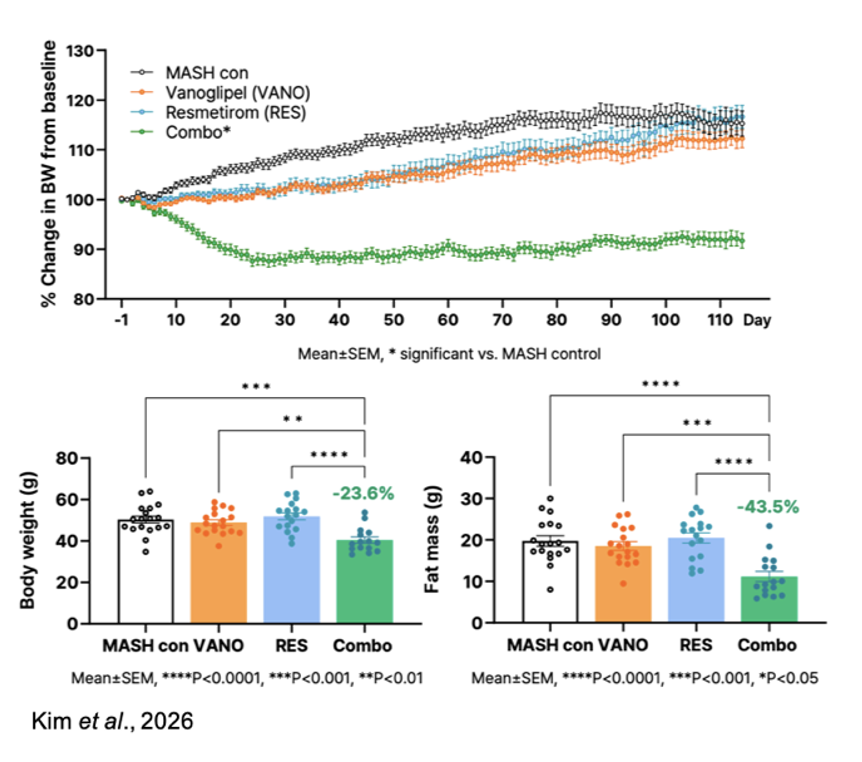
- The combination of vanoglipel and resmetirom resulted in a significant reduction in body weight. As the following figure shows, no weight loss benefit was seen with either monotherapy, however the combination therapy resulted in an average 23.6% weight loss and 43.5% loss in fat mass compared to the control group. However, there was no difference in lean mass or in food intake between any of the groups.
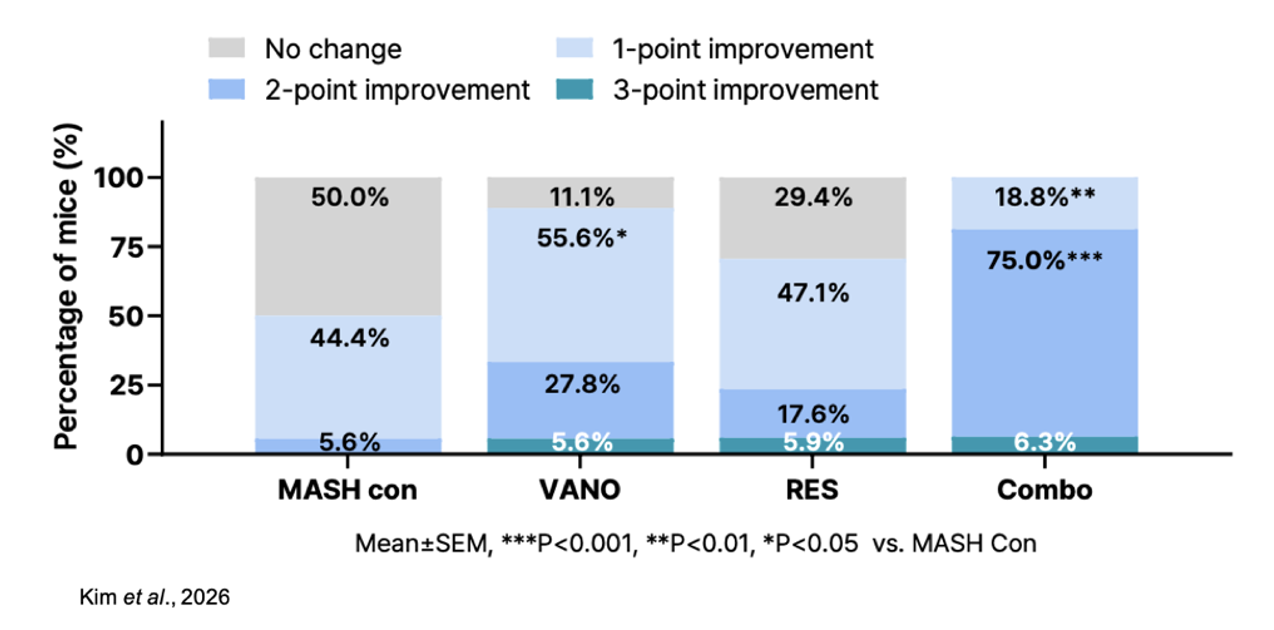
- In regard to liver health, monotherapy treatment with vanoglipel showed greater improvement than monotherapy treatment with resmetirom, however the combination therapy showed the greatest effect in NAS improvement.
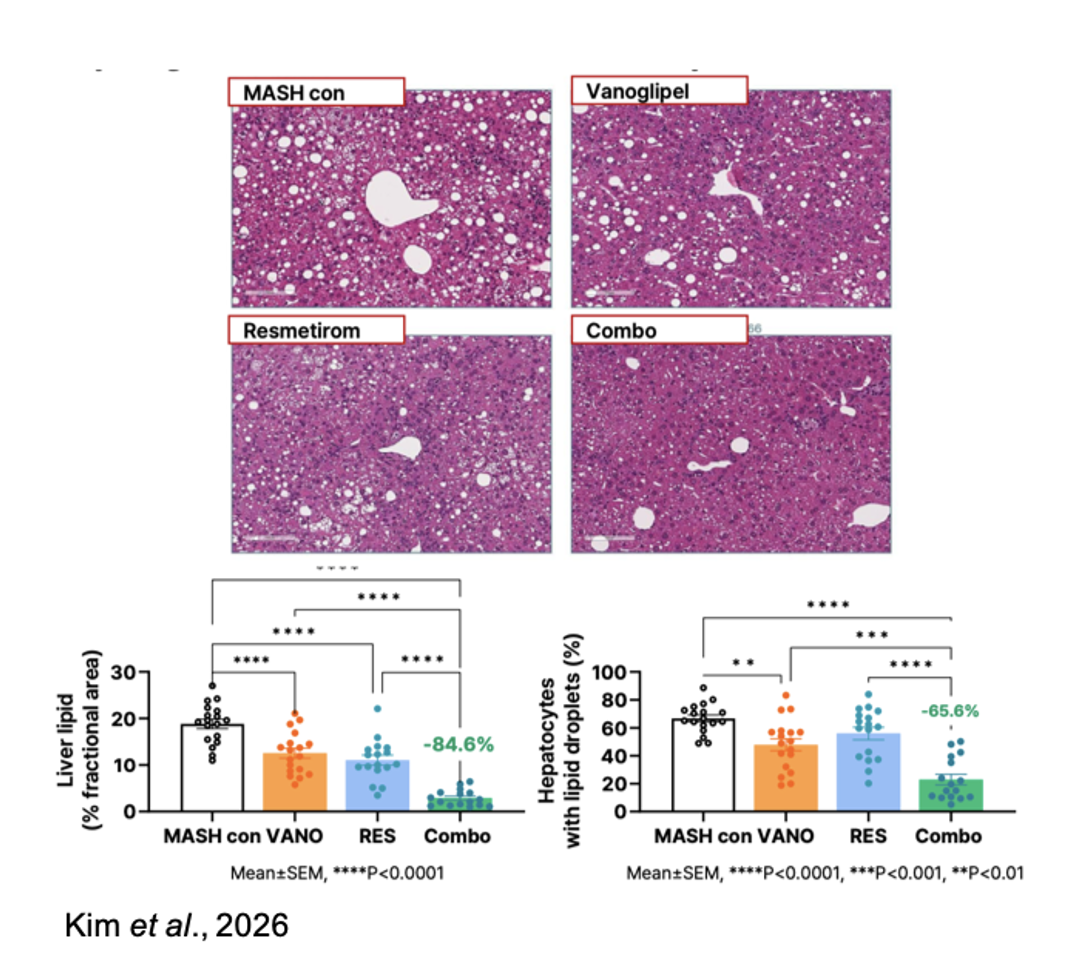
Similar results were seen with liver steatosis, in which both vanoglipel and resmetirom monotherapy resulted in decreased liver fat, however the combination therapy was superior to either monotherapy.
For liver inflammation, vanoglipel monotherapy resulted in a statistically significant reduction compared to the control group and to the resmetirom monotherapy, which did not result in a statistically significant decrease compared to control. The combination treatment resulted in a statistically significant average decrease of 43.7%.
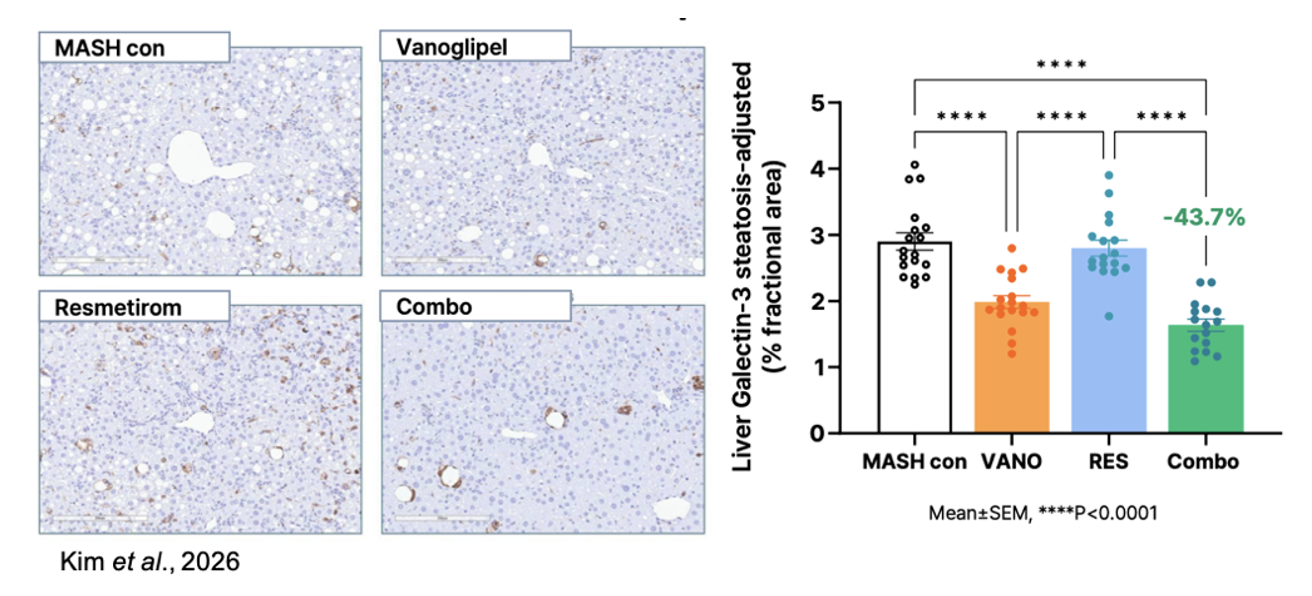
- Lastly, the combination of vanoglipel and resmetirom resulted in further improvement in liver fibrosis compared to either therapy alone. The following image shows plasma ALT and AST levels, where the combination treatment resulted in an average 83.5% decrease in ALT and an average 68.2% decrease in AST compared to the control group.
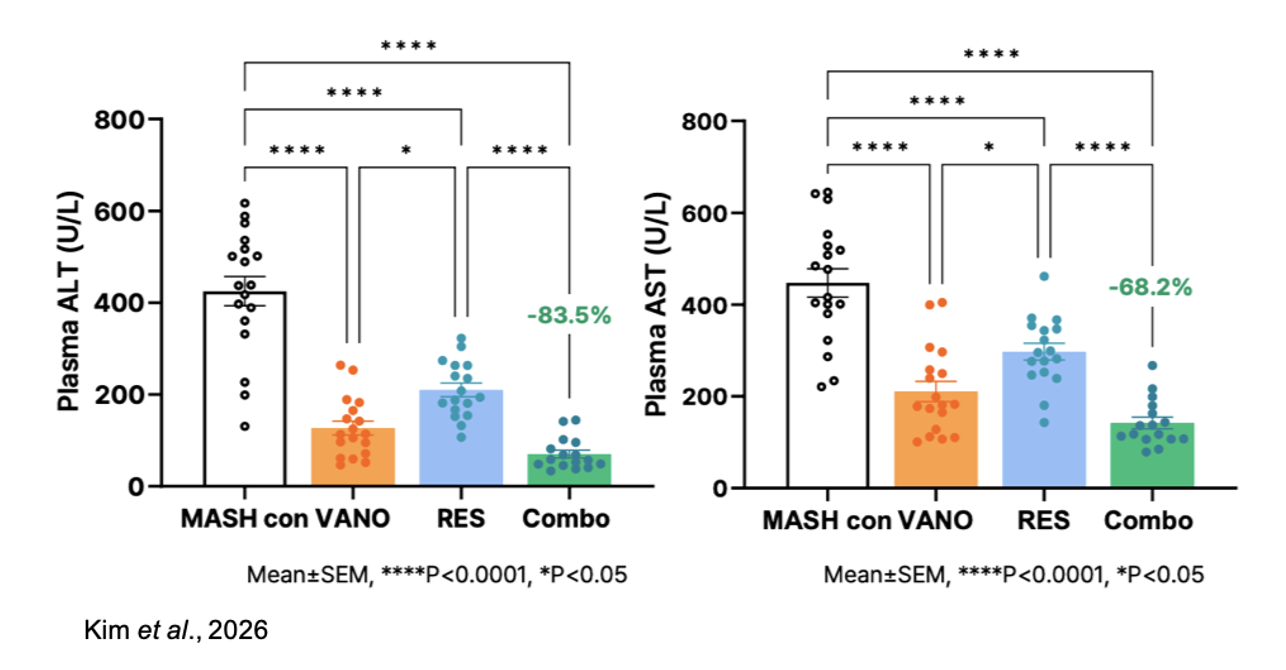
Overall, the combination of vanoglipel and resmetirom resulted in positive synergistic effects on liver health in a DIO mouse model of MASH across multiple parameters, including NAS, liver fat percentage, and fibrosis. While transcriptomic analysis is ongoing to determine the potential underlying mechanism, the body weight loss is thought to be attributable to enhanced thermogenesis in white adipose tissue. Resmetirom has had a successful commercial launch as a MASH therapy, thus the potential combination treatment with vanoglipel may provide additional metabolic benefits.
Conclusion
The new PK data for DA-1726 is another positive indicator for the compound as it supports once weekly dosing and shows linear and dose proportional kinetics. The new data presented for vanoglipel is intriguing, as it opens multiple development pathways for that compound. The company has consistently stated that vanoglipel would likely function best as part of a combination treatment, and the preclinical data showing its synergistic effects with both metformin and resmetirom further support that thesis.
The next big catalyst for MetaVia should be the topline data from Part 3 of the Phase 1 trial of DA-1726 in the fourth quarter of 2026. With no changes to our model, our valuation remains at $30 per share.
SUBSCRIBE TO ZACKS SMALL CAP RESEARCH to receive our articles and reports emailed directly to you each morning. Please visit our website for additional information on Zacks SCR.
DISCLOSURE: Zacks SCR has received compensation from the issuer directly, from an investment manager, or from an investor relations consulting firm, engaged by the issuer, for providing research coverage for a period of no less than one year. Research articles, as seen here, are part of the service Zacks SCR provides and Zacks SCR receives payments totaling a maximum fee of up to $50,000 annually for these services provided to or regarding the issuer. Full Disclaimer HERE.