By M. Marin
TSX: SWP.TO | OTC: SWSSF
READ THE FULL SWP.TO RESEARCH REPORT
SWP managed challenges of difficult 2025 industry dynamics, producing solid operating results
Swiss Water Decaffeinated Coffee Inc. (TSX: SWP.TO) (OTC: SWSSF) reported 4Q25 / 2025 results last week and hosted a conference call yesterday after the market close. Coffee prices and coffee futures prices were volatile and experienced upward pressure in 2025, reflecting weak crop harvests, tariffs, disrupted trade patterns, recession concerns, and the geopolitical climate, among other factors.
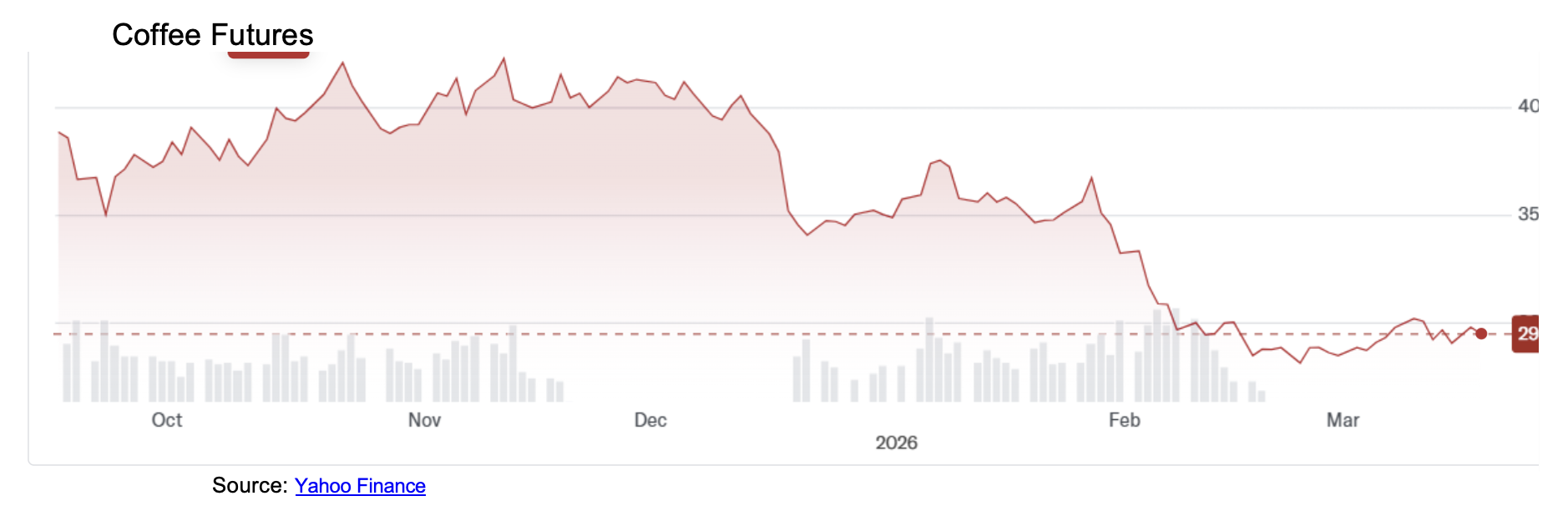
The coffee futures contract is the global benchmark for Arabica coffee. Futures contract prices reached their highest levels since the early 1970s, and spot availability of green coffees remains very low. During 3Q25, the NY’C’ coffee futures prices for Arabica coffee averaged US$3.37/lb, compared to an average of US$2.46/lb in 3Q24, an increase of 37%, and remained volatile in 4Q25. During the quarter, the NY’C’ averaged US$3.83/lb, up 35% compared to an average of US$2.83/lb in 4Q24 and reaching a quarterly high of US$4.23/lb in November.
Upward pressure on prices continued into January 2026, as indicated by data from the Federal Reserve. Moreover, throughout 2025, Swiss Water was impacted by unpredictable and rapidly changing US tariff policy. Swiss Water’s decaffeination process is classified as “non-transformational,” and so coffee retains country-of-origin status for tariff purposes, but Brazil is the world’s largest producer of green coffee, and U.S. tariffs imposed on imports from Brazil impacted coffee prices for much of the year until November 20, 2025, when tariffs were lifted.
Higher prices and coffee price uncertainty arguably result in short-term changes in demand and disruptions in normal seasonal order patterns from importers and roasters. Processed volumes were 2% lower in 4Q25 compared to 4Q24, but up 2% for the year compared to full year 2024. The 2% annual increase reflected continued customer demand and orders, despite the difficult industry backdrop.
Prices now appear to be declining, according to Trading Economics, which notes that over the month of February 2026, coffee prices have fallen by double-digit percentages compared to the same period in 2025. In fact, Arabica coffee futures approached their lowest level since November 2024. The supply outlook has improved, with a strong crop expected in the next (2026-2027) season. The National Supply Company (Conab) anticipates a significant increase in Brazilian supply, forecasting a 17+% increase in 2026 compared to 2025, with Arabica production up an anticipated 23+%.
Industry dynamics were difficult in 2025, but SWP was able to manage the challenges to produce solid results and lay the foundation for resumed growth as industry fundamentals normalize. The company strategically managed its inventory levels so that it could be responsive to often rapid shifts in customer demand and quarterly sales activity that did not follow usual seasonal patterns, as the pricing and tariff landscape fluctuated, contained costs, and strengthened its balance sheet to retain financial flexibility.
Foundation set for growth as industry fundamentals normalize
We believe the foundation is set for growth if the above-noted improvements in coffee prices hold and as industry fundamentals normalize. While higher coffee prices, market inversion, and uncertainty negatively impacted demand in 2025, the company is encouraged by early signs that prices are moderating and market dynamics are resuming normal patterns, albeit slowly.
The company also made progress in strengthening its balance sheet in 2025, including the repurchase and cancellation of the MRC warrants and the expansion of its operating credit facilities (see below) to enhance its financial flexibility.
Moreover, SWP expects the recovery of fiscal year 2025 inversion costs to continue in 2026 and has identified initiatives to help counter the potential impact if tariffs are imposed in the future. The underlying commodity price of coffee appears to be the critical factor, at this point, and, as noted, prices appear to be moderating. Based on the company’s experience, when the NY’C’ trends upward, SWP’s customers generally tend to work through their inventories rather than build inventories. Conversely, when the NY’C’ is in a sustained period of decline, customers tend to build inventories. Uncertainty around tariffs and their potential impact on trade and the economy adds further complexity.
SWP’s natural 100% chemical-free decaffeination process expected to remain highly attractive, given continued consumer trends towards health consciousness
Coffee ranks among the top beverages consumed 2nd only to bottled water & within the coffee beverage category, decaffeinated and specialty coffees are gaining share. SWP’s natural 100% chemical-free decaffeination process is expected to remain highly attractive, given continued consumer trends towards health consciousness. The company is encouraged by early signs that coffee prices are moderating and that market dynamics are resuming normal patterns, albeit slowly.
SUBSCRIBE TO ZACKS SMALL CAP RESEARCH to receive our articles and reports emailed directly to you each morning. Please visit our website for additional information on Zacks SCR.
DISCLOSURE: Zacks SCR has received compensation from the issuer directly, from an investment manager, or from an investor relations consulting firm, engaged by the issuer, for providing research coverage for a period of no less than one year. Research articles, as seen here, are part of the service Zacks SCR provides and Zacks SCR receives payments totaling a maximum fee of up to $50,000 annually for these services provided to or regarding the issuer. Full Disclaimer HERE.